Mehmedovic MirzaMareMagnum

350 résultats
brossura Questo lavoro presenta uno sguardo particolare sulle circostanze che caratterizzarono il conflitto in Bosnia ed Erzegovina nel periodo 1992-1995. Partendo dal concetto di totalitarismo, l'autore ha inteso ricostruire quei rapporti tra cultura, religione, storia e politica che troppo spesso sono passati nel silenzio e che, tuttavia, sono fondamentali per chiunque voglia comprendere le condizioni che hanno determinato il tentativo di eliminare un'intera etnia da quella che, ancora oggi, la politica e i media vogliono condannata a un'impercettibile ambiguità ontologica: essere o non essere Europa. Attraversando la storia dei programmi per una Grande Serbia, il lettore dovrà confrontarsi con le verità sui genocidi e sugli stupri, ma soprattutto sulle responsabilità e sul debito morale che la comunità internazionale ha contratto con quello che William Miller ha definito come il curioso fenomeno di un'etnia slava per razza, maomettana per fede, che mai accettò il fondamentalismo ottomano.
"At the end of the twentieth century people spoke as if the Balkans had plagued Europe forever." "Mark Mazower dispels current Western cliches and replaces stereotypes with an account of how mountains, empires and religions have shaped their inhabitants' lives. As a bridge between Europe and Asia the Balkans has been exposed to a constant incursion of nomadic peoples across the centuries. Mountain ranges made farming hard and political control almost impossible and allowed small communities to live side by side through to the end of the twentieth century. Empires based on religion not ethnicity shaped customs and beliefs in ways that did not entirely vanish with the coming of modernity." A short but well researched introduction to the complex and always compelling history of the Balkans. 160p. bibliography. index Book
Broch?. 222 pages.
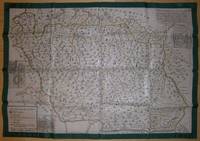
1471740: By Johannes Weingartner. Manuscript colored military map of Bosnia on linen with green silk edges by Johannes Weingartner. In fine condition. Manuscript colored military map of Bosnia on linen with green silk edges by Johannes Weingartner. 660 × 470 mm; 620 × 430 mm. <p><br /> Showing the borders and the fronts of the Habsburg Empire in Dalmatia and the Ottoman Empire in Bosnia on the day of the battle of Banja Luka August 4 1737. It was one of the main battles of the Russo-Turkish-Austro War 1735–1739 in which the Ottomans led by Hekimoğlu Ali Pasha 1689–1758 grand vizier defeated the Austrians who entered the war a month before in July 1737.<br /> <p> <p><br /> With four vignettes of views of principal cities: Banja Luka Bihać Sarajevo written “Seraglio†on the map which is equivalent to “saray†or “serail†which means the governor’s palace in Turkish and Zvornik.<br /> <p>. By Johannes Weingartner unknown
Milano, 1904, estratto con copertina posticcia muta, pp. 907/915 con ill. (Cavalli) - !! ATTENZIONE !!: Con il termine estratto (o stralcio) intendiamo riferirci ad un fascicolo contenente un articolo di rivista, sia che esso sia stato stampato a parte utilizzando la stessa composizione sia che provenga direttamente da una rivista. Le pagine sono indicate come "da/a", ad esempio: 229/231 significa che il testo è composto da tre pagine. Quando la rivista di provenienza non viene indicata é perchè ci è sconosciuta. - !! ATTENTION !!: : NOT A BOOK : “estratto” or “stralcio” means simply a few pages, original nonetheless, printed in a magazine. Pages are indicated as in "from” “to", for example: 229/231 means the text comprises three pages (229, 230 and 231). If the magazine that contained the pages is not mentioned, it is because it is unknown to us.
Very Good Serbo-Croatian Paperback. Roy. 8vo. (23 x 15 cm). In Aljamiado (Serbo-Croatian in Arabic letters), Arabic, and Persian with an introduction in Arabic. The third revised edition of the Waqf Directorate in Sarajevo. 104 p., 4 unnumbered b/w plates. "Ilmihal" [i.e. Catechism] recommended to all who want to know and learn Islamic ceremonies and practice. Learn how to pray, what are basic principles of the Islamic faith, what are the Islamic duties, what are the Islamic holidays, what constitutes proper Islamic behavior, and lots more. This extremely rare catechism book printed in Sarajevo in Croatian with Arabic letters (Aljamiado). This book is one of the late examples of Aljamiado literature beginning in early Andalusia and constitutes one of the rarest examples of the Ottoman book tradition. Aljamiado or Aljamía texts are manuscripts that use the Arabic script for transcribing European languages, especially Romance languages such as Mozarabic, Portuguese, Spanish or Ladino, and Bosnian with its Arebica script. According to Anwar G. Chejne, Aljamiado or Aljamía is "a corruption of the Arabic word ?ajamiyah (in this case it means foreign language) and, generally, the Arabic expression ?ajam and its derivative 'Ajamiyah are applicable to peoples whose ancestry is not of Arabian origin". During the Arab conquest of Persia, the term became a racial pejorative. In linguistic terms, the Aljamía is the use of the Arabic alphabet to transcribe a Romance language. It was used by some people in some areas of Al-Andalus as an everyday communication vehicle, while Arabic was reserved as the language of science, high culture, and religion. The systematic writing of Romance-language texts in Arabic scripts appears to have begun in the fifteenth century, and the overwhelming majority of such texts that can be dated belong to the sixteenth century. A key aljamiado text was the mufti of Segovia's compilation Suma de los principales mandamientos y devediamentos de nuestra santa ley y sunna, of 1462. In later times, Moriscos were banned from using Arabic as a religious language and wrote in Spanish on Islamic subjects. Examples are the Coplas del alhichante de Puey Monzón, narrating a Hajj, or the Poema de Yuçuf on the Biblical Joseph (written in Aragonese). Aljamiado played a very important role in preserving Islam and the Arabic language in the life of the Moriscos. After the fall of the last Muslim kingdom on the Iberian peninsula, the Moriscos (Andalusian Muslims in Granada and other parts of what was once Al-Andalus) were forced to convert to Christianity or leave the peninsula. They were forced to adopt Christian customs and traditions and to attend church services on Sundays. Nevertheless, some of the Moriscos kept their Islamic belief and traditions secretly through the usage of Aljamiado. In 1567, Philip II of Spain issued a royal decree in Spain, which forced Moriscos to abandon using Arabic on all occasions, formal and informal, speaking and writing. Using Arabic in any sense of the word would be regarded as a crime. They were given three years to learn the language of the Christian Spanish, after which they would have to get rid of all Arabic written material. Moriscos translated all prayers and the sayings of their prophet Mohammed into Aljamiado transcriptions of the Spanish language while keeping all Qur'anic verses in the original Arabic. Aljamiado scrolls were circulated amongst the Moriscos. Historians came to know about Aljamiado literature only in the early nineteenth century. Some of the Aljamiado scrolls are kept in the Spanish National Library in Madrid. The word aljamiado is sometimes used for other non-Semitic languages written in Arabic letters. For example, Bosnian and Albanian texts written in Arabic script during the Ottoman period have been referred to as aljamiado. However, many linguists prefer to limit the term to Romance languages, instead of using Arebica to refer to the use of Arabic script for Slavic languages... Not in OCLC.
340p.maps, bibliography, index [Library stamp] Ex-Library
19401Bruxelles, Editions Artis-Historia, s.d. (ca 1980). 20 x 30, 160 pp., très nombreuses illustrations en couleurs, 2 cartes, cartonnage d'édition + jaquette, très bon état.
Broché. 178 pages.
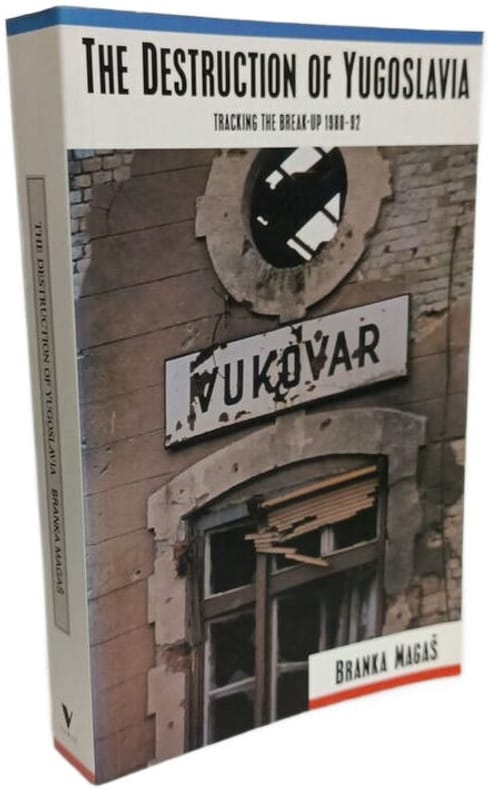
1993100145504Verso Books 1993 390 pages 15 24x22 86x2 4892cm. 1993. Broché. 390 pages.
8vo., Uncorrected Proof Copy; original photographic wrappers, a very good, clean copy. The author's first book, a vivid and haunting account of the war in Bosnia from 1993 to 1996 as reporter for the Daily Telegraph and The Times as special correspondent.
20730Paris, Bernard Grasset, 1996. 14 x 23, 552 pp., broché, très bon état.
br. Luglio 1995: a ridosso della fine della guerra di Bosnia (1992-1995) cadde Srebrenica, enclave musulmana protetta dai caschi blu dell'Onu. Una tragedia, che il Tribunale internazionale dell'Aja per l'ex Jugoslavia ha definito genocidio, costruita a tavolino non solo con l'obiettivo di conquistare la città o di procedere alla strage degli appartenenti a una nazionalità. Obiettivo principale era minare la continuità della storia di convivenza pacifica e secolare tra popoli in Bosnia all'interno di una cultura cosmopolita. Il libro è un viaggio nel genocidio a dieci anni dalla tragedia di Srebrenica.
brossura Primavera del 1992, Visegrad viene sottoposta a un intenso bombardamento da parte dell'esercito regolare jugoslavo. Ritiratesi le forze armate, la cittadina della Bosnia orientale finisce sotto il controllo di un gruppo paramilitare guidato dai cugini Luki?, che inaugurano un regime del terrore e dell'orrore. In pochi mesi la pulizia etnica ai danni dei musulmani-bosniaci - che costituivano il 63 per cento della popolazione locale - viene portata a termine con operazioni di rastrellamento, deportazioni, omicidi di massa e persino attraverso la combustione, in almeno due casi, di decine di civili all'interno di case private. Circa tremila persone vengono uccise e fatte scomparire. Lo stupro etnico ai danni di donne, bambini e uomini diviene pratica comune. Il fiume Drina diviene la più grande fossa comune di quella guerra. Questo reportage scritto sul campo racconta le vicende, raccoglie le testimonianze di tutte le parti e fa il punto sull'episodio che ha rappresentato la prova generale di ciò che sarebbe accaduto tra il 1992 e il 1995 a Srebrenica, Prijedor, Fo?a e in altri luoghi passati alla storia per la crudeltà degli eventi verificatisi.
br. Gli Accordi di Dayton nel novembre del 1995 misero fine al conflitto in Bosnia Erzegovina dopo quattro anni di orrori, il più noto dei quali è il genocidio di Srebrenica. In questo libro collettivo - un lavoro imparziale nel quale parlano ventisei voci di altissimo spessore -, testimoni dell'epoca, diplomatici, giornalisti, scrittori, giuristi, religiosi, cooperanti ed esperti di Bosnia Erzegovina e di Balcani raccontano spaccati inediti dal loro osservatorio speciale durante le settimane che precedettero e seguirono il raggiungimento degli Accordi, partecipando al contempo al dibattito sull'efficacia, i limiti, gli errori di chi li negoziò, viste la situazione di stallo sociale ed economico e la gestione improvvida del potere da parte delle élite politiche attuali. Prefazione di Cristina Battocletti.
190043572Couverture souple. Numéro complet. 8 pages. Gravures en couleur. Légèrement défraîchi.
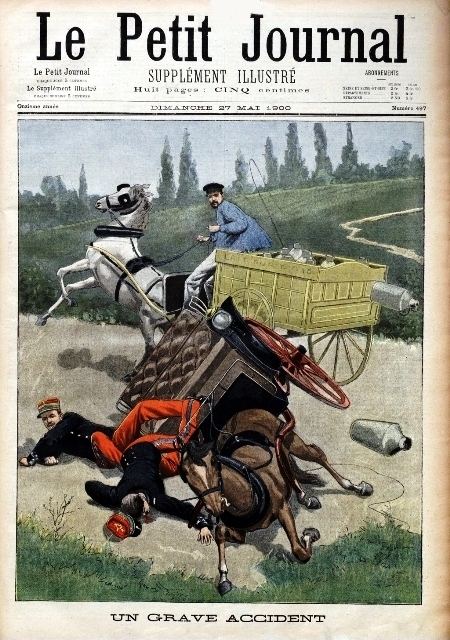
1900125400Couverture souple. Numéro complet. 8 pages. Gravures en couleur.
O.E.I.L. 1986, In-8 broché 112 p. Trés bon état.
Broché. 330 pages.
198699946047O.E.I.L. 1986, In-8 O.E.I.L. 1986, In-8 broché 112 p. Trés bon état.
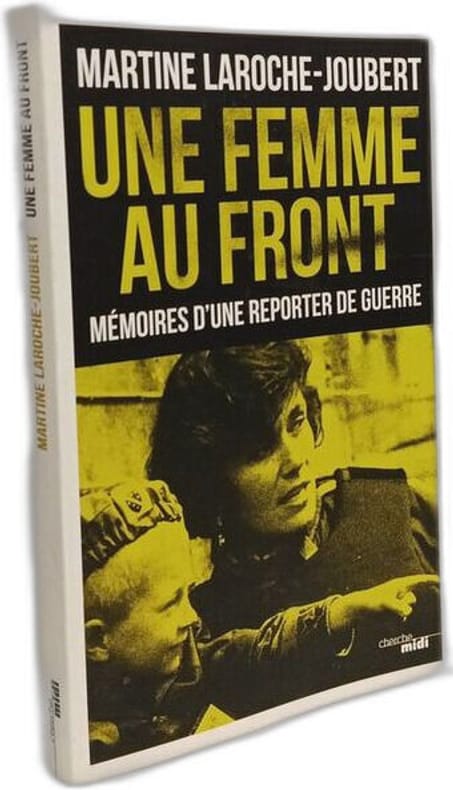
2019100140840CHERCHE MIDI 2019 208 pages 14x21 8x1 7cm. 2019. Broché. 208 pages.
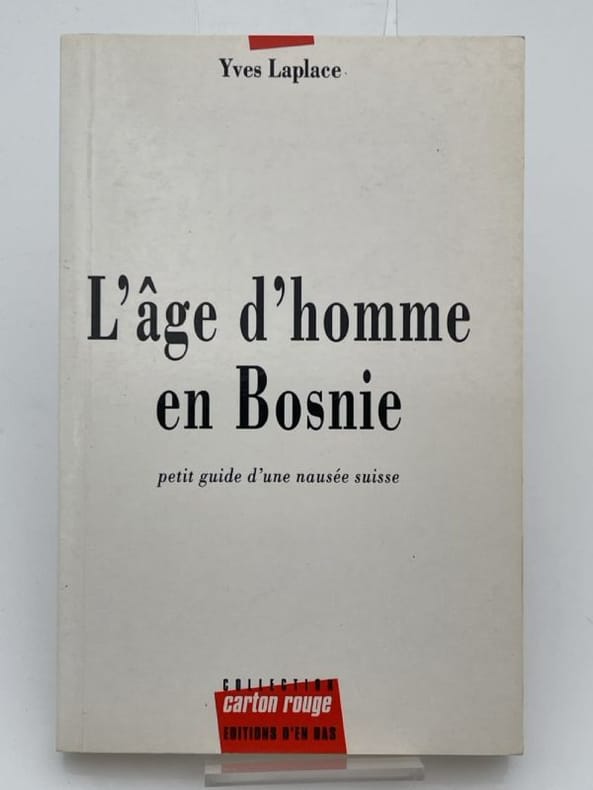
Editions d’en bas, collection carton rouge, 1997. In-12 broché de 93 pages. Très bon état
199716442Editions den bas Editions den bas, collection carton rouge, 1997. In-12 broché de 93 pages. Très bon état
br. La guerra in Bosnia fu "anche" una guerra psichiatrica, non solo per il protagonismo di molti psichiatri, ma perché in essa si perseguiva la separazione e la soppressione dei diversi in nome della pulizia etnica, secondo una pratica comune nella psichiatria sociale. Una deprecabile operazione affidata ai cecchini-infermieri che operavano agli ordini dello psichiatra Radovan Karadzic. A Sarajevo la guerra etnica e religiosa svelò anche i suoi contenuti affaristici, mostrò quanto rapidamente i conflitti proclamati in nome dell'identità logoravano le comunità locali anziché proteggerle. Così si è disperso il patrimonio di Sarajevo, una città in grado di riunire la complessità culturale dell'Oriente.