170 résultats
1861000615Chicago Illinois IL. Good. 1861. A wonderful archive of historically significant with detailed civil war content: 1 Two detailed Civil War diaries; 2 Ransom's first war letter home; 3 superb signed Ransom Civil War cartes des vistecdv; 4 Other photos: a tintype cdv gem photo and another hand colored cdv of his wife Louie Lucy Perham; 5 A book titled "Sacred Poems"; 6 Ransom's business card and property tag and lastly but of huge importance to genealogists; 7 Early name and address book of Dick Ransom mentioning many family members and Battery mates. Dick Ransom was from Chicago Illinois; enlisted on 8/7/1862 as a private. On 8/29/1862 he mustered into Chicago Mercantile Light Artillery. He was discharged for disability on 3/24/1863. Specifics: Diary #1 1861 2.5 x 3.5 inches full year January 1st through December 31st 1861 120 pages of which approx. 250 days with entries recorded dark brown period ink very legible. Great war content and a number of remarks made in great excitement; Lincoln as President; death of Col. Ellsworth and Steven Douglas. Battle excitement and the rout of the federal army at the first battle of Bull Run at Manassas. Diary #2 1862 : 3 x 5 inches entries from Aug. 7th 1862 through Mar. 6th 1863. 29 pages brown period ink very legible. Cover reads " Dick Ransom mercantile Battery Chicago Artillary 100 Washington Street Chicago". Signed in ink in Dick Ransom's hand on first page; "Dick Ransom 100 Washington Street Chicago Ill." Also included: 3 wonderful cdv/tintype of Lucy Ransom. Dick speaks of his proposal for marriage to Lucy in his 1861 diary. First is a tintype/cdv format of Lucy backmark Chicago dated Aug 19th 1866 and signed on reverse in Dick's handin brown ink "Louie Perham 1866 Dick Ransom". Secondly mounted Gem Albuman photo of Lucy on cdv mount ca. 1865. Cdv is handcolored image of Lucy dated Jan 23rd 1868. The address book includes all of Dick's friends and family and many of Mercantile Battery mates including Sinclair Willard Gunlock and Medal of Honor winner James Dunne. 3 x 5 inches many pages of entries mouse chew on cover edges. The date of 1883 can be found on the fep. Brown ink inscriptions this book is an important genealogy record and helps to identify all the people referred to in the diaries. Here are some snippets: " January 9th "my Birthday 19 years old born at South Woodstock Vermont""march 4th Abe Lincoln President of the United States"" Mar 19th " wrote a long letter to Lucy . with a proposal for marrige which I am sure will be accepted.I am in great anxiety for an answer". tintype of Lucy included "rec'd an answer alright = O.K."" April 25th -Intense excitement about . voluteers companies forming and drilling constantly all over the North"." May 2nd - douglas was received here by republicans and Democrates unanimously " May 3 - great war excitement for some time - volunteerism all over the country - great excitement". " May 5th - volunteers drilling in the streets "" May 8th - Lucy went for me to get a flag for the volunteers ."" May 9th - great war excitement companies guarding and driling". " May 24th - war message regarding the good and efficient commanders." " may 25th - Scott and President Lincoln col. Ellsworth the Zouave huro of Chicago killed in Alexandrea yesterday for tearing down a secsession flag. " June 3rd - Stephen A Douglas died at the tremont house this A.m. at 48. The city draped very very heavily mourning. col. Ellesworth funeral yeaterday at Bryan hall". " May 4th - Douglas laid in state at Bryan Hall all day." " May 5th - Douglas still in Bryan Hall ". " May 5th - Douglas still lies in state at Bryan hall is to be burried at Cottage Grove tomorrow ". "May 7th- Douglas funeral stores all shut up largest funeral ever in Chicago ". " June 10th - War excitement continues usual small battles and skirmishes but no large ones some expected soon". " June 20th - war and rumors of war some great battles expected soon in vicinity of Washington Sucession." " June 25th - Great riot in Milwakee yesterday - Dutch Mob attacks." " June 25 - all state banks in iowa Indiana and Eastern Missiouri counterfeits so plenty now". " June 30th - went out to Cottage Grove to see the camp" " July 8 - Telegraphs forbidden by the War department to transmit any war news of the intentions of the united states "." July 16 - the federal forces are beginning to move toward Richmond knowing where they will stop Gen. Scott don't tell everydody". " July 22 - At noon good news from the war high hopes night news the entire rout of the Federal army . and retreat back to Washington". referring to the first battle of Bull Run at Manassas " July 23 - News from war not encouraging - 600 killed ". " July 25- breacking accounts the battle and rout of the Union army though better than at first suspected ". " Sept. 25- think of joining T.E.G. Ransoms 11th regiment at Cairo had a letter from him wants me". referring to Gen. Ransom. " Oct 6th - another letter from T.E. G. Ransom still urges me. " " Aug 7th 1862 I enlisted in the Mercantile Battery of the Artillary of the U.S. for three years unless sooner discharges"" Aug 9th I was sworn in by capt. christopher U.S. mustering officer of Chicago". " Mr Sutter pastor presented each of the young men who had enlisted with a teatament". " Aug 11th - picked up duds to go to camp tomorrow- at 9 o'clock". "Aug 12th- at 9 o'clock at our headquarters at corner of Lake and State streets at the .Mercantile Association - marched to court house and examined by surgeon and then recieved our $ 60 ". " Aug 13th - arranged our camp as best we could not being organized . was on guard . skirmishing ." " Aug 14th -rec'd news that we were accepted by the government and were to have a full battery . powder smooth Bores . the Coffeemill . orders to fill up the company to 156 men. some photographs taken ". " Aug 25 - we elected our officers and then were visited by Adjutant General Fuller.Cooley Wilson Swan Bickford ". " Aug 29 - The Battery was mustered into service by lt. Knox ". "Sept. 1st- went to town to get more photographs". " Sept 23 - lient Wilson had a sword to be presented him ". " Oct. 3- went to camp and found that the Guns and all accoutrements and ammunition had come". . guns 2 .from riffle james cannon 2 to 8 ditto rebel guns -one made in Memphis and one in orleans which had been captured". " Oct 4th Seargents knights and Whitney Thomas and Throop drew cuts for the 4 bronze guns -knight & Thomas got the U.S. & Throop 7 Whit the rebels.". " Oct 5- had a great deal of company to look at the guns ." the Mercantile Association presented Crego with a sword . the accoutrements are being distributed and guns. today there was a sword Pistols presented to Capt. Cooley by the Mercantile Association." "Oct 15th " last evening the Asociation presented the Battery a splendid set of Colors. . to ft. Wayne.after the horses for the Battery ". " Oct 26th - we drill about 4 hours daily with our horses and guns on the prarie and five blank cartriges to break in the horses - we are almost ready mow for the field and fight". We are now likely to get our Captain Cooley to resign and have Morgan in his place. we have no guard around the camp now only on the horses guns ammunitionstores & officers tents and the boys go down town when they choose". " Dec. 25th - Vicksburg measels" "jan 2nd 1863. left Yazoo country- & Walnut Hills & c bluffs - Sherman's big retreat" . " Feb 14 - Arkansas Post- Sherman deserted - then back to Youngs Point". " Mar 6th Left Youngs Point for Hospital in Memphis on steame "City of Memphis". " April 1st 1863 - Mrs. Livermore brought me my discharge from the service- to Washington Hosptal Memphis.". " April 2 - left Memphis on Bostona -- homeward bound a free man". Remarkable archive.; Manuscript; 48mo - over 3" - 4" tall; KEYWORDS: HISTORY OF DICK RANSOM ALS CDV AMERICANA HANDWRITTEN MANUSCRIPT DOCUMENT LETTER AUTOGRAPH WRITER HAND WRITTEN DOCUMENTS SIGNED LETTERS MANUSCRIPTS HISTORICAL HOLOGRAPH WRITERS AUTOGRAPHS PERSONAL PERSONAL HISTORY MEMOIR MEMORIAL DIARY JOURNAL DIARIES JOURNALS LOG LOGS KEEPSAKE AMERICANA Civil War War Between the States VICKSBURG MANASSASS BULL RUN LINCOLN ILLINOIS MERCHANTILE ILLINOIS INFANTRY Zouave . unknown
181154628E-172: Longman Hurst Rees Orme and Brown. Very Good. 1811. First Edition; First Printing. Hardcover. Leather. 4to. Printed in London for Longman Hurst Rees Orme and Brown Paternoster-Row. 1811. 436 pgs. Fine folding engraved map "of the Interior of Louisiana with a part of New Mexico" and full-page map of ". The Mississippi River from its source to the Mouth of the Missouri." Bound by in full calf leather. Spine has been rebacked with contemporary leather spine and gilt titled spine label. Boards are scuffed and worn with wear present to the edges of the boards. Small name present to the reverse of the front board. Both maps present however the first map has a small piece missing and has been rebacked with linen. Foxing present. Text is free of marks. Binding tight and solid. The first U. S. Government exploration of the American southwest. In 1805 Wilkinson ordered Pike to find the source of the Mississippi River so Pike traveled into the northern Louisiana Territory newly purchased from France. In 1806 Pike led an expedition to the southwestern borders of the land acquired by the United States through the Louisiana Purchase. One of the most important inland travel narratives giving an account of the South-west including the author's description of his earlier journey to explore the headwaters of the Mississippi. The two maps are among the first of the area executed by a government expedition. After Pike returned from this first expedition General Wilkinson almost immediately ordered him to mount a second expedition this time to explore map and find the headwaters of the Arkansas and Red rivers. Additional objectives of this exploratory expedition into the southwestern part of the Louisiana Territory were to evaluate natural resources and establish friendly relations with Native Americans. Beginning July 15 1806 Pike led what became known as the "Pike Expedition". General Wilkinson's son James served as one of his lieutenants although it now seems that Wilkinson planned that the Spanish who controlled Mexico would capture him and his men. Over 100 years later France released official records showing General Wilkinson received personal trade concessions and thus could be labeled a spy for Spain at the time. Sabin 62837; Howes P373 e-172; 8vo 8" - 9" tall . Longman, Hurst, Rees, Orme, and Brown hardcover
1890WRCAM52682Chicago: Kurz & Allison 1890. Color lithograph. Image size: 18 1/2 x 25 inches; sheet size: 22 x 28 1/4 inches. Matted to an overall size of 25 x 31 inches. Some moderate chipping and edge tears not affecting image. Reinforced with older tape along top edge. Lightly toned though colors are still strong and fresh. Good plus with wide margins. Suitable for framing. A dramatic rendering of the first major battle in the Civil War to involve African- American troops the attempted storming of a Confederate fort near Charleston South Carolina on July 18 1863. Colonel Robert Gould Shaw was killed along with fifteen other officers and nearly 300 of his men. The print shows the Union troops charging the ramparts of Fort Wagner charging into the oncoming Confederate rifle and cannon fire. A Union officer likely intended to be Shaw stands atop the first rampart sword held high the flag waving boldly next to him. Union ships float off the coast in the background shells bursting above them. <br> <br> Shaw 1837-63 came from a wealthy Massachusetts family noted for upholding reform and abolitionist causes. When the Civil War broke out in 1861 Shaw distinguished himself in combat surviving the bloody battles of Antietam and Cedar Mountain. After the Emancipation Proclamation was passed in 1863 Massachusetts governor John Andrew organized the army's first black volunteer unit the 54th Massachusetts. Despite his initial refusal Shaw was ultimately persuaded by his family to accept the command. Sent to fight in the Union effort to seize the border islands of the Carolina coast in the late spring of 1863 the regiment proved its valor that summer by holding off Confederate troops at James Island South Carolina. "Two days later July 18 1863 on Morris Island Shaw proudly volunteered his regiment to lead the assault on the impregnable Fort Wagner the first step in an offensive on the Confederate stronghold of Charleston South Carolina. When the Fifty-fourth charged the fort 272 were killed wounded or captured. One of those who fell was Shaw leading his African- American troops in battle. Although the assault failed the bravery of the Fifty- fourth proved the ability of black troops and in death the young Shaw was ennobled as a martyr to freedom and as a symbol of enlightened sacrifice" - ANB. The soldiers of the 54th impressed Shaw with their dedication and valor which they demonstrated during the Fort Wagner assault. Shaw was buried with his troops by the Confederates in a mass grave on the site of the assault. <br> <br> Shaw and his troops are the subject of one of the most celebrated works of public sculpture in the United States Augustus St.- Gaudens' Shaw Memorial on the corner of the Boston Common nearest the State House. Shaw's leadership of the regiment is best known to many people today through the film GLORY 1989 which culminates in the attack on Fort Wagner and Shaw's death. A dramatic portrayal of this important historical moment. BLOCKSON 111. Kurz & Allison unknown books
1888000093Hamilton Ontario/Montreal Quebec. Very Good. 1888. Remarkable archive of 58 handwritten manuscript diaries covering 1888 - 1944 1922 includes a travel diary authored by Private James R. Adams of the famed red-coated 13th Battalion of Infantry Hamilton Ontario Canada. Beginning in 1888 age 25 James does more than detail his adult life on paper he actually writes a history of the Canadian textile industry and the Ontario Cotton Mills Company a name that changed a number of times and eventually to the Canadian Colored Cotton Mills company a Hamilton based company that gained fame on a number of fronts. Biographic notes on the company at the end of the listing. The first diary begins with only the odd financial and business note. It actually takes James a couple of years 3 or 4 before he begins to use the diaries more fully beyond business appointments prices of commodities contacts made and the odd news item. As he ages he does more and writes more but he does not make it easy as he uses shorthand frequently. Most of what you learn about James is obliquely but what James does amazingly is capture the history of the textile industry in Canada. There are copious notes throughout that we are sure that for someone with knowledge of the industry terms and sizes and such could dig out a mass of historical information through this lot. We also noted that even in the 19th century diaries James worked with large numbers. He had an important job and we assume he was successful enough that he was sent to help open up the Montreal office in 1894 as evidenced by the change to his address the particulars area. Beyond the business writings there are his personal finances and family matters. In one diary we found a genealogy area but all intials and we only realized the value of the notes by the description 'Mater' and 'Pater'. A fascinating voyage of discovery awaits the new owner of this sensational historic record of one man's life and business career. BIOGRAPHICAL NOTES: The Ontario Cotton Mills Company was established in 1881 in Hamilton Ontario by a group of men including William Hendrie Sr. Edward and Charles Gurney and C.B. Snow. The name was changed the same year to the Ontario Cotton Manufacturing Company O.C.M. and production began in 1882. The factory covered almost the entire block bounded by James Simcoe MacNab and Ferrie Streets except for a hotel on the west side of the property. The company manufactured such cotton products as denims shoe linings flour bags and carpet yarns under the brand name "Kingcot". By 1886 the mill's 400 employees mostly women and girls were producing 2.5 million yards - over 14000 miles - of cloth per year. However two years later the company "met with a financial reverse" according to the Hamilton Spectator and was purchased by a Hamilton syndicate of businessmen comprising mostly the same businessmen who established the O.C.M. in 1881. In 1892 it was reorganized again as the Ontario Cottons O.C. subsidiary of the Canadian Colored Cotton Mills Company Limited C.C.C. headquartered in Montreal Quebec. C.C.C. controlled about a dozen mills throughout the Dominion including three in Cornwall Ontario and three in New Brunswick. The company was also noted in 1898 as being the first company in Hamilton to switch from steam power to hydroelectric power.; Manuscript; HAMILTON HANDWRITTEN MANUSCRIPT DOCUMENT LETTER AUTOGRAPH DIARY JOURNAL LOG KEEPSAKE WRITER HAND WRITTEN DOCUMENTS SIGNED LETTERS MANUSCRIPTS HISTORICAL HOLOGRAPH WRITERS DIARIES JOURNALS LOGS AUTOGRAPHS PERSONAL MEMOIR MEMORIAL PERSONAL HISTORY CANADIANA Canada Fenians Royal Blackwatch World War I Word War II WWI WWII Clothing Industry Spinning Yarn Looms Montreal Hamilton Textile Textiles Quebec Ontario Canada . hardcover
181149912London: Printed for Longman Hurst Rees Orme and Brown 1811. 1811. First edition. First English edition. Substantially reorganized from the 1810 Philadelphia edition. 4to. Quarter polished brown calf and marbled paper over boards marbled front and rear endpapers all edges marbled iii - xx 436 pp. two engraved maps one folding footnotes appendix. Pike's personal journal of the earliest U.S. government expedition to the southwest including one of the first descriptions of Texas in English. Pike explored the headwaters of the Arkansas and Red Rivers and reported on the Spanish settlements in New Mexico as well as his account of his expedition to the upper Mississippi in Minnesota. The maps are of the Mississippi and New Mexico and were "the first of this entire region to display knowledge derived from actual exploration and are of outstanding historic interest." Wheat Trans-Mississippi West Maps II pp. 20-21. "The Louisiana Purchase was one of Thomas Jefferson's crowning achievements and in the following four years he commissioned a number of expeditions to explore the largely unknown territory. In 1804 Lewis and Clark ventured westward from St. Louis; Sibley Dunbar and Freeman explored the Spanish border region in Texas; and in 1806 Pike went to explore the southernmost border region north of New Spain. His orders were to explore the Arkansas and Red Rivers but by February of 1807 he had reached the upper reaches of the Rio Grande having missed the Red River entirely: "Spanish authorities learned of his presence and sent a force to arrest him and his men. They were taken to Santa Fe and then sent on to Chihuahua. Pike's maps and papers were confiscated but he managed to retain his diary and journals by secreting them in the gun barrels of his men. Apparently he was able to convince the Spaniards that he had entered New Spain by accident as he was escorted by armed guard through Texas via San Antonio to the Sabine where he was released. He arrived at Natchioches in June 1807 having thus had the opportunity to examine New Mexico and Texas in some detail at the expense of the Spanish government." Jenkins. "In the hierarchy of significant westward expeditions that of Lieutenant Zebulon Montgomery Pike 1779-1813 ranks right below that of Lewis and Clark. While his was not the first official reconnaissance of the west he provided 'the earliest official geographical image of the trans-Mississippi West'. Pike's map and journal provided the first authentic information about the Upper Mississippi. On the Conejos River an effluent of the Rio Grande well into Spanish territory Pike boldly constructed a fort. It was at this fort that he was arrested and taken first to Santa Fe and then to Chihuahua for a meeting with Don Nemesio Salcedo the governor of New Spain. The authorities confiscated among other documents a manuscript map of the Santa Fe Trail. While in custody of the Spanish Pike learned 'just how many and what kind of troops the Spanish had on hand to defend the northern provinces' according to William Goetzmann 'and he was well informed on the character and personalities of all the Spanish military leaders. No more successful espionage operation has ever been conducted in recorded American history.' Pike returned from captivity without his sketch maps making the creation of his own map more difficult. He had managed to smuggle traverse tables in the rifle barrels that he and his men were allowed to take with them after being released. These tables enabled him to reconstruct parts of the upper Arkansas and to his credit his map is the first to accurately delineate the Arkansas and its tributaries. Nevertheless large sections of 'A Chart of the Internal Part of Louisiana' 1810 were based on Alexander von Humboldt's map. It is paradoxical that Pike who had actually explored the internal part of Louisiana relied on the cartography of Humboldt who had never been there" Cohen. "Pike has been suspected of complicity with the Aaron Burr conspiracy to establish an empire in the Southwest carved from the Spanish provinces of northern Mexico and the western United States but no firm evidence supports those charges. He remained however outspoken in his resistance to the democratization of the army during the Thomas Jefferson administration. Pike published the journals of his explorations in 1810 supplemented with his correspondence with General Wilkinson his speeches to the Indians and detailed descriptions of the land through which he traveled as An Account of Expeditions to the Sources of the Mississippi and through the Western Parts of Louisiana. Appearing as it did four years before the publication of the journals of Lewis and Clark Pike's book provided the American public with its first written description of the trans-Mississippi West. He was killed in action at the storming of York now Toronto Canada on April 27 1813 when the enemies' powder magazine exploded" Handbook of Texas Online. The publication of Pike's reports of the area now occupied by Texas Arkansas and New Mexico encountered similar difficulties to those of Lewis and Clark of their expedition and did not appear in print until three years after Pike's return. However they were well received and the favorable reports of Texas as "one of the richest most prolific and best watered countries in North America" did much to encourage further exploration and expansion." Covers lightly rubbed leather label on the spine is chipped with the loss of four letters former owner's neat bookplate on front pastedown sheet half title not preserved else a very good clean sound copy. Printed for Longman, Hurst, Rees, Orme, and Brown, 1811. hardcover
186458358Various places including Methuen Lawrence Andover Boston and Lowell Massachusetts 1864-1865. modern calf antique with original gilt-lettered label "Company Clothing" laid down on front panel. Folio. Two pages list "Price of Clothing Camp & Garrison Equipage Year 1864." Following are 204 pages one to a soldier listing name company place and date of enlistment articles of clothing issued value itemized date of clothing issue and signature of soldier and witness. In some cases date of discharge desertion or demise is also noted. A "colored" under cook is also listed along with the soldiers. hardcover
186358199Camp near Brooks Station Saturday April 11 1863. Fine original condition. 15-1/2 x 9-3/4 inches. ".Yesterday I witnessed one of the grandest sights that I ever beheld. Our whole corps was reviewed by the President Generals Hooker McLain Howard Steinway Secretary Seward and an innumerable host of Brigadier Generals and it was a sight that has paid me for coming to war." The spectacle is described in great detail. Private Penfield was soon to be captured at Chancellorsville spending 12 days as a prisoner of war before being exchanged. He survived the war to carry on his father's carriage making business in Monroe Connecticut and later founded a small private academy. unknown
1890000615bChicago Illinois IL. Good. 1890. Important archive of post Civil War GAR letters of the Chicago Mercantile Battery Light Infantry Chicago Illinois including two Medals of Honor winner's autographs Kretsinger and Stevens. This archive comes from the Dick Ransom estate from his former Civil War comrades specific to the GAR activities for the "Battery Boys." 1 Letter written on behalf of battery mate Dick Ransom by Gardner Willard and signed by 8 additional Chicago Mercantile Battery boys. Two of these signatures belong to Medal of Honor winners William Stevens and George Kretsinger. Other signatures include David Crego Orin Nash W. Brown Richard Powel Florus D. Meachem. Dated 1891. 2. Hand written letter in support of Dick Ransom and signed by battery mate J. H. Swan. 1891. 3. Dec. 15th 1890 carbon-type copy of a letter Ransom had sent to fellow battery comrade George Kretsinger. 4. great personal letter from fellow Battery comrade Henry C. Gray .single page ink dated Feb. 13 1888. 5. Wonderful period civil war letter from Battery Comrad to Ransom from Gardner G. Willard single sheet and dated during the civil war April 18th 1863. 6 wonderful 4 page letter from former Battery mate Chapin. Letter in ink dated Jan. 1876 being sent to Dick Ransom sharing Chapin's heart felt concern over the recent loss of Ransom's wife. 7. typed letter by Battery Mate James H. Swan in support of Dick Ransom. BIO NOTES: Dick Ransom; Residence Chicago IL; Enlisted on 8/7/1862 as a Private. On 8/29/1862 he mustered into Illinois Chicago Mercantile Light Artillery. He was discharged for disability on 3/24/1863. David R. Crego; First Lieutenant 8/29/62 through 2/6/63. Orrin Nash: 8/29/1862 through 7/10/65. William L. Brown : 8/29/1862 through 7/10/65. Richard Powel; On 10/5/1863 he mustered into IL Chicago Merc He was discharged for disability on 6/17/1864. Florrus D. Meachem; Served 8/29/1862 through 7/10/65. James H. Swan; Enlisted on 8/29/1862 as a 1st Lieutenant. George Kretsinger; Entered service at: Chicago Ill. Birth: Herkimer County N.Y. Date of issue: 20 July 1897. Citation: Carried with others by hand a cannon up to and fired it through an embrasure of the enemy's works. Medal of Honor Winner. Henry C. Gray; Enlisted on 8/15/1862 as a Private. Gardner G. Williard; Enlisted on 8/5/1862 as a Private. James H. Swan; Enlisted on 8/29/1862 as a 1st Lieutenant. Generally very good though a stain has affected a few items none touching signatures.; Manuscript; 4to - over 9¾" - 12" tall; KEYWORDS: HISTORY OF HANDWRITTEN MANUSCRIPT DOCUMENT LETTER AUTOGRAPH WRITER HAND WRITTEN DOCUMENTS SIGNED LETTERS MANUSCRIPTS HISTORICAL HOLOGRAPH WRITERS AUTOGRAPHS PERSONAL PERSONAL HISTORY MEMOIR MEMORIAL DIARY JOURNAL DIARIES JOURNALS LOG LOGS KEEPSAKE AMERICANA Civil War War Between the States VICKSBURG MANASSASS BULL RUN LINCOLN ILLINOIS MERCHANTILE ILLINOIS INFANTRY GAR GRAND ARMY OF THE REPUBLIC VETERANS . unknown
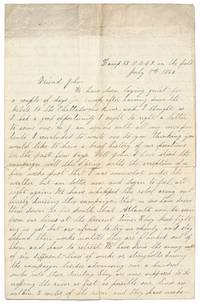
1864438776Atlanta Georgia 1864. Very Good. Autograph Letter Signed. Folio. 4pp. Partial splitting at the edges of one vertical and two horizontal folds about very good. A detailed and historically important long letter written in the field by Union soldier Harvey Rodgers just two weeks before he was killed at the Battle of Atlanta on July 22 1864.<br /> <br /> Rodgers was mustered into service in 1861 as a Corporal in the 54th Regiment Ohio Volunteer Infantry Zouaves Company A commanded by 1st Lt. Judson McCoy referred to as “Jud†in the letter. In the letter written to his “Friend John†on four easily legible folio pages Rodgers describes Confederate and Union Army maneuvers and skirmishes immediately after the Battle of Kennesaw Mountain fought from June 19 – July 2 1864 during the lead-up to the Battle of Atlanta which began on July 21st:<br /> <br /> “… Well John I have stood the campaign well this Spring … We have whipped the rebel army out finely … that is we have drove them so far South that Atlanta can be seen from our lines … I suppose you have heard about our making a charge on the 27th June … I do not wish to be in anymore such places … we lay in camp until the 2nd of July when our Division moved … very near due south of the Kennesaw mountain. That night Jud with our Company was on picket. We heard the cars very plain but did not think they the rebel army were evacuating the mountain and falling back … Next morning … We did not move forward until two o’clock when we advanced our lines two miles finding a small force of Cavalry in our front which we routed by charging them. The Regt. lost 1 killed 14 wounded …â€<br /> <br /> He describes a second skirmish on July 4th at which his Company fought in support of the Union army’s 16th Corps to advance Union lines and continues:<br /> <br /> “… On the 5th we were moved back again and brought further around on the right where we now lay. Our front lines are two miles further on. The rebels have a line of works between them and the Chattahoochee river … I expect we will have a pretty hard time before we get there and a hard time to cross the river …â€<br /> <br /> The Battle of Atlanta commenced on July 21 1864. Both Harvey Rodgers and Union Maj. Gen. James B. McPherson were killed during the battle on July 22nd. Rodgers' letter thus ends poignantly:<br /> <br /> “Well John my time is fast rolling around now and I begin to think I will soon get home again. Only two months and 8 days more … Still in that short time there are many dangers to undergo. I may be called on to go into several more charges. Perhaps of some one not to come out alive … There has not more than half a dozen days passed since the 10th of May but what we have been under the sound of artillery. The troops appear to be pretty well worn out and wish for the campaign to close yet they all want to get into Atlanta first …â€<br /> <br /> A compelling and ultimately heartbreaking eye witness account of General Sherman’s Atlanta campaign during the summer of 1864. Longer quoted extracts from the letter are available. unknown
184834406New York: D. Appleton and Company 1848. Hardcover. Good. Octavo. 1 557 pages 1 page blank 32 pages publisher catalog 1. Frontispiece and Illustrations. Folding map of lower Florida. Restored. Dark brown cloth hardcover with decorative blind stamped borders and gilt illustration of Oseola on the front cover. Gilt title and publisher name stamped on the newer brown cloth spine. Frontispiece title page prliminary pages folding map and publisher catalog in back have moderate foxing. Light toning to the rest of the text. Map has a very small chip bottom edge and an approx. A 5"-6" closed split on a lower fold below Key Largo with no loss of content. D. Appleton and Company hardcover
1830013641London: Henry Colburn and Richard Bentley 1830 Book. Illus. by Foldout Map and Three Illustrations. Good Minus. 3/4 Leather. 1st Edition. 12mo - over 6¾ - 7¾" tall. Original 3/4 leather over maroon cloth on boards. Marbled page edges. Five raised bands on spine with gilt and embossed decoration. Minor wear to edges and corners of leather. Top of spine a little frayed. Previous owner's bookplates in front. Front hinge broken but still holding. Medium hinge break between pgs. 120-121. Bad hinge break between pgs. 288-289. Rear hinge cracked. Foldout lithographed map of Nova Scotia counties is in very good condition - just a few extra folds at one edge. Captain Moorsom spent five years in Nova Scotia initially as an officer in the 52nd Regiment. This book is his observances of the people climate geography and economic prospects of the colony written in the form of letters home to friends in England. One biographer calls it "the most complete picture available of Nova Scotia during the 1820s." Some Nova Scotians were upset at some of his comments but Joseph Howe defended Moorsom since he'd promoted the colony in England. This book is on consignment so no discounts apply. It will be sent insured so expect a request for "extra shipping" to cover that cost. Henry Colburn and Richard Bentley hardcover
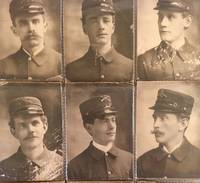
1898List319Massachusetts 1898. The 2nd Massachusetts Volunteers mustered into service in May 1898 and within a month saw significant action in Cuba at the Battle of El Caney. They were one of three volunteer units from Massachusetts to see action on the Santiago Campaign. The regiment was inexperienced - 55% were untrained recruits. The lack of experience combined with their rifles giving off a very visible black smoke led to a heavy casualties in the Battle of El Caney. After an encampment near Santiago de Cuba in which a large number of the soldiers became ill with disease - estimates are as high as 65% - the regiment returned home in August. Historians have noted that soldier demographics changed considerably from the Civil War to the Spanish American war as the smaller number of troops and the lack of a draft led to a more enthusiastic army with higher morale. <br /> <br /> The photographs in this group are interesting as a typological grouping of images of untrained soldiers and also for their historical value as most contain identifications to versos. The highlight of the group is forty-four uniformly mounted portraits of soldiers nearly all identified measuring 3 ¾ x 2 ½ inches each. Other photographs include a large portrait of Captain Frederick E. Pierce with the blindstamp of Goldsmith Studio Springfield Massachusetts and a 3 ¼ x 3 ¼ inch square card of Capt. Pierce in Camp Turner. Also included are two slightly larger photographs on similar mounts. <br /> <br /> Overall an interesting group. Good condition overall with assorted chips and wear. unknown
1898List319Massachusetts 1898. The 2nd Massachusetts Volunteers mustered into service in May 1898 and within a month saw significant action in Cuba at the Battle of El Caney. They were one of three volunteer units from Massachusetts to see action on the Santiago Campaign. The regiment was inexperienced - 55% were untrained recruits. The lack of experience combined with their rifles giving off a very visible black smoke led to a heavy casualties in the Battle of El Caney. After an encampment near Santiago de Cuba in which a large number of the soldiers became ill with disease - estimates are as high as 65% - the regiment returned home in August. Historians have noted that soldier demographics changed considerably from the Civil War to the Spanish American war as the smaller number of troops and the lack of a draft led to a more enthusiastic army with higher morale. <br /> <br /> The photographs in this group are interesting as a typological grouping of images of untrained soldiers and also for their historical value as most contain identifications to versos. The highlight of the group is forty-four uniformly mounted portraits of soldiers nearly all identified measuring 3 ¾ x 2 ½ inches each. Other photographs include a large portrait of Captain Frederick E. Pierce with the blindstamp of Goldsmith Studio Springfield Massachusetts and a 3 ¼ x 3 ¼ inch square card of Capt. Pierce in Camp Turner. Also included are two slightly larger photographs on similar mounts. <br /> <br /> Overall an interesting group. Good condition overall with assorted chips and wear. unknown books
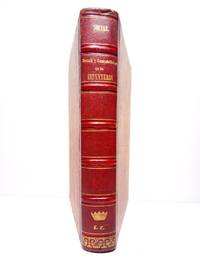
185837012Barcelona: Imprenta de Luis Tasso 1858.- 247 p. 676 p. de formularios y estados; 4º mayor 29 x 22 cm; Media Piel chagrén época lomo dorado con corona iniciales y greca al pie.- RARO libro que es en sí el primer tratado completo de contabilidad militar impreso en España. Los cantos de las tapas y las esquinas con rozaduras y pequeños deterioros diversos pero restaurados en lo posible. Interior impecable. EJÉRCITO Y TEMAS MILITARES Libro en español Imprenta de Luis Tasso hardcover
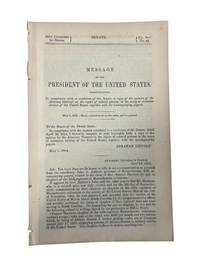
1864214721864. Lincoln Abraham. Message of the President of the United States. on the Rights of Colored Persons in the Army 1864 documents federal policy and legal interpretation concerning the status and compensation of African American soldiers and officers during the Civil War and provides direct evidence of how the U.S. government addressed racial inequality within the Union Army. Transmitting Attorney General Edward Bates' formal opinion the document centers on the case of Reverend Samuel Harrison chaplain of the 54th Massachusetts Volunteer Infantry and addresses the broader question of whether Black service members were entitled to the same recognition and pay as their white counterparts. Issued during active wartime mobilization of United States Colored Troops the pamphlet supports research into African American military service Civil War law and the evolving federal stance on racial equality within military institutions.<br /> <br /> Lincoln Abraham. Message of the President of the United States Communicating. a Copy of the Opinion of the Attorney General on the Rights of Colored Persons in the Army. Washington: Government Printing Office 1864. Disbound pamphlet 9 pages. The text includes the full opinion of Attorney General Edward Bates affirming that "Mr. Harrison was the lawfully appointed and qualified chaplain of the 54th Massachusetts regiment" and therefore entitled to full compensation. The case arose when Harrison despite his commissioned status was paid only ten dollars per month and one ration under interpretations of the July 17 1862 law governing Black enlistment. Bates rejects this limitation stating that denial of proper pay would constitute "a plain violation of the purpose of Congress." Accompanying documents include War Department orders issued by Secretary of War Edwin M. Stanton authorizing the recruitment of African American regiments under Governor John A. Andrew of Massachusetts as well as a muster-in roll confirming Harrison's official appointment.<br /> <br /> Issued at a moment when the Union relied increasingly on African American troops this document records the tension between discriminatory policy and federal efforts to formalize Black military service within established legal frameworks. The case of Samuel Harrison connected to the 54th Massachusetts one of the most prominent Black regiments of the war highlights both institutional inequities and the mechanisms through which they were contested at the highest levels of government. The inclusion of legislative interpretation executive transmission and military documentation within a single publication makes it a concentrated record of how civil rights questions were adjudicated during wartime illustrating the gradual expansion of legal recognition for African American service members. Light toning and minor edge wear from disbinding; overall condition very good. unknown
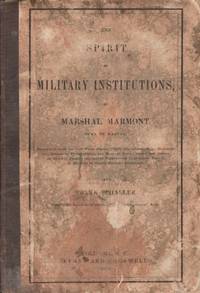
186432582Columbia: Evans and Cogswell 1864. Stiff wraps. Good. 12mo. 278 pages. Stiff paper boards with title on the front cover. Black cloth spine. Covers are worn and discolored. It appears the covers are facsimiles. Light to moderate foxing to the contents. Pencil inscription on the right front flyleaf reads "Col. Samuel W Milton from the publishers." <br /> <br /> The author wrote this book during his recovery from wounds in battle. He dedicates this work to Jefferson Davis. Jefferson Davis thanks the author and calls him "a master of the art of war" on page 12. Confederate imprint.<br /> <br /> Parrish & Willingham 4953; Confederate Hundred 60; Sabin 44651. The previous owner served as an Assistant Adjutant General under Samuel Cooper from 1863 to the end of the war. From Find A grave dot com taken from the Biography of Eminent Men of the Carolinas: <br /> <br /> Samuel Wickiff how it is spelled in the obit Melton was born in Yorkville S. C. February 7 183 hard to read. Receiving his early education in Yorkville he graduated from the South Carolina college in the class of 1852. He edited the Chester Standard published in Chester in 1852 and 1854. Then he returned to Yorkville and established the Yorkville Examiner on January 1 1855 running it until 1858 when he sold out to Lewis M. Grist. In the meantime in 1857 he was admitted to the bar and commenced the practice of law with his brother C. D. Melton at Chester continuing until the war broke out. He enlisted in the Confederate army in 1861 on the staff of Gen. M L. Bonham as aid-de-camp accompanying him to Virginia remaining with him until after the first battle of Bull Run. Subsequently he went on the staff of Maj. Gen. Gustavius W. Smith commanding the Second corps he having the rank of major. He remained with Gen. Smith until February 1863 and was then assigned to duty in the office of the adjutant and inspector general of the Confederate army at Richmond where he remained until the close of the war. He was in the first battle of Bull Run in the Peninsular campaign in the battles around Richmond at Seven Pines the campaign in 1863 in North Carolina and temporarily on the staff of Gen. Beauregard at the battle of Drury's Bluff. The chief duties however from early in 1862 to the close of the war were in the adjutant general's office in Richmond. Evans and Cogswell unknown
189017551Paris, Garnier Frères, 1890 ; fort in-8, cartonnage polychrome sur fond kaki, titre doré, dos décoré et doré, second plat décoré en noir, plats biseautés, tranches dorées ; (4), 1138 pp. , 54 illustrations aquarellées à la main, dont 16 hors-texte, 30 en-tête et 8 dessins in-texte, 7 vignettes en noir et blanc.
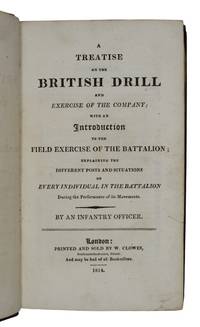
1814AQ22779London: Printed and sold by W. Clowes 1814. 3 vi-xxxii 351pp 1. Without half-title. With 82 engraved figures on five folding plates. Contemporary gilt-tooled calf. Lightly rubbed and marked corners bumped head of spine scorched. Marbled endpapers armorial bookplate of Thomas Francis Fremantle third Lord Cottesloe 1862-1965 to FEP manuscript shelf-marks to front blank fly-leaf tear to leaves K9-10 - touching text without loss of sense. The uncommon first edition of an exhaustive and authoritative manual on British Army drills; published in the penultimate year of the Napoleonic Wars. A second edition appeared in 1816. In his prefatory remarks the anonymous infantry officer bemoans the 'little attention which is sometimes bestowed to the instruction of the troops' and the 'careless manner in which the drill and exercise are often carried on' situations which he hopes his book may rectify. The usual databases record copies at five locations BNF Buffalo California Canadian Museum of History and Mississippi. . First edition. 12mo. Printed and sold by W. Clowes unknown
180218453München, 1802 / 04. 8° (ca. 18 x 22 cm), orange Pappe der Zeit, etwas Rückenvergoldung, verg. Deckelfileten.
185532141Boston: Davis & Farmer Printers 1855. 48pp top margins of first few leaves spotted. Stitched in original printed wrappers lightly foxed. Except as noted Very Good.<br /> <br /> The Infantry is named in honor of Revolutionary War Major General Benjamin Lincoln. This rare pamphlet prints its founding documents marching and arms instruction for the soldier and a manual of arms for sergeants.<br /> FIRST EDITION. OCLC 590599680 2- AAS NYHS as of June 2015. Davis & Farmer, Printers unknown
185532141Boston: Davis & Farmer Printers 1855. 48pp top margins of first few leaves spotted. Stitched in original printed wrappers lightly foxed. Except as noted Very Good.<br/><br/> The Infantry is named in honor of Revolutionary War Major General Benjamin Lincoln. This rare pamphlet prints its founding documents marching and arms instruction for the soldier and a manual of arms for sergeants.<br/>FIRST EDITION. OCLC 590599680 2- AAS NYHS as of June 2015. Davis & Farmer, Printers unknown books
188117577Berlin, Mittler u. Sohn, 1881. Portrait-Frontispiz, XXVII, 614 SS., 1 S. Errata, 3 farbige Lithographien (Uniformtafeln), 2 gefaltete Karten, enthält u.u. 15 SS. mit Noten. Gr.-8°, Halbleinwand der Zeit.
19001107951900 Première année complète - 1899 et 1900 - Revue mensuelle illustrée - In-4 (environ 25 x 17cm), demi basane verte - Titre, année et filets dorés au dos - 327 pages - Très riche iconographie en N&B, ainsi que 28 planches rehaussées à la couleurs (hors texte)
18922563Chicago: Women's Temperance Publishing 1892. First Edition. Cloth. Very good. First edition of the history of the Illinois Thirteenth Volunteer Infantry. Octavo viii 672pp. Brown cloth title in gilt on spine embossed decorative illustrations on cover. Wear to rear cover light dampstain at top edge. Frontispiece portrait of Colonel John B. Wyman with tissue cover. Floral endpapers some cracking at hinges text block stable and secure. Nevins 1 110. The 13th Illinois Volunteer Infantry Regiment was organized under the Ten Regiment Bill and nicknamed "Fremont's Grey Hounds." They were part of General Sherman's attack on Chickasaw Bayou where their commander Colonel Wyman was killed. Women's Temperance Publishing unknown books
188717632Landshut, im Selbstverlag des Bataillons, 1887. 2 Teile in 2 Bänden. 1. Teil: 1795 - 1825. 2. Teil: 1825 - 1875. XIV, 583 (1) SS.; X, 573 SS., 1 Bl. Gr.-8°, Halbleinwand, Rückentitel goldgeprägt, marmorierte Einbanddeckel. Die Rücken lichtgebleicht, Kanten berieben.