1 572 résultats
1861000615Chicago Illinois IL. Good. 1861. A wonderful archive of historically significant with detailed civil war content: 1 Two detailed Civil War diaries; 2 Ransom's first war letter home; 3 superb signed Ransom Civil War cartes des vistecdv; 4 Other photos: a tintype cdv gem photo and another hand colored cdv of his wife Louie Lucy Perham; 5 A book titled "Sacred Poems"; 6 Ransom's business card and property tag and lastly but of huge importance to genealogists; 7 Early name and address book of Dick Ransom mentioning many family members and Battery mates. Dick Ransom was from Chicago Illinois; enlisted on 8/7/1862 as a private. On 8/29/1862 he mustered into Chicago Mercantile Light Artillery. He was discharged for disability on 3/24/1863. Specifics: Diary #1 1861 2.5 x 3.5 inches full year January 1st through December 31st 1861 120 pages of which approx. 250 days with entries recorded dark brown period ink very legible. Great war content and a number of remarks made in great excitement; Lincoln as President; death of Col. Ellsworth and Steven Douglas. Battle excitement and the rout of the federal army at the first battle of Bull Run at Manassas. Diary #2 1862 : 3 x 5 inches entries from Aug. 7th 1862 through Mar. 6th 1863. 29 pages brown period ink very legible. Cover reads " Dick Ransom mercantile Battery Chicago Artillary 100 Washington Street Chicago". Signed in ink in Dick Ransom's hand on first page; "Dick Ransom 100 Washington Street Chicago Ill." Also included: 3 wonderful cdv/tintype of Lucy Ransom. Dick speaks of his proposal for marriage to Lucy in his 1861 diary. First is a tintype/cdv format of Lucy backmark Chicago dated Aug 19th 1866 and signed on reverse in Dick's handin brown ink "Louie Perham 1866 Dick Ransom". Secondly mounted Gem Albuman photo of Lucy on cdv mount ca. 1865. Cdv is handcolored image of Lucy dated Jan 23rd 1868. The address book includes all of Dick's friends and family and many of Mercantile Battery mates including Sinclair Willard Gunlock and Medal of Honor winner James Dunne. 3 x 5 inches many pages of entries mouse chew on cover edges. The date of 1883 can be found on the fep. Brown ink inscriptions this book is an important genealogy record and helps to identify all the people referred to in the diaries. Here are some snippets: " January 9th "my Birthday 19 years old born at South Woodstock Vermont""march 4th Abe Lincoln President of the United States"" Mar 19th " wrote a long letter to Lucy . with a proposal for marrige which I am sure will be accepted.I am in great anxiety for an answer". tintype of Lucy included "rec'd an answer alright = O.K."" April 25th -Intense excitement about . voluteers companies forming and drilling constantly all over the North"." May 2nd - douglas was received here by republicans and Democrates unanimously " May 3 - great war excitement for some time - volunteerism all over the country - great excitement". " May 5th - volunteers drilling in the streets "" May 8th - Lucy went for me to get a flag for the volunteers ."" May 9th - great war excitement companies guarding and driling". " May 24th - war message regarding the good and efficient commanders." " may 25th - Scott and President Lincoln col. Ellsworth the Zouave huro of Chicago killed in Alexandrea yesterday for tearing down a secsession flag. " June 3rd - Stephen A Douglas died at the tremont house this A.m. at 48. The city draped very very heavily mourning. col. Ellesworth funeral yeaterday at Bryan hall". " May 4th - Douglas laid in state at Bryan Hall all day." " May 5th - Douglas still in Bryan Hall ". " May 5th - Douglas still lies in state at Bryan hall is to be burried at Cottage Grove tomorrow ". "May 7th- Douglas funeral stores all shut up largest funeral ever in Chicago ". " June 10th - War excitement continues usual small battles and skirmishes but no large ones some expected soon". " June 20th - war and rumors of war some great battles expected soon in vicinity of Washington Sucession." " June 25th - Great riot in Milwakee yesterday - Dutch Mob attacks." " June 25 - all state banks in iowa Indiana and Eastern Missiouri counterfeits so plenty now". " June 30th - went out to Cottage Grove to see the camp" " July 8 - Telegraphs forbidden by the War department to transmit any war news of the intentions of the united states "." July 16 - the federal forces are beginning to move toward Richmond knowing where they will stop Gen. Scott don't tell everydody". " July 22 - At noon good news from the war high hopes night news the entire rout of the Federal army . and retreat back to Washington". referring to the first battle of Bull Run at Manassas " July 23 - News from war not encouraging - 600 killed ". " July 25- breacking accounts the battle and rout of the Union army though better than at first suspected ". " Sept. 25- think of joining T.E.G. Ransoms 11th regiment at Cairo had a letter from him wants me". referring to Gen. Ransom. " Oct 6th - another letter from T.E. G. Ransom still urges me. " " Aug 7th 1862 I enlisted in the Mercantile Battery of the Artillary of the U.S. for three years unless sooner discharges"" Aug 9th I was sworn in by capt. christopher U.S. mustering officer of Chicago". " Mr Sutter pastor presented each of the young men who had enlisted with a teatament". " Aug 11th - picked up duds to go to camp tomorrow- at 9 o'clock". "Aug 12th- at 9 o'clock at our headquarters at corner of Lake and State streets at the .Mercantile Association - marched to court house and examined by surgeon and then recieved our $ 60 ". " Aug 13th - arranged our camp as best we could not being organized . was on guard . skirmishing ." " Aug 14th -rec'd news that we were accepted by the government and were to have a full battery . powder smooth Bores . the Coffeemill . orders to fill up the company to 156 men. some photographs taken ". " Aug 25 - we elected our officers and then were visited by Adjutant General Fuller.Cooley Wilson Swan Bickford ". " Aug 29 - The Battery was mustered into service by lt. Knox ". "Sept. 1st- went to town to get more photographs". " Sept 23 - lient Wilson had a sword to be presented him ". " Oct. 3- went to camp and found that the Guns and all accoutrements and ammunition had come". . guns 2 .from riffle james cannon 2 to 8 ditto rebel guns -one made in Memphis and one in orleans which had been captured". " Oct 4th Seargents knights and Whitney Thomas and Throop drew cuts for the 4 bronze guns -knight & Thomas got the U.S. & Throop 7 Whit the rebels.". " Oct 5- had a great deal of company to look at the guns ." the Mercantile Association presented Crego with a sword . the accoutrements are being distributed and guns. today there was a sword Pistols presented to Capt. Cooley by the Mercantile Association." "Oct 15th " last evening the Asociation presented the Battery a splendid set of Colors. . to ft. Wayne.after the horses for the Battery ". " Oct 26th - we drill about 4 hours daily with our horses and guns on the prarie and five blank cartriges to break in the horses - we are almost ready mow for the field and fight". We are now likely to get our Captain Cooley to resign and have Morgan in his place. we have no guard around the camp now only on the horses guns ammunitionstores & officers tents and the boys go down town when they choose". " Dec. 25th - Vicksburg measels" "jan 2nd 1863. left Yazoo country- & Walnut Hills & c bluffs - Sherman's big retreat" . " Feb 14 - Arkansas Post- Sherman deserted - then back to Youngs Point". " Mar 6th Left Youngs Point for Hospital in Memphis on steame "City of Memphis". " April 1st 1863 - Mrs. Livermore brought me my discharge from the service- to Washington Hosptal Memphis.". " April 2 - left Memphis on Bostona -- homeward bound a free man". Remarkable archive.; Manuscript; 48mo - over 3" - 4" tall; KEYWORDS: HISTORY OF DICK RANSOM ALS CDV AMERICANA HANDWRITTEN MANUSCRIPT DOCUMENT LETTER AUTOGRAPH WRITER HAND WRITTEN DOCUMENTS SIGNED LETTERS MANUSCRIPTS HISTORICAL HOLOGRAPH WRITERS AUTOGRAPHS PERSONAL PERSONAL HISTORY MEMOIR MEMORIAL DIARY JOURNAL DIARIES JOURNALS LOG LOGS KEEPSAKE AMERICANA Civil War War Between the States VICKSBURG MANASSASS BULL RUN LINCOLN ILLINOIS MERCHANTILE ILLINOIS INFANTRY Zouave . unknown
181154628E-172: Longman Hurst Rees Orme and Brown. Very Good. 1811. First Edition; First Printing. Hardcover. Leather. 4to. Printed in London for Longman Hurst Rees Orme and Brown Paternoster-Row. 1811. 436 pgs. Fine folding engraved map "of the Interior of Louisiana with a part of New Mexico" and full-page map of ". The Mississippi River from its source to the Mouth of the Missouri." Bound by in full calf leather. Spine has been rebacked with contemporary leather spine and gilt titled spine label. Boards are scuffed and worn with wear present to the edges of the boards. Small name present to the reverse of the front board. Both maps present however the first map has a small piece missing and has been rebacked with linen. Foxing present. Text is free of marks. Binding tight and solid. The first U. S. Government exploration of the American southwest. In 1805 Wilkinson ordered Pike to find the source of the Mississippi River so Pike traveled into the northern Louisiana Territory newly purchased from France. In 1806 Pike led an expedition to the southwestern borders of the land acquired by the United States through the Louisiana Purchase. One of the most important inland travel narratives giving an account of the South-west including the author's description of his earlier journey to explore the headwaters of the Mississippi. The two maps are among the first of the area executed by a government expedition. After Pike returned from this first expedition General Wilkinson almost immediately ordered him to mount a second expedition this time to explore map and find the headwaters of the Arkansas and Red rivers. Additional objectives of this exploratory expedition into the southwestern part of the Louisiana Territory were to evaluate natural resources and establish friendly relations with Native Americans. Beginning July 15 1806 Pike led what became known as the "Pike Expedition". General Wilkinson's son James served as one of his lieutenants although it now seems that Wilkinson planned that the Spanish who controlled Mexico would capture him and his men. Over 100 years later France released official records showing General Wilkinson received personal trade concessions and thus could be labeled a spy for Spain at the time. Sabin 62837; Howes P373 e-172; 8vo 8" - 9" tall . Longman, Hurst, Rees, Orme, and Brown hardcover
1890WRCAM52682Chicago: Kurz & Allison 1890. Color lithograph. Image size: 18 1/2 x 25 inches; sheet size: 22 x 28 1/4 inches. Matted to an overall size of 25 x 31 inches. Some moderate chipping and edge tears not affecting image. Reinforced with older tape along top edge. Lightly toned though colors are still strong and fresh. Good plus with wide margins. Suitable for framing. A dramatic rendering of the first major battle in the Civil War to involve African- American troops the attempted storming of a Confederate fort near Charleston South Carolina on July 18 1863. Colonel Robert Gould Shaw was killed along with fifteen other officers and nearly 300 of his men. The print shows the Union troops charging the ramparts of Fort Wagner charging into the oncoming Confederate rifle and cannon fire. A Union officer likely intended to be Shaw stands atop the first rampart sword held high the flag waving boldly next to him. Union ships float off the coast in the background shells bursting above them. <br> <br> Shaw 1837-63 came from a wealthy Massachusetts family noted for upholding reform and abolitionist causes. When the Civil War broke out in 1861 Shaw distinguished himself in combat surviving the bloody battles of Antietam and Cedar Mountain. After the Emancipation Proclamation was passed in 1863 Massachusetts governor John Andrew organized the army's first black volunteer unit the 54th Massachusetts. Despite his initial refusal Shaw was ultimately persuaded by his family to accept the command. Sent to fight in the Union effort to seize the border islands of the Carolina coast in the late spring of 1863 the regiment proved its valor that summer by holding off Confederate troops at James Island South Carolina. "Two days later July 18 1863 on Morris Island Shaw proudly volunteered his regiment to lead the assault on the impregnable Fort Wagner the first step in an offensive on the Confederate stronghold of Charleston South Carolina. When the Fifty-fourth charged the fort 272 were killed wounded or captured. One of those who fell was Shaw leading his African- American troops in battle. Although the assault failed the bravery of the Fifty- fourth proved the ability of black troops and in death the young Shaw was ennobled as a martyr to freedom and as a symbol of enlightened sacrifice" - ANB. The soldiers of the 54th impressed Shaw with their dedication and valor which they demonstrated during the Fort Wagner assault. Shaw was buried with his troops by the Confederates in a mass grave on the site of the assault. <br> <br> Shaw and his troops are the subject of one of the most celebrated works of public sculpture in the United States Augustus St.- Gaudens' Shaw Memorial on the corner of the Boston Common nearest the State House. Shaw's leadership of the regiment is best known to many people today through the film GLORY 1989 which culminates in the attack on Fort Wagner and Shaw's death. A dramatic portrayal of this important historical moment. BLOCKSON 111. Kurz & Allison unknown books
1888000093Hamilton Ontario/Montreal Quebec. Very Good. 1888. Remarkable archive of 58 handwritten manuscript diaries covering 1888 - 1944 1922 includes a travel diary authored by Private James R. Adams of the famed red-coated 13th Battalion of Infantry Hamilton Ontario Canada. Beginning in 1888 age 25 James does more than detail his adult life on paper he actually writes a history of the Canadian textile industry and the Ontario Cotton Mills Company a name that changed a number of times and eventually to the Canadian Colored Cotton Mills company a Hamilton based company that gained fame on a number of fronts. Biographic notes on the company at the end of the listing. The first diary begins with only the odd financial and business note. It actually takes James a couple of years 3 or 4 before he begins to use the diaries more fully beyond business appointments prices of commodities contacts made and the odd news item. As he ages he does more and writes more but he does not make it easy as he uses shorthand frequently. Most of what you learn about James is obliquely but what James does amazingly is capture the history of the textile industry in Canada. There are copious notes throughout that we are sure that for someone with knowledge of the industry terms and sizes and such could dig out a mass of historical information through this lot. We also noted that even in the 19th century diaries James worked with large numbers. He had an important job and we assume he was successful enough that he was sent to help open up the Montreal office in 1894 as evidenced by the change to his address the particulars area. Beyond the business writings there are his personal finances and family matters. In one diary we found a genealogy area but all intials and we only realized the value of the notes by the description 'Mater' and 'Pater'. A fascinating voyage of discovery awaits the new owner of this sensational historic record of one man's life and business career. BIOGRAPHICAL NOTES: The Ontario Cotton Mills Company was established in 1881 in Hamilton Ontario by a group of men including William Hendrie Sr. Edward and Charles Gurney and C.B. Snow. The name was changed the same year to the Ontario Cotton Manufacturing Company O.C.M. and production began in 1882. The factory covered almost the entire block bounded by James Simcoe MacNab and Ferrie Streets except for a hotel on the west side of the property. The company manufactured such cotton products as denims shoe linings flour bags and carpet yarns under the brand name "Kingcot". By 1886 the mill's 400 employees mostly women and girls were producing 2.5 million yards - over 14000 miles - of cloth per year. However two years later the company "met with a financial reverse" according to the Hamilton Spectator and was purchased by a Hamilton syndicate of businessmen comprising mostly the same businessmen who established the O.C.M. in 1881. In 1892 it was reorganized again as the Ontario Cottons O.C. subsidiary of the Canadian Colored Cotton Mills Company Limited C.C.C. headquartered in Montreal Quebec. C.C.C. controlled about a dozen mills throughout the Dominion including three in Cornwall Ontario and three in New Brunswick. The company was also noted in 1898 as being the first company in Hamilton to switch from steam power to hydroelectric power.; Manuscript; HAMILTON HANDWRITTEN MANUSCRIPT DOCUMENT LETTER AUTOGRAPH DIARY JOURNAL LOG KEEPSAKE WRITER HAND WRITTEN DOCUMENTS SIGNED LETTERS MANUSCRIPTS HISTORICAL HOLOGRAPH WRITERS DIARIES JOURNALS LOGS AUTOGRAPHS PERSONAL MEMOIR MEMORIAL PERSONAL HISTORY CANADIANA Canada Fenians Royal Blackwatch World War I Word War II WWI WWII Clothing Industry Spinning Yarn Looms Montreal Hamilton Textile Textiles Quebec Ontario Canada . hardcover
181149912London: Printed for Longman Hurst Rees Orme and Brown 1811. 1811. First edition. First English edition. Substantially reorganized from the 1810 Philadelphia edition. 4to. Quarter polished brown calf and marbled paper over boards marbled front and rear endpapers all edges marbled iii - xx 436 pp. two engraved maps one folding footnotes appendix. Pike's personal journal of the earliest U.S. government expedition to the southwest including one of the first descriptions of Texas in English. Pike explored the headwaters of the Arkansas and Red Rivers and reported on the Spanish settlements in New Mexico as well as his account of his expedition to the upper Mississippi in Minnesota. The maps are of the Mississippi and New Mexico and were "the first of this entire region to display knowledge derived from actual exploration and are of outstanding historic interest." Wheat Trans-Mississippi West Maps II pp. 20-21. "The Louisiana Purchase was one of Thomas Jefferson's crowning achievements and in the following four years he commissioned a number of expeditions to explore the largely unknown territory. In 1804 Lewis and Clark ventured westward from St. Louis; Sibley Dunbar and Freeman explored the Spanish border region in Texas; and in 1806 Pike went to explore the southernmost border region north of New Spain. His orders were to explore the Arkansas and Red Rivers but by February of 1807 he had reached the upper reaches of the Rio Grande having missed the Red River entirely: "Spanish authorities learned of his presence and sent a force to arrest him and his men. They were taken to Santa Fe and then sent on to Chihuahua. Pike's maps and papers were confiscated but he managed to retain his diary and journals by secreting them in the gun barrels of his men. Apparently he was able to convince the Spaniards that he had entered New Spain by accident as he was escorted by armed guard through Texas via San Antonio to the Sabine where he was released. He arrived at Natchioches in June 1807 having thus had the opportunity to examine New Mexico and Texas in some detail at the expense of the Spanish government." Jenkins. "In the hierarchy of significant westward expeditions that of Lieutenant Zebulon Montgomery Pike 1779-1813 ranks right below that of Lewis and Clark. While his was not the first official reconnaissance of the west he provided 'the earliest official geographical image of the trans-Mississippi West'. Pike's map and journal provided the first authentic information about the Upper Mississippi. On the Conejos River an effluent of the Rio Grande well into Spanish territory Pike boldly constructed a fort. It was at this fort that he was arrested and taken first to Santa Fe and then to Chihuahua for a meeting with Don Nemesio Salcedo the governor of New Spain. The authorities confiscated among other documents a manuscript map of the Santa Fe Trail. While in custody of the Spanish Pike learned 'just how many and what kind of troops the Spanish had on hand to defend the northern provinces' according to William Goetzmann 'and he was well informed on the character and personalities of all the Spanish military leaders. No more successful espionage operation has ever been conducted in recorded American history.' Pike returned from captivity without his sketch maps making the creation of his own map more difficult. He had managed to smuggle traverse tables in the rifle barrels that he and his men were allowed to take with them after being released. These tables enabled him to reconstruct parts of the upper Arkansas and to his credit his map is the first to accurately delineate the Arkansas and its tributaries. Nevertheless large sections of 'A Chart of the Internal Part of Louisiana' 1810 were based on Alexander von Humboldt's map. It is paradoxical that Pike who had actually explored the internal part of Louisiana relied on the cartography of Humboldt who had never been there" Cohen. "Pike has been suspected of complicity with the Aaron Burr conspiracy to establish an empire in the Southwest carved from the Spanish provinces of northern Mexico and the western United States but no firm evidence supports those charges. He remained however outspoken in his resistance to the democratization of the army during the Thomas Jefferson administration. Pike published the journals of his explorations in 1810 supplemented with his correspondence with General Wilkinson his speeches to the Indians and detailed descriptions of the land through which he traveled as An Account of Expeditions to the Sources of the Mississippi and through the Western Parts of Louisiana. Appearing as it did four years before the publication of the journals of Lewis and Clark Pike's book provided the American public with its first written description of the trans-Mississippi West. He was killed in action at the storming of York now Toronto Canada on April 27 1813 when the enemies' powder magazine exploded" Handbook of Texas Online. The publication of Pike's reports of the area now occupied by Texas Arkansas and New Mexico encountered similar difficulties to those of Lewis and Clark of their expedition and did not appear in print until three years after Pike's return. However they were well received and the favorable reports of Texas as "one of the richest most prolific and best watered countries in North America" did much to encourage further exploration and expansion." Covers lightly rubbed leather label on the spine is chipped with the loss of four letters former owner's neat bookplate on front pastedown sheet half title not preserved else a very good clean sound copy. Printed for Longman, Hurst, Rees, Orme, and Brown, 1811. hardcover
19160009183CAMP COTTON EL PASO TEXAS TX. Good. 1916. On offer is a fascinating journal kept by an officer or high ranking NCO at Camp Cotton in El Paso Texas. He appears to be an officer with the 9th Massachusetts infantry fresh off training from Camp Framingham in Massachusetts who have come down to Camp Cotton. It appears that the troops were sent down to Camp Cotton to take place in the Pancho Villa Expedition attempting to hunt down Mexican Revolutionary Pancho Villa for his role in attacking New Mexico though they may have also been used to provide support for the ongoing Border War between Mexico and America. Beginning in June of 1916 and ending in September of the same year the journal documents the daily every day duties of the officer's command. Such looks into the darily Army command responsibilities in the early 20th century are not easy to come by. Such daily entries offer fantastic glimpses as to the uniform routine and daily activities of the officers and the enlisted men. One entry even goes over each detail of a meeting in which the Infantrys camp was set up:El Paso. Camp Cotton. Sunday July 2 1916. 1st meeting 11 am. Push all work till next meeting later in day. 2nd meeting 5-20 pm. Capt. Lawless will require spare parts and cleaning materials. Tops. 10 pm. Roll call chief and repeat to Regmt. Officers can buy for cash at Depot Quartermaster. Draw for Enlisted Men: 1 hat 1 cord. 1 O.T. shirt. 6 jean undershirts. 6 jean underdrawers. Belt if necessary. 3 breeches - cotton. 1 pr. Leggings. 6 pr. Socks for work. 1 pr. Shoes. 4 pr. Leggings laces. 4 pr. Shoe laces. All men must have one new outfit at all times. The above will be paid for by each man from his ____ of $4.00 for 1set 6 mos. Then $6 or $7 allowance for each 6 mos thereafter. Muster In Rolls. Col. Buck is sending the roll for correction. they must bear names of all officers and men. Ammunition 100 rds must be issued to each man. 6:30 pm. Recd 5 cases of 1200 rounds each from Capt. Lawless same as usual. At 7 pm each man recd 90 rounds which is all they belt can carry. Balance for present will be held by 1st srgt in his tent for immediate distribution. Tents must be ditched and cinders placed in Company seets. Calls Reveiller at 6am and all other calls same as those need used at Framingham. Tents Loop up early in morning drop at 9 am until further advised. Cots Request in for cots. Mess An officers mess will be established. Pay It is understood that Col. Parker is on his way here and will arrange to pay men for 8 days from Mass state funds. There are many more meetings in the new few days as the camp is set up for the soldiers arriving soon to the Camp. The men arrive a few days later around July 11th. There is an officer's meetings: 11 July. Meeting at 10 am. Meat only 2 times a day. Coffee twice a day. Muster and pay bills. Men to keep away from the citizens of the city. Physical inspection this weekend. Thereafter once a week. There is a tremendous amount of information about the nitty gritty details of running a camp full of enlisted men in the early 20th century. What to do if men go AWOL What happens when they are ready to be discharged Who will set up the latrine What supplies to order for the cook staff Who will staff the canteen and what will be served All these details come from the many notes the author took in the twice daily officers meetings held at the camp. The journal ends with notes on a 15 day hike about to take place. This hike may very well be the Infantry getting ready to hunt down Pancho Villa in Mexico though it is unknown: Revelle 4:45 am. Men carry two blankets. One man left believed in prison. Regtl surgeon will decide men who are to be excused. Carry 3 days dry components. Have men report to Capt. Doly 5:30 am. There journal is an absolute wealth of fascinating information and provides a really great amount of daily officer work and details of the life of an enlisted man on the border of the U.S. and Mexico during the Mexican Revolution. The books cover and spine are still in good condition. The covers are marbled paper and show some wear and fading. The book opens from top to bottom not from right to left. There are approximately 65 handwritten pages and the book itself is 110 pages in length. The paper is still in good condition showing only minimal wear and aging. While the binding is still intact it is no longer very tight. The book should be handled with care. The handwriting is clear throughout in pencil. There is so smudging and fading in a few pages but in general the handwriting is clear and legible. The Pancho Villa Expeditionnow known officially in the United States as the Mexican Expedition but originally referred to as the "Punitive Expedition U.S. Army"was a military operation conducted by the United States Army against the paramilitary forces of Mexican revolutionary Francisco "Pancho" Villa from March 14 1916 to February 7 1917 during the Mexican Revolution of 19101920. The expedition was launched in retaliation for Villa's attack on the town of Columbus New Mexico and was the most remembered event of the Border War. OVERALL: G; Manuscript; 8vo - over 7¾" - 9¾" tall; KEYWORDS: HISTORY OF CAMP COTTON EL PASO TEXAS BORDER WAR BORDER CAMPAIGN MEXICAN REVOLUTION PANCHO VILLA EXPEDITION MEXICO-UNITED STATES BORDER U.S.-MEXICAN RELATIONS PERSHING EXPEDITION PUNITIVE EXPEDITION U.S. ARMY 9TH MASSACHUSETTS INFANTRY CAMP FRAMINGHAM WORLD WAR ONE ERA UNITED STATES ARMED FORCES SOUTHERN BORDER RIO GRANDE RIVER HIGH RANKING OFFICER DUTIES ESTABLISHMENT OF ARMY CAMP DAILY OFFICER DUTIES AMERICANA HANDWRITTEN MANUSCRIPT DOCUMENT LETTER AUTOGRAPH WRITER HAND WRITTEN DOCUMENTS SIGNED LETTERS MANUSCRIPTS HISTORICAL HOLOGRAPH KEEPSAKE WRITERS AUTOGRAPHS PERSONAL MEMOIR MEMORIAL ARCHIVE DIARY DIARIES JOURNAL LOG ANTIQUITÉ CONTRAT VÉLIN DOCUMENT MANUSCRIT PAPIER ANTIKE BRIEF PERGAMENT DOKUMENT MANUSKRIPT PAPIER OGGETTO DANTIQUARIATO ATTO VELINA DOCUMENTO MANUSCRITTO CARTA ANTIGÜEDAD HECHO VITELA DOCUMENTO MANUSCRITO PAPEL . unknown
19170001391Camp MEADE USS AGAMEMNON EUROPEAN THEATER. Good. 1917. Hardcover. On offer is an original and simply sensational manuscript relic of World War I being the handwritten diary of Sgt. John Reed of the 316 Infantry Band. Over 120 pages fully written in neat dense hand Reed details his experiences 'To Whom It May Concern'. He begins July 5th retrospectively explaining his being drafted November 3rd 1917 and then spending an easy 8 months at Camp Meade for him it was an easy transition into the Army life as he had already served in the US Regulars. From July 5th on he writes with dedication to a very abrupt end June 8th 1918. Reed is a super diarist has a great personality and is a dedicated American. One cannot help admire this soldier. The very first writings on the free endpaper states: Advance into Germany Millions of trained fighters Eagerness to crush Prussianism Righteousness and readiness to serve Immense Resources Crushing blows delivered to Huns Army unconquerable Navy superb Safety for Democracy for World spelling out the word AMERICANS. Here is a snippet: 'Sept 29th Our infantry was still advancing and fighting like tigers it wasn't interesting for me to stay in the supply loo so I started all alone for the front my revolver and lots of ammunition was my only friend. I walked until I got to a town that we had just captured but 'Bosh' still bombarding it heavily while looking around for wounded friends I found out that by this time Charlie Miller was still ahead of me and well and fighting like an old regular. I also met my old friend Hal Anderson working day and night as a stretcher bearer he was tired out and hungry as I send a man back after food for him and seven others as I am writing this 'Bosh' are still bombarding with monster bullets bursting all around us.' 'Sept 30th I only crawled out of a hole twice all day and that was at mess time. This day the Germans bombarded our field hospital killing many of the hospital wounded lads. Hospital had been put to close too the front.' near Verdun. Of course there is the mundane - but it is never really mundane - dinner in the rough is described as a rabbit with its neck broken the French woman cutting out the eyes the house they waited in during a bombardment the rain the mud and the waiting. Being in the band there are many concerts but they seem secondary to the action and the observations. Oblong flipbook style in this 5.25"x 2.5" also includes an actual photograph not a copy of his 316 Infantry Band Unit. Also included: a First Edition copy of the U.S. official issued song book entitled "Songs of the Soldiers and Sailors. Issued by the Commissions on Training Camp Activities of the Army and Navy departments. First Printing 1917. Also included is a newspaper clipping that Sgt. Reed had tucked away in his journal. It includes information about his company's orders to go to France.; 48mo - over 3" - 4" tall; KEYWORDS: CAMP MEADE USS AGAMEMNON ARMY BAND EUROPEAN THEATER VIMY VERDUN BOSH WORLD WAR I WWI WORLD WAR ONE WORLD WAR 1 HANDWRITTEN MANUSCRIPT DOCUMENT LETTER AUTOGRAPH DIARY JOURNAL LOG KEEPSAKE WRITER HAND WRITTEN DOCUMENTS SIGNED LETTERS MANUSCRIPTS HISTORICAL HOLOGRAPH WRITERS DIARIES JOURNALS LOGS AUTOGRAPHS PERSONAL MEMOIR MEMORIAL PERSONAL HISTORY AMERICANAAls antiquité contrat vélin document manuscrit papier Antike Brief Pergament Dokument Manuskript Papier oggetto d'antiquariato atto velina documento manoscritto carta antigüedad hecho vitela documento manuscrito Papel . hardcover
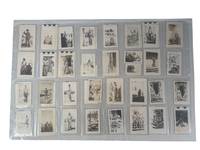
1943214881943. African American MilitaryWWII African American U.S. Army soldiers photo archive from Fort Huachuca Arizona 1943 documenting the lived experience of segregated military training during World War II. The archive shows Black army soldiers in training for the 93rd Infantry Division one of only two African American infantry divisions organized during the conflict. While the division is not explicitly named in the photographs contemporary handwritten annotations identify Fort Huachuca and the 1943 date strongly suggesting the men pictured were a part of that unit.<br /> Archive comprises 46 original black and white snapshot photographs measuring approximately 2.5 x 3.5 inches to 3.25 x 5 inches several bearing manuscript identifications of location and named soldiers. The images depict Black servicemen in standard World War II U.S. Army dress including M 1941 and M 1943 field jackets wool service uniforms garrison caps and M1 steel helmets. Rank insignia are clearly visible across multiple photographs including private first class corporal technician fifth grade staff sergeant and other non commissioned officer grades. Identified individuals include Sgt. Aaron C. Morton Sgt. William U. Dean Sgt. Lockleau and Sgt. Asbury the latter humorously photographed overturned on a barracks railing with a caption noting his antics. Several images show non commissioned officers posed with younger recruits underscoring internal mentorship and command structure within segregated companies. One photograph captures a soldier manning an M1919 Browning .30 caliber machine gun reflecting weapons training and infantry preparedness. Other images depict barracks life informal camaraderie saluting poses and interactions that convey unit cohesion during stateside training.<br /> <br /> Fort Huachuca functioned as a central site for Black military training during the years of segregation prior to the Korean War. The 93rd Infantry Division would later deploy to the Pacific Theater where elements engaged in security operations and combat patrols under conditions shaped by discriminatory assignment practices. These photographs document the formative training phase preceding overseas service capturing visible evidence of rank progression technical specialization and heavy weapons instruction within Black units. The presence of named non commissioned officers enhances the archive's value for regimental research. Minor curling and light edge wear to several photographs; manuscript annotations remain legible; overall very good. A substantial visual record of African American military service within the segregated U.S. Army during World War II mobilization. unknown
186458358Various places including Methuen Lawrence Andover Boston and Lowell Massachusetts 1864-1865. modern calf antique with original gilt-lettered label "Company Clothing" laid down on front panel. Folio. Two pages list "Price of Clothing Camp & Garrison Equipage Year 1864." Following are 204 pages one to a soldier listing name company place and date of enlistment articles of clothing issued value itemized date of clothing issue and signature of soldier and witness. In some cases date of discharge desertion or demise is also noted. A "colored" under cook is also listed along with the soldiers. hardcover
186358199Camp near Brooks Station Saturday April 11 1863. Fine original condition. 15-1/2 x 9-3/4 inches. ".Yesterday I witnessed one of the grandest sights that I ever beheld. Our whole corps was reviewed by the President Generals Hooker McLain Howard Steinway Secretary Seward and an innumerable host of Brigadier Generals and it was a sight that has paid me for coming to war." The spectacle is described in great detail. Private Penfield was soon to be captured at Chancellorsville spending 12 days as a prisoner of war before being exchanged. He survived the war to carry on his father's carriage making business in Monroe Connecticut and later founded a small private academy. unknown
171858200Various places including Camp Sprague Camp Brightwood and Douglas Hospital Washington D.C. July 10 1861 - June 7 1862. Fine original condition; postage clipped from envelopes. 8vo. The first letter is written from Hopeville Connecticut prior to enlistment. Subsequent letters describe the trip to Washington D.C. the camp there R.I. prisoners taken at Bulls Run; the capture of a spy bad news from "Missouria" entrenchment work rumors of the death of Jeff Davis passing within 30 ft. of Lincoln "He looks just like the pictures I have seen of him" and many other interesting details. Green had become a hospital orderly by early 1862 and describes hospital conditions sightseeing in wartime Washington and news from the battlefields. unknown
1934000530Borden Hants Hampshire England. Good. 1934. Original Wraps. On offer is a handwritten notebook-style instruction manual as titled on the cover "Fencing Lessons Foil - Sabre - Epee". The inside front cover has a pastedown fully identifying the writer: "Serjeant T. Wells of the 1st BATTALION OXFORDSHIRE & BUCKINGHAMSHIRE LIGHT INFANTRY. 19th Sept. to 13th Dec. 1934. Instructors Gartzen and Harkinson". An Index of the 67 page book shows that besides the lessons in the three sword types there are chapters on the Army Fencing Union Pitches and Arenas and Bayonet Team Competitions. We are led to believe that this book is also a manual for the Instructor trainee as most pages have three columns headed: Pupil Master Remarks. The remarks appear to be helpful hints for the Instructor in dealing with the pupil. There are a number of hand drawn illustrations including charts tables graphs and such plus there are quite a few little. 1.5" x 1" photographs which were cut from elsewhere and glued in as part of the lesson. In addition to the identification on the cover and inside front cover the back cover has Sjt. Wells handwritten address being we believe Bordon Hants Hampshire. Boards are cracked in the hinges and the netting shows but otherwise in very good shape. Provenance: From the library of a famed Hungarian fencing master instructor Olympian and coach. Superb fencing collectible.; Manuscript; 4to - over 9¾" - 12" tall; Manuscript Handdrawn HANDWRITTEN MANUSCRIPT DOCUMENT LETTER AUTOGRAPH DIARY JOURNAL LOG KEEPSAKE WRITER HAND WRITTEN DOCUMENTS SIGNED LETTERS MANUSCRIPTS HISTORICAL HOLOGRAPH WRITERS DIARIES JOURNALS LOGS AUTOGRAPHS PERSONAL MEMOIR MEMORIAL PERSONAL HISTORY FENCING FENCERS SWORD FIGHTING SABRE EPEE FOIL CUTLASS FENCING MASTER OLYMPICS OLYMPIAN antiquité contrat vélin document manuscrit papier Antike Brief Pergament Dokument Manuskript Papier oggetto d'antiquariato atto velina documento manoscritto carta antigüedad hecho vitela documento manuscrito papel. . paperback
535894to. 10 pages rectos only though Gould has sketched a map with troop placements and annotations on the verso of one leaf approximately 1200 words. Folded corners of two leaves chipped some edgewear. Some browning but quite legible throughout. After a quarter century during which time he published a history of his regiment John M. Gould. History of the First-Tenth-Twenty Ninth Maine Regiment; Portland 1871 Gould is still searching for the identity of the Confederate regiment that faced his near the East Woods at Antietam. Reporting to Law the commander of the 4th Alabama Infantry in that bloody battle Gould relates his findings in excruciating detail quoting correspondents from a dozen regiments commanders junior officers and non-commissioned officers from both sides who have given him conflicting reports almost all of which stand at odds with official published reports as to the deployment of their units in the chaos of Hood's counter attack against Hooker's corps that blunted the initial Union assault early on the morning of 17 September 1862. _"It is quite clear that Hooker's fragments did not offer very serious resistance to Hood's advance. As far as the East Wood is concerned the 10th Maine was their first real obstacle . Judge Smith of the 5th Texas writes of the exceedingly severe fight the 1st was having with some Union forces & that both parties were showing their best 'staying qualities.' Then Gen. Hood noticing a force coming out of the East Wood said to Capt. Turner 'You may attend to those people!' I can't understand who this Union force was . this succession of events is extremely puzzling." Gould closes by asking Law not to refer to printed sources all of which he was familiar with but asked for any personal comments on his long commentary. "At present it appears to me that Gordon's Brigade did not follow up Hood sharply or at all & that Ripley & Colquitt replaced Hood but the latter line was considerably south of yours. How does that accord with your idea" In addition to his history of the regiments he served in during the Civil War Gould contributed a number of articles to the "National Tribune" relating to Antietam and corresponded with veterans from both sides as referred to often in this letter seeking information on various controversies surrounding the battle. He later donated hundreds of these letters to the Antietan Battlefield Board. Detailed letters on major Civil War battles by participants even those fueled by recollections shaded by decades of discussion and dispute are uncommon in trade. <br/><br/> unknown books
1890000615bChicago Illinois IL. Good. 1890. Important archive of post Civil War GAR letters of the Chicago Mercantile Battery Light Infantry Chicago Illinois including two Medals of Honor winner's autographs Kretsinger and Stevens. This archive comes from the Dick Ransom estate from his former Civil War comrades specific to the GAR activities for the "Battery Boys." 1 Letter written on behalf of battery mate Dick Ransom by Gardner Willard and signed by 8 additional Chicago Mercantile Battery boys. Two of these signatures belong to Medal of Honor winners William Stevens and George Kretsinger. Other signatures include David Crego Orin Nash W. Brown Richard Powel Florus D. Meachem. Dated 1891. 2. Hand written letter in support of Dick Ransom and signed by battery mate J. H. Swan. 1891. 3. Dec. 15th 1890 carbon-type copy of a letter Ransom had sent to fellow battery comrade George Kretsinger. 4. great personal letter from fellow Battery comrade Henry C. Gray .single page ink dated Feb. 13 1888. 5. Wonderful period civil war letter from Battery Comrad to Ransom from Gardner G. Willard single sheet and dated during the civil war April 18th 1863. 6 wonderful 4 page letter from former Battery mate Chapin. Letter in ink dated Jan. 1876 being sent to Dick Ransom sharing Chapin's heart felt concern over the recent loss of Ransom's wife. 7. typed letter by Battery Mate James H. Swan in support of Dick Ransom. BIO NOTES: Dick Ransom; Residence Chicago IL; Enlisted on 8/7/1862 as a Private. On 8/29/1862 he mustered into Illinois Chicago Mercantile Light Artillery. He was discharged for disability on 3/24/1863. David R. Crego; First Lieutenant 8/29/62 through 2/6/63. Orrin Nash: 8/29/1862 through 7/10/65. William L. Brown : 8/29/1862 through 7/10/65. Richard Powel; On 10/5/1863 he mustered into IL Chicago Merc He was discharged for disability on 6/17/1864. Florrus D. Meachem; Served 8/29/1862 through 7/10/65. James H. Swan; Enlisted on 8/29/1862 as a 1st Lieutenant. George Kretsinger; Entered service at: Chicago Ill. Birth: Herkimer County N.Y. Date of issue: 20 July 1897. Citation: Carried with others by hand a cannon up to and fired it through an embrasure of the enemy's works. Medal of Honor Winner. Henry C. Gray; Enlisted on 8/15/1862 as a Private. Gardner G. Williard; Enlisted on 8/5/1862 as a Private. James H. Swan; Enlisted on 8/29/1862 as a 1st Lieutenant. Generally very good though a stain has affected a few items none touching signatures.; Manuscript; 4to - over 9¾" - 12" tall; KEYWORDS: HISTORY OF HANDWRITTEN MANUSCRIPT DOCUMENT LETTER AUTOGRAPH WRITER HAND WRITTEN DOCUMENTS SIGNED LETTERS MANUSCRIPTS HISTORICAL HOLOGRAPH WRITERS AUTOGRAPHS PERSONAL PERSONAL HISTORY MEMOIR MEMORIAL DIARY JOURNAL DIARIES JOURNALS LOG LOGS KEEPSAKE AMERICANA Civil War War Between the States VICKSBURG MANASSASS BULL RUN LINCOLN ILLINOIS MERCHANTILE ILLINOIS INFANTRY GAR GRAND ARMY OF THE REPUBLIC VETERANS . unknown
Signed, without inscription, by author upon title page. Hand-numbered copy #34 of 1,000. [8], 188 pages. Profusely illustrated with black and white photos. Printed upon glossy stock. "Illustrates the infantry badges of the Canadian Expeditionary Force of 1914-1919, backed by short sketches of the battalions they represented. Not only a unique reference work for the serious badge collector, but will also serve those who would begin a study of the Canadian Units that made the name of Canada second to none on the bloody battlefields of Flanders a half century ago." - John C. Newlands, Librarian/Curator - Royal Canadian Military Institute. "The format is simple, precise and packed with information of the type the reader wants. The photography is excellent and the text complete and easy to digest. Will become a standard reference book from this time on, and deservedly so." - Edward Denby, The "Musket and Doubloon", Antique Arms Dealer, Toronto. Bookplate of prior owner inside front board, otherwise contents clean, bright and unmarked. Light wear to decorated green cloth-covered boards. Binding tight. A high-quality copy of this essential reference. COOKE (3E) p.196. Book
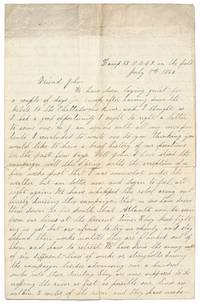
1864438776Atlanta Georgia 1864. Very Good. Autograph Letter Signed. Folio. 4pp. Partial splitting at the edges of one vertical and two horizontal folds about very good. A detailed and historically important long letter written in the field by Union soldier Harvey Rodgers just two weeks before he was killed at the Battle of Atlanta on July 22 1864.<br /> <br /> Rodgers was mustered into service in 1861 as a Corporal in the 54th Regiment Ohio Volunteer Infantry Zouaves Company A commanded by 1st Lt. Judson McCoy referred to as “Jud†in the letter. In the letter written to his “Friend John†on four easily legible folio pages Rodgers describes Confederate and Union Army maneuvers and skirmishes immediately after the Battle of Kennesaw Mountain fought from June 19 – July 2 1864 during the lead-up to the Battle of Atlanta which began on July 21st:<br /> <br /> “… Well John I have stood the campaign well this Spring … We have whipped the rebel army out finely … that is we have drove them so far South that Atlanta can be seen from our lines … I suppose you have heard about our making a charge on the 27th June … I do not wish to be in anymore such places … we lay in camp until the 2nd of July when our Division moved … very near due south of the Kennesaw mountain. That night Jud with our Company was on picket. We heard the cars very plain but did not think they the rebel army were evacuating the mountain and falling back … Next morning … We did not move forward until two o’clock when we advanced our lines two miles finding a small force of Cavalry in our front which we routed by charging them. The Regt. lost 1 killed 14 wounded …â€<br /> <br /> He describes a second skirmish on July 4th at which his Company fought in support of the Union army’s 16th Corps to advance Union lines and continues:<br /> <br /> “… On the 5th we were moved back again and brought further around on the right where we now lay. Our front lines are two miles further on. The rebels have a line of works between them and the Chattahoochee river … I expect we will have a pretty hard time before we get there and a hard time to cross the river …â€<br /> <br /> The Battle of Atlanta commenced on July 21 1864. Both Harvey Rodgers and Union Maj. Gen. James B. McPherson were killed during the battle on July 22nd. Rodgers' letter thus ends poignantly:<br /> <br /> “Well John my time is fast rolling around now and I begin to think I will soon get home again. Only two months and 8 days more … Still in that short time there are many dangers to undergo. I may be called on to go into several more charges. Perhaps of some one not to come out alive … There has not more than half a dozen days passed since the 10th of May but what we have been under the sound of artillery. The troops appear to be pretty well worn out and wish for the campaign to close yet they all want to get into Atlanta first …â€<br /> <br /> A compelling and ultimately heartbreaking eye witness account of General Sherman’s Atlanta campaign during the summer of 1864. Longer quoted extracts from the letter are available. unknown
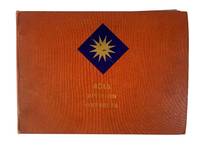
1944220931944. 40th Infantry Division Pacific campaign photograph album documenting combat operations and daily military life of U.S. Army forces during World War II. The 40th Infantry Division served extensively in the Southwest Pacific Theater participating in campaigns across New Guinea New Britain and the Philippines as Allied forces advanced against Japanese defensive positions. The photographs record amphibious landings artillery operations destroyed towns and the collaboration between American troops and Filipino guerrilla forces during the campaign to liberate the Philippines. The album therefore documents the operational environment of Pacific warfare including jungle terrain fortified Japanese defensive networks and the logistical systems required to sustain prolonged combat across island battlefields.<br /> <br /> Photograph album containing approximately 200 original black and white photographs documenting operations of the 40th Infantry Division during the Pacific campaigns of World War II. Each photograph is sequentially numbered in white ink at the lower corner and corresponds to descriptive entries in a photographic index within the album. Early images depict American Red Cross workers disembarking from landing craft and greeted by U.S. soldiers illustrating the presence of female support personnel assigned to medical and relief operations. Additional photographs record amphibious landing scenes aerial views of destroyed towns in Luzon artillery and tank operations and soldiers operating mounted machine guns overlooking jungle valleys. Several images depict Japanese military casualties reflecting the intense close combat that characterized fighting across the Pacific islands. A printed military map within the album shows Japanese tunnel and cave fortifications in the Zambales Mountains illustrating defensive positions encountered during operations in the Philippines.<br /> <br /> The album also documents logistical and civilian dimensions of the campaign. Photographs show ships unloading cargo Filipino guerrilla units marching through urban streets and groups of local porters assisting Allied forces in moving supplies through mountainous terrain. Weapons and equipment visible in the images include field artillery pieces mortars and armored vehicles such as the M4 Sherman. One photograph depicts African American soldiers accompanied by scout dogs operating in jungle terrain illustrating the presence of Black servicemen serving within the segregated structure of the wartime U.S. Army. Other photographs show tent encampments mess areas interactions with local populations and the recovery of prisoners of war following combat operations. The photographs collectively present a visual record of combat logistics and daily military life during the Pacific campaigns. Album contains approximately 200 photographs with indexed numbering. Light handling wear visible to album and photographs consistent with wartime field compilation. Overall condition very good. unknown
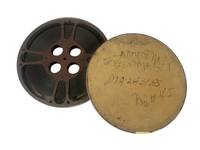
1945232061945. Capra Frank. Japanese-Americans a 1945 wartime military screen magazine segment film reel highlighting Japanese American service in the U.S. Army's information and morale boosting film distributions during the final year of World War II. Produced for exhibition to servicemen as part of Army-Navy Screen Magazine No. 45 the segment is also an example of the wartime contributions of legendary Italian-American filmmaker Frank Capra one of Hollywood's most influential directors best known for It Happened One Night Mr. Smith Goes to Washington and It's a Wonderful Life. During World War II Capra became a major figure in official U.S. military filmmaking directing or supervising films that translated government policy and Allied war aims into accessible emotionally forceful cinema for soldiers and civilians. Here his Army film work presents Nisei troops not as an isolated human-interest subject but as participants in a broader program joining military projection democratic rhetoric and controlled public acknowledgment of Japanese American loyalty after mass incarceration. The film's focus on the 100th Infantry Battalion the 442nd Regimental Combat Team battlefield casualties and a widow receiving the Silver Star shows how Capra's wartime production apparatus helped frame Japanese American military service for uniformed audiences in 1945.<br /> <br /> Capra Frank producer. Japanese-Americans. Segment from Army-Navy Screen Magazine No. 45. U.S. Army Signal Corps Army Pictorial Service 1945. Black and white sound film reel 16mm. Present on a large reel in metal can the lid handwritten in grease pencil "ARMY/NAVY SCREEN MAG." and "NO #45." The identified segment shows a spokesman in Hawaii praising Japanese Americans in the U.S. Army a war widow receiving a Silver Star scenes of Nisei troops in the Italian campaign the 100th Infantry Battalion entering Livorno wounded men being evacuated and General Mark Clark citing soldiers of the 34th Infantry Division. The physical reel remains tightly wound; the present housing and handwritten can notation directly support identification to issue no. 45.<br /> <br /> Issued at a time when Japanese Americans were serving in segregated units even as many of their families remained confined under wartime exclusion policy the segment shows how Capra's Army film production participated in reconciling racial tension and patriotic messaging to American servicemen. Japanese American servicemen are honored here as heroes and patriots. Light wear and dust to can; reel housed and tightly wound; surface inspection only. A strong piece of World War II military film notable both for its Japanese American subject matter and as a sample of Frank Capra's influential wartime propaganda work for the U.S. Army. unknown
191964551Bordeaux France: V. Cambette 1919. Presumed first edition/first printing. Wraps. Good. No dust jacket as issued. Cover has some wear scuffing and soiling. 16 pages. Page 46 is signed by Brant E. Wilcox Captain 327th Infantry Personnel Adjutant and Henry E. Hackney Captain 327th Infantry Adjutant Not in Dornbusch! Likely to have had only a limited number printed. This roster of officers compiled from records of the Personnel Office 327th Infantry was published to further cement the bonds of fellowship and friendship between the officers of this regiment to honor the memory of those to made the Supreme Sacrifice and to provide those officers who were deprived of the privilege of serving overseas with some idea of the regiment's engagements with the enemy. The Regiment was organized at Camp Gordon on 2 Sept. 1917. The Regiment participated in the St. Mihiel Offence and the Meuse-Argonne Offensive and claime the longest contiuous time that any regiment of the American Expeditionary Forces participated in any offensive. V. Cambette paperback
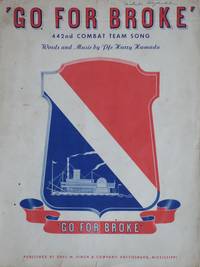
1944List2436Hattiesburg: Earl M. Finch 1944. Sheet music measuring 12 x 9 inches 4 pp. Signature of a Nabuko Hayashida on front cover. Slight tears at fold some toning two small pinholes very good overall quite attractive. Very Good. In Hawaii in May 1942 a battalion of Nisei volunteers was assembled for service in World War Two despite earlier failures of efforts to recruit Japanese-Americans due to the Army’s labeling of Nisei recruits as 4-C enemy aliens. Designated as the 100th Infantry Battalion they were deployed to North Africa in June 1943 integrating with the 34th Division in active combat. Their subsequent deployment to Italy in September 1943 exposed them to intense warfare earning them the moniker of the "Purple Heart Battalion" due to their notably high casualty rate.<br /> <br /> In January 1943 the U.S. War Department officially declared the establishment of the segregated 442nd Regimental Combat Team RCT which was comprised of Nisei volunteers originating from Hawaii and the mainland. The culmination of this initiative transpired in June 1944 when the 442nd RCT merged forces with the 100th Infantry Battalion in Europe subsequently absorbing the latter into its structure. The notable achievements of Nisei soldiers in combat operations prompted the reinstatement of the draft in January 1944 specifically targeting Nisei detainees to augment the ranks of the 442nd. Over time the 442nd RCT expanded to encompass the 2nd 3rd and 100th Battalions; the 522nd Field Artillery Battalion; the 232nd Engineering Company; the 206th Army Band; Anti-Tank Company; Cannon Company; and Service Company. <br /> <br /> Offered here is a very scarce piece of sheet music entitled “Go For Broke†which was written by the Hawaiian musician Harry Hamada reflecting the slogan of the 442nd and performed by Shelby and others during the war as part of efforts to boost morale. Hamada would feature in the 1951 movie “Go For Broke†as Masami alongside several other veterans of the 442nd. This publication of “Go For Broke†is from 1944 seven years before the movie’s release. The piece is dedicated to Colonel C.W. Pence. Hamada was a Hawaiian musician who performed with a band called the Shelby Hawaiians or the Shelby Serenaders. They performed as early as 1943. The Hattiesburg Mississippi merchant Earl M. Finch who ran an Army and Navy store close to Camp Shelby befriended Hamada and other members of the 442nd and acted as a sponsor for the group and eventually published this version despite his business being a dry goods merchant house and not a publishing house. The group with the support of Finch performed throughout the country to lift morale. At some point Hamada penned this composition likely in 1944 as we find no reference to it in 1943 articles and Finch published it - Hamada’s composition would become the theme song of the 442nd and Hamada would perform at the Halloran General Hospital in New York and the Walter Reed Hospital in Washington D.C. in 1944 likely performing this composition. Another composition called “Go For Broke†exists as well and it is unclear to what degree Hamada’s work caught on among the regiment. <br /> <br /> We find two records of Finch’s published version of the composition one listed as part of an online remembrance of the 442nd by the Smithsonian Institution https://americanhistory.si.edu/explore/stories/day-remembrance-70-years-after-executive-order-9066 which appears to have been on loan from the National Japanese American Historical Society and another copy held at Stanford though not listed in OCLC. Finch’s story is also interesting and is the subject of a remembrance on a 100th Battalion History page online https://www.100thbattalion.org/history/stories/earl-finch/. We find no copies listed in OCLC. Overall a very scarce piece of Japanese-American wartime history. Earl M. Finch unknown
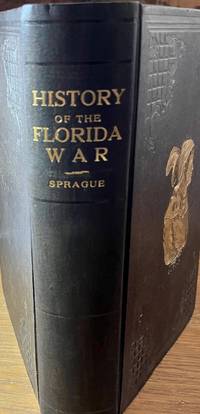
184834406New York: D. Appleton and Company 1848. Hardcover. Good. Octavo. 1 557 pages 1 page blank 32 pages publisher catalog 1. Frontispiece and Illustrations. Folding map of lower Florida. Restored. Dark brown cloth hardcover with decorative blind stamped borders and gilt illustration of Oseola on the front cover. Gilt title and publisher name stamped on the newer brown cloth spine. Frontispiece title page prliminary pages folding map and publisher catalog in back have moderate foxing. Light toning to the rest of the text. Map has a very small chip bottom edge and an approx. A 5"-6" closed split on a lower fold below Key Largo with no loss of content. D. Appleton and Company hardcover
1919216951919. Victory: History of the 805th Pioneer Infantry by Paul S. Bliss published in 1919 documents the service of an African American regiment of the American Expeditionary Forces during the final year of World War I. The volume records the organization deployment and wartime duties of the 805th Pioneer Infantry a Black regiment formed during the rapid expansion of the United States Army in 1918. Composed of African American enlisted soldiers serving under white officers in a segregated military structure the regiment deployed to France during the closing phase of the war and performed engineering construction and logistical work in areas affected by active combat operations. Regimental histories such as this were produced soon after the war to preserve the institutional record of individual units and to commemorate the contributions of the soldiers who served within them.<br /> <br /> Bliss Paul S. Victory: History of the 805th Pioneer Infantry American Expeditionary Forces. St. Paul Minnesota: Paul S. Bliss 1919. First edition. The book presents rosters portraits and photographs documenting the regiment's organization and activities while serving in France. The 805th Pioneer Infantry was organized at Camp Funston Kansas in July 1918 and deployed overseas during the Meuse Argonne campaign. Although classified as a pioneer unit responsible for construction and engineering tasks the regiment often worked in forward operational areas exposed to enemy fire. Photographs in the volume depict companies of the regiment in formation including an image titled "Company C at Brieulles sur Meuse" along with scenes of soldiers repairing damaged structures posing with captured German artillery and assembling for inspection during a visit by General John J. Pershing. Portrait collages identify numerous enlisted men and officers of the regiment while an illustrated frontispiece portrays African American soldiers advancing with fixed bayonets across a shell damaged battlefield landscape.<br /> <br /> Regiments such as the 805th Pioneer Infantry formed part of the broader mobilization of African American soldiers during World War I when more than 350000 Black men served in the United States Army in segregated units. Pioneer infantry regiments were frequently assigned labor and engineering duties supporting front line operations including road construction trench repair and logistical supply work. Printed regimental histories produced after the war served as commemorative records preserving the service of these units and documenting the participation of African American soldiers in the American Expeditionary Forces. Volume bound in original embossed leather boards with gilt and blind stamped decoration and heavy card stock leaves printed on recto only. Includes color printed pages depicting regimental and national flags. Spine worn and partially split with rubbing to board edges and scattered foxing and toning to leaves; contents remain intact. Overall good condition. The book provides an extensive visual and documentary record of an African American regiment serving in the United States Army during World War I. unknown
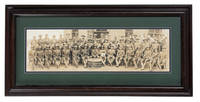
1918List1733Ohio 1918. Silver gelatin photograph in glass-fronted frame image measures 24 ¼ x 6 ⅞ inches. Matted and framed not examined out of frame. The 317th Engineer’s Band was a part of the 317th Engineer Regiment an element of the 92nd Division which was composed of over 15000 African-American soldiers from across the country. The 92nd was one of two African-American regiments to fight in the war the other being the 93rd and was unique in that it was under the command of the United States. The 317th Engineer Regiment was organized in November 1917 at Camp Sherman Ohio several months before this photograph was taken and saw action in Europe as part of the 92nd. Camp Sherman was the third largest training camp in the country at the time with over 2000 buildings capable of housing 40000 men and 12000 horses. As well as being the training site for units of the 92nd also known as the Buffalo Division it served as the training site entire 83rd 84th 95th and 96th divisions. It later became a trade school. <br /> <br /> The 317th Engineer’s Band performed locally around Chillicothe and at other military functions eventually becoming known according to a contemporary newspaper account as one of the best bands in the army. They traveled to Indianapolis to perform in March of 1918. A New York Times article from 1918 mentions them briefly and describes them as ‘famous’ but does not elaborate. They performed at the ‘Colored Club’ in Chillicothe a social club for African-American servicemen in a converted hotel. We find no other record of this image. unknown