1 572 résultats
227708Lyon, Vitte, 1894 in-8, 270 pp., portr., ill. in-t., percaline rouge, fer d'institution religieuse sur le premier plat (reliure de l'époque). Dos passé, petites taches sur la reliure. Manque la carte.
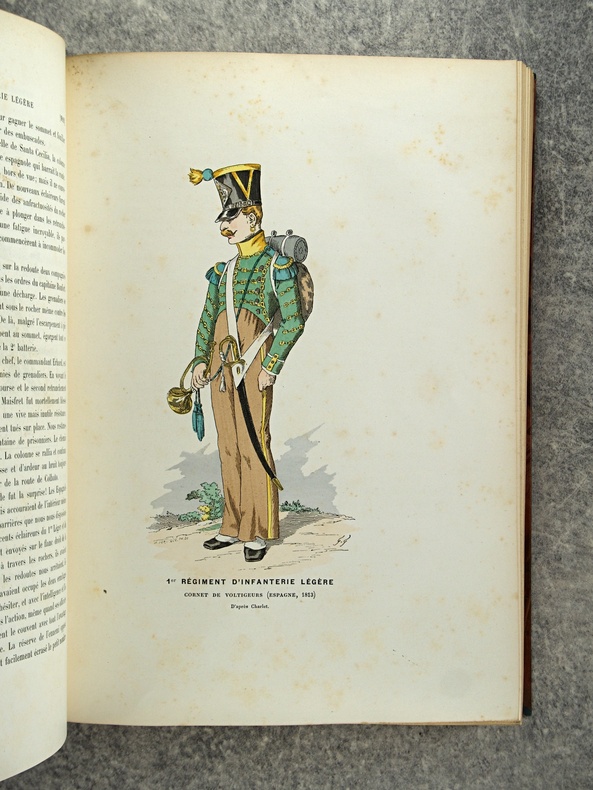
181772Paris, E. Flammarion, 1894 gr. in-4, X-[1]-752 pp., très nombreuses pl. dt en couleurs (17 portraits, 21 dessins, 24 uniformes), et cartes in-t., demi-chagrin rouge, dos à nerfs orné (reliure de l'époque). Coiffes usées avec accroc à la coiffe supérieure. Envoi.
18941985PARIS. E. FLAMMARION, EDITEUR. 1894. GRAND ET FORT IN-4 (22,5 X 31 X 6,5 CENTIMETRES ENVIRON) DE XI + 752 ET (4) PAGES, RELIURE D’EPOQUE 1/2 CHAGRIN ROUGE, DOS A CINQ NERFS, TITRE DORE, COUVERTURE ILLUSTREE CONSERVEE. ILLUSTRE DE 75 CROQUIS ET CARTES DANS LE TEXTE, DE 21 REPRODUCTIONS IN ET HORS TEXTE DE 24 PLANCHES HORS TEXTE EN COULEURS DE DRAPEAUX ET UNIFORMES. EDITION ORIGINALE. (HANOTEAU ET BONNOT. 95-96).- FILIATION : ROYAL-ITALIEN, CHASSEURS ROYAUX DE PROVENCE, 1° DEMI-BRIGADE LEGERE, 1° REGIMENT D’INFANTERIE LEGERE, REGIMENT SUISSE, 76° DEMI-BRIGADE DE BATAILLE, 76° DEMI-BRIGADE DE LIGNE, 76° REGIMENT D’INFANTERIE DE LIGNE, 1° REGIMENT D’INFANTERIE LEGERE, 76° REGIMENT D’INFANTERIE DE LIGNE.- GUERRES DE HOLLANDE, DE LA LIGUE D’AUGSBOURG, DES SUCCESSIONS D’ESPAGNE, DE POLOGNE ET D’AUTRICHE, DE SEPT ANS, PACIFICATION DE LA CORSE, CAMPAGNE SUR LE RHIN (1792), DANS LES PYRENEES (1793 ET 1794), CATALOGNE (1794) ESPAGNE (1795), ITALIE (1795-1796), DANUBE ET SUISSE (1799), CAMPAGNE DE 1800, CAMPAGNE D’ALLEMAGNE, GUERRE D’ESPAGNE, CAMPAGNE DE FRANCE EN 1814, CAMPAGNE DE 1815,- ARMEE DU NORD (1794), ARMEE DE L’OUEST (1795-1796), ARMEE DE RHIN ET MOSELLE (1796-1797), CAMPAGNE D’HELVETIE (1798-1799), CAMPAGNES D’ALLEMAGNE (1800, 1805, 1809 ET 1813), CAMPAGNE DE PRUSSE (1806-1807), GUERRE D’ESPAGNE (1808-1813), CAMPAGNE D’ESPAGNE (1823), CAMPAGNE D’ALGERIE (1830). GUERRE D’ITALIE (1859), GUERRE FRANCO-ALLEMANDE DE 1870-1871.BON EXEMPLAIRE.
20074Lyon, Vitte 1894 in 8 br.sous couverture rempliée illustrée, 270 p. illustrations nb ht de P.Faure dont un portrait du Capitaine Cullet en frontispice, carte de Sébastopol, souvenirs du Capitaine Octave Cullet de Belley (Ain),
189654300ABBerlin, Ernst Siegfried Mittler und Sohn : Königliche Hofbuchhandlung, 1896. gr8° (24x16), X, 224 S., mit 16 Skizzen im Text, OKart (Brosch), 2., vermehrte Aufl. etwas berieben und anstaubt, fest sauber und gepflegt,
1863000013036Philadelphia: J.B. Lippincott & Co 1863. Later printing. Hardcover. Very Good. 32mo. 14 cm x 9 cm. 4 5-450 14 pages of publisher's advertisements 2 pp. Green pebble-grain publisher's cloth with the symbol of the War Department and several borders in blind on both boards gilt lettering and the War Department's symbol in gilt on the spine. Illustrated with a folding frontispiece and with 77 additional plates many of which are folding all illustrations and diagrams done in black and white. Completing the title page: "Including Infantry of the Line Light Infantry and Riflemen. Prepared under the Direction of the War Department Authorized and Adopted by The Secretary of War May 1 1861. Containing The School of the Soldier; The School of the Company; Instruction for Skirmishers; the General Calls the Calls for Skirmishers and the School of the Battalion; Including the Articles of War and a Dictionary of Military Terms. Broadfoot 591. With a contemporary inscription on the free front endpaper: "Mr. James Reynolds Book O U or Oct. 15th 1862". According to records found on Ancestry.com a James Reynolds enlisted in August of 1862 into the 25th Infantry of Connecticut and mustered in on November 11 of 1862. The entire regiment mustered out in Hartford on August 26th of 1863. The regiment saw action near Baton Rouge and helped carry out the siege of Port Hudson. A fascinating volume of U.S. military history crucial to the volunteers and drafted soliders of the Union Army. The manual instructs the soldiers on how to interpret bugle calls with sheet music printed inside how to engage in combat and on the general rules of conducting war. Spotting to the front board some of the plates with a wrinkle or two the frontispiece partially trimmed resulting in only nine of the ten companies depicted actually present. J.B. Lippincott & Co hardcover
2011DADAX1610042190Brand: Paladin Press 2011-02-01. 2011 ed. paperback. New. 5.51x0.00x8.50. Buy with confidence. Excellent Customer Service & Return policy. Brand: Paladin Press paperback
1610042190.Gpaperback. Good. Access codes and supplements are not guaranteed with used items. May be an ex-library book. paperback
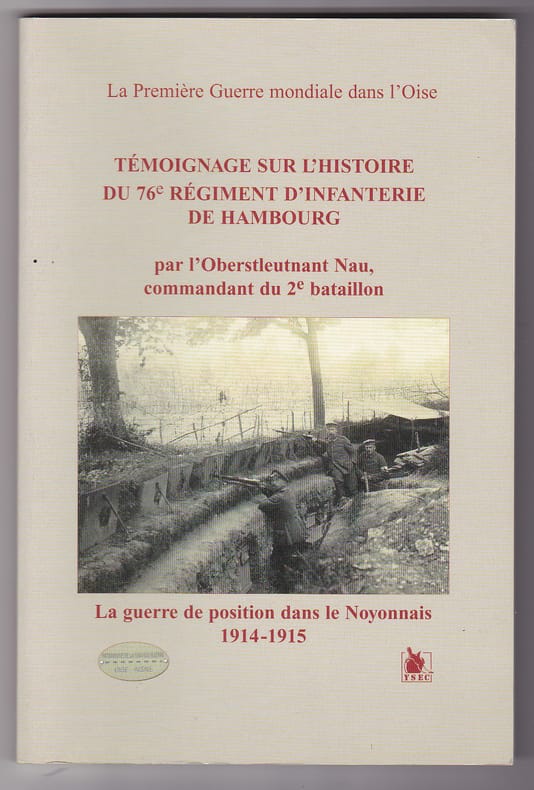
2002Ze32YSEC 2002 In8 broché in 8 - 80 pages - nombreuses illustrations - très bon etat - port rapide et soigné
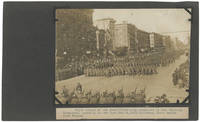
1919CAT0119New York: Underwood and Underwood 1919. First Edition. Gelatin silver prints 7 ¾ x 5 ½ inches each on 11 ½ x 7 inch black paper mounts captioned with affixed text. Very Good. Two WWI-era press photographs related to the Negro 15th Infantry Division of the New York National Guard a.k.a. the 369th US Infantry Regiment and their white commander Colonel William Hayward. One photograph shows the division on parade in New York following their return from combat duty in France in 1919 the other is a well-known image of Hayward who organized the all-black unit and served as its leader. Fighting for a record-breaking 191 consecutive days alongside French troops in the trenches the regiment became known as the "Harlem Hellfighters." <br /> <br /> The opportunity for African-Americans to serve in WWI arose from the Selective Service Act of 1917 which drafted all men between the ages of twenty-one and thirty. Special segregated training camps were established and units were formed. The US National Archives states that 200000 African-Americans served in Europe during WWI but only 42000 saw combat. When the 15th Infantry arrived in France in 1918 Hayward was committed to the idea that his unit would fight on the front lines. After General Pershing refused to integrate them with the full US army Hayward pushed for another assignment under French command. Unlike many other segregated divisions in WWI the 15th aka 369th was eventually sent to the trenches. Its members' distinguished service brought honor and fame. Before leaving the US in 1917 the regiment had not been allowed to participate in the New York National Guard's farewell parade. When they returned victorious Hayward ensured they were publicly honored. <br /> <br /> Both with various press stamps to versos. Small closed tear of about a half inch to upper edge of parade picture good overall. Hayward portrait with some rippling at edges very good overall. Underwood and Underwood unknown books
1919CAT0119New York: Underwood and Underwood 1919. First Edition. Gelatin silver prints 7 ¾ x 5 ½ inches each on 11 ½ x 7 inch black paper mounts captioned with affixed text. Very Good. Two WWI-era press photographs related to the Negro 15th Infantry Division of the New York National Guard a.k.a. the 369th US Infantry Regiment and their white commander Colonel William Hayward. One photograph shows the division on parade in New York following their return from combat duty in France in 1919 the other is a well-known image of Hayward who organized the all-black unit and served as its leader. Fighting for a record-breaking 191 consecutive days alongside French troops in the trenches the regiment became known as the “Harlem Hellfighters.†<br /> <br /> The opportunity for African-Americans to serve in WWI arose from the Selective Service Act of 1917 which drafted all men between the ages of twenty-one and thirty. Special segregated training camps were established and units were formed. The US National Archives states that 200000 African-Americans served in Europe during WWI but only 42000 saw combat. When the 15th Infantry arrived in France in 1918 Hayward was committed to the idea that his unit would fight on the front lines. After General Pershing refused to integrate them with the full US army Hayward pushed for another assignment under French command. Unlike many other segregated divisions in WWI the 15th aka 369th was eventually sent to the trenches. Its members' distinguished service brought honor and fame. Before leaving the US in 1917 the regiment had not been allowed to participate in the New York National Guard’s farewell parade. When they returned victorious Hayward ensured they were publicly honored. <br /> <br /> Both with various press stamps to versos. Small closed tear of about a half inch to upper edge of parade picture good overall. Hayward portrait with some rippling at edges very good overall. Underwood and Underwood unknown
19184144France: unknown 1918. Postcard measuring 90 x 146 mm. printed on both sides; with a string tied folding Christmas card containing two leaves 113 x 143 mm. A few ink spots affect the postcard yet both items are in good condition. Two pieces of ephemera from the 23rd Battalion A.I.F. created just after the armistice of 11 November 1918. </p> <p>Raised in Victoria in March 1915 the 23rd Battalion served at Gallipoli between September to December of that year before redeployment to France. In July of 1916 the battalion suffered a horrific casualty rate over ninety percent during the battles of Pozieres and Mouquet Farm. By mid-1918 the 23rd was rolling back the German line at Amiens and Hamel a precursor of defeat and the armistice.</p> <p>The postcard reads "Just a Plane Good Wish I am Dropping" and is inscribed by one Frederick to Martha and Dad. Dated November 16th the card was sent just five days after the armistice was declared. The Christmas card contains two printed leaves depicting Mont de Cats in France opposite gum trees in Geelong.</p> <p>Instances of quality First World War ephemera are becoming increasingly scarce on the market. unknown unknown
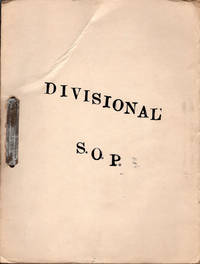
195245343Fort Benning Georgia & Korea: Privately published by the 3rd Infantry Division & the 15th Infantry Regiment 1952. 1952. KOREAN CONFLICT. First editions. Original soft covers binder punch-bound at gutter margin with steel sliding Accu-fasteners numerous annotations and corrections in ink and pencil from the library of Hiro Wakabayashi 1930-2017 Japanese-American and Korean Conflict veteran with his name in ink on title page. Volume one Divisional S.O.P. has approximately 250 pp. separate paginations per section; Volume two Regimental S.O.P. has approximately 200 pp. separate paginations some in pencil pen tipped-in or mounted form samples. First volume is a mimeograph copy; second volume is typescript copy on onion skin paper tipped-in and mounted samples forms graphs charts diagrams. Regimental Standard Operating Procedures manuals for logistics during the Korean War for the Third Infantry Division 15th Infantry Regiment. The 15th Infantry Regiment sailed for Korea from Fort Benning Georgia in August 1950 covered the withdrawal of X Corps from the Chosin Reservoir in 1950 fought to the 38th parallel in 1951 fought battles in the Kumsong sector until the armistice was signed in 1953. These logistics manuals detail all of the procedures for supply officers transportation engineering supply operations ordnance quartermaster division including forms procedures and samples of all possibilities with Army rules governing each instance. Of particular interest are the extended sections on procedures and operational issues for MASH units covering evacuation hospitals medical and dental services disease prevention sanitation medical reports physical examinations and even psychiatric services and procedures. The 15th United States Infantry Regiment is a parent regiment with lineage back to the American Civil War first activated in Wheeling West Virginia. During the Korean War the 3rd Division was known as the Fire Brigade due to its rapid response to crises and received ten Battle Stars with eleven members receiving Medals of Honor. Privately published by the 3rd Infantry Division & the 15th Infantry Regiment, 1952. paperback
B9781020797637Hardback. New. hardcover
1120047323.Gpaperback. Good. Access codes and supplements are not guaranteed with used items. May be an ex-library book. paperback
A9781166331504New. unknown
2010DADAX1162055944Kessinger Publishing 2010-05-23. hardcover. New. 7.00x1.06x10.00. Buy with confidence. Excellent Customer Service & Return policy. Kessinger Publishing hardcover
B9781166331504New. unknown
1166331504.Gpaperback. Good. Access codes and supplements are not guaranteed with used items. May be an ex-library book. paperback
1162055944.Ghardcover. Good. Access codes and supplements are not guaranteed with used items. May be an ex-library book. hardcover
026799107X.Ghardcover. Good. Access codes and supplements are not guaranteed with used items. May be an ex-library book. hardcover
133083402X.Gpaperback. Good. Access codes and supplements are not guaranteed with used items. May be an ex-library book. paperback
19192702New York: Knickerbocker Press 1919. fair. 425 illus. roster boards weak boards quite scuffed top edge of spine threadbare. Pages 24-29 contain brief references to the Spanish-American War and the Philippine Insurrection. Part of Chaffee's 3rd Brigade served in Cuba 1898. Pages 193-196 contain a brief discussion of the service of Col. Alfred Aloe with the 12th in the Philippines for six years; he was twice recommended for brevet for gallantry. Pages 197-199 discuss the service of Lt. Col. Homer N. Preston with the 21st Infantry in the Philippines in 1905-1906; Col. Preston "took an active part in suppressing the Pulajan Insurrection on the island of Samar. " Knickerbocker Press hardcover
191937952New York: Twelfth U.S. Infantry 1919. First Edition. First Printing. fair to poor. 425 illus. stamp inside front board boards weak worn and soiled badly shaken. Colonel Alfred Aloe was the commander of the Twelfth U.S. Infantry at the time this book was published. Twelfth U.S. Infantry hardcover