1 088 résultats
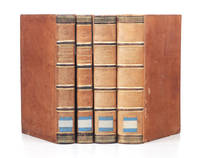
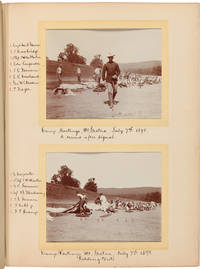
1898WRCAM54683Various places including Pennsylvania Virginia at sea New Jersey and Puerto Rico 1898. 171pp. with 342 photographs. Four large quarto photograph albums. Matching contemporary three-quarter crimson morocco and cloth front covers gilt. Minor shelf wear and some rubbing. Images in overall very good condition. An amazing assemblage of photographs documenting the Spanish-American War experiences of the First Troop Philadelphia City Cavalry which was at that time the oldest volunteer military unit in continuous service to the United States. The photographs are arranged chronologically in four contemporary photo albums with the images occasionally annotated in a contemporary hand and including the identification of numerous members of the Troop. <br> <br> The first volume opens with images of Mt. Gretna Pennsylvania "where troops were sworn into U.S. service May 7th 1898 by Maj. Thompson U.S.A." The photographs record field exercises camp building and tent organization at Camp Hastings cavalry drills an image of "Capt. Groome reading the Articles of War to Troop June 1898" a "first arrival of government horses" several shots of men training and "throwing" their horses shooting practice "Capt. Groome assigning Government horses to Troopers" and various shots of the men at work and even some play. Over the course of the album the names of numerous soldiers are recorded below several of the photographs. <br> <br> The second album opens with several photographs of the Troop striking their tents in preparation for leaving Camp Hastings at Mt. Gretna headed for Camp Alger at Dunn Loring Virginia. Here the Troop was ordered to increase their enlistment numbers. At Camp Alger the Troop was also fitted out with federal supplies and assigned to the Second Army Corps commanded by Maj. Gen. William Graham who is pictured here. Other photographs capture the camp scene at Alger "the First Troop picket line" the Troop receiving their federal-issue khaki uniforms the Troop at roll call and some shots featuring African-American helpers. <br> <br> In late July the Troop was sent to Newport News and several photographs record their brief time there with about a dozen shots of their temporary camp. On July 28 1898 the Troop left Virginia on the transport ship MASSACHUSETTS bound for Puerto Rico. Several images here capture the frenetic loading of the troops and their horses onto the ship with the remaining half dozen or so shots recording the Troop's time on board. <br> <br> The third album picks up where the second left off with the First City Troop embarked on the transport ship MASSACHUSETTS headed for Guanica Puerto Rico. Shipboard activities captured here include a few shots of groups of men being showered with water hoses. Several shots record the arrival of the men in the port of Guanica where they encounter the hospital ship NUECES which reports of the news of the "surrender of Ponce." After the men disembark they pitch their camp around Cathedral Virgin del Carmen on August 5. The next day several photographs record the unloading of horses and stores in the harbor at Ponce. The remaining thirty-eight photographs in this volume record scenes in the interior of Puerto Rico and are the most heavily annotated of the four albums. The images record scenes from the "road from Port of Ponce to Ponce" several scenes capturing a market day in Ponce and recording numerous native islanders the Troop's "temporary camp about 2 miles beyond Ponce" the "Troop wagon leaving camp beyond Ponce to join wagon train for Guayama" on August 8 a shot of the Troop's wagon "on road to Guayama in a Porto Rico mudhole" images of the wagon train to Guayama with the H Troop 6th U.S. Cavalry the "Point of Advance Guard entering Guayama within the lines" the Troop itself "entering Guayama passing General Brooke's Headquarters" a "View of First Troop Phila. City Cavalry U.S.V. Camp at Arroyo August 10th to 6A.M. Aug. 13th 1898" with the last ten images recording the camp or the streets at Arroyo. <br> <br> The fourth album documents the Troop's voyage home to Philadelphia. This time they take passage on the transport ship MISSISSIPPI and about half of the images record their voyage on board. On Sept. 10 1898 they reach Jersey City in New York harbor where they camp for a short time before returning to camp in Pennsylvania where the album ends. A couple of months later all three officers and the ninety- eight enlisted men of the First City Troop were mustered out of federal service for the Spanish-American War. <br> <br> Originally founded in 1774 by twenty-eight Philadelphia patriots as the "Light Horse of the City of Philadelphia" the First Troop of Philadelphia Cavalry is the oldest mounted military unit operating in continuous service to the American republic being the first volunteer cavalry troop organized in defense of the colonies. Among the Troop's original founders was John Dunlap printer to Congress from 1778 to 1789 publisher of the first American daily newspaper and the first printer of the Declaration of Independence. Most of the earliest members were similarly notable professional men of Philadelphia. The Troop served with valor in the American Revolution the War of 1812 the Mexican- American War the Civil War the Spanish- American War and every major American war through the Korean War. <br> <br> The present albums present a unique and important visual record of the First City Troop's activities before during and on the way home from the Spanish-American War. hardcover books
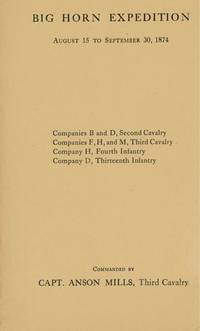
187453597N. P.: Privately printed n. d. ca 1874. 1874. WYOMING TERRITORY. First edition. 8vo. Original printed wrappers 15 pp. large fold-out map. The map traces the route of the Big Horn Expedition. "The Big Horn Expedition of 1874 was a significant military operation involving the United States Army against the Lakota Sioux and Cheyenne Indians in the Wyoming and Montana Territories. This expedition was part of the broader conflicts between the U.S. government and Native American tribes during that period. The operation aimed to assert control over the region and respond to Native American resistance against U.S. expansion and settlement. The discovery of gold in the Black Hills by soldiers under Lieutenant Colonel George A. Custer in 1874 intensified these conflicts as the U.S. sought to acquire the land from the Sioux. The expedition solidified Lakota Sioux and Northern Cheyenne resistance against the United States attempt to force them to sell the Black Hills and live on a reservation beginning the Great Sioux War of 1876." This is an account of an expedition in which Buffalo Bill was along as a scout. They were trailing an Indian war party and comment upon seeing buffalo and other types of game. Also included is a tragic account of a private being mauled by a bear. The man died shortly thereafter from his injuries. Spine neatly repaired else a fine bright copy housed in a quarter leather and marbled paper over boards clamshell case with titles stamped in gilt on the spine. This is a rare item and seldom offered for sale. Privately printed, n. d. (ca 1874). hardcover
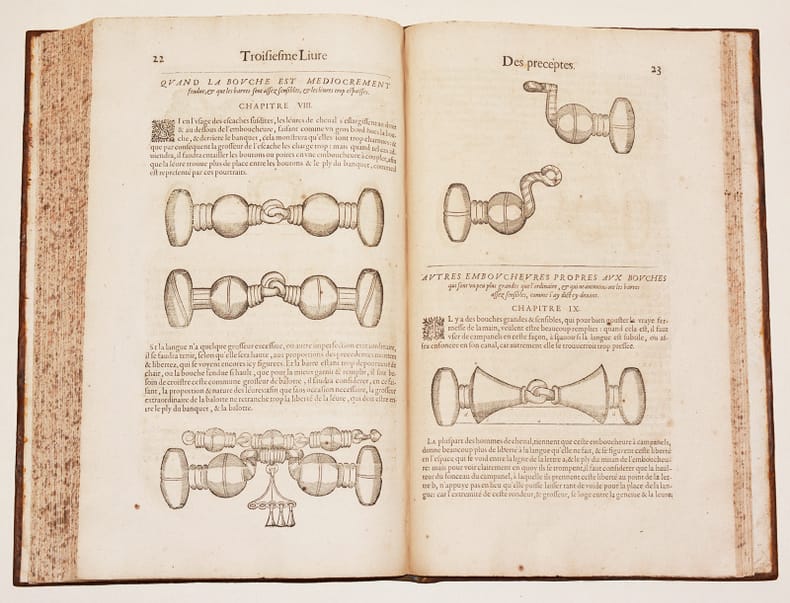
16460054021646 Paris, Charles Du Mesnil, 1646. Trois parties reliées en un volume in-folio (250 X 383 mm) basane brune, encadrement de double filet à froid sur les plats, dos à six nerfs ornés d'une roulette dorée, caissons ornés de fers et fleuron central dorés, titre doré, tranches mouchetées en noir (Reliure de l'époque) ; titre illustré, (2) ff. de dédicace et stances, 23 pages d'"Avis du Sieur de La Broue", 177 pages - 178 pages (dont titre), (1) f. de table - (4) ff. dont titre, 5-105 pages, (3) pages de table et privilège. Dos de la reliure moderne, quelques feuillets uniformément brunis et quelques petites taches brunes dans le corps d'ouvrage.
1865List2438Camp Low 1865. Original partially printed document 26cm x 77cm. Printed on both sides of the sheet completed in manuscript. Darkening at folds from old tape repairs; partial splits to folds and extremities; complete and quite Good. Docketed verso signed in ink by Lieutenant Morgan Owen. Lists twelve enlisted soldiers most with Spanish surnames two with French surnames. Fine. The formation of the California Native Cavalry in 1863 marked a significant chapter in the state's history. Comprising primarily Mexican-American individuals colloquially referred to as "native" Californians the California Native Cavalry unit was formed 1863. Initially commanded by Maj. Andreas Pico a distinguished hero from the Mexican-American War and later under Salvador Vallejo the regiment drew its ranks from diverse backgrounds. Recruitment efforts began with vaqueros from southern California expanding to include individuals from San José and San Francisco. The unit boasted a varied composition encompassing not only Mexican-Americans but also Chilenos California and Yaqui Indians and even French legionnaires.<br /> Company "B" a contingent largely recruited from the northern part of the state is reflected in the existing muster roll. The company assembled at Camp Low near San Juan Bautista in 1865 making a striking entrance into the town. Described as "gay and gallant Spanish lancaroes" the cavalrymen presented a formidable sight with lances in hand and flags flying leaving a lasting impression on the townspeople who had never before encountered soldiers."The gay and gallant Spanish lancaroes sic came dashing through the town with the lances in their hand a flag flying from each of them. I assure you that they presented a war like appearance the people here had never seen a soldier in their lives – Yes Sir!." letter Maj. Michael O'Brien to Gov. Frederick Low January 1865; quoted in Prezelski "Lives of the Californio Lancers: the First Battalion of Native California Cavalry" in Journal of Arizona History v.40 no.1 Spring 1999. <br /> Under the command of Capt. Porfirio Jimeno Company B swiftly engaged in a critical mission: dismantling the notorious Mason-Henry Gang that had terrorized the San Juan region in the preceding months. Despite successfully wounding John Mason in early April 1865 the gang persisted for another month until Mason met his demise at the hands of a miner he sought to kidnap.<br /> However Company B faced challenges including low morale and a high rate of desertions with over 40 men leaving the company in 1865 alone. Transferred to Tubac Arizona Territory to confront the Apaches the company encountered further desertions along the way. The muster roll listing only twelve soldiers alongside Capt. Porfirio Jimeno reflects this tumultuous period. Overall the muster roll provides scarce documentation of the role of Mexican-Americans in the Civil War with few other examples in the trade or institutionally. unknown
13442grand in 8 53 volumes reliés demi toile verte, dos lisses. Bel ensemble en reliures uniformes
01-1226Paris: chez la Veuve Gandouin; Giffart; David l'Aîné; Jombert; Durand 1754. 4to. 3 vols. Folding engraved and etched plates. Original calf with 5 raised bands on spine. Paris: chez la Veuve Gandouin; Giffart; David l'Aîné; Jombert; Durand, 1754. hardcover
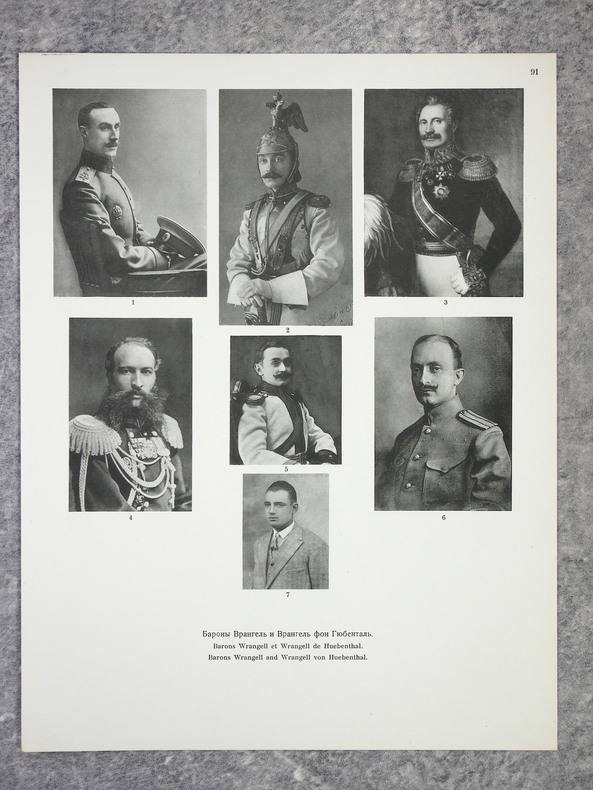
19611523(PARIS). PRINCE BELOSSELSKY-BELOZERSKY. 1961. 13 VOLUMES GRAND IN-4, 12 VOLUMES DE PLANCHES SOUS CHEMISES REMPLIEES ET UN VOLUME DE TEXTE BROCHE, LE TOUT SOUS EMBOITAGE TOILE NOIR DE L’EDITEUR (27 X 34 X 7,5 CENTIMETRES ENVIRON), PLAT SUPERIEUR ILLUSTRE D’UNE GRANDE COMPOSITION EN COULEURS A L’AIGLE BICEPHALE PAR ZWORIKINE. TEXTE TRILINGUE: RUSSE-FRANCAIS-ANGLAIS. ILLUSTRE DE 244 PLANCHES HORS TEXTE, 198 EN NOIR ET 46 EN COULEURS EDITION ORIGINALE. TIRAGE LIMITE A 300 EXEMPLAIRES NUMEROTES, NON MIS DANS LE COMMERCE, CELUI-CI PORTANT LE NUMERO 236. COMPREND:- TEXTE. HISTOIRE DU REGIMENT DE LA GARDE A CHEVAL. (6) + 39 ET (1) PAGES. BIEN COMPLET DE SON FEUILLET D’ERRATA.- I. UNIFORMES DU REGIMENT. 25 PLANCHES, DONT 12 EN COULEURS.- II. MEMBRES DE LA FAMILLE IMPERIALE, CHEFS ET OFFICIERS DE LA GARDE IMPERIALE. 47 PLANCHES, DONT 21 EN COULEURS.- III. PALAIS IMPERIAUX ET EDIFICES HISTORIQUES. 23 PLANCHES, DONT 1 EN COULEURS.- IV. JOURNEES MEMORABLES DANS LA VIE DES OFFICIERS DE LA GARDE A CHEVAL. 16 PLANCHES, DONT 8 EN COULEURS.- V. PORTRAITS D’OFFICIERS DE LA GARDE A CHEVAL. 25 PLANCHES, DONT 1 EN COULEURS.- VI. ANCIENNES FAMILLES DES GARDES A CHEVAL. 14 PLANCHES EN NOIR.- VII. OBJETS D’ART AYANT RAPPORT A LA GARDE A CHEVAL. 11 PLANCHES, DONT 1 EN COULEURS.- VIII. CHATEAUX ET DOMAINES DES OFFICIERS DE LA GARDE A CHEVAL. 19 PLANCHES, DONT 1 EN COULEURS.- IX. LES CASERNES DU REGIMENT. 18 PLANCHES EN NOIR.- X. LE REGIMENT DE LA GARDE A CHEVAL EN TEMPS DE PAIX. 22 PLANCHES EN NOIR.- XI. LE REGIMENT DE LA GARDE A CHEVAL PENDANT LA GUERRE. 17 PLANCHES, DONT 1 PLANCHE EN COULEURS.- XII. LES ANCIENS DE LA GARDE A CHEVAL DANS L’EMIGRATION. PLANCHES SUPPLEMENTAIRES. 7 PLANCHES EN NOIR.PETITE FENTE A L’EMBOITAGE, QUELQUES FINES ROUSSEURS EPARSES SUR LA PREMIERE PLANCHE DE CHAQUE POCHETTE, SINON BON EXEMPLAIRE DE CETTE MONUMENTALE EDITION.
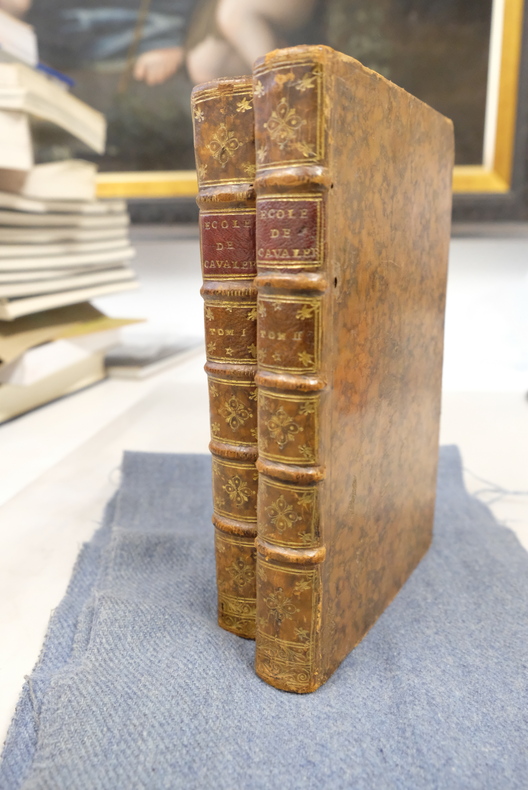
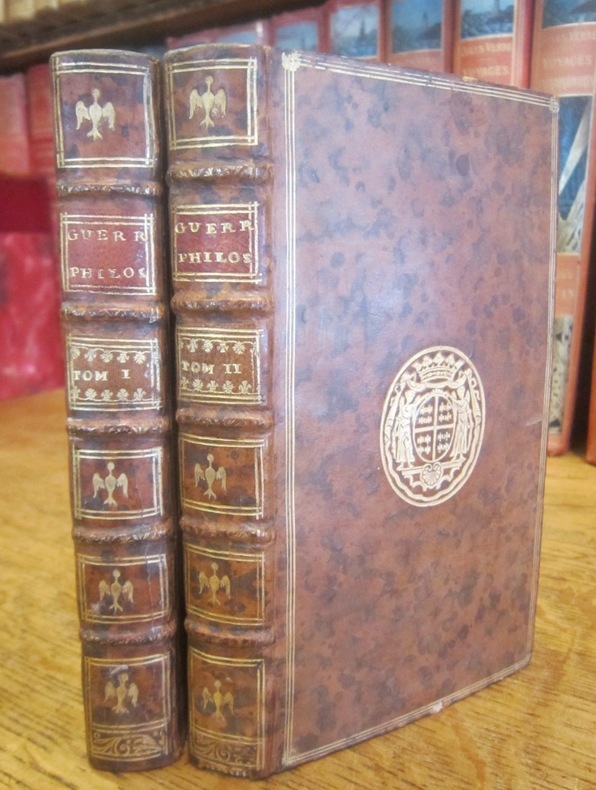
1736CHE2987MReliés, 319 et 298 pages, paru en 1736 à Paris, chez Jacques Guérin, libraire-imprimeur, 19,5x13,5cm. Très bon état général, très bien conservés, reliures légèrement usées, certaines pages légèrement brunies ou présentant des rousseurs.
1756000021Paris, Moreau ou Versailles, Lefebvre. In-18 (124 x 65 mm), 96 pp., maroquin rouge, dos à cinq nerfs orné, plats ornés d'une plaque or très décorative, dentelle intérieure, tranches dorées (reliure d'époque). Les quatre Compagnies de Gardes du corps du roi (la Compagnie écossaise, créée par Charles VII, la première et la seconde Compagnies françaises, créées sous Louis XI, et la troisième Compagnie française, créee sous François Ier), ont respectivement pour capitaines en 1756 : le Maréchal Louis de Noailles, le Duc de Villeroy, Paul-François de Béthune duc de Charost et le Duc de Luxembourg. Un feuillet manuscrit ancien, en fin de volume, donne les dates de promotions de 22 gardes, entre 1729 et 1734. Bel exemplaire (malgré des défauts d'usage, charnière du premier plat fendue dans le haut sur 6 mm, coins usés, petite trace noire sur le second plat, dorure des tranches en partie effacée, une brunissure sur une tranche et en marge des pages 19 à 62, petit trou dans la marge supérieure p. 87, quelques rousseurs). // 18o (124 x 65 mm), 96 pp., red morocco, spine tooled in gilt raised on five bands, very decorative gilt tooling on covers, dentelle inside, gilt edges (contemporary binding). The four "Gardes du corps du Roi" life guards companies ("Compagnie écossaise", created by Charles VII, first and second "Compagnies françaises", created under Louis XI, and the third under François Ier), were in 1756 respectively directed by the following "Capitaines" : Maréchal Louis de Noailles, Duc de Villeroy, Paul-François de Béthune duc de Charost, and Duc de Luxembourg. An old handwritten leaf in the end gives the dates of promotions for 22 guards, between 1729 and 1734. Nice copy (despite defects of use, first hinge cracked on 6 mm on top, corners bumped, small dark stain on second cover, gilt of edges partly faded, a foxing on one edge from p. 19 to p. 62, small hole on top margin p. 87, some brownings). Cet état de 1756 manque à la Bibliothèque Nationale.
1771002410Paris Jorry, Le Jay 1771
Octavo. Pp. (iii), (156) consisting of 78 double-page tables, (vi). Handsome vignette of a mounted knight to title-page. Hardcover, bound in contemporary quarter morocco and matching paper-covered boards, vellum French corners, spine gilt, black morocco lettering-pieces gilt, old expert mend to joint, pink ribbon marker; spine-ends bit worn, minor spot or two. In a very good condition. A clean, tight copy, well preserved. ~ First edition. Extremely rare.
3870Armand-Dumaresq Imprimerie Lemercier et Cie 45,5 x 34,5 Paris Album grand in-4, reliure demi-chagrin bordeaux à coins début XXème, dos à quatre nerfs, filets et titres dorés. Recueil, dédié à Robert d'Orléans duc de Chartres et signé par l'auteur, composé d'une page de titre imprimée comportant la dédicace et d'une suite de 66 planches contrecollées sur papier fort en recto, montées sur onglet. Il n'y a pas de pages de texte. La page de titre en noir est encadrée d'un cuirassier et d'un chasseur à cheval et comporte à gauche la signature "Armand-Dumaresq 1880" et à droite la mention "Imprimerie Lermercier et Cie Paris". Les 66 planches, lithographies d'après les dessins d'Armand-Dumaresq, sont rehaussées de couleurs. Elles représentent chacune des soldats à pied ou à cheval, sur la rangée supérieure et en dessous, les étendards. Elles sont numérotées en haut à droite de Pl.1 à Pl.66 et portent toutes la mention en bas au centre "Imprimerie Lemercier et Cie Paris". Les planches de notre album sont celles, qui seront publiées en 1881, accompagnées d'un texte, par la librairie J. Dumaine, Baudouin et Cie, sous le titre "Album de la cavalerie française, MDCV - MDCCCLXXXI". Chaque planche représente les uniformes et les étendards d'un même régiment depuis sa fondation jusqu'à la Troisième République. Robert d'Orléans (1840-1910) a été chef de corps du 12ème Régiment de chasseurs à cheval de 1878 à 1883. Il est le fils du duc d'Orléans, neveu du duc d'Aumale et le frère du comte de Paris son aîné, prétendant orléaniste au trône de France. Il connait l'exil après la Révolution de 1848, comme tous les membres de la famille d'Orléans. Le duc d'Aumale lui servit de tuteur, le faisant entrer dans l'armée du Piémont en 1859-1860. Il partit ensuite aux États-Unis lors de la guerre de Sécession, sous la conduite de son oncle le prince de Joinville, faisant partie en 1862 de l'armée du Potomac aux côtés de son frère le comte de Paris. En 1871, il rentra en France, combattant sous le nom de « Robert Lefort » avant d'être nommé dans les chasseurs d'Afrique. Il fut mis en non-activité en 1883, à l'âge de quarante-trois ans. Coins et coiffes légèrement usés. Unique et rare exemplaire. Bel ex-libris de J. Baeyens, gravé par Rousselot représentant un caisson d'artillerie avec au premier plan un artilleur de la garde, daté 1932. Etiquette de la librairie Clavreuil sur le premier contre plat. (ApB53) PHOTOS NUMERIQUES DISPONIBLES PAR EMAIL SUR SIMPLE DEMANDE-DIGITAL PHOTOGRAPS MAY BE AVAILABLE ON REQUEST Livre
3870Armand-Dumaresq Imprimerie Lemercier et Cie 45,5 x 34,5 Paris Album grand in-4, reliure demi-chagrin bordeaux à coins début XXème, dos à quatre nerfs, filets et titres dorés. Recueil, dédié à Robert d'Orléans duc de Chartres et signé par l'auteur, composé d'une page de titre imprimée comportant la dédicace et d'une suite de 66 planches contrecollées sur papier fort en recto, montées sur onglet. Il n'y a pas de pages de texte. La page de titre en noir est encadrée d'un cuirassier et d'un chasseur à cheval et comporte à gauche la signature "Armand-Dumaresq 1880" et à droite la mention "Imprimerie Lermercier et Cie Paris". Les 66 planches, lithographies d'après les dessins d'Armand-Dumaresq, sont rehaussées de couleurs. Elles représentent chacune des soldats à pied ou à cheval, sur la rangée supérieure et en dessous, les étendards. Elles sont numérotées en haut à droite de Pl.1 à Pl.66 et portent toutes la mention en bas au centre "Imprimerie Lemercier et Cie Paris". Les planches de notre album sont celles, qui seront publiées en 1881, accompagnées d'un texte, par la librairie J. Dumaine, Baudouin et Cie, sous le titre "Album de la cavalerie française, MDCV - MDCCCLXXXI". Chaque planche représente les uniformes et les étendards d'un même régiment depuis sa fondation jusqu'à la Troisième République. Robert d'Orléans (1840-1910) a été chef de corps du 12ème Régiment de chasseurs à cheval de 1878 à 1883. Il est le fils du duc d'Orléans, neveu du duc d'Aumale et le frère du comte de Paris son aîné, prétendant orléaniste au trône de France. Il connait l'exil après la Révolution de 1848, comme tous les membres de la famille d'Orléans. Le duc d'Aumale lui servit de tuteur, le faisant entrer dans l'armée du Piémont en 1859-1860. Il partit ensuite aux États-Unis lors de la guerre de Sécession, sous la conduite de son oncle le prince de Joinville, faisant partie en 1862 de l'armée du Potomac aux côtés de son frère le comte de Paris. En 1871, il rentra en France, combattant sous le nom de « Robert Lefort » avant d'être nommé dans les chasseurs d'Afrique. Il fut mis en non-activité en 1883, à l'âge de quarante-trois ans. Coins et coiffes légèrement usés. Unique et rare exemplaire. Bel ex-libris de J. Baeyens, gravé par Rousselot représentant un caisson d'artillerie avec au premier plan un artilleur de la garde, daté 1932. Etiquette de la librairie Clavreuil sur le premier contre plat. (ApB53) PHOTOS NUMERIQUES DISPONIBLES PAR EMAIL SUR SIMPLE DEMANDE-DIGITAL PHOTOGRAPS MAY BE AVAILABLE ON REQUEST Livre
1769002098Paris Cellot 1769
1765002077Londres, Paris Chez l'Esclapart 1765
1767002377Paris Barrois 1767
1772002420Amsterdam Changuion 1772
186351386Mobile: S. H. Goetzel 1863. First edition 16mo 3 parts in 1; pp. 2 ii 220; 104; 47 1; 97-108 Bugle Signals; xiv index 2 ads; 38 engraved plates 8 folding; original paper-covered boards rebacked in blue cloth sometime in the 20th century; boards worn text occasionally dampstained and foxed without the front free endpaper and hinges with old archival paper repair; but in all a good sound and compelling copy of a poorly made book. Parrish & Willingham 5116. <br/><br/> S. H. Goetzel hardcover books
186351386Mobile: S. H. Goetzel 1863. First edition 16mo 3 parts in 1; pp. 2 ii 220; 104; 47 1; 97-108 Bugle Signals; xiv index 2 ads; 38 engraved plates 8 folding; original paper-covered boards rebacked in blue cloth sometime in the 20th century; boards worn text occasionally dampstained and foxed without the front free endpaper and hinges with old archival paper repair; but in all a good sound and compelling copy of a poorly made book. Parrish & Willingham 5116. S. H. Goetzel unknown
1729002106Amsterdam Herman Uytwerf 1729
1773002381Amsterdam E. Van Harrevelt 1773
4858Plate vols.: Two folding engraved titles four engraved leaves of music & 93 fine folding engraved plates. Text vols.: xv 1 501 pp. one leaf of errata; xix 1 360 pp. one leaf of errata. Four vols. 8vo cont. polished sheep spines gilt text vols. with a.e.g. Munich: Rösl 1828. First edition and very rare of the official book of instruction and regulations for the Bavarian cavalry chevauleger. This is a richly illustrated work: the plates depict uniforms of different members of the cavalry; their weapons swords lances and rifles; sword techniques; horse tack including saddles stirrups bridles etc.; the anatomy of the horse and their hooves; and many tactical formations. Fine and handsome set from the Wittelsbach library of the dukes and kings of Bavaria. Upper cover of Vol. II of text slightly wormed. unknown books
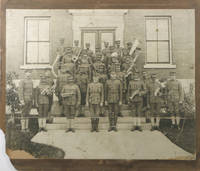
1910List304Fort Ethan Allen 1910. Gelatin silver print mounted to board 16 ¼ x 14 ½ inches. Fair to Good. The 10th Cavalry was one of the original “Buffalo Soldier†regiments of the post-Civil War segregated U.S. Army first seeing action in the Indian Wars. Their band is shown here most likely during their stint at Fort Ethan Allen in Vermont. They are wearing a mix of insignia from 1902 to 1908 and some are shown in civilian clothing which suggests the picture was taken in Vermont as this was during the time the Army used a vast mix of insignia and the brick architecture of the background also matches that of the fort. <br /> <br /> They were exposed to some racism during their time in Vermont - the soldiers were punished for associating with neighboring white women with some of the offenders being confined to the guardhouse for punishment which fits with the strictly segregated Army policies of the time. The soldiers did also record positive aspects of their time at the fort including studying at the fort’s library and playing nightly games of the newly-invented sport of basketball. These amenities provided some positive contrast to the previous assignments of the regiment who had been mostly stationed on the frigid plains where the army believed racial tensions would be kept to a minimum. <br /> <br /> The picture shows the band with the normal marching band instruments of clarinets tubas and sousaphones as well as an alto clarinet oboe and what appears to be a baritone saxophone. We find no other examples of the 10th Cavalry Band and the picture shows the regiment at a relatively calm time as they would soon be sent to the Mexican-American border in 1913 to deal with rising tensions. The picture has condition issues with damage to the mount some damage to the bottom left corner and a crease along the bottom third of the image along with closed tears and chipping to the title label. It remains in fair to good condition attractive and worthy of preservation. unknown