1 094 résultats
1954LFA-126717140Un ouvrage de 209 pages, format 165 x 255 mm, broché, Impr. M. Pailhé et ses Fils (Paris), bon état
1969LFA-126717141Un ouvrage de 229 pages, format 165 x 255 mm, broché, Impr. M. Pailhé et ses Fils (Paris), publié en 1969, bon état
1970LFA-126717142Un ouvrage de 253 pages, format 165 x 255 mm, broché, Impr. M. Pailhé et ses Fils (Paris), publié en 1970, bon état
182863001München, Gedruckt mit Rösl?schen Schriften, 1828. 8°. Mit 2 gefalt. lithogr. Titeln, 93 gefalt. lithogr. Tafeln u. 7 gefalt. lithogr. Musikseiten. XV, 501 S., 1 Bl.; XIX, 360 S., 1 Bl., Ldr.-Bde. d. Zt. a. 4 Bünden m. Rückenverg. u. goldgepr. Rückentiteln (die Textbände auch mit dreiseitigem Goldschnitt).
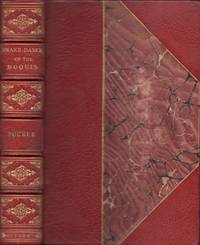
188435196London: Sampson Low Marston Searle & Rivington 1884. Three-quarter leather. Good. Octavo. xvii 371 pages 32 page publisher catalog bound in back. Illustrated with color frontispiece and 31 plates in the back of the text. Recased. Three quarter red leather binding with reddish marbled paper covered boards. Reddish marbled end papers. The original green cloth front cover and spine with gilt title and gilt illustration is bound in the back of the book. The right front flyleaf and the the title page are both clipped at the top edge suggesting a possibly clipped signature of the previous owner. Book plate of Robert C. Euler former anthropologist of the National Parks located on the front paste down. <br /> <br /> Howes B 655; Graff 368 - "The Moquis Indians of Arizona are of course the Hopi. The snake-dance is still performed but is too fascinating to be called "revolting" today. Sampson, Low, Marston, Searle, & Rivington unknown
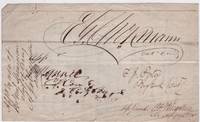
186145596n.p. 1861. Very good folded edge worn light soiling and ink staining. 1 sheet. 7.75 x 4.5 inches. Signed by Ernest G. Chormann Brig. Gen. Fitz John Porter Col. William Woods Averell Chief of ordnance Charles P. Kingsbury and Assistant Adjutant-General Andrew J. Alexander for Gen. George Stoneman with the note "approved" by three signatures. Though undated it was likely signed between September 1861 and January 17 1862 based on the service records of those who signed it.<br /> <br /> 1. Ernest G. Chormann in 1861 recruited a volunteer regiment called "Chorman’s Independent Mounted Rifle Rangers" in Philadelphia. See Library Company of Philadelphia for the broadside. The first company of this regiment was mustered into service July 23 1861 and the last was mustered Sept. 15th 1861. The regiment was then under the command of Col. E. G. Chormann. It was numbered the 89th of the line and the 8th Cavalry and left Pennsylvania for Washington on Oct. 4 where it was brigaded with the 3rd Pa. cavalry thus putting Chormann under the command of William Woods Averell who in turn was under the command of Brigadier General Fitz John Porter. On Nov. 9 1861 the New York Times reported "The Eighth Pennsylvania Cavalry Col. Chormann has been brigaded with the Third from the same State. The brigade is commanded by Col. W.W. Averell of the latter regiment. Both are rapidly improving in efficiency and drill." But on Nov. 27 the Philadelphia Inquirer reported that "The statement that charges have been filed against Col. Chormann is said to be erroneous. The Colonel is laboring energetically to ensure the perfection of drill desireable in all well disciplined regiments." By January 17 1862 Chormann had resigned his commission to be replaced by Capt. David Gregg of the 6th U. S. cavalry an experienced officer and a graduate of West Point. Chormann had endorsed Merrill’s Patent Breech-Loading Carbine on September 19th 1861 his letter to General J. W. Ripley Chief of Ordnance Washington D. C. soon appearing in an advertisement for the weapons but so had many other officers. Thus both the reason for his resignation and the purpose of this document remain unknown.<br /> <br /> Little is known about Ernest G. Chormann other than in his autobiography below and for his filing of numerous patents. He was an inventor and also active as an artist between 1853-1880 See Frick Museum Art Reference Library. In 1852 he exhibited saddle patterns at the Twenty-second Exhibition of American Manufactures at the Franklin Institute; in 1861 listed as an engraver and die sinker he bid on a $2500 contract with the U.S. Government for coin designs as part of ongoing experiments into how to prevent “abrasion counterfeiting and deterioration of the coins of the United States; †he was hired as the engraver; he filed for optical and mechanical patents; in 1880 he painted "Letitia Street House 1880" now at the Historical Society of Pennsylvania. The Pennsylvania's Rangers' War song: "Up ! up ! with our flag let its bright stars gleam out" was dedicated to him. <br /> <br /> The Pennsylvania Historical Review 1886 lists his firm Chormann & Mitchell as "inventors and patentees of the specialties manufactured. They manufacture all kinds of art furniture including parlor easels novel and chaste in design labor- saving studio easels sketching easels artists’ kits etc. together with interior decorations. the studio easel being awarded the first premium and diploma at the Centennial Exposition of 1876."<br /> <br /> Chormann adds his somewhat rather fanciful biography:<br /> <br /> "Mr. Chormann the founder of this business was born in France. Early in life he was noted for his energy talent and determination and visited as an explorer and traveller nearly every country in the civilized world. In 1836 he was a colonel in the San Jacinto war where he manifested great courage and prudence and on its termination made an effort to explore almost alone the sources of the Nile. Eventually after exploring various portions of Australia New Mexico Arizona and Lower California and undergoing great hardships and dangers from climate and Indians he was appointed on his arrival in Texas in 1845 captain and superintendent of the Texan Rangers. He was actively engaged in 1847 and 1848 in the Mexican war where his distinguished military ability was of great service to the United States. During his explorations and travels in the West he was associated with those famous old Indian fighters namely De Soto and California Joe. Mr. Chormann was the first white man who explored the Western portion of the Colorado River the whole of the country at that period 1843 watered by this stream being inhabited by tribes of Indians of the most cruel and treacherous nature. Colonel Chormann organized the first regiment that served during the war and which was known as Chormann’s Mounted Rangers. On the 14th April 1861 immediately after the bombardment of Fort Sumpter he began recruiting and put 5000 men in the field. In 1865 he brought East the first specimen of the moss agate. In a few months Mr. Chormann intends to publish a work on Colorado and the West illustrated with splendid engravings which will prove of the greatest interest to all lovers of nature. He was the inventor of stylograph printing and is noted in scientific and artistic circles for his inflexible integrity and sterling ability."<br /> <br /> 2. Fitz John Porter 1822-1901 Civil War Union Major General West Point 1845 served in the Mexican–American War promoted to brigadier general of volunteers in 1861 and divisional commander in the newly formed Army of the Potomac under Maj. Gen. George B. McClellan who was soon is patron. On November 25 1862 Porter was arrested and court-martialed for his actions at Second Bull Run after McClellan was dismissed by Lincoln. He spent the next 16 years trying clear his name and record which he finally did in 1878.<br /> <br /> 3. William Woods Averell 1832-1900 Civil War Union Brigadier General West Point 1855 2nd Lieutenant assigned to the United States Army Mounted Rifles and served in the Indian Wars on the Western frontier severely wounded in a fight with Navajos in 1859 became a 1st Lieutenant with the Mounted Riflemen and was placed on staff duty in Washington D.C. In August 1861 he was appointed as Colonel of the 3rd Pennsylvania Volunteer Cavalry and soon became a Brigadier General.<br /> <br /> 4. Andrew Jonathan Alexander 1833-1887 Civil War Union Brevet Brigadier General served first as a Captain in the 3rd United States Regular Cavalry then as Lieutenant Colonel and Assistant Adjutant General on the staff of Union General George Stoneman.<br /> <br /> 5. Charles Peeble Kingsbury 1816-1879 graduated from West Point in 1840 2nd in a class of 42 served in the Mexican War as General Wolf's ordnance officer and on General Taylor’s staff wrote 'Elementary Treatise on Artillery and Infantry' 1849 and was a contributor to the American Whig Review Western Quarterly Review Putnam’s Monthly and the Southern Literary Messenger from 1840-67 was superintendent of the Armory at Harper's ferry and Chief of Ordnance for the Army of the Potomac August 12 1861 to July 1862 promoted to Colonel and aide-decamp September 28 1861. unknown
206988S.l., s.d. (mai 1794) placard in-folio de 53 x 41 cm, texte sur trois colonnes, en feuille, contrecollée sur papier fort moderne, importante mouillure latérale, bords atteints par l'humidité.
1991LFA-126723782Un ouvrage de 32 pages, format 210 x 295 mm, illustré, broché couverture couleurs, publié en 1991, Impr. du Poney, bon état
218160Versailles, Imp. Mallen, s.d. (1937) in-8, 2 feuillets, broché, retenu par une ficelle, couverture illustrée.
185247576Adorf, Verlags-Bureau, 1852. Gr.-8°. Mit einer gefalt. lithogr. Übersichtskarte u. einem gefalt. lithogr. Plan. Titelbll. in Rot u. Schwarz gedruckt. XIV, 386; VIII, 426 S., HLdr.-Bde. d. Zt. m. goldgepr. Rückentitel u. dreiseitigem Farbschnitt.
1935LFA-126724266Revue de 138 pages, format 235 x 310 mm, illustrée, brochée, bon état, rare
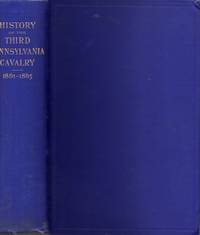
190532898Philadelphia: Franklin Printing Company 1905. First Edition. Hardcover. Good. Thick quarto. 1 xxxvi 614 pages 2. Illustrated with frontispiece photograph of Brigadier and Brevet-Major General William W. Averill folding maps photograph views and portraits. Blue cloth hardcover with gilt title on the spine. The rear hinge is slightly cracked. Light foxing to the verso of the right front flyleaf and to the recto of the frontispiece photograph. Interior text is very clean. Contents include a roster. <br /> <br /> This copy has several notes written in pencil and an inscription that takes up the complete right front flyleaf. Pencil inscription "From Auntie Helen Christmas 1956" written top of the front paste down. Below this inscription is a list of 32 marked pages regarding the service of Colonel Samuel W. Owen and Major Howard Edmonds both officers photograph portraits are located in the book. The inscription on the right front flyleaf reads - "Dear Charles III Your old Auntie would like you to have this book. The pages marked are a brief official record of your Great Grandfather part in the Civil War. He was a wonderful man I knew him and loved him very much. signed Major Howard Edmunds Col. 3rd Pa. Cavalry." Written on the front blank end sheet is a note - "Col. Samuel Owen was your great grandmothers Father." The illustration on preliminary page iv shows 4 soldiers playing "Reveille" with an arrow pointing to one the soldiers with the statement "Major Edmonds he looked like this! 1861". Pencil remarks are made in the text with some short passages underlined. <br /> <br /> Nevins I page 143 - "An exceptionally full day by day chronicle of the regiment first commanded by William W. Averill; indispensable for an insight into Eastern cavalry operations throughout the four years of war. Franklin Printing Company hardcover
185945Paris, Dumaine, 1868 in-8, 112 pp., tableaux dépliants, demi-vélin ivoire (reliure de l'époque). Vélin taché et noirci. Coins abîmés. Cachets annulés.
208544Paris, Dumaine, 1868; in-8, 112 pp., tableaux dépliants, demi-basane brune, dos lisse orné de filets dorés (reliure de l'époque). Fortes rousseurs, importants manques de cuir au dos, un mors fendu.
226463Paris, Dumaine, 1868 in-8, 112 pp., tableaux dépliants, demi-basane bleu-nuit, dos lisse orné de filets dorés (reliure de l'époque). Reliure défraîchie. Très important manque de cuir au dos, épidermures, coupes et coins frottés. Rousseurs. Cachets (annulés).
1973LFA-126723668N° 111 (1973) de "Sciences du Monde" : 94 pages, format 140 x 210 mm, illustré, broché couverture couleurs, publié en 1973, bon état
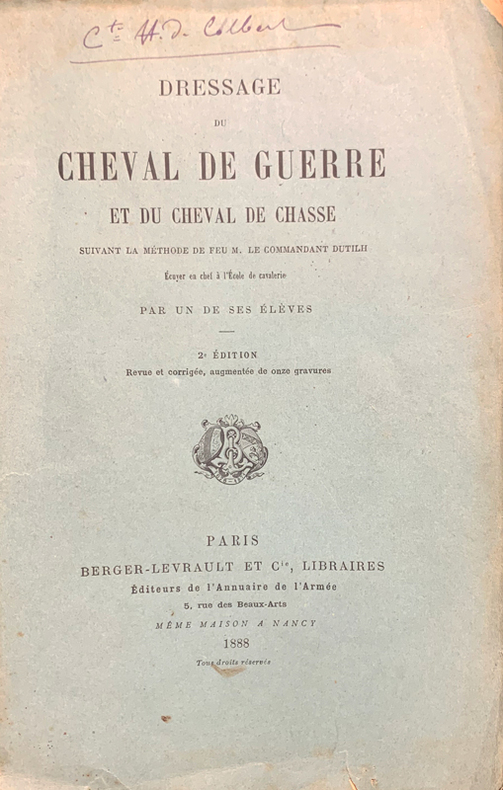
188822356Paris, Berger-Levrault, 1888 ; in-8, broché ; 210, [2] pp. de Catalogue et 11 gravures in-texte, couverture verte imprimée.
1999LFA-126742123Revue de 28 pages, format 205 x 300 mm, illustrée, brochée, bon état
1986LFA-126746613Revue de 40 pages, format 210 x 270 mm, illustrée, brochée couverture couleurs, Souvenir Napoléonien, bon état
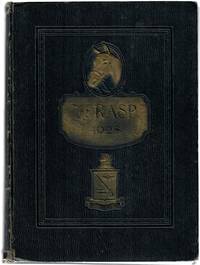
192830367Fort Riley KS: Cavalry School 1928. First edition. Hardcover leatherette embossed in gold. Fair shaken but binding will hold. 272p many photos line ills. and ads. Covers rubbed outer pages foxed. No d.j. as issued. The final appearaance of this Cavalry School yearbook which began publication in 1912. Dedicated to Commandant Brig. Gen. Charles J. Symonds with photo of him on horseback. Full-page photos of the other commanding officers. Doings at Fort Riley in the academic year 1927-28. School activities exercises show results. etc. told chiefly via many photos of men and horses and cartoons. Several pages with photos on flying and also the mechanization of the British cavalry. Two pages on shoeing the polo pony but overall very little on horsemastership. Heavy; shipping/handling will be extra. Please keep this in mind when ordering. Scarce. Wells 6143.1. [Cavalry School] hardcover
193680642Washington DC: United States Cavalry Association 1936. First Edition. First printing softcover issue. 12mo 19cm. Original card wrappers softcover; 173pp; illus. Bit of external rubbing and soil; faint marginal dampstain to final 15 or so leaves else a tight unmarked copy Very Good.<br /> <br /> Account of Bernard's nearly 40-years career as a U.S. Cavalry officer with accounts of his actions in the Civil War and the Western Theater Illustrated throughout with photographic portraits and line drawings by Donald Dickson. There was a small simultaneous issue in cloth. United States Cavalry Association unknown
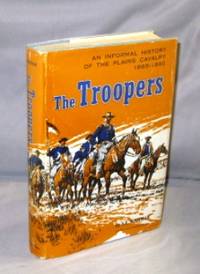
196226676<p>New York:: Hastings House Publishers 1962. First Printing of the First US Edition. A Fine copy in a Near Fine unclipped dust jacket with a small chip to the bottom edge of the front panel. The cavalry writes about in this book existed from 1865 to 1890 and was informally known as the Plains Cavalry. Formed at the end of the Civil War in 1865 the Plains Cavalry was charged with protecting American settlers railroaders wagon trains businesses gold seekers and others from Indian attacks. The Plains Cavalry was meant to operate primarily on the western frontiers of the expanding nation. At that time almost anything west of the Mississippi River was considered the frontier. Most Americans living east of the Mississippi had no idea of the danger deprivation or hardship encountered by those who lived on the other side of the river. This history is a clear-eyes description of the troopers as they really were.</p> Hastings House Publishers, hardcover
AQ24115s.l.: s.n. 1842-46 Manuscript on paper. 102 leaves. 14 used the remainder blank. Contemporary green cloth contrasting red paper lettering-piece to upper board title in manuscript to spine and bottom edge metal clasp. Extremities rubbed and a trilfe marked. Upper hinge exposed. A mid-nineteenth-century manuscript guest book for the Westmorland Yeomanry Cavalry. The regiment was raised by Colonel Henry Lowther as the Westmorland Yeomanry Cavalry in 1819. It was re-raised as the Westmorland and Cumberland Yeomanry Cavalry in 1828 and was called upon to suppress chartist riots at Penrith and Carlisle in 1839. It was called upon again to suppress fighting between English and Irish labourers working on the Lancaster and Carlisle Railway at Lowther Park in 1846. Although there had been no intention for the Yeomanry to serve overseas a series of defeats during Black Week in December 1899 convinced the British Government that additional troops were needed to supplement the regular army. A Royal Warrant was issued on 24th December 1899 to allow volunteer forces to serve in the Second Boer War and the Yeomanry were duly dispatched. . 8vo. [s.n.], [1842-46] hardcover
1833AQ25433London: Printed by J. Hartnell 1833. 20pp 4. Contemporary calf tooled in blind ruled and lettered in gilt A.E.G. Inscribed to upper board 'Earl of Lovelace'. Rubbed loss to head and foot of spine. Marbled endpapers lightly creased and spotted. Autograph letter pasted to front blank fly-leaf 8pp of manuscript tables to rear blank fly-leaves listing the 'Return of the arms and accoutrements in possession of the Surrey Yeomanry Cavalry on 1 Jan. 1835' 'Return of the present enrolled and serving in the Surrey Yeomanry Cavalry commanded by the R. Hon. Col. William Lord King' and 'Returns made to the Sec. of State on 1 April 1835 of the strength of the S.Y.C.' With a loosely inserted manuscript list of names. The printed ordinances regarding the pay of members of the mounted component of the British Volunteer Corps; from the library of William King eighth Baron King of Ockham 1805-1893 with autograph letter to Lord King confirming his commission as Lt. Colonel Commandant of the Surrey Regiment of Yeomanry Cavalry in 1833. In 1838 King was created the Earl of Lovelace on his marriage to Augusta Ada Lovelace 1815-1852 pioneering female scientist computer programmer and the only legitimate child of George Gordon Lord Byron. . 8vo. Printed by J. Hartnell unknown
17516Saumur, chez Dubosse, 1830. 2 vol. in-8,,VIII-408 pp. + 353 pp., cartonnage éditeur illustré (cartonnages défraîchis, manques, petites rousseurs, annotations).