167 résultats
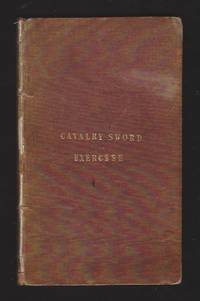
183696361London: W. Clowes and Sons 1836. Hardcover. Good. Scarce 1836 hardcover edition of a System of Drill for sword exercises written by the man who formulated the exercises. Original calf boards with title in gilt on front. Binding is a little wobbly but holding. Ex-library with stamps Trinity College Carmarthen on front and rear pastedown pages and title page. Book is in good condition. Faint staining on corners of some pages. Short tear on one page. Original owner's name in brown ink on title page. 16mo. 27 pp. of text followed by 14 pages of line drawings showing positions; a final plate is indicated Salute but isn't present nor does it appear to have been taken from the book. From the estate of Canadian military collector extraordinaire Donald Skinner. <br/><br/> W. Clowes and Sons hardcover
1104021668.Gpaperback. Good. Access codes and supplements are not guaranteed with used items. May be an ex-library book. paperback
1165311402.Gpaperback. Good. Access codes and supplements are not guaranteed with used items. May be an ex-library book. paperback
18568543London: H. Bailliere. Good with no dust jacket. 1856. First Edition. Original Cloth. Covers are worn & soiled. Wear at the spine ends and split ~1 1/2" bottom front hinge. Interior is fine or better except for some loosening of the signatures. 252pp.; 5x7 1/2" . H. Bailliere hardcover
1330278070.Gpaperback. Good. Access codes and supplements are not guaranteed with used items. May be an ex-library book. paperback
ria9783752574593_inpHardcover. New. New Book; Fast Shipping from UK; Not signed; Not First Edition; Reprint of the original first published in 1867. hardcover
B9783752574593Hardback. New. hardcover
3752574585.Gpaperback. Good. Access codes and supplements are not guaranteed with used items. May be an ex-library book. paperback
3752574593.Ghardcover. Good. Access codes and supplements are not guaranteed with used items. May be an ex-library book. hardcover
1867E15350BEdinburgh and London: William Blackwood and Sons 1867. Third edition. Hardcover. Very Good. Hardcover in violet cloth with spine lettered in gilt and gilt cover decoration of horse and rider. The Third Edition Revised and Enlarged. Small 8vo. xii 167 pp. with index. plus 20 pp. publsier's ads at rear. Illustrated with six engravings. A tight example front cover gilt bright spine sunned. 1870s veterinery doctor signature on the half title. <br/><br/> William Blackwood and Sons hardcover
1833AQ25433London: Printed by J. Hartnell 1833. 20pp 4. Contemporary calf tooled in blind ruled and lettered in gilt A.E.G. Inscribed to upper board 'Earl of Lovelace'. Rubbed loss to head and foot of spine. Marbled endpapers lightly creased and spotted. Autograph letter pasted to front blank fly-leaf 8pp of manuscript tables to rear blank fly-leaves listing the 'Return of the arms and accoutrements in possession of the Surrey Yeomanry Cavalry on 1 Jan. 1835' 'Return of the present enrolled and serving in the Surrey Yeomanry Cavalry commanded by the R. Hon. Col. William Lord King' and 'Returns made to the Sec. of State on 1 April 1835 of the strength of the S.Y.C.' With a loosely inserted manuscript list of names. The printed ordinances regarding the pay of members of the mounted component of the British Volunteer Corps; from the library of William King eighth Baron King of Ockham 1805-1893 with autograph letter to Lord King confirming his commission as Lt. Colonel Commandant of the Surrey Regiment of Yeomanry Cavalry in 1833. In 1838 King was created the Earl of Lovelace on his marriage to Augusta Ada Lovelace 1815-1852 pioneering female scientist computer programmer and the only legitimate child of George Gordon Lord Byron. . 8vo. Printed by J. Hartnell unknown
AQ24115s.l.: s.n. 1842-46 Manuscript on paper. 102 leaves. 14 used the remainder blank. Contemporary green cloth contrasting red paper lettering-piece to upper board title in manuscript to spine and bottom edge metal clasp. Extremities rubbed and a trilfe marked. Upper hinge exposed. A mid-nineteenth-century manuscript guest book for the Westmorland Yeomanry Cavalry. The regiment was raised by Colonel Henry Lowther as the Westmorland Yeomanry Cavalry in 1819. It was re-raised as the Westmorland and Cumberland Yeomanry Cavalry in 1828 and was called upon to suppress chartist riots at Penrith and Carlisle in 1839. It was called upon again to suppress fighting between English and Irish labourers working on the Lancaster and Carlisle Railway at Lowther Park in 1846. Although there had been no intention for the Yeomanry to serve overseas a series of defeats during Black Week in December 1899 convinced the British Government that additional troops were needed to supplement the regular army. A Royal Warrant was issued on 24th December 1899 to allow volunteer forces to serve in the Second Boer War and the Yeomanry were duly dispatched. . 8vo. [s.n.], [1842-46] hardcover
193680642Washington DC: United States Cavalry Association 1936. First Edition. First printing softcover issue. 12mo 19cm. Original card wrappers softcover; 173pp; illus. Bit of external rubbing and soil; faint marginal dampstain to final 15 or so leaves else a tight unmarked copy Very Good.<br /> <br /> Account of Bernard's nearly 40-years career as a U.S. Cavalry officer with accounts of his actions in the Civil War and the Western Theater Illustrated throughout with photographic portraits and line drawings by Donald Dickson. There was a small simultaneous issue in cloth. United States Cavalry Association unknown
196226676<p>New York:: Hastings House Publishers 1962. First Printing of the First US Edition. A Fine copy in a Near Fine unclipped dust jacket with a small chip to the bottom edge of the front panel. The cavalry writes about in this book existed from 1865 to 1890 and was informally known as the Plains Cavalry. Formed at the end of the Civil War in 1865 the Plains Cavalry was charged with protecting American settlers railroaders wagon trains businesses gold seekers and others from Indian attacks. The Plains Cavalry was meant to operate primarily on the western frontiers of the expanding nation. At that time almost anything west of the Mississippi River was considered the frontier. Most Americans living east of the Mississippi had no idea of the danger deprivation or hardship encountered by those who lived on the other side of the river. This history is a clear-eyes description of the troopers as they really were.</p> Hastings House Publishers, hardcover
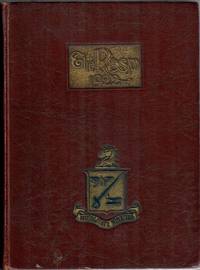
192830367Fort Riley KS: Cavalry School 1928. First edition. Hardcover leatherette embossed in gold. Fair shaken but binding will hold. 272p many photos line ills. and ads. Covers rubbed outer pages foxed. No d.j. as issued. The final appearaance of this Cavalry School yearbook which began publication in 1912. Dedicated to Commandant Brig. Gen. Charles J. Symonds with photo of him on horseback. Full-page photos of the other commanding officers. Doings at Fort Riley in the academic year 1927-28. School activities exercises show results. etc. told chiefly via many photos of men and horses and cartoons. Several pages with photos on flying and also the mechanization of the British cavalry. Two pages on shoeing the polo pony but overall very little on horsemastership. Heavy; shipping/handling will be extra. Please keep this in mind when ordering. Scarce. Wells 6143.1. [Cavalry School] hardcover
190532898Philadelphia: Franklin Printing Company 1905. First Edition. Hardcover. Good. Thick quarto. 1 xxxvi 614 pages 2. Illustrated with frontispiece photograph of Brigadier and Brevet-Major General William W. Averill folding maps photograph views and portraits. Blue cloth hardcover with gilt title on the spine. The rear hinge is slightly cracked. Light foxing to the verso of the right front flyleaf and to the recto of the frontispiece photograph. Interior text is very clean. Contents include a roster. <br /> <br /> This copy has several notes written in pencil and an inscription that takes up the complete right front flyleaf. Pencil inscription "From Auntie Helen Christmas 1956" written top of the front paste down. Below this inscription is a list of 32 marked pages regarding the service of Colonel Samuel W. Owen and Major Howard Edmonds both officers photograph portraits are located in the book. The inscription on the right front flyleaf reads - "Dear Charles III Your old Auntie would like you to have this book. The pages marked are a brief official record of your Great Grandfather part in the Civil War. He was a wonderful man I knew him and loved him very much. signed Major Howard Edmunds Col. 3rd Pa. Cavalry." Written on the front blank end sheet is a note - "Col. Samuel Owen was your great grandmothers Father." The illustration on preliminary page iv shows 4 soldiers playing "Reveille" with an arrow pointing to one the soldiers with the statement "Major Edmonds he looked like this! 1861". Pencil remarks are made in the text with some short passages underlined. <br /> <br /> Nevins I page 143 - "An exceptionally full day by day chronicle of the regiment first commanded by William W. Averill; indispensable for an insight into Eastern cavalry operations throughout the four years of war. Franklin Printing Company hardcover
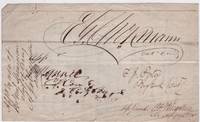
186145596n.p. 1861. Very good folded edge worn light soiling and ink staining. 1 sheet. 7.75 x 4.5 inches. Signed by Ernest G. Chormann Brig. Gen. Fitz John Porter Col. William Woods Averell Chief of ordnance Charles P. Kingsbury and Assistant Adjutant-General Andrew J. Alexander for Gen. George Stoneman with the note "approved" by three signatures. Though undated it was likely signed between September 1861 and January 17 1862 based on the service records of those who signed it.<br /> <br /> 1. Ernest G. Chormann in 1861 recruited a volunteer regiment called "Chorman’s Independent Mounted Rifle Rangers" in Philadelphia. See Library Company of Philadelphia for the broadside. The first company of this regiment was mustered into service July 23 1861 and the last was mustered Sept. 15th 1861. The regiment was then under the command of Col. E. G. Chormann. It was numbered the 89th of the line and the 8th Cavalry and left Pennsylvania for Washington on Oct. 4 where it was brigaded with the 3rd Pa. cavalry thus putting Chormann under the command of William Woods Averell who in turn was under the command of Brigadier General Fitz John Porter. On Nov. 9 1861 the New York Times reported "The Eighth Pennsylvania Cavalry Col. Chormann has been brigaded with the Third from the same State. The brigade is commanded by Col. W.W. Averell of the latter regiment. Both are rapidly improving in efficiency and drill." But on Nov. 27 the Philadelphia Inquirer reported that "The statement that charges have been filed against Col. Chormann is said to be erroneous. The Colonel is laboring energetically to ensure the perfection of drill desireable in all well disciplined regiments." By January 17 1862 Chormann had resigned his commission to be replaced by Capt. David Gregg of the 6th U. S. cavalry an experienced officer and a graduate of West Point. Chormann had endorsed Merrill’s Patent Breech-Loading Carbine on September 19th 1861 his letter to General J. W. Ripley Chief of Ordnance Washington D. C. soon appearing in an advertisement for the weapons but so had many other officers. Thus both the reason for his resignation and the purpose of this document remain unknown.<br /> <br /> Little is known about Ernest G. Chormann other than in his autobiography below and for his filing of numerous patents. He was an inventor and also active as an artist between 1853-1880 See Frick Museum Art Reference Library. In 1852 he exhibited saddle patterns at the Twenty-second Exhibition of American Manufactures at the Franklin Institute; in 1861 listed as an engraver and die sinker he bid on a $2500 contract with the U.S. Government for coin designs as part of ongoing experiments into how to prevent “abrasion counterfeiting and deterioration of the coins of the United States; †he was hired as the engraver; he filed for optical and mechanical patents; in 1880 he painted "Letitia Street House 1880" now at the Historical Society of Pennsylvania. The Pennsylvania's Rangers' War song: "Up ! up ! with our flag let its bright stars gleam out" was dedicated to him. <br /> <br /> The Pennsylvania Historical Review 1886 lists his firm Chormann & Mitchell as "inventors and patentees of the specialties manufactured. They manufacture all kinds of art furniture including parlor easels novel and chaste in design labor- saving studio easels sketching easels artists’ kits etc. together with interior decorations. the studio easel being awarded the first premium and diploma at the Centennial Exposition of 1876."<br /> <br /> Chormann adds his somewhat rather fanciful biography:<br /> <br /> "Mr. Chormann the founder of this business was born in France. Early in life he was noted for his energy talent and determination and visited as an explorer and traveller nearly every country in the civilized world. In 1836 he was a colonel in the San Jacinto war where he manifested great courage and prudence and on its termination made an effort to explore almost alone the sources of the Nile. Eventually after exploring various portions of Australia New Mexico Arizona and Lower California and undergoing great hardships and dangers from climate and Indians he was appointed on his arrival in Texas in 1845 captain and superintendent of the Texan Rangers. He was actively engaged in 1847 and 1848 in the Mexican war where his distinguished military ability was of great service to the United States. During his explorations and travels in the West he was associated with those famous old Indian fighters namely De Soto and California Joe. Mr. Chormann was the first white man who explored the Western portion of the Colorado River the whole of the country at that period 1843 watered by this stream being inhabited by tribes of Indians of the most cruel and treacherous nature. Colonel Chormann organized the first regiment that served during the war and which was known as Chormann’s Mounted Rangers. On the 14th April 1861 immediately after the bombardment of Fort Sumpter he began recruiting and put 5000 men in the field. In 1865 he brought East the first specimen of the moss agate. In a few months Mr. Chormann intends to publish a work on Colorado and the West illustrated with splendid engravings which will prove of the greatest interest to all lovers of nature. He was the inventor of stylograph printing and is noted in scientific and artistic circles for his inflexible integrity and sterling ability."<br /> <br /> 2. Fitz John Porter 1822-1901 Civil War Union Major General West Point 1845 served in the Mexican–American War promoted to brigadier general of volunteers in 1861 and divisional commander in the newly formed Army of the Potomac under Maj. Gen. George B. McClellan who was soon is patron. On November 25 1862 Porter was arrested and court-martialed for his actions at Second Bull Run after McClellan was dismissed by Lincoln. He spent the next 16 years trying clear his name and record which he finally did in 1878.<br /> <br /> 3. William Woods Averell 1832-1900 Civil War Union Brigadier General West Point 1855 2nd Lieutenant assigned to the United States Army Mounted Rifles and served in the Indian Wars on the Western frontier severely wounded in a fight with Navajos in 1859 became a 1st Lieutenant with the Mounted Riflemen and was placed on staff duty in Washington D.C. In August 1861 he was appointed as Colonel of the 3rd Pennsylvania Volunteer Cavalry and soon became a Brigadier General.<br /> <br /> 4. Andrew Jonathan Alexander 1833-1887 Civil War Union Brevet Brigadier General served first as a Captain in the 3rd United States Regular Cavalry then as Lieutenant Colonel and Assistant Adjutant General on the staff of Union General George Stoneman.<br /> <br /> 5. Charles Peeble Kingsbury 1816-1879 graduated from West Point in 1840 2nd in a class of 42 served in the Mexican War as General Wolf's ordnance officer and on General Taylor’s staff wrote 'Elementary Treatise on Artillery and Infantry' 1849 and was a contributor to the American Whig Review Western Quarterly Review Putnam’s Monthly and the Southern Literary Messenger from 1840-67 was superintendent of the Armory at Harper's ferry and Chief of Ordnance for the Army of the Potomac August 12 1861 to July 1862 promoted to Colonel and aide-decamp September 28 1861. unknown
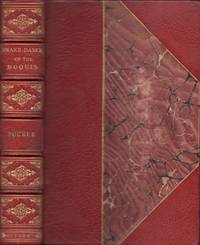
188435196London: Sampson Low Marston Searle & Rivington 1884. Three-quarter leather. Good. Octavo. xvii 371 pages 32 page publisher catalog bound in back. Illustrated with color frontispiece and 31 plates in the back of the text. Recased. Three quarter red leather binding with reddish marbled paper covered boards. Reddish marbled end papers. The original green cloth front cover and spine with gilt title and gilt illustration is bound in the back of the book. The right front flyleaf and the the title page are both clipped at the top edge suggesting a possibly clipped signature of the previous owner. Book plate of Robert C. Euler former anthropologist of the National Parks located on the front paste down. <br /> <br /> Howes B 655; Graff 368 - "The Moquis Indians of Arizona are of course the Hopi. The snake-dance is still performed but is too fascinating to be called "revolting" today. Sampson, Low, Marston, Searle, & Rivington unknown
1865List2438Camp Low 1865. Original partially printed document 26cm x 77cm. Printed on both sides of the sheet completed in manuscript. Darkening at folds from old tape repairs; partial splits to folds and extremities; complete and quite Good. Docketed verso signed in ink by Lieutenant Morgan Owen. Lists twelve enlisted soldiers most with Spanish surnames two with French surnames. Fine. The formation of the California Native Cavalry in 1863 marked a significant chapter in the state's history. Comprising primarily Mexican-American individuals colloquially referred to as "native" Californians the California Native Cavalry unit was formed 1863. Initially commanded by Maj. Andreas Pico a distinguished hero from the Mexican-American War and later under Salvador Vallejo the regiment drew its ranks from diverse backgrounds. Recruitment efforts began with vaqueros from southern California expanding to include individuals from San José and San Francisco. The unit boasted a varied composition encompassing not only Mexican-Americans but also Chilenos California and Yaqui Indians and even French legionnaires.<br /> Company "B" a contingent largely recruited from the northern part of the state is reflected in the existing muster roll. The company assembled at Camp Low near San Juan Bautista in 1865 making a striking entrance into the town. Described as "gay and gallant Spanish lancaroes" the cavalrymen presented a formidable sight with lances in hand and flags flying leaving a lasting impression on the townspeople who had never before encountered soldiers."The gay and gallant Spanish lancaroes sic came dashing through the town with the lances in their hand a flag flying from each of them. I assure you that they presented a war like appearance the people here had never seen a soldier in their lives – Yes Sir!." letter Maj. Michael O'Brien to Gov. Frederick Low January 1865; quoted in Prezelski "Lives of the Californio Lancers: the First Battalion of Native California Cavalry" in Journal of Arizona History v.40 no.1 Spring 1999. <br /> Under the command of Capt. Porfirio Jimeno Company B swiftly engaged in a critical mission: dismantling the notorious Mason-Henry Gang that had terrorized the San Juan region in the preceding months. Despite successfully wounding John Mason in early April 1865 the gang persisted for another month until Mason met his demise at the hands of a miner he sought to kidnap.<br /> However Company B faced challenges including low morale and a high rate of desertions with over 40 men leaving the company in 1865 alone. Transferred to Tubac Arizona Territory to confront the Apaches the company encountered further desertions along the way. The muster roll listing only twelve soldiers alongside Capt. Porfirio Jimeno reflects this tumultuous period. Overall the muster roll provides scarce documentation of the role of Mexican-Americans in the Civil War with few other examples in the trade or institutionally. unknown
192232809Fort Riley KS: Cavalry School 1922. First edition. Hardcover leatherette embossed in gold. Very good covers shelf rubbed outer pages lightly worn. 272p many photos line ills. and ads. No jacket as issued. Small bookseller label in back. Doings at Fort Riley in the academic year 1921-22. Many articles and photos about the history of Fort Riley the classes field officers troop officers basic National Guard and Reserve tactics weapons riding with the A.F. in Germany polo building jumps and cross-country obstacles Saumur etc. Also school activities show results humor and cartoons. The texts are by students and various officers including Harry B. Chamberlin's "Observations on Riding and Training" and Major George S. Patton on "The Cavalryman" "you must become a horsemaster a scholar a high minded gentleman a cold blooded hero and a hot blooded savage if you would be a successful Cavalry leader". Dozens of photos of riders and horses mostly named the buildings the faculty and more. Dedicated to Colonel Hamilton S. Hawkins assistant commandant with his photo. Many local and military related ads. The sixth appearance of the Fort Riley yearbook which ceased publication in 1928. This year is very scarce. Heavy; shipping/handling will be extra. Please keep this in mind when ordering. Wells 6143.1. [Cavalry School] hardcover
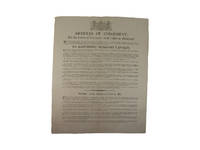
002856No Place: No Publisher Printed single sided broadside approximately 380mm x 465mm in size n.d. but probably 1794. Slightly creased small scuff to head with small amount of loss otherwise quite bright and clean. "Thomas Grimston of Kilnwick and Grimston offered to raise a cavalry force in Holderness and he set about his task with characteristic thoroughness. He issued the articles of enrolment based on those of the Northamptonshire Yeomanry and then travelled round the Holderness villages explaining his plans to the farmers. The response was very poor and he followed up his visits with letters to the Clergy suggesting that parish meetings be called so that the importance and purpose of the proposed corps could be explained to all the parishioners. Once more the results were disappointing. A letter received from the Vicar of Sproatley partly explains why this was so. "The sentiments of the People here are not changed I apprehend since you conversed with them. What they object to is the smallness of the pay from which circumstances one may r think infer two things First they are aware of the Necessity of the Measure and Secondly in return for their Services they expect a valuable consideration adequate at least to the Profits arising from Labour". Several letters were written in similar tenus and some also pointed out that volunteers were unlikely to come forward during . First Edition. Unbound. Good. Elephant Folio. Broadside. No Publisher Paperback
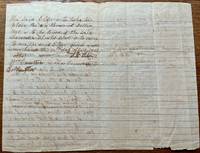
186336642Hamilton County Tennessee: n/a 1863. Document. Good. Document. Folded sheet of paper. 9" x 5". Paper has blue lines and multiple folds. 4 pages with 2 pages of content. Some fading to the ink and light toning to the paper. Chattanooga Tennessee is the seat of Hamilton County. Hand written document transcribed here: "State of Tennessee Hamilton County I Sam Elder of said County and State have this day hired Thomas Cavender as a substitute to serve as a Private in Capt J B Kings company or Capt Lyness for which I agree to pay the said Cavender one thousand dollars in hand & the other thousand dollars to be paid in three months from this date and to be loned at interest for twelve months two years is the time of service I have hired the said Thos Cavender now if the said Cavendar serves faithful as a substitute for the time of two years and at the expiration of that time the said Elder to take his place the one thousand dollars that is to be loned if the said Cavender should desert is to come to me the said Elder given under our hands this 30th day of April 1863 attest Wm Caruthers and Bob Caruthers signed seal S. H. Elder signed seal Thos Cavender." A Confederate soldier who paid another person to take his place is often referred to as a "substitute" soldier. During the American Civil War individuals who were drafted or conscripted into military service had the option to hire a substitute to serve in their place if they could afford it. These substitutes were typically individuals who were either unemployed or seeking financial gain. The practice of hiring substitutes was more prevalent among wealthier individuals who could afford to pay for someone else to take their place in the military.<br /> <br /> The Elder family were pioneers in Tennessee. Some of the family settled in Hamilton County. This excerpt is copied from Chattanoogan dot com: "The children of Robert S. Elder included Samuel Houston Sarah Jane Minerva Jane Robert and James B. Sarah married Thomas Monger a Unionist who was on the County Court. Minerva married James Clifford Allen who fought for the Union and was in the Legislature from Bradley County. Samuel H. was on the Confederate side joining 2nd Co. K of the First CSA Cavalry on Sept. 23 1862. He married Sarah J. White. Their daughter Mary A. married Aaron E. Smith. Samuel H. and his brother Robert had a "store boat'' that made calls at the various river landings and they also had a general store at Snow Hill. Samuel H. was postmaster at Long Savannah. He died in 1910 of a heart attack while walking from Avondale to Snow Hill."<br /> <br /> A record for Benjamin Franklin Cavendar from Hamilton County was found. However no mention of Confederates in Hamilton County for Thomas. Although a "Reader's Comment" from the Chattanoogan dot com states this: CAVENDER Benjamin Franklin Co. B 1TN Cav. Carter's Born 1839 in TN son of Henry Cavender. Farmer in Ooltewah. 1860 HC Census Reader Comment; Henry Cavender by his first wife did have a son named Benjamin S. Cavender b. ca. 1806 in NC living in Hamilton in 1850 but d. March 14 1858 in Dade Co. MO. By his 2nd wife Henry Cavender had a son named Franklin b. ca. 1839 in Hamilton Co. TN. However Henry Cavender relocated with several of his married and unmarried children after the 1860 census but prior to the War to Pitman Randolph Co. AR. In service with nephews in Company A of the 12th Missouri Infantry is Henry's son Francis Marion Cavender and an F.N.C. Cavender who I assume may be Henry's son Franklin. I cannot say for certain since there are no enlistment dates on this post but this Benjamin Cavender may be the son of Henry's son Thomas Cavender who remained in Hamilton Co. Thomas' son Benjamin J. Cavender was b. ca. 1844 in Hamilton Co. relocating after the War to Jeffersonville IN. I would be interested in hearing how the authors pegged this solder as Benjamin Franklin Cavender as Civil War soldiers database only lists him as Benjamin. I regret I cannot say anything more definitive than to cast some doubts. Kendall Sparkman.<br /> <br /> According to a record found in familysearch dot org: Captain J. B. King mentioned in the document was an officer for for Company B of the 1st Regiment Tennessee Cavalry Carter's. This regiment was organized in November 1862 using the 3rd Tennessee Cavalry Battalion as its nucleus. This company was active in the Vicksburg Campaign and was captured July 1863. By exchanged it was attached to Waul's Texas Legion then returned to the regiment. It surrendered with the Army of Tennessee.1<br /> <br /> The Caruthers individuals who attested this document were not found in a brief internet search. However there are other possible spellings of the name such as CARRUTHERS CARETHERS CAROTHERS. Some of the individuals named in the site Chattanoogan dot com were near the Chattanooga area during the Civil War. n/a unknown
186358198Virginia; various places including City Point 1863-1865. Fine original condition. 8vo. With a brief signed note describing the finding of these letters on a farm near Albany New York. Two letters from Charles Seaver to his sister describe a night-time call to arms arrival on the Rapidan coming under battery fire and forcing the enemy infantry across the river; hoping to relocate to Washington rather than South Carolina; effecting the surrender of "five Rebble sentenals" and the destruction of a railroad bridge by axe and fire. To his mother from City Point he writes of religion; of money due him and how to collect it in case he is killed; and a temporarily successful Rebel capture of 2500 cattle. Merrill Flint writes to his sister on April 6th 1865 from Virginia about walking the streets of Petersburg "it looks very rough"; and not expecting to see Richmond for some time "for we are following Old Lee as fast as the Army can march.the Confederate Army is on its last pins." With one original addressed envelope. unknown
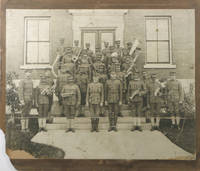
1910List304Fort Ethan Allen 1910. Gelatin silver print mounted to board 16 ¼ x 14 ½ inches. Fair to Good. The 10th Cavalry was one of the original “Buffalo Soldier†regiments of the post-Civil War segregated U.S. Army first seeing action in the Indian Wars. Their band is shown here most likely during their stint at Fort Ethan Allen in Vermont. They are wearing a mix of insignia from 1902 to 1908 and some are shown in civilian clothing which suggests the picture was taken in Vermont as this was during the time the Army used a vast mix of insignia and the brick architecture of the background also matches that of the fort. <br /> <br /> They were exposed to some racism during their time in Vermont - the soldiers were punished for associating with neighboring white women with some of the offenders being confined to the guardhouse for punishment which fits with the strictly segregated Army policies of the time. The soldiers did also record positive aspects of their time at the fort including studying at the fort’s library and playing nightly games of the newly-invented sport of basketball. These amenities provided some positive contrast to the previous assignments of the regiment who had been mostly stationed on the frigid plains where the army believed racial tensions would be kept to a minimum. <br /> <br /> The picture shows the band with the normal marching band instruments of clarinets tubas and sousaphones as well as an alto clarinet oboe and what appears to be a baritone saxophone. We find no other examples of the 10th Cavalry Band and the picture shows the regiment at a relatively calm time as they would soon be sent to the Mexican-American border in 1913 to deal with rising tensions. The picture has condition issues with damage to the mount some damage to the bottom left corner and a crease along the bottom third of the image along with closed tears and chipping to the title label. It remains in fair to good condition attractive and worthy of preservation. unknown
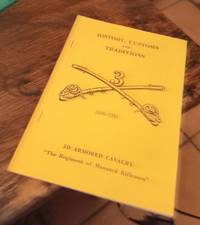
1981054918USA: 3D Armored Cavalry 1981. Paper Back. Fine/No Jacket. 8vo - over 7¾" - 9¾" tall. 27pp.; SC staple-bound; yellow w/blk.-pic.cover; fine condition w/cleantight pgs. Military history <br/> <br/> 3D Armored Cavalry unknown