U S Cavalry AssociationBiblio.com
1 094 résultats
0365159085.Ghardcover. Good. Access codes and supplements are not guaranteed with used items. May be an ex-library book. hardcover
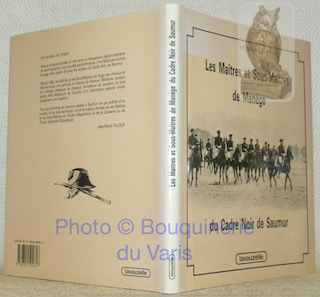
95879Paris, Lavauzelle 1989, 260x205mm, 77pages, reliure d'éditeur sous jaquette. Bel exemplaire.
Z1-H-004-01695Saunders Otley and Co. Used - Good. 1865. pp47 24 ads. Ex institutional library. Dedication to endpaper " J. Gibbs esq. Chanpion of Medical Liberty with the Author's respect" Bookplate of Gibbs to endpaper. Pen changes to text in the author's hand. Father of Tudor St. George Tucker. Ships from UK in 48 hours or less usually same day.Your purchase helps support Sri Lankan Children's Charity 'The Rainbow Centre'. 100% money back guarantee. We are a world class secondhand bookstore based in Hertfordshire United Kingdom and specialize in high quality textbooks across an enormous variety of subjects. We aim to provide a vast range of textbooks rare and collectible books at a great price. Our donations to The Rainbow Centre have helped provide an education and a safe haven to hundreds of children who live in appalling conditions. We provide a 100% money back guarantee and are dedicated to providing our customers with the highest standards of service in the bookselling industry. Saunders, Otley, and Co unknown
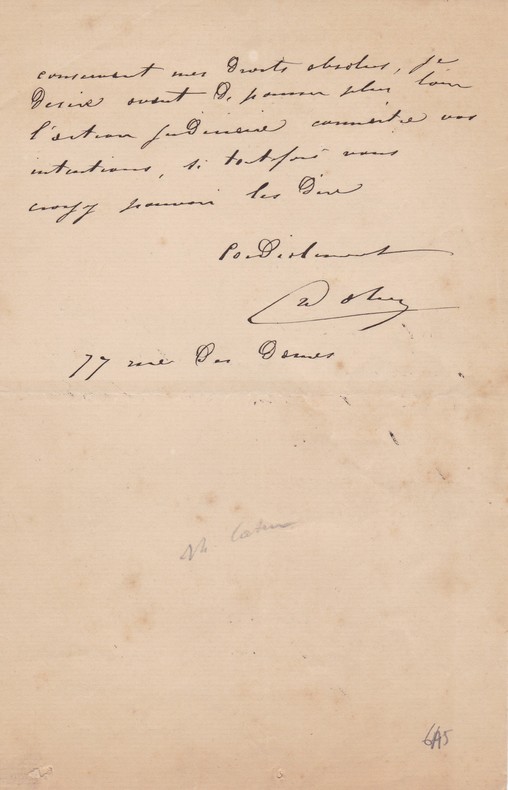
007321Théodore Cahu (1854-1928), écrivain, officier de cavalerie. L.A.S., sd [188.], 1pœ in-8. Lettre difficile à déchiffrer concernant une affaire. [246]
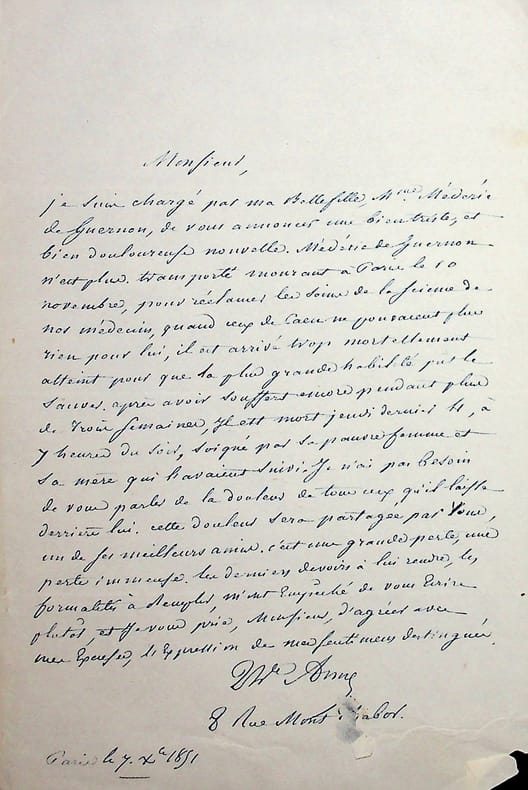
020469Théodore Anne (1797-1869), écrivain, dramaturge, officier de cavalerie, garde du corps du roi jusqu'en 1830. L.A.S., Paris, 7 décembre 1851, 1p in-8. Il annonce à son correspondant la mort de son beau-fils, le magistrat Médéric de Guernon (1812-1851), gendre de son épouse (Anne est le son second mari). Il donne des détails sur les derniers moments de Guernon. [493]
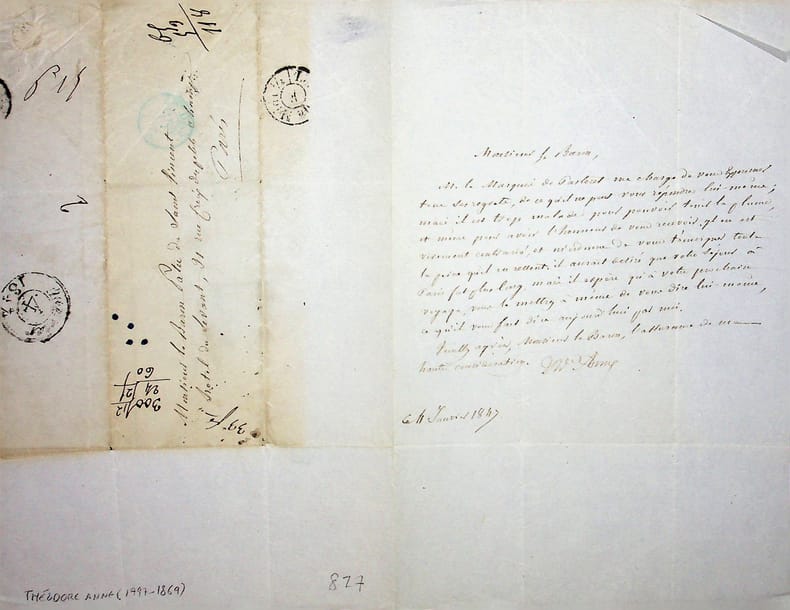
020470Théodore Anne (1797-1869), écrivain, dramaturge, officier de cavalerie, garde du corps du roi jusqu'en 1830. L.A.S., 11 janvier 1847, 1p in-8. Au baron Cyrille Patu de Saint-Vincent (1801-1867), avocat. Il écrit pour le marquis [Amédée] de Pastoret, trop fatigué pour répondre ou recevoir le baron. Il espère que le prochain voyage du baron à Paris permettre de rendre la visite possible. [493]
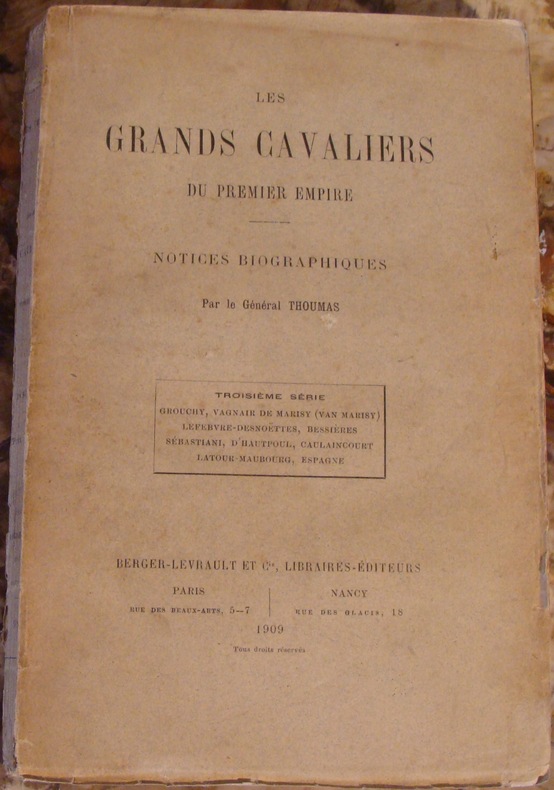
1909938PARIS-NANCY. BERGER-LEVRAULT ET CIE LIBRAIRES-EDITEURS. 1909. IN-8 BROCHE (16,5 X 25,5 X 2 CENTIMETRES ENVIRON) DE (6) + 441 PAGES, COUVERTURE GRISE, TITRE IMPRIME EN NOIR. EDITION ORIGINALE. DEFAUTS A LA COUVERTURE, SINON BON EXEMPLAIRE.
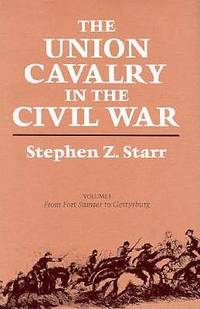
G/G (lightly discoloured/faded intact dj, black boards with grey cloth backstrip, one small mark to backstrip at top of front cover,a very good clean tight bright copy internally but heavy stain 1.5" deep across outside fore-edges) quarto 336pp. In-depth look at the Civil War's mounted men and the part they played in the war effort. Over 200 b/w photos.
195287562Atlanta GA: Albert Love Enterprises c1952. Presumed First Edition First printing. Hardcover. Good. The format is approximately 9 inches by 12 inches. Dornbusch 411. Unpaginated. Endpaper map. Illustrations. Maps. Cover worn and soiled. Edges and corners rubbed. No dust jacket present. Large volume somewhat shaken. If sent outside of the U. S. this would require additional shipping charges. Includes a section on the History of the First Team prior to Korea going back to its precursor lineage units its formal organization in 1921 and its spectacular achievements during World War II. After a substantial text and pictorial section on the combat operations and military activities the volume ends with information on The Division Patch information on the Headquarters and Headquarters Company 1st Cavalry Division 5th Cavalry Regiment 7th Cavalry Regiment of Custer fame and Garry Owen 8th Cavalry Regiment; Headquarters and Headquarters Battery 1st Cavalry Division Artillery 61st Field Artillery Battalion 77th Field Artillery Battalion 82nd Field Artillery Battalion 99th Field Artillery Battalion 29th Antiaircraft Artillery Automatic Weapons Battalion 92d Antiaircraft Artillery Automatic Weapons Battalion 8th Engineer Combat Battalion 13th Signal Company 15th Quartermaster Company 15th Medical Battalion 15th Replacement Company 16th Reconnaissance Company 27th Ordnance Maintenance Company 70th Heavy Tank Battalion 71st Heavy Tank Battalion 191st Counter-Intelligence Corps Detachment 545th Military Police Company and 1st Cavalry Division Band. This is followed by the Roster First Cavalry Division which gives unit name street address and home town and state. The 1st Cavalry Division initially organized in September 1921 at Fort Bliss Texas was serving on occupation duty in Japan when the Korean War began in the summer of 1950. On 18 July 1950 elements of the division went ashore at P'ohang-dong South Korea moving quickly westward to block the enemy along the main Taejon-Taegu corridor which led back to the ports on the Sea of Japan. With unrelenting pressure from the enemy the division withdrew to Kumch'on and later east of the Naktong River where it held part of the front near Taegu on the Pusan perimeter. During the month of August "The First Team" successfully countered five major North Korean attacks in that section. In early September the division launched an attack against the "Walled City" a series of high mountain ridges along the perimeter which the enemy repelled. On 15 September however the United Nations began a new offensive with an amphibious landing at Inch'on near Seoul; with the opening of the second front the 1st Cavalry Division began a drive northwest of Taegu. Six days later the division broke out of the perimeter and North Korean pressure in the south ended. Pursuit of the enemy followed and on 27 September the division met the 7th Infantry Division at Osan. From there the 1st Cavalry Division shifted north to the Kaesong area near the 38th Parallel the dividing line between North and South Korea. On 9 October the 1st Cavalry Division was ordered to take Kumch'on in North Korea which fell on 14 October. Shortly thereafter the division reached P'yongyang the North Korean capital. Elements of the division linked up with the 187th Airborne Infantry at Sunch'on and other elements turned southwest to Chinnamp'o the main port of North Korea. Oon 1 November a new more savage conflict began. Waves of enemy forces swept over the 1st Cavalry Division area near Unsan and the division fell back to a line between the coast and the Taedong River valley. By 12 December the division had withdrawn to only six miles north of Seoul and in January 1951 it occupied positions south of Seoul in the Ch'ungju area. Seoul had been captured but the enemy did not cross the Han River. When the enemy failed to follow up its recapture of Seoul the 1st Cavalry Division undertook a reconnaissance in force resulting in a limited offensive north and west of the capital. By the end of February "The First Team" had reached the Hongch'on area in the central front midway between Seoul and the Sea of Japan. In February the 1st Cavalry Division pushed to the Hwach'on Reservoir north of the 38th Parallel and then went into reserve. On 22 April the Chinese Communists began a new offensive to dislodge the UN forces and the division was given the mission of defending Seoul and the area north of the city. The division pushed northward and by the end of May it was again in North Korea. The 1st Cavalry Division's next assignment was to attack the "Iron Triangle" an area from P'yonggang southeast to Ch'orwon and southwest to Kumhwa which served as a marshalling zone for the enemy. In December 1951 the 45th Infantry Division replaced the 1st Cavalry Division which then began redeploying to Hokkaido Japan. The last element of the 1st arrived in Japan in mid-January 1952. Albert Love Enterprises hardcover
nosku2408This is the hardcover only stated Louisiana Edition from 1979. Other than a back cardholder flyleaf ex lib both the mylar-covered DJ and the book are in excellent condition. There are no rips tears etc. and the pages and binding are tight. This wonderful impossible-to-find item is available for purchase now! Note: All books listed as FIRST EDITIONS are stated by the publisher in words or number lines--or--only stated editions that include only the publisher and publication date. NAME YOUR PRICE!!! Due to the vagaries of market fluctuations an item's listed price should be considered a guideline. Serious buyers are welcome to make a on each and every item listed with the assurance that ALL reasonable offers will be accepted!!Very Good hardcover
1923043773Mittler. nice copy; but ex-private library; Withdrawal card on rear endpaper; stamp on front endpaper; stamp on edges . Very Good. Hardcover. 1st Edition. 1923. Mittler hardcover
1926mon0000014194The Cavalry School 1926. Hardcover. Good. Covers show some darkening and fading and spine edges show some rubbing. Corners show some fraying rubbing and scuffing. Pages show some light browning. The Cavalry School hardcover
188745161887 Paris, Georges Hurtrel 1887; in-16 carré, broché. 326 pages. Illustré de nombreuses figures par P. Kauffmann.,non rogné,à grandes marges, fort manque au bas du dos,
19742091502135308727Oizumi shoten 1974. Soft Cover. Fine. Number of books: 3 Oizumi shoten paperback
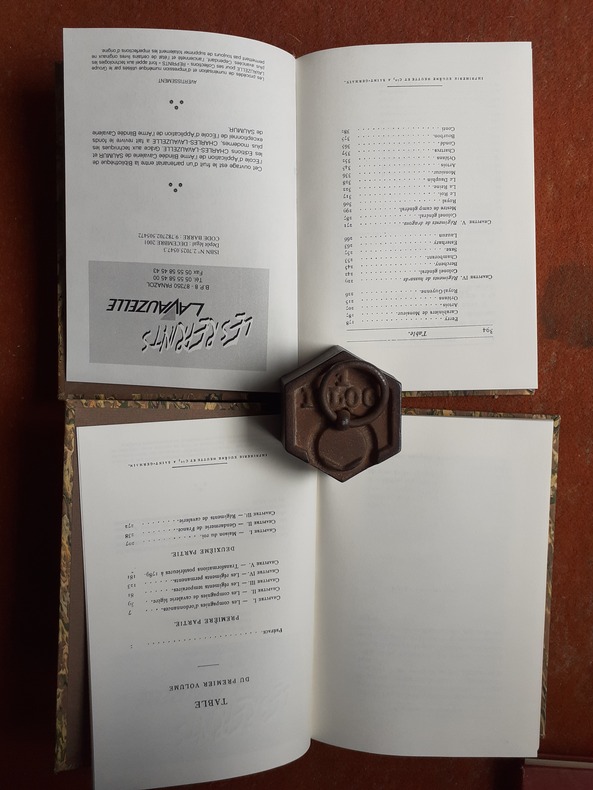
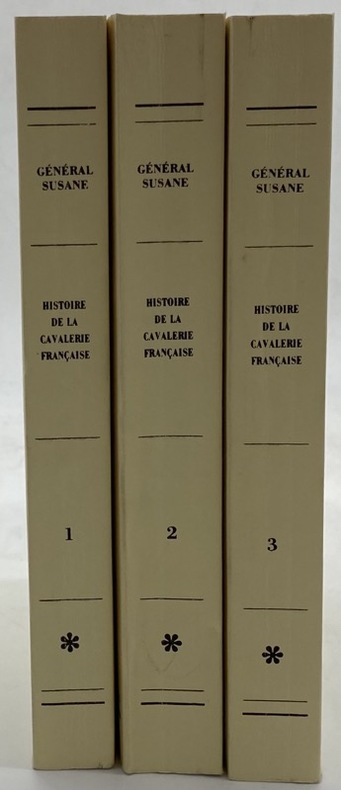
QWA-19421Lavauzelle, 2001, 3 vol. in-8 rel. 1/2 chagr. havane moucheté (15 x 21,5),311 p.-394 p.-340 p., réimpression en fac-similé de l'édition Hetzel 1874, dos à 4 faux nerfs et pièces de titre, très bon état.
105.128Reprint C. Terrana, 1989. 12 x 19, 3 volumes, 313 + 394 + 342 pages, broché (thermocollé), très bon état.
2985Paris, Hetzel, 1874. 3 vol. in-12, demi chagrin, 311, 392 & 340p. Table ; Régiments de cavalerie - Régiments de Hussards - Régiment de Dragons - Régiments de Chasseurs. Rousseurs éparses, Bon état.
232063Paris, Terana, 1989 3 vol. in-12, 311 pp., 394 pp. et 342 pp., broché.
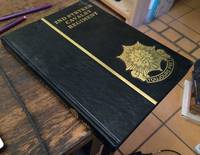
2008007667US Army/Minneapolis Minnesota: 2nd Stryker Cavalry Regiment/Jostens Commercial Printing 2008. Hardcover. Fine/No Jacket. Folio - over 12" - 15" tall. 303pp.; HB blk.w/gilt-emboss cover; fine condition w/cleantight pgs. History & yearbook. color photos throughout. <br/> <br/> 2nd Stryker Cavalry Regiment/Jostens Commercial Printing hardcover
8vo., First Edition, with frontispiece, photographs in the text and pictorial endpapers; black cloth, a very good, bright, clean copy in unclipped dustwrapper.
Octavo. Pp. viii, 112. Original printed wrappers, bit shabby, shelf ticket to spine, spine bit worn at foot, old military institutional stamps to title. In a very good internal condition. ~ First edition. The first volumes of this extended work, complete in itself.
Lower corners bumped. Else book and DJ have minor shelfwear. ; 1.06 x 8.75 x 5.75 Inches; 380 pages; This book is the first to examine how classical Greek cavalry actually operated on the battlefield. It looks at its prime characteristics, including mobility, protection, armament, training, leadership, flexibility, and motivation. Until now, it was generally assumed that ancient Greek cavalry was subordinated to the infantry because it was less effective in battle. This book challenges this assumption, analyzing the position of Greek cavalry, and especially the Athenian arm, not only in the battlefield but in society as a whole.
2 corners and base of spine bumped. Ex-library copy with usual stamps, call numbers and pocket. ; 1.06 x 8.75 x 5.75 Inches; 380 pages; This book is the first to examine how classical Greek cavalry actually operated on the battlefield. It looks at its prime characteristics, including mobility, protection, armament, training, leadership, flexibility, and motivation. Until now, it was generally assumed that ancient Greek cavalry was subordinated to the infantry because it was less effective in battle. This book challenges this assumption, analyzing the position of Greek cavalry, and especially the Athenian arm, not only in the battlefield but in society as a whole.
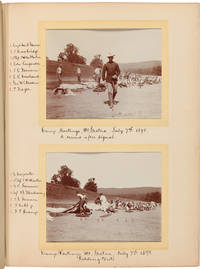
1898WRCAM54683Various places including Pennsylvania Virginia at sea New Jersey and Puerto Rico 1898. 171pp. with 342 photographs. Four large quarto photograph albums. Matching contemporary three-quarter crimson morocco and cloth front covers gilt. Minor shelf wear and some rubbing. Images in overall very good condition. An amazing assemblage of photographs documenting the Spanish-American War experiences of the First Troop Philadelphia City Cavalry which was at that time the oldest volunteer military unit in continuous service to the United States. The photographs are arranged chronologically in four contemporary photo albums with the images occasionally annotated in a contemporary hand and including the identification of numerous members of the Troop. <br> <br> The first volume opens with images of Mt. Gretna Pennsylvania "where troops were sworn into U.S. service May 7th 1898 by Maj. Thompson U.S.A." The photographs record field exercises camp building and tent organization at Camp Hastings cavalry drills an image of "Capt. Groome reading the Articles of War to Troop June 1898" a "first arrival of government horses" several shots of men training and "throwing" their horses shooting practice "Capt. Groome assigning Government horses to Troopers" and various shots of the men at work and even some play. Over the course of the album the names of numerous soldiers are recorded below several of the photographs. <br> <br> The second album opens with several photographs of the Troop striking their tents in preparation for leaving Camp Hastings at Mt. Gretna headed for Camp Alger at Dunn Loring Virginia. Here the Troop was ordered to increase their enlistment numbers. At Camp Alger the Troop was also fitted out with federal supplies and assigned to the Second Army Corps commanded by Maj. Gen. William Graham who is pictured here. Other photographs capture the camp scene at Alger "the First Troop picket line" the Troop receiving their federal-issue khaki uniforms the Troop at roll call and some shots featuring African-American helpers. <br> <br> In late July the Troop was sent to Newport News and several photographs record their brief time there with about a dozen shots of their temporary camp. On July 28 1898 the Troop left Virginia on the transport ship MASSACHUSETTS bound for Puerto Rico. Several images here capture the frenetic loading of the troops and their horses onto the ship with the remaining half dozen or so shots recording the Troop's time on board. <br> <br> The third album picks up where the second left off with the First City Troop embarked on the transport ship MASSACHUSETTS headed for Guanica Puerto Rico. Shipboard activities captured here include a few shots of groups of men being showered with water hoses. Several shots record the arrival of the men in the port of Guanica where they encounter the hospital ship NUECES which reports of the news of the "surrender of Ponce." After the men disembark they pitch their camp around Cathedral Virgin del Carmen on August 5. The next day several photographs record the unloading of horses and stores in the harbor at Ponce. The remaining thirty-eight photographs in this volume record scenes in the interior of Puerto Rico and are the most heavily annotated of the four albums. The images record scenes from the "road from Port of Ponce to Ponce" several scenes capturing a market day in Ponce and recording numerous native islanders the Troop's "temporary camp about 2 miles beyond Ponce" the "Troop wagon leaving camp beyond Ponce to join wagon train for Guayama" on August 8 a shot of the Troop's wagon "on road to Guayama in a Porto Rico mudhole" images of the wagon train to Guayama with the H Troop 6th U.S. Cavalry the "Point of Advance Guard entering Guayama within the lines" the Troop itself "entering Guayama passing General Brooke's Headquarters" a "View of First Troop Phila. City Cavalry U.S.V. Camp at Arroyo August 10th to 6A.M. Aug. 13th 1898" with the last ten images recording the camp or the streets at Arroyo. <br> <br> The fourth album documents the Troop's voyage home to Philadelphia. This time they take passage on the transport ship MISSISSIPPI and about half of the images record their voyage on board. On Sept. 10 1898 they reach Jersey City in New York harbor where they camp for a short time before returning to camp in Pennsylvania where the album ends. A couple of months later all three officers and the ninety- eight enlisted men of the First City Troop were mustered out of federal service for the Spanish-American War. <br> <br> Originally founded in 1774 by twenty-eight Philadelphia patriots as the "Light Horse of the City of Philadelphia" the First Troop of Philadelphia Cavalry is the oldest mounted military unit operating in continuous service to the American republic being the first volunteer cavalry troop organized in defense of the colonies. Among the Troop's original founders was John Dunlap printer to Congress from 1778 to 1789 publisher of the first American daily newspaper and the first printer of the Declaration of Independence. Most of the earliest members were similarly notable professional men of Philadelphia. The Troop served with valor in the American Revolution the War of 1812 the Mexican- American War the Civil War the Spanish- American War and every major American war through the Korean War. <br> <br> The present albums present a unique and important visual record of the First City Troop's activities before during and on the way home from the Spanish-American War. hardcover books
Fine French Original red cloth. 12mo. (17 x 12 cm). In French. 256 p., 19 b/w plans, 32 numerous color plans, 1 map of Morocco in 18 pages. Maroc. Preface du Marechal de France Alphonse Juin de l'Academie française. First Edition.