HOUSEHOLD CAVALRYBiblio.com
167 résultats
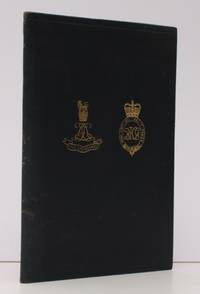
196340031Gale & Polden Aldershot 1963. 8vo. First Edition thus with title in gilt and colours and 2 fine full-page coloured plates of colours; de luxe binding of full navy roan upper board blocked in gilt gilt doublures blue silk endpapers a near fine copy. The de luxe binding is very scarce. [Gale & Polden, Aldershot], unknown
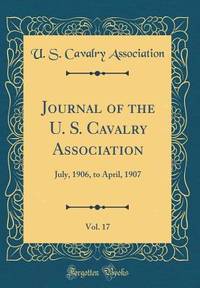
193680642Washington DC: United States Cavalry Association 1936. First Edition. First printing softcover issue. 12mo 19cm. Original card wrappers softcover; 173pp; illus. Bit of external rubbing and soil; faint marginal dampstain to final 15 or so leaves else a tight unmarked copy Very Good.<br /> <br /> Account of Bernard's nearly 40-years career as a U.S. Cavalry officer with accounts of his actions in the Civil War and the Western Theater Illustrated throughout with photographic portraits and line drawings by Donald Dickson. There was a small simultaneous issue in cloth. United States Cavalry Association unknown
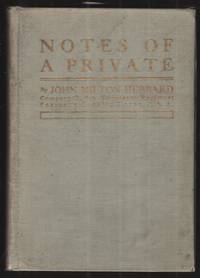
190940921Memphis Tennessee: E. H. Clarke & Brother. Very Good. 1909. Hardcover. Very Good condition. Small grey cloth hardcover with gold writting on the title. Corners and bottom of spine are worn some markins on the cover. Pages are slightly aged and there are a couple small feded pencilings inside the cover. Otherwise the interior is excellent condition. Book has been glassine wrapped for protection. ; 5 3/4" x 8"; 189 pages . E. H. Clarke & Brother hardcover
1865List2438Camp Low 1865. Original partially printed document 26cm x 77cm. Printed on both sides of the sheet completed in manuscript. Darkening at folds from old tape repairs; partial splits to folds and extremities; complete and quite Good. Docketed verso signed in ink by Lieutenant Morgan Owen. Lists twelve enlisted soldiers most with Spanish surnames two with French surnames. Fine. The formation of the California Native Cavalry in 1863 marked a significant chapter in the state's history. Comprising primarily Mexican-American individuals colloquially referred to as "native" Californians the California Native Cavalry unit was formed 1863. Initially commanded by Maj. Andreas Pico a distinguished hero from the Mexican-American War and later under Salvador Vallejo the regiment drew its ranks from diverse backgrounds. Recruitment efforts began with vaqueros from southern California expanding to include individuals from San José and San Francisco. The unit boasted a varied composition encompassing not only Mexican-Americans but also Chilenos California and Yaqui Indians and even French legionnaires.<br /> Company "B" a contingent largely recruited from the northern part of the state is reflected in the existing muster roll. The company assembled at Camp Low near San Juan Bautista in 1865 making a striking entrance into the town. Described as "gay and gallant Spanish lancaroes" the cavalrymen presented a formidable sight with lances in hand and flags flying leaving a lasting impression on the townspeople who had never before encountered soldiers."The gay and gallant Spanish lancaroes sic came dashing through the town with the lances in their hand a flag flying from each of them. I assure you that they presented a war like appearance the people here had never seen a soldier in their lives – Yes Sir!." letter Maj. Michael O'Brien to Gov. Frederick Low January 1865; quoted in Prezelski "Lives of the Californio Lancers: the First Battalion of Native California Cavalry" in Journal of Arizona History v.40 no.1 Spring 1999. <br /> Under the command of Capt. Porfirio Jimeno Company B swiftly engaged in a critical mission: dismantling the notorious Mason-Henry Gang that had terrorized the San Juan region in the preceding months. Despite successfully wounding John Mason in early April 1865 the gang persisted for another month until Mason met his demise at the hands of a miner he sought to kidnap.<br /> However Company B faced challenges including low morale and a high rate of desertions with over 40 men leaving the company in 1865 alone. Transferred to Tubac Arizona Territory to confront the Apaches the company encountered further desertions along the way. The muster roll listing only twelve soldiers alongside Capt. Porfirio Jimeno reflects this tumultuous period. Overall the muster roll provides scarce documentation of the role of Mexican-Americans in the Civil War with few other examples in the trade or institutionally. unknown
134669768X.Ghardcover. Good. Access codes and supplements are not guaranteed with used items. May be an ex-library book. hardcover
190949257n.p.: U.S. Army 1909. good. 35" x 22.5" 1 sheet 1 color map folded size 4.5" x 7.5" small tears at a few creases. Sgt. J. Howry was the draftsman for this map. This map is a reduced copy of 3-inch map referred to in Problems to include 1908-1909. Scale: 2 inches equals 1 mile. Contour intervals 20 feet. U.S. Army unknown
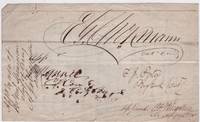
186145596n.p. 1861. Very good folded edge worn light soiling and ink staining. 1 sheet. 7.75 x 4.5 inches. Signed by Ernest G. Chormann Brig. Gen. Fitz John Porter Col. William Woods Averell Chief of ordnance Charles P. Kingsbury and Assistant Adjutant-General Andrew J. Alexander for Gen. George Stoneman with the note "approved" by three signatures. Though undated it was likely signed between September 1861 and January 17 1862 based on the service records of those who signed it.<br /> <br /> 1. Ernest G. Chormann in 1861 recruited a volunteer regiment called "Chorman’s Independent Mounted Rifle Rangers" in Philadelphia. See Library Company of Philadelphia for the broadside. The first company of this regiment was mustered into service July 23 1861 and the last was mustered Sept. 15th 1861. The regiment was then under the command of Col. E. G. Chormann. It was numbered the 89th of the line and the 8th Cavalry and left Pennsylvania for Washington on Oct. 4 where it was brigaded with the 3rd Pa. cavalry thus putting Chormann under the command of William Woods Averell who in turn was under the command of Brigadier General Fitz John Porter. On Nov. 9 1861 the New York Times reported "The Eighth Pennsylvania Cavalry Col. Chormann has been brigaded with the Third from the same State. The brigade is commanded by Col. W.W. Averell of the latter regiment. Both are rapidly improving in efficiency and drill." But on Nov. 27 the Philadelphia Inquirer reported that "The statement that charges have been filed against Col. Chormann is said to be erroneous. The Colonel is laboring energetically to ensure the perfection of drill desireable in all well disciplined regiments." By January 17 1862 Chormann had resigned his commission to be replaced by Capt. David Gregg of the 6th U. S. cavalry an experienced officer and a graduate of West Point. Chormann had endorsed Merrill’s Patent Breech-Loading Carbine on September 19th 1861 his letter to General J. W. Ripley Chief of Ordnance Washington D. C. soon appearing in an advertisement for the weapons but so had many other officers. Thus both the reason for his resignation and the purpose of this document remain unknown.<br /> <br /> Little is known about Ernest G. Chormann other than in his autobiography below and for his filing of numerous patents. He was an inventor and also active as an artist between 1853-1880 See Frick Museum Art Reference Library. In 1852 he exhibited saddle patterns at the Twenty-second Exhibition of American Manufactures at the Franklin Institute; in 1861 listed as an engraver and die sinker he bid on a $2500 contract with the U.S. Government for coin designs as part of ongoing experiments into how to prevent “abrasion counterfeiting and deterioration of the coins of the United States; †he was hired as the engraver; he filed for optical and mechanical patents; in 1880 he painted "Letitia Street House 1880" now at the Historical Society of Pennsylvania. The Pennsylvania's Rangers' War song: "Up ! up ! with our flag let its bright stars gleam out" was dedicated to him. <br /> <br /> The Pennsylvania Historical Review 1886 lists his firm Chormann & Mitchell as "inventors and patentees of the specialties manufactured. They manufacture all kinds of art furniture including parlor easels novel and chaste in design labor- saving studio easels sketching easels artists’ kits etc. together with interior decorations. the studio easel being awarded the first premium and diploma at the Centennial Exposition of 1876."<br /> <br /> Chormann adds his somewhat rather fanciful biography:<br /> <br /> "Mr. Chormann the founder of this business was born in France. Early in life he was noted for his energy talent and determination and visited as an explorer and traveller nearly every country in the civilized world. In 1836 he was a colonel in the San Jacinto war where he manifested great courage and prudence and on its termination made an effort to explore almost alone the sources of the Nile. Eventually after exploring various portions of Australia New Mexico Arizona and Lower California and undergoing great hardships and dangers from climate and Indians he was appointed on his arrival in Texas in 1845 captain and superintendent of the Texan Rangers. He was actively engaged in 1847 and 1848 in the Mexican war where his distinguished military ability was of great service to the United States. During his explorations and travels in the West he was associated with those famous old Indian fighters namely De Soto and California Joe. Mr. Chormann was the first white man who explored the Western portion of the Colorado River the whole of the country at that period 1843 watered by this stream being inhabited by tribes of Indians of the most cruel and treacherous nature. Colonel Chormann organized the first regiment that served during the war and which was known as Chormann’s Mounted Rangers. On the 14th April 1861 immediately after the bombardment of Fort Sumpter he began recruiting and put 5000 men in the field. In 1865 he brought East the first specimen of the moss agate. In a few months Mr. Chormann intends to publish a work on Colorado and the West illustrated with splendid engravings which will prove of the greatest interest to all lovers of nature. He was the inventor of stylograph printing and is noted in scientific and artistic circles for his inflexible integrity and sterling ability."<br /> <br /> 2. Fitz John Porter 1822-1901 Civil War Union Major General West Point 1845 served in the Mexican–American War promoted to brigadier general of volunteers in 1861 and divisional commander in the newly formed Army of the Potomac under Maj. Gen. George B. McClellan who was soon is patron. On November 25 1862 Porter was arrested and court-martialed for his actions at Second Bull Run after McClellan was dismissed by Lincoln. He spent the next 16 years trying clear his name and record which he finally did in 1878.<br /> <br /> 3. William Woods Averell 1832-1900 Civil War Union Brigadier General West Point 1855 2nd Lieutenant assigned to the United States Army Mounted Rifles and served in the Indian Wars on the Western frontier severely wounded in a fight with Navajos in 1859 became a 1st Lieutenant with the Mounted Riflemen and was placed on staff duty in Washington D.C. In August 1861 he was appointed as Colonel of the 3rd Pennsylvania Volunteer Cavalry and soon became a Brigadier General.<br /> <br /> 4. Andrew Jonathan Alexander 1833-1887 Civil War Union Brevet Brigadier General served first as a Captain in the 3rd United States Regular Cavalry then as Lieutenant Colonel and Assistant Adjutant General on the staff of Union General George Stoneman.<br /> <br /> 5. Charles Peeble Kingsbury 1816-1879 graduated from West Point in 1840 2nd in a class of 42 served in the Mexican War as General Wolf's ordnance officer and on General Taylor’s staff wrote 'Elementary Treatise on Artillery and Infantry' 1849 and was a contributor to the American Whig Review Western Quarterly Review Putnam’s Monthly and the Southern Literary Messenger from 1840-67 was superintendent of the Armory at Harper's ferry and Chief of Ordnance for the Army of the Potomac August 12 1861 to July 1862 promoted to Colonel and aide-decamp September 28 1861. unknown
AQ24115s.l.: s.n. 1842-46 Manuscript on paper. 102 leaves. 14 used the remainder blank. Contemporary green cloth contrasting red paper lettering-piece to upper board title in manuscript to spine and bottom edge metal clasp. Extremities rubbed and a trilfe marked. Upper hinge exposed. A mid-nineteenth-century manuscript guest book for the Westmorland Yeomanry Cavalry. The regiment was raised by Colonel Henry Lowther as the Westmorland Yeomanry Cavalry in 1819. It was re-raised as the Westmorland and Cumberland Yeomanry Cavalry in 1828 and was called upon to suppress chartist riots at Penrith and Carlisle in 1839. It was called upon again to suppress fighting between English and Irish labourers working on the Lancaster and Carlisle Railway at Lowther Park in 1846. Although there had been no intention for the Yeomanry to serve overseas a series of defeats during Black Week in December 1899 convinced the British Government that additional troops were needed to supplement the regular army. A Royal Warrant was issued on 24th December 1899 to allow volunteer forces to serve in the Second Boer War and the Yeomanry were duly dispatched. . 8vo. [s.n.], [1842-46] hardcover
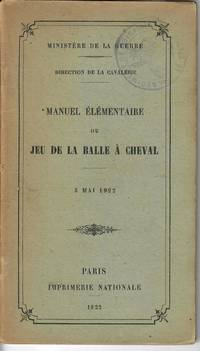
192216810Paris: Imprimerie Nationale 1922. First edition. Soft cover. Very good pages age browned. 55p 22 line ills. Old regimental library stamp on cover and half-title. In French. There are very few French books on polo and this cavalry manual was printed only in this one edition. Covers training rules tactics etc. Very scarce: one location in WorldCat Bibliotheque Nationale. Can be sent outside the US for less than the default shipping rate. Imprimerie Nationale unknown
1896152509Bruxelles : J. B. Stephens 1896. First Edition. Hardback. A fine copy in the original blind tooled pebbled cloth. Remains particularly well-preserved overall; tight bright clean and especially sharp-cornered. Ex-libris copy with minor internal marks remaining. ; 61 pages; Description: 61 p. : ill. some foldng ; 15 cm. Subjects: Explosives --Tactics --Warfare. Lieutenant Piret's copy with signature. Bruxelles : J. B. Stephens hardcover
0266210406.Ghardcover. Good. Access codes and supplements are not guaranteed with used items. May be an ex-library book. hardcover
1331362369.Gpaperback. Good. Access codes and supplements are not guaranteed with used items. May be an ex-library book. paperback
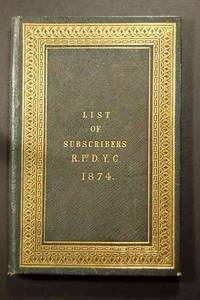
280281874. 8vo 12pp. manuscript on vellum hand illuminated by Frank Walker illuminator to the Queen in colours and gold with a green morocco binding wide gilt decorative border to upper cover centre lettered in gilt a nice copy. 1874 hardcover
1017541329.Ghardcover. Good. Access codes and supplements are not guaranteed with used items. May be an ex-library book. hardcover
139059890X.Gpaperback. Good. Access codes and supplements are not guaranteed with used items. May be an ex-library book. paperback
20002091502133513978Japan Map Center 2000. Soft Cover. Fine. Number of books: 1 Japan Map Center paperback
19272092902137302689Kaikosha 1927. Soft Cover. Fine. The book is in fine condition. Kaikosha paperback
0282555811.Gpaperback. Good. Access codes and supplements are not guaranteed with used items. May be an ex-library book. paperback
0365159085.Ghardcover. Good. Access codes and supplements are not guaranteed with used items. May be an ex-library book. hardcover
14171Print. Illus. by Homer Lee & Company NY Engravers. Good. No Binding. Circa 1870s sized about 8 x 10.5 inches engraved by Homer Lee & Company NY overall sharp and bright. General James S. Jackson Union 3rd KY Cavalry. Suitable for framing. . unknown
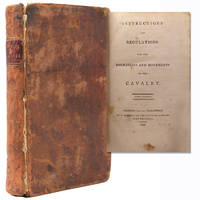
1807222466London: Printed for the War-Office by T. Egerton at the Military Library 1807. Sixth edition. Table and 13 folding plates at rear. xvi 374 pp. 1 vols. 8vo. Full contemporary calf maroon leather spine label. Joints cracked but firm; a Very Good copy. Contemporary booklable of Robert B. Taylor Norfolk and his signature on ffep. Sixth edition. Table and 13 folding plates at rear. xvi 374 pp. 1 vols. 8vo. Printed for the War-Office by T. Egerton, at the Military Library unknown
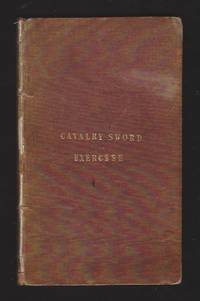
183696361London: W. Clowes and Sons 1836. Hardcover. Good. Scarce 1836 hardcover edition of a System of Drill for sword exercises written by the man who formulated the exercises. Original calf boards with title in gilt on front. Binding is a little wobbly but holding. Ex-library with stamps Trinity College Carmarthen on front and rear pastedown pages and title page. Book is in good condition. Faint staining on corners of some pages. Short tear on one page. Original owner's name in brown ink on title page. 16mo. 27 pp. of text followed by 14 pages of line drawings showing positions; a final plate is indicated Salute but isn't present nor does it appear to have been taken from the book. From the estate of Canadian military collector extraordinaire Donald Skinner. <br/><br/> W. Clowes and Sons hardcover
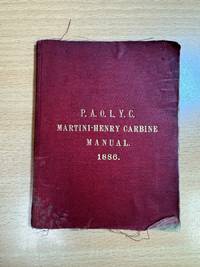
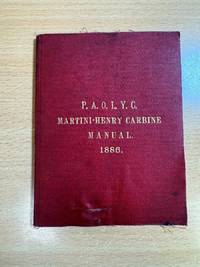
18861188419-1: A. Tacey. 1886. Paperback. Fair in No Dust Jacket dust jacket. A. Tacey paperback
18861240910-2: A. Tacey. 1886. Paperback. Fair in No Dust Jacket dust jacket. A. Tacey paperback