9 442 résultats
1910160423005sltMacGowan-Cooke Printing Company 1910-01-01. Hardcover. Read but in good condition. 0x0x0. Green hardcover gilt lettering cover has some wear and foxing gilt lettering is bright text is unmarked but with heavy foxing binding is tight. Brick and mortar bookshop since 1975! MacGowan-Cooke Printing Company hardcover
1948202159Madrid: Servicio Geográfico del Ejército 1948. Paperback. 134p. wraps with clerical edges somewhat worn and toned has a ragged three inch closed tear along the wrap in all other respects very good condition 7.5x10.5 inches illus. nine folded color maps in rear pocket as called for. Servicio Geográfico del Ejército paperback
198593920U.S. Army 1985. Paperback. Used - Very Good. U.S. ArmyCommunications-Electronics Command Fort Monmouth New Jersey July 1985. 66 pages. Illustrated. 9.75 x 6.75" paperback. Clean tight very good. U.S. Army paperback
1918190919Government Printing Office January 1918. Hardcover . Good/No Jacket. Good Hardcover with No DJ. Moderate soiling and shelfwear to covers including rubbing and tearing on corners. Spine ends bumped and rubbed. Textblock lightly soiled. Writing on inside cover. Name written on title page. A few pages lightly soiled. Otherwise pages yellowed but clean and tight in binding. Pictures available upon request. A locally owned independent book shop since 1984. Government Printing Office hardcover
1961100371Departments of the Army Navy Air Force and Veterans Administration of the United States of America New York November 1961. First edition. Condition: Fine. Paperback no dust jacket. 30 pp. Text clean white and unmarked with no prior owner attribution. Small chip at lower front edge of cover. Light soil mark on back cover. Disclaimer on front cover says "For use in Special Services Activities by ARMED FORCES Personnel Only. NOT FOR SALE OR OTHER COMMERCIAL USE." Songs include: I Won't Dance My Kind Of Girl Farewell Blues Wooden Heart The Lady's In Love With You Diane Nevertheless Jeepers Creepers and Everytime I Feel The Spirit. The music includes lyrics for singing a score for the piano or other instrument chords for guitar and tune blocks for the ukulele. The back endpaper offers an inspirational mental health message to officers entitled "Share Christmas" to address those under their command who are exhibiting symptons of depression or non-inclusion. Excellent condition for a paperback of this age. Departmens of the Army, Navy, Air Force and Veterans Administration of the United States of America paperback
nosku1263This is the hardcover stated Knopf First Edition from 1944. Other than a name on the inside cover both the cover and the book are in positively excellent condition. There are no rips tears markings etc. and the pages and binding are tight. This wonderful impossible-to-find item is available for purchase now! Note: All books listed as FIRST EDITIONS are stated by the publisher in words or number lines--or--only stated editions that include only the publisher and publication date. NAME YOUR PRICE!!! Due to the vagaries of market fluctuations an item's listed price should be considered a guideline. Serious buyers are welcome to make a on each and every item listed with the assurance that ALL reasonable offers will be accepted!Very Good hardcover
198312376Doncaster: Athena Books. Very Good- with no dust jacket. 1983. Softcover. 0946851018 . No signatures. Some rubbing and light marks to wrappers.; A 1983 facsimile printing of the scarce original edition of 1943. U. S. Army manual. The five pages of colour illustrtions of insignia of the original edition have not been reproduced in this edition. Large format softcover book. 434 pages. Page dimensions: 292 x 182mm. Illustrated. Selected contents: Training Efficiency and Morale; Uniforms; Infantry; Cavalry; Land Reconnaissance Units; Field Artillery; Armored Troops; Engineers; Chemical Warfare and Smoke; Police Gendarmerie Semi-military Forces; Air Defense System; Tactics; Permanent Fortifications; Camouflage. ; 4to . Athena Books paperback
197701111342U. S. Army Corps of Engineers Huntington District 1977. "W.V." written on spine edge. Stapled Soft Cover. Very Good. Quarto. Book. U. S. Army Corps of Engineers, Huntington District Paperback
197801111341U. S. Army Corps of Engineers Huntington District 1978. "OH" written on spine edge. Stapled Soft Cover. Very Good. Quarto. Book. U. S. Army Corps of Engineers, Huntington District Paperback
200074941Aberdeen Proving Grounds MD: U. S Army Medical Research Institute of Chemical Defense USAMRICD 2000. Third Edition. Wraps. Good. 4 290 8 pages. Fold-out illustration. Tables. Glossary of Terms. Index. Title page has been removed. The purpose of this handbook is to provide medical personnel in the field a concise pocket-sized reference source for the medical management of chemical casualties. It is not intended to be a definitive text on the management of chemical casualties. The end of World War II did not stop the development stockpiling or use of chemical weapons. During the Yemen War of 1963 through 1967 Egypt probably used mustard bombs in support of South Yemen against royalist troops in North Yemen. The U.S. which used defoliants and riot-control agents in Vietnam and Laos ratified the Geneva Protocol in 1975 but with the stated reservation that the treaty did not apply either to defoliants or riot-control agents. The Soviet Union was accused of using chemical agents in Afghanistan. The United States Army Medical Research Institute of Chemical Defense USAMRICD is a military medical research institute located at Aberdeen Proving Ground Maryland. It is the leading science and technology laboratory of the Department of Defense for the development testing and evaluation of medical chemical warfare countermeasures to treat casualties of chemical warfare agents. The mission of USAMRICD includes fundamental and applied research in the pharmacology physiology toxicology pathology and biochemistry of chemical agents and their medical countermeasures. The Institute with the United States Army Medical Research Institute of Infectious Diseases educates health care providers in the medical management of chemical and biological agent casualties. The USAMRICD supports a Chemical/Biological Rapid Response Team C/B-RRT supports and trains Area Medical Laboratory personnel and maintains a chemical surety facility. U. S, Army Medical Research Institute of Chemical Defense (USAMRICD) paperback
1990250128002Breakout Productions Inc 1990-10-01. paperback. Good. 8x0x11. US Army tech bulletin. Shelving code LSA Breakout Productions Inc paperback
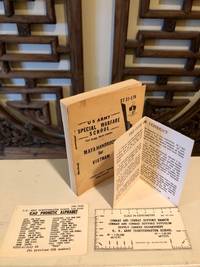
19665981Fort Bragg North Carolina: U. S. Army Special Warfare School 1966. Revised edition. Stiff Printed Wraps. Very Good. 24mo. Pp. ii 247. Illustrated with maps charts drawings and diagrams. Beige paper covers signatures side stapled: staples lightly oxidized light stains and offsetting to covers first leaf lightly foxed. Four laid in cards: Code of Conduct Leader's Guide ICAO Phonetic Alphabet and metric ruler/angle gauge all printed at Fort Lee Virginia. Printed 1 March 1966 at Ft. Benning Georgia. "This handbook contains useful reference material vital for the military advisor in Vietnam and is designed to assist him in the performance of his duties." Chapters include information on weapons air operations tactical air support communications adjustment of artillery fire field engineering and demolitions tactics evasion survival and tropical sanitation and hygiene. U. S. Army Special Warfare School unknown
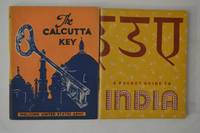
1942111111113862Government Printing Office and The Indian Press Limited 1942 and 1945. Pamphlet. Very Good. Government Printing Office and The Indian Press Limited; Washington and Calcutta 1942 and 1945. Two Booklets. Very Good few scuff/rub marks to covers bit of cover edge/corner wear some age toning to covers and pages crease top rear cover both booklets a nice overall clean and unmarked set in wraps. 18mooctodecimo or approx. 4.25 x 5.5 68pp. and 94pp. b&w illustrations. We pack securely and ship daily w/delivery confirmation on every book. The picture on the listing page is of the actual book for sale. Additional Scans are available for any item please inquire. Government Printing Office and The Indian Press Limited unknown
197777412Washington DC: United States Department of the Army Headquarters 1977. Presumed First Edition First printing thus. Wraps. Good. Three-hole punched and staplebound. Format is approximately 7.875 inches by 10.25 inches. This material was intended to be separated and inserted into FM 6-13E3 April 1977 to create FM 6-13E4 for Skill Level 4 soldiers. Thus in this format this is NOT a stand alone document but does provide focus and detail on what in addition to Skill Level 3 was required to qualify for Skill Level 4 Various paginations approximately 70 pages. Illustrations. References. Index. Questionnaire. Cover has some wear and soiling. Ink notation on front cover. Back cover held by one staple. A Cannon Fire Direction Specialist is a member of the Army's field artillery team. Artillery are weapons that fire large ammunition or missiles and are used by the Army to support infantry and tank units in combat as well as protect land and sea forces from air attack. The Cannon Fire Direction Specialist is primarily responsible for leading supervising or serving as a member of a field artillery cannon unit. Here are some duties of a Cannon Fire Direction Specialist: Establish maintain and operate communications systems; Assist in the preparation of computer centers for operation; Prepare field artillery tactical data systems for operation; Determine target location using computers or manual calculations. Requirements: Cannon Fire Direction Specialists must have the physical stamina to perform strenuous activities for long periods without rest. They're also required to have normal color vision in order to identify color-coded ammunition. Job training for a Cannon Fire Direction Specialist consists of nine weeks of Basic Training where you'll learn basic Soldiering skills and seven weeks four days of Advanced Individual Training. Part of this time is spent in a classroom and part in the field under simulated combat. Some of the skills you'll learn are: Methods of computing target locations; Ammunition-handling techniques; Gun missile and rocket system operations; and Artillery tactics. United States Department of the Army, Headquarters paperback
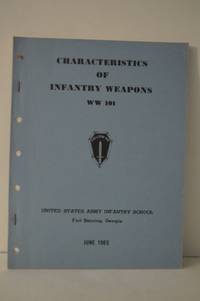
1965111111113752Fort Benning Infantry School 1965. Softcover. Very Good. United States Army Infantry School; Fort Benning 1965. Softcover. A Very Good binding sturdy and intact some handling/scuff marks to covers bit of cover edge/corner wear sunning to cover margins some age toning to text block stapled and with punch holes a nice clean and unmarked copy in Oversize Wraps. 4toquarto or approx. 9.5 x 12 inches 86pp. b&w illustrations. We pack securely and ship daily with delivery confirmation on every book. The picture on the listing page is of the actual book for sale. Additional Scans are available for any item please inquire. Fort Benning Infantry School paperback
195081591Washington DC: U. S. Government Printing Office 1950. Presumed First printing of this version. Wraps. Good. iv 340 8 pages. Illustrations. References. Exercises. Index. Marked Restricted. Cover has some wear and soiling. Some edge soiling. This is an important Korean War era military manual focused on soldier's training for combat. This manual supersedes FM 21-75 6 February 1944 including C1 6 May 1944: C 2 5 July 194; C 3 July 1945; and C 4 23 August 1945. This manual is dedicated to the soldier - the key to success on the battlefield. This is a guide for the soldier regardless of the arm or service. It explains how to go about your duties as a soldier in daylight and darkness. It shows the soldier to to protect and preserve your health and how to see at night. It also teaches the soldier the technique of sniping and shows how combat intelligence can help . This is the soldier's field manual. It tells the soldier how to perform the combat skills needed to survive on the battlefield. These are basic skills that must be learned by soldiers in all military occupational specialties. If the enemy can see you he can hit you with his fire. So you must be concealed from enemy observation and have cover from enemy fire. When the terrain does not provide natural cover and concealment you must prepare your cover and use natural and man-made materials to camouflage yourself your equipment and your position. This chapter provides guidance on the preparation and use of cover concealment and camouflage. U. S. Government Printing Office paperback
196862489Forest Grove OR: The Combat Bookshelf 1968. Reprint. Reprint of 1955 Army publication. Wraps. Good. No dust jacket as issued. Cover has some wear and soiling. 166 2 p. Includes: illustrations diagrams index. References. Distributed by the Normount Armament Co. This manual was correct to 26 July 1955. It superseded TB 9-1940-6 25 March 1944; TB 9-1940-9 11 September 1944 and TB ORD 214 28 October 1944 and those portions of TM 9-1940 15 July 1943 and C1 7 August 1944; TB 9-1940-11 2 August 1950; materials of a technical nature of TM 5-220 3 July 1945; and FM 5-25 2 September 1954 that pertain to the demolition materials covered herein. This version thus not only codified some of the late Second World War experience but also reflected the experience of the Korean War. The Combat Bookshelf paperback
191137319Washington DC: GPO 1911. Boards show moderate scuffing and wear. A couple of paper clip ghosting. Small sticker blemish at front pastedown. Careful packing and fast efficient shipping including delivery confirmation. Please note: International and Domestic Priority orders for this item are available. . Hardcover. Very Good/No Jacket. GPO Hardcover
1960017217United States Army Corps 1960. No covers bound with a single staple. 4to. 61 pages. This book is in good condition with some bumping/folding to outer corners at top of spine. Interior is clean. . Revised. Paperback. Good/No DJ. 4to. Paperback. United States Army Corps Paperback
201516791U.S.A.: CreateSpace Independent Publishing Platform 2015. Trade Paperback. Fine. 8 1/2" X 11. 60 Pages. No defects to this faultless book with flawless interior text pages. General George S. Patton Jr. was one of the most successful operational commanders during World War II. As the commander of the Third Army his units were instrumental in the defeat of German forces and their eventual unconditional surrender. General Patton was not only an operational artist but also a master of the art of Battle Command. Although the term Battle Command is relatively new in U.S. Army doctrine being first introduced in the 1993 edition of Field Manual 100-5 it has always been at the forefront of collective army thought. The art of Battle Command as executed by General Patton and many other commanders throughout history requires continual study to gain insight into the operational problems faced by these leaders and their eventual solutions. The purpose of this monograph is to show the importance of Battle Command and why it should continue to be studied. I Although there are many past commanders who have mastered the art of operational Battle Command this study focuses solely on General Patton. It will examine General Patton and his actions as the Third Army commander to gain insight for future operational commanders. Contents in 11 Chapters: Introduction Command and Control of Third Army General Patton and Leadership General Patton and Information Assimilation General Patton and Visualization General Patton and Conceptualization General Patton and Communication Three Great Lessons for Future Commanders Endnotes and Bibliography. Plus Three appendices: Third Army Organization Map of the Ardennes Campaign and Map of the Breakout in France. <br/> <br/> CreateSpace Independent Publishing Platform paperback
196862414Fort Knox KY: U.S. Army Armor School 1968. Presumed first edition/first printing. Wraps. Good. No dust jacket as issued. Cover has some wear and soiling. 68 p. Includes: illustrations diagrams. This pamphlet presents an objective report of the history of Army relates it to the present and considers the prospects for Armor in the future. Major General James W. Sutherland Jr Command stated that "If Armor's superiority on the nuclear battlefield is to remain unchallenged we must continue our efforts to improve our mibility firepower and shock effect. " U.S. Army Armor School paperback
2007017989University of Chicago Press. Unclipped DJ in archival cover. . Fine. Hardcover. 1st Edition. 2007. University of Chicago Press hardcover
196962496Forest Grove OR: Normount Armament Company 1969. Reprint. Reprint of 1959 Department of the Army publication. Wraps. Good. No dust jacket as issued. Cover has some wear and soiling. 142 1 p. Includes: illustrations diagrams index. Glossary. References. This manual superseded FM 20-32 19 July 1955 and TC 5-6 3 April 1958. It represented the state of knowledge and the state of practice at the time the United States entered the Vietnam War. Normount Armament Company paperback
197678294Washington DC: United States. Department of the Army. Headquarters 1976. This is a reprint which includes current pages from C1. Wraps. Good. Format is approximately 5.25 inches by 8.25 inches. ii 139 3 pages. Illustrations. Appendix A: References. Appendix B: Master Training Program. Appendix C: Tactical Employment of Climbers. Appendix D: Measurement Conversion Factors. Glossary. Index. Cover is scuffed and has sticker residue. This training circular #TC 90-6-1 is designed to help the reader become an expert military mountaineer. Gives information for survival in different terrains climates and types of weather. Tactics with climbing ropes and knots operations on glaciers and snow covered mountains. This is the finest book written on 'real world' mountaineering not just for sport. In current use with Navy Seals Army Rangers and Special Forces Marines and sport climbers. Covers basic techniques movement of individuals and units and evacuation. Military Mountaineering Covers basic techniques movement of individuals and unit movement and evacuation. Operations on glaciers and snow covered mountains fixed alpine paths also master training program. TCs contain material that is directive or informational is transitory or needs to be published only once. Circulars expire 2 years from the date of issue or earlier. The Army subsequently issued Field Manual FM 3-97.61 Military Mountaineering. Military mountaineering is a means to enable a commander to negotiate complex terrain both ascent and descent in mountainous environments using ropes and other specialized equipment Military mountaineers understand how environmental factors and terrain can be overcome and used to gain an advantage over enemy forces. Topics such as intelligence collection offensive and defensive postures sustainment operations direct and indirect fires and communications are examined by military mountaineers. Mountainous environments have variables that elevate the risk level because of the lack of mobility or how quickly the weather can change while the same mission in other terrain would be low risk and routine. Basic Military Mountaineering training provides soldiers in the fundamental knowledge and skills required to successfully conduct small-unit operations in typical mountainous terrain found throughout the world. Advanced training builds on previous instruction and trains soldiers in the knowledge and skills required to lead small units and teams over technically difficult hazardous or exposed mountainous terrain during summer months. The course is intended for units or individuals who will conduct operations in mountainous terrain and must operate independently of major units or organizations or who will lead larger organizations over technically hazardous terrain. United States. Department of the Army. Headquarters paperback
198573443W: U. S. Department of the Army 1985. Supersedes GTA 3-6-2 June 1975. Ephemera. Good. Single sheet printed on both sides 10 inches by 12 inches. Folded and re-folded so that there are 16 panels eight on each side. Two panels are for notes and is almost completely blank space. Illustrations. Pencil erasure residue on title panel. The primary means of warning units of an actual or predicted CB hazard is the NBC Warning and Reporting system NBCWRS. It is a key in limiting the effects of attacks. The NBCWRS allows units to determine required protective measures and plan operations. Units take action depending on the mission and type of hazard present. Affected units alter plans to avoid the hazard. The units can upgrade protective measures and occupy or cross the hazard area. The NBCWRS consists of six reports. Each is standardized. The six standard reports are- NBC 1-Initial report used for passing basic data compiled at unit level. NBC 2-Report used for passing evaluated data. NBC 3-Report used for immediate warning of predicted contamination and hazard areas. NBC 4-Report used for passing monitoring and survey results. NBC 5-Report used for passing information on areas of actual contamination. NBC 6-Report used for passing detailed information on chemical or biological attacks. The reports use standard formats. The warning and reporting system is based on a code letter system. NBC has been updated to be described as Chemical biological radiological and nuclear defense CBRN defense or CBRNE defense is protective measures taken in situations in which chemical biological radiological or nuclear warfare including terrorism hazards may be present. CBRN defense consists of CBRN passive protection contamination avoidance and CBRN mitigation. A CBRN incident differs from a hazardous material incident in both scope i.e. CBRN can be a mass casualty situation and intent. CBRN incidents are responded to under the assumption that they are intentional and malicious; evidence preservation and perpetrator apprehension are of greater concern than with HAZMAT incidents. This ephemeral training aid was distributed to US Army Training and Audio-visual Support Centers TASC. Distribution was restricted because it contained technical or operational information that was for official government use only. Distribution was limited to US government agencies. Request for release outside the US government needed to be made to HQ TRADOC Fort Monroe Virginia. Due to its age and advances in technical and operational information it is understood that this distribution restriction no longer applies. U. S. Department of the Army unknown