9 442 résultats
25054401China n.d. ca. 1927-1928. Brown simulated alligator cloth covers 37 x 27.5 cm. black pages spine ribbon-tied ca. 400 b.w. photos corner mounted images very good sharp and clear images NOT fadedsolidnicely done. V E R Y R A R E ! . . SUPERB PHOTO ALBUM OF THE CHINESE CIVIL WAR: . . Beginning of The Communist Party led led by Mao Tse-tung . . V.S. the Kuomintang KMT or Chinese Nationalist Party . Led by Chiang Kai Shek. . The United States Supported the KMT. In this album we see how the KMT soldiers hosted the American Army in China using their trains and military bases throughout China. This unusual album contains 400 original b. w. photographs & and is an historic photographic record of American military deployment showing Dough-boys in China probably from the U.S. Army's 2nd. Battalion 15th. infantry per the flag and insignia found on a group formation photograph. A minority are with written captions by and large taken by the person who made the album also enhanced with a small percent of professional Chinese photos some of which have in-negative captions. There are ca. 3 or so photos missing else completely filling 32 pages or 64 sides one on the inside back cover. The inside of the front cover has five attractive period color luggage type adverts from various hotels: Hotel Lankershim & Coast Line Military & Naval Hotel San Francisco Cal; The Court Hotel Tientsin North China; Grand Hotel des Wagons Litz; Astor House Hotel Ltd. Tientsin. The album begins with photos of a Chinese playing a Pi-pa snake skin banjo then there are three other photos: first two show a Chinese military camouflage train engine from which a Yank soldier in his campaign hat descends and a long train of cars with a large howitzer mounted upon one last shows French troops at parade rest with their rifles and white gloves and crested helmets with anchors naval or marines with others in the background with some officers. The next two pages show Chinese coolies swing a basket from the creek top water a field a mother suckling her baby with her family at the farm a large water tower in the wet slums and a group of Doughboys at attention in formation they wear boots leggings chrome World War I type dress helmets a rifle back pack with bayonet cartridge pouch belts with green wool hip-length jackets. The opposite page shows another view of the Chinese military train a pair of large mounted guns on an armored train car. To the right is a Chinese officer pointing to a large pierced hole in the train with a foreign engineer peering out from the small window. The train sports the Republic of China flag with a Chinese military unit flag painted on the side. Another view shows a group of abandoned Chinese coffins that went to the dogs; a group of soldiers in garrison caps at attention with fixed bayonets as the officers salute someone near the person taking the photo some Chinese officers also present. Next 2 pages show Chinese on a wheel barrow some Japanese women by a pond in Kimono and a group of British troops from their colonial Empire: blacks Indians white trumpeter Chinese and others with musical instruments all wear white cork-type pith helmets. A group of Japanese officers mugging for the camera. Photos of the railhead and large number of Chinese troops with rifles and kit at the railway station some on march carrying their flags others in open box cars with touring cars that are on the move another of camouflaged armored train cars one shows a number of foreign soldiers looking out of a train car window some are with tiny embossed stamp at right corner: "Mei Lee Tien Tsin." The album continues with a mixture of images of civilian Chinese Chinese military their trains moving air planes weapons war refugees in tents military views of barbed wire fortifications trenches machine gunners Russian soldiers Chinese officers Chinese air force funerals rickshaw pullers camel trains captured & wounded prisoners foreign soldiers at their sand-bagged posts. Photos of the great wall magnificent Chinese architectural monuments buildings and pagodas religious icons coffins more coffins mortars & Chinese junks and a plethora of others. The American Consulate General's compound in Tientsin American military band welcoming the newly arrived replacement troops. A large photo group shot of the American officers seated for a memorial photograph with their Battalion flag proudly posted on the wall where they pose source of our citation at the top of the unit name; two buglers are at each outside position the commander is ram-rod straight and taller than all others seated in the front & center; he and only two others on his sides wear full leather knee boots probably indicating the highest ranking officers; others are in boots & leggings. Photos of Doughboys aboard a ship showing the Naval officers with one stunning photo of an American high officer with his Japanese & Chinese counter parts posing for the camera. And a photo of the "Mail Boat Gazun Panama" and a few others of Panama giving credence to the fact that some of these soldiers came from the American East coast via Panama to San Francisco then on to China. Nice photo of semi-nude Panamanian family men women children. Doughboys at target practice photos of Chinese poverty coolies pulling great loads and street vendors. More showing Chinese life style street life horse & bullock carts and yet more caskets left in the open unburied and abandoned train cars full of horses Chinese troops smoke rising from a burning city another with "Tian jin" written in Chinese catholic church more parading of American soldiers within the Tientsin American Consulate parade grounds trooping of the colors. And a nice photo of the "U.S. Army Transport Thomas" Chinese junk &c. A U.S. soldier in a necktie his rifle at fixed bayonet at parade-rest before the Consulate General compound with sand bags inside a photo of a U.S. soldier with his Colt-45 on his hip with canteen looking at some communications connections another photo of two mini U.S. tanks and a very long bridge over the water. Photo of the Tientsin downtown with a Sikh Indian policeman directing traffic. Next page shows a public Chinese street execution: the guilty on his knees with the executioner ready to swing a very large sword and another headless corpse is before him the Tientsin YMCA compound opposite which is likely the inside of the American Consulate offices showing very ancient typewriters and three women staff and one other female Navy person. They all mug for the camera with a good number of U.S. Army or Marine officers behind three desks. Chinese hauling "magnum gold" brand ammunition on hand- trucks a U.S. Army band performing before the Consulate's office. At this point we find a few photos with penned captions: "One of China's Department Stores it shows a bird vendor; Peanut Gambler a mountain of P-nuts; Chinese Shimboo photo of the office and maker of the album and his Chinese officer friend ; "A Chinese Taxi" shows him in a Rickshaw "Me and the boy friend 11/3/28" shows a tiny goat cart carrying a child's coffin with a Chinese man. This penned date gives substantial proof of the date range of the entire album which was placed about the center of the whole work. The next page shows two more penned captions: "Chinese cavalry" and "Note mud house and fence" shows two Chinese officers on horse-back and a very very poor house with very starved animals. The next shows six Chinese undercover men two each holding a Chinese being readied for execution; and a very grizzly photo of a Chinese officer actually executing a Chinese man with his pistol who is seated on a rock: the photo captures the action as the shot blows away the mans brains. Behind the execution scene is a crowd of American soldiers in campaign hats and Chinese military officers who are witness to the event. More views of Chinese street life vendors pullers haulers & horse carts religious icons and a stunning Chinese roofed gate more Chinese troops on the move via train with a very horrible view of a large number of dead Chinese in the muddy filthy waters by a bridge. Homeless Chinese at a "soup kitchen" war refugees hauling their belongings house boat street barbers a group of 7 photos by the ocean. They show American soldiers at leisure looking at Chinese fishermen nets naked fishermen hauling in a net of fish to the beach a burning waterfront village the jetty where several large American transport ships are at anchor and a great assembly of Yankee soldiers on the beach with duffel bags and their gear at the railhead. The last photo shows a great number of various whisky bottles lined up for display. More photos show a coffin maker large coffin basket seller and "chow" sellers on the street. A military formation of 100's of either Scottish or Irish soldiers with fixed bayonets marching down the main street before the "RNC Electricity Dept." below which is a very long line of British soldiers on one side of the street opposite from a good number of American soldiers who are on the side of the street a British Union Jack flies over a castle-like structure this is clearly some kind of grand military parade. More photos of the Great Wall the military parade and army chaplains with an Australia flag flying over another castle tower. Chinese river scene with large numbers of native boats in a canal a beggar's camp with straw -mat tents a canal crossing ferry for people a photo of a U.S. officer stand on top a wooden coffin for a closer look. More poverty-stricken Chinese haulers fortune tellers graves tethered horses log sawyers rice haulers electric trolley with English and Chinese language sign on the roof panorama post card of Shanghai's Bund. The album now shifts to photos of the Peking area. Shows the Ming tombs and the camel-lined road; military train the Americans were transported by that train a large bivouac and tent city where the U. S. military troops camped some Chinese "house boys" proudly holding the American troop's unit flag. More photos of two U.S. soldiers posing near Chinese coffins in a wet ditch. A group of very young Chinese boys posed near the railroad; one is so poor that he has no clothes at all and is in nude. A large group of Nationalist Chinese soldiers marching along a street one classic photo of a single American soldier on guard standing at attention as stands vigil on a barbed-wire barrier his rifle at fixed bayonet. A group of five Chinese young "ladies" who pose for the camera who seemed NOT to be bewildered by the photographer they look like "Sing-song girls" hookers who entertained the U.S. troops. Chinese Buddhist priests in white robes with shaved heads a great gate to Peking Shanghai harbor views shanty huts captured Chinese criminal or traitor guarded by Chinese soldiers train car full of rifles more Chinese soldiers on trains marching in formation on the road. And a good photo of several American officers: one with a whip posing for the camera in garrison hat. Chinese bivouac and American soldiers with bullet and pouches for ammo with rifles at parade rest. More barbed-wire barricades Chinese & British soldiers armored train-mounted gun. More Chinese prisoners traitors being executed heads hoisted on power poles in baskets as a form of public warning and display for other would-be traitors. An American tent bivouac camp at the train yard two more public exec executions by beheading at the moment of loosing one's head an executed dead man lying in the street. Photos of Peking's Forbidden City a Chinese hung to death from a tree a Yank soldier in overalls carries a Chinese bamboo "yoke" with two baskets and smokes a pipe while Chinese look on and laugh. Two photos of lines of Rickshaws waiting for passengers. One comic photo with negative caption: "Find the Chinaman;" it shows two American soldiers sitting among Chinese. Nice shot of the Summer Palace Peking and a U.S. soldier riding in a Rickshaw. The very last photo inside the back cover shows the whole battalion dressed up wearing their chrome helmets standing at attention in formation for a classic and most historic memorial photograph. Their commanding officer is front and center; all have their rifles ammo belts and very polished boots with back packs. They could be standing in the Tientsin American Consulate compound grounds. Followed by a few other photos of Chinese a Chinese soldier et al. This work shows the typical things seen in China during this period of political and military chaos. The feuding war lords and political parties at war; the landing of American military to protect American diplomatic interests. Support & assistance given to the Americans and other foreign military groups by the Nationalist Chinese army. The desperate situation of the tragic Chinese people caught in the grips of upheaval and the summary punishment of traitors in a public display of the swift and ruthless law of China. A riveting and most compelling true record of a U.S. military officer's sojourn to and deployment in China. THE PHOTOGRAPHER AND THE SIZE OF PHOTOGRAPHS: This is not a professional group of photographs but there a very small amount which were obviously purchased by the maker of the album and inserted. The vast majority are his personal photographs these again are obvious to anyone who looks at the album. This is an excellent example of private work of an unknown American Army officer stationed in China during a very chaotic period. He was interested in recording for posterity his experiences and the sights that he saw while on duty. We thank him for giving us privy to this slice of American and Chinese military history. SIZE OF THE PHOTOGRAPHS: The size varies considerably sizes in cm.: the smallest are 8 x 5 most are 14 x 9 3 larger photos 24.5 x 18 and the last 30 x 10. CONDITION OF THE PHOTOGRAPHS: These are original period photos they are all very clear sharp images no fading and in excellent condition. They have been corner mounted. RARITY: Photographic albums of this period in China are NOT commonly found; one made by an American Army officer stationed in China at this time is exceptionally unusual and RARE ! This is a charming primary source with a large number of clean & sharp images taken by an actual participant in this historic period of China. The officer and photographer of these photographs shared for posterity his keen insight and view of these events. We thank him for giving us privy to this slice of American & Chinese military history. . unknown
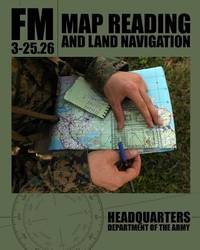
2011251607112CreateSpace Independent Publishing Platform 2011-03-03. Paperback. Very Good. Book is not new but in very good condition. Overall- Minor Wear. Cover is very good with minor - moderate wear. Buy with confidence.customer service is our TOP PRIORITY! Quick Shipping/ Free Delivery Confirmation! CreateSpace Independent Publishing Platform paperback
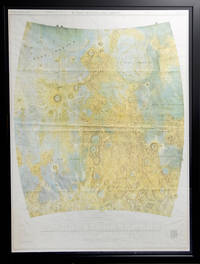
115559Washington D.C. Army Corps of Engineers March 1962. . Colour map 54.5 x 40.5 in glazed and framed; some wear and loss at the edges and to two round spots at the bottom of the lower text portion repaired with paper with slight loss of some text horizontal creases from folding a few light spots; very good condition.<br /> First printing of a monumental and important lunar relief map produced by the US Army Map Service in the run-up to the Apollo program incorporating all six future landing sites. Rare in commerce with no other copies in auction records.<br /><br />Mare Nectaris - Mare Imbrium was compiled during 1961 the same year that Kennedy famously announced to Congress that the US would land a man on the Moon. It was the first Earthside stereographic map of any part of the Moon highlighting the central portion of the visible half of the lunar surface and was based on photographs taken by the Paris Observatory between 1896 and 1907. The map was available in two versions: gradient tint and shaded relief as here Surveying and Mapping United States Superintendent of Documents 1963. The names of the features were derived from the standard source Named Lunar Formations by Mary Blagg and K. Müller and the verso is printed with a complete list of lunar places. A small three-dimensional plastic version at 1:500000 was produced the year before and is somewhat more available.<br /><br />The Apollo sites not yet designated as such at the time of printing are the Sea of Tranquility the Sea of Storms Oceanus Procellarum near Lansberg Crater Fra Mauro near the Bonpland and Perry craters the Appenine Mountains near Haldey Rille the Descartes Crater and the Taurus Mountains-Littrow Crater area.<br /> Washington, D.C., Army Corps of Engineers, March, 1962. unknown
1943190146Washington: United States Government Printing Office 1943-45-46. Presentation copies from General George Marshall to his "miracle worker" General Brehon B. Somervell A complete set of the original official US Army wartime reports handsomely produced the personal copies of General Brehon Burke Somervell 1892-1955 George Marshall's commander of Services of Supply the first two being presentation copies from Marshall the cover of each volume gilt lettered with Somervell's name and rank. Services of Supply was one of the three "superagencies" organized by the US Army after the United States's entry into the war in December 1941 - the other two being Army Ground Forces and Army Air Forces - and gathered under its overarching aegis Quartermaster Corps Chemical Warfare Service Signal Corps Corps of Engineers Ordnance Department Medical Corps and Transportation Corps. "General George C. Marshall the army's chief of staff during World War II held Somervell in high regard for his ability to perform monumental tasks and was willing to overlook his penchant for antagonizing others. "What he did was a miracle" said Marshall in a postwar interview. The U.S. Army in World War II was probably the best-supplied army that had ever gone to war. Much of the credit for that accomplishment goes to Somervell who provided the "sinews of war" for a military effort that literally spanned the globe" American National Biography. Somervell is mentioned directly by Marshall in his concluding remarks to the first volume where he notes "The requirements of logistics are seldom understood. The burdens they impose on the responsible military authorities are rarely appreciated. The conflicting demands of our theater commanders of Allied sovereign powers and of the home front pose difficulties never before approximated in war. The necessity for a high degree of efficiency in management is evident and it has been found in the coordination of all the various supplies and administrative departments of the Army under the command and leadership of Lt. Gen. Brehon B. Somervell. "Published at two-year intervals these reports provide a comprehensive picture of global war as seen from the perspective of the Chief of Staff. The first report describes the race to mobilize an unprepared country and Marshall's appeal on the eve of war for the renewal of Selective Service a reminder of how far the U.S. Army had to come to meet the Axis challenge. The second recounts the initial defeats after Pearl Harbor and the ultimately successful efforts of the United States and its Allies to turn the tide. The final report describes the drive to victory and outlines Marshall's analysis of the reasons for the Allied triumph. Summaries give an overall view of the progress of the war but the scholar and military professional will find most interesting Marshall's comments on such topics as technology the "90-division gamble" the replacement system troop morale and the citizen-soldier and demobilization. These comments and the other material presented in the reports provide not only a fresh perspective on the myriad problems of conducting a global war at the highest levels but also renewed appreciation for the man whom Churchill appropriately called 'the organiser of victory'" Brigadier-General John W. Mountcastle foreword to the 1996 Center of Military History edition. This is a set of the scarce original edition produced by the United States Government Printing Office in Washington; trade editions were also produced by the Infantry Journal Press in the US and HMSO in Britain. The set comprises: Biennial Report of the Chief of Staff of the United States Army July 1 1941 to June 30 1943 to the Secretary of War. Octavo pp. v 56. 6 folding maps and 19 folding charts. Presentation copy from General George Marshall inscribed on a preliminary blank: 'To General Somervell with appreciation and warm regard G. Marshall". Biennial Report of the Chief of Staff of the United States Army to the Secretary of War July 1 1943 to June 30 1945 to the Secretary of War' Quarto pp. iii 123. bound with the supplementary Atlas of World Battle Fronts in Semimonthly Phases to August 15 1945 pp. 101. Presentation copy from General George Marshall inscribed on a preliminary blank: "Dear Somervell - Please accept this copy of my final report as Chief of Staff with appreciation of your tremendous service to the army and support of me with my affectionate regards - G. Marshall October 5 1945". Report by the Supreme Commander to the Combined Chiefs of Staff on the Operations in Europe of the Allied Expeditionary Force 6 June 1944 to 8 May 1945. Quarto pp. x 123. Several colour maps. 3 vols one octavo 232 x 135 mm 2 quarto 305 x 210 mm. Contemporary black pebble-grained skiver gilt lettered on front covers first 2 vols with dark blue vertical-rib cloth endpapers third with white moiré silk-effect endpapers. Bindings a little worn at extremities some mottling to covers scattered foxing otherwise very good. hardcover
191845147n.p.: Army General Staff College 1918. fair to good. 8.5" x 13.5" approx. 1000 6-vol. set a collection of mimeographed copies and some carbon copies bound together some foxing to text some pages browned. A few pages brittle some pencil notations to text. Volume I contains conferences and lectures for the First Course reissued during the Second Course presented by the Army Staff College--A.E.F. France. Volume II contains map problems of the First Course reissued during the Second Course. Volume III contains conferences 1 to 114 of the Second Course. Volume IV contains conferences 115 to 145 lectures 1 to 26 and miscellaneous matter. Volume V contains map problems 1 to 21 of the Second course. Volume VI contains map problem 22 of the Second Course. Volume VII contains publications. Volume VIII contains maps. This is an extremely rare collection with student notes and comments. We believe this was the personal copy of Lt. Col. Herbert Parsons of the Fifth Division. Among the topics covered are maps and trench maps military geography of the Western Front food supply marches combat artillery infantry transport the intelligence service roads and railways ammunition supply motor transportation liaison billeting and administrative instructions practical exercise in map reading trench relief training of reinforcements evacuation of wounded night operations counter attack exploitation of success examination of prisoners of war burial tactical withdrawal and many others. Army General Staff College unknown
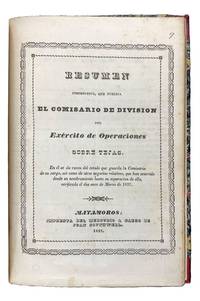
183741693Matamoros Mexico: Imprenta del Mercurio a Cargo de Juan Southwell 1837. 4to. 7 3/4 x 5 1/2 inches. 3 4-36 4. 40 pp. Engraved title-page with decorative border Resumen Instructivo Estado Table 1 by Manuel Mendiola Estado 2 by Luis Jose de la Peza and Vicente Daza. Both estados are accounting tables giving the "ingreso" income and the "egreso" expenditure of the operation. The title carries the date of 3.11.1837 while the text sections are dated 3.14.1837. With woodcut printer's device of an eagle and fleurons. Text in Spanish. Bound to style in 19th-century quarter red straight-grained morocco over 19th-century marble paper boards<br/> <br/> Provenance: Hubert Hudson Texas State Senator for Brownsville 1957-1963<br/> <br/> A rare report detailing the failed Mexican mission to rein in the Republic of Texas following the Texan Revolution.<br/> <br/> "In the fall of 1836 the Mexican government attempted with complete lack of success another expedition into Texas." Streeter "Face-saving explanation for Mexico's failure against the despised Texans in 1836-7." Howes This official pamphlet details the failed Mexican expedition into the Republic of Texas over the period of October 21 1836 to March 14 1837. Barreiro an army commissioner in charge of the operation concludes that the "ridiculo" Texan rebels were far less dangerous than the hostile desert terrain. "No es el numero del exercito de Tejas el temible. Bien despreciable y ridiculo es ese peloton de aventureros que piensan que es como andar en cacerias de fieras haberselas con veteranos valientes y aguerridos: es el clima son los desiertos horrorosos son los rios invadeables son los pantanos." It is not the number of the Texas army that is fearsome. Very despicable and ridiculous is that platoon of adventurers who think that it is like going on wild beast hunts dealing with brave and seasoned veterans: it is the climate it is the horrible deserts it is the uncrossable rivers the swamps. Texas had declared its independence on March 2 1836 a culmination of the Texan Revolution which had begun on October 2 1835. The United States did not diplomatically recognize the Republic of Texas until March of 1837 near the publication date of this pamphlet. Texas would remain an independent nation for a decade until it was annexed by the USA on December 29 1845.<br/> <br/> Howes B 170. Palau 24651. Streeter sale I 357. Streeter Texas 918. Imprenta del Mercurio a Cargo de Juan Southwell unknown
1917K8VDJ4FBG0KGCalcutta: Superintended government printing 1917. Original green cloth with title on spine and front. Small 8vo 17 x 11.5 cm. With 1 folding heliozincographed map of "Lower Mesopotamia" map size 41 x 37 cm with some routes in red and three folding letterpress tables. Second edition considerably expanded of a field guide to Mesopotamia Iraq published on behalf of the General Staff in India for the use of officers serving in the Mesopotamian campaign during the First World War stating on the binding and title-page "for official use only". The guide is divided into eight chapters dealing with Iraq's history geography population resources military strength maritime power administration and communication respectively. The fifth and sixth chapter also contain valuable information on the Turkish military and maritime strength. The present edition adds much new information that was not included in the 1915 edition. For example the "list of routes" in the present guide contains 36 routes between compared to 14 routes in the 1915 guide. The routes are shown on the folding map.With the owner's inscription of H.W. Leatham Lieutenant in the British Royal Army Medical Corps on the first flyleaf. A few small spots or stains. Binding only very slightly rubbed. Overall in very good condition. Superintended government printing, hardcover
181400535755Eastburn Kirk and Co 1814. First Edition. Hardcover. Very Good/No Jacket. 8vo - over 7¾" - 9¾" Brig Gen. Duncan McArthur's Orders to Attend General Hull's Court Martial A remarkable document from the Court Martial Brig. General William Hull following his surrender of Detroit which resulted in a death sentence for cowardice. Although his sentence was later remitted General William Hull is the only U.S. general to be sentenced to death by an American court-martial. This copy of the court martial transcript belonged to Hull's second in command Brig Gen. Duncan McArthur and includes the actual hand-written orders commanding him to attend and testify. McArthur's testimony was an essential and central part of the trial filling the entirety of pages 47 to 73. In it as well as numerous contemporary accounts his outrage against Hull's conduct as Commander of the Army of the Northwest during the War of 1812 including the entire campaign in and around Detroit which ended with Hull's surrender not only of Detrit and the forces directly under his command but for some reason of detached troops under McArthur's command which particularly enraged McArthur. Tipped in is the handwritten order a letter of summons from Inspector General Abimael Youngs Nicoll to Brigadier General Duncan McArthur commanding his appearance at General Hull's court martial letter is dated December 2nd 1813 and includes the folded envelope addressed to McArthur. Duncan McArthur 1772-1839 Brigadier General later Governor of Ohio. 156pp. 177 29pp. appendices. Rebound in black cloth gilt title on spine. Light foxing in places; cloth has light surface wear else a Very Good copy. The President of the Court was Major General Henry Dearborn and the special Judge Advocate was Martin van Buren later President of the United States. There is a signature on the title page somewhat reminiscent of Van Buren's during this period appearing to read 'M.v.B illegible'. Additional provenance: Later the property of Brig. General Thomas McArthur Anderson copy grandson of Brig Gen. Duncan McArthur with his signature to the title page pg. 19 and the last page of text. General Anderson had four decades of decorated service 1861-1900 extending from his rise to brevet rank of Lt. Colonel during the Civil War to command of the Army force sent to Skagway and Dyea Alaska to protect American miners heading to the Klondike Gold Rush to his command of the first 'Philippine Expeditionary Force' during the Spanish-American War. During the Philippine campaign he was promoted to the brevet Major General of U.S. Volunteers two stars and retired as a Brigadier General. Eastburn, Kirk and Co hardcover
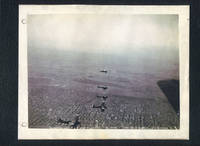
192342800Mitchel Field Long Island NY: U.S. Army Air Service 1923-1925. 1923-1925. Archive of 57 original aerial photographs from the 8th & 14th Photographic Sections Air Service during the Aerial Mapping Survey of New York City and vicinity and the Northeast. 57 original photos mounted on thick card stock 10" x 8". 53 have identifications of place and Air Service Photo section at lower fore-edge of the images and all are printed on glossy photographic stock with some sepia-toned. The images encompass planes in formation over New York views of Manhattan the Statue of Liberty a factory fire in Jersey City Fort Ticonderoga the Zeppelin hanger at Lakehurst New Jersey Albany Philadelphia Hartford Exeter NH numerous Air Fields a scarce series of photos for the Jan. 24th 1925 Eclipse of the Sun and more. The Air Service was created by executive orders of President Wilson in May 1918 during World War I and would eventually expand to nearly 200000 personnel and 2000 aircraft by the end of the war producing planes as well as carrying out operations by aerial reconnaissance photo sections dirigibles balloons and fixed wing aircraft. By 1923 the peacetime cutbacks had slashed the Air Service down to just under 10000 men and 1450 aircraft including 15 photographic sections encompassing the above mentioned 8th and the 14th commanded from 1920 to 1925 by Brig. General Billy Mitchell. Mitchell campaigned tirelessly and bitterly until his court-martial at the end of 1925 to establish the Air Service as a separate military wing independent from the Army and Navy. To aid this mission he authorized a number of publicity stunts to emphasize the modernity and ability of the Air Service including aerial mapping projects speed and altitude records in cross country flying scientific projects and most famously the first flight around the world. The Air Service set up support facilities around the world for the fliers and in April 1924 sent four aircraft named Seattle Chicago Boston and New Orleans west beginning from Seattle Washington and led by Major General Mason Patrick Chief of Air Service. Two of the images in this collection show the two surviving Douglas World Cruisers which on Sept. 8 1924 stopped over in New York One of the photos shows a formation including the New Orleans flown by Lieutenants Eric Nelson and John Harding. They would complete the circumnavigation on Sept. 28 1924 in Seattle nearly 3 weeks later after these photos. The earliest of the dated photos shows 5 DH-4Bs flying in formation on November 20 1923 over Manhattan. The DH-4Bs set records of flying aloft through aerial refueling. The images dated July through November 1924 by the 8th Photo Section during their Aerial Survey mapping projects include Hartford Bridgeport and New Haven CT; Air Port in Boston MA; Fairgrounds at Brockton MA; Exeter NH; Providence and Connecticut Island RI; as well as 2 photos of a Nov. 1924 fire in the industrial section near the docks in Jersey City NJ showing tugboats nearby as well as smoke billowing above the factories damaged by the fire. Images by the 14th Photo Section include the airfield and hangar Lakehurst Naval Air Station NJ which was the home of the ZR-3 Los Angeles dirigible and would later be the site of the Hindenburg disaster; 3 photos of Mitchell Field Long Island NY; landing fields in Van Cortland Park Bronx NY; Governors Island; 2 photos of Roosevelt Field and downtown Albany at Albany NY; aerial views of the Statue of Liberty lower Manhattan including nice images of the Manhattan and Brooklyn Bridges; Fort Ticonderoga; Niagara Falls; Philadelphia; and photographs mapping the area around Mt. Mansfield Vermont. Of particular interest are the series of 11 photographs showing the sequence of the total solar eclipse on Jan. 24th 1925 over Connecticut. The skies were cloudy but 12 planes the ZR-3 Los Angeles dirigible and many scientists and men with special cameras and instruments recorded the event. Ten of the photographs here are marked in stages for the eclipse and an additional separate initial view that is marked Eclipse of the Sun 14th Photo Section Air Service U.S.A. This collection offers an excellent historical record of the early years of U.S. aviation as well as views of the Northeast during the 1920's. All of the images are quite crisp with almost no fading and have two small holes at the left gutter margin where they were apparently stored originally in a two- ring binder. Minor bumping and chipping to some corners of the boards. A few images have lifted at the corners and a couple have very minor loss one with creasing to center of image though not affecting the quality of the image. A remarkable collection of a scarce series of aerial photographs taken by the 8th and 14th Photographic Sections of the U.S. Army Air Service. U.S. Army Air Service, 1923-1925. hardcover
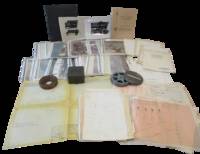
1950229621950. This exceptionally dense technical archive documents U.S. Army rocket and missile development during the height of the Cold War and Vietnam War originating from the estate of a retired aerospace engineer Thomas T. Howell affiliated with the U.S. Army Missile Command with direct work conducted at Redstone Arsenal Alabama and White Sands Missile Range New Mexico. The materials capture the applied test-driven reality of American rocketry at the moment when battlefield rocket systems solid-fuel propulsion and rapid-deployment tactical missiles became central to U.S. military doctrine. Of particular importance is the archive's sustained focus on field testing propulsion diagnostics firing mechanisms and structural integrity analysis with repeated references to multi-stage motors booster threads nozzle pressure profiles thrust measurement strain-gauge instrumentation and dynamic propulsion testing under operational conditions. The presence of Vietnam-era documentation situates this archive squarely within the escalation of U.S. missile and rocket deployment in Southeast Asia when systems such as the Little John rocket and related short-range artillery rockets were actively refined tested and evaluated for combat reliability. <br /> <br /> Collection includes; 2 original testing mechanisms; a 16mm film roll documenting a test launch; over 40 original photographs showcasing different testing sites and rocket units; over 40 hand drafted graphs on red paper; several hand written pages of calculations with formulas and schematics; several signed printed documents signed regarding the procedures for assembly static test flight weight booster motor components all dated in the summer of 1969; and a heavily annotated blueprint.<br /> Redstone Arsenal established in the early Cold War and shaped by the integration of German rocket scientists after World War II became the intellectual and engineering hub of U.S. Army missile work where propulsion systems launch mechanisms instrumentation and tactical doctrines were conceived refined and standardized. White Sands Missile Range by contrast functioned as the proving ground where theory met reality. This Redstone-White Sands pipeline allowed the United States to move rapidly from concept to deployable weapon. The archive comprises a combination of original testing hardware primary testing documentation photographic evidence and engineering drawings and graphs offering a nearly end-to-end view of the rocket development and validation process. Included is an original Electrical Output Firing Mechanism Tester for rocket launchers which is distinctly labeled for testing electrical firing mechanisms with milliwatt-second measurements a piece of surviving test equipment seldom encountered outside institutional collections; a rubber ring with conductive instrumentation in the interior a ring-type electromagnetic integrator or pickup coil used to measure missile velocity by electrically integrating acceleration over time with the central aperture allowed a magnetic core conductor or shaft associated with missile motion to pass through; extensive hand-plotted K&E bar graphs trajectory charts acceleration and velocity curves displacement diagrams and launch-segment data sheets many executed on period engineering graph paper with handwritten annotations calculating thrust pressure acceleration in g's and burnout timing; a substantial group of typed Army test procedures and data-requirement documents several signed and approved by supervising engineers details assembly procedures static and dynamic propulsion tests booster motor configurations which include tapered buttress threads and pin joints strain-gauge placement chamber pressure measurement and photographic documentation protocols; and a blueprint with extensive handwritten calculations in areas surrounding schematic drawings titled "Revisions -- Body Pressure Transducer" dated 1969. The calculations mention error rates "at 0.4% to 0.6% due to boost acceleration." These documents reveal the rigor of U.S. Army missile testing culture where every firing was instrumented recorded and analyzed as part of an iterative engineering feedback loop.<br /> A binder containing over 40 original photographs many stamped on the verso identifying the various locations and rockets such as "LITTLE JOHN" and "WHITE SANDS" on glossy photo paper shows test stands firing sequences hardware setups and missile components in both black-and-white and color. These images provide rare ground-level views of rocket testing infrastructure and procedures at one of the most historically significant U.S. missile ranges. Also present is 16mm film apparently documenting test-stand or firing activity; the film appears physically intact and represents a rare moving-image record of Army missile testing during the era. Completing the archive are large-format blueprints and technical drawings including a detailed pressure-transducer body schematic bearing U.S. Army Materiel Command identifiers Redstone Arsenal attribution and extensive handwritten calculations direct evidence of hands-on analytical work by an engineer engaged in real-time problem solving under Cold War weapons development pressures.<br /> <br /> Materials show expected handling and working-archive wear consistent with active engineering use: edge wear folds staple and paper-clip rust toning and some stains to paper; handwritten calculations and annotations throughout; photographs generally well preserved with strong contrast; hardware tester shows surface wear and oxidation consistent with age and field use; 16mm film appears physically sound but untested. Overall very good condition. This archive represents a rare primary source for the study of U.S. Army rocketry missile engineering and weapons testing during the Vietnam War and late Cold War period. Its combination of original equipment signed technical procedures analytical charts photographs and film makes it especially valuable for institutional collections focused on military technology Cold War science aerospace engineering history and the material culture of U.S. weapons development. unknown
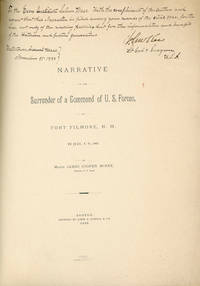
188647058Boston: Printed By John A. Lowell & CO. 1886. 1886. First edition. 11" x 8 3/4" Original plain stapled wrappers 32 pp. introductory maps index. Third edition according to Howes M125 and the only edition with maps. He also notes 300 copies printed but only a few have been on the rare book market. AE locates only the 1960 Houston edition and only one copy of the 1886 edition in 1922. Eberstadt’s had a copy of the 1886 edition in 1954. In our copy there is a long presentation note to Essex Institute Salem Mass.: "With the compliments of the author and request that this narrative be filed among your records of the Civil War for the use not only of the reading public but for the information and benefit of the Historian and future generations." Graff 2621. Nicholson p.586. Nevins I p.126: "Important only because it recounts a singular and unknown event in an isolated region." Tis book includes eye-witness accounts of the battle at Old Mesilla the first clash in the far west between Union and Confederate forces. In July 1861 Texas Confederates hit the Union outpost at Fort Filmore 40 miles north of El Paso. Under the command of Major Isaac Lynde the fort was surrendered after very little resistance and McKee a young Union surgeon privately published this bitter account. The first edition was printed in very small quantities for friends. This edition is the best edition and a well written account. McKee added an index and two maps not found in the first or second editions. All are very rare. A faint library stamp to the top corner of the front cover minor chipping and nicks to the cover fore-edges else a near fine tight copy. Printed By John A. Lowell & CO., 1886. unknown
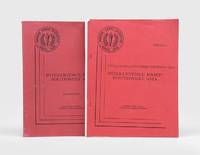
179352Washington DC & Arlington Virginia: Specialized Skill Training Department Marine Corps Institute 1998 & 1991. Preparing the USMC for desert warfare A scarce set of training and examination manuals with exercise questions completed by an unknown marine. They are a basic introduction designed to familiarize the corps with desert warfare terrain and the cultures and histories of the Middle East. We have traced no records of a two-volume set. The US army had little experience of desert warfare prior to the Gulf War 1990-91. "For many years US doctrine failed to address desert warfare. During World War II US forces suffered heavy losses in the opening phase of the North Africa Campaign 1942-43. Stung by these defeats American forces learned quickly and fared somewhat better later. After the war American military doctrine focused on the defence of Europe and desert warfare was again ignored" Chambers p. 212. Brief is a 10-lesson course "designed to familiarize the student with the terrain weather climate physical environment armed forces and the geopolitical and sociopolitical influences which apply to military operations in the area" p. i. It covers four units: "Introduction" "Military and Paramilitary Forces" "Terrorism" and "Culture Economics and History". Each unit is illustrated and includes a set of exercise questions which in this copy have been filled in. Readings was to be consulted alongside the Culture Economics and History unit of Brief. The 27 articles are mostly by Westerners such as John Bulloch Bruce Kuniholm Edward Mortimer William Polk and Maxime Rodinson. The Lebanese academic Fouad Ajami is an exception as is Palestine-US historian Rosemarie Said Zanian Edward Said's sister. The articles explain Saddam's actions in Iraq the history of Islam the Iranian Revolution Saudi Arabia's oil industry US policy in Palestine and many other crucial areas. Readings is the 1991 first edition of which only six copies are listed on WorldCat in American military institutions. Brief is the 1998 reissue listed with no known locations. 2 vols octavo. Illustrations maps and tables throughout. Original red paper wrappers. Brief: front wrapper lettered in black stapled without rear wrapper; Readings: spine and front wrapper lettered in black. Exercise questions in Brief sometime completed in pen answer key to Unit II exercises excised and loosely inserted answer key to Unit IV exercises missing. Wrappers creased and a little scratched light abrasions to wrapper edges of Readings old adhesive remains to p. 1 of Readings contents bright: a very good set. John Whiteclay Chambers The Oxford Companion to American Military History 2000. unknown
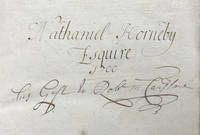
169757867<p>PEACETIME ARMIES ENABLE ABSOLUTISM - AN IMPORTANT DEBATE WITH ENDURING IMPLICATIONS - GIFTED BY A JACOBITE LONDON BANKER TO AN IRISH LANDOWNER</p><p>Collection of 5 items bound together on the issue of a Standing Army being:- <br /><strong>TRENCHARD John</strong> An Argument shewing that a Standing Army is inconsistent with a Free Government and absolutely Destructive to the Constitution of the English Monarchy.<br />London: Printed in the Year: 1697 4to. iv numbered v in error 30 2 advertisement & blankpp. . bound with<br /><strong>MOYLE Walter</strong> The Second Part of an Argument shewing that a Standing Army is inconsistent with a Free Government and absolutely destructive to the Constitution of the English monarchy. With remarks on the late published list of King James's Irish forces in France.<br />London: Printed in the Year: 1697 4to. 27 1 blankpp. . bound with<br /><strong>SOMERS John</strong> A Letter ballancing the Necessity of keeping a Land-Force in times of Peace: with the Dangers that may follow on it.<br />London: Printed in the year: 1697 4to. 2 blank 2 title 16pp. complete with preliminary blank . bound with<br /><strong>TRENCHARD John</strong> A Letter from the Author of the Argument against a Standing Army to the Author of the Balancing Letter.<br />London: Printed in the Year: 1697 4to. 15 1 blankpp. . bound with<br /><strong>FLETCHER Andrew</strong> A Discourse concerning Militia's and Standing Armies with relation to the Past and Present Governments of Europe and of England in particular.<br />London: Printed in the Year: 1697 4to. 2 30pp. <br />The five items bound together in contemporary mottled calf decorative blind tooled panels on sides marbled endpapers very small stain at outer top corner of the last two items small piece of shaved calf repair to the calf skin prior to binding flaked away near upper edge of rear board else a fine fresh copy. Contemporary signature on title of first item "Natt. Horneby" and inscribed on a preliminary blank leaf in a calligraphic hand "Nathaniel Horneby/ Esquire/ 1700" and below that probably at a slightly later date "his gift to Robt. Mc Causland".</p><p><br />1 Trenchard: ESTC r509611 WING T2110. This issue has a press-figure dagger only on leaf B1v and an advertisement on final leaf. Signature C2 is under the "ere is" of "there is". This edition is rare with ESTC locating 5 copies only 2 in B.L. 2 in Oxford & 1 other. See ESTC R16216 for another edition. Wing does not distinguish between the editions. <br />2 Moyle ESTC r177336 WING M3030 ESTC notes "The first part entitled An argument shewing that a standing army is inconsistent with a free government was written by John Trenchard and Walter Moyle. It is often thought Trenchard also assisted in the second part; however attributed solely to Moyle by BM Wing".<br />3 Somers ESTC r11547 WING S4642 <br />4 Trenchard ESTC r16213 There are 2 printings this one line 8 of title page has: 'Balancing'; there is no press-figure on p. 7; p. 15 has additional paragraph beginning: "Now Sir if a Parliament should subject all the Lands .". WING T2113 <br />5 Fletcher ESTC r5238 WING F1294</p><p>Following his invasion of England in 1688 the Glorious Revolution William of Orange became King William III and reigned jointly with his wife Mary. The English parliament's Bill of Rights of 1689 established a constitutional monarchy with extensive restrictions on the royal prerogative. One of those restrictions was that the Sovereign could not raise a standing army during peacetime without parliamentary consent. While William opposed such constraints he accepted them and chose not to engage in a conflict with Parliament. In the following years William was much engaged in European wars that ended with the Treaty of Ryswick in 1697.<br />The wars now over parliament to the king's displeasure decided to reduce the size of the army to 10000 men and later to 7000.<br />The ideological and political significance of the issue was argued out in a series of pamphlets of which these five are probably the most important on both sides of the issue. "The pamphlets . had a powerful effect upon the immediate controversy of 1697-99. The anti-army tracts moreover played a vital role in the formulation of an anti-army attitude which lived on in eighteenth century England and was transmitted along with many other ideas in liberal and republican seventeenth political thought to the American colonies. . Against the peacetime army were principally John Trenchard Walter Moyle Andre Fletcher of Saltoun the Rev. Samuel Johnson and John Toland. Arguing for the king's proposal were chiefly the lord chancellor John Somes and Daniel Defoe . Outstanding among the men who opposed the army was John Trenchard who may be regarded as the leader of the pamphleteers" Schwoerer.<br />Trenchard 1662 - 1723 educated at T.C.D. studied law in London and was a man of considerable wealth through inheritance and marriage. From initial support of the 1689 Revolution he became disenchanted with William and used his wide knowledge of sixteenth and seventeenth century republican political thought to oppose what he judged to be a potentially dangerous power grab by the monarchy. His Argument written in conjunction with Moyle the first pamphlet in this collection launched the debate and determined its parameters. Moyle's <em>Second Part</em> continued their argument. Somers apparently without great conviction argued for retention of a standing army and Trenchard in turn wrote a riposte.<br />Fletcher of Saltoun 1655 - 1716 Scottish writer patriot and politician had returned from European exile with William of Orange in 1688 but terminated his support when he judged that William also King of Scotland was only interested in using the country to help fight foreign wars. He like the other anti-army writers argued that history indicated a direct relationship between absolutism and a peacetime army. He perceived a decay in liberty around 1500 a product of economic and social changes that produced luxury and an abandonment of an old frugal military way of life. Such circumstances allowed defence of the realm to slip into the hands of princes who eliminated ancient rights and freedoms. England the last bastion of liberty faced following 'all the other kingdoms of Europe' along this path unless she avoided a standing army in peacetime.<br />Trenchard and his supporters the group of Whig religious political and economic reformers later sometimes Commonwealth men through their writings promoted republicanism in Britain. However while they were rejected in Britain their ideas were widely influential in British colonial America and on Republicanism in the United States.<br />Nathaniel Hornby or Horneby a London goldsmith and banker served as a Commissioner of Excise 1683 to 88 and in 1691. From the Restoration in 1660 to 1683 the state's excise was farmed out to investors willing to pay the government for the right to collect taxation. In 1683 a new group of Commissioners was chosen to be more efficient in collection than the foregoing. The Revolution of 1688/89 overturned the leadership of the excise branch and only 2 of the 7 Commissioners in office in Feb. 1688 survived a purge in April 1689 with most removed for political reasons. In 1684 when a remodelled department was considered "Sir John Somers whose influence was rising as the Whigs ascended recommended dismissal for virtually all of the commissioners. In particular he singled out Nathaniel Nornby and Thomas Aram who 'were such avowed Jacobites that there was nothing to be said for them'" Krenzke.<br />Nathaniel Hornby perhaps to provide himself with a bolt-hole far from London in the early 18th century rented a house and farm at Muff now Eglinton in Co. Londonderry from Ireland richest commoner and Speaker of the Irish parliament William Conolly himself a head tenant of the London Grocer's Company. Robert McCausland lived at Fruit Hill now Drenagh only a few miles from Muff and near Limavady. That estate was bequeathed to him on his death by William Conolly in 1729 and thereafter alternate eldest sons in the family were named Conolly. Modern McCausland family sources state that Robert was married to a daughter of Conolly but the latter was officially at least childless. Conolly did however support the families of his siblings which may be the connection. Evidently it was as neighbours that a rich London Jacobite banker came to know McCausland and present him with an important collection of pamphlets flagging the perils of creeping central power. From the inscription both men perceived the pamphlets as significant both in themselves and as a gift.<br />Lois G. Schwoerer 'The Literature of the Standing Army Controversy 1697-1699' <em>Huntington Library Quarterly</em> vol. 28 no. 3 1965 p. 187-212 <br />John Krenzke <em>Change in Brewing. Industrialization of the London Beer Brewing Trade 1400-1760</em>.</p> hardcover
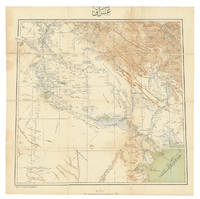
1915ABC_47201Istanbul: Erkan-i Harbiye-i Umumiye 1915. Colour-lithographed map of Iraq Kuwait and southwestern Iran 65.5 x 66 cm in black brown blue and green at a scale of 1:1000000 dissected into 12 sections and mounted on contemporary cloth. First edition of the first accurate Ottoman general map of Central and Southern Iraq Kuwait and Khuzestan southwestern Iran; the authoritative map used by the Ottoman army for strategic planning during the "Mesopotamia Campaign" where Ottoman-German forces mounted a unexpectedly strong resistance to Britain's invasion of Iraq in World War I. Examples of the present map were used by Ottoman commanders who oversaw the successful Ottoman-German defence of Baghdad at the Battle of Ctesiphon 22-25 Nov. 1915 as well as the capture of the main British army at the Siege of Kut-al-Amara 7 Dec. 1915-29 April 1916. It shows the tip of the Gulf and the Tigris and Euphrates vallies including Kuwait most of Iraq and Khuzestan province in southwestern Iran. Mountain ridges are rendered in brown with rivers and marshes in blue permanent bodies of water in green and parallels and meridians at every degree ranging from about 43.5 to 49.5°E longitude and 29 to 34°N latitude. With the text entirely in Ottoman Turkish the map is based on the British War Office's "Lower Mesopotamia between Baghdad and the Persian Gulf" 1911 which was itself in part based on Ottoman sources. Both maps were dramatically superior in all respects to previous efforts forming the culmination of over three generations of reconnaissance capped by critical late-breaking discoveries.Some light stains in the margins and the lower-right quadrant but generally in good condition. Very rare. [Erkan-i Harbiye-i Umumiye], hardcover
19412110502150407699Tsuru shobo 1941. Soft Cover. Fine. Volume: 1 Tsuru shobo paperback
20002080502106406404Kuresushuppan 2000. Soft Cover. Fine. The book is in fine condition. Kuresushuppan paperback
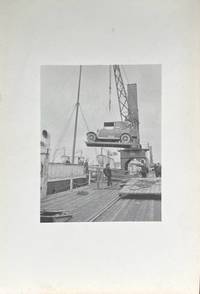
191259779Horsham West Sussex & Haymarket London UK: H.W.C. James A. Sinclair & Co. Ltd. 1912. Two vols. Oblong 8vo. 8.5 x 5 in. 64; 69 leaves unnumbered. including 2 calligraphic titles 63 & 68 platinum print matte finish photographs w/ images sized from 2 x 3 in. up to 3.25 x 3.75 in. on 4.75 x 7 in. prints all expertly hinged at gutter margin a few w/ pencil annotations on versos occasional light toning from the platinum salt emulsions coating the papers. Uniformly bound in striking full green morocco bindings by Zaehnsdorf gilt ruling on covers gilt inner dentelles 5 raised bands on spines title lettering ownership & dating in gilt a.e.g. marbled endpapers very slight shelfwear incremental rubbing at corners still a NF set. An exceptional pair of automobile travel albums composed of platinum print photographs by Dr. E. Stevens apparently presented to fellow Royal Photographic Society member and platinum photograph enthusiast H.W. Child. The motor car was a grey 1912 35 CWT Delaunay-Belleville depicted in 15 of the images bore the GB License Plate of BP1945 registered in 1912 to Charles Stevens c/o Dr. Stevens of Sarcelles Horsham West Sussex July 4 1912. The Delaunay-Belleville in the Brass Era was one of the most expensive and prestigious touring cars for travelers and enthusiasts whose owners at the time included Evalyn Walsh McLean original owner of the Hope Diamond as well as Mann who traveled “Round the World†in 1912 in a similar model. The intrepid travelers clearly intended to photograph and put their new motor through its paces traveling about 3000 miles. The album opens with photos of the auto loaded at Portsmouth and by ferry to Le Havre and then driving down through Normandy Alencon Le Mans Tours Bordeaux and onto Biarritz. The tour extended across the Pyrenees into Spain visiting San Sebastian followed by drives to Pau Lourdes Toulouse Narbonne and then along the South of France into Italy. The drive was not without pitfalls as they suffered punctured tires with two different images showing repairs one with a crowd as well as the photo waiting for a massive rock slide of giant boulders fallen onto the roadway and being removed by wooden wheelbarrows. They continued their tour across the Alps into Switzerland with views of the travelers at a Swiss border station and then capturing scenic vistas and driving onto Salzburg & Linz. One of the images captures advertising and awning of a “Buchdruckerei†specializing in photographic books supplies and photo albums. At that point the motorists had reached the most Eastern point and drove along the Danube route crossing overland to the river Necker Heidelberg and finally into the Netherlands with visits of Amsterdam Haarlem often with picturesque images capturing the Dutch in their iconic wooden shoes windmills canals and even electric railways. One particular image documents the “Art Store†selling Volendam silver & brass and antiques. The final image shows the car being loaded back on the steamship to England from Rotterdam. The platinum photographs were processed by James A. Sinclair & Co. Ltd. at 34 Haymarket in London specializing in photographic prints & equipment and at the time the Platinum prints were Alfred Stieglitz’s process of choice celebrating the images for their aesthetic qualities and permanence. As the Platinum prints were printed direction on coated paper with platinum salts the image was absorbed directly into the paper creating a softer and less-detailed image which was quite durable. Dr. Stevens fl. 1910-1918 who during World War I served as surgeon with the Royal Army Medical Corps joined the Royal Photographic Society in 1915 and exhibited three of his photographs presumably from this excursion including “In the Paese†“Making Port Concarneu†and “Santa Maria della Pace Lago di Como.†Child b. 1859 was a very successful merchant who by 1897 was also an active member of the Royal Photographic Society Platinum print enthusiast and automobile traveler as well. He exhibited several times with the RPS often appearing in their exhibitions from 1898-1915 the last being “Citadel and Church Dinant†shot in 1914 and displayed as an Autochrome. See: Ordinary Members The Photographic Journal Vol. 41 January 1917 pp. 32 41; Exhibition Catalogue of 1898 43rd Annual Exhibition of the Royal Photographic Society 1898; 44th 1899; 45th 1900; 47th 1902; 60th 1915. H.W.C., James A. Sinclair & Co., Ltd., hardcover
19362080502106917695Not Available 1936. Soft Cover. Fine. The book is in fine condition. Not Available paperback
1916000483<p>Istanbul: TanÄ«n 1916.<br />Book. As new. Hardcover. 8vo over 7¾–9¾ in.<br />An official report issued by the Ottoman Fourth Army under Jamal Pasha concerning the proceedings of the Supreme Court Martial Tribunal convened at Ê¿Ä€liyah Aley Lebanon established to prosecute alleged Arab separatists and Pan-Arabist movements in Syria and Egypt during the First World War.<br />The report claims that the names of prominent Arab nationalists were discovered by the Ottoman authorities among documents seized from the French Embassy in Beirut reportedly placed under the safekeeping of the American Embassy following the outbreak of war. These documents formed the evidentiary basis for the tribunal's investigations.<br />125 pages of Arabic text accompanied by over 50 facsimile plates issued as a supplement reproducing original documents and correspondence between the accused Arab nationalists and other related parties examined by the tribunal.<br />Preserved in a modern hardcover binding.<br />A significant and controversial contemporary Ottoman publication providing rare primary documentation on wartime military justice Arab nationalist movements and Ottoman intelligence practices during the final years of the empire.</p><p>An important Arabic political and legal work presenting the Arabic version of La Vérité sur la Question Syrienne addressing the investigations and proceedings of the Ottoman Martial Law Tribunal DÄ«wÄn al-Ḥarb al-Ê¿UrfÄ« convened in Ê¿Ä€liyah Aley during the First World War.<br />The work constitutes a contemporary defense and documentary clarification of political accusations brought against Syrian and Lebanese figures shedding light on:<br />Ottoman wartime judicial procedures<br />political repression and accusations of separatism<br />and the broader Syrian Question in the late Ottoman period.<br />As the original Arabic edition this publication is a key primary source for the study of Ottoman military justice Arab political movements and Syro-Lebanese intellectual history during the final years of Ottoman rule.<br />A scarce and historically significant work particularly sought after in collections relating to the Arab provinces of the Ottoman Empire World War I Middle Eastern politics and constitutional and legal history.</p> Tanine hardcover
17932201040008Philadelphia: : Printed by E. Oswald no. 156 Market-Street south between Fourth and Fifth-Streets. M DCC XCIII 1793. Hardcover. Good. Von Steuben's Revolutionary War Manual on Drill was written at George Washington's urging. It remained an important guide for the American military through the War of 1812 Rebound in early 20th century 1/2 cloth over marbled boards. Hardcover. Good binding and cover. Foxing. 48 p. ; 22 cm. 8vo. <br> Evans 26358. ESTC W21724. <br> Prepared by Friedrich von Steuben in 1779 as inspector general of the Continental Army; adopted nationally by the Uniform Militia Act of 1792. 'Washington asked Steuben to serve temporarily as inspector general and to begin his duties by instructing the soldiers in the long-neglected subjects of discipline and drill. To the amazement of the Americans who were unaccustomed to officers acting as drillmasters Steuben initially formed a model company which he personally instructed with the aid of a translator. By April Steuben had acquired four assistant inspectors and had extended drill instruction to the whole army. Lacking adequate drill manuals Steuben wrote daily lessons in which he greatly simplified and softened Prussian methods to fit the immediate needs and free-spirited ways of the American soldiers . The transformation that Steuben wrought in the training of the Continental army greatly impressed Washington and other observers. In May 1778 Congress acting at Washington's recommendation officially appointed Steuben inspector general of the army with the rank and pay of major general.' ANB online. Philadelphia: : Printed by E. Oswald, no. 156, Market-Street, south, between Fourth and Fifth-Streets., M, DCC, XCIII hardcover
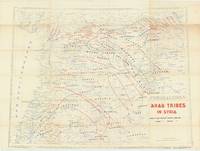
63833G.S.I. T. Headquarters Ninth Army February 1942. FIRST EDITION. 8vo. 24 x 17 cm. pp.vi Title and Contents plus pp.ii Errata plus iii-xv The Bedouins of Northern Arabia by Lt. Col. J.B. Glubb and pp.186. Original blue printed paper wrappers rubber stamped 102 and in red "This Document will be kept under lock and key when not in actual use". Ownership inscription of "P.M. Holt/28.0.59/Hastings" A fascinating handbook on the tribal peoples of Syria with a remarkable folding map of 'The Arab Tribes in Syria' a French map overprinted with the tribes' names and their Summer and Winter locations. The handbook was compiled by the British 'Ninth Army' which occupied Syria and Lebanon after the allied defeat of Vichy France in 1941. An official publication it was issued for a limited readership: "This document is the property of H.B.M. Government and is issued for the information of officers and responsible officials." Most surviving copies show signs of official ownership and this is no different with sporadic manuscript annotations updating the intelligence. Uncommon. LibraryHub lists three holdings in the UK at SOAS the British Museum and Oxford. OCLC adds six holdings at the American University in Beirut Princeton Duke University NYU Abu Dhabi Monash University and Keio University. Peter Malcolm Holt 1918 -2006 eminent historian of the Middle East and Sudan and a founding editor of the Cambridge History of Islam. G.S.I. (T). Headquarters, Ninth Army, February, 1942. unknown
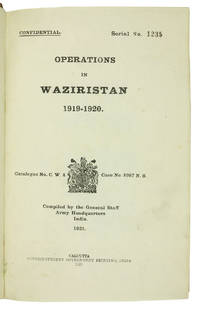
1921ABC_45215Calcutta: Superintendent of Government Printing 1921. Contemporary half calf green cloth sides gold-stamped red spine labels. 8vo. With frontispiece 31 plates 7 maps 3 in pocket on inside of back board and 8 panoramas mostly folding. First edition of the British-Indian armys official account of the 1919-20 Waziristan campaign marked "Confidential" on the title-page. The operations followed unrest that arose in the aftermath of the Third Anglo-Afghan War; they were conducted in the mountainous region of Waziristan now in Pakistan by British and Indian forces against the fiercely independent Waziri and Mahsud tribesmen that inhabited it. Since the 1870s the British government agencies were assiduous in compiling internally published histories of their military frontier operations with the intention of providing a "valuable guide" to such British commanders and policymakers as "might have future dealings with these turbulent neighbours" as the Punjab Government phrased it in 1866.The title-page reports the catalogue number and location of what may be the original report: Catalogue no. C.W. 4 - Case no. 8987 N.S..Serial No. 1235 stamped on the title-page. Occasional light marginal staining. A few edge flaws consistent with army use repaired by a contemporary owner. Otherwise in very good condition.l WorldCat 11497145. Superintendent of Government Printing, hardcover
1943005853Tunisia: British Eighth Army 28 April 1943. Leaflet. This compelling Second World War artifact is an original message from General Bernard Law Montgomery to his Eighth Army troops on 28 April 1943 during the final Allied effort to expel Axis forces from North Africa. This printed message is not only a remarkable survivor but is signed by Montgomery B. L. Montgomery just below his printed name. While the signature is undated it seems almost certainly to have been signed in situ; Montgomery was created Viscount Montgomery of Alamein in January 1946 and thereafter routinely signed Montgomery of Alamein. <br /> <br />The leaflet measures 8 x 10 inches 20.3 x 25.4 cm printed in black on a single side of thin acidic stock. Condition shows wear expected for an original piece of North African theatre ephemera. A single vertical crease and two horizontal creases testify that the leaflet was folded notionally to fit in a soldiers pocket. The folds and edges show wear and fractional chipping there is overall soiling particularly to the blank verso and a central rectangle of the printed and signed recto is differentially toned indicating that it was once framed and thereby exposed to sun. Nonetheless like the solder to whom it once belonged and the General who authored and signed it this copy survived. <br /> <br />Montgomerys EIGHTH ARMY Personal Message from the Commander specifies that it is To be read out to all troops and consists of eight numbered points. The first three points encapsulate recent Eighth Army objectives and accomplishments. Points 4-7 are a spur to action with a specific repeated exhortation to KEEP UP THE PRESSURE!. The final point 8 is Good luck to each one of you. You can rest assured that I am watching over the battle carefully and together we will finish the job. Montgomerys signature is faded but still clear below his printed name at the lower right and the leaflet is printed 28.4.43 Tunisia. at the lower left. Operation Vulcan which began on 22 April 1943 was among the final Allied initiatives to overcome the last Axis North Africa defenses. By 13 May 1943 British Middle East Commander-in-Chief Harold Alexander sent Churchill the message the Tunisian campaign is over We are masters of the North African shores. Churchill THoF p.780 <br /> <br />Nearly two and a half millennia after Thucydides discussed the unpredictable role of chance in war Bernard Law Montgomery 1886-1976 and the Eighth Army found one another in North Africa. In July 1942 British troops checked Rommels forces in the First Battle of El Alamein but Allied momentum stalled. Churchill flew to Cairo on 1 August to assess command replacing Middle East Commander-in-Chief Claude Auchinleck with General Alexander and appointing General Gott to command the Eighth Army. When Gott was killed on 7 August flying back to Cairo Churchill acceded to General Montgomery in Gotts stead. Montgomery seized command two days earlier than authorized by his C-in-C and began an historic transformation of a beaten body of men into the legendary Eighth Army that fought its way from Alamein to Tunisia between August 1942 and May 1943. North Africa and the Eighth Army proved the perfect milieu for Montgomerys messianic vitality and vanity. Montgomerys political ineptitude and diplomatic limitations earned him significant postwar hostility and criticism but did not prevent his becoming widely regarded as the outstanding British field commander of the twentieth century. As this Personal Message testifies Above all Montgomery understood soldiers hearts and minds thousands of miles from home in a citizen army The men of the Eighth Army wanted to know what they were required to do Montgomery gave them an immediate answer. ODNB Montgomery later said the intent of his Personal Messages was to define the common objective and thereby foster unity of purpose.I like to think that these messages did much to foster the spirit and the will-to-win El Alamein to the River Sangro <br/><br/> British Eighth Army unknown
194728740Washington DC: United States Army Air Forces. Very Good. ca.1947. First Edition. Hardcover. no dust jacket probably as issued light external soiling a little darkening to the spine. charts maps A massive catalog of all and I do mean all the photo-technical data related to the photography both still and motion picture both black & white and color of "Operation Crossroads" the first two post-World War II nuclear bomb tests conducted at Bikini Atoll in the South Pacific in July 1946. The first test took place on July 1 and was nicknamed "Able Day"; the second on July 25 was "Baker Day." The names were directly taken from the first two letters of the Joint Army/Navy Phonetic Alphabet. The stated purpose of the tests was to assess the level of damage that the massive explosions would inflict on naval vessels of various kinds that were stationed in the vicinity; all humans were evacuated from the ships although a large number of small animals were placed on board thousands of rats; hundreds of goats pigs and mice; and even a few dozen guinea pigs in order to measure the effects on them of the radiation emitting from the blasts. Short version: not good. The two tests were designed to measure the effects of two different kinds of explosions: the Able bomb was an "air burst" detonated 520 above the surface; the Baker bomb was suspended beneath a landing craft and detonated 80 feet underwater. The stated purpose of this catalog was "to provide a systematically-combined record of photography available from the two operations for study measurement and analysis purposes." The bulk of its 756 pages is devoted to reproductions of the three data sheets that documented each roll of film that was shot: 1 the "Film Data Sheet" giving the technical specs of the camera and a summary of its coverage; 2 the "Time and Position Data Sheet" with detailed data on each individual exposure; and 3 the "Aircraft Track and Position Chart" a map of Bikini Atoll with the positions of each camera-carrying aircraft plotted thereon. Those aircraft by the way were essentially drones operated by radio remote control and the cameras were automatic so that no humans needed to be too close to the blasts. There are also at the beginning of both the Able and Baker sections abstracts of the contents of each roll of film. Example: "This roll shows phenomena from fireball through development of mushroom cloud in a series of exposures made in rapid succession 3 per second." Although the volume itself was apparently not classified neither was it a U.S. Government Printing Office issue intended for wide circulation; it's stated in a couple of places that "a limited number of additional copies of this publication are available" and informs the reader where to procure them. Its obvious purpose was to facilitate the users' ability to locate the film footage or still photography needed for purposes of their own analysis and it's likely that a certain level of security clearance was required. There is however this note among the introductory matter: "All data and sheets pertaining to Able Day Sortie H and bomb carrying aircraft have been deleted from this catalog and will be found in a classified addendum." Keeping wraps on info about the plane that actually dropped the Able bomb I can understand but I wonder what the deal was with "Sortie H" A small amount of the film footage documented here was incorporated into the official U.S. Government documentary film of the events called "Operation Crossroads: Able and Baker Day Tests Bikini Atoll Summer 1946" released in 1949. One would hope that all this photography has been preserved in the National Archives -- maybe even the stuff from the mysterious "Sortie H." The present volume is quite rare with OCLC recording just three copies: at the Smithsonian Institution in Washington DC; the Air University Library at Maxwell AFB in Montgomery Alabama; and at the Phillips Research Site Technical Library which was merged in 1997 into the Air Force Research Laboratory at Wright-Patterson AFB in Ohio the OCLC link however is dead -- the latter two of which I suspect are not readily if at all accessible by the public. NOTE by the way that there is no actual photography reproduced in this book: it's strictly a non-visual catalog. . United States Army Air Forces hardcover
4911Four vols. 8vo orig. polished mottled green calf a little rubbed single gilt fillet round sides flat spine gilt orange leather lettering piece on spine crown stamped in gilt at head of spine Vol. I orig. fine brown sheep maroquiné single gilt fillet round sides flat spine gilt orange leather lettering piece on spine crowns stamped in gilt at head & foot of spine a.e.g. Vol III orig. boards Vols. II & IV. Munich: 1832-33-48-72.<br/> <br/> The first catalogue issued with its three supplements of the maps and plans in the Bavarian Army Library founded in 1822. This was one of the most important collections of maps of the period. <br/> <br/> Very fine and pretty set from the Wittelsbach library of the dukes and kings of Bavaria. unknown