WORLD WAR II; US ARMYBiblio.com

14 580 résultats
1943190146Washington: United States Government Printing Office 1943-45-46. Presentation copies from General George Marshall to his "miracle worker" General Brehon B. Somervell A complete set of the original official US Army wartime reports handsomely produced the personal copies of General Brehon Burke Somervell 1892-1955 George Marshall's commander of Services of Supply the first two being presentation copies from Marshall the cover of each volume gilt lettered with Somervell's name and rank. Services of Supply was one of the three "superagencies" organized by the US Army after the United States's entry into the war in December 1941 - the other two being Army Ground Forces and Army Air Forces - and gathered under its overarching aegis Quartermaster Corps Chemical Warfare Service Signal Corps Corps of Engineers Ordnance Department Medical Corps and Transportation Corps. "General George C. Marshall the army's chief of staff during World War II held Somervell in high regard for his ability to perform monumental tasks and was willing to overlook his penchant for antagonizing others. "What he did was a miracle" said Marshall in a postwar interview. The U.S. Army in World War II was probably the best-supplied army that had ever gone to war. Much of the credit for that accomplishment goes to Somervell who provided the "sinews of war" for a military effort that literally spanned the globe" American National Biography. Somervell is mentioned directly by Marshall in his concluding remarks to the first volume where he notes "The requirements of logistics are seldom understood. The burdens they impose on the responsible military authorities are rarely appreciated. The conflicting demands of our theater commanders of Allied sovereign powers and of the home front pose difficulties never before approximated in war. The necessity for a high degree of efficiency in management is evident and it has been found in the coordination of all the various supplies and administrative departments of the Army under the command and leadership of Lt. Gen. Brehon B. Somervell. "Published at two-year intervals these reports provide a comprehensive picture of global war as seen from the perspective of the Chief of Staff. The first report describes the race to mobilize an unprepared country and Marshall's appeal on the eve of war for the renewal of Selective Service a reminder of how far the U.S. Army had to come to meet the Axis challenge. The second recounts the initial defeats after Pearl Harbor and the ultimately successful efforts of the United States and its Allies to turn the tide. The final report describes the drive to victory and outlines Marshall's analysis of the reasons for the Allied triumph. Summaries give an overall view of the progress of the war but the scholar and military professional will find most interesting Marshall's comments on such topics as technology the "90-division gamble" the replacement system troop morale and the citizen-soldier and demobilization. These comments and the other material presented in the reports provide not only a fresh perspective on the myriad problems of conducting a global war at the highest levels but also renewed appreciation for the man whom Churchill appropriately called 'the organiser of victory'" Brigadier-General John W. Mountcastle foreword to the 1996 Center of Military History edition. This is a set of the scarce original edition produced by the United States Government Printing Office in Washington; trade editions were also produced by the Infantry Journal Press in the US and HMSO in Britain. The set comprises: Biennial Report of the Chief of Staff of the United States Army July 1 1941 to June 30 1943 to the Secretary of War. Octavo pp. v 56. 6 folding maps and 19 folding charts. Presentation copy from General George Marshall inscribed on a preliminary blank: 'To General Somervell with appreciation and warm regard G. Marshall". Biennial Report of the Chief of Staff of the United States Army to the Secretary of War July 1 1943 to June 30 1945 to the Secretary of War' Quarto pp. iii 123. bound with the supplementary Atlas of World Battle Fronts in Semimonthly Phases to August 15 1945 pp. 101. Presentation copy from General George Marshall inscribed on a preliminary blank: "Dear Somervell - Please accept this copy of my final report as Chief of Staff with appreciation of your tremendous service to the army and support of me with my affectionate regards - G. Marshall October 5 1945". Report by the Supreme Commander to the Combined Chiefs of Staff on the Operations in Europe of the Allied Expeditionary Force 6 June 1944 to 8 May 1945. Quarto pp. x 123. Several colour maps. 3 vols one octavo 232 x 135 mm 2 quarto 305 x 210 mm. Contemporary black pebble-grained skiver gilt lettered on front covers first 2 vols with dark blue vertical-rib cloth endpapers third with white moiré silk-effect endpapers. Bindings a little worn at extremities some mottling to covers scattered foxing otherwise very good. hardcover
191845147n.p.: Army General Staff College 1918. fair to good. 8.5" x 13.5" approx. 1000 6-vol. set a collection of mimeographed copies and some carbon copies bound together some foxing to text some pages browned. A few pages brittle some pencil notations to text. Volume I contains conferences and lectures for the First Course reissued during the Second Course presented by the Army Staff College--A.E.F. France. Volume II contains map problems of the First Course reissued during the Second Course. Volume III contains conferences 1 to 114 of the Second Course. Volume IV contains conferences 115 to 145 lectures 1 to 26 and miscellaneous matter. Volume V contains map problems 1 to 21 of the Second course. Volume VI contains map problem 22 of the Second Course. Volume VII contains publications. Volume VIII contains maps. This is an extremely rare collection with student notes and comments. We believe this was the personal copy of Lt. Col. Herbert Parsons of the Fifth Division. Among the topics covered are maps and trench maps military geography of the Western Front food supply marches combat artillery infantry transport the intelligence service roads and railways ammunition supply motor transportation liaison billeting and administrative instructions practical exercise in map reading trench relief training of reinforcements evacuation of wounded night operations counter attack exploitation of success examination of prisoners of war burial tactical withdrawal and many others. Army General Staff College unknown
19091819600 leaves typed on recto only bound in original half leather with gilt titling. Six large fold-out maps of the period. Plates composed of postal views with a few photographs laid down. Marbled endpapers hinges reinforced. 'Confidential' stamped in violet as well as 'Office Chief of Staff 2nd section' and 'Withdrawn from Library'. American contractors had just completed the Oruro/Viacha railway in 1908 with 125 miles laid to mineral rich regions to and from La Paz. This study seems to have never been published beyond the present edition.; Folio 20.5 x 41 cm; pages; All shipments through USPS insured Priority Mail. U.S. Army hardcover books
1917K8VDJ4FBG0KGCalcutta: Superintended government printing 1917. Original green cloth with title on spine and front. Small 8vo 17 x 11.5 cm. With 1 folding heliozincographed map of "Lower Mesopotamia" map size 41 x 37 cm with some routes in red and three folding letterpress tables. Second edition considerably expanded of a field guide to Mesopotamia Iraq published on behalf of the General Staff in India for the use of officers serving in the Mesopotamian campaign during the First World War stating on the binding and title-page "for official use only". The guide is divided into eight chapters dealing with Iraq's history geography population resources military strength maritime power administration and communication respectively. The fifth and sixth chapter also contain valuable information on the Turkish military and maritime strength. The present edition adds much new information that was not included in the 1915 edition. For example the "list of routes" in the present guide contains 36 routes between compared to 14 routes in the 1915 guide. The routes are shown on the folding map.With the owner's inscription of H.W. Leatham Lieutenant in the British Royal Army Medical Corps on the first flyleaf. A few small spots or stains. Binding only very slightly rubbed. Overall in very good condition. Superintended government printing, hardcover
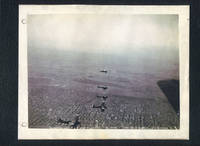
192342800Mitchel Field Long Island NY: U.S. Army Air Service 1923-1925. 1923-1925. Archive of 57 original aerial photographs from the 8th & 14th Photographic Sections Air Service during the Aerial Mapping Survey of New York City and vicinity and the Northeast. 57 original photos mounted on thick card stock 10" x 8". 53 have identifications of place and Air Service Photo section at lower fore-edge of the images and all are printed on glossy photographic stock with some sepia-toned. The images encompass planes in formation over New York views of Manhattan the Statue of Liberty a factory fire in Jersey City Fort Ticonderoga the Zeppelin hanger at Lakehurst New Jersey Albany Philadelphia Hartford Exeter NH numerous Air Fields a scarce series of photos for the Jan. 24th 1925 Eclipse of the Sun and more. The Air Service was created by executive orders of President Wilson in May 1918 during World War I and would eventually expand to nearly 200000 personnel and 2000 aircraft by the end of the war producing planes as well as carrying out operations by aerial reconnaissance photo sections dirigibles balloons and fixed wing aircraft. By 1923 the peacetime cutbacks had slashed the Air Service down to just under 10000 men and 1450 aircraft including 15 photographic sections encompassing the above mentioned 8th and the 14th commanded from 1920 to 1925 by Brig. General Billy Mitchell. Mitchell campaigned tirelessly and bitterly until his court-martial at the end of 1925 to establish the Air Service as a separate military wing independent from the Army and Navy. To aid this mission he authorized a number of publicity stunts to emphasize the modernity and ability of the Air Service including aerial mapping projects speed and altitude records in cross country flying scientific projects and most famously the first flight around the world. The Air Service set up support facilities around the world for the fliers and in April 1924 sent four aircraft named Seattle Chicago Boston and New Orleans west beginning from Seattle Washington and led by Major General Mason Patrick Chief of Air Service. Two of the images in this collection show the two surviving Douglas World Cruisers which on Sept. 8 1924 stopped over in New York One of the photos shows a formation including the New Orleans flown by Lieutenants Eric Nelson and John Harding. They would complete the circumnavigation on Sept. 28 1924 in Seattle nearly 3 weeks later after these photos. The earliest of the dated photos shows 5 DH-4Bs flying in formation on November 20 1923 over Manhattan. The DH-4Bs set records of flying aloft through aerial refueling. The images dated July through November 1924 by the 8th Photo Section during their Aerial Survey mapping projects include Hartford Bridgeport and New Haven CT; Air Port in Boston MA; Fairgrounds at Brockton MA; Exeter NH; Providence and Connecticut Island RI; as well as 2 photos of a Nov. 1924 fire in the industrial section near the docks in Jersey City NJ showing tugboats nearby as well as smoke billowing above the factories damaged by the fire. Images by the 14th Photo Section include the airfield and hangar Lakehurst Naval Air Station NJ which was the home of the ZR-3 Los Angeles dirigible and would later be the site of the Hindenburg disaster; 3 photos of Mitchell Field Long Island NY; landing fields in Van Cortland Park Bronx NY; Governors Island; 2 photos of Roosevelt Field and downtown Albany at Albany NY; aerial views of the Statue of Liberty lower Manhattan including nice images of the Manhattan and Brooklyn Bridges; Fort Ticonderoga; Niagara Falls; Philadelphia; and photographs mapping the area around Mt. Mansfield Vermont. Of particular interest are the series of 11 photographs showing the sequence of the total solar eclipse on Jan. 24th 1925 over Connecticut. The skies were cloudy but 12 planes the ZR-3 Los Angeles dirigible and many scientists and men with special cameras and instruments recorded the event. Ten of the photographs here are marked in stages for the eclipse and an additional separate initial view that is marked Eclipse of the Sun 14th Photo Section Air Service U.S.A. This collection offers an excellent historical record of the early years of U.S. aviation as well as views of the Northeast during the 1920's. All of the images are quite crisp with almost no fading and have two small holes at the left gutter margin where they were apparently stored originally in a two- ring binder. Minor bumping and chipping to some corners of the boards. A few images have lifted at the corners and a couple have very minor loss one with creasing to center of image though not affecting the quality of the image. A remarkable collection of a scarce series of aerial photographs taken by the 8th and 14th Photographic Sections of the U.S. Army Air Service. U.S. Army Air Service, 1923-1925. hardcover
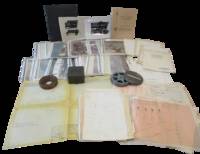
1950229621950. This exceptionally dense technical archive documents U.S. Army rocket and missile development during the height of the Cold War and Vietnam War originating from the estate of a retired aerospace engineer Thomas T. Howell affiliated with the U.S. Army Missile Command with direct work conducted at Redstone Arsenal Alabama and White Sands Missile Range New Mexico. The materials capture the applied test-driven reality of American rocketry at the moment when battlefield rocket systems solid-fuel propulsion and rapid-deployment tactical missiles became central to U.S. military doctrine. Of particular importance is the archive's sustained focus on field testing propulsion diagnostics firing mechanisms and structural integrity analysis with repeated references to multi-stage motors booster threads nozzle pressure profiles thrust measurement strain-gauge instrumentation and dynamic propulsion testing under operational conditions. The presence of Vietnam-era documentation situates this archive squarely within the escalation of U.S. missile and rocket deployment in Southeast Asia when systems such as the Little John rocket and related short-range artillery rockets were actively refined tested and evaluated for combat reliability. <br /> <br /> Collection includes; 2 original testing mechanisms; a 16mm film roll documenting a test launch; over 40 original photographs showcasing different testing sites and rocket units; over 40 hand drafted graphs on red paper; several hand written pages of calculations with formulas and schematics; several signed printed documents signed regarding the procedures for assembly static test flight weight booster motor components all dated in the summer of 1969; and a heavily annotated blueprint.<br /> Redstone Arsenal established in the early Cold War and shaped by the integration of German rocket scientists after World War II became the intellectual and engineering hub of U.S. Army missile work where propulsion systems launch mechanisms instrumentation and tactical doctrines were conceived refined and standardized. White Sands Missile Range by contrast functioned as the proving ground where theory met reality. This Redstone-White Sands pipeline allowed the United States to move rapidly from concept to deployable weapon. The archive comprises a combination of original testing hardware primary testing documentation photographic evidence and engineering drawings and graphs offering a nearly end-to-end view of the rocket development and validation process. Included is an original Electrical Output Firing Mechanism Tester for rocket launchers which is distinctly labeled for testing electrical firing mechanisms with milliwatt-second measurements a piece of surviving test equipment seldom encountered outside institutional collections; a rubber ring with conductive instrumentation in the interior a ring-type electromagnetic integrator or pickup coil used to measure missile velocity by electrically integrating acceleration over time with the central aperture allowed a magnetic core conductor or shaft associated with missile motion to pass through; extensive hand-plotted K&E bar graphs trajectory charts acceleration and velocity curves displacement diagrams and launch-segment data sheets many executed on period engineering graph paper with handwritten annotations calculating thrust pressure acceleration in g's and burnout timing; a substantial group of typed Army test procedures and data-requirement documents several signed and approved by supervising engineers details assembly procedures static and dynamic propulsion tests booster motor configurations which include tapered buttress threads and pin joints strain-gauge placement chamber pressure measurement and photographic documentation protocols; and a blueprint with extensive handwritten calculations in areas surrounding schematic drawings titled "Revisions -- Body Pressure Transducer" dated 1969. The calculations mention error rates "at 0.4% to 0.6% due to boost acceleration." These documents reveal the rigor of U.S. Army missile testing culture where every firing was instrumented recorded and analyzed as part of an iterative engineering feedback loop.<br /> A binder containing over 40 original photographs many stamped on the verso identifying the various locations and rockets such as "LITTLE JOHN" and "WHITE SANDS" on glossy photo paper shows test stands firing sequences hardware setups and missile components in both black-and-white and color. These images provide rare ground-level views of rocket testing infrastructure and procedures at one of the most historically significant U.S. missile ranges. Also present is 16mm film apparently documenting test-stand or firing activity; the film appears physically intact and represents a rare moving-image record of Army missile testing during the era. Completing the archive are large-format blueprints and technical drawings including a detailed pressure-transducer body schematic bearing U.S. Army Materiel Command identifiers Redstone Arsenal attribution and extensive handwritten calculations direct evidence of hands-on analytical work by an engineer engaged in real-time problem solving under Cold War weapons development pressures.<br /> <br /> Materials show expected handling and working-archive wear consistent with active engineering use: edge wear folds staple and paper-clip rust toning and some stains to paper; handwritten calculations and annotations throughout; photographs generally well preserved with strong contrast; hardware tester shows surface wear and oxidation consistent with age and field use; 16mm film appears physically sound but untested. Overall very good condition. This archive represents a rare primary source for the study of U.S. Army rocketry missile engineering and weapons testing during the Vietnam War and late Cold War period. Its combination of original equipment signed technical procedures analytical charts photographs and film makes it especially valuable for institutional collections focused on military technology Cold War science aerospace engineering history and the material culture of U.S. weapons development. unknown
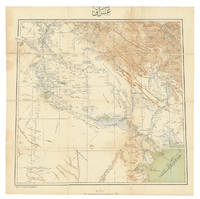
1915ABC_47201Istanbul: Erkan-i Harbiye-i Umumiye 1915. Colour-lithographed map of Iraq Kuwait and southwestern Iran 65.5 x 66 cm in black brown blue and green at a scale of 1:1000000 dissected into 12 sections and mounted on contemporary cloth. First edition of the first accurate Ottoman general map of Central and Southern Iraq Kuwait and Khuzestan southwestern Iran; the authoritative map used by the Ottoman army for strategic planning during the "Mesopotamia Campaign" where Ottoman-German forces mounted a unexpectedly strong resistance to Britain's invasion of Iraq in World War I. Examples of the present map were used by Ottoman commanders who oversaw the successful Ottoman-German defence of Baghdad at the Battle of Ctesiphon 22-25 Nov. 1915 as well as the capture of the main British army at the Siege of Kut-al-Amara 7 Dec. 1915-29 April 1916. It shows the tip of the Gulf and the Tigris and Euphrates vallies including Kuwait most of Iraq and Khuzestan province in southwestern Iran. Mountain ridges are rendered in brown with rivers and marshes in blue permanent bodies of water in green and parallels and meridians at every degree ranging from about 43.5 to 49.5°E longitude and 29 to 34°N latitude. With the text entirely in Ottoman Turkish the map is based on the British War Office's "Lower Mesopotamia between Baghdad and the Persian Gulf" 1911 which was itself in part based on Ottoman sources. Both maps were dramatically superior in all respects to previous efforts forming the culmination of over three generations of reconnaissance capped by critical late-breaking discoveries.Some light stains in the margins and the lower-right quadrant but generally in good condition. Very rare. [Erkan-i Harbiye-i Umumiye], hardcover
19459000C1945. (ca. 31,5 x 23 cm). 2 S. (Fraktur). Original-Zeitung im kleinen Format, beidseitig bedruckt, mit Titel im oberen Bereich. Papier gebräunt und gefaltet, sonst wohlerhalten. Altersentsprechend guter Zustand.
19412110502150407699Tsuru shobo 1941. Soft Cover. Fine. Volume: 1 Tsuru shobo paperback
20002080502106406404Kuresushuppan 2000. Soft Cover. Fine. The book is in fine condition. Kuresushuppan paperback
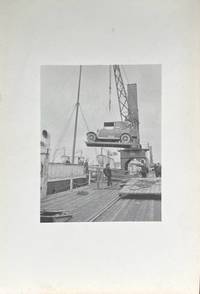
191259779Horsham West Sussex & Haymarket London UK: H.W.C. James A. Sinclair & Co. Ltd. 1912. Two vols. Oblong 8vo. 8.5 x 5 in. 64; 69 leaves unnumbered. including 2 calligraphic titles 63 & 68 platinum print matte finish photographs w/ images sized from 2 x 3 in. up to 3.25 x 3.75 in. on 4.75 x 7 in. prints all expertly hinged at gutter margin a few w/ pencil annotations on versos occasional light toning from the platinum salt emulsions coating the papers. Uniformly bound in striking full green morocco bindings by Zaehnsdorf gilt ruling on covers gilt inner dentelles 5 raised bands on spines title lettering ownership & dating in gilt a.e.g. marbled endpapers very slight shelfwear incremental rubbing at corners still a NF set. An exceptional pair of automobile travel albums composed of platinum print photographs by Dr. E. Stevens apparently presented to fellow Royal Photographic Society member and platinum photograph enthusiast H.W. Child. The motor car was a grey 1912 35 CWT Delaunay-Belleville depicted in 15 of the images bore the GB License Plate of BP1945 registered in 1912 to Charles Stevens c/o Dr. Stevens of Sarcelles Horsham West Sussex July 4 1912. The Delaunay-Belleville in the Brass Era was one of the most expensive and prestigious touring cars for travelers and enthusiasts whose owners at the time included Evalyn Walsh McLean original owner of the Hope Diamond as well as Mann who traveled “Round the World†in 1912 in a similar model. The intrepid travelers clearly intended to photograph and put their new motor through its paces traveling about 3000 miles. The album opens with photos of the auto loaded at Portsmouth and by ferry to Le Havre and then driving down through Normandy Alencon Le Mans Tours Bordeaux and onto Biarritz. The tour extended across the Pyrenees into Spain visiting San Sebastian followed by drives to Pau Lourdes Toulouse Narbonne and then along the South of France into Italy. The drive was not without pitfalls as they suffered punctured tires with two different images showing repairs one with a crowd as well as the photo waiting for a massive rock slide of giant boulders fallen onto the roadway and being removed by wooden wheelbarrows. They continued their tour across the Alps into Switzerland with views of the travelers at a Swiss border station and then capturing scenic vistas and driving onto Salzburg & Linz. One of the images captures advertising and awning of a “Buchdruckerei†specializing in photographic books supplies and photo albums. At that point the motorists had reached the most Eastern point and drove along the Danube route crossing overland to the river Necker Heidelberg and finally into the Netherlands with visits of Amsterdam Haarlem often with picturesque images capturing the Dutch in their iconic wooden shoes windmills canals and even electric railways. One particular image documents the “Art Store†selling Volendam silver & brass and antiques. The final image shows the car being loaded back on the steamship to England from Rotterdam. The platinum photographs were processed by James A. Sinclair & Co. Ltd. at 34 Haymarket in London specializing in photographic prints & equipment and at the time the Platinum prints were Alfred Stieglitz’s process of choice celebrating the images for their aesthetic qualities and permanence. As the Platinum prints were printed direction on coated paper with platinum salts the image was absorbed directly into the paper creating a softer and less-detailed image which was quite durable. Dr. Stevens fl. 1910-1918 who during World War I served as surgeon with the Royal Army Medical Corps joined the Royal Photographic Society in 1915 and exhibited three of his photographs presumably from this excursion including “In the Paese†“Making Port Concarneu†and “Santa Maria della Pace Lago di Como.†Child b. 1859 was a very successful merchant who by 1897 was also an active member of the Royal Photographic Society Platinum print enthusiast and automobile traveler as well. He exhibited several times with the RPS often appearing in their exhibitions from 1898-1915 the last being “Citadel and Church Dinant†shot in 1914 and displayed as an Autochrome. See: Ordinary Members The Photographic Journal Vol. 41 January 1917 pp. 32 41; Exhibition Catalogue of 1898 43rd Annual Exhibition of the Royal Photographic Society 1898; 44th 1899; 45th 1900; 47th 1902; 60th 1915. H.W.C., James A. Sinclair & Co., Ltd., hardcover
19362080502106917695Not Available 1936. Soft Cover. Fine. The book is in fine condition. Not Available paperback
1916000483<p>Istanbul: TanÄ«n 1916.<br />Book. As new. Hardcover. 8vo over 7¾–9¾ in.<br />An official report issued by the Ottoman Fourth Army under Jamal Pasha concerning the proceedings of the Supreme Court Martial Tribunal convened at Ê¿Ä€liyah Aley Lebanon established to prosecute alleged Arab separatists and Pan-Arabist movements in Syria and Egypt during the First World War.<br />The report claims that the names of prominent Arab nationalists were discovered by the Ottoman authorities among documents seized from the French Embassy in Beirut reportedly placed under the safekeeping of the American Embassy following the outbreak of war. These documents formed the evidentiary basis for the tribunal's investigations.<br />125 pages of Arabic text accompanied by over 50 facsimile plates issued as a supplement reproducing original documents and correspondence between the accused Arab nationalists and other related parties examined by the tribunal.<br />Preserved in a modern hardcover binding.<br />A significant and controversial contemporary Ottoman publication providing rare primary documentation on wartime military justice Arab nationalist movements and Ottoman intelligence practices during the final years of the empire.</p><p>An important Arabic political and legal work presenting the Arabic version of La Vérité sur la Question Syrienne addressing the investigations and proceedings of the Ottoman Martial Law Tribunal DÄ«wÄn al-Ḥarb al-Ê¿UrfÄ« convened in Ê¿Ä€liyah Aley during the First World War.<br />The work constitutes a contemporary defense and documentary clarification of political accusations brought against Syrian and Lebanese figures shedding light on:<br />Ottoman wartime judicial procedures<br />political repression and accusations of separatism<br />and the broader Syrian Question in the late Ottoman period.<br />As the original Arabic edition this publication is a key primary source for the study of Ottoman military justice Arab political movements and Syro-Lebanese intellectual history during the final years of Ottoman rule.<br />A scarce and historically significant work particularly sought after in collections relating to the Arab provinces of the Ottoman Empire World War I Middle Eastern politics and constitutional and legal history.</p> Tanine hardcover
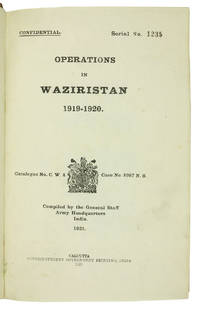
1921ABC_45215Calcutta: Superintendent of Government Printing 1921. Contemporary half calf green cloth sides gold-stamped red spine labels. 8vo. With frontispiece 31 plates 7 maps 3 in pocket on inside of back board and 8 panoramas mostly folding. First edition of the British-Indian armys official account of the 1919-20 Waziristan campaign marked "Confidential" on the title-page. The operations followed unrest that arose in the aftermath of the Third Anglo-Afghan War; they were conducted in the mountainous region of Waziristan now in Pakistan by British and Indian forces against the fiercely independent Waziri and Mahsud tribesmen that inhabited it. Since the 1870s the British government agencies were assiduous in compiling internally published histories of their military frontier operations with the intention of providing a "valuable guide" to such British commanders and policymakers as "might have future dealings with these turbulent neighbours" as the Punjab Government phrased it in 1866.The title-page reports the catalogue number and location of what may be the original report: Catalogue no. C.W. 4 - Case no. 8987 N.S..Serial No. 1235 stamped on the title-page. Occasional light marginal staining. A few edge flaws consistent with army use repaired by a contemporary owner. Otherwise in very good condition.l WorldCat 11497145. Superintendent of Government Printing, hardcover
1943005853Tunisia: British Eighth Army 28 April 1943. Leaflet. This compelling Second World War artifact is an original message from General Bernard Law Montgomery to his Eighth Army troops on 28 April 1943 during the final Allied effort to expel Axis forces from North Africa. This printed message is not only a remarkable survivor but is signed by Montgomery B. L. Montgomery just below his printed name. While the signature is undated it seems almost certainly to have been signed in situ; Montgomery was created Viscount Montgomery of Alamein in January 1946 and thereafter routinely signed Montgomery of Alamein. <br /> <br />The leaflet measures 8 x 10 inches 20.3 x 25.4 cm printed in black on a single side of thin acidic stock. Condition shows wear expected for an original piece of North African theatre ephemera. A single vertical crease and two horizontal creases testify that the leaflet was folded notionally to fit in a soldiers pocket. The folds and edges show wear and fractional chipping there is overall soiling particularly to the blank verso and a central rectangle of the printed and signed recto is differentially toned indicating that it was once framed and thereby exposed to sun. Nonetheless like the solder to whom it once belonged and the General who authored and signed it this copy survived. <br /> <br />Montgomerys EIGHTH ARMY Personal Message from the Commander specifies that it is To be read out to all troops and consists of eight numbered points. The first three points encapsulate recent Eighth Army objectives and accomplishments. Points 4-7 are a spur to action with a specific repeated exhortation to KEEP UP THE PRESSURE!. The final point 8 is Good luck to each one of you. You can rest assured that I am watching over the battle carefully and together we will finish the job. Montgomerys signature is faded but still clear below his printed name at the lower right and the leaflet is printed 28.4.43 Tunisia. at the lower left. Operation Vulcan which began on 22 April 1943 was among the final Allied initiatives to overcome the last Axis North Africa defenses. By 13 May 1943 British Middle East Commander-in-Chief Harold Alexander sent Churchill the message the Tunisian campaign is over We are masters of the North African shores. Churchill THoF p.780 <br /> <br />Nearly two and a half millennia after Thucydides discussed the unpredictable role of chance in war Bernard Law Montgomery 1886-1976 and the Eighth Army found one another in North Africa. In July 1942 British troops checked Rommels forces in the First Battle of El Alamein but Allied momentum stalled. Churchill flew to Cairo on 1 August to assess command replacing Middle East Commander-in-Chief Claude Auchinleck with General Alexander and appointing General Gott to command the Eighth Army. When Gott was killed on 7 August flying back to Cairo Churchill acceded to General Montgomery in Gotts stead. Montgomery seized command two days earlier than authorized by his C-in-C and began an historic transformation of a beaten body of men into the legendary Eighth Army that fought its way from Alamein to Tunisia between August 1942 and May 1943. North Africa and the Eighth Army proved the perfect milieu for Montgomerys messianic vitality and vanity. Montgomerys political ineptitude and diplomatic limitations earned him significant postwar hostility and criticism but did not prevent his becoming widely regarded as the outstanding British field commander of the twentieth century. As this Personal Message testifies Above all Montgomery understood soldiers hearts and minds thousands of miles from home in a citizen army The men of the Eighth Army wanted to know what they were required to do Montgomery gave them an immediate answer. ODNB Montgomery later said the intent of his Personal Messages was to define the common objective and thereby foster unity of purpose.I like to think that these messages did much to foster the spirit and the will-to-win El Alamein to the River Sangro <br/><br/> British Eighth Army unknown
194728740Washington DC: United States Army Air Forces. Very Good. ca.1947. First Edition. Hardcover. no dust jacket probably as issued light external soiling a little darkening to the spine. charts maps A massive catalog of all and I do mean all the photo-technical data related to the photography both still and motion picture both black & white and color of "Operation Crossroads" the first two post-World War II nuclear bomb tests conducted at Bikini Atoll in the South Pacific in July 1946. The first test took place on July 1 and was nicknamed "Able Day"; the second on July 25 was "Baker Day." The names were directly taken from the first two letters of the Joint Army/Navy Phonetic Alphabet. The stated purpose of the tests was to assess the level of damage that the massive explosions would inflict on naval vessels of various kinds that were stationed in the vicinity; all humans were evacuated from the ships although a large number of small animals were placed on board thousands of rats; hundreds of goats pigs and mice; and even a few dozen guinea pigs in order to measure the effects on them of the radiation emitting from the blasts. Short version: not good. The two tests were designed to measure the effects of two different kinds of explosions: the Able bomb was an "air burst" detonated 520 above the surface; the Baker bomb was suspended beneath a landing craft and detonated 80 feet underwater. The stated purpose of this catalog was "to provide a systematically-combined record of photography available from the two operations for study measurement and analysis purposes." The bulk of its 756 pages is devoted to reproductions of the three data sheets that documented each roll of film that was shot: 1 the "Film Data Sheet" giving the technical specs of the camera and a summary of its coverage; 2 the "Time and Position Data Sheet" with detailed data on each individual exposure; and 3 the "Aircraft Track and Position Chart" a map of Bikini Atoll with the positions of each camera-carrying aircraft plotted thereon. Those aircraft by the way were essentially drones operated by radio remote control and the cameras were automatic so that no humans needed to be too close to the blasts. There are also at the beginning of both the Able and Baker sections abstracts of the contents of each roll of film. Example: "This roll shows phenomena from fireball through development of mushroom cloud in a series of exposures made in rapid succession 3 per second." Although the volume itself was apparently not classified neither was it a U.S. Government Printing Office issue intended for wide circulation; it's stated in a couple of places that "a limited number of additional copies of this publication are available" and informs the reader where to procure them. Its obvious purpose was to facilitate the users' ability to locate the film footage or still photography needed for purposes of their own analysis and it's likely that a certain level of security clearance was required. There is however this note among the introductory matter: "All data and sheets pertaining to Able Day Sortie H and bomb carrying aircraft have been deleted from this catalog and will be found in a classified addendum." Keeping wraps on info about the plane that actually dropped the Able bomb I can understand but I wonder what the deal was with "Sortie H" A small amount of the film footage documented here was incorporated into the official U.S. Government documentary film of the events called "Operation Crossroads: Able and Baker Day Tests Bikini Atoll Summer 1946" released in 1949. One would hope that all this photography has been preserved in the National Archives -- maybe even the stuff from the mysterious "Sortie H." The present volume is quite rare with OCLC recording just three copies: at the Smithsonian Institution in Washington DC; the Air University Library at Maxwell AFB in Montgomery Alabama; and at the Phillips Research Site Technical Library which was merged in 1997 into the Air Force Research Laboratory at Wright-Patterson AFB in Ohio the OCLC link however is dead -- the latter two of which I suspect are not readily if at all accessible by the public. NOTE by the way that there is no actual photography reproduced in this book: it's strictly a non-visual catalog. . United States Army Air Forces hardcover
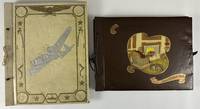
194512886Various locations mainly Texas Oklahoma and Arkansas 1945. Two albums. Album I: 24 leaves illustrated with twenty-four original photographs over two dozen postcards mostly photographic original letters and military documents and a large quantity of ephemeral items. Folio. Contemporary cream cloth decoratively stamped on front board in gilt and silver string tied. Album II: 11 leaves illustrated with ninety-eight photographs in mounting corners six loose photos and a couple of ephemeral items. Oblong folio. Contemporary brown cloth decoratively stamped on front board in gilt yellow and red string tied. Overall minor wear. Very good condition. A pair of annotated vernacular photograph album / scrapbooks compiled by Lt. Erma J. Frazier and her mother during her wartime service in the U.S. Army Nurse Corps. Frazier served in the Nurse Corps at various hospitals in the Trans-Mississippi West at Camp Swift in Bastrop Texas; Fort Sam Houston in San Antonio Texas; Okmulgee Oklahoma; and Camp Robinson Arkansas. Frazier hailed from East Brady Pennsylvania and worked as a Registered Nurse at the nearby Kittanning Hospital before she entered military service. She enlisted in early 1945 and served throughout the conclusion of the Second World War. The present albums record her service time in unusual detail with a mixture of original photographs picture postcards original military documents a few manuscript letters and various ephemeral items.<br /> <br /> The first album was compiled by Frazier's mother who inscribes the first page: "I dedicate this book to my daughter Erma Jean Eberhart Frazier who entered the Armed Services on March 17 1945 as a 2nd Lt. in the Nurse Army Corps a Camp Swift Texas." This album focuses mainly on Frazier's time at Camp Swift and Okmulgee Oklahoma. This album contains the lion's share of the ephemera including a patch the floral corsage she wore on the day she left for service military paperwork and forms and various newspaper clippings. The military paperwork includes enlistment documents including her "Application for Appointment" a manuscript postcard from the director of the Red Cross describing Frazier as a "professional qualified for military service" Army documents on qualifications for nurses and more. Other ephemera includes letters and cards received by her at Camp Swift a page of five pressed "Flowers from Texas" each preserved in a small plastic bag shipping tags from packages of clothing sent home by Frazier a couple of church programs a page of ten small postcards from her visit to Austin a menu from Brooke General & Convalescent Hospital at Fort Sam Houston some greeting cards and so forth. The photographs include portraits of Frazier from 1943 and 1944 while a nursing student; eight pictures of Frazier and other soldiers at Camp Swift; and eight shots of Frazier fellow soldiers and their barracks and administration buildings at Okmulgee Oklahoma.<br /> <br /> The second album was compiled by Frazier herself who provides a manuscript title on the inside front cover: "Memories of the Army Nurse Corps." There are also two photographs inscribed in the first person "Me on arrival at G.G.H." and "side entrance to my barracks G.G.H.". This album is almost entirely comprised of captioned photographs particularly valuable for identifying numerous fellow soldiers serving with Frazier. The images emanate from the last three locations at which Frazier served which she lists on the inside front cover: Brooke General Hospital at Fort Sam Houston Glennon General Hospital in Okmulgee and Regional Hospital at Camp Robinson Arkansas. Perhaps Frazier felt her mother's album largely focused on Camp Swift sufficiently memorialized here time there. The photographs are presented in chronological order and include portraits of dozens of men and women with whom Frazier served or patients served by Frazier often accompanied by informative and sometimes humorous manuscript captions on the album leaves or directly on the images. The photos also picture the hospitals themselves and include a handful of images taken during leisure time on base.<br /> <br /> A unusually informative pair of World War II-era albums and scrapbooks preserving the service of a highly-qualified Army nurse from Pennsylvania serving in the American West during the last year of the war. unknown
19692110502150414835Akita shoten 1969. Soft Cover. Fine. Number of books: 14 Akita shoten paperback
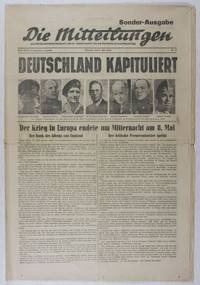
194539196Germany: The 21st Army Group 1945. First edition. Softcover. vg. Folio 12 1/2 x 18 1/2". 8pp. Published by the 21st Army Group this special issue of "Die Mitteilungen" Information announces in bold letters and across its front page the capitulation of Nazi Germany. Featured in two columns and above the b/w photographic portraits of Field-Marshal Alexander Marshal Koniev Field-Marshal Montgomery King George VI General Eisenhower Marshal Zhukov and General Bradley are the victory speeches pronounced by King George VI and Prime Minister Winston Churchill. Of special interests are the announcement of Joseph Goebbels' death Page 2; the liberation of some of Europe's political military and religious leaders such as Leon Blum Paul Reynaud Edouard Daladier General Weygand General Gamelin Dr. Kurt von Schuschnigg Pastor Niemöller Belgian King Leopold III etc. Page 2; Information on Hitler's suicide Page 4; The San Francisco conference Page 5 and 8; article with four gruesome photographs on the liberation of the Death Camps Page 6; five b/w photographic portraits of the following allied statesmen: General de Gaulle Marshal Stalin Winston Churchill President Franklin Delano Roosevelt who died less than a month before Germany's capitulation and President Harry Truman Page 8. 'The 21st Army Group newspaper "Mitteilungen" was distributed as follows: Laer 700 copies; Greven 560 copies; Wunsdorf and Neustadt 1000 copies; Basthorst 500 copies; Celle 3000 copies; Lübeck 4000 copies; Bergen-Belsen camp 2500 copies' Extracts from War Diary of 14 Amplifier Unit & 19 Leaflet Unit. Folding mark at center. Tiny closed tear along spine. Minor age-toning. Text in German. Newspaper in overall very good condition. The 21st Army Group was a World War II British headquarters formation in command of two field armies and other supporting units consisting primarily of British and Canadian forces. Established in London during July 1943 under the command of Supreme Headquarters Allied Expeditionary Force SHAEF it was assigned to Operation Overlord the Western Allied invasion of Europe and was an important Allied force in the European Theatre. The 21st Army Group operated in Northern France Luxembourg Belgium the Netherlands and Germany from June 1944 until the end of the war in Europe in 1945. After the German surrender 21st Army Group was converted into the headquarters for the British zone of occupation in Germany. It was renamed the British Army of the Rhine BAOR on 25 August 1945 and eventually formed the nucleus of the British forces stationed in Germany throughout the Cold War. The 21st Army Group unknown
1923215951923. African American MilitaryWWI Muller William G. The Twenty-Fourth Infantry 1923 documents the service of a Black regiment in the United States Army tracing its development from Reconstruction through the Mexican Border War. Written by Captain William G. Muller the volume situates the regiment's origins in the 1869 consolidation of the 38th and 41st Infantry regiments among the first post-Civil War units composed of Black enlisted men and follows its campaigns across the Western frontier Cuba during the Spanish American War and Mexico during the 1916 to 1917 Punitive Expedition. Produced at a time when Black military service was constrained by segregation the work offers insight into the service of Buffalo Soldiers in the decades preceding formal desegregation.<br /> <br /> Muller William G. The Twenty-Fourth Infantry. 1923. The text opens with a dedication "To those colored non-commissioned officers and soldiers whose unswerving loyalty and devotion of the regiment made possible these brilliant pages of history." Extensively illustrated with photographic portraits of senior Black noncommissioned officers among them Regimental Sergeant Major Walter B. Williams Color Sergeant Wm. G. Wilcox and Regimental Color Sergeant Abraham Hill identified as "one of the Army's great rifle shots." Additional images document encampments in New Mexico and Texas scenes from Mexico during the Punitive Expedition and regimental athletics including a football team that competed against historically Black colleges such as Tuskegee and Talladega. The narrative emphasizes the regiment's record of discipline and cohesion asserting that its "high character.unsullied for 54 years" reflected institutional stability amid shifting national racial politics.<br /> <br /> The history reflects an effort to commemorate the service record of Black soldiers at a moment when their contributions to westward expansion the Spanish American War and border conflicts were indispensable. The sustained attention to leadership merit marksmanship and athletic competition underscores the high professional standards Black soldiers were held to in the face of systemic discrimination. Minor edge wear and light rubbing to the binding; interior generally clean with occasional light toning; illustrations clear and complete. Overall very good. unknown
191959006401Washington: U.S. War Department - General Staff G-3 1919. Bound in one half brown leather over gray boards. five raised bands gilt still bright. Tabs for 93 divisions from 1917-1918 with 4-5 pp. per division. Lists no. of enlisted men officers headquarters generals casualties etc. Exceedingly rare. Approximately 400 leaves. Contains charts no maps in this volume. States Copy No. 41. First Edition. Hard Cover. Very Good /No Jacket. 4to - over 9¾" - 12" tall. U.S. War Department - General Staff G-3 Hardcover
19611523(PARIS). PRINCE BELOSSELSKY-BELOZERSKY. 1961. 13 VOLUMES GRAND IN-4, 12 VOLUMES DE PLANCHES SOUS CHEMISES REMPLIEES ET UN VOLUME DE TEXTE BROCHE, LE TOUT SOUS EMBOITAGE TOILE NOIR DE L’EDITEUR (27 X 34 X 7,5 CENTIMETRES ENVIRON), PLAT SUPERIEUR ILLUSTRE D’UNE GRANDE COMPOSITION EN COULEURS A L’AIGLE BICEPHALE PAR ZWORIKINE. TEXTE TRILINGUE: RUSSE-FRANCAIS-ANGLAIS. ILLUSTRE DE 244 PLANCHES HORS TEXTE, 198 EN NOIR ET 46 EN COULEURS EDITION ORIGINALE. TIRAGE LIMITE A 300 EXEMPLAIRES NUMEROTES, NON MIS DANS LE COMMERCE, CELUI-CI PORTANT LE NUMERO 236. COMPREND:- TEXTE. HISTOIRE DU REGIMENT DE LA GARDE A CHEVAL. (6) + 39 ET (1) PAGES. BIEN COMPLET DE SON FEUILLET D’ERRATA.- I. UNIFORMES DU REGIMENT. 25 PLANCHES, DONT 12 EN COULEURS.- II. MEMBRES DE LA FAMILLE IMPERIALE, CHEFS ET OFFICIERS DE LA GARDE IMPERIALE. 47 PLANCHES, DONT 21 EN COULEURS.- III. PALAIS IMPERIAUX ET EDIFICES HISTORIQUES. 23 PLANCHES, DONT 1 EN COULEURS.- IV. JOURNEES MEMORABLES DANS LA VIE DES OFFICIERS DE LA GARDE A CHEVAL. 16 PLANCHES, DONT 8 EN COULEURS.- V. PORTRAITS D’OFFICIERS DE LA GARDE A CHEVAL. 25 PLANCHES, DONT 1 EN COULEURS.- VI. ANCIENNES FAMILLES DES GARDES A CHEVAL. 14 PLANCHES EN NOIR.- VII. OBJETS D’ART AYANT RAPPORT A LA GARDE A CHEVAL. 11 PLANCHES, DONT 1 EN COULEURS.- VIII. CHATEAUX ET DOMAINES DES OFFICIERS DE LA GARDE A CHEVAL. 19 PLANCHES, DONT 1 EN COULEURS.- IX. LES CASERNES DU REGIMENT. 18 PLANCHES EN NOIR.- X. LE REGIMENT DE LA GARDE A CHEVAL EN TEMPS DE PAIX. 22 PLANCHES EN NOIR.- XI. LE REGIMENT DE LA GARDE A CHEVAL PENDANT LA GUERRE. 17 PLANCHES, DONT 1 PLANCHE EN COULEURS.- XII. LES ANCIENS DE LA GARDE A CHEVAL DANS L’EMIGRATION. PLANCHES SUPPLEMENTAIRES. 7 PLANCHES EN NOIR.PETITE FENTE A L’EMBOITAGE, QUELQUES FINES ROUSSEURS EPARSES SUR LA PREMIERE PLANCHE DE CHAQUE POCHETTE, SINON BON EXEMPLAIRE DE CETTE MONUMENTALE EDITION.
1939192368Edinburgh: 1939-45. Digging for victory A small but evocative collection tracing the war work of the artist Mary Paton who served with the Women's Land Army in Scotland throughout the Second World War. The highlight of the collection is a pair of standard-issue corduroy breeches made by Redman Bros in January 1943. Other than a couple of small oil stains to the right inner thigh they are well-preserved and have been supplemented with non-standard leather reinforcing patches to the inner knees. Two certificates in the collection are addressed to "Frances M. R. Paton" the full name of Mary Paton 1920-1990 who studied at the Edinburgh College of Art before and after the war and later lived in Aberdeenshire. A letter of thanks records her service as having lasted from 11 October 1939 to 10 October 1945 while the two WLA armbands show her service at 3 1/2 and 5 1/2 years respectively. The collection also includes two enamelled WLA lapel badges and a silver gelatine photograph 86 x 57 mm showing a young woman with "Mave. Freiburg '37" inscribed on the verso. Together eight items. One certificate with storage folds overall in very good condition. hardcover
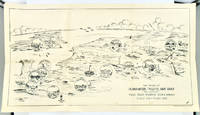
19452442Bad Wildungen Germany: Tac Echelon HQ 12th Army Group 1945. First Edition. Single Sheet Paper. Very Good Plus/4-mil clear mylar envelope. This is an ORIGINAL folded MAP showing the travels of the "Tac Echelon" Headquarters 12th Army Group in WWII through England France Luxenbourg Belgium and Germany from 15 July 1944 through 9 May 1945. On the verso of the map is the description of the "VICTORY IN EUROPE" Dinner Dance presented in honor of General Omar N. Bradley by the Officers of Tac Echelon Headquarters 12th Army Group at the Hotel Furstenhof in Bad Wildungen Germany on 12 May 1945; i.e. 4 days after the Surrender of Germany. The document is SIGNED in ink by General Omar Bradley "O N Bradley". The map measures 11 1/2" x 20" opened and 6 3/4" x 5 1/2" folded.<br /> <br /> One of the MOST REMARKABLE MAPS of WW2 the map was hand-drawn by an artist who signs his name RWD in the print. The document was produced by "Engr. Repro. Det. 12 A Gp." The map shows the various locations of the Headquarters 12th Army Group during its progress in combat in WWII from the "Staging Area" in England to Bad Wildungen Germany. Beverages are described for most of the locations ending in "V-E Specials" for Germany. We believe this map was distributed at the dinner dance celebrating the "Victory in Europe" just 4 days after the War in Europe ended and was signed by General Bradley at the dinner. The 12th Army Group was the largest military formation of the United States in the history of the Country. The 12th Army Group was deactivated shortly afterward on July 12 1945 upon General Bradley’s departure to become Director of the Veterans Administration. <br /> <br /> NOTE: This map will be accompanied by a CERTIFICATE OF PROVENANCE dated and signed by Debbie Chapman Luckinbill certifying that the map was brought home as a souvenir by her aunt the late Helen Chapman who was a member of Red Cross Clubmobile Group C which served in Europe during WW2. Red Cross Clubmobiles were large food trucks which were driven by Red Cross women to troop assembly areas where the women would open up the sides and serve doughnuts coffee and snacks to the fighting men. <br /> <br /> We have not found this map anywhere on the internet or other research. The map is foldedrubbed and lightly soiled from handling but is Very Good or better and now in a 4mil clear mylar protective envelope. Tac Echelon, HQ 12th Army Group unknown
19452080202102707404Not Available 1945. Soft Cover. Fine. The book is in fine condition. Not Available paperback