DORGELES. (ROLAND LECAVELE, DIT. 1886-1973).Livre Rare Book
11 068 résultats
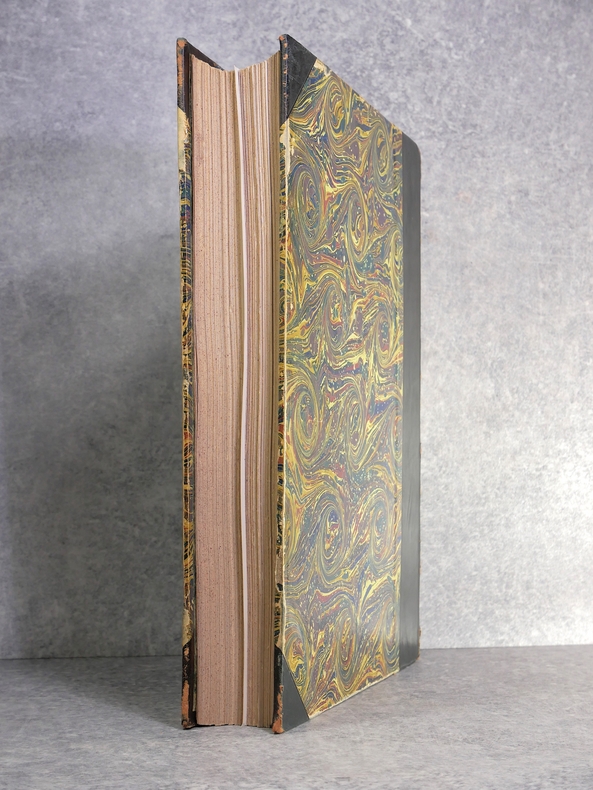
1921569PARIS. EDITIONS DE LA BANDEROLE. 1921-1924. 3 VOLUMES IN-8 (21,5 X 26,5 X 11,5 CENTIMETRES ENVIRON) DE (4) + 86 + (3), (6) + 123 + (6) ET (4) + 278 + (3) PAGES, RELIURE D’EPOQUE PLEIN MAROQUIN VERT SAPIN, DOS A CINQ NERFS SOULIGNES DE FILETS VERT D’EAU, AVEC NOM DE L’ILLUSTRATEUR ET MONOGRAMME P. M. DORES EN QUEUE, TITRE DORE SUR ETIQUETTE VEAU ROUGE, TETE DOREE, PLATS ENCADRES D’UN FILET VERT D’EAU ET MOSAIQUE D’UN FILET DE BOX ROUGE, CONTREPLATS ET GARDES DOUBLES DE DAIM VERT D’EAU, COUVERTURES ILLUSTREES D'UNE VIGNETTE ET DOS CONSERVES. CONTIENT :- LA BOULE DE GUI. ILLUSTRE DE 47 COMPOSITIONS D’ANDRE DUNOYER DE SEGONZAC (1884-1974), 42 DESSINS REPRODUITS DANS LE TEXTE ET 5 POINTES SECHES ORIGINALES HORS TEXTE, DONT LE FRONTISPICE. EDITION ORIGINALE ET PREMIER TIRAGE LIMITE A 600 EXEMPLAIRES NUMEROTES, UN DES 519 SUR PAPIER LAFUMA TEINTE, CELUI-CI PORTANT LE NUMERO 557.- LE CABARET DE LA BELLE FEMME. ILLUSTRE DE 58 COMPOSITIONS D’ANDRE DUNOYER DE SEGONZAC (1884-1974), 50 DESSINS REPRODUITS DANS LE TEXTE ET 8 POINTES SECHES ORIGINALES HORS TEXTE, DONT LE FRONTISPICE. EDITION ORIGINALE ET PREMIER TIRAGE LIMITE A 640 EXEMPLAIRES NUMEROTES, UN DES 520 SUR VERGE DE RIVES, CELUI-CI PORTANT LE NUMERO 402.- LES CROIX DE BOIS. ILLUSTRE DE 63 COMPOSITIONS D’ANDRE DUNOYER DE SEGONZAC (1884-1974), 40 DESSINS REPRODUITS DANS LE TEXTE ET 23 GRAVURES DONT 10 POINTES SECHES ORIGINALES HORS TEXTE, Y COMPRIS LE FRONTISPICE. NOUVELLE EDITION COMPORTANT EN EDITION ORIGINALE DEUX CHAPITRES CENSURES DANS L’EDITION PRECEDENTE : L’ENNEMI DES VIEUX ET PERMISSIONNAIRES. PREMIERE EDITION ILLUSTREE ET PREMIER TIRAGE LIMITE A 600 EXEMPLAIRES NUMEROTES, UN DES 519 SUR PAPIER LAFUMA TEINTE, CELUI-CI PORTANT LE NUMERO 533.TRES BEL ENSEMBLE.
49296Bordeaux.Paris.1865.E.O.2 vols.in-4 demi-reliés.180 et 461 p.150 planches ( 2 planches en double.) Carte.Bel exemplaire avec qques piqùres.Demi-chagrin rouge avec caractères dorés.
19012851PARIS. LA GIBERNE. 1901. GRAND ET FORT IN-4 (28,5 X 34 X 6 CENTIMETRES ENVIRON) DE XII + 379 PAGES RELIURE D’EPOQUE 1/2 VEAU VERT, DOS A 4 NERFS SOULIGNES DE FILETS A FROID ET DE FLEURONS DORES, TITRE DORES, COUVERTURE CONSERVEE. LES 60 PLANCHES HORS TEXTE SONT SOUS SERPENTE LEGENDEE (SAUF CELLES DES PAGES 209 ET 216). EDITION ORIGINALE. TIRAGE LIMITE A 650 EXEMPLAIRES NUMEROTES, UN DES 600 SUR VELIN GLACE, CELUI-CI PORTANT LE NUMERO 4. OUVRAGE RARE ET RECHERCHE. LE DOS A VIRE AU MARRON, COMME LA PLUPART DES RELIURES VERTES. LE NOM DU SOUSCRIPTEUR ANCIENNEMENT DECOUPE, PETITS DEFAUTS EXTERIEURS SANS AUCUNE GRAVITE, SINON BEL EXEMPLAIRE.
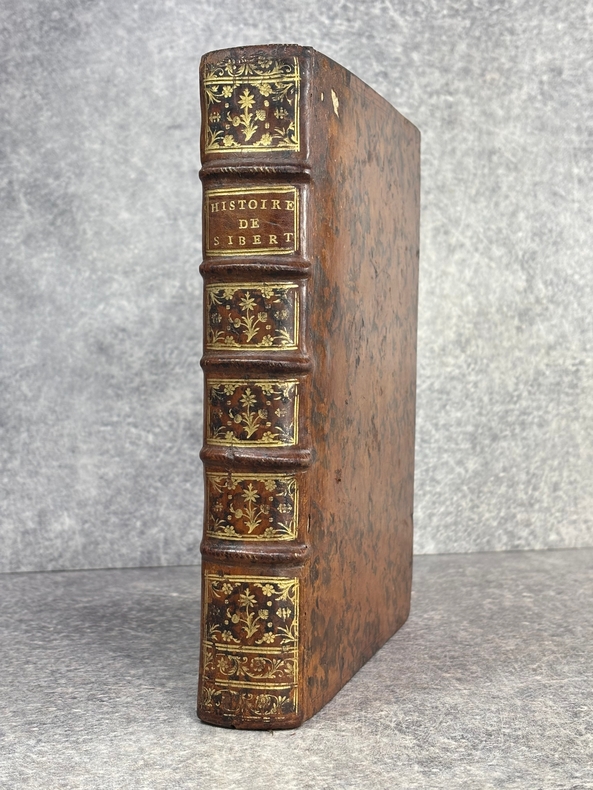
17722941A PARIS. DE L’IMPRIMERIE ROYALE. 1772. IN-4 (20,5 X 26 X 4,5 CENTIMETRES ENVIRON) DE (6) + XVI + 514 + (2) + CVII ET (1) PAGES, RELIURE D'EPOQUE PLEIN VEAU MARBRE, DOS A CINQ NERFS ORNE DE CAISSONS A FLEURONS DORES, TITRE DORE SUR ETIQUETTE MAROQUIN HAVANE, FILETS DORES SUR COUPES, TRANCHES ROUGES. BELLE ILLUSTRATION GRAVEE SUR CUIVRE COMPOSEE D’UN BEAU FRONTISPICE PAR EISEN, GRAVE PAR DE GHENDT; D’UN FLEURON SUR LE TITRE PAR DE SEVE, GRAVE PAR PATAS; D’UN PORTRAIT DU COMTE DE PROVENCE, GRAVE PAR VOYSARD, D’APRES MICHEL VANLOO; DE 4 JOLIES VIGNETTES PAR EISEN, GRAVEES PAR DELAUNAY, MASSARD ET DE LONGUEIL; DE 2 FIGURES PAR EISEN, GRAVEES PAR BAQUOY ET DE 3 CULS-DE-LAMPE PAR LES-MEMES, EN PREMIER TIRAGE (COHEN. 427-428). EDITION ORIGINALE, PUBLIEE AUX FRAIS DES ORDRES DE SAINT-LAZARE ET DE NOTRE-DAME DU MONT-CARMEL (SAFFROY. I. 4491). FONDE AU XII° SIECLE EN TERRE-SAINTE, L’ORDRE DE SAINT-LAZARE SE CONSACRAIT A L’ACCEUIL ET A LA DEFENSE DES LEPREUX. BIENTOT INSTALLE EN FRANCE, IL Y FUT ENTIEREMENT RAPATRIE AU XIII° SIECLE. EN 1608 IL FUT FUSIONNE PAR HENRI IV AVEC L’ORDRE DE NOTRE DAME DU MONT-CARMEL, NOUVELLEMENT CREE ET QUI AVAIT VOCATION A LUTTER CONTRE L’HERESIE PROTESTANTE. AU XVIII° SIECLE, LES GRANDS MAITRES EN FURENT TOUS DES PRINCES DU SANG. RARE. BEL EXEMPLAIRE.
17572658A AMSTERDAM. CHEZ CHATELAIN IMPRIM. LIB. 1757. IN-12 (9,7 X 16,2 X 2,7 CENTIMETRES ENVIRON) DE (8) + XXXVIII + 244 ET XXIV PAGES, RELIURE D'EPOQUE PLEIN VEAU MARBRE, DOS A CINQ NERFS ORNE DE CAISSONS A FLEURONS DORES, TITRE DORE SUR ETIQUETTE MAROQUIN HAVANE, TRANCHES ROUGES. EDITION ORIGINALE RARE. (BARBIER. III. 760). PETITES TRACES D'USURE EXTERIEURE SANS GRAVITE, SINON BON EXEMPLAIRE.
18373808PARIS. H. FOURNIER AINE, EDITEUR. LONDRES. SAUNDERS & OTLEY. 1837-1838. 6 TOMES EN 3 VOLUMES IN-8 (13,5 X 21,5 X 16 CENTIMETRES ENVIRON) DE (4) + VIII + 495, (4) + 504, (4) + 520, (4) + II + 448 + (1), (4) + 544 + (1) ET (4) + 814 PAGES, RELIURE D'EPOQUE 1/2 VEAU FAUVE, DOS A QUATRE NERS ORNE D'UN JOLI DECOR DE FLEURONS DORES, TITRE DORE SUR ETIQUETTE MAROQUIN NOIR, TRANCHES MARBREES. SANS LA CARTE DES OPERATIONS EN VIRGINIE EN 1781, QUI MANQUE SOUVENT ET NE SEMBLE PAS AVOIR ETE RELIEE D’ORIGINE DANS CET EXEMPLAIRE. EDITION ORIGINALE TRES RARE. BON EXEMPLAIRE, DANS UNE RELIURE STRICTEMENT CONTEMPORAINE. .
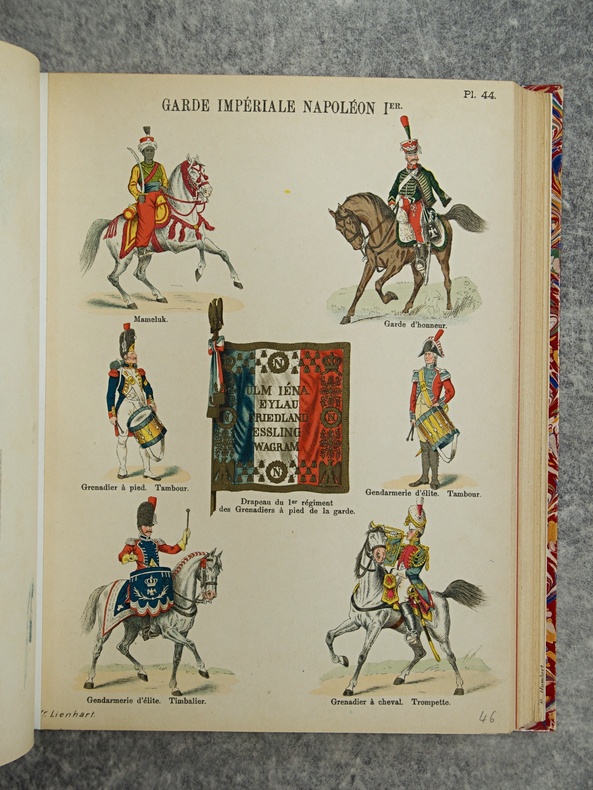
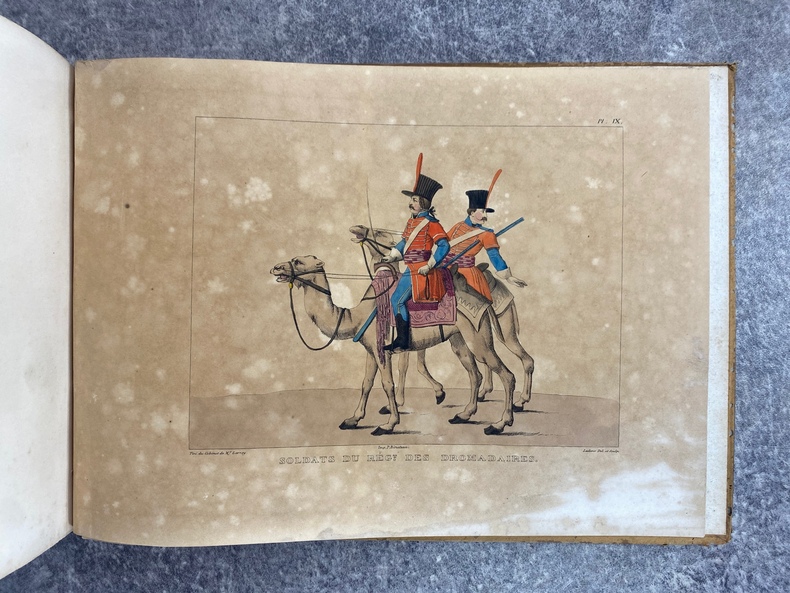
18973425LEIPZIG. M. RUHL. 1897-1906. 5 TOMES EN 6 VOLUMES IN-4 (21 X 26 X 23,5 CENTIMETRES ENVIRON), 3 VOLUMES DE TEXTE DE (4) + 145 + (2), (6) + 187 + (1), (6) + 242, VI + 481 ET VI + 634 ET (1) PAGES, ET 3 VOLUMES DE PLANCHES MONTEES SUR ONGLET, RELIURE MODERNE 1/2 CHAGRIN ROUGE, DOS A CINQ NERFS, TITRE DORE, (FAVRE-PETIT-MERMET, RELIEUR). ILLUSTRE DE 395 PLANCHES HORS TEXTE EN COULEURS, TIREES EN CHROMOLITHOGRAPHIE, DONNANT SOUS FORME DE TABLEAUX SYNOPTIQUES LES DIFFERENTS UNIFORMES DE L’ARMEE FRANCAISE DE 1690 A 1890. (COLAS. 1868). A NOTER QUE DEUX PLANCHES SONT NUMEROTEES BIS DANS LE TOME 1 : LES PLANCHES 20 ET 46. CURIEUSEMENT, CET OUVRAGE A ETE RELIE D'ORIGINE SANS LES PAGES 1 A 8 DANS LE VOLUME DE TEXTE DU TOME 1, PAGES QUE NOUS JOIGNONS ICI EN PHOTOCOPIE, SINON TRES BEL EXEMPLAIRE.
214785Paris, Louis Tirpenne, s.d. (1855) in-folio, un feuillet de notice historique, avec plan ; et 5 planches lithographiées sur fond teinté, en feuilles sous couverture crème imprimée, ébarbée. Couverture un peu défraichie.
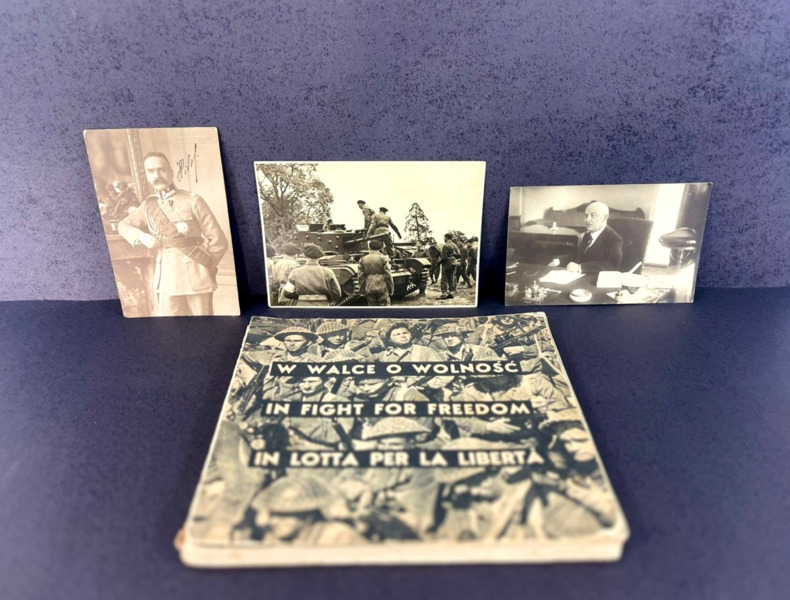
1945517This is a set which belonged to Janusz Gluchowski, a high-ranking Polish military officer at the time of the WW2. The set contains three original B&W pictures. First one: undated postcard showing Marshal Jozef Pilsudski, signed by himself in black ink, 8.5 x 13.5 cm, with two embossed mentions above and below. Second picture: undated postcard showing Poland President Gabriel Narutowicz, with a written mention on the back. Third picture: 11 x 15.5 cm photograph. General Tadeusz Bór-Komorowski inspecting a British Cromwell tank, accompanied by Polish officers of the 3rd Armored Regiment (3 puk pancerny). The image was captured during an official ceremony in the city of Kelso, Scotland, in the immediate post-war period, on June 15, 1945. The scene shows the General in an observation position, climbing onto the tank while surrounded by Polish soldiers. The tank corresponds to a British model widely used by Polish forces in exile during the Western European campaign. On the reverse, the following handwritten inscriptions appear: VI 1945, Kelso. N. Wódz gen. Bór-Komorowski dokonuje inspekcji 3 p. panc. N. Wódz w towarzystwie bryg. puku na czogu." / June 15, 1945, Kelso The book is an illustrated three-languages (Polish, English and Italian) set commemorating the struggles of the Polish II Corps. Edited by Wyda Rererat [Referat] Kultury i Prasy Kresowej Dywizji Piechoty in Rome, 1945. Oblong book of 21 x 19 cm, unpaginated (144 pp.). Cover detached. Endpapers and first page show Janusz Gluchowski's stamp. In publisher's photographically illustrated wrappers. Each page contains a photographic image or a photomontage accompanied with a short text in three languages. Front cover shows some wear and tear, the binding is a bit loose - we would advise having this book bound. The Polish II Corps was a major tactical and operational unit recruited from Polish deportees in the Soviet Gulags in 1943. First they fought in the Middle East, and in 1944 February they were transferred to Italy and as independent part of the British Army to fight in the Italian campaign, in the battles of Monte Cassino and Ancona and also the Battle of Bologna during the final offensive in Italy in 1945. The book goes through the story of Poland and the later established Polish II Corps, starting with the German and Soviet occupation in 1939. It shows the deportation of Poles to forced labour to the Gulag and, after the Polish-Russian Military Agreement in 1941, the establishment of the Polish Army on Soviet soil, also their military training and their fights in various battles. Janusz Julian Gluchowski was a Major General in the Polish Army during the Second Polish Republic. He was born on August 6, 1888, in Bukowa. He fought in the Polish Legions in World War I, the Polish-Ukrainian War, the Polish-Soviet War, and the invasion of Poland by Nazi Germany, Slovakia, and the Soviet Union in 1939, which culminated in the start of World War II. In his adolescence, he attended high school in Czstochowa. In 1905, he became a member of the Combat Organization of the Polish Socialist Party and was wounded in the hand during an attack near Czstochowa. To avoid arrest by the Russian authorities, he left for Belgium, where he studied at the University of Liège. He returned to divided Poland around 1910 and settled in Austrian Galicia. In 1912 he graduated from the Officers' School of the Riflemen's Association in Stroza, near Krakow. In the early hours of August 1914, he commanded a platoon in Oleandria and was Wadysaw Belina-Pramowski's representative during the legendary attack of the so-called Seven Lancers of Belina (Uaska siódemka). On August 6th, together with the First Cadre Company, he left Krakow and marched to Miechów. In October 1914 he was promoted to Lieutenant (Poruchik) and, in November 1916, to Rittmeister (Cavalry Master). Until 1917 he served in the First Uhlan Regiment of the Polish Legions. After the Oath Crisis (Kryzys przysigowy) he was interned first in Fort Beniaminów and later in Werl. Released in October 1918, he went to Lublin, where, in early November, he formed the Third Ulan Regiment (later renamed the Seventh Ulan Regiment of Lublin). Along with his unit, he fought in the Polish-Soviet War. On May 29, 1920, he was promoted to Polkovnik. He was transferred in July 1920 to Eastern Galicia, taking command of the First Cavalry Brigade, fighting against the Soviets in Galicia and Volhynia. After the war, he remained in this position until 1925, when he was transferred to the Fourth Cavalry Brigade. Promoted to Brigadier General on March 16, 1927. Appointed commander of the Center for Higher Military Studies on June 4, 1930, and three years later, after the death of General Stanislaw Tessaro, he was appointed commander of Military District X in Przemyl. In October 1935, he became Deputy Minister of Military Affairs. In the early days of the 1939 invasion of Poland, Gluchowski ordered General Walerian Czuma to prepare the defense of Warsaw. In mid-September 1939, he fled to Romania. After his escape, he managed to travel to the Middle East and, in January 1941, received orders to go to London. In October 1941, he was appointed Commander of the Training Brigade stationed in Scotland. On September 23, 1943, he was appointed commander of all Polish Army units stationed in Great Britain, except the First Independent Parachute Brigade, which remained under the authority of the Commander-in-Chief. He was promoted to Major General on June 1, 1945. He decided not to return to Soviet-occupied Poland and remained in Great Britain. He frequently criticized the Soviet regime and the Soviet occupation authorities in postwar Poland. Furthermore, he was one of the founders and president of the Jozef Pilsudski Institute in London. He was, therefore, an active member of the Polish community in Great Britain. He was president and honorary member of several Polish veterans' organizations. He died on June 11, 1964, in London, England.
218204Lieux divers, 1809-1811 in-8 et in-4,
1839252PARIS. J. CORREARD, EDITEUR D’OUVRAGES MILITAIRES. 1839. IN-8 BROCHE (15 X 22,5 X 0,5 CENTIMETRES ENVIRON) DE (4) + 60 PAGES, COUVERTURE ORANGE IMPRIMEE EN NOIR. ACCOMPAGNE DE SON ATLAS (34 X 25 X 1 CENTIMETRES), RELIURE A BRADEL DE L’EDITEUR, CARTONNAGE ORANGE, TITRE IMPRIME EN NOIR, DE (4) PAGES ET 10 PLANCHES, DONT UNE EN COULEURS. EDITION ORIGINALE ET UNIQUE, RARISSIME AVEC SON ATLAS (INCONNUE DE TULARD). QUELQUES DEFAUTS EXTERIEURS, SINON BON EXEMPLAIRE.
235011À Paris, chez Antoine Boudet, 1744 11 vol. in-12, basane brune, dos à nerfs orné, tranches rouges (rel. de l'époque). Qqs épid. sur les plats.
1540003398Gaetano, in Venetia In-12 (15,5 x 11 cm), 1 bl., titre avec encadrement, 2 ff., 4 ff., 1 bl., 87 ff. numérotés, 1 bl., reliure demi-vélin crème, titre manuscrit au dos (reliure ancienne).
13240Paris MARCILLY XVIIIème Ensemble de trois Canons, estampes en gravure en taille douce colorée à la main polychrome portant un texte en latin imprimé à l'encre noire avec illustrations se rapportant à l'iconographie et aux instructions liturgiques(collées sur carton enveloppé de papier vieux rose). Le canon central est Pliant et de forme rectangulaire horizontale (format déplié : 38 cm de haut x 61 cm de large - Format plié : 21,6 cm de large x 38 de haut), les deux autres de forme rectangulaire verticale (format : 24,8 cm de large x 33,4 cm de haut), Le canon central est composé de trois espaces scandé par un décor (décoré à la main) aux guirlandes de fleurs et Anges avec aux pieds des personnages bibliques avec leurs attibuts : MOÏSE et sa Table de la Loi, Saint-MARC assis sur un Lion avec un livre ouvert, Un Aigle avec Saint-JEAN l'évangéliste, Saint-LUC assis sur un Boeuf, Saint-PIERRE tenant ses Clefs à la Main, Saint MATTHIEU et son Ange, Saint-PAUL et son Epée, Saint-LAURENT en habit de Thuriféraire avec son brule-encens etc... avec des Anges dans la partie supérieure. Le canon dit du Dernier Evangile : le texte en latin est encadré à gauche et à droite de 2 Colonnes sculptées avec motif floral en couleurs surmontés chacune d'un Ange tenant une guirlande de feuilles verte au dessus du texte avec une Urne dorée au centre. Le canon dit du Lavabo présente le même type de mise en scène, avec au pied du texte en latin un Livre, une Croix d'or et un Brule-Encens représenté au lieu d'un Agneau Pascal blanc; l'ensemble est trés beau et les couleurs trés fraîches peintes à la main sont resplendissantes, le coin droit du canon central est fortement écorné sans que cela ne touche à aucun moment à la gravure, petites traces de coulures de cire, montrant bien que cet Autel Portatif à servi, sans date (XVIIIème) sans lieu ni nom d'Editeur ( peut être Paris Marcilly, rue saint Jacques n° 21, Imprimeur Editeur),
17280Lyon, Guillaume Rouillé, 1569. 2 ouvrages en 1 vol. in-8, 296-[8] pp. [suivi de:] [8]-145-[7] pp. (insolation du dos, petits frottements ou épidermures, trous de vers, quelques petites taches éparses, rousseurs, N3 et N4 reliés dans le désordre
18971166LEIPZIG. M. RUHL. 1897-1906. 5 TOMES IN-4 (20,5 X 25,5 X 20 CENTIMETRES ENVIRON) EN FEUILLES DE (6) + 145, (4) + 187 + (1), (6) + 242, VI + 481 ET VI + 634 ET (1) PAGES, RELIURE DE L’EDITEUR A LA BRADEL PLEINE PERCALINE ROUGE, TITRE DORE SUR DOS LISSE. ILLUSTRE DE 395 PLANCHES HORS TEXTE EN COULEURS, TIREES EN CHROMOLITHOGRAPHIE, DONNANT SOUS FORME DE TABLEAUX SYNOPTIQUES LES DIFFERENTS UNIFORMES DE L’ARMEE FRANCAISE DE 1690 A 1890. (COLAS. 1868). A NOTER QUE DEUX PLANCHES SONT NUMEROTEES BIS DANS LE TOME 1 : LES PLANCHES 20 ET 46. QUELQUES PETITS DEFAUTS EXTERIEURS SANS GRAVITE, SINON BON EXEMPLAIRE.
183156822Christiania, Samfundets Forlag Johan Krohn, (1831-41). Indbundet i 18 samtidige hldrbd. Rygforgyldning. Forgyldte titelfelter. Nederst på rygge er der med tape påsat en papirsetiket. Enkelte kapitæler lidt slidte. Stempel på heftetitelbladene. Hvert hefte ca. 200 pp. Med talrige litograferede kort, planer og plancher. Indvendig ren og frisk.
184022540Strasbourg Levrault Editeur 1840 In-8, maroquin rouge long grain, plats orns d'un large encadrement d'une roulette dore entre deux paires de filets dors, dos sans nerfs orn de roulettes dores, filet dor sur les coupes; encadrements intrieurs orns d'une roulette dore, doublures et gardes de papier bleu, tranches dores (reliure de l'poque).Cet annuaire national rpertorie les noms des grads appartenant lOrdre de la Lgion dhonneur, classs par corps darme suivant un ordre hirarchique, puis par dcoration: respectivement Grandcroix, Grand-Officier, Commandeur, Officier ou Chevalier. Une description dtaille des uniformes prcde chaque corps. En fin douvrage se trouve une table alphabtique des grades, corps darmes et divisions. Bel exemplaire en reliure de l'poque, trs frais.
226917Varsovie, Thorn, 1807 in-4, 1 à 4 pp. chacune,
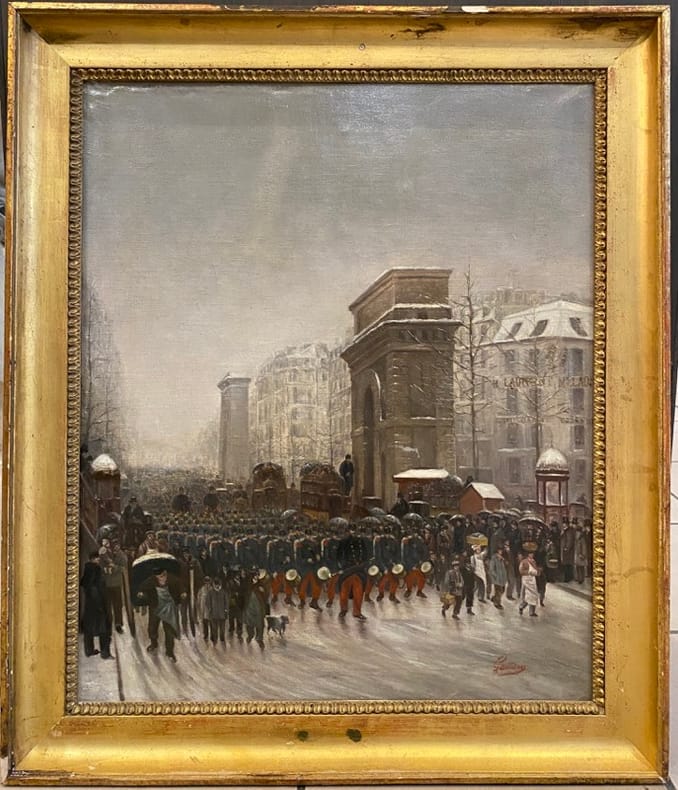
211908S.l., 54.5 x 46 cm, huile sur toile sous cadre de bois doré de l'époque. Manques au cadre.
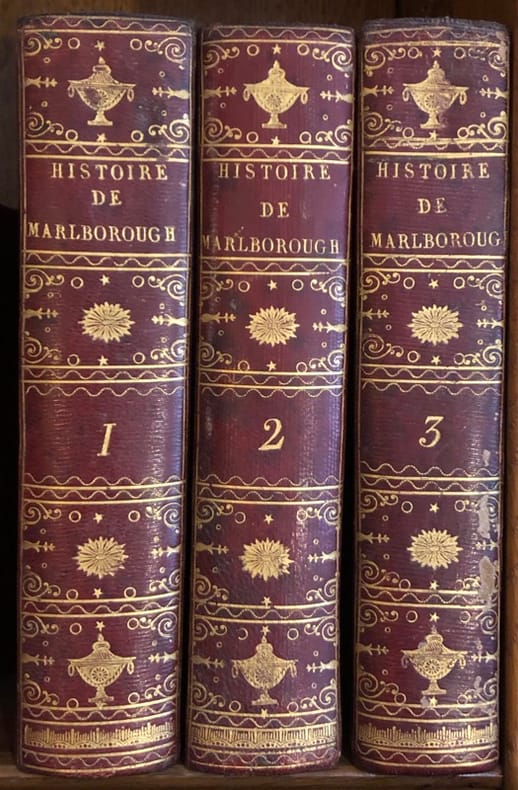
238212La Haye, et se trouve à Paris, Antoine Boudet, 1760-1764 8 vol. in-12, veau fauve tacheté, dos lisse orné, armes en pied, tranches rouges (reliure de l'époque). Début de fente au mors supérieure du tome 1. qqs soulignures au crayon.
209402Paris, Imprimerie Impériale, an XIII - 1805 3 vol. in-8, [2] ff. n. ch., lxiv-409 pp., [2] ff. n. ch., 492 pp., [2] ff. n. ch., 584 pp., un f. n. ch. d'errata, avec 7 planches hors texte (un portrait-frontispice, un fac-similé de signature et 5 cartes et plans en dépliant), maroquin vieux-rouge, dos lisses cloisonnés et fleuronnés, encadrement de pointillé et guirlande dorés sur les plats, pointillé doré sur les coupes, tranches dorées, guirlande intérieure, gardes doublées de tabis azur (reliure de l'époque). Traces d'humidité au vol. I, reliure du vol. III un peu frottée.
224163S.l., s.d. (vers 1895) fort vol. in-4, [2] ff. n. ch., puis ensemble chiffré de façon anarchique (alternativement folioté et paginé sans ordre repérable) 1-1274, [5] ff. n. ch. de table, demi-chagrin noir, dos lisse orné de filets et pointillés dorés (reliure de l'époque). Mors abîmés.
189689Marseille, 17 août 1815 , 1 pp. grand in-folio en partie imprimée, grande vignette marine en en-tête, avec grandes armoiries royale et collier du St-Esprit, encadrement gravé aux attributs de la marine de commerce, cachet rouge aux armes royales et timbres, apostilles au verso ; plis marqués avec léger manque et trou central, renforcé au verso.
146886À Paris, de l'imp. d'Antoine Boudet, 1755 in-4, XX-446-[2] pp., 16 pl. dépl., veau blond marbré, dos à nerfs orné aux petits fers dorés, tranches rouges (reliure de l'époque). Infimes manques aux coiffes, coins usés. Bon exemplaire.