9 442 résultats
47371n.p.: n.p. WWII era. fair. 44" x 32" 1 poster large poster 44" x 32" closed size 11" x 8" black & white illus. wear and tears along folds. Scenes illustrating how to orient maps determine direction resection and intersection. Also contains four illustrations with instructions on how to use a compass with a luminous index in order to march at night. This training chart was prepared at the Infantry School under the direction of the Commanding General Army Ground Forces. n.p. unknown
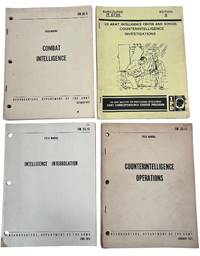
232441972. US Army manuals on counterintelligence interrogation and combat. FM 30-17 Counterintelligence Operations FM 30-15 Intelligence Interrogation FM 30-5 Combat Intelligence and the Fort Huachuca subcourse Counterintelligence Investigations trace the Army's printed intelligence doctrine from January 1972 to June 1989. The sequence begins after the Army established Military Intelligence as a distinct professional branch in 1962 and after the Military Intelligence Corps relocated its school to Fort Huachuca in 1971. By 1989 the printed curriculum had shifted from broad field doctrine toward formal professional instruction for Counterintelligence Special Agents at the U.S. Army Intelligence Center and School. FM 30-17 indexes topics including "Rights" "Witness" "Wiretapping" and the "U.S. Army Security Agency"; FM 30-15 appends the 1949 Geneva Conventions and states that coercion is neither acceptable nor effective.<br /> <br /> 1972-1989 Washington D.C. and Fort Huachuca Arizona. Archive of 4 military intelligence training publications: three Headquarters Department of the Army field manuals and one Army Intelligence Center and School correspondence-course subcourse all in original printed wrappers and stapled or punched for binder storage.<br /> 1 United States Department of the Army. FM 30-17 Counterintelligence Operations. Washington D.C.: Headquarters Department of the Army January 1972. Issued under the printed authority of General W. C. Westmoreland and Adjutant General Verne L. Bowers the manual sets out the Army's investigative framework for sworn statements interrogations surveillance audio surveillance surreptitious entry false documentation secret writing and polygraph procedure.<br /> 2 United States Department of the Army. FM 30-15 Intelligence Interrogation. Washington D.C.: Headquarters Department of the Army June 1973. Sets forth doctrine for Army intelligence interrogations of non-U.S. personnel prohibits physical or mental torture coercion and threats and reproduces the 1949 Geneva Conventions in Appendix E.<br /> 3 United States Department of the Army. FM 30-5 Combat Intelligence. Washington D.C.: Headquarters Department of the Army October 1973. Issued the year of final U.S. combat withdrawal from Vietnam the manual expands combat intelligence into "cold war" "limited war" "general war" and "stability operations" with sections on civilian sources insurgent intelligence collection rear-area sabotage and terrorist threats and counterintelligence planning.<br /> 4 United States Army Intelligence Center and School. Counterintelligence Investigations. Subcourse IT 0735 Edition 9. Fort Huachuca Arizona: Army Institute for Professional Development Army Correspondence Course Program June 1989. A six-credit-hour professional course for the Counterintelligence Special Agent covering doctrine for initiating CI cases procedures for selected CI investigations and techniques for handling physical evidence.<br /> The group follows the Army's post-1962 effort to professionalize intelligence as a branch and concentrate its training system at Fort Huachuca after the 1971 move from Fort Holabird. FM 30-15 1973 is the Army's printed official position that torture and coercion are prohibited with the Geneva Conventions reproduced in full. That manual was the governing interrogation doctrine on paper through the early 2000s. It's the document that the post-9/11 interrogation debates the 2002 OLC memos and Abu Ghraib were measured against. Owning the actual printed doctrinal manual that says "coercion is neither acceptable nor effective" is the headline. One booklet is missing its rear cover and one volume contains annotations throughout. Overall good condition. The 1972 and 1973 manuals set out combat collection interrogation surveillance evidence and counterintelligence support in cold war and stability operations; the 1989 Huachuca subcourse narrows that material into school-based instruction for case initiation and judicial-type investigations. unknown
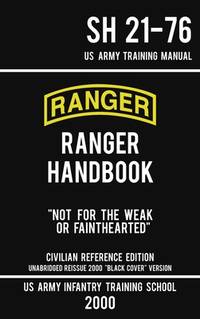
SONG1643890379Doublebit Press 2019-12-07. Civilian Reference ed. hardcover. Used: Good. 6.00x0.69x9.00. Buy with confidence. Excellent Customer Service & Return policy. Doublebit Press hardcover
1643890379.Ghardcover. Good. Access codes and supplements are not guaranteed with used items. May be an ex-library book. hardcover
1962031907Fort Benning GA: U.S. Army Infantry School 1962. Paper Back. Very Good/No Jacket. 4to - over 9¾" - 12" tall. 99pp.; SC staple-bound w/5-holes&no title on spine; blue w/blk.; slight rub w/sun on edges; cleantight pgs. "This handbook covers the principles of clear logical effective writing. It contains specific information on how to apply these principles to the type of writing required in the preparation of staff papers and an aritlcle for publication." bttm.last pg.reads: "34606 Army-Ft.Benning Ga. 9 Jul 62 5500" rare. <br/> <br/> U.S. Army Infantry School unknown
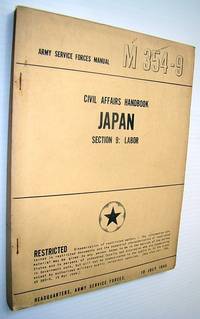
1944871G1397USA: U.S. Army 1944. Book. Good. Paperback. First Edition. 4to - over 9¾" - 12" tall. 169 pages. "International Law places upon an occupying power the obligation and responsibility for establishing government and maintaining civil order in the areas occupied." - from Introduction. Thus this work was intended for civil affairs officers of the U.S. military in Japan at the conclustion of WWII. It provides a very straight-forward and interesting overview of Japan's Labour situation prior to the end of the war. Average wear. Unmarked. A sound vintage copy. U.S. Army Paperback
1391683005.Ghardcover. Good. Access codes and supplements are not guaranteed with used items. May be an ex-library book. hardcover
1396576037.Ghardcover. Good. Access codes and supplements are not guaranteed with used items. May be an ex-library book. hardcover
1396596003.Ghardcover. Good. Access codes and supplements are not guaranteed with used items. May be an ex-library book. hardcover
1396646817.Ghardcover. Good. Access codes and supplements are not guaranteed with used items. May be an ex-library book. hardcover
0331057956.Ghardcover. Good. Access codes and supplements are not guaranteed with used items. May be an ex-library book. hardcover
192650184Fort Leavenworth KS: General Service Schools 1926. Third Edition. Second Printing. good. 43 wraps covers slightly worn and faded. Topics covered include the estimate of the situation discussion of the procedure in making an estimate of the situation hints for solving problems and illustrative problem--an estimate of the situation. General Service Schools paperback
1953004612Marceline MO: Walsworth Brothers 1953 Walsworth Brothers Marceline MO. 1953. Hardcover. First Edition. Signed by 60 members of the HQ CO mostly in the first and second platoons. Book is tight square and unmarked bur for former owner name and serial number on the front paste down. Book Condition: VG; age browning of edges; dulling of gilt on front board. No DJ as issued. Blue leatherette boards and spine with white and red 10th ID insignia and gilt lettering on front board. Pictorial endpapers. 79pp 4to. A military yearbook covering the schooling of the HQ Co of the 2nd BN 86th Infantry of the 10th ID during their time at Fort Riley Kansas. A clean presentable copy rare with the soldier signatures. Walsworth Brothers hardcover
19461022Tokyo: U.S. Army Forces Pacific 1946. presumed First Edition First printing thus. Hardcover. Fair. Approx. 450 pages. Tables. Appendix. Front board weak. Boards scuffed. Ex-library with library stamp inside front board and on fore-edge. :Library pocket inside rear board. Embossed stamp on title page. U.S. Army Forces, Pacific hardcover
192949297Fort Sill OK: Field Artillery School 1929. Presumed First Edition First printing. Wraps. Good. 37 pages. Wraps. Illustrations. Study Questions. Text somewhat darkened. Some wear to cover edges. Topics covered include the panoramic sight the French sight M-1901 the bracket fuze setter M 1916 the hand fuze setters model 1912 and model 1913 gunner's quadrant model of 1918 and study questions. The United States Army Field Artillery School USAFAS trains Field Artillery Soldiers and Marines in tactics techniques and procedures for the employment of fire support systems in support of the maneuver commander. The school further develops leaders who are tactically and technically proficient develops and refines warfighting doctrine and designs units capable of winning on future battlefields. The mission of the Field Artillery is to destroy neutralize or suppress the enemy by cannon rocket or missile fire and to help integrate all fire support assets into combined arms operations. The U.S. Army Field Artillery School trains educates and develops agile adaptive and decisive Soldiers and leaders; engages collaborates and partners with other branches sister-services and other fires warfighting function proponents; and serves as the lead agent for the development of Field Artillery doctrine concepts and dissemination of that knowledge to the Field Artillery force in support of commanders operating across the full spectrum of conflict and in the joint inter-organizational and multinational JIM environment. The U.S. Army Field Artillery enables maneuver commanders to dominate in Unified Land Operations through effective targeting integration and delivery of fires. The origin of USAFAS can be traced back to the 1907 reorganization of the Artillery Corps and to the character of Fort Sill at that time. The 1907 reorganization created Coast and Field Artillery Branches. In the process of this reorganization the Field Artillery was deprived of its former home at Fort Monroe Virginia. Fort Sill was considered the best location for a Field Artillery school since its 15000-acre reservation allowed ample room for target practice and its great variety of terrain offered an excellent area for different types of tactical training. In addition the post had already assumed the character of the home of artillery with a large number of artillery units assigned. The first artillery school the US Army School of Fire was organized in 1911 by Captain Dan Tyler Moore. With the exception of a brief period in 1916 when school troops were used as frontier security guards during the Mexican Revolution the School has operated and expanded continuously. Hundreds of thousands of artillerymen have been trained at Fort Sill since the inception of the School. After the United States entered World War I the school reopened in 1917 with Col. William J. Snow as commandant. The Field Artillery School as it was now known added more courses. After the war school commandants began a long-range program to improve field artillery mobility gunnery and equipment. Budget cuts during the 1920s hampered their efforts but innovative directors of the Gunnery Department with support from school commandants helped modernize the field artillery in the 1930s. Maj. Carlos Brewer director of the Gunnery Department in the late 1920s and early 1930s introduced new fire direction techniques so fire support would be more responsive. Maj. Orlando Ward the next department director developed the fire direction center to centralize command and control and to facilitate massing fire. Brewer Ward and Lt. Col. H.L.C. Jones encouraged replacing horses with motor vehicles for moving field artillery guns. During World War II to best use new long-range guns and better response times the Field Artillery School championed the use of air observation to control artillery fires. The War Department approved organic field artillery air observation in 1942. The artillery air observers adjusted massed fire and performed liaison reconnaissance and other missions during the war. Following the war the school adapted to the atomic age and the Cold War. The War Department consolidated all artillery training and developments under the U.S. Army Artillery Center at Fort Sill in 1946. At that time the center included the Artillery School the Antiaircraft and Guided Missile School at Fort Bliss Texas and the Coast Artillery School at Fort Scott Calif. Field Artillery School paperback
196487717Livermore CA: U.S. Army Engineer Nuclear Cratering Group 1964. Presumed First Edition First printing. Wraps. Good. The format is approximately 8 inches by 10.5 inches. Various paginations approximately 120 pages. Illustrations figures tables tabular data. Ex-library copy with the usual library markings some blacked out. This is part of Plowshare--civil industrial and scientific used for nuclear explosives. The US Army Corps of Engineers Nuclear Cratering Group NCG program activities include: 1 cratering calibration of various geologic media and development of techniques designed to provide a desired crater geometry with chemical high-explosive detonations; 2 joint planning of and technical participation in AEC nuclear-excavation experiments; 3 development of data on the engineering properties of nuclear craters; 4 development of civil works nuclear construction technology; 5 accomplishment of engineering studies of nuclear construction feasibility; and 6execution of joint CE/AEC civil works nuclear-construction experiments. Four conceptual nuclear-construction applications have been identified as having a significant potential for accomplishment: 1 nuclear quarrying to produce rock fill or aggregate; 2 nuclear ejecta dam construction; 3 nuclear harbor construction; and 4 nuclear canal excavation. This inclosure described the design of the nuclear explosions required to excavate the channel for an Isthmian sea-level canal. The Columbian nuclear cue would use 262 devices with a total yield of 2709 megatons fired in 21 separate detonations. Project Plowshare was the overall United States program for the development of techniques to use nuclear explosives for peaceful construction purposes. The program was organized in June 1957 as part of the worldwide Atoms for Peace efforts. As part of the program 35 nuclear warheads were detonated in 27 separate tests. A similar program was carried out in the Soviet Union under the name Nuclear Explosions for the National Economy. Successful demonstrations of non-combat uses for nuclear explosives include rock blasting stimulation of tight gas chemical element manufacture unlocking some of the mysteries of the R-process of stellar nucleosynthesis and probing the composition of the Earth's deep crust creating reflection seismology vibroseis data which has helped geologists and follow-on mining company prospecting. The project's uncharacteristically large and atmospherically vented Sedan nuclear test also led geologists to determine that Barringer crater was formed as a result of a meteor impact and not from a volcanic eruption as had earlier been assumed. This became the first crater on Earth definitely proven to be from an impact event. Negative impacts from Project Plowshare's tests generated significant public opposition which eventually led to the program's termination in 1977. These consequences included tritiated water projected to increase by CER Geonuclear Corporation to a level of 2% of the then-maximum level for drinking water and the deposition of fallout from radioactive material being injected into the atmosphere before underground testing was mandated by treaty. Peaceful nuclear explosions PNEs are nuclear explosions conducted for non-military purposes. Proposed uses include excavation for the building of canals and harbors electrical generation the use of nuclear explosions to drive spacecraft and as a form of wide-area fracking. PNEs were an area of some research from the late 1950s into the 1980s primarily in the United States and Soviet Union. In the U.S. a series of tests were carried out under Project Plowshare. Some of the ideas considered included blasting a new Panama Canal constructing the proposed Nicaragua Canal the use of underground explosions to create electricity Project PACER and a variety of mining geological and radionuclide studies. The largest of the excavation tests was carried out in the Sedan nuclear test in 1962 which released large amounts of radioactive gas into the air. By the late 1960s public opposition to Plowshare was increasing and a 1970s study of the economics of the concepts suggested they had no practical use. Plowshare saw decreasing interest from the 1960s and was officially canceled in 1977. The Soviet program started a few years after the U.S. efforts and explored many of the same concepts under their Nuclear Explosions for the National Economy program. The program was more extensive eventually conducting 239 nuclear explosions. Some of these tests also released radioactivity including a significant release of plutonium into the groundwater and the polluting of an area near the Volga River. A major part of the program in the 1970s and 80s was the use of very small bombs to produce shock waves as a seismic measuring tool and as part of these experiments two bombs were successfully used to seal blown-out oil wells. The program officially ended in 1988. U.S. Army Engineer Nuclear Cratering Group paperback
2i9175Eigenverlag Virginia um 1970. Insgesamt 537 S. in getrennter Zählung teils mit Buchstabenreitern versehen kartonierter Einband mit Schraubbindung quart Notizen auf Titel = notes to title. - sonst gutes Exemplar / good condition / contains Speech for Instructions / Psychology / Lesson planning / Methods of Instruction / Evaluation / etc . / Text englisch - unknown
197101110456U.S. Army Engineer District Louisville 1971. 105pp stapled. This appears to be a contemporaneous photocopy whether released in this form or privately produced we don't know. In any case it's an extremely scarce report. Unbound. Very Good. Small Quarto. U.S. Army Engineer District, Louisville Paperback
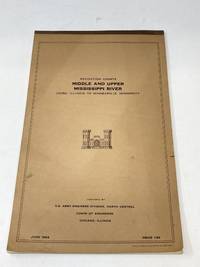
195887934Chicago IL: Corps of Engineers 1958. Staplebound Pamphlet. Very Good. Stapled tablet-style book 13.5 in. x 8.25 in. displaying 58 color blue red black navigation charts for safe river passage plus a three page index to charts a one-page "General Map : Middle and Upper Mississippi River" and one page with notes and a legend. Published in June 1958. Tan cardpaper wraps with dark brown tape covering the staples at top of publication. Black title and castle drawing to front. Light rubbing to wraps. Thumbing to bottom front corners. Corps of Engineers unknown
19724U-9L9C-B9RZU.S. Army Engineer Districts Little Rock and Tulsa 1972-01-01. Plastic Comb. Acceptable. Plastic comb 1972. Oversize book that measures about 20 x 10.5 x .5 inches. Ships next day. Book is in fair shape no scribbles highlighting or underlining has a little tearing on the right corner has a little corner bend has a little bit of a stain on the front no odor a little general wear from a smoke-free environment. U.S. Army Engineer Districts, Little Rock and Tulsa unknown
1994241217185Department of the Army 1994. spiral_bound. Very Good. 14x1x9. CAUTION: This is the January 1994 printing Department of the Army unknown
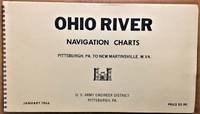
196669689spbU.S. Army Engineer District Pittsburgh Pa 1966-01-01. Spiral-bound. Very Good. 14x8x0. January 1966 edition. Oblong-shaped book of maps with wire coil binding. No text markings noted mild wear. U.S. Army Engineer District, Pittsburgh, Pa unknown
ria9781410224507_inpPaperback. New. New Book; Fast Shipping from UK; Not signed; Not First Edition; N/A paperback
191635612Washington DC: Engineer School 1916. fair. 23 cm 138 ads wraps illus. fold-out plates front cover separated name stamped on front cover pencil erasure on p. iii. The article on searchlights is a short annotated bibliography of their design and use in peace and war. Engineer School paperback