9 442 résultats
197001109707Forest Grove: Normount Armament Co. 1970. Reprint of Technical Manual 9-1910/Technical Order 11A-1-34 1954. Gilt titles on deep green cloth. 358pp ads. Owner's name on title page handstamp on rear end paper. Hard Cover. Near Fine/No Jacket. Large Octavo. Normount Armament Co. Hardcover
1391975804.Gpaperback. Good. Access codes and supplements are not guaranteed with used items. May be an ex-library book. paperback
32014101Lemoore California 1943 U.S. ARMY AIR FORCES. Certificate ca. 10 x 15.5 cm. very good three original pen signatures: Instructor: E. F. Bowes; John B. Hamilton Civilian Training Cooridntor; Lt Col A.C. Glenn L Arbogast Commanding Officer. . . . U.S. ARMY AIR FORCES AIR SERVICE COMMAND . . . ORIGINAL TRIPLE SIGNED CERTIFICATE OF TRAINING . . . LEMOORE ARMY AIR FIELD . . . This is an official U.S. ARMY AIR FORCE certificate card. It is a "CERTIFICATE OF TRAINING" it reads: "This is to certify that ALVIN KINSLOW has completed the course of instruction for BASIC BLUEPRINT as authorized by Air Service Command 21 June1943." Kinslow's name is typed in. . It is fountain pen signed by the instructor civilian training coordinator and the Commanding Officer. The white card shows the Army Air Force logo like those found on all military aircraft of World War II a white star over a blue circle with the red outline see photos posted to our website. . The card is black ink printed it is 10.2 x 6.3 cm. . CONDITION: This is an excellent example a tiny bit dusty as usual the back side is clean. About as good as it can get. . Color photos are posted to our website. unknown
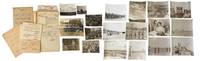
1942233621942. Army Air Forces B-25 pilot training at Columbia Army Air Base is documented through 2nd Lt. Floyd J. Good's flight records B-25 questionnaire training papers base photographs and an associated TB-25 cockpit checklist marked "Horg L. M. / 45-B / C-1." Good's file places him in the 376th Squadron 309th Bombardment Group with records tracking day and night flying first pilot time instructor time combat crew entries and related duty. One later flight sheet notes that Good was "killed in accidental explosion July 1944" while the Horg checklist dated January 26 1945 carries working cockpit procedures for takeoff single-engine drills supercharger use landing and shutdown.<br /> 1943 to 1945 chiefly Columbia Army Air Base Columbia South Carolina. Mixed archive of 66 items including 17 Individual Flight Record sheets 29 black-and-white photographs Good's Pilot's Information File and related training status medical and administrative papers a multi-page "B-25 Questionnaire" with handwritten answers and one folding "TB-25 CHECK LIST" with printed procedures and pencil notes. Good's flight records and training papers 1943 to 1944. Seventeen Individual Flight Record sheets and related forms record Good's progress through B-25 training including aircraft type flight hours instructor time medical classification and duty status. The B-25 questionnaire includes handwritten answers on hydraulic pressure emergency brakes landing gear flaps bomb bay doors and cockpit procedure.<br /> Columbia Army Air Base photographs circa 1943 to 1944. Twenty nine photographs record classroom instruction before a chalked airfield diagram formation drill band and flag ceremony barracks leisure barbering reading room interiors B-25 activity on the field and aircrew posed in flight gear before aircraft. Several versos carry crop measurements or layout marks.<br /> Also includes a wartime B-25 flight checklist dated January 26 1945 documenting cockpit procedure while B-25s were still in active combat service rather than training. Horg L. M. "TB-25 CHECK LIST." Folding cockpit checklist marked "HORG" and "Horg L. M. / 45-B / C-1" with sections for pre-inspection starting engines taxi single-engine stopping and starting drills before takeoff climb landing and stopping procedure. Its pencil reminders including "BOOSTERS ON / WHEELS DOWN" "LEARN" and "150 FLAPS" show use as a working pilot's reference at the height of the final wartime training cycle when Army Air Forces pilots were still being prepared for medium-bomber operations for 7 months before Japan's surrender. This gives the archive a direct war-date cockpit component connecting Good's stateside B-25 training file to the procedural discipline required of pilots flying an aircraft still central to Allied tactical bombing anti-shipping and ground-support missions.<br /> Columbia Army Air Base trained medium bomber pilots for an aircraft used in tactical bombing anti-shipping strikes airfield attacks and ground-support missions across the Mediterranean and Pacific theaters. Good's file records the institutional threshold for that work through flight time medical status instructor approval and technical examination while Horg's checklist records the cockpit habits expected of a pilot moving toward operational flying: single-engine control at 140 m.p.h. supercharger use above 11000 feet booster pump commands landing-gear timing and radio calls. The archive connects the classroom personnel office flight line and cockpit preserving the chain between stateside instruction and the emergency procedures required of Army Air Forces B-25 pilots. Documents and checklist with toning filing holes creasing soiling and handling wear; photographs with light fading silvering and occasional surface abrasions. Overall good condition. unknown
38043501Alexandra 1944-1945. Brown cloth over boards 6.3 x 9.9 cm. opens to: 17.8 cm. very clean solid with typed & signed text pilot flying qualification oxygen mask flight over over 30000 feet immunization records. ORIGINAL PERIOD ITEM . . . . WORLD WAR 2 PILOT FLIGHT TRAINING CERTIFICATION CARD . . . ISSUED TO T/SGT JIMMY P. LITTLE U.S.A.A.F . . This very rare certification card is the training record of Technical Sergeant Little serial number 38671050. . This is ARMY AIR FORCE FORM: "AAF Form No. 206 approved January 181943 16-32833-3 GPO" . In September 1944 he qualified for flying pilot at Army Air Base Alexandra Louisiana. In November that same year he qualified for flight over 30000 feet. At the same time he also qualified for use of the A-14 oxygen high-altitude mask . This meant he was qualified to fly a B-24 or B-29 bomber at the highest altitude any American war plane could fly. This was a special achievement and earned him respected status. . . The second half of his certification card shows the inoculations & vaccinations he received for over seas combat duty: smallpox triple typhoid cholera anti-tetanus yello fever & typhus all successfully May-September 1944-1945. Including malaria control & discipline lectures. . With flight instructor & medical doctor's original pen signatures. . The verso back side shows the "Instructions" on card possession used and display as proof of aviation pilot skills. . CONDITION: This record card is in excellent condition barely any wear to the hinges verso text very clean blemish free. A RARE original and seldom found authentic 1944-1945 Army Air Forces certification card. . . unknown
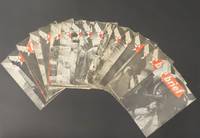
19455514<p>Set of 17 issues of Brief all from 1945. Each issue includes a full page photo of a pin-up girl on the back cover. Models include: Marguerite Chapman Virginia de Luce Lana Turner Belita Dorothy Morris Ava Gardner and many others. In addition to being a news and information publication Brief also strives to acquaint the men with the accomplishments of the personnel of AAFPOA. Creasing and occasional fold lines down middle a few have some water staining to back wrap see images. 18 pp. 9 x 12 inches. Complete list of issue dates: 9 Jan 6 Feb 13 Feb 20 Feb 27 Feb 6 March 13 March 5 June 12 June 19 June 26 June 3 July 10 July 24 July 7 Aug 14 Aug 28 Aug.</p> Information and Education Division of AAFPOA paperback
194549162Washington DC: U.S. Army Air Forces 1945. good. Quarto 14 wraps illus. tables stamp on front cover ink number on front cover some creasing to covers. U.S. Army Air Forces paperback
DADAX0879940247Brand: Aviation Publications 0000-00-00. paperback. New. 0.00x0.00x0.00. Buy with confidence. Excellent Customer Service & Return policy. Brand: Aviation Publications paperback
1944mon0000160143GPO/Arrow Press May July and S 1944-01-01. Hardcover. Good. in x in x in. sturdy manual number 20 ring bound with hardcover. covers have discoloration along all edges. great color photos. these guys were brave getting inside a very vulnerable ball hanging below the underbelly. give me the Navy anyday GPO/Arrow Press, May, July and S hardcover
194348556Chicago IL: Marshall-White 1943. Special Edition. good. 142 total wraps 3-hole punched illus. some in color diagrams covers somewhat worn and soiled. Published by the Authority of the Commanding General Army Air Forces. Three Technical Orders bound together. Scarce WWII military instruction. This special edition was published for distribution to all pilots February 1944. Complete title: Instrument Flying: Basic Without Radio Aids: Technical Order No. 30-100A-1; Instrument Flying: Advanced Without Radio Aids: Technical Order No. 3-100B-1; Instrument Flying: Army Air Forces Instrument Approach System: Technical Order No. 30-100F-1. Marshall-White paperback
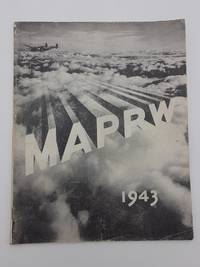
1944290952No place.: Reproduced by 941st Engr BN MAPRW 1944. 1944. Pictorial stapled wraps. Good plus verso of front cover and back cover have old pencil notes cover corners creased otherwise very good. 25.7x20.5x0.4 cm. Scarce World War II Air Force publication. weight: 0.4 lb. Numerous photo illustrations. Reproduced by 941st Engr BN MAPRW, 1944. paperback
9995483599.Gpaperback. Good. Access codes and supplements are not guaranteed with used items. May be an ex-library book. paperback
1974Q-0879940190Aviation Book Co 1974. Paperback. New. In shrink wrap. Looks like an interesting title! Aviation Book Co paperback
19427862St. Louis MO: The Everett Schneider Co c. 1942. as is. Quarto c. 65 profusely illus. signatures onphoto and autograph pg bds quite worn & separated from text 1st 2 pgs separated from rest. Slight foxing to text. The Chicago Schools' mission was to train and qualify the radio operators and mechanics for the Army Air Forces. The Everett Schneider Co unknown
194446499Cleveland OH: Copifyer Lithograph Corp 1944. good. 121 wraps maps index covers somewhat worn and soiled small edge tear to rear cover stamp on page 1. This Technical Order was corrected to include Weekly Notices to Airmen Vol. 12 No. 14 7 Sept. 1944 and replaces Technical Order No. 08-15-03 dated 20 July 1944. The instrument letdown procedures contained in this Technical Order except where otherwise annotated have been flight checkedand approved by AAF Commanders of the Army Air Field covered or are based on procedures use by commercial airlines. This is an extremely scarce resource that covers the major military air installations in the United States. Copifyer Lithograph Corp paperback
194045333X.Gpaperback. Good. Access codes and supplements are not guaranteed with used items. May be an ex-library book. paperback
340042011942 Dinjian. Two early black and white photographs one dated:"12-1.42" on the verso back the other with pilot's name size: a. 14.2 x 8.8 cm.; b. 7.4 x 11.7 cm. very clear & unfaded images on glossy photo paper. ORIGINAL PERIOD . . . A PAIR OF EARLY WORLD WAR 2 PHOTOGRAPHS . . . TENTH ARMY AIR FORCE BOMBER PILOTS WEARING SHEEPSKIN . . . FLYING UNIFORMS IN THE "C.B.I." THEATER OF WAR . . . FLYING FROM ROYAL AIR FORCE AIRFIELD DUBJAN INDIA . . . TO KUNMING YUNNAN CHINA . The "Hump" was the nickname of the world's tallest mountain range the Himalayas given by U.S. Army Air Force pilots. They flew bomber planes loaded with cargo to Kunming China in the C.B.I. China Burma & India theaters of World War 2 Asia. . The "Hump" was the one and only way to support the "A.V.G." "AMERICAN VOLUNTEER GROUP" later known as the famous "FLYING TIGERS" created and commanded by Major General Claire L. Chennault. . The flight from India at high-altitude in freezing aircraft temperatures required sheepskin flying uniforms. These bulky but warm flight jackets trousers and boots protected the flight crew from freezing to death. . The frequent bomber flights provided Chennault with the material to prosecute the air war against the Japanese air force: gasoline ammunition food rations medical supplies and other necessities. There was no land route to Kunming as the Japanese military forces had cut off western China from all allied support. . The two photographs were most likely taken at the Royal Air Force airfield at Dinjan India just prior to take off. The flight crew consisted of: pilot co-pilot navigator and a relief flier. . The first photograph the larger shows four airmen in sheepskin flight uniforms. The smaller photograph shows a pilot in typical sheepskin flight uniform: jacket trousers boots with his parachute attached to his back ready for take off to Kunming. . Color photos are posted to our website. . REFERENCE: . The Hump: en-wikipedia-org/wiki/The_Hump . . unknown
380433011942-1943. Two black & white photographs of pilots suited up in flight uniforms size:a. 9.6 x 11.8 cm.; b.8 x 12.3 cm image clear excellent no fading original period photos with inscriptions. UNIQUE OBSCURE EARLY 1940'S . . . A PAIR OF EARLY WORLD WAR 2 PHOTOGRAPHS . . . SHOWS TWO U.S.A.A.F. PILOTS: FIGHTER & BOMBER . . This is a pair of early 1940's black and white photographs of United States Army Air Force U.S.A.A.F. pilots. These were part of a group of photographs from a "FLYING TIGERS" U.S.A.A.F. member's collection of duty while stationed in Kunming Yunnan China 1942-1943. . The larger shows a pilot immediately after landing standing on the right wing inspecting two large "flack" holes in the aircraft skin during air to air combat against the Japanese air force. . The American pilot wears the typical flight A.A.F. uniform of the period: leather flight cap with earphones flight goggles leather flight jacket heavy duty trousers boots and his parachute. . Near the tail are twin 50 caliber machine guns in the turret typical of the weapons on U.S. bombers. . The smaller photograph shows a fighter pilot wearing his sheepskin flight jacket flight jumpsuit flight boots and he is wearing his parachute. He stands on the wing with one leg inside the cockpit getting ready for take off. He holds a camera in his right hand. . The first photograph show the typical bomber aircraft flown from the Royal Air Force Airfield in Dubjan India to Kunming Yunnan China in the C.B.I. China Burma & India theaters of World War 2 Asia. The inscription on the back states: "This photo has been" released for publication: Jerome Kagel 1st Lt. Ac" with a "Passed by Army Examiners" stamp over the signature. Below that: "Lt. James Wilson" with a more recent comment: "Please return to Luther d. Moore 5370 Verbena San Antonio Texas 78240." . The second shows a single seat fighter aircraft. The front has an inked inscription: "To Cary with love Herbie." The photo was taken at the U.S.A.A.F SAACC San Antonio Aviation Cadet Center San Antonio Texas which operated 1943-1945. Obviously this pilot sent a previous photo of himself to his girlfriend or wife prior to shipping out to the war. . . unknown
38017501Washington D.C.1942-1945 Army Air Force. Black patent leather bill and chin strap leather liner 100% Mohair top with large brass American Eagle emblem very clean cloth a bit of wear on the bill else a solid and clean example. . . . . STANDARD NCO ENLISTED MAN'S 100% MOHAIR WOOL . . . WINTER VISOR "CRUSHER" CAP . . . WITH 3 PIECE BRASS EAGLE EMBLEM . Issued during World War 2 this is the typical example worn on winter dress duty. . This cap has two brass American eagle buttons holding the chin strap and a large American eagle insignia at the front of the cap. . NOTE: A second example lacks the chin strap and two brass American eagle buttons sold "as is." Ask questions prior to ordering this example. . . unknown
38017502Washington D.C.1942-1945 Army Air Force. Brown leather visor lacks chin strap leather liner 100% Mohair top with large brass American Eagle emblem very clean 2-3 tiny pin holes else a solid & clean example. VINTAGE WW 2 . . . . STANDARD NCO ENLISTED MAN'S 100% MOHAIR WOOL . . . WINTER VISOR "CRUSHER" CAP . . . WITH 3 PIECE BRASS EAGLE EMBLEM . Issued during World War 2 this is the typical example worn on winter dress duty. . This cap has two brass American eagle buttons holding the chin strap and a large American eagle insignia at the front of the cap. . NOTE: A second example lacks the chin strap and two brass American eagle buttons sold "as is." Ask questions prior to ordering this example. . . unknown
39012501New York 1940 Hunt. U.S. Army Air Force Officer pilot's cap olive drab mohair wool extra fine high-quality leather visor chin-strap brass buttonslarge brass eagle insignia very good condition complete worn by Americans dated.RARE . . . . VERY RARE DATED 1940 OFFICER'S "CRUSHER" CAP . . . OLIVE DRAB GREEN 100% MOHAIR WOOL AND LEATHER . . . WORN BY "A.V.G. "AMERICAN VOLUNTEER GROUP" & . . . "FLYING TIGERS" THROUGHOUT WORLD WAR 2 IN CHINA & BURMA . This is a very good used example of the Officer Pilot U.S. Army Air Force mohair wool & all leather cap. . CRUSHER STYLE A.A.F. ARMY AIR FORCE CAP: The cap is often called "crusher" type since it was used by aviators wearing headphones. The hat could also be folded and put in the pocket when necessary without damage. The visor and chin-strap are of brown calf leather with out damage firmly in place with two expandable tabs and a small buckle at the back for expansion. This cap was very popular and worn from the beginning of World War II by U.S. A.A.F. Army Air Force pilots and crew members. The main difference being in the quality of the wool cover. The high quality finely woven mohair type was issued to officers while the rougher more course weave was wool was for the enlisted crew members. . The steel band that goes inside the wool cover accompanies this cap to make it a 'crusher' pilots removed this item to allow the outside top edges of the cap to be loose and allow the wear to use earphones over this cap. The buyer can use this cap either way. . THE EAGLE EMBLEM AT THE TOP: There were various makers of the cap and the hardware. Each maker made a slightly variant emblem of the eagle clutching sheaves of grain and arrows with an eagle in the center with a round disk showing 13 stars surrounded by a field of flowers. While the subject of the emblem remains virtually the same the exact style varied with makers as did the style of the eagle's wings. Some were more open in a "V" shape others more closed or vertical in a "V" shape. . THE HUNT CO. HUNT NEW YORK MAKER: Inside the leather brim is some black printed information we hope it was correctly read some letters are less than clear: "June 29 1940 qm 278 SPEC. O.Q.D. No. 595 STOCK No. 73-F-2111 Q.M. P.O.N.Y." . This example was made in Hunt New York by an unstated company. The usual plastic head liner is missing it was the usual place to carry the maker's name. Elsewhere we found "Hunt New York most likely this was the Hunt Co. product. . The interior top liner is khaki color satin with a leather liner and brown ribbon at the back where the leather band is joined. The size is about 7 inches. . QUALITY: This is a superior quality officer's hat with high-grade calf-brown leather visor and an excellent quality leather of a lighter color under the visor. The fine leather chinstrap has the two brass screw retainers buttons at the side 3 belt loops in all and a bronze buckle at the rear. All in all excellent quality materials & workmanship. . CONDITION: There are a few typical tiny and old moth holes on the top of the hat otherwise a very good example no damage or other issues. The inside leather band has some minor wear opposite the forehead as usual. . RARE: This World War 2 early A.A.F. "Crusher" hat is quite rare and seldom found on the market in such very good condition for a 1940 dated item now nearly 80 years old. . . unknown
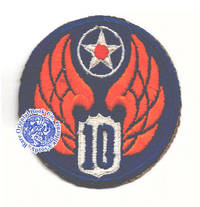
44015701Washington D.C.1942 U. S. Dept. of Defense. One old era vintage embroidered shoulder patch of the 10th. U. S. A.A.F. in blue gold and red over cloth 6.5 x 7.3 cm. oval very goodbit of usual soil solid. VERY RARE ORIGINAL EXAMPLE . . . GENUINE SHOULDER PATCH OF 10TH ARMY AIR CORPS . . . "C.B.I." CHINA-BURMA-INDIA THEATER OF WORLD WAR 2 . The U.S. ARMY AIR CORPS established the 10th Air Force in 1942 to fly from India to Kunming. Soon thereafter their name was changed to U.S. Army Air Force. . TENTH AIR FORCE COMMAND: The Tenth Air Force initially provided control of all U.S.A.A.F. combat operations in the China Burma India Theater under theater commander Lt. Gen. Joseph Stillwell. . COMMANDED BY BRIGADIER GENERAL CLAIRE CHENNAULT: Units based in China were controlled by the China Air Task Force of the Tenth Air Force created 4 July 1942 to replace the "A.V.G." "American Volunteer Group and commanded by Brig. Gen. Claire Chennault. . Units based in India were controlled by the India Air Task Force created 8 October 1942 commanded by Brigadier General Caleb V. Haynes. . In March 1943 the China Air Task Force was dissolved and its components made part of the new Fourteenth Air Force 14 U.S.A.A.F. activated in China under Chennault. . The Tenth operated in India and Burma as part of the Allied Eastern Air Command until it moved to China late in July 1945. . CONDITION: This is a very good example with a tiny bit of usual minor soil else solid above average example. . Color photos are posted to our website. NOTE: Our scanner is not picking up the actual color of the wings which gold NOT red ! . . REFERENCE: wikipedia-org/wiki/Tenth_Air_Force . . unknown
29029501Washington D.C. ca. 1941-1943. A.A.F. uniform jacketshirt trousers garrison cap olive drab green pins rank badge pins medals & wings with patches:"FLYING TIGERS" "C.B.I." & A.A.F. patchs. Air Force. unknown
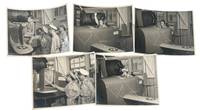
1942235381942. World War II U.S. Army Air Forces Link Trainer training photo archive of five large format silver gelatin prints circa 1942 to 1945 documenting simulator instruction during the wartime expansion of American military flight training using the first effective training device. The men wear Army Air Forces uniforms aviation badges officer caps and the winged star shoulder sleeve insignia commonly called the Hap Arnold emblem an insignia approved in 1942 for AAF personnel. The photographs place the pilot inside a ground based cockpit trainer while instructors and fellow cadets observe a visual record of how instrument procedure radio communication and cockpit discipline were taught before airborne practice. Invented by Edwin Albert Link in 1929 the Link Trainer was the world's first widely successful and effective mechanical flight simulator. Affectionately dubbed the "Blue Box" it revolutionized aviation by allowing pilots to safely train for blind instrument-only flying and poor weather conditions without leaving the ground.<br /> <br /> Photo archive of 5 silver gelatin photographs 8 x 10 inches United States circa 1942 to 1945. The photographs show Army Air Forces cadets and officers in a training room with a large cockpit simulator built with stub wings a tail round U.S. star insignia hinged canopy panels external bracing and a cockpit just large enough for one seated trainee. Several images show a trainee wearing headphones and working inside the enclosed trainer; another shows a man raising the canopy while holding a hand microphone; another shows three uniformed men observing a cadet seated at the controls. One image shows a pilot being congratulated or greeted at the simulator door by three officers with a placard on the fuselage reading "International flight." Visible uniform details include the AAF shoulder patch on a cadet's sleeve pilot or aircrew wings over shirt pockets aviation branch collar devices and officer cap insignia linking the group to the Army Air Forces rather than the postwar U.S. Air Force.<br /> <br /> The Link Trainer became one of the defining instruments of World War II flight instruction because it moved dangerous lessons in blind flying night navigation instrument reading and radio procedure into a controlled classroom setting. The U.S. Army Air Corps had adopted the device before the war and wartime mobilization turned simulator instruction into a standard component of pilot preparation as the Army Air Forces trained pilots at unprecedented scale for bomber fighter transport and liaison service. These photographs are strongest where they show the training process itself: the student isolated inside the cockpit the instructor watching from outside the headset and microphone linking simulated flight to communication procedure and the fuselage marked for an "International flight" exercise. Light curling and occasional creasing; some handling marks in the margins. Overall good condition. A focused visual record of World War II Army Air Forces simulator training and the classroom machinery that converted cadets into wartime pilots. unknown