9 442 résultats
19971301156PN. New. 1997. Soft Cover. Date is original print. This is a reprint edition . PN paperback
1997297311PN. New. 1997. . Soft Cover. Date is original print. This is a reprint edition . PN paperback
1997296907PN. New. 1997. Soft Cover. Date is original print. This is a reprint edition . PN paperback
1993268829PN. New. 1993. Soft Cover. Date is original print. This is a reprint edition . PN paperback
1994438261PN. New. 1994. Soft Cover. Date is original print. This is a reprint edition. . PN paperback
197745272Huntsville AL: US Army Corps of Engineers 1977. First Edition. First Printing. good. Approx. 425 wraps 3-hole punched staple bound illus. diagrams references title written on spine covers somewhat worn/soiled. Several pages have paperclip marks. HNDTR-77-32-ED-SR. Distribution limited to U.S. Government Agencies Only. Test and Evaluation 23 Aug 74. Pencil "X" through limited distribution statement. The United States Ballistic Missile Defense Advanced Technology Center BMDATC recognized the need to investigate Advanced Poser Wystems APS which will be compatible with projected requirements for future BMD concepts. The U.S. Army Corps of Engineers Huntsville Division was requested to performed theinvestigation. US Army, Corps of Engineers paperback
1963721918PN. New. 1963. Soft Cover. Date is original print. This is a reprint edition. . PN paperback
1963721920PN. New. 1963. Soft Cover. Date is original print. This is a reprint edition. . PN paperback
1970740094PN. New. 1970. Soft Cover. Date is original print. This is a reprint edition. . PN paperback
196562404Washington DC: U.S. Government Printing Office 1965. Wraps. Good. No dust jacket as issued. 67 1 p. Includes: illustrations maps index. Three-hole punched. Stamp on front cover blacked over. References. This manual supersedes FM 1-80 21 February 1962. This manual provides guidance to commanders staff aviators and observers concerned with the planning and conduct of aerial observation misisons and the training of aerial observers. The information contained herein is applicable to nuclear and nonnuclear war. This reflects the state of knowledge and the state of practice during the early period of the Vietnam War. U.S. Government Printing Office paperback
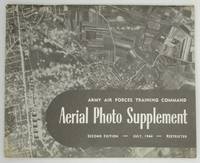
194410542Army Map Service 1944. Paperback. Very Good. Paperbound book of aerial photography was used in WWII training. The book measures 9x11 pen name on inside front cover light wear. 164 plates. All orders packed with care most dust jackets protected by Brodart sleeve independent bookseller since 2011 Army Map Service paperback
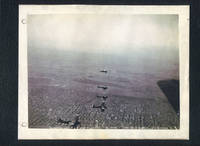
192342800Mitchel Field Long Island NY: U.S. Army Air Service 1923-1925. 1923-1925. Archive of 57 original aerial photographs from the 8th & 14th Photographic Sections Air Service during the Aerial Mapping Survey of New York City and vicinity and the Northeast. 57 original photos mounted on thick card stock 10" x 8". 53 have identifications of place and Air Service Photo section at lower fore-edge of the images and all are printed on glossy photographic stock with some sepia-toned. The images encompass planes in formation over New York views of Manhattan the Statue of Liberty a factory fire in Jersey City Fort Ticonderoga the Zeppelin hanger at Lakehurst New Jersey Albany Philadelphia Hartford Exeter NH numerous Air Fields a scarce series of photos for the Jan. 24th 1925 Eclipse of the Sun and more. The Air Service was created by executive orders of President Wilson in May 1918 during World War I and would eventually expand to nearly 200000 personnel and 2000 aircraft by the end of the war producing planes as well as carrying out operations by aerial reconnaissance photo sections dirigibles balloons and fixed wing aircraft. By 1923 the peacetime cutbacks had slashed the Air Service down to just under 10000 men and 1450 aircraft including 15 photographic sections encompassing the above mentioned 8th and the 14th commanded from 1920 to 1925 by Brig. General Billy Mitchell. Mitchell campaigned tirelessly and bitterly until his court-martial at the end of 1925 to establish the Air Service as a separate military wing independent from the Army and Navy. To aid this mission he authorized a number of publicity stunts to emphasize the modernity and ability of the Air Service including aerial mapping projects speed and altitude records in cross country flying scientific projects and most famously the first flight around the world. The Air Service set up support facilities around the world for the fliers and in April 1924 sent four aircraft named Seattle Chicago Boston and New Orleans west beginning from Seattle Washington and led by Major General Mason Patrick Chief of Air Service. Two of the images in this collection show the two surviving Douglas World Cruisers which on Sept. 8 1924 stopped over in New York One of the photos shows a formation including the New Orleans flown by Lieutenants Eric Nelson and John Harding. They would complete the circumnavigation on Sept. 28 1924 in Seattle nearly 3 weeks later after these photos. The earliest of the dated photos shows 5 DH-4Bs flying in formation on November 20 1923 over Manhattan. The DH-4Bs set records of flying aloft through aerial refueling. The images dated July through November 1924 by the 8th Photo Section during their Aerial Survey mapping projects include Hartford Bridgeport and New Haven CT; Air Port in Boston MA; Fairgrounds at Brockton MA; Exeter NH; Providence and Connecticut Island RI; as well as 2 photos of a Nov. 1924 fire in the industrial section near the docks in Jersey City NJ showing tugboats nearby as well as smoke billowing above the factories damaged by the fire. Images by the 14th Photo Section include the airfield and hangar Lakehurst Naval Air Station NJ which was the home of the ZR-3 Los Angeles dirigible and would later be the site of the Hindenburg disaster; 3 photos of Mitchell Field Long Island NY; landing fields in Van Cortland Park Bronx NY; Governors Island; 2 photos of Roosevelt Field and downtown Albany at Albany NY; aerial views of the Statue of Liberty lower Manhattan including nice images of the Manhattan and Brooklyn Bridges; Fort Ticonderoga; Niagara Falls; Philadelphia; and photographs mapping the area around Mt. Mansfield Vermont. Of particular interest are the series of 11 photographs showing the sequence of the total solar eclipse on Jan. 24th 1925 over Connecticut. The skies were cloudy but 12 planes the ZR-3 Los Angeles dirigible and many scientists and men with special cameras and instruments recorded the event. Ten of the photographs here are marked in stages for the eclipse and an additional separate initial view that is marked Eclipse of the Sun 14th Photo Section Air Service U.S.A. This collection offers an excellent historical record of the early years of U.S. aviation as well as views of the Northeast during the 1920's. All of the images are quite crisp with almost no fading and have two small holes at the left gutter margin where they were apparently stored originally in a two- ring binder. Minor bumping and chipping to some corners of the boards. A few images have lifted at the corners and a couple have very minor loss one with creasing to center of image though not affecting the quality of the image. A remarkable collection of a scarce series of aerial photographs taken by the 8th and 14th Photographic Sections of the U.S. Army Air Service. U.S. Army Air Service, 1923-1925. hardcover
1969738503PN. New. 1969. Soft Cover. Date is original print. This is a reprint edition. . PN paperback
1969738520PN. New. 1969. Soft Cover. Date is original print. This is a reprint edition. . PN paperback
19481340639PN. New. 1948. Soft Cover. md . PN paperback
1967732349PN. New. 1967. Soft Cover. Date is original print. This is a reprint edition. . PN paperback
1979758847PN. New. 1979. Soft Cover. Date is original print. This is a reprint edition. . PN paperback
1995283090PN. New. 1995. Soft Cover. Date is original print. This is a reprint edition . PN paperback
1970739676PN. New. 1970. Soft Cover. Date is original print. This is a reprint edition. . PN paperback
20111352065PN. New. 2011. Soft Cover. Date is original print. This is a reprint edition. . PN paperback
0260803316.Ghardcover. Good. Access codes and supplements are not guaranteed with used items. May be an ex-library book. hardcover
1782665749.Gpaperback. Good. Access codes and supplements are not guaranteed with used items. May be an ex-library book. paperback
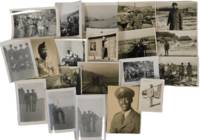
1951191891951. African American U.S. Army soldiers photographed during the early Korean War era document Black military service during the first years following the formal desegregation of the United States armed forces. Twenty photographs dating from approximately 1950 to 1952 depict African American soldiers in uniform at military bases and in field conditions associated with Korean War deployment. Several images also show Black and white soldiers posing together providing visual documentation of the Army during the first phase of racial integration ordered by President Harry S. Truman through Executive Order 9981 in 1948. Inscriptions on several photographs including one signed portrait reading "Joe Moddin 1951" identify individual servicemen and record personal messages written during active service.<br /> <br /> Twenty black and white photographs depicting African American soldiers in U.S. Army uniforms during the early 1950s. Photographs include scenes of soldiers standing with military trucks traveling along roads in Korea and posing with fellow servicemen at military installations where barracks structures are visible in the background. Several images show troops operating or stationed in rough winter terrain consistent with Korean War conditions. Three photographs contain extended inscriptions on the verso dated December 1951 and January 1952. Another photograph is a portrait image signed and dated "Joe Moddin 1951." The images collectively portray daily military life including group portraits transportation scenes and base environments during wartime deployment.<br /> <br /> The Korean War fought between 1950 and 1953 became the first major conflict in which the United States attempted to implement racially integrated military units following Truman's desegregation order. African American soldiers had served in segregated formations throughout World War II and their wartime service contributed to growing national pressure to dismantle racial segregation within the armed forces. By the early years of the Korean War the Army began integrating many units in training and field operations bringing together soldiers of different racial backgrounds in combat and support roles. Historians estimate that roughly 600000 African Americans served in the armed forces during the Korean War and Black servicemen accounted for a significant portion of U.S. casualties during the conflict. These photographs provide ground-level visual documentation of soldiers serving during the transitional period when formal military segregation was being dismantled but integration remained uneven in practice. Twenty photographs. Minor handling wear typical of mid twentieth century vernacular photographs. Overall condition very good. unknown
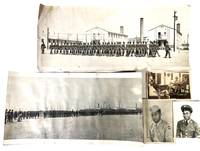
1941193561941. Partially identified Black Airmen photographs and Tuskegee Airmen signatures. African American airmen associated with the United States Army Air Forces during the World War II era document the struggle the struggle of entry into military aviation during a period when the armed forces remained racially segregated. This archive contains sixteen items including photographs of Black airmen in uniform and autographs of Tuskegee Airmen the pioneering African American pilots and support personnel trained beginning in 1941 after federal pressure forced the Army Air Corps to open limited aviation training opportunities to Black candidates.<br /> <br /> Five original photographs of African American airmen in Army Air Forces or early U.S. Air Force uniforms and nine signed note cards bearing the signatures of Tuskegee Airmen veterans. The archive also includes a contemporary pamphlet and photograph of a monument commemorating the Tuskegee Airmen. Signatures appear on white unlined cards measuring approximately 5 x 3 inches and include Claude Platt of the 301st Fighter Squadron and an Army primary flight instructor Charles A. Lane Jr. of the 99th Fighter Squadron Charles McGee of the 302nd Fighter Squadron Luther E. McIlwain Eldridge Williams of the 332nd Fighter Wing Leroy Bowman of the 301st Fighter Squadron Edward E. Tillman of the 477th Bombardment Group Utota Knox of the 302nd Fighter Squadron and Curtis C. Robinson of the 99th Fighter Squadron. The five photographs include two panoramic images measuring approximately 8 x 15 inches and 8 x 17.5 inches and three smaller photographs measuring roughly 3 x 5 inches. <br /> <br /> One panorama shows a large formation of troops assembled in ranks with a band and flag bearers present with African American personnel grouped separately from white soldiers and women within the formation. A second panorama shows approximately four dozen Black airmen marching in formation near a military installation. The smaller photographs depict African American airmen wearing service uniforms with airman caps and winged shoulder insignia; one image bears the inscription "To Mother - From Son in the service" while another real photo postcard shows a Black airman posing with a Black woman seated in a prop carriage behind a decorative mule annotated with "me" above the woman and the initials "T.B." above the man. <br /> <br /> The Tuskegee Airmen program began in 1941 when the U.S. Army Air Corps initiated training for African American pilots at Tuskegee Army Air Field in Alabama following federal directives requiring the military to allow limited Black participation in aviation roles. Units such as the 99th Fighter Squadron and the 332nd Fighter Group became the most visible African American flying units during World War II flying escort and combat missions in the European theater while operating within a segregated military structure. Their service challenged long standing claims that African Americans were unsuited for combat aviation and became a major milestone in the broader campaign for racial equality in the armed forces. The experience of these aviators and the public recognition of their accomplishments contributed to growing pressure for the desegregation of the military culminating in President Harry S. Truman's 1948 order ending official racial segregation in the armed forces. Five photographs ranging from approximately 3 x 5 inches to panoramic formats up to about 8 x 17.5 inches accompany nine signed note cards. One panoramic photograph shows slight water staining and a fold at the left corner; the remaining photographs and signatures remain well preserved. Overall condition very good. The material preserves visual documentation of African American participation in military aviation alongside signatures of several Tuskegee Airmen who served in fighter and bomber units during the war. unknown
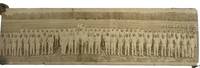
1942185261942. Panoramic photograph 1940s depicting an African American Quartermaster Corps unit during World War II with direct relevance to the study of segregated military organization logistical operations and the role of Black service troops in the war effort. The image shows three rows of Black soldiers in uniform assembled on a field with five white officers positioned in front reflecting the racial hierarchy characteristic of the U.S. Army during the period. A soldier at center holds a unit flag bearing an eagle insignia and the number "663" identifying the formation as part of a Quartermaster unit responsible for supply provisioning and support functions. During World War II the majority of African American soldiers were assigned to service branches rather than combat divisions and Quartermaster units played a central role in sustaining operations across multiple theaters. The photograph documents both the scale of military organization and the structural limitations placed on Black troops within the wartime army.<br /> <br /> Panoramic sepia photograph measuring approximately 8 x 16 inches showing the assembled unit in formation on a grassy field with additional soldiers visible in the background engaged in training or awaiting assembly. The composition emphasizes uniformed ranks command structure and the presence of the unit flag providing visual identification and context for the group.<br /> <br /> Photograph with creasing pinholes and tears consistent with handling; image remains clear; overall fair condition. A large-format visual record of African American service personnel in a logistical unit central to the operation of the U.S. Army during World War II. unknown