30 199 résultats
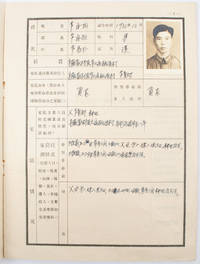
1956171561No place of publication.: 中國人民解放軍總幹部部.Zhongguo ren min jie fang jun zong gan bu bu. 1956. Scarce 1950s Curriculum Vitae or dossier of a Chinese Reserve Force Officer dated on 15th September 1956 with official stamp from the 中國人民解放軍通信第六團 "No. 6 Regiment of Communications Department People's Liberation Army". Officer's ID black and white head and shoulders portrait photograph laid down first page of the dossier 16pp original wrappers light staple stains occasional creasing mainly on corners overall very good. Text in traditional Chinese. 24.8 x 18.4cm. This dossier is for 芦再排 Lu Zaipai born in Anhui Province in 1932 his courtesy name 芦昌仁 Lu Changren. His family background were considered good as he was a peasant before joined the revolution although his maternal uncle was forced to join the Kuomintang in 1941 and was liberated in 1949. The form says Lu Zaipai was enlisted in 1951 and his experience from 1938 till 1951 was given and verified by four different referees. Lu joined the Chinese New Democracy Youth League in February 1954. Lu was a corporal in January 1956 and later promoted to <br>second lieutenant of the reserve force in September same year. . 中國人民解放軍總幹部部.[Zhongguo ren min jie fang jun zong gan unknown
19561585031st Edition 2nd Printing. 1956. 1950s Chinese Nuclear Science Poster set incomplete 15 posters of 30 in colour. Each poster is numbered and depicts a detailed image for example a variety of types of nuclear weapons and defence construction with explanative notes. <br> <br>This broken set comprises poster numbers 6 8 9 10 11 12 13 14 15 21 22 23 24 25 and 26 of the 30 issued in this set. The posters in this group vary from being in reasonable secondhand condition to poor condition. Each shows signs of wear creasing closed tears and some with loss mainly on edges and corners. Most posters are torn with considerable loss at one corner and in two cases this has caused loss to the image. Many have been mended with tape on the reverse along some edges there is some marking mainly on reverse though in one case on the poster itself. On the reverse of poster 23 there is an amateur painting and some painted text. Text in Chinese. The poster sizes vary ranging approximately from approximately 55 x 77 to and 77 x 53cm. An interesting collection of posters which clearly shows that China was as deeply concerned about nuclear war during the Cold War as it's neighbours Russia and the United States across the Pacific. <br> <br>Poster no. 6 shows details of the lethality and destruction factors of the atomic explosion including shock weaves radiation and radioactive contamination. <br> <br>Poster no. 8 shows the materials to be used to build nuclear protection trenches as well as the construction methods. <br> <br>Poster no. 9 displays the images of the type of bomb shelter known "below chest-level bulletproof shelter" giving its floor plans with information on an estimated time to build and materials to use. <br> <br>Poster no. 10 shows images of the type of bomb shelter known "light bomb shelter" and a floor plan with information about its accommodation capacity 8-10 people estimated time to build 15 days and materials to use. Also it suggests every infantry platoon should install one of these shelters. <br> <br>Poster no. 11 shows images of the type of bomb shelter known "heavy bomb shelter" and a floor plan with information about an estimate time to build 35 days and materials to use. The heavy bomb shelter is used as a command office when needed. <br> <br>Poster no. 12 includes 9 images showing different nuclear protection bunkers built for various weapons and equipment such as 57 x 85cm cannon 122 x 152cm howitzer rocket artillery tank self-propelled artillery trucks and communication equipment. The poster also shows floor plans for each type of the bunkers an estimate time to build and materials to use. <br> <br>Poster no. 13 includes 8 images showing different nuclear protection field war warehouses to store materials and equipment such as ammunition mines explosives fuel barrels PT-10 and PT-25 fuel tanks and army provisions. The poster also shows floor plans with information about an estimate time to build and material to use. <br> <br>Poster no. 14 includes two images showing special squads for detecting radition levels on the upper section of the poster together with action plans below the images. A legend on the lower section shows correspondent names for the coloured routes. Detailed plans designed for searching nuclear contamination source and safe routes to take within the contamination zone. The routes are shown and numbered. Each squad consists of one squad leader. <br> <br>Poster no. 15 features an image of the special squad for detecting radiation level and very detailed information on their responsibility and action plans. An inset includes three images showing how to extract contaminated soil and a legend showing correspondent names for the coloured routes lower right section. <br> <br>Poster no. 21 includes 9 images showing different ways to remove radiative contamination on the roads and on battle field. Two blue charts in the middle section one chart showing different types of vehicles to remove contamination on the roads the other various warning signs according to radiation levels. <br> <br>Poster no. 22 shows images of different types of water supply wells cistern etc. and ways to protect the water supply from radioactive contamination. An image featured in the centre shows the layout of a water plant and how it processes contaminated water. The instruction above the image suggests that processed water shall be consumed only when no clean water is available. Four images with detailed instruction lower section show various water purifying methods distilling filtering and ion exchanging <br> <br>Poster no. 23 displays images of soldiers disinfecting radiation contaminated food with package or without and containers for food storage. <br> <br>Poster no. 24 features a Soviet Union made AN-1-A radiac set left section and two images right section of soldier measuring radiation level and soldier carrying the set. <br> <br>Poster no. 25 shows a circuit diagram of the AN-1-A radiac set with a legend showing different coloured current circuits. <br> <br>Poster no. 26 features another Soviet Union made AN-11-A radiac set. The parts of the set are highlighted upper section. Front view and back view of the set are shown lower section. A small image of the set in use upper right section. . unknown
1970158580北京.Beijing.: No publication details. circa1970. Coloured Chinese Air Defence poster incomplete set consisting of 9 posters each poster is numbered. The set includes poster numbers 4 8 10 11 12 13 14 15 and 16. These posters are in secondhand condition. The posters show some creasing with a number of small tears particularly at margins some mending on reverse with tape. Two posters are considerably torn at margin affecting the image slightly in one case. There is some browning and staining and there is considerable annotation on the reverse of poster number 8. Text in Chinese. Sheets measure appoximately 53.9 x 77.9cm. Poster no. 4 depicts 9 images of different types of simple air defence shelters trenches caves etc. Brief descriptions of each type of shelter are provided below the images. Three images in the lower section suggest that when selecting the site for air defence shelters one should not build too close to buildings flammables and electric wire. <br> <br>Poster no. 8 includes 9 images showing the alternative shelters when air raids happen and no nearby air defence shelter available. Alteratives suggested include basements beneath a bridge the corner of a wall and under solid staircases as good alternative shelters. <br> <br>Poster no. 10 shows 3 methods to use to fire at enemy aeroplanes each with detailed instructions. The speed and size of the aeroplane and shooting angles and distance are all taken into consideration. A chart in the centre gives the calculations required to be prepared in advance to successfully shoot down an aeroplane. The calculations require taking into account the plane's size and distance. <br> <br>Poster no. 11 includes 3 images to demonstrate methods to fire at enemy paratroopers with detailed instructions. A chart in the centre gives the calculations for advance preparation taking into account the person's height and distance from the invading paratroopers. <br> <br>Poster no. 12 depicts 5 images showing various anti-aircraft firing positions. They are: a position where a single person lifts and stabilises the rifle while the other person aims; position aided by fortification; position aided by tree branches; position aided by walls; and kneeling position. <br> <br>Poster no. 13 is illustrated with 5 images showing two squads rifle shooting squad and machine gun shooting squad who are in charge of the anti-aircraft placement and three main targeted aircrafts bomber military cargo aircraft and helicopter to shoot. <br> <br>Poster no. 14 shows 10 images of self-rescue and first aid for other people after air raids with detailed instructions. Self-rescue actions featured are emergency bleeding control and fire evacuation; first aid treatment introduced are treatment for bone rapture CPR and transport the wounded. <br> <br>Poster no. 15 depicts 5 images demonstrating methods to extinguish fire bombs. Methods include: burying or covering the burning objects with sand and soil; covering the burning objects with soaking wet quilts or sack bag; throwing the burning objects into water containers with iron shovel; and using a fire extinguisher extinguishing powder or carbon nitride. <br> <br>Poster no. 16 includes 6 images showing plans and actions of rescue urgent repair and maintance of law and order with detailed instructions. It suggests: to report to the relevant government agency and evacuate nearby civilians when unexploded bombs are discovered; during air strikes lay down perimeters around shops to prevent from looting; to restore transportation by clearing roads immediately after air raids; to urgently repair damaged electric wires and water pipes; it gives the major patrol sites as the factory shops warehouses dams bridges and power station and urges the viewer to arrest suspects if necessary; to put out fire immediately and to make sure the safety of the civilians is paramount. <br> <br>中國人民解放軍總參謀部動員部Mobilization Division of People's Liberation Army General Staff Department was first formed in 1954 and later joined with 中国人民解放军总参谋部军务部 Military Division of People's Liberation Army General Staff Department to form a joint division in 1969. The Division returned to its original name in 1975. . No publication details. unknown
1970158618北京.Beijing.: No publication details. circa1970. Coloured Chinese Air Defence broken run of 5 posters. Each poster in this small collection is numbered. The collection is made up of poster numbers 10 11 12 13 and 16. <br> <br>The posters are in secondhand condition. Two are poorer condition than the others as there is loss along a margin of each although this loss does not affecting the images themselves. There is creasing and wear and tear particularly at edges and one poster is damp stained. There are some tape repairs on the reverse one Text in Chinese. Poster sheets measure appoximately 54 x 77.5 cm. Poster no. 10 shows 3 images which demonstrate the methods which could be used to fire at enemy aeroplanes. The images are accompanied by detailed instructions. The speed and size of the aeroplane and the angle from which the shot is taken and the distance from the target are all taken into consideration. A chart in the centre gives details of how to prepare in advance for shooting an enemy aircraft. The chart gives details of how to calculate the plane's length taking into account its size and distance to make sure of an accurate shot. <br> <br>Poster no. 11 shows 3 images which demonstrate methods to fire at enemy paratroopers again with detailed instructions of how to do this. A chart in the centre gives details of how to prepare in advance for shooting an enemy aircraft. The chart gives details of how to calculate the plane's length taking into account its size and distance to make sure of an accurate shot. <br> <br>Poster no. 12 depicts 5 images showing various anti-aircraft firing positions. They are: position for one person to lift and stabilise the rifle while the other person aims; position aided by fortification; position aided by tree branches; position aided by walls; and kneeling position. <br> <br>Poster no. 13 includes 5 images showing two squads rifle shooting squad and machine gun shooting squad who are in charge of the anti-aircraft placement and the three main targeted aircraft bomber military cargo aircraft and helicopter which these squads wish to shoot. <br> <br>Poster no. 16 includes 6 images showing plans and the actions required to rescue perform urgent repairs and maintain law and order. Each with detailed instructions. It suggests: to report to the relevant government agency and evacuate nearby civilians unexploded bombs are discovered; during air strikes lay down perimeters around shops to prevent from looting; to restore transportation by clearing roads immediately after air raids; to urgently repair damaged electric wires and water pipes; the major patrol sites: factories shops warehouses dams bridges and the power station and to arrest suspects if necessary; to put out fire immediately and to make sure the safety of the civilians are the most important. <br> <br>中國人民解放軍總參謀部動員部Mobilization Division of People's Liberation Army General Staff Department was first formed in 1954 and later joined with 中国人民解放军总参谋部军务部 Military Division of People's Liberation Army General Staff Department to form a joint division in 1969. The Division returned to its original name in 1975. . No publication details. unknown
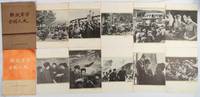
1970215493Circa1970. Set of 10 Revolutionary black and white photographs of PLA soldiers interacting with the people including a slightly browned title page all inserted in the original brown paper envelope. A collectable set in very good condition 26.5 x 19cm. This collection of black and white photographic illustrations show PLA soldiers in different contexts; being taught class consciousness studying Mao's little red book together learning from workers and farmers and so on provided for the use of military units. . unknown
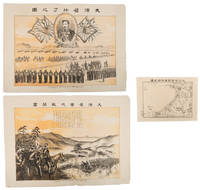
1898218770大阪. Osaka.: 山口新三. Yamaguchi Shinzo. Meiji 31 1898. Black and white map 20 x 27cm together with two colour photolithographic prints each with a light vertical central crease 39.2 x 54.5cm. Very good. This collection consists of three items — two colour prints and a map—related to the Army Training Exercise held in Osaka in 1898. They are titled: <br> <br>Daienshū jicchi sentōga 大演習実地戦闘画 <br>Daienshū shūryō no zu 大演習終了之図 and <br>Daienshū sentōga furoku chizu 大演習戦闘画附録地図. <br> <br>The Emperor attended the exercise in person an event that was regarded as a great honour for the local residents. The two prints depict scenes from the exercise — one showing the Emperor on horseback observing an attack and the other capturing the final parade. The supplementary map covers Osaka and its southern outskirts where the manoeuvres took place. . 山口新三. Yamaguchi, Shinzo. unknown
2008169215北京.Beijing.: 星球地图出版社.Xing qiu di tu chu ban she. May2008. Two large coloured maps printed on double sided on a single sheet folded issued shortly after the devastating 2008 Wenchuan Earthquake which was occurred on 12 May 2008. Small tears along folds mended by both non-acidic tape and cello tape some creasing generally good. Text in Chinese. Sheet measures 84.9 x 119.7cm. <br> <br>Map of Sichuan Province: scale 1: 1100000 inset map lower right corner showing the provincial capital city Chengdu a statistical chart lower section listing counties within Sichuan Province their population and territory size. <br> <br>Map of Wenchuan County and Its Vicinity: 1: 300000 various colour representing altitude differences inset map showing the position Wenchuan County within Sichuan Province a mileage chart listing the distance between Wenchuan County to nearby cities. A brief introduction of Wenchuan on left section accompanying the images of the rescue forces. The Great Wenchuan Earthquake was the biggest earthquake in Chinese history with a casualty over 69000 people. . 星球地图出版社.[Xing qiu di tu chu ban she]. unknown
1970158619北京.Beijing. Circa1970. Coloured poster no.11 of the Chinese Air Defence poster set. Damp staining horizontal and vertical creases where poster has been folded closed tears several of which have been repaired with tape on reverse. Text in Chinese. Poster measures 53.8 x 77.4cm. This poster shows three methods which can be used to fire at enemy paratroopers - each with detailed instructions. A chart in the centre gives useful information regarding the shooting distance required to hit enemy paratroopers based on a multiplication of the shooter's height. <br> <br>中國人民解放軍總參謀部動員部Mobilization Division of People's Liberation Army General Staff Department was first formed in 1954 and later joined with 中国人民解放军总参谋部军务部 Military Division of People's Liberation Army General Staff Department to form a joint division in 1969. In 1975 it returned to its original name. . unknown
1970158620北京.Beijing.: No publication details. Circa1970. Coloured poster no. 12 of the Chinese Air Defence poster set. Lightly stained along upper edge brown stain with a little minor loss tape repairs in several places along the upper edge on the reverse of the poster. Good copy. Text in Chinese. Poster measures 53.9 x 77.7cm. This poster depicts 5 anti-aircraft firing positions. They are: one person lifts and stabilises the rifle while the other person aims; position aided by fortification; position aided by tree branches; position aided by walls; and kneeling position. <br> <br>中國人民解放軍總參謀部動員部Mobilization Division of People's Liberation Army General Staff Department was first formed in 1954 and later joined with 中国人民解放军总参谋部军务部 Military Division of People's Liberation Army General Staff Department to form a joint division in 1969. In 1975 it returned to its original name. . No publication details. unknown
194314624Londres, His Majesty’s Stationery Office, 1943, pt in-8°, 100 pp, 24 photos sur 16 pl. hors texte, un schéma et une photo sur les gardes, broché, couv. illustrée, état correct
243375 May 1896; on leterhead of 130 Edgeware Road London W. See his entry in the Oxford DNB. The Church Army still active today was founded in 1882 as a Church of England equivalent to the Methodists’ Salvation Army. From the papers of the recipient Wilfred Seymour De Winton of Haverfordwest. 3pp 12mo. On a bifolium of grey paper. In good condition lightly aged. Signed ‘W Carlile / Hon. Chief Sec.’ To the left of the signature in the bottom-left of the recto of the second leaf is a purple ink stamp of the following: ‘WRITTEN BY ONE OF OUR POOR STRUGGLING LABOUR HOME BROTHERS’. He begins what is undoubtedly one of many such letters he had to write: ‘Dear Mr De Winton / The Vagrant Criminal and Inebriate Classes a seething mass of our fellow men look to us as the hand of the Church held out to give them a last chance.’ While many could ‘get a fresh start in life after 2 or 3 months staying in one of our Labour Homes the lack of funds compels us day by day to refuse numbers of genuine helpable persons’. He stresses that the homes ‘are not Shelters and are limited to 25 Inmates men women and youths all received irrespective of creed’. He states that 51 1/2 per cent of those who passed through the institutions in the year 1895 ‘obtained a fresh start’ and that the organisation requires ‘£100000 annually’. ‘The financial burdens come heavily on us who nearly all work without any pay.’ He asks if De Winton can help them ‘regain by labour & religion many rapidly sinking into the vortex of crime and misery.’ 5 May 1896; on leterhead of 130 Edgeware Road, London W. unknown
23815Without date or place but before Chantrey's death in 1841 and probably from London. See the entries for Jones and Chantry in the Oxford DNB. 3pp 12mo. On bifolium. An interesting letter of 39 lines with text intact in poor condition aged and with closed tears and discoloration from tape used in repair and ink blot to first page. The surname of the recipient is not given but the close friendship between the two men Jones published a memoir of Chantrey in 1849 puts Chantrey’s identity beyond doubt. Begins: ‘Very dear Sir Francis / Your kind note is duly appreciated and all you do tends to my happiness altho’ it occasionally embarrasses my conduct; in the present instance I deeply feel your kindness in cherishing the pursuit that affords me pleasure but your dony so makes me feel as if I were receiving too great a testimony of your good will’. He is aware that it is ‘impertinent’ for him to ‘judge’ for Sir Francis but he has ‘permitted me to such a station of familiarity that I feel rather as a brother than as a client’. He would far rather his picture were in Sir Francis’s possession than anyone else’s and offer it to him ‘most willingly’ as a ‘testimonium amicitiae’ but he ‘dare not - therefore if it be your will send me one hundred Guineas and I will write you a formal answer by which you will learn what you are to name if my professional fee be demanded -’. If Sir Francis will indulge him by ‘acceding to my wish in this particular’ he will be ‘completely satisfied and this I affirm with the most complete sincerity of heart’ last eleven words underlined. A hundred guineas would have meant nothing to Chantrey; according to the DNB his estate was worth £150000. Without date or place, but before Chantrey's death in 1841, and probably from London. unknown
195613425Alphonse Leduc 1956 100 pages in12. 1956. broché. 100 pages.
7648Paris, Berger-Levrault, 1894 atlas in-4, 19 pl. en couleurs, demi-basane rouge, dos lisse (reliure de l'époque). Dos légèrement frotté.
219092Paris, Berger-Levrault, 1894 1 vol. de texte gr. in-8 et atlas in-4, XII-416 planches, certaines en couleurs, demi-chagrin vert, dos lisse, filets dorés (reliure de l'époque). Étiquette de bibliothèque au dos. Cachet (annulé). Qqs épid. à l'atlas mais bon exemplaire.
240951Genève, J.-J. Paschoud, Paris, F. Buisson, 1809 2 vol. in-8, [4]-XXII-[2]-416 et [4]-422 pp., cartonnage papier brun à la Bradel, filets dorés au dos (reliure de l'époque). Ex-libris Roger Budin, Genève. Bon exemplaire.
190818742St. Petersburg, Kügelgen, 1908. X, 127 SS., mit sehr zahlreichen Tabellen, statistischen Tafeln u. fotografischen Schiffs-Abbildungen, sowie 2 (von 3) mehrf. gef. farbigen Karten als Beilage. 8°, hellgrauer Orig.- HLwdbd. mit weißgepr. Deckeltitel. Kanten berieben.
1988130436München : Beck, 1988. 404 S. mit 359 Abbildungen (z.T. farb.) ; 28 cm, gebunden, Orig.-Pappband mit Original-Schutzumschlag,
198834990München : Beck 1988. 404 S. : m. 359 Abb. z. Tl. farb. Abb. ; 28 cm, mit Schutzumschlag Gewebe, gebundene Ausgabe, Leinen, im Schuber, Exemplar in gutem Erhaltungszustand, Neupreis in DM: 128,--
19881204106München : Beck, 1988. 404 S. : 359 Ill. (z.T. farb.) ; 28 cm Originalleinen mit Schutzumschlag
198835740München : Beck, 1988. 404 S. : 359 Ill. (z.T. farb.) ; 28 cm Pb.
Sauber und frisch erhalte mit einer Fülle von Beiträgen. Verzeichnis der Autoren. Vorwort ZUR HINWENDUNG DEUTSCHLANDS NACH ÜBERSEE Volker Plagemann Die Entwicklung des modernen Welthandels - eine europäische Leistung des 19. Jahrhunderts: WELTHANDEL UND WELT VERKEHR Rainer Postel Das Ringen um freie Märkte in Übersee: Die Hansestädte und Latein amerika Albrecht von Gleich Die Überseebesitzungen blieben ein nationales Verlustgeschäft: Das deutsche Kolonialreich Rudolf Kroboth Dem Handel mußte die Flagge folgen: DEUTSCHE SEEHANDELS- UND FLOTTENPOLITIK Rainer Postel Eine nationale Tat, die der Begeisterung der Deutschen den rechten Weg weist: Flottenbau, Finanzkrise und Reichssteuerreform (1898 bis 1914) Rudolf Kroboth Die Organisation und Zusammen setzung derselben liegt dem Kaiser ob: Die Marine und ihre Einrichtungen Rainer Postel Der Dreizack gehört in unsere Faust: Wilhelm II. und die See Michael Salewski Bitter not ist uns eine deutsche Flotte: Alfred von Tirpitz Michael Salewski 37 43 t 8 Der Ruhm der englischen Cowes- Week sollte verdunkelt werden: Die Kieler Woche Hedwig Sievert t 9 Vom Binnenland zum Weltmeer: DIE INFRASTRUKTUR DES REICHES Fritz W. Achilles Die Locomotive zieht auf eisernen 17 Geleisen die Industrie, den Handel und die Wohlfahrt der Völker hin ter sich her: Die Anfänge der Hamburg- Berliner Bahn Gisela Schütte 22 Wodurch die Unterweser, soweit die Fluth reicht, der überseeischen Segel- und Dampfschiffahrt zugänglich gemacht werde: 26 Die Weser-Korrektion Hartmut Müller Ziehet in Scharen, ihr Schiffe und Kähne: Der Dortmund-Ems-Kanal 32 Eckhard Schinkel Schwimmerschleuse mit Schraubenspindeln: Das Schiffshebewerk Henrichen burg Eckhard Schinkel 41 47 Kein großes Wasserbauwerk der Zeit hat bis heute seine Aufgaben so ununterbrochen erfüllt: Der Kaiser-Wilhelm-Kanal Fritz W. Achilles Förderung alles dessen, was zur Hebung des deutschen Seewesens beitragen kann: DAS SEEVERKEHRSWESEN . Heinrich Walle Ein deutsches Weltkartenwerk: Preußisch-deutsche Seekarto graphie Uwe Schnall 49 53 58 61 64 66 68 71 Anordnungen über die Prüfung der Seeschiffer und Seesteuer leute: Seemannsausbildung Heinrich Walle Einen seiner größten technischen Triumphe feierte das Reich mit der Errichtung des Leuchtturms <Roter Sand>: Verkehrszeichen auf See Siegfried Stölting Auch nach dem Abschied Bismarcks weiter ausgebaut: Das Lotswesen Günther Spelde Sie hielten die Zufahrten der Häfen im Winter frei: Eisbrecher Christian Ostersehlte Wie die Wirklichkeit die schreckensvollsten Bilder der Erfindung überbietet: Schiffskatastrophen Gisela Schütte Freiwillige der seemännischen Bevölkerung: Die <Deutsche Gesellschaft zur Rettung Schiffbrüchigen Christian Ostersehlte Des Reiches Tore zur Welt: DIE GROSSEN HANDELS HÄFEN Dieter Maass Schlußstein im Bau der wirtschaft lichen Einheit des Deutschen Reiches: Die Freihäfen Karin M a a k 83 85 91 93 96 99 107 Die Freihäfen sollten ein Attribut und eine Domäne des Handels staates sein: Die Lagerhausgesellschaften . . . Karin M a a k Time is money: 80 Kais, Schuppen und Speicher Karin M a a k Dampf- und Elektrokräne: Umschlag- und Arbeitsgeräte des Hafens Dieter Maass und Jürgen Rath Schuten, Schlepper und Barkassen: Die Wasserfahrzeuge im Hafen . . . Maria Möring Zwischen Dampfer und Bahnhof: Die Hafenbahnen Dieter Maass Entwickelte sich mehr und mehr zu einem Zweig der Rüstungs industrie: DER SCHIFFBAU Walter Kresse t Schiffe wurden nicht mehr gezimmert, sondern geschmiedet: Der <Vulcan> in Stettin und Hamburg und der <Bremer Vulkan> A c h i m Quaas Erörterung wissenschaftlicher und praktischer Fragen der Schiffbau technik: Schiffbau in Forschung und Lehre Kurt lllies + Möge dieses Schiff im Kriege ein gefürchteter Gegner des Feindes, ein Beschirmer unserer heimat lichen Küsten und im Frieden der Stolz unserer Nation sein: Schiffstaufen Clas Broder Hansen Alle bedeutenden Überseeländer waren über Hamburger oder Bremer Dampfer erreichbar: DIE DEUTSCHE HANDELS SCHIFFAHRT Walter Kresse t Schnelldampfer für eilige Passa giere, langsame Frachtdampfer für den Gütertransport: Entwicklung des Schiffstypen . . . . A r n o l d Kludas Vom Ladetakel zum doppelten Geschirr: Das Schiffsladegeschirr Jürgen Rath 1871 gab es im neuen Deutschen Reich bereits neun regelmäßige 118 Passagierdampfer-Linien nach Übersee: DIE PASSAGIERSCHIFFAHRT A r n o l d Kludas 121 124 126 135 140 The fastest Maiden Trip westward: Das Blaue Band A r n o l d Kludas Weit größeres Kulturraffinement als auf dem Festland: Dampferarchitektur Clas Broder Hansen Ein Vierteljahrhundert Innendekoration auf See: Der Schiffsausstatter Johann Georg Poppe Günter Heiderich 159 168 171 176 Hier wähnt man sich tatsächlich nicht auf dem Meere: Die Vereinigten Werkstätten und die neue <Raumkunst an Bord> . . . 131 Günter Heiderich Nach der Eröffnung füllten die Namen von Überseereisenden die Gästelisten: Das Atlantic-Hotel in Hamburg. . . Erich L ü t h 180 184 143 Uneingeschränkter Genuß der frischen Seeluft: Helgolandfahrten und Seebäder dienst Gisela Schütte Deutschlands schwimmende Wehr: DIE KAISERLICHE MARINE . Heinrich Walle Die Wiedergeburt Deutschlands muß eine Frucht des Meeres sein: Die Marine des Reiches 1848 . . . Paul Heinsius Unter dem Flaggschiff <Barbarossa>: Konteradmiral Brommys 1848er- Flotte Paul Heinsius 186 189 192 153 Bedürfnis des Marine- Etablissements und der Flotte: Die Reichskriegshäfen Wilhelmshaven und Kiel 201 Lars U. Scholl Bismarck legte Wilhelms Denkschrift zu den Privatakten: Wilhelm II. und seine Flotten skizzen 207 Paul Heinsius D e r vorgedachte Krieg: Seekriegsliteratur vor 1914 209 Siegfried Stölting Technischer Fortschritt, militärische Macht, nationale Identifikation: Schlachtflottenbau und Flottenenthusiasmus 211 Heinrich Walle Die Zunahme des Fischkonsums in Deutschland und die wachsende Bedeutung der Fischindustrie sind ersichtlich: DIE SEEFISCHEREI 216 Clas Broder Hansen 195 157 Das Gedeihen meiner Marine hängt wesentlich davon ab, daß sie mit geringem Aufsehen sich ent wickelt: Flottenpläne der preußischen und der Reichsmarine bis zur Ära Tirpitz 198 Paul Heinsius D e r erste deutsche Fischdampfer: Die <Sagitta> Siegfried Stölting Kein Altonaer Bürger sollte die Nase rümpfen, wenn es nach Fischen riecht: Fischindustrie in Altona Elisabeth von Dücker In kaum einem Wirtschaftszweig brach die Kluft zwischen kleinge werblicher Privatstruktur und großen Kapitalgesellschaften so raß auf: DIEBINNENSCHIFFAHRT . . . Fritz W. Achilles Das beladene Schiff folgte willig dem Ruder: Binnenschiffstypen Fritz W. Achilles Die Arbeit einer Hausfrau und eines Matrosen: Binnenschifferinnen Rita B a k e 222 224 228 234 236 Wir Deutschen sind das erste Volk der Welt geworden, und Hamburg ist die Perle der Kaiserkrone: DAS HANSEATISCHE BÜRGERTUM UND SEINE REPRÄSENTANTEN 238 Jörgen Bracker Salomon in all seiner Pracht war ein Waisenknabe gegen Ballin: Der Generaldirektor der HAPAG 1899-1918 Renate Hauschild-Thiessen 244 Der Industrieplatz Bremen geht weitgehend auf seine Anregungen zurück: Heinrich Wiegand, Generaldirek tor des Norddeutschen Lloyd . . . . 246 Maria Möring Ein gewöhnlicher Übersee kaufmann: Edgar Otto Titzck in Ostasien. . Rita B a k e und Birgit Kiupel Von ihrem namenlosen Wirken kündete keine Chronik: Reedersfrauen Rita B a k e und Birgit Kiupel Schiffszwieback und Salzfleisch: SEELEUTE AN BORD Jürgen Rath 248 250 253 Während der Fahrt «master next god»: Kapitäne und Schiffsoffiziere . . . . 257 Jürgen Rath Eine Hand für den Mann und eine Hand für das Schiff: Matrosen und Junggrade 261 Jürgen Rath Sobald der Heizer langsamer arbeitete, fiel der Dampfdruck: Heizer und IMmmer 265 Jürgen Rath Die Mehrarbeit würde keineswegs darunter leiden, wenn sie extra bezahlt würde: Gewerkschaftliche Ansätze und der <Seemannsverband> 268 Jürgen Rath Ehrlose und vaterlandslose Gesellen: Die Werftarbeiter an der Elbe und an der Weser um 1900 271 Marina Cattaruzza In der Vorstellungswelt <Hafen> spielen ausschließlich Männer und ihre Arbeit eine Rolle: Frauen im Hafen 275 A G Frauen im Hafen Ne bang wesen, Junge, anners kummst du ne mit no See: Seemannsbräute und Seemannsfrauen Rita B a k e und Birgit Kiupel Nach den Wochen auf hoher See, ohne die Nähe der Frauen: Prostitution Martina Gedai Sklaven, Auswanderer, Passagiere: MENSCHEN ALS SCHIFFS FRACHT Frank Jürgensen Schreiben schützte vor Seekrankheit: Tagebücher von Seereisenden . . . . Christine Maiwald Stolz zieht der <Imperator> seine Bahn, dem Meerbeherrscher vergleichbar, von Tritonen und Delphinen begleitet: Jungfernfahrten Gisela Schütte Literatur und Kunst stellten sich bewußt oder unbewußt in den Dienst des Vaterlandes: KULTUR, WISSENSCHAFT, IDEOLOGIE Volker Plagemann Gottlov, dat ick en Seemann bin: Arbeitsgesänge und Seemanns folklore Helmut Glagla Feigen und sechs Stück Kolibri: Die Mitbringsel der Seeleute Hans Jürgen Hansen In vielen Seefahrerwohnungen hingen sie in der guten Stube: Schiffsporträts Hans Jürgen Hansen Ich höre noch das heitre, lang hingezogene Hoiho der Matrosen: Vergnügungsviertel St. Pauli . . . Jörg Haspel Matrosen-Knaben-Anzüge u. Bekleidungs-Gegenstände genau n. Vorschrift der Kaiserl. Marine: Marinekleidung Gisela Jaacks Gesammelt von Menschen, die den Schiffen voller Nationalbegei sterung nachsahen: 278 Postkarten von Überseedampfern 325 Gerhard Kaufmann Prachtvolle, auf das solideste construirte und rühmlichst 2g ^ bekannte große Post-Dampf- schiffe: Plakatkunst der Passagierschiff fahrt 330 Gisela Schütte 283 U m eine bessere Kenntnis der Marine ins Publikum zu bringen: Marinemalerei zu Kaisers Zeiten . . 338 H e l m u t R . Leppien 291 Was nur Afrika, Arabien und Persien an Handelsprodukten hervorbringen: Museen in Kontoren und Speichern 352 Karin M a a k 2 ^ Nützlichkeit von ethnographischen Museen in den Staaten, die Kolo nien besitzen: Kolonialhandel und Völkerkunde museen 355 Volker H a r m s Zwischen Wissenschaft und 299 Paradies: Deutsche Künstler in der Südsee . . 360 Rüdiger Joppien Sie prägten das Bild von Ländern 309 und Menschen, über die man als Europäer meinte, frei verfügen zu können: Bildpostkarten von den deutschen 2^2 Kolonien 367 Gerhard Kaufmann ISBN 9783406333057
1931MILI1098bWien, Vlg. d. Militärwiss. Mitteilgn. 1931. gr.-4°, 146 S., mit zahlr. Textabb., farb. ill. OKart., Umschl. leicht fl., Rücken mit (unterlegten) Rissen.
19941164466Stuttgart : Dt. Verl.-Anst., 1994. 398 S. ; 22 cm; fadengeh. Orig.-Pappband.
193836889Köln [u.a.] : Volker, [1938]. 164 S. : Ill. 8°. OLwd mit SChwarzpräg. u. SU.