Little Purr" [Anonymous soldier]Biblio.com
550 résultats
19430072801943. Hardcover. Cloth Box. Very Good. Inimitable and disarming tales that represent the pinnacle of outsider art and folk art with the naive drawings richly full of life as they speak of the daily routine at a British army camp during the Second World War from the point-of-view of a camp mascot cat who excels at mangling English in its creative attempts at phonetic spelling. Folios are oblong 41 by 30 cm each. The first folio contains "The Alterbyografy" a 56 pages long unpaginated with 54 illustrations including the folio cover 28 of which are full page 24 of which are half page. The second folio is entitled "Kamp Karacters" . This is 51 leaves with 92 illustrations including the cover 51 of which are full page 40 a third page generally with the area above entirely blank. Illustrations are rendered with colored pencil and crayon. The first manuscript is a continuous narrative of army life its humdrum rhythms and routines its various inanities its social life sports and other activities etc. while the second part is more character sketches. The second folio is even more visually driven than the autobiography. Another distinction between the two is that the autobiography is done with the leaves oblong while the character studies are applied with the leaves vertical. While one part isn't exactly a sequel to the other the two parts are truly complementary. The two folios are of a rough burlap material with a large title sheet mounted on their front cover. The folios have three flap folds to hold the loose sheets in plus ribbon ties on their right sides. hardcover
19620001450KOREA. Very Good. 1962. Manuscript. On offer is a super manuscript relic of Canada's Korean War participation being a handwritten day book diary pages of a soldier with the famed French Canadian regiment the 'Van Doos'. The 2-ring 6 x 4 inch pages record terse fact filled sometimes intimate personal notations of this soldier's duties and life in the Korean Theatre. Some pages are missing but from April 2nd 1952 through November 3rd 1952 he notes 216 days in Korea at this point this serviceman provides an intimate picture of a support soldier laying cables building rafts laying out minefields and many times under attack. June July August and September are the most filled months and in roughly 137 pages one reads the day to day mundane and of course the definitely not mundane entries - how he was driving a jeep with a Sergeant and a military officer and the jeep was under mortar fire and it rolled over down an embankment. Other entries include: May 17th 1952 29 years old; check Vandoos reg. 2000 mine A/P minefield. Got shelled in the valley. 18 - 75 mm came in on us in ½ hour. No casualties; received letters from patootie. Wrote letter to patootie; started booby trap MF mine field; Sgt. Jackson went to battle school in Japan; attended class pontoon raft demonstration at Widgeon bridge; June 25th 7th Wedding Anniversary; mention of Operations Buster and Buckingham Noahs Ark; went over to Sgt's mess a HQ. Tied one on; constructed & operated close 50/60 raft all day; buffet lunch @ Vandoos HQs; took 5 L/Cpls up to Black Watch; almost got clobbered by a heavy mortar which landed 25' behind jeep and much more. One online source provides: BACKGROUND NOTES: The Royal 22e Régiment is an infantry regiment and the most famous francophone organization of the Canadian Forces. The regiment comprises three Regular Force battalions two Primary Reserve battalions and a band making it the largest regiment in the Canadian Army. The ceremonial home of the regiment is La Citadelle in Quebec City where the regimental museum is housed. The regiment is nicknamed the Van Doos an anglicized mispronunciation of vingt-deux "twenty-two" in French. The regiment's regimental headquarters is located in Quebec City with all three of its regular battalions stationed at various bases in the province of Quebec. The regiment serves as the "local" infantry regiment for Quebec. During the Korean War 1951-1953 the regiment expanded to three battalions each serving in turn as part of the Canadian brigade in the 1st Commonwealth Division. Thus the "Van Doos" represented one-third of Canada's infantry contingent throughout the war. Overall in very good condition save for one page chewed as noted by 'Kibbles'.; 12mo - over 6¾" - 7¾" tall; KEYWORDS: CANADIANA FRENCH CANADIAN REGIMENTS VAN DOOS VANDOOS 22ND REGIMENT KOREAN WAR SEOUL PYONG YANG OPERATION NOAHS ARK OPERATION BUCKINGHAM MINE FIELDS BLACK WATCH CANADA Personal Memoir Handwritten hand written autograph autographs signed letters document documents manuscript manuscripts writers writer author holograph personal ANTIQUITÉ CONTRAT VÉLIN MANUSCRIT PAPIER ANTIKE BRIEF PERGAMENT DOKUMENT . unknown
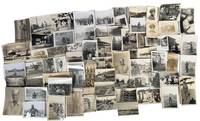
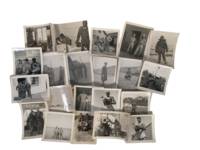
1941196921941. African American Army Transportation Corps photo archive depicting Black enlisted men and noncommissioned officers in wartime transport service occupation duty and domestic training between 1941 and 1952. The strongest identified material centers on the 3528th Transportation Corps Truck Company active from 1943 to 1946 and its successor the 551st Transportation Corps Truck Company active from 1946 to 1947. A captioned portrait places Joseph Galloway "somewhere in Belgium" on December 6 1944 ten days before Germany opened the Ardennes offensive that became the Battle of the Bulge. President Harry S. Truman issued Executive Order 9981 on July 26 1948 requiring "equality of treatment and opportunity" in the armed services but Army integration unfolded gradually through the occupation years and into the 1950s.<br /> <br /> Photo archive of 100 silver gelatin photographs ranging from 1.75 x 2.25 inches to 3.75 x 5.5 inches United States Belgium Japan and West Germany circa 1941-1952. More than half show Black soldiers in uniform including studio and outdoor portraits weapons training field scenes recruits and senior noncommissioned officers. Galloway poses with a pistol in Belgium; transport trucks appear in operation and maintenance; unit facilities domestic training camps interregimental competitions a 155 mm howitzer and soldiers beside a Sherman tank marked "Barbra" extend the record beyond portraiture. Occupation-era scenes include bombed urban landscapes in Japan locations identified as Osumi and Kyoto Black troops with Japanese civilians Buddhist monks at a temple and later service in West Germany including Bonn and Karlsruhe. Approximately one quarter bear manuscript captions identifying individuals dates or locations.<br /> <br /> In WWI many Black troops were denied combat roles and assigned to stevedore work labor battalions butchery companies road work hauling unloading ships and other manual support duties. The National Archives specifically notes that many Black units were kept from front-line fighting and "relegated to support duties." These Black soldiers served heavily in transportation engineering construction and supply roles during World War II making Army logistics one of the central places where African American military labor sustained Allied movement while the armed forces remained segregated. Several scenes place Black and White soldiers working alongside one another preserving the transitional military culture between wartime segregation and the uneven implementation of Truman's desegregation order. Light edge wear occasional creasing and minor surface abrasions to several prints; manuscript captions legible where present; no significant losses observed. Overall in very good condition. The archive gives named faces unit evidence vehicles weapons occupation landscapes and manuscript identifications across the decade when Black military service moved from segregated wartime labor toward formal integration. unknown
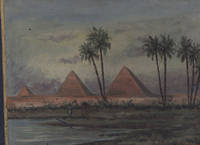
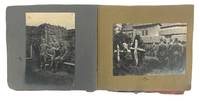
194045303Egypt & The Sudan: Photographs Taken By Donald Stone 1940-1944. 1940-1944. WORLD WAR II. First edition. 12" x 16" cloth string-tied album with an original color oil painting on the front cover of the Pyramids. Photographs by British soldier Donald Stone who was part of the RAF's 203 Group 1940-1944 headquartered in Khartoum. The album has 276 neatly mounted photographs with captions on both sides of 17 leaves each with a tissue guard. Additionally there are 23 loose photographs including 19 photographs of British planes in an envelop. These military photographs of aircraft were strictly forbidden during the War years. Also there are 2 pieces of printed ephemera including a menu for the 203 Group Xmas dinner in 1942 signed by the entire membership. An interesting album of people and places visited by this British airman throughout Egypt and the Sudan. Most of the photos are 2‑1/2" x 3-1/2" but many are larger. Laid-in is a three-page history of RAF Squadron 203. Very good with photographs in fine condition. Photographs Taken By Donald Stone, 1940-1944. hardcover
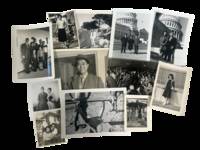
1940226451940. Japanese AmericanWWII Japanese American military service and postwar life photograph archive documenting Nisei participation in the United States armed forces and the reintegration of Japanese American families into public life after World War II 1940s-1960s. The photographs capture Japanese Americans in military uniform as well as family gatherings and civilian travel throughout wartime incarceration and postwar recovery and reintegration. The images document the lives of a generation of Nisei soldiers who served in units such as the 442nd Regimental Combat Team and the Military Intelligence Service whose wartime service occurred while more than 120000 Japanese Americans were forcibly removed and incarcerated under Executive Order 9066. The archive encapsulates the complex relationship between patriotic service and racial discrimination during WWII and the reintegration of Japanese Americans into civilian life during the mid twentieth century.<br /> <br /> Archive of 12 black and white photographs produced between the 1940s and 1960s. The images range in size from approximately 2 x 3 inches to 3.5 x 5 inches and include several photographs of Japanese American men in United States military uniform. Other photographs depict Japanese American families posed together in domestic and social settings including women dressed in fashionable postwar clothing typical of the 1950s. A small group of photographs shows Japanese American visitors standing in front of the United States Capitol building in Washington D.C. Several photographs bear numbers dates or personal names written on the verso in both Japanese and English.<br /> <br /> Japanese American military service during World War II was a central element in the broader struggle for Asian American civil rights after the war. Nisei soldiers serving in the 442nd Regimental Combat Team and the Military Intelligence Service played significant roles in combat operations in Europe and in intelligence translation work in the Pacific theater. At the same time their families and communities endured forced removal and incarceration under federal wartime policy. In the decades following the war Japanese American families rebuilt social networks reestablished businesses and professions and increasingly participated in civic life across the United States. Photographs documenting travel to symbolic national locations such as the United States Capitol reflect this period of renewed public presence and political engagement among Japanese Americans in the 1950s and 1960s. Minor edge wear and handling visible to several photographs with occasional annotations on the versos in Japanese and English; overall very good condition. This archive provides visual documentation of Japanese American wartime service and the reestablishment of civic identity during the postwar era. unknown
1930000769CAIRO EGYPT JERUSALEM ISRAEL. Very Good. 1930. On offer is a large oblong photo album circa 1935 to 1945 with over 180 mounted pictures and photographs providing a visual diary of one soldier's tour through Egypt and the Holy Land. Unique photos beautifully presented in a well kept cloth cover 10 x 13 inch album. ; Folio - over 12" - 15" tall; HANDWRITTEN MANUSCRIPT DOCUMENT LETTER AUTOGRAPH DIARY JOURNAL LOG KEEPSAKE WRITER HAND WRITTEN DOCUMENTS SIGNED LETTERS MANUSCRIPTS HISTORICAL HOLOGRAPH WRITERS DIARIES JOURNALS LOGS AUTOGRAPHS PERSONAL MEMOIR MEMORIAL PERSONAL HISTORY TRAVEL PHOTOGRAPHY INDIA ILLUSTRATED antiquité contrat vélin document manuscrit papier Antike Brief Pergament Dokument Manuskript Papier oggetto d'antiquariato atto velina documento manoscritto carta antigüedad hecho vitela documento manuscrito Papel PALESTINE ISRAEL BRITISH MANDATE BETHLEHEM EGYPT HOLY LAND JUDEA SAMARIA WEST BANK CAIRO JERUSALEM PHOTO ALBUM PHOTOGRAPHIC ALBUM . hardcover
194544498Okayama: Photographed in many Japanese Locations with most of the loose photographs taken in Okayama Japan n. d. ca 1945. 1945. WORLD WAR II JAPAN. First edition. Blue cloth photograph album 124 silver gelatin photographs mostly 2 1/4" x 3 1/4" with 106 of them in corner mounts. A fascinating vernacular photograph album capturing scenes in American-occupied Japan just after the Second World War. Most of the photographs are captioned in white ink on the black album pages and organized in sections such as "Landmarks" "The People" "The Cities" “The Military” and “Personalities.” “Landmarks” include views of sites in Kokura Yakata Okayma Prefecture picturing shrines country homes water works the "International Military Tribunal Far East" and more. "The People" shows Japanese residents of all ages some in Western dress others in traditional Japanese garb standing in front of structures on the streets at a military checkpoint playing "yakkyu national game" baseball swimming and other activities. The section on the cities comprises street views in Okayama Kokura Fukuoka Hiroshima Yakata Tokyo Kyoto and Yokohama. Surprisingly the four shots of Hiroshima do not contain much evidence of destruction and provide a rare contemporary glimpse of areas of the city not leveled by Little Boy. Views of Tokyo include the Dai Ichi Building the Imperial Museum and an image of an American soldier "on the Ginza." The various views in the other cities show Japan's largest steel works a partially-demolished department store temples and the Yokohama wharf. The military section includes photographs of Okayama Post the "A.G. Office" barracks headquarters of the 24th Division in Kokura Kyushu the Kokura Arsenal and Post Exchange Fukuoka's 118 Station Hospital and more. The "Personalities" section is comprised of shots of American soldiers in and out of uniform almost all of them identified by their first names or nicknames. This section also includes photographs of "A.G. Girls" a few Japanese people identified by name American soldiers at the War Ministry Hotel in Tokyo U.S. soldiers at the "4th Repl. Depot" in Sobudai" and more. A handful of the captions and some of the loose photographs are captioned in Japanese. Some of the loose photographs are stamped on the verso "Jack Woytych" with his Wisconsin address though it is unclear whether this refers to the owner/photographer of the album or the printer of the photographs. Most of the loose photographs emanate from Okayama. A noteworthy collection of personal images from an American serving in Japan at the end of World War II. Moderate wear to the spine ends and spine panel light edge wear and rubbing to the extremities else a very good copy. Photographed in many Japanese Locations, with most of the loose photographs taken in Okayama, Japan, n. d. (ca 1945). hardcover
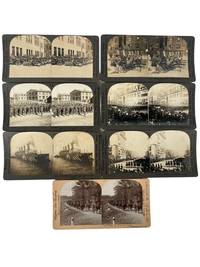
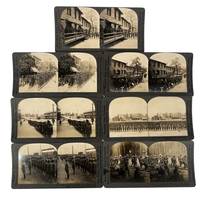
1918205021918. Buffalo Soldier regiments depicted in stereoview photographs from the World War I era document African American cavalrymen and infantry units serving in segregated formations of the United States Army during the early twentieth century. These images record soldiers from several historically significant Black military units including the 9th U.S. Cavalry the 10th Cavalry and the 369th Infantry Regiment. African American soldiers served in large numbers during World War I despite segregation in the armed forces and the war marked a turning point in public recognition of Black military service. The photographs capture cavalry movement machine gun training and celebratory returns from the European front preserving visual evidence of the military presence and public visibility of Buffalo Soldiers during the conflict.<br /> <br /> Archive consists of seven stereoview photographs published by the Keystone View Company during the World War I period. The views depict soldiers from the 9th U.S. Cavalry the 8th Regiment of Colored Troops the 10th Cavalry the Chicago Regiment of Colored Troops and the 15th Regiment of the 369th Infantry. Two stereoviews show Black machine gun companies operating Lewis guns one of the principal light machine guns used on the Western Front during the war. Another view shows Troop K of the 10th Cavalry moving on horseback at Camp Chickamauga in Georgia. Additional stereoviews depict African American soldiers returning from European service and marching in public celebrations including scenes of troops parading along major boulevards such as Fifth Avenue in New York.<br /> <br /> The Buffalo Soldier regiments had already established a long military record before the First World War. Units such as the 10th Cavalry formed part of the segregated Regular Army created after the Civil War and served in campaigns across the western United States during the Indian Wars later participating in the Spanish American War the Philippine American War and operations during the Mexican Revolution. World War I marked one of the final periods in which cavalry units remained visible in American military organization as mechanized armor and motorized vehicles soon replaced mounted troops. At the same time Black soldiers who returned from service were celebrated in wartime parades yet continued to face segregation and racial discrimination within American society. Stereoview cards remain well preserved with light age wear typical of early twentieth century photographic prints. Very good condition overall and a visually compelling record of Buffalo Soldiers during the World War I era. unknown
19154227France Belgium England 1915. Good. Oblong 8vo. Small "Walker's Service Notebook" 154 x 94 mm lined 26 pages filled with neat entries in pencil and pen final page of diary loose the remaining portion of the notebook i.e. about 2/3 blank. Original limp cloth covers worn. § Extraordinary manuscript diary of an anonymous British soldier beginning April 12th 1915 and ENDING ABRUPTLY IN THE TRENCHES AFTER A GAS ATTACK. The final entry was dated December 19th 1915 which was THE FIRST DAY PHOSGENE GAS WAS USED AGAINST BRITISH SOLDIERS. The short diary is rich in detail of life at the front. The anonymous soldier belonged to the 49th West Riding Division which had a large number of gas casualties when soldiers in reserve lines did not receive a warning in time to put on their helmets. A study by British medical authorities arrived at a figure of 1069 gas casualties 120 of which were fatal. It is very possible that the present manuscript was written by one of those men. It seems probable that with access to the right regimental records the identity and fate of the soldier could be learned and his story told in full; however even as an anonymous diary the interest and poignancy of this personal record is clear.<br /> <br /> The events recorded span just nine months. On April 12th the soldier leaves Edenthorpe near Doncaster and crosses the channel to Le Havre that evening "packed like herrings" and accompanying horses and wagons. Over the next few months he records laying lines opening signal offices handling horses towns and villages visited billets and meals injuries regiments encountered names of comrades and O.C.s shelling rain and mud. He sees the Northumberland Hussars the Indian Corps and Royal Horse Artillery. On May 9th he records the Battle of Aubers Ridge: "Off duty at 7am. Attack began at 5am by Artillery. Signal thro' during day showed heavy losses in E. Lancs Lincolns. 13th London and other Batts. Had coffee in Fleurbaix and then to bed in barn. Off duty 3pm. Attack still proceeding without much impression on our line. French said to be doing well. At night we have the two windows in our Signal Office made up with corrugated iron & sandbags."<br /> <br /> For the entry dated May 12th our author notes that the name of the Division has been "altered to the 49th" thereby confirming the identity of his Division. On May 24th: "The Allamands dropped about 6 shrapnel in our vicinity."<br /> <br /> From a period of steady work and periodic pleasures "had tea & cakes at a patisserie & and then back after buying some books" "glorious day" the situation deteriorates with the weather "torrential rain dugouts leaking & 18" water on my floor".<br /> <br /> They move to Chateau de Trois Tours and on July 13th there is "rather an exciting night" with a bombardment from 7.30 to 10.30. On the 14th "The whole place is being encircled by barbed wire & trenches & the furniture is being moved out of the chateau." On the 15th "At 12.45pm about 12 shells fell round the chateau made a dive for the Signal Office Billy Edwards & Gus Harris wounded in thigh and ankle." They were shelled again on the 16th.<br /> <br /> On December 1st he travels back to Sheffield on leave returning on December 8th. The company are now holed up near Ypres at Hospital Farm the name given to a farm building used as a dressing station. The final entry reads "Dec 19th 'S.O.S.' Gas attack 5.30 am things lively until 8.30am. 146 & 148 des. 148 soon repaired from chateau". The cemetery at Hospital Farm contains 115 Commonwealth burials of the First World War.<br /> <br /> On the significance of the 19 Dec. 1915 battle at Wieltje Belgium northeast of Ypres see the long Wikipedia entry "German Phosgene Attack of 19 December 1915." <br /> <br /> The diary contains many clues that could help identify our writer in military records. It is not certain that he was one of the first British casualties to Phosgene gas but it seems tragically likely. As it stands the final entry in the diary marks an important milestone in the war: phosgene gas would eventually be responsible for about 85% of the 90000 deaths caused by chemical weapons during World War I. unknown
1925536421925. Folio. Eight pages approximately 2750 words; accompanied by another autograph letter from Russell to Trowbridge 14 March 1925; 4to four pages approximately 750 words with more information on the political situation in Missouri on the eve of war and an autograph transcription by Russell of the long poem "The Battle of Wilson's Creek August 10 1861" folio two pages with his own commentary on the poem. Folded. Insect damage to the poem and first leaf of the longer letter resulting in the loss of a number of letters but quite legible throughout. 813. Russell a native of St. Louis enlisted under Lincoln's first call for troops and served in a Missouri regiment through the summer of 1864. Following an outline of sectional struggle from 1820 and early events of the war given in the first half of the longer letter Russell describes the events of the Wilson's Creek Campaign and then his own eyewitness to history: "The Kansas boys like ourselves were resting when all at once the rebels crept up the hill to the top of the crest opened a tremendous fire right into the Iowa boys and our regiment but we went at them anyway and a hand to hand struggle began . My Captain Cary Gratz was killed . I was wounded four times and the Kansas boys were holding their own. Capt. Lyon had been hit twice once a scratch along the forehead and a light superficial wound in the knee. I was carried down the hill and placed on the hill side opposite the line of battle the valley being merely a hollow. I had a good view of the fight as it went on. My first attention was attracted to my right as I lay there and watched Capt. Lyon trying to rally the Iowa boys who were in a panic their Colonel had been killed and although the Kansas boys had saved them Capt. Lyon was rallying them into formation to use as they were then near the front. All at once I saw him rear off that dople sic gray horse and fall to the ground. Maj. Schofield also ran to his side a messenger sent for our surgeon Dr. Comyns . Capt. Lyon was carried down the hill he was shot nearly half way up from the hollow to the battle lines. The bullet had struck him squarely in the breast and had gone through his hear and he had lost the pleasure of seeing the victory his indomitable courage had won."_The Confederates commanded by Gen. Sterling Price made another assault following the death of Lyon but Samuel Sturgis rallied the Union troops and the Federal lines held. Sturgis then left the field toward Springfield and the Confederates did not pursue him. "The campaign marked the beginning of the war in Missouri and the trans-Mississippi. Afterward the Federal army withdrew to rolla Missouri leaving the Southerners in possession of most of the southwestern region of the state" "Encyclopedia of the Confederacy"._Lyon 1818-1861 a Connecticut native graduated from West Point in 1841 served in the Mexican War and on the western frontier most of the time to the eve of Civil War in "Bleeding Kansas" becoming involved in the political issue of slavery in the territories. Appointed brigadier general in May 1861 to command the Union forces in St. Louis he also led discussions with Confederate sympathizers on Missouri's position in the union; when compromise failed he launched his first military campaign which culminated in his death at Wilson's Creek. "The entire north mourned his death and he immediately became a national hero and martyr . his brilliant work had done much to hold Missouri for the Union" DAB. <br/><br/> unknown books
1917200631917. Czechoslovak Legion soldiers photographed during World War I document the participation of Czech and Slovak troops fighting alongside Allied forces in campaigns across Europe. Approximately seventy eight photographs record military life among soldiers associated with the Czechoslovak armed formations that emerged during the war as nationalist units seeking independence from the Austro Hungarian Empire. The images depict trench warfare troop encampments drills and daily life among soldiers whose political objective was the creation of an independent Czechoslovak state. The photographs illustrate the conditions and routines experienced by these soldiers during the conflict that ultimately contributed to the establishment of Czechoslovakia at the end of the war in 1918.<br /> <br /> Photographic album containing approximately seventy eight photographs measuring about 4.75 x 6.5 inches mounted on album leaves. The images depict soldiers in trench positions infantry movements across terrain and group formations during drills. Additional photographs show military camps outdoor meals mess areas and group portraits including one of a military band. Several photographs capture village architecture including houses courtyards and churches encountered by the soldiers during the campaign. The album also contains images of wartime medical care including a medic working with wounded soldiers a funeral scene with graves and cemetery crosses and a horse drawn wagon train traveling along a mountain road. Other photographs depict staged performances and theatrical scenes presented outdoors for soldiers.<br /> <br /> During World War I Czech and Slovak nationalist leaders organized volunteer military formations known collectively as the Czechoslovak Legions composed of soldiers drawn from prisoners of war and expatriate communities who sought to fight alongside the Allied powers against Austria Hungary. Their participation in the war strengthened international support for the creation of an independent Czechoslovakia which was established following the collapse of the Austro Hungarian Empire in 1918. Photographs of trench systems encampments and military drills in this album illustrate the entrenched character of warfare that dominated much of the conflict as armies constructed extensive defensive systems while attempting to break enemy lines through periodic assaults. Album containing approximately seventy eight photographs measuring about 4.75 x 6.5 inches. Album boards show chipping along the edges while photographs remain clear with strong contrast. Overall condition very good. unknown
19461045CG1946. Oel auf Holz. 72 x 43 cm. + Wichtig: Für unsere Kunden in der EU erfolgt der Versand alle 14 Tage verzollt ab Deutschland / Postbank-Konto in Deutschland vorhanden +
19461045CG1946. Oel auf Holz. 72 x 43 cm.
1952002334Paris Gérard Le Gris 1952
1918205031918. Keystone View Company. Buffalo Soldiers stereoview photographs World War I era document African American military service in the American Expeditionary Forces and place segregated Black troops within the broader Allied war effort in Europe. The images identify units of "Colored Troops" including engineers of the Signal Corps and depict formations logistical organization and moments of assembly such as soldiers "lined up for democracy." These photographs situate African American soldiers-many of whom descended from the Buffalo Soldier regiments established after the Civil War-within a transnational military environment that included French British and colonial forces. Scenes showing interaction with Moroccan and Indian troops on French roads reflect the multinational composition of Allied armies during the final phases of the war while the presence of Black American troops underscores their continued participation in major military operations despite segregation within the U.S. Army.<br /> <br /> France and possibly other European locations circa 1917-1919. Archive of seven stereoview photographs published by the Keystone View Company. Images depict African American soldiers in formation including lines for mess and organized ranks as well as mixed Allied groupings on roadways and near encampments. Stereographic format intended for three-dimensional viewing with printed captions identifying subjects and units. Photographs emphasize both structured military order and the varied roles occupied by Black troops particularly in engineering and support divisions.<br /> <br /> Produced during the final years of World War I these stereographs align with the expanded deployment of African American soldiers overseas and the broader visibility of Black troops within global conflict. While their service contributed to Allied operations these soldiers returned to a United States that maintained racial segregation and limited civil rights situating the archive within the larger history of African American military participation and postwar inequality. As visual records the images support research into race military organization and the international dimensions of the war. Light handling wear; overall very good condition. unknown
1957193551957. Vernacular photograph archive of African American soldiers in integrated U.S. Army units circa 1950s documents the early implementation of military desegregation following Executive Order 9981 and provides visual evidence of Black and white soldiers serving together during and after World War II including the Korean War. The photographs place African American servicemen within the first generation of formally integrated military units preceding broader civil rights gains in civilian society. Scenes of joint training transport and daily life show Black soldiers operating alongside white counterparts in contexts ranging from shipboard movement to antiaircraft defense positions indicating the practical realities of integration in active and post-conflict environments. The archive captures both structured military activity and informal moments offering a record of service that contrasts with the segregated conditions that had defined earlier periods of U.S. military history.<br /> <br /> United States and Korea circa 1950s. Archive of 21 silver gelatin vernacular photographs with several images bearing manuscript captions on the verso identifying individuals and locations including one noting Korea 1957-1958. Photographs depict a range of settings including military bases in Korea stateside camps shipboard scenes and antiaircraft gun emplacements in snowy terrain. Multiple images show interracial groups of soldiers posing with rifles and submachine guns while others capture informal activities including one sequence featuring a soldier holding an inflated puffer fish aboard a ship. One photograph includes a note written in Italian on the verso indicating cross-cultural contact or circulation. Composition and subject matter vary from posed group portraits to candid operational and leisure scenes.<br /> <br /> Created during the first decade of enforced military integration these photographs align with the transitional period in which desegregation policies were implemented unevenly across the armed forces with fuller integration not realized until the mid-1950s. The Korean War served as a critical testing ground for integrated units accelerating changes in military structure and social dynamics within the ranks. This archive provides a ground-level view of those developments documenting both the normalization of interracial military service and the persistence of shared routines duties and environments across racial lines. Light wear from handling with minor surface marks and occasional verso annotations; overall very good condition. unknown
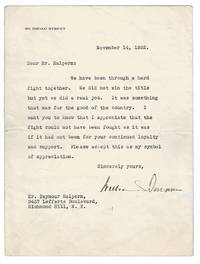
1932100747<p>New York November 14 1932. 1932. Very good. - Over 85 words typed on his 8-5/8 inch high by 6-1/2 inch wide "90 Broad Street" stationery. Addressing the young campaign volunteer Seymour J. Halpern William J. Donovan the future head of the Office of Strategic Services writes "We have been through a hard fight together. We did not win the title but we did a real job." He goes on to show his appreciation to the young autograph collector "I want you to know that I appreciate that the fight could not have been fought as it was if it had not been for your continued loyalty and support. Please accept this as my symbol of appreciation." Signed in full "William J. Donovan". Donovan ran for Governor of New York State to succeed FDR in 1932. A Republican he lost to Herbert Lehman. Folded in half for mailing the edges are soiled and there are tears to the edges of the fold. Very good.</p><p>To house his law firm in March of 1932 Colonel William J. Donovan leased a large suite of offices in the Stone & Webster Building at 90 Broad Street in New York City.</p><p>The American attorney diplomat soldier and intelligence officer William J. Donovan 1883-1959 is best known as the head of the OSS the Office of Strategic Services which was the war time precursor to the CIA. A veteran of World War I Donovan was awarded the Medal of Honor the Distinguished Service Cross the Distinguished Service Medal and the National Security Medal. In 1941 FDR established the Office of the Coordination of Information with Donovan as its director. Once the U.S. entered the war the COI became the OSS in June of 1942 with Donovan now a major general as its head. Donovan created the OSS as a military psychological warfare service to include both psychological and unconventional warfare. The service would soon include elements that would be called "special operations" the first phase of which would be intelligence penetration including research and analysis and propaganda followed by a second stage incorporating sabotage and subversion. This second stage would be followed by guerilla action commando raids and support of resistance movements.</p><p>An avid autograph collector in his youth the then 19-year old campaign volunteer the future Queens New York Republican Congressman Seymour Halpern 1913-1997 started his political career as a campaign aide to New York's powerful mayor Fiorella La Guardia and first served in New York's State Senate for 14 years before seeking a seat in the U.S. Congress. In Albany Halpern sponsored 279 bills that became law including measures on schools housing civil rights nutrition and mental health. A Liberal he was something of an anomaly as the lone Republican representative from New York City and generally garnered support from Labor Unions and endorsement from the Liberal Party. Yet he never even considered switching parties as he considered membership in the Republican Party a family tradition and commitment. While he found ample time for his private pursuits including painting and collecting autographs he took his legislative duties very seriously. Of these he was proudest of his co-sponsorship of the 1964 Civil Rights Act and of the original 1965 Medicare legislation.</p> [New York], November 14, 1932.
19359489Paris, Editions de la Clé d'Or, 1935 ; grand in-4 en feuilles sous couverture crème rempliée, illustrée en couleurs, chemise-étui de l'éditeur, pièce de titre havane imprimée en doré ; 201, (5) pp., 1 photographie hors-texte et 24 aquarelles hors-texte coloriées au pochoir par le procédé Duval-Beaufumé.
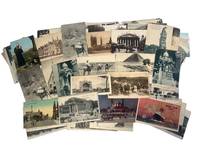
1915207331915. Australian Imperial Force soldiers postcard correspondence Archive 1915 to 1916 documents ANZAC service during the Gallipoli campaign and subsequent deployments across the Mediterranean theater through sustained communication with a civilian recipient in Sydney. The archive centers on letters addressed to a woman identified as Olga written by multiple soldiers including her brother Eric and another correspondent George. The material records trench conditions troop movement and the transmission of news from the front including the report of Eric's death. The correspondence situates individual experience within the Gallipoli campaign where Allied forces sustained heavy casualties in operations against Ottoman defenses and traces the continuation of service across France Egypt and Greece following the withdrawal.<br /> <br /> Archive of 54 handwritten postcard letters. Europe North Africa and the Mediterranean 1915 to 1916. Each message is written on the verso of a period postcard most measuring approximately 5.5 x 3.5 inches with photographic views of cities and towns including London French villages Cairo and locations in Greece. Several images depict damaged urban environments. One postcard bears a censorship marking with portions of text obscured. The correspondence includes multiple authors primarily Eric and George. In one letter from France George writes "Thank you for the pose.We are having beautiful weather at present. Just like an Australian spring. Love from George." Eric writing from Egypt on April 16 notes "We are once again in the trenches where we have had a very lovely time for a few days." A later letter reports Eric's death stating "You need have no fear that he was decently buried" while subsequent correspondence reflects diminished communication and shifting personal relationships including George's inquiry "Do you ever write to me Olga. I wish a few letters from you would turn up."<br /> <br /> The Gallipoli campaign fought from April 1915 to January 1916 resulted in extensive casualties and became central to the development of ANZAC identity commemorated annually as Anzac Day. Following the evacuation of Gallipoli Australian forces were redeployed across multiple theaters including the Western Front and Middle Eastern campaigns reflected in the geographic range of these postcards. The archive documents the function of wartime correspondence under censorship and the role of letters in conveying both military experience and personal loss to the home front. Light wear consistent with handling; overall very good condition. unknown
19812111902158500119Tsugu Village Office Aichi Prefecture 1981. Soft Cover. Fine. Number of pages: 184p. Size: 27cm Tsugu Village Office (Aichi Prefecture) paperback
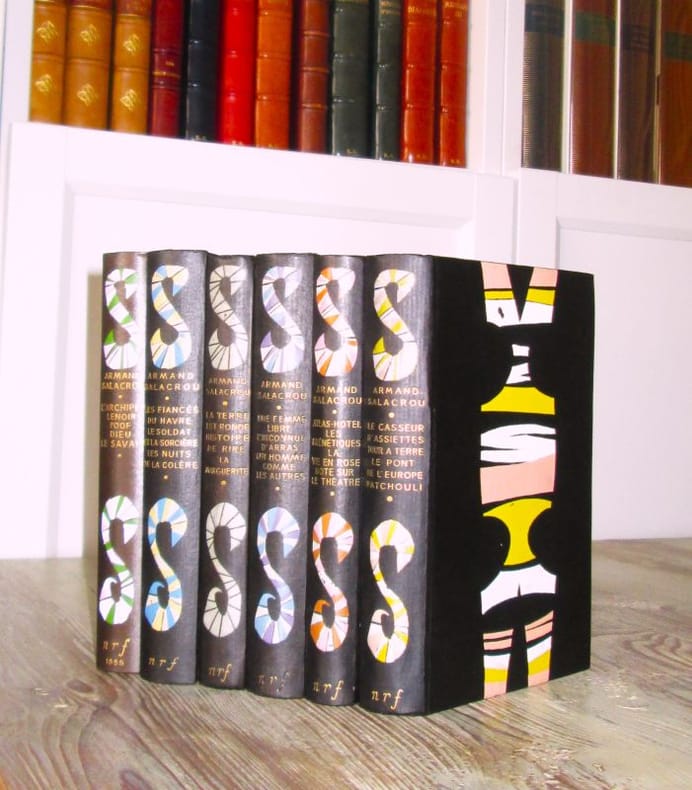
194733156Gallimard, 1947-1954. 6 volumes in-12 reliés plein cartonnage éditeur selon les maquettes de Mario PRASSINOS. Théâtre I. : Patchouli. Précédé de Le Casseur d'assiettes - Tour à terre - Le Pont de l'Europe.- Théâtre II. Atlas-hôtel. Les Frénétiques. La Vie en rose. Note sur le théâtre.- Théâtre III. L'Inconnue d'Arras, précédé de Une femme libre et suivi d'Un homme comme les autres.- Théâtre IV. La Terre est ronde. Histoire de rire. La Marguerite.- - Théâtre V. Les Fiancés du Havre. Le Soldat et la sorcière. Les Nuits de la colère.- Théâtre VI. L'Archipel Lenoir - Poof - Dieu le savait - La Vie et la mort de Charles Dullin - Mes certitudes et incertitudes.- Complet des six tomes de l'auteur sous cartonnage Nrf, dont le tirage est de 1040 exemplaires numérotés sur Alfa de Navarre. Exemplaires très frais, reliures en excellent état de fraîcheur.
1967226158Osnabrück: Biblio Vlg. 1967. 808 S., ca. 60 gef. Taf., zahl. Abb, 4° HLdr.iS. *neuwertig*.
19486818Madrid: La Arcadia 1948 Imp. en Gráficas Ultra.- XIII65 p. 4 h.: Va ilustrado con la reproducción facsímil de la portada de la obra original; 4º 255 x 175 cm; Portada a dos tintas; Intonso; Fina impresión sobre excelente papel ahuesado verjurado con todas sus barbas; Enc. original en Cartulina Ed.- Publs. de La Arcadia. 6.- Tirada de 110 ejemplares numerados. En excelente estado de conservación. Reimpresión de la rarísima edición de: "Zaragoza en las prensas de Jorge Coci hacia 1504". La obras nos relata de un modo directo y popular la conquista de Nápoles por el Gran Capitán Don Gonzalo Fernández de Córdoba. RARA EDICION DE BIBLIOFILO. HISTORIA DEL SIGLO DE ORO ESPAÑOL Libro en español La Arcadia paperback
19262110502150306340Treasure Museum 1926. Soft Cover. Fine. Volume: 1 Treasure Museum paperback
19371154341937 Du N° 1 au N° 32 - 1937 à 1940 - 2 volumes in-4, cartonnages toilés noirs, pièce de titre au dos - Couvertures d'origines et pages de publicités conservées - 772 pages (pagination continue sur les deux tomes) + pages de publicités