Württemberg - Schall, Friedrich WAntiquariat.de

78 résultats
1863144848Stuttgart, Nitzschke 1863. VI, 349 Seiten. Beschädigter Kart.-Einband der Zeit. (Einband mit Fehlstellen und sehr stark berieben. Papier teils etwas stockfleckig). 21x14 cm
1875052767Westminster: Manuscript ALS. ca. 1875 1875. No Binding. Very Good. Original autograph letter signed ALS 'W. Gifford Palgrave' to "Dear Joseph" regretting he is unable to make the journey William Palgrave Gifford. Speaker's Court the Palace Westminster undated. 15x10 cm. In English. 2 pp. in good condition with a separate photographic portrait of Palgrave. William Gifford Palgrave was an English priest soldier traveller and Arabist author of A Personal Narrative of a Year's Journey through Central and Eastern Arabia 1862-1863. Palgrave was born in Westminster. He was the son of Sir Francis Palgrave and Elizabeth Turner daughter of the banker Dawson Turner. His brothers were Francis Turner Palgrave Inglis Palgrave and Reginald Palgrave. He was educated at Charterhouse School then occupying its original site near Smithfield and under the head-mastership of Dr Saunders afterwards Dean of Peterborough. Among other honours he won the school gold medal for classical verse and proceeded to Trinity College Oxford where he obtained a scholarship graduating First Class Lit. Hum. Second Class Math. 1846. He went straight from college to India and served for a time in the 8th The King's Regiment of Foot Bombay Native Infantry H.I.C. Shortly after this he became a Roman Catholic was ordained a priest and joined the order of the Jesuits Society of Jesus and served as a member of the order in India Rome and in Syria where he acquired a colloquial command of Arabic. He convinced his superiors to support a mission to the interior of Arabia which at that time was terra incognita to the rest of the world. He also gained the support of the French emperor Napoleon III representing to him that better knowledge of Arabia would benefit French imperialistic schemes in Africa and the Middle East. Palgrave then returned to Syria where he assumed the identity of a travelling Syrian physician. Stocking his bags with medicines and small trade goods and accompanied by one servant he set off for Najd in north-central Arabia. He travelled as a Christian. The service he would do for the Society of Jesus and the French empire would be as a spy not a missionary. Palgrave became friendly with Faisal bin Turki bin Abdullah Al Saud while in Riyadh Saudi Arabia. Faisal's son Abdul Rahman bin Faisal asked Palgrave to get him strychnine. Palgrave believed that Abdul wanted to poison his father. Palgrave was accused of espionage and was almost executed for his Christian beliefs. <br/> <br/> Manuscript ALS., [ca. 1875] unknown
1817084-Lum 1817/18. Aus einer Folge von 4 Blatt Kreidelithographien, um 1817/18. 29,4:42,6 cm. Mit der Adresse von C. de Lasteyrie, rue du four St. Germain No. 54. Literatur: Béraldi XII, 394.
1817082-Lum 1817/18. Aus einer Folge von 4 Blatt Kreidelithographien, um 1817/18. 29,4:42,6 cm. Mit der Adresse von C. de Lasteyrie, rue du four St. Germain No. 54. Literatur: Béraldi XII, 392.
1817083-Lum 1817/18. Aus einer Folge von 4 Blatt Kreidelithographien, um 1817/18. 29,4:42,6 cm. Mit der Adresse von C. de Lasteyrie, rue du four St. Germain No. 54. Literatur: Béraldi XII, 393
1817085-Lum 1817/18. Aus einer Folge von 4 Blatt Kreidelithographien, um 1817/18. 29,4:42,6 cm. Mit der Adresse von C. de Lasteyrie, rue du four St. Germain No. 54. Literatur: Béraldi XII, 395.
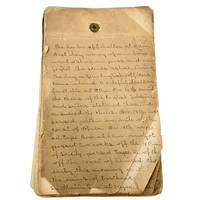
18990012049Donsol Pilar Manila Philippines New York Malta. Poor with no dust jacket. 1899-1901. Other. On offer is an unbelievable handwritten account of 19 months of action on the frontlines of the Philippine Insurrection the Philippine-American War between November 1899 and June 1901. An unknown American soldier writes of his experiences in a level of detail that cannot be overstated. This diary places the reader in the Philippines with shocking realism making this diary exceedingly rare. The 139 pages of this journalled account of events have been removed from a larger document and someone has pinned these loose pages together. This writing begins at the end of a sentence penned on presumably November 17 1899 and concludes half way through a sentence written on June 23 1901. There seem to be very few missing pages from within the journal and it reads very smoothly. The content is outstanding. The diary opens with our soldier diarist sailing from New York to the Philippines via the British Naval base at Gibraltar and the Suez Canal. He describes his experiences sailing sharing about a stop ashore in Malta a Thanksgiving spent at sea a concert enjoyed aboard the gunboat Nashville on the way to Manila and more. He arrives with his regiment in Manila on Dec 22 1899. The troops explore Manila and meet Filipino locals. In early January of 1900 they receive orders to head to southern Luzuon on the Kobbe Expedition which refers to General William Kobbes Expedition to Bicolandia. This expedition was in response to an urgent order from Washington to open up hemp ports of Southern Luzon due to an American hemp shortage. The problem was the port towns were largely controlled by Filipino Insurgents. Our diarist provides absolutely remarkable detail about Americas role in defeating the Insurgents and the tragedy of the Filipino peoples experience. Context indicates that our diarist was possibly a member of the 43rd Volunteer Infantry Regiments USV Company A. An excerpt that provides a sense of how our soldier explains the circumstances in the Philippines follows: Jan 16th we got the order to pack up and get ready to leave Mikata and to proceed to the Southern part of Luzon we were put aboard the transport Hancock which was at anchor in the Bay of Manila All combined we were named the Kobbe Expedition to the Southern Luzon to open up the Hemp ports and protect the natives from the Insurgents down there On the 21st of Jan 1900 our boats dropped anchor in a bay named the bay of Sorsogon in the Province of Albay All over this province there are large gangs of Insurgents holding the towns so at many towns our boys had a hard fight with the Insurgents before they could take the towns and the gun boat had to shell many of the towns. Our Regt. Occupied nine towns. Our detachment of A and D. Co. Were taken to a town named Donsol the gunboat Helena took us ashore from the Hancock On their arrival ashore they were met by a crowd of Philippinos. They had an order from the officers of the Insurgents it read saying that they would not haul down their colors nor surrender for three days. So our Major returned to the gunboat and a short conversation was held with the officers of the gun-boat and it was decided to prepare the gun boat for action and land all of us. If the Insurgents fired one shot at us the gun-boat would shell the town The hills were full of fleeing people. A detail of men were sent out on the hills at once then the Insurgents fired their first shot at us. Our boys had a warm fight for 15 minutes. They found the hills well entrenched and also found one big cannon. Lots of spears Bolas and wooden guns. They returned to town bringing in a few prisoners. A scouting party was seent and they saw a lot of Philippinos fleeing to the mountains. This town had a population of 10000 and three hundred were Insurrectors. The next thing we done was to find ourselves some good houses to live in. Outposts were put out all around the town. A few natives came across our post for a few nights and on the 22th Jan the Insurgents paid our town a visit setting fire to one of the big houses where our men were sleeping. Our men got out of the house without anyone being hurt. We surrounded the town fired a few volleys . Later in January our soldiers regiment goes on the first of many missions all of which he describes in glaring detail. On this mission the troops attempt to leave Donsol for Pilar when they run into trouble as the connecting bridge was destroyed by Insurgents. They make it to Pilar and find the town has been deserted. As they march back to Donsol they find someone has lit the bridge ablaze: Jan 28th We had a very hard time crossing the bridge burning our shoes and legs but we got safely on the Donsol side before the bridge fell with a crash into the river. We marched on we heard several shots from the Mauser and Remington rifles. Next we discovered a big fire and a call to arms and fire call was sounded The fire of the Insurgents got heavier. Our Major gave an order not to fire. He was going out in the front of our lines. He went out with a detail of men and discovered that our town was surrounded and the hills were full of Insurgents. He fired a few volleys then he came into town. The Insurgents answered him by firing a cannon. Then the Insurgents gave a yell and started to advance and we kept quiet and let them get close to our lines. Then we got the order to commence firing and the boys opened up all around the town and we soon put the Insurgents to flight firing a few shots as they ran. Next morning we discovered a few dead Insurgents close to our lines. The Insurgents almost always carry their dead and wounded along with them in their flight Our soldier does an absolutely phenomenal job of describing not only the day-to-day in Donsol where he spends majority of his time but also the various missions in which he participates. His words paint a fulsome picture of the war: 21st Feb at noon our Major asked for a detachment of men to volunteer to go up the river on a scouting expedition. I along with 12 more men went out of our company and 12 out of D. Co. Along with Capt. Hart of D. Co. And our Major left Donsol in a hard paddle boat and one white boat in tow On our way up the river we could see high hills on each side and the river was very narrow. There were many Insurgents outposts in the high trees all the way up and we fired at every one we saw. We went up a distance of 8 miles before we thought of coming home as it was getting late We had traveled one mile on our homeward way when the Insurgents fired on us from the left hand ashore. Our men in the rear boat fired a volley into the two Insurgents and were taking good aim for a second volley when the hills fairly echoed with the yells from the Insurgents. They then opened up on the right hand side which was aimed at the white boat hitting one of our men our company in the head and he was killed instantly. Then we answered their shots from each of our boats and from that time until we got back to Donsol we were under the hot fire of the Insurgents we could see the hills full of Insurgents and we had plenty to shoot at. We made every shot count. The insurgents even fired rocks at us from the high hills . More texture is added when our soldier discusses aspects of the war that dont involve active fire. Some examples follow: March 5th Gen Kobbe of the 8th Army Cor was here on a visit and he said these two companies were a very industrious lot of men and that the building of the stocade and trenches was a very sensible work he also brought us 17 of the Battery G 3rd Artillery men and one Hotch Kiss gun for reinforcements. April 10th the mail boat was here bringing the report of Gen. Pawa likely Jose Ignacio Paua an Insurgent Gen in Command of the Insurgent troops through this province. He surrender to our Colonel in Legaspi Legazpi and was sent to the Military Prison in Manila. April 21st We took a long march across the hills in a round about manner to a town named Sevilla merely an Insurgent camp. The town was deserted on our arrival. Fires were still burning in the houses. Everything was just as they had dropped it in their flight. We passed through the town and discovered many traps laid in the roads for us. One trap was an arrow trap on each side of the path in the bushes and by pulling a strong the arrows would stick into anyone going down the path. None of their traps caught us. Our soldier writes frequently about expeditions for which he volunteers. He describes a mission to Banningaran sic. En route the men captured Captain Hernandiz sic; possibly Adriano Hernández y Dayot and his family before being caught unprepared by the Insurgents who severely injured one of the American sargeants. On their hike back to Donsol they are again attacked by the Insurgents this time caught off guard as they attacked from the rear. And so it goes for many more months. Our author describes the movements of the men with whom he is stationed his commanding officers and the various wins and setbacks of both the Americans and the Insurgents. In May of 1901 our soldier and his regiment begin the process of boarding a ship to return to America. There is of course never a straightforward path and there are many bumps in the road. However our soldier does eventually board a ship and begins again to describe his journey in detail. The diary cuts off abruptly mid-sentence on June 23 1901 as our soldier is describing being at sea with nothing but a sailboat in sight for miles. While we do not know our soldiers identity we do know he was safely heading home at the conclusion of his diary. We know he was a highly motivated volunteer soldier who displayed total buy-in to the mission of the Americans in the Philippines and we know he was a gifted writer penning his experiences with such texture and realism that the reader feels as though they too have been on the front lines of a bloody wet miserable war in the Philippines - fighting for America and for the displaced Philippino people forced to flee from the Insurgents to the mountains. This journal measures 8x5 inches and contains 139 single-sided sheets. The pages were all loose so the author has pinned them together with a single round-headed fastener post. There are no covers to this journal. As a result the first and last few pages show obvious and significant wear and tear including a large corner of the first page being completely ripped off obstructing the text. The handwriting is quite legible. Overall Fair to Poor. ; Manuscripts; 8vo 8" - 9" tall; 139 pages . unknown
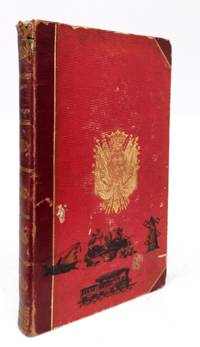
1824148954Paris: Chez C. J. Trouve 1824. Hardcover. Good. xxviii 224 p. 22 cm. Half red leather with red paper boards. Gold impressing. Marbled endpapers and text block edges. Black illustrations added to front cover. Stains to boards. Corners and edges worn tear in upper front hinge spine head chipped. Front endpaper loosening. Some foxing. French text. <br/><br/> Chez C. J. Trouve hardcover
1890620271890. unknown
1817081-Lum 1817/18. Kreidelithographie um 1817. 43,8:28,8 cm. Links unten in der Darstellung monogr. AT (M?) ligiert. Mit der Adresse von F. Imp. Lithogr. De G. Engelmann rue Cassette No 18 à Paris-. Wohl bisher unbekanntes Gegenstück zu Winkler 858.12.- Wohl sehr selten.
180881633[Hamburg], 1808. Knapp beschnitten. Platte: 23,5 x 17 cm (= Sammlung verschiedener spanischer National-Trachten und Uniformen der Division des Marquis de la Romana 1807 und 1808 in Hamburg in Garnison, 13). Auf Bütten montiert u. unter Passepartout.
180881235[Hamburg], 1808]. Platte 26 x 17 cm. Darstellung mit Trockenstempel 29 cm. (= Sammlung verschiedener spanischer National-Trachten und Uniformen der Division des Marquis de la Romana 1807 und 1808 in Hamburg in Garnison, 11). Unter Passepartout.
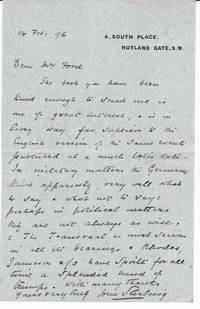
189635639London: 14 February 1896. 1896. Fine. - Letter filling one side of a 7 inch high by 4-3/8 wide sheet of light gray letterhead with the address printed in raised lettering at the top. Signed "John Sterling". Folded twice for mailing. Near fine. <p>Sterling writes to Mrs. Richard Ford thanking her for sending him a military book about the Jameson Raid. "It is of great interest & is in every way far superior to the English version of the same events published at a much later date. In military matters the Germans know apparently very well what to say & what not to say: perhaps in political matters they are not always as wise. The Transvaal is most serious in all its bearings & Rhodes Jameson & Co have spoilt for all time a splendid hand of trumps."<p>Major-General John Barton Sterling 1840-1926 entered the army in 1861 serving in Egypt and the Sudan. He was wounded at Tel-el-Kebir in 1882 and subsequently commanded the Coldstream Guards until his retirement in 1901. He was a member of the Royal Yacht Squadron and the Atheneum Club. At the Atheneum he befriended Kipling who wrote of him that he "dealt faithfully with me when I made technical errors in any tale of mine that interested him." "Something of Myself" page 143. [London]: 14 February, 1896. unknown
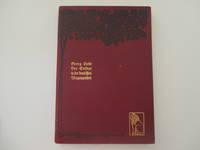
189916223AB1899. Leipzig Diederichs 1899. 27 : 19 cm. 157 nn. Seiten mit 184 teils ganzseitigen Abbildungen. Illustrierter Original Leinenband. Erste Ausgabe. - Monographien zur deutschen ulturgeschichte 1. Band. unknown
1887MILI1422Wien, Seidel 1887. gr.-8°, VIII, 418 S., mit 2 Tafeln, OBrosch., ausgebleicht, Rücken nur tlw. vorhanden, die Reste sind stark gedunkelt, mit durchsichtigem Klebeband verklebt, Buchblock mittig gebrochen, unaufgeschnitt., papierbed. gebräunt.
1880156466Berlin, Ernst Siegfried Mittler und Sohn, 1880.
186545094Leipzig : Wigand, 1865. 3 Bde 1 - 3. 332, 398, 432 S. 8°. 2., verb. u. verm. Aufl. - Wohlfeile Volksausg. OLwd mit Rückengoldpräg. u. Kopfbuntschnitt.
190038511Couverture souple. Broché. 343 pages. Légèrement défraîchi. Non coupé.
1898SPN-726Paris/Lille : A. Taffin-Lefort, s.d. [circa 1898]. Demi-reliure en cuir, dos à titre doré, 188 pages.
185048456Ohne Ort, um 1850. Bild ca. 19,5 x 15 cm, Blatt 24,5 x 18,5 cm. 1 Blatt, verso weiß.
1884RO80152309BOULANGER A.. 1884. In-4. Relié demi-cuir. Etat d'usage, Couv. défraîchie, Dos satisfaisant, Quelques rousseurs. 802 pages. Nombreuses gravures en noir et blanc, dans le texte et hors-texte. Titre, filets et caissons dorés sur chagrin rouge. Coupes des plats frottés. Mors fendus sur les coiffes. Quelques accrocs en marges, et pages volantes.. . . . Classification Dewey : 840.08-XIX ème siècle
1897052752Istanbul: 1897 AH 1313 1897. No Binding. Very Good. Original berat given by Ottoman Ministry of War to Osman Nuri. 405x235 cm. In Ottoman script. Tapes on paper. Contemporary repair. Sealed. Dated 1325 1899 confirmation and script on verso. Well-calligraphed. <br/> <br/> 1897 [AH 1313] unknown
1821G50508Paris, L'Huillier 1821 29pp., br.orig., 21cm., fort taché (texte toujours bien lisible)
18942400991894. Signiert, datiert und bezeichnet "Karl Müller / Hb, 94". 43,5 x 60,5 cm.
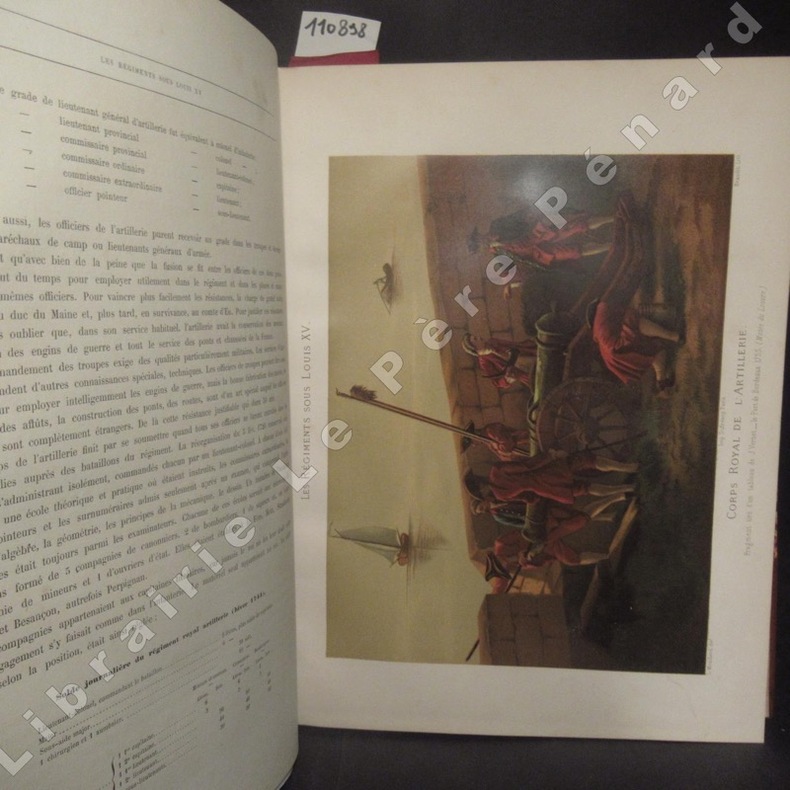
18821108981882 A Paris, Librairie Militaire de J. Dumaine, Libraire-Editeur / L. Baudoin & Cie, Successeurs - 1882 - In-Folio (29,5 x 39,5 cm environ), demi chagrin rouge à coin, plats marbrés - 5 nerfs, fleurons et titre dorés au dos - 120 pages + planches insérées - Ouvrage illustré par 49 planches en lithochromie reproduisant les Drapeaux, Etendards et Costumes des régiments, de 1737 à 1774 - Augmenté de six reproductions en couleur de tableaux de maitres du XVIIIe siècle