28 résultats
16479448DB1647. Utrecht Halm 1647. 2 Bl. 12 S. Geheftet. Mit gestochener Titelvignette. Letzte 3 Bl. mit kleinen Fehlstellen kein Textverlust. Durchgehend leicht braunfleckig sonst ein sehr gut erhaltenes Exemplar. unknown
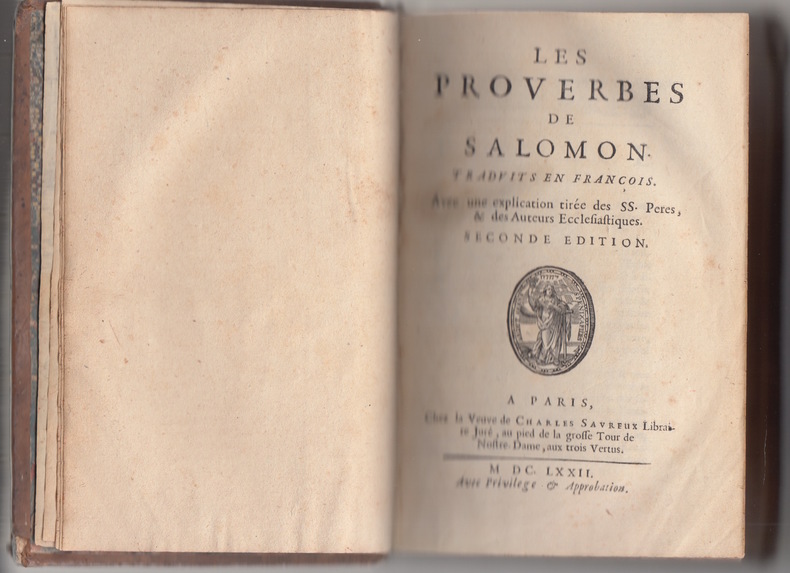
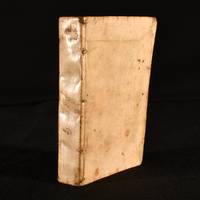
167249633Couverture rigide. Reliure plein veau d'époque, mors fendus, coiffes manquantes, plats frottés. 783 pages.
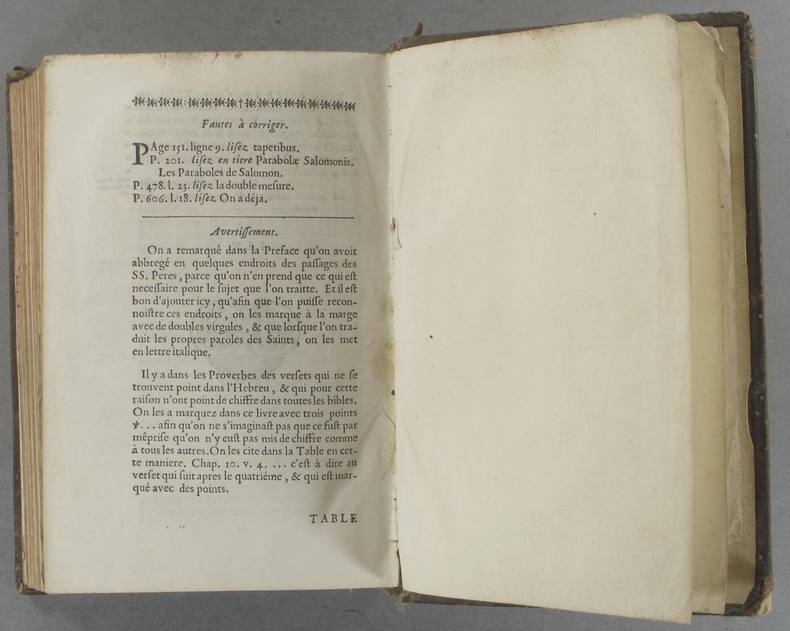
167249633A Paris chez la veuve de Charles Savreux 1672. Bonded Leather. <b>Livre en français</b>. Couverture rigide. Traduits en françois avec une explication tirée des SS. Pères et des auteurs ecclesiastiques. Reliure plein veau d'époque mors fendus coiffes manquantes plats frottés. 783 pages. <i>ref. 49633</i> A Paris, chez la veuve de Charles Savreux hardcover
1672240811672 CHEZ LA VEUVE DE CHARLES SAVREUX, 1672. In-8 Relié plein cuir époque.783 pages - quelques bandeaux,lettrines et culs de lampe en noir et blanc - coins frottés - dos à nerfs - titre et caissons dorés sur le dos - coiffes abîmés
1694MSALCAN1A Paris Chez Guillaume Desprez 1694 Un volume in-8 (19.5x13 cm), plein veau, dos à 5 nerfs, caissons dorés, étiquette de titre rouge, dentelles sur les coupes, tranches mouchetées. xx ff. dont titre et privilège, 558 pp. [5] ff. (tables, [1] ff. bl. Bandeaux en tête de chapitre.
1681LA - HAY007391681. Paris chez Pierre Le Petit Imprimeur & Libraire ordinaire du Roy. relié plein veau de ce temps là avec 2 fermoirs en laiton complets. Coiffes absentes mors en bon état dos craquelé avec motifs estompés ; page de titre recoupée en marge sinon bonne reliure et intérieur très frais. fort pt in-8. orné d'une vignette en page de titre de bandeaux et lettrines ; dos à 5 nerfs avec caissons ornés de motifs et titre dorés. unknown
1672R300114015CHEZ LA VEUVE DE CHARLES SAVREUX. 1672. In-8. Relié plein cuir. Etat d'usage, Coins frottés, Coiffe en tête abîmée, Intérieur frais. 783 pages - ex libris manuscrit sur la page de titre - une gravure en noir et blanc en frontispice - quelques bandeaux,lettrines et culs de lampe en noir et blanc - coins frottés - dos à 5 nerfs - titre et caissons dorés sur le dos - coiffe en tête abîmée - 3 photos disponibles.. . . . Classification Dewey : 840.04-XVII ème siècle
1628902884AGAmsterdam:, Guiljemus Blaeuw, 1628. Kupferstich 38 x 49 cm, Blattgröße 44,5 x 55 cm.
1684LA - HAY007381684. Paris chez Pierre Le Petit Imprimeur & Libraire ordinaire du Roy. relié plein veau de ce temps là avec 2 fermoirs en laiton complets. Coiffes absentes mors en bon état dos craquelé avec motifs estompés ; page de titre recoupée en marge sinon bonne reliure et intérieur très frais. fort pt in-8. orné d'une vignette en page de titre de bandeaux et lettrines ; dos à 5 nerfs avec caissons ornés de motifs et titre dorés. unknown
163170298-Kast 5Soest: Davaco 1631 / 1971. Half leren groot folio band met ribben en vergulding. Vele platen. 13 86 pp. Facsimile ed. van de oorspronkelijke editie bij C. Dankerts 1631. In uitstekende staat band heeft heel lichte gebruikssporen. Inleidende tekst in het Engels. Davaco unknown
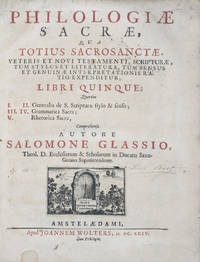
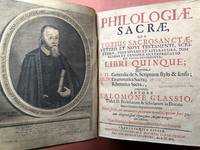
169443223Amstelaedami Amsterdam: Apud Joannem Wolters 1694. Later edition. Hardcover. poor to g. Quarto 10 x 8". 72 1001 103pp. Contemporary blind-stamped full calf with gold lettering to spine. Raised bands. Engraved frontispiece portrait of the author unsigned. Title page in red and black lettering. Title vignette. Decorative initials and tailpieces. <br /> <br /> Originally published in 1623 Salomon Glass' magnum opus "Philologia sacra" marks the transition from the earlier views on questions of biblical criticism to those of the school of Spener.<br /> <br /> Binding darkened and rubbed along edges. Both covers detached but present. Front free endpaper missing. Engraved frontispiece portrait of Salomon Glass detached but present. Contemporary previous owner's name on title and initials at verso of title page. Moderate to heavy foxing and age-toning throughout. Clear water-staining along fore-edge of very first leaves and at lower margin of pp. 337-352. Text in Latin with some Hebrew and Greek. Binding in overall poor interior in fair to good condition. Salomon Glass 1593-1656 was a German theologian Hebraist and biblical critic. Apud Joannem Wolters hardcover
1691H3758Frankfurt and Leipzig: Apud Christophorum Davidem Fleischerum 1691. Hardcover. Very Good. Published 1691 small quarto 8.75 inches 22 cm old full vellum very good light splitting along front outer joint signs of a label removal to spine probably not institutional but private contents moderately tanned throughout. An impressive looking tome 80 1495 137 pp. This is the author's principal work published first in 1623 and considered a turning point in Biblical studies and criticism moving the entire field in the direction of Lutheran theologian Phillip Spener the Father of Pietism the principal arguments of which is to place individual faith and piety as central to Christian theology and pedagogy. Glassius also was a linguist and did much work on Hebrew especially its variations and various cognates. Apud Christophorum Davidem Fleischerum hardcover
169415551Amsterdam: Apud Joannem Wolters 1694. Hardcover. Good. Amsterdam 1694 1653. Heavy vellum binding. Spine labeled in contemporary ink. Chip to front endpaper. A tight copy in good-very good vellum binding. Text is also good with a few marginal notes. Small former owner notes on margins of title page. 1495 oages and INDICES Speciales TTOTIUS PHILOLOGIAE S.: I. Locorum Scripturae; 2. Verborum & rerum praecipuarum; 3. Vocum Graecarum & Ebraearum. Salomon Glass 1593-1656 was a German theologian Hebraist and biblical critic.He played a role in the Syncretistic Controversy. His principal work Philologia sacra 1623 marked the transition from the earlier views on questions of biblical criticism to those of the school of Spener. It was more than once reprinted during his lifetime. As a student of theology under Johann Gerhard he directed his attention especially to Hebrew and the cognate dialects; in 1619 he was made an “adjunctus” of the philosophical faculty and some time afterwards he received an appointment to the chair of Hebrew. Apud Joannem Wolters hardcover
1690910378CGLondon:, Richard Blome, [um 1690]. Kupferstich Bildgröße 40 x 51,5 cm, Blattgröße 42,5 x 52,5 cm.
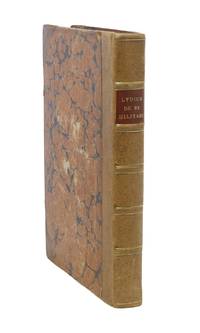
1698128079Dordraci Dordrecht: apud Cornelium Willegardum Bibliopolam 'apud Nicolaum Vries' to rear 1698. First Edition. Hardcover. Very Good. 19th-century marbled paper-covered boards and tan calf corners recently rebacked in tan speckled calf with raised bands and dark red morocco gilt label edges very lightly sprinkled red. Boards rubbed corners worn nonetheless in very good shape and showing well. Contents generally clean and bright just a couple of small closed marginal tears; a very minor paper flaw at the bottom edge of pp.89-90 not affecting text; some very occasional spotting a few small stains to engraved title and some very light marginal smudges. Also: there's an old Oxford University bookplate to front paste-down. Size: 4to 250mm x 200mm; collation: pp. xxviii 338 56 xxviii 12 plates 4 of which are folding. Additional engraved title-page woodcut device to title-page and further woodcut head- and tail-pieces and initials generous margins. Thus a very presentable First edition of Lydius's 1610-79 posthumously published work on ancient military science. Brunet 29046. apud Cornelium Willegardum Bibliopolam ('apud Nicolaum Vries' to rear) hardcover
169828791698. : 75 . 2 Blank pages / 1 Blank pages / 34 NNP / 338 Pages / 56 Pages / 28 NNP / 2 Blank pages / 8 Engraved Plates / 4 Folding Plates Binding: Contemporary Half Leather Octavo 8vo Height cm: 225 CM Width cm: 18 CM Thickness cm: 35 CM hardcover
166448776Nürnberg Endter & Wolfgang 1664. Folio. Contemp. full calf. Raised bands spine richly blindtooled titlelabel. A tear to fronthinge at upper compartment. Some scratches to covers. Firt inner hinge broken and inner backhinge weak. halftitlepage with a tear no loss of text. Engraved titlepage. Printed titlepage in red/black. 141834 pp. Indexes. Internally clean. hardcover
166448776Nürnberg, Endter & Wolfgang, 1664. Folio. Contemp. full calf. Raised bands, spine richly blindtooled, titlelabel. A tear to fronthinge at upper compartment. Some scratches to covers. Firt inner hinge broken and inner backhinge weak. halftitlepage with a tear, no loss of text. Engraved titlepage. Printed titlepage in red/black. (14),1834 pp. + Indexes. Internally clean.
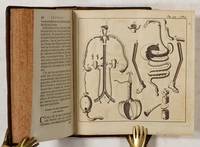
1684540221684. Journal des Scavans 11. - A Amsterdam Chez Pierre le Grand M.DC.LXXXIV 1684 404 18 pp. 12 z.T. gefalt. Kupferstichtafeln Halbledereinband d.Zt. First Edition! The first material model of the blood circulation was produced by the German Salomon Reisel 1625-1701. "Let's examine Reisel's Statua more closely probably the most spectacular item in the list. As it appears from his 1693 essay in Miscellanea curiosa unlike Jacques Vaucanson with his duck Reisel wished to build the Statua but he did not actually do so; rather he discussed the most appropriate materials for its construction such as the skeleton of wood or iron the blood vessels near the heart of elder- tree and as Luigi Belloni has emphasized the pineal gland of conical glass or crystal held by a silk thread inside a spherical glass globe. Reisel's remarkable plates show the kidneys bladder sphincter penis and larynx. Reisel discussed digestion and the filtration of urine but his primary aim was to convince the skeptics of the truth of the circulation of the blood which he illustrated with the detail of blood squirting out of openings in the foot and hand. It would be reductive to take Malpighi's examples as mere marvels or even instantiations of anatomical structures. It has not been sufficiently appreciated that Malpighi framed his examples as part of a general reflection on pathology as well as physiology thus extending the notion of nature's uniformity from machines to organs and from healthy to diseased states. Malpighi's anatomical publications and medical consultations display his chymical and mechanical thinking in understanding many of the operations described by Reisel's machine and of the related diseases. In De polypo cordis for example he reported several experiments based on aspersing different chemical on blood poured in a vessel in order to ascertain their properties. Malpighi was especially concerned with the change of color and fluidity of blood arguing that those chemicals making the blood more fluid would be potentially effective against affections decreasing the blood's fluidity such as the plague. His experiments pointed to a therapy though one none of use would be eager to test. Similarly in a medical consultation of 29 March 1687 for a case of gout he sought to explain what happens inside the body the cause of the disease being an excess of acids in the chyle. Then he also stated: "All this can be seen in proportion also mechanically mixing spirit of vitriol or another acid that is especially austere with different fluids." In this passage Malpighi used the term "mechanically" rather broadly in conjunction with a chymical operation. It is especially significant from our perspective that he reproduced in vitro processes occurring inside the body in order to investigate disease and to devise suitable therapies. This consultation echoes Malpighi's description of Reisel's Statua thus providing strong evidence that he envisaged it as a material device and interpreted it - unlike Reisel himself - from a pathological and medical standpoint as well." Machines and the Body between Anatomy and Pathology Domenico Bertoloni Meli Reisei Salomon. "Mediziner. 24. 10.1625 Warmbrunn Schlesien t 21.11.1701 Stuttgart; studierte 1645-52 in Straßburg und Basel praktizierte 1652-55 in Ottweiler bei Saarbrücken und war 1655-60 Hofarzt in Saarbrücken unter Graf Johann Ludwig von Nassau-Saarbrücken sowie Erzieher des ältesten Grafensohnes. 1657 wurde er in Basel promoviert. 1660-68 war er Leibarzt in Buchsweiler unter Graf Friedrich Kasimir von Hanau dann Hof- und Leibarzt in Hanau. 1674-79 Stadtphysikus in Worms. 1679-1701 Leibarzt und Rat der württembergischen Herzoge in Stuttgart. 1674 wurde er in die Deutsche Akademie der Naturforscher Leopoldina aufgenommen. Reisel war latrophysiker und früher Anhänger William Harveys. Er wurde durch seine Suitmi hunuma circuUituria 1674 bekannt. ein erstes Modell des Blut- und Säftekreislaufs das er aus dem Prinzip des Siphons Hebers entwickelte." Deutsche Biographie unknown
1685JLOebSOL70Amsterdam: '5445' ie. 1684 or 1685. 1685. folio. ff. 224. Hebrew title within elaborate woodcut border. woodcut ornaments & title vignette. 2 columns. Hebrew text. contemporary vellum overlapping fore-edges lacking rear endleaves Hebrew title repaired at lower & gutter edge some light browning. Third Edition including the second edition of the super-commentary Leket Shikchah first printed in the 1660-61 edition by Jacob Abendana Haham of the Spanish and Portuguese Synagogue London 1681-85. Amsterdam: '5445' [ie. 1684 or 1685]. hardcover
1650CLL-498Paris, Sébastien Martin et Charles Sercy, 1650 In-12 (4) ff., 164 pp. (mal numérotées 168, les pages passent de 80 à 91sans manque, les pages 133 à 138 sont numérotées en double), (2) ff. de tables, vélin de l'époque.
161234211612 Manuscrit, pleine reliure veau marbré, dos plat à caissons ornés, pièce de titre. Emprunt à l'univers mythique de la magicienne Médée, originaire de Colchide, qu'on pourrait situer en Capadoce, la toison d'or est cette peau de bélier qui servait de tamis pour recueillir les paillettes d'or. Parmi les oeuvres qu'il a inspiré, les commentaires alchimiques représentent une branche originale, révélant un aspect surprenant de l'imaginaire ésotérique occidental. Ce manuscrit retranscrit La toyson d'or ou La fleur des thrésors, édité en 1612 par Charles Sevestre à Paris par privilège du Roi, traduit de l'allemand en français & commenté par "L.J.".Le projet décrit méthodiquement est celui de trouver la pierre philosophale.
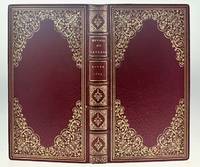
16646997Rouen: The Hague: Elzevier Lo¸ys du Mesnil 1664. 12mo 5 x 2æ in.; approx. 13 x 7 cm. 288pp. Bound by Chambolle-Duru signed and dated 1865 in full red morocco the covers framed by triple gilt fillets with ornamental corner sprays of scrolling volutes dots and star tools; spine in six compartments with five raised bands lettered and decorated in gilt. Title with woodcut ornament woodcut initials and typographical head-pieces; early armorial bookplate of Comte Joseph de Lagonde. Doublures in striking citron oak-toned / light mustard morocco richly inlaid with shaped red and green morocco onlays and elaborately tooled in gilt with interlaced strapwork volutes dots and stars; marbled endpapers and fly-leaves; all edges gilt. Tabarin was the stage name of Anthoine Girard c.1584ñ1633 the famed Parisian street performer whose comic dialogues circulated widely in pirated editions. This Rouen issue is a pirated reprint of the Geuffroy 1627 text notable for the first appearance of the second part of the Farces Tabarinques and the inclusion of Les Avantures et Amours du Capitaine Rodomont while omitting the Rencontres of Gratelard. Housed in a later marbled board slipcase with morocco front edges. A crisp jewel-like example of late 19th-century Parisian decorative binding. Fine. [The Hague: Elzevier] Lo¸ys du Mesnil unknown
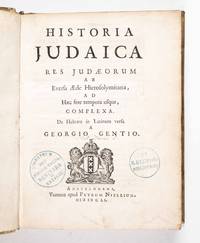
165149175Amsterdam: Pieter Niellius 1651. First edition. Hardcover. Very Good. Small quarto. aster.-2aster.4 A-3M4 = 240 leaves. 16 464pp. Contemporary Dutch vellum very slightly bowed panelled in blind with central stamped vignette spine with raised bands and elegant calligraphic title. Title vignette depicting the arms of Amsterdam. A few old marginal annotations. Various old library stamps at title and bottom margins of two text leaves that on the final leaf bleeds through to text on recto. A very good copy text clean and fresh throughout attractively bound.<br /> <br /> First Latin edition of this late medieval chronicle of Jewish history "one of the outstanding achievements of Hebrew literature in the Renaissance" Enc. Jud. reprinted in 1680 under the Hebrew title Shevet Yehudah The Tribe of Judah. First published in Hebrew at Adrianople in 1554 it was followed by various Hebrew or Yiddish Judaeo-German editions prior to Gentius' version; a Spanish version appeared at Amsterdam in 1640.<br /> <br /> During the 1520s Solomon ibn Verga 1460-1554 wrote his Shevet Yehudah The Tribe of Judah a compilation of accounts of the persecutions undergone by Jews from the destruction of the Second Temple until his own day. At times the author intersperses the historical account with disputations and deliberations of which some are authentic and others imaginary. The author drew his historical material from Josippon the Sefer ha-Kabbalah of Abraham ibn Daud from the narrative of Nathan ha-Babli and from Maimonides’ letters including Iggeret Teiman. He also utilized a brief Hebrew chronicle dealing with the general expulsions and religious persecutions probably that of Profiat Duran and consulted the writings Isaac Abrabanel. For his own period he mentions some of the events which he heard of or witnessed and for which he is sometimes the only source. The work has special importance in the annals of Jewish historical thought. The thoughts and reflections which the author interweaves in his imaginary discussions that is in the literary and not the historical section of the work reflect his dissatisfaction with the traditional outlook and opinions of the Middle Ages.<br /> <br /> The Orientalist and diplomat Georg Gentius 1618-1687 was born in Dhame Saxony and came to study with Heinsius De Dieu Golius and L'Empereur in Leiden as well as the rabbis of Amsterdam. Among the latter Menasseh ben Israel respected Gentius for the courtesy he displayed in his scholarly and personal dealings with the Jews and asked him to complete a Latin translation of the Shevet Yehudah which he himself had begun. With this publication dedicated to the Hamburg consuls Gentius created a larger public for one of the most fascinating historical works of the Hebrew Renaissance and heralded a new era in Jewish history by its critical and empirical approach to the phenomena of history.<br /> <br /> Provenance: old entry of “Nicol. Nonnea D.†at title leaf. References: EJ 8:1203-05 noting the various editions along with Steinschneider 6982. Fürst 3:474. A. Katchen Christian Hebraists and Dutch Rabbis esp. 247-68: Discussion of Gentius leads into Shevet Yehudah. A.A. Neuman “The Shebet Yehudah and Sixteenth Century Historiography†in: Louis Ginzberg Jubilee Volume English Section NY 1945 253-73. Pieter Niellius hardcover
1619781P24Francofurti: Lucam Jennis 1619. Vellum. Good. 6" by 4". Not Stated. A Latin heraldic work on the insignia of European rulers a notable copy from the library of William Beckford the important English novelist. In the original Latin.From the library of William Beckford. In pencil above the bookplate 'Mr. Beckford's copy from sale of his library - 1883'. As per 'The Hamilton Palace Libraries Catalogue of the Third Portion of the Beckford Library Removed From Hamilton Palace' this book was sold as lot 63 referenced on page 5 of the volume.William Beckford was an English novelist who is best known for his Gothic novel 'Vathek' and for his buildings now lost Fonthill Abbey and Lansdown Tower which is also known as Beckford's Tower in Bath. He was a noted patron of the arts well regarded for his beautiful art collection.The basis for Beckford's library at Fonthill Abbey came when he purchase the complete library of the historians and politician Edward Gibbon.Illustrated with two-hundred in-text engraved emblems.Collated complete.A fascinating study on the insignia of European rulers before the seventeenth century a concise work on the emblems and heraldic devices.By Salomon Neugebauer.Derived from an earlier work by Jacobus Typotius.Bookplate of Hubert John Elliot to the front paste down.Blindstamp of Neatham Mill Library to the rear paste down. In the original limp vellum binding. Externally with some discolouration and marks as is usual with vellum. Ink to the backstrip. Boards have sprung. Bookplate and pencil note to the front paste down. Blindstamp to the rear paste down. Prior owner's ink inscription to the recto to the front endpaper. Internally firmly bound. Pages are lightly age-toned and generally clean with some spots. Small chip to the tail of leaf Y1. Good Lucam Jennis hardcover