300 résultats
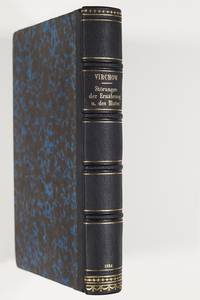
18549001854. Hdb. Path. Ther. Vir. 1. - Erlangen Verlag von Ferdinand Enke 1854 8° XIV 551 pp. Halbledereinband der Zeit. First Edition! The earliest attempts to explain the doctrine of celluar nature of vital processes was made by Virchow in the present work. It is a comprehensive preliminary study and a invaluable source book of his famous "Celluar Pathology" published 4 years afterwards in 1858. Virchow's original contributions comprising the pages 1-371. Von Rudolf Virchow stammen die Arbeiten auf den Seiten 1-371. "Hier finden sich auch schon mehrfach die Gedanken aus welchen Virchow seine fundamentale Cellular-Pathologie aufgebaut hat." W.Becher Virchow. "Virchows so sehr erfolgreiche Synthese das Buch über die Zellular-Pathologie aus dem Jahre 1858 war nicht sein erster Versuch in dieser Richtung. Sein "Versuch zur Einigung der wissenschaftlichen Medizin" von 1849" . war so allgemein das sie den Zweck verfehlte." "Ein zweiter weit ernsthafterer und ausgedehnterer Vorstoß in dieser Richtung waren die einführenden vierhundert Seiten die Virchow 1854 Würzburg für sein "Handbuch" schrieb. Er begann mit allgemeinen Feststellungen über Leben und Krankheit: Die Zellen sind die wirkliche Herde des Lebens die vitalen Elemente. Diese Elemente besitzen eine gewisse Selbstständigkeit; doch sind sie voneinander abhängig und bilden höhere Einheiten. Solche Einheiten werden durch gemeinsame Zirkulation gemeinsame nervöse Versorgung und direkten Zusammenhang oder Berührung der Zellen untereinander erhalten. Die letztere Beziehung ist vernachlässigt worden. Das Leben kann nur durch ständige Stimulierung und Irritierung bestehen. Die Krankheit ist immer eine Schwächung des Lebens die durch die Gefahr gekennzeichnet wird. Jede Störung des Lebens beginnt lokal. Die pathologische Erscheinungen unterscheiden sich qualitativ nicht von den gewöhnlichen vitalen Erscheinungen; sie sind nicht heterolog im engeren Sinne des Wortes sie sind vitale Erscheinungen die zur falschen Zeit auftreten heterochron oder am unrechten Platz heterotop. Normale Verhältnisse können durch nervöse Regulierung durch das Blut- und Kreislaufsystem und durch eine Reaktion des Gewebes wieder hergestellt werden. In dem letzteren Zusammenhang übernahm Virchow von John Simon den Gedanken daß die Organe Substanzen in das Blut ausscheiden die auf andere Organe einwirken Er hob auch die Wirkung der Geschlechtsdrüsen auf die Schilddrüse Milchdrüse und den Kehlkopf vor einer der nicht so seltenen Hinweise dieser Periode auf die innere Sekretion die erst in den achtziger Jahren durch die Arbeit von Brown-Séquard Schiff u.a. näher untersucht wurde." "Da Virchow sein Thema im Rahmen eines traditionellen Textes über allgemeine Pathologie entwickelte mußte er viele Gebiete die außerhalb seines direkten Tätigkeitsfeldes lagen behandeln." Er war gezwungen in der Hauptsache über die Beobachtungen und Theorien anderer zu berichten. Dadurch ist der Text von großem historischen Interesse" Ackerknecht Rudolf Virchow p.71-74 "So gehört der erste Abschnitt zu den wichtigsten in weiten Bereichen noch heute gültigen jedoch vergessenen Dokumenten der Medizin im 19.Jahrhundert . Erstaunlich ist folgendes . das Grundkonzept der Cellularpathologie ist in dem ersten Abschnitt des Handbuchbeitrages bereits voll und ganz enthalten." W. Jacob Ferner enthält der Band die "Störungen der Blutmischung" pp.372-470 von Karl Julius Vogel 1814-1880 und Salomon Friedrich Stiebel 1792-1868: "Rachitis und Osteomalacie" pp.471-551. unknown
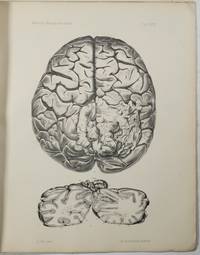
1896185001896. Stockholm 1896 2° 6 245 pp. 27 z.T. farb. lith. Taf. mit zahlr. Abbildungen feiner Halbleinenband. Inhalt: Neue Fälle die Lehre von der Sehbahn und dem Sehcentrum betreffend; Über hemiopische Pupillenreaktion; Zwei Fälle von Hemianopsie durch Geschwülste im unteren Parietallappen; Über die Beziehung der Sehfasern zu den Centralganglien; Zur Extirpation der Hirntumoren; Über die Veränderungen der Sehbahn bei kongenitaler Augen - Atrophie. Walker No.1062 unknown
18874343ABLondon, Swan Sonnenschein, Lowrey, 1887. 8°. Frontispiz (Karte), XVI, 384 S. und fotogr. Abbildungen auf 10 Tafeln (davon 1 mit Notenbeispielen)., 1
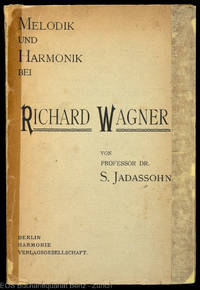
18997642CB1899. Berlin Harmonie 1899. 8°. 28 S. Orig.-Broschur. Mit Gebrauchsspuren mit Klebstreifen. Papier gebräunt und stockfleckig. unknown
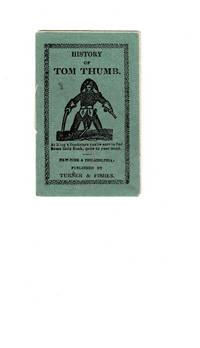
1829100209<p>New York: Published by Solomon King 148 Fulton Street between 1829 and 1832. 1829 and 1832. Very good. - Miniature Book. Sexagesimo-quarto 64mo 3-1/4 inches high by 2 inches wide. Softcover bound in green pictorial stitched wrappers titled in black on the front cover. 8 pages illustrated with a wood engraving on each page. There is some minor scattered foxing. Very good.</p><p>RARE.</p><p>Apparently after Solomon King's death in 1832 the book was distributed by the publishers Turner & Fisher. At the foot of the front wrapper is printed "New-York & Philadelphia: Published By Turner & Fisher". The front wrapper bears the title "History of Tom Thumb" with the illustration of a pirate. Beneath the illustration is King's original statement on two lines "At King's Bookstore you're sure to find / Some little Book quite to your mind." The title page still bears the original publication information: "New-York: Published By Solomon King / 148 Fulton Street". The rear wrapper advertises "Books At One Cent Each Published ." The name of the publisher "S. King" appears on the copy of the book in the American Antiquarian Society collection but is deleted here. 12 titles including "Tom Thumb" are listed.</p><p>Turner and Fisher published in Philadelphia from 1834 and in Philadelphia and New York from 1835. They are not known to have published children's books after 1848.</p><p>The dating derives from Harry B. Weiss in his article "Solomon King Early New York Bookseller and Publisher of Children's Books and Chapbooks" Bulletin of the New York Public Library September 1947. According to Weiss Solomon King 1791-1832 moved his business "during 1829 and 1830 to 148 Fulton Street where he remained until 1832 when he moved again to 147 Fulton Street". He died September 14 1832 aged 41 during an epidemic of Asiatic cholera. Weiss also comments on the rarity of King's publications. In his last advertisement King "mentioned '400 kinds' of books. Of this number less than half are listed in the accompanying preliminary check list. Of the 187 titles in the list only 28 represent books actually located in libraries. The remainder represent titles advertised on the cover pages of King's publications." "Relatively few of his titles appear to be extant at present in comparison with those of Samuel Wood and Mahlon Day and this may be due to the comparative smallness of the original editions."</p> New York: Published by Solomon King, 148 Fulton Street, between 1829 and 1832. paperback
1820425022Albany: John O. Cole and Henry S. Donlevy` 1820. Hardcover. Very Good. Two volumes. Quartos. 414 2; 416pp. Illustrated. Vol. I No. 1 - Vol. II No. 52. Contemporary American half leather and marbled paper covered boards with black and red morocco spine labels gilt. Owner's name in each volume and what seems like an interesting glazed and gilt embossed contemporary bookplate albeit faded and hard to discern in Vol. II front board of Vol. II detached but present chip on front board and a few leaves of Vol. I removing a little text on the final page boards well worn a good plus set. John O. Cole [and] Henry S. Donlevy` hardcover
1812007813Paris: L. Duprat - Duverger 1812. Book. Very Good. Hardcover. New Edition. 24mo - over 5" - 5¾" tall. Four volumes 5 1/4" x 3 3/8" From the library of John Masefield O.M. Poet Laureate his small bookplate front paste down Vol. I. With gift inscription to Masefield recto of frontispiece dated Geneva 1921. Very Good bound in contemporary quarter red morocco over diced red calf the backs ornately gilt page block edges marbled the marbling dulled the boards lightly rubbed. L. Duprat - Duverger Hardcover
187182671871/72. Leipzig Verlag von Wilhelm Engelmann 1871/72 Gr.8° XII XXVIII 664 pp.; IV pp.665-1248 mit 421 Textholzschnitten Halbledereinband der Zeit; Papier gebräunt. First Edition! "One of the greatest text-books on histology". Ab 1869 in Lieferungen erschienen die beiden Titelblätter tragen die Jahreszahlen 1871 u.1872. Enthält u.a. Beiträge von: Carl Ludwig: Von der Niere - Vgl. G/M 1232; Maximillian Johann Sigismund Schultze: Die Retina - Vgl. G/M 1512; Wilhelm Kühne: Nerv- und Muskelfaser; Wilhelm Waldeyer-Hartz: Eierstock und Ei; Theodor Meynert: Gehirn und Säugetiere; Joseph Gerlach: Rückenmark; Eduard Friedrich Wilhelm Pflüger: Die Speicheldrüsen; Alexander Rollet: Vom Blut; Johannes Kessel: Gehörgang; St. George: Der Hoden; weitere Beiträge von Heinrich Ewald Hering Ernst Brücke Theodor Wilhelm Engelmann u. Friedrich von Recklinghausen. Garrison & Morton No.550 unknown
18798788AB1879. Stockholm P. A. Norstedt & Söner 1879. 4 1 kol. 3 gef. lith. Taf. 2 Bl. 166 S. OBr. Überaus seltener Erstdruck der Dissertation Salomon Henschens 1847-1930 des wohl bedeutendsten schwedischen Hirnforschers und Neurologen. - Fischer II 611/12; Grote Die Medizin der Gegenwart V 46/47. - Auf Anregung von Carl Ludwig in Leipzig entstandene Dissertation über Nierensekretion in der die Theorie Haidenhains falsifiziert und die des Doktorvaters in einer Reihe von Experimenten in Henschens eigenem Laboratorium verifiziert wurde. Die Arbeit wurde mit 'Cum laude' benotet die Wissenschaftsakademie verlieh die goldene Medaille des Florman-Preises die Schwedische Ärzte-Gesellschaft zeichnete die Dissertation mit einer Silbermedaille aus. unknown
1809124409London England: Longman Hurst Rees and Orme 1809. Hardcover. VG- Front hinge split; Some foxing mostly confined to endpapers. Marbled paper over boards; Brown leather at spine and corners; Marbled endpapers; 256 pp.; No illustrations. A collection of poems by Swiss poet Salomon Gessner translated from the original German by George Baker; Includes a prefaces by both Gessner and Baker. Longman, Hurst, Rees, and Orme hardcover
182838188Salzburg: Arnsteinii et Filiorum 1828. Second edition. Hardcover. fair. Small quarto 12 117 leaves 2 67 leaves 84 leaves; 5 in text illustrations. Contemporary three quarter calf over marbled boards with gilt lettering on green and brown labels on spine. Latin and Hebrew title-pages plus title-pages before each of the 3 sections. Maimonides' "Guide for the Perplexed." First published in 1791 in Berlin and then in 1800 in Salzburg. Translated from Judeo-Arabic by Samuel ibn Tibbon. Commentary by Moses Narbonni and a contemporary commentary "Givat Hamoreh" printed anonymously but actually by the maskil Solomon Maimon. Edited by Isaac Abraham Euchel one of leaders of the moderate wing of the Berlin Haskalah. Prefaces by Narbonni and Maimon. Errata pages after the first and third sections. Explanation of philosophical terms. As with Moses Mendelssohn's Biur project this work exemplifies the moderate strain within the late 18th century German Haskalah which attempted to reform traditional Judaism using the medieval Jewish philosophical tradition exemplified by Maimonides. Text in Hebrew. Head and tail of spine with wear and chipped at head and green label. Leather broken just below brown label and at joints of spine. Corners and boards rubbed. Endpapers with offsetting in corners. Very light and sporadic foxing throughout. Binding in overall fair to good- interior in good condition. Title page info: "Auctore R. Mose Majemonide Arabico idiomate conscriptus a R. Samuele Abben Thibbone in Linguam Hebraeam translatus novis commentaris uno R. Mosis Narbonnensis ex antiquissimis manuscriptis depromto; altero anonymi cujusdam sub nomine Gibeath Hamore adauctus nunc in lucem editus cura et impensis Isaaci Eucheli. Solisbaci in officina arnsteinii et filiorum. MDCCC."<br /> <br /> R. Moses Maimonides Rambam was a 12th century Jewish philosopher and halachic legal scholar. A highly controversial figure both during his lifetime and after his death but generally acknowledged as the preeminent Jewish thinker of the Middle Ages. He was born in Córdoba Spain but fled as a child from the Almohad persecution. He eventually settled in Egypt where he served as a rabbi physician and philosopher. His fourteen-volume Mishneh Torah his only work not in Arabic still carries canonical authority particularly within the Yemenite Jewish community as the codification of Talmudic law. His other work includes a commentary on the Mishnah entitled Kitab al-Siraj Kitab al-Fara'I a book on precepts and the philosophical work Dalalat al-Ha'irin known in Hebrew as the Moreh Nevukhim The Guide to the Perplexed. The major premise is an attempted philosophical/theological reconciliation of the Hebrew Bible and Greek knowledge. This work came to play a central role in all subsequent major controversies over philosophy within the Jewish community during the Middle Ages. Arnsteinii et Filiorum hardcover
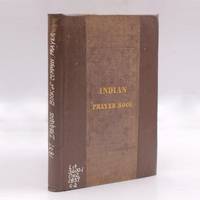
1837373005New York: Swords Stanford & Co. D. Fanshaw Printer 1837. 168pp. 8vo. Original cloth taped GTS markings. 168pp. 8vo. Oneida prayer book for tribes in Wisconsin and upper New York. Davis' work is a revision of the Indian prayer book published in 1815 by the Rev. Eleazar Williams a catechist in Oneida Castle New York. It does not contain the entirety of the prayer book but "the Morning and Evening Service the Litany Catechism some of the collects and the prayers and thanksgivings upon several occasions in the Book of Common Prayer.together with forms of family and private devotion." At the end are four hymns in Oneida without music. The Episcopal Church had a very successful ministry to the Oneida in the 19th century and one of the Episcopal Seminaries Nashotah House was founded in 1842 specifically as a mission to them. Siebert Sale 499. Ayer INDIAN LINGUISTICS ONEIDA 3. Pilling PROOF-SHEETS 998. American Imprints 46443; Pilling J.C. Iroquoian languages p. 53; Sabin 18885; Field T.W. Indian Bib. 404 Swords, Stanford, & Co. D. Fanshaw, Printer unknown
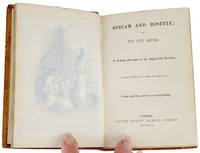
184742644London: D. Bogue 1847. Original period full tooled leather with raised bands satin bookmark and black leather spine label 16mo small viii 318 pages. All edges gilt. Includes 4 plates. <br> Immensely popular juvenile novel addressing themes of Jewish identity though a tale of twin Jewish girls raised by their widowed father. Indeed much of Bristow s writing explores Jewish themes and Jewish identity<br> Amelia Bristow was born Amelia Solomon in 1783 in London. In 1810 she published her first work. The Maniac a Tale; or a View of Bethlem Hospital: and the Merits of Women a Poem from the French with Poetical Pieces on various Subjects original and translated.In 1824 she published The Faithful Servant or The History of Elizabeth Allen an Evangelical novel she published anonymously. At some point in her life she converted from Christianity to Judaism Blain157 and in 1828 she published Emma DeLissau: a narrative of striking vicissitudes and peculiar trials: with explanatory notes illustrative of the manners and customs of the Jews which proved to be quite popular and went through five editions by 1840 Jackson38. <br> In 1828 she also published Sophia DeLissau: or A portraiture of the Jews of the Nineteenth century: being an outline of their religious and domestic habits with explanatory notes. In 1830 she published The orphans of Lissau : and other interesting narratives immediately connected with Jewish customs domestic and religious with explanatory note a third volume in her Lissau series. <br> The Lissau series focuses on providing information about the aforementioned domestic and religious habits of Polish Jews in England with a particular focus on women in that group Blain157.<br> Her last book was Rosette and Miriam or The twin sisters: a Jewish narrative of the eighteenth century which she published in 1837 just two years before the death of her husband sometime around 1839. She died in 1860 Lia Havlena 2018. See https://english.unl.edu/sbehrendt/WomenWritersProject/BristowManiacBio.htm <br> SUBJECTS: Jewish families -- Juvenile fiction. Motherless families -- Twins -- Sisters -- Fathers and daughters -- Jews -- Persecutions -- Conversion to Christianity --Familles juives -- Romans nouvelles etc. pour la jeunesse. Familles sans me`re -- S urs --Pe`res et filles -- Juifs -- Perse cutions -- Conversion au christianisme. OCLC: 172996665. OCLC lists only 2 copies of the 1847 edition HUC British Library and only 5 other holdings of any editions from before the 1870s Hamilton College Cabiola Univ Stanford Yale UFlorida <br> Light shelfwear to leather leather spine label has little chip 1858 prize bookplate tipped into front pastedown awarded to Miss Elizabeth Lowson. About Very Good Condition. Very attractive copy of a scare imprint. Women-6-11. London: D. Bogue unknown
185414384Philadelphia: T.B. Peterson 1854. First Edition. Leather bound. Very good. First edition of Theatrical Journey-Work and Anecdotical Recollections of Solomon Smith. Small octavo 2 254pp. Three-quarter brown morocco thin border stamped in blind. Four raised bands title in gilt on spine. Marbled paper boards. No additional printings listed. Solid text block light rubbing along edges touch of soiling to endpapers. Howes S671 Sabin 84240 Includes frontispiece portrait of the author and subject Solomon Smith. Solomon Franklin Smith 1801-1869 joined the Alexander Drake dramatic company in 1820 withdrew the following year and began studying law in Cincinnati Ohio. He traveled with an acting company and gained a reputation as "a low comedian" with roles as Mawworm in "The Hypocrite" Sheepface in "The Village Lawyer" and Billy Lackaday in " Sweethearts and Wives." He abandoned theatrical management and the stage in 1853 settled as a lawyer in St. Louis and was a member of the Missouri state convention in 1861. He was an ardent Union man and bore an active part in forming a provisional government for the state. His published works include: "Theatrical Apprenticeship" 1845; "Theatrical Journey Work" 1854; and an "Autobiography" 1868. T.B. Peterson unknown
1836elala622<p>New-York: Leavitt Lord & Co. & Boston: Crocker & Brewster 1836. 1836. 12mo. pp. viii 9-41 blank leaf 95 22ads. folding map frontis. original embossed cloth spine label & foot of spine chipped stain on front cover some foxing. First Edition. A reply to General Armstrong’s Notices of the War of 1812 by the Commander of the advance American force attacking Queenstown Oct. 13 1812. The lengthy appendix pp. 95 consists of letters and general orders relating to the affair. Howes V-40. Lande 872. Sabin 98548. TPL 929. 1st Edition. Hardcover.</p> New-York: Leavitt, Lord & Co. & Boston: Crocker & Brewster, 1836. hardcover
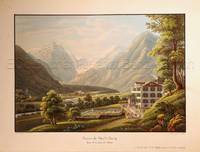
1835624DG1835. Zürich F. Sal Füssly successeur de Keller et Füssly um 1835. Aquatinta von Lukas Weber 1811-1860. Bildgrösse: 172 x 252 cm. Blattgrösse: 224 x 296 cm. Fein koloriertes Blatt. - Alt aufgezogen auf rosafarbiges Papier. unknown
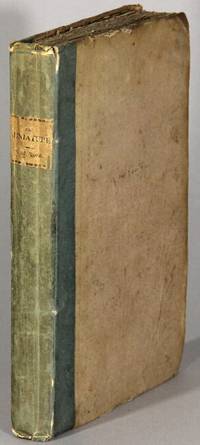
180566738London: printed for John Murray 32 Fleet Street; J. Hatchard Piccadilly; J. Harding St. James's Street; Pote and Williams Eton; C. Knight Windsor; Hanwell and Parker Oxford; and Barrett Cambridge 1805. 8vo pp. viii 368 2 plus two leaves outside of pagination inserted; original salmon boards with green shelfback original printed paper label textblock untrimmed; boards faded and toned light edgewear corners bumped one leaf with a closed tear repaired with tape; very good. Early ownership inscription of "A. Wilkinson / Houghton le Spring / Durham" and the later bookplate of Anne and F. G. Renier. An Eton periodical printed on wove paper and a collational nightmare but apparently complete though gathering 2H has been bound inside 2I. Stab holes in the gutter suggest that the books was produced by gathering remainders of individual issues. Nos. XXVIII and XXIX have no title page as issued. Text comprises the original 34 numbers of The Miniature: Monday April 23 1804-Monday April 1 1805. "The second periodical work which issued from the college of Eton: the joint production of Dr. Rennell Mr. Knight Mr. Canning and the sons of the Marquis of Wellesley" Lowndes. The first was The Microcosm 1778. Stratford Canning was the working editor. printed for John Murray, 32, Fleet Street; J. Hatchard, Piccadilly; J. Harding, St. James's Street; Pote and Williams, Eton; C. unknown
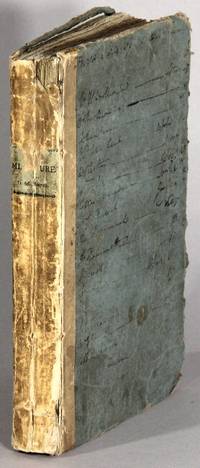
180566739London: printed for John Murray 32 Fleet Street; J. Hatchard Piccadilly; J. Harding. St. James's Street; Pete and Williams Eton; C. Knight Windsor; Hanwell and Parker Oxford; and Barratt Cambridge 1805. 8vo pp. viii 368; original blue paper-covered boards cream paper shelfback blue printed label on spine; label defective with loss of three letters spine worn and cracked edges rubbed and worn upper joint cracked; the textblock is clean and the sewing structure is sound. Bookplate of Charles Gower Boyles and ownership signature of Edward Hawker both on the front pastedown. While there is no internal evidence this looks to be a lending library copy with a dozen or so names in manuscript some difficult to read on the upper board together with dates presumably dates of check-up and/or return. An Eton periodical printed on wove paper and a collational nightmare but apparently complete minus a final leaf of ads. The gatherings E through G are also in a different state than that of another copy on hand possibly due to a second run through the press to provide issues that hadgone out of print prior to the collection. Later issues show stab holes in the gutter suggesting they were remainders of the run in periodical form. Nos. XXVIII and XXIX have no title page as issued. Text comprises the original 34 numbers of The Miniature: Monday April 23 1804-Monday April 1 1805. "The second periodical work which issued from the college of Eton: the joint production of Dr. Rennell Mr. Knight Mr. Canning and the sons of the Marquis of Wellesley" Lowndes. The first was The Microcosm 1778. Stratford Canning was the working editor. printed for John Murray, 32, Fleet Street; J. Hatchard, Piccadilly; J. Harding. St. James's Street; Pete and Williams, Eton; C. unknown
1827515971827. Rev. méd. franc. étrang. 1827/1. - Paris Gabon 1827 8° 564 pp. feiner Pappband d.Zt. First Edition! Pierre Salomon Séglas 1792-1875 - Urethro-cystic speculum endoscope. Garrison & Morton No.4165.1 unknown
183762547New York:: Swords Stanford & Co. 1837. First edition. publisher's gilt-lettered cloth blind-embossed in a floral pattern; expertly rebacked retaining the original spine. Institutional bookplate on pastedown; faint evidence of pocket on rear pastedown; some light foxing and wear to cloth; an attractive copy. 12mo. Swords, Stanford, & Co., hardcover
18545904Auburn: Derby and Miller 1854. 1st Edition . Hardcover. Very Good. First edition early printing. Published in 1854--one year after the first printing--with "Twentieth Thousand" at top of title page. Very good with minor professional repair to spine ends and interior hinges. Binding firm with all seven full-page illustrations intact and in nice shape. Some foxing and soiling to pages inevitable with this title but overall a very attractive copy of this important book. Basis for the film of the same name that won the 2014 Academy Award for Best Picture. <br/> <br/> Derby and Miller hardcover
188756012Paris:: Ernest Thorin 1887. First edition. Old half morocco over marbled boards; t.e.g. Some scattered foxing to plate volume mostly marginal; bindings sound and unworn. . Folio. 52 plates. Ernest Thorin, hardcover