Northup, SolomonBiblio.com
300 résultats
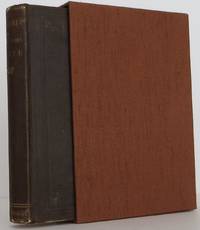
18561401303Miller Orton & Mulligan 1856. 5th or later Edition. Hardcover. Very Good. Very good early printing. Basis for award winning movie this year. Housed in a custom-made collector's slipcase. Miller, Orton & Mulligan hardcover
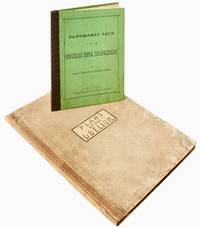
1861BB2214Boston: printed by Samuel N. Dickinson Washington Street / Published by Luther Stevens 186 Washington Street 1861. Two works documenting the first public obelisk in the United States and the technology developed to create it. First and only Edition of the Willard quite scarce. Royal 8vo 340 x 253 mm: 56-311pp with 14 inserted leaves including frontispiece of plates one folding. Original drab boards brown muslin spine upper cover with publisher's paper title label ruled and printed in black. Inscribed on front fly-leaf in pencil: "Charles W. Pearson August 13 185" A handsome survival tightly bound hinges neatly reinforced with Japanese tissue pages and plates generally clean and free of foxing with occasional smudges and stains. American Imprints 43-5291; Hitchcock 1409. The second work by Smillie: Slim demy 8vo 223 x 175mm: 16pp with frontispiece view of the monument engraved by E. A. Fowle from a drawing by R. P. Mallory seven-part accordion-fold panoramic view engraved for Drakes History of Boston of 160 important sites and institutions pp 2-12 provide "A key to the engraving" and woodcut in text. Publisher's green paper-covered boards printed in black rebacked with black cloth spine mimicking the original. End sheets and first page of text tanned from binder's glue else pages and plates including folding panorama fresh bright and free of foxing. Also issued in 1848 by Redding & Co. 8 State Street Boston in brown cloth decorated in blind and gilt. Stokes & Haskell P.1855—G-37. Abbey Life 573 for Mallory's panorama issued by Redding. The Battle of Bunker Hill actually was fought on Breed's Hill site of the Willard's Bunker Hill Monument on June 17 1775. The first monument commemorating the major opening battle of the American Revolution was an 18-foot wooden pillar with gilt urn erected in 1794 by King Solomon's Lodge of Masons to honor the fallen patriot and mason Major-General Dr. Joseph Warren who was killed during the battle's third and final assault. From 1824 to 1842 Willard designed and built the present monument a 221-foot tall granite obelisk for which he also developed the granite quarry in Quincy Massachusetts that provided stone. The first railroad in the country was built to transport granite from that quarry to the waterfront where it was taken by boat to Charlestown and hauled to the building site. N. B. With few exceptions always identified we only stock books in exceptional condition carefully preserved in archival removable mylar sleeves. All orders are packaged with care and posted promptly. Satisfaction guaranteed. Fine Editions Ltd is a member of the Independent Online Booksellers Association and we subscribe to its codes of ethics. [printed by Samuel N. Dickinson, Washington Street] / Published by Luther Stevens, 186 Washington Street unknown
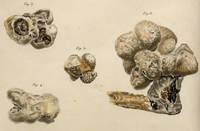
183927384Paris: Baillere 1839. leather_bound. Gut. 1 Blatt 8 Doppeltafeln 1 Blatt. Halbleder der Zeit mit vergoldetem Rückentitel und marmoriertem Bezugspapier. Folio 35 x 27 cm. etwas beschabt und bestossen etwas gebräunt und braunfleckig im Rand stärker als in der Darstellung insgesamt farbfrisch und recht gut erhalten. Atlasband OHNE den Textband ! Der Arzt Segalas 1792-1875 war Urologe und verfasste diverse Schriften zu diesem Thema. Von vorliegendem Werk erschien eine erste Ausgabe 1835-36 wobei die Abbildungen nur im gewöhnlichen Oktav-Format beigegeben waren. Zur zweiten stark erweiteren Ausgabe erschien dann 1839 der hier vorliegende Atlasband im Großformat. In dieser Form ist der Band deutlich seltener und in nur wenigen Bibliotheken nachweisbar. Die Tafeln zeigen allerlei Nierensteine und deren Behandlung wie etwa durch Zertrümmerung. Wegen Urlaub kann Ihre Bestellung / Anfrage erst nach dem 21.06.2026 bearbeitet werden. - Because of holidays your order / question can be handled only after 06/21/2026. Baillere hardcover
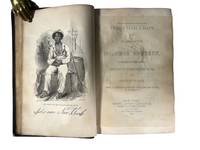
1853001105Auburn: Derby and Miller 1853. Hardcover. Very Good/No Jacket. 12mo - over 6¾ - 7¾" tall. First edition early printing with "Thirteen Thousand" at the top of the title page. 1853 on the title page and the copyright page. Lacking ads xvi 17-336pp. Sm 8vo. Original brown leather with gilt lettering to the spine. Frontispiece with facsimile autograph below Northup's portrait. Very good with slight loss to top of the spine edgewear soiling to the text block and 3 inked letters to the bottom edge. Foxing throughout. Yellow pastedowns. Square and solid. A very decent early copy of this classic. Basis for the eponymous movie. <br/> <br/> Derby and Miller hardcover
18381260001838. First Edition. SLAVERY CONSTITUTION GILMAN Winthrop S. SOLOMON John LINCOLN William S. Alton Trials: of Winthrop S. Gilman Who Was Indicted with Enoch Long and Thadeus B. Hurlbut: For the Crime of Riot Committed on the night of the 7th of November 1837 while engaged in defending a Printing Press From an attack made on it at that time by An Armed Mob Written out from notes of the trial taken at the time By a Member of the Bar of the Alton Municipal Court. Also The Trial of John Solomon . and James M. Rock Indicted with James Jennings Solomon Morgan and Frederick Bruchy: For a Riot Committed in Alton On the night of the 7th of November 1837 in unlawfully and forcibly entering the Warehouse of Godfrey Gilman & Co. and breaking up and destroying a Printing Press. Written out from notes taken at the time of trial by William S. Lincoln A Member of the Bar of the Alton Municipal Court. New York: John F. Trow 1838. Small octavo 4-3/4 by 7-1/4 inches later 19th-Century three-quarter brown calf and marbled boards; pp. i-ii 1-5 6-158 2. $2200.First edition of the crucial record of the controversial 1838 trials of over 20 defendants documenting the deadly mob attack on Reverend Lovejoy and his press a work that swiftly provoked Northern fears that free speech required ""not only protection against governmental suppression but also protection against private violence aimed at silencing speakers.""The deadly 1837 mob riot that killed the abolitionist publisher and minister Elijah Lovejoy and destroyed his printing press had swift national impact. It proved to be ""a climactic event in the larger struggle for free speech"": one that raised fundamental questions on the ""private suppression of speech and the nature and future of republican government."" It also triggered ""an emerging view that free speech and press were rights or 'privileges' and 'immunities' to which all American citizens were entitled everywhere in the U.S."" The murderous riot demonstrated that free speech required ""not only protection against governmental suppression but also protection against private violence aimed at silencing speakers"" Curtis Free Speech 217-18.Prior to his death Reverend Lovejoy had seen mobs twice destroy his presses in Alton Illinois but despite no support from the state legislature or local officials he persisted. On November 7 1837 the warehouse where his new press was held was set on fire and he was murdered. In January 1838 eleven of Lovejoy's supporters and Gilman owner of the warehouse were indicted for attempting to protect Lovejoy and defend his pressa prosecution that outraged many in the North. At the same time eleven of the rioters ""only a small fraction of those who attacked the warehouse"" were also indicted Finkelman Slavery 148 The January trial of Gilman and his co-defendants is documented in the nearly 80 first pages of this very elusive first edition followed by coverage of the same month's trial of the eleven mob participants. Both trial records contain indictments arguments of counsel and witness testimony. While all in both trials were acquitted anger remained that defenders of Lovejoy and his press were indicted at all. The trials ""crystallized the fear that slavery would destroy free speech and civil liberty Lovejoy's death was part of a great transformation"" in a movement that recognized ""states and cities had acted against free speech simply by not acting by failing to provide protection free speech then required protection to be a meaningful right"" Curtis 227 239-400. To scholar Paul Finkelman ""the history of speech and anti-slavery is critical for our understanding of how opposition to free speech works"" Speech Press and Democracy 818. First edition first printing: with engraved frontispiece; rear pre-publication advertisement for Twelve Months in Alton. Cohen Bibliography of Early American Law 121163. Ex-library with gilt numbers on otherwise plain spine and evidence of library label removal.Text fresh with mild occasional soiling edge-wear to bright boards. A distinctive near-fine copy. hardcover
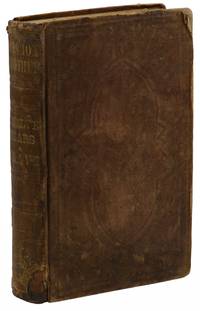
1855215231855. Slavery & AbolitionAfrican American History Northup Solomon. Twelve Years a Slave 1855 stands as one of the most consequential firsthand accounts of American slavery documenting the kidnapping and illegal enslavement of a free Black man from New York and exposing the interstate slave trade that linked Washington D.C. to the plantation economies of Louisiana. Born free in New York State Northup was deceived into traveling to the nation's capital in 1841 where he was drugged imprisoned and sold into slavery. His narrative provides rare and detailed testimony of slave pens in Washington the markets of New Orleans and the labor regimes of cotton and sugar plantations in Louisiana. A first edition later printing published during the intensifying crisis around national abolition in the 1850s the work contributed to Northern antislavery discourse by candidly explaining the vulnerability of free Black citizens under federal law and the complicity of national institutions in sustaining bondage. Northup's reflections including his observation that cruelty was rooted in "the system under which he lives" articulates broader antebellum debates over slavery as an institution rather than merely as individual failing.<br /> <br /> Northup Solomon. Twelve Years a Slave. Narrative of Solomon Northup. New York and Auburn: Miller Orton and Mulligan 1855. First edition later printing twenty-eighth thousand stated on title page. This printing comprises 336 pages and includes a frontispiece portrait of Northup and six inserted plates. Bound in original brown cloth embossed with a scene of an enslaver whipping an enslaved man on both covers spine gilt-lettered 12mo.<br /> <br /> Issued first in 1853 shortly after Northup regained his freedom the narrative went through multiple printings and additional editions by 1859 reflecting sustained public engagement with firsthand testimony of the domestic slave trade. The graphic illustrations underscore the publisher's intention to present the work as a moral indictment of slavery. Ex libris bookplate of historian Arthur M. Schlesinger appears on the front pastedown accompanied by a penciled inscription on the front free endpaper linking this copy to twentieth-century American historical scholarship. Frontispiece portrait and six plates present. Original brown cloth as described. No dust jacket as issued. Some rippling to pages. Binding and text block tight. Overall good. A significant antebellum printing of a foundational slave narrative that documents the kidnapping of free Black Americans and the operational realities of slavery in the nation's capital and the Deep South. unknown
186124225Cape Town: Saul Solomon & Co 1861. First edition. Hardcover. Orig. charcoal cloth front cover and spine lettered and decorated in gilt. Near fine. XII.180 pages. 28 x 22.5 cm. The first edition of the very first book to be illustrated with original photographs on the African continent and very important as such. It includes photos by the photographer Joseph Kirkman who was active in South Africa 1859 - 1870. 17 mounted albumen print photographs including additional illustrated title page; woodcuts in text. With a circular original photograph of Prince Alfred mounted on the title page. There is also a second printed title page. In addition there are sixteen original full page photographs ten being photographs of paintings by Bowler and Baines and six being original images of Prince Alfred's tour including a fine photograph of Chief Moshesh and his councillors. Solomon the publisher was also one of the founders of Old Mutual today one of the largest insurance firms in South Africa. As representative for Cape Town Solomon entered the very first Parliament of the Cape of Good Hope Cape Parliament when it opened in 1854. He remained an MP for this constituency until his retirement in 1883. Color half title. Armorial bookplate of Raydon Charles Peden and with his stamp of the first two front endpapers. Minor scattered toning primarily to the first few leaves. Saul Solomon & Co hardcover
1853314000SERBY AND MILLER AUBURN DERBYORTON AND MULLIGAN BUFFALO 1853 HARDBACK BOOK IN GOOD CONDITIONtop of title page-fifth thousand wear at ends of spinesolid binding. 1st Edition. Hardcover. Good. SERBY AND MILLER [AUBURN] DERBY,ORTON AND MULLIGAN [BUFFALO] hardcover
189766711897. Offered here is an original watercolor image size: 15 x 12 inches by the noted British painter Solomon Joseph Solomon 1860-1929 which appeared in the May 1897 edition of the Graphic Magazine. The painting is signed in the lower left corner “S J Solomon 97.†Matted and framed. Solomon Joseph Solomon was a founding member of the New English Art Club and member of the Royal Academy. Solomon made an important contribution to the development of camouflage in the First World War working in particular on tree observation posts and arguing tirelessly for camouflage netting. Solomon’s painting was grounded in his influence from his teacher Alexandre Cabanel but was also influenced by Frederic Leighton and Lawrence Alma-Tadema. Solomon painted mainly portraits to earn a living but also painted dramatic theatrical scenes from mythology and the bible on large canvasses. A large and masterfully executed painting. Provenance: Formerly in the collection of E. W. Phipps. unknown
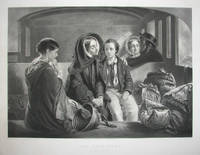
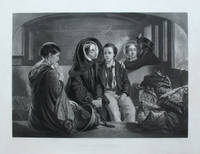
185711291857. Mixed method engraving. <p>A pair of mixed method engravings published by Gambart and Co. in 1857 in a declared edition of 225 pairs. The original paintings were exhibited at the Royal Academy in 1854. In the first picture the scene is the interior of a second class railway carriage with hard unpadded wooden benches. A young mother plainly dressed in a black coat bonnet and shawl clutches the hand of her young son who is evidently on his way to Portsmouth to join the service of the East India Company a recruiting poster is pasted to the wall above his head. His tearful sister sits on the bench opposite next to her brother's baggage a sailor is traveling with his wife in the background numerous posters advertising ship passages to Australia and India and other advertisements are stuck to the walls and ships in the harbour are visible through the carriage window. In the second picture the young man now considerably older has returned to England evidently having made his fortune. He sits in backview in a comfortably upholstered first class carriage wearing smart military uniform chatting to an elderly well dressed fellow passenger while exchanging glances with the old man's pretty fashionably dressed young daughter who sits demurely crocheting in a corner of the carriage. Abraham Solomon was a popular London artist and Simmons was a notable mezzotint engraver. The Departure has some faint spotting lower right corner in margin faint indentation in title area and repaired tear in margin outside the platemark on right hand side. The Return has a repaired tear on left hand side which enters the image about 4cm. It also has a repaired tear in top margin outside image area but within platemark. <br /> <br /> </p> <br /> <p></p> unknown
180440694Kbhvn. 1804-28 1830 og 1834-35. Indbundet i 51 bind. Bd- 1-49 i samt. halvlæderbind bd. 1-4 i 8vo resten i 4to. Bd. 1 og 2 mangler øverste del af ryg de sidste 2 bind i nyere halvmaroquin alle med stempler på titelblade og etiketter på rygge. Bd. 16 mangler nr. 96 og 100. I Allernyeste 1830 mangler spalte 1-4. <br/><br/><em>Yderst sjælden række af dette omfattende kulturhistorisk/topografiske værk. "Nyeste Skilderie af Kjøbenhavn" grundlages i 1803 af Johan Werfel og eksisterede til 1837. Johan Werfel døbte bladet Nyeste Skilderie af Kjøbenhavn til minde om sin ven samfundsrevseren Niels Ditlev Riegels som var død året før. Riegels havde 1786-1790 udgivet det samfundskritiske blad Månedsskriftet Kjøbenhavns Skilderie men efter Trykkefrihedsforordningen af 1799 var grænserne for hvad man kunne skrive væsentligt indskrænkede. Werfel forsøgte i nogle numre af sit blad at mindes Riegels ved at udgive nogle af hans efterladte skrifter men måtte efter nogle numre stoppe forsøget. Boghandleren og forlæggeren Salomon Soldin blev snart ansat som redaktør og efter at Werfel i 1808 forsvandt og foregav at være død for at undgå sine kreditorer overtog Soldin også udgivelsen af bladet.I de første årgange var bladet et lille ugeblad der udkom i kvartformat men det udvidedes snart så bladet i format og udgivelse kunne konkurrere med tidens andre populære blade såsom Berlingske Tidende og Adresseavisen.Soldin skrev selv en stor del af indholdet i bladet men også flere af tidens betydelige personligheder som Rasmus Nyerup Knud Lyne Rahbek Christian Molbech og Nikolaj Frederik Severin Grundtvig bidrog ofte med indlæg.Nyeste Skilderie af Kjøbenhavn var et særligt københavnsk blad og det læstes fortrinsvis af de dannede borgere. Det var desuden i sin levetid et af de væsentligste blade hvor bl.a. mange af de vigtigste litterære fejder stod.Allerede i 1825 afhændede Soldin redaktionen af bladet til Frederik Thaarup. Omgangskredsen frygtede for bladets skæbne og selv sagde Soldin at han ved overgivelsen til Thaarup havde sørget for at de fik "kristelig Begravelse". Det var dog ikke Thaarup der lagde det i graven for efter 6 år på posten overlodes det til Hans Christian Wosemose Claudius Rosenhoff og J. H. Stabell som omdøbte det til Allernyeste Skilderie. Det levede endnu 6 år men i 1837 samme år som Soldin døde gik bladet endeligt ind. - Bibl. Danica IV: 614. </em> unknown
1853140942732Auburn / Buffalo: Derby and Miller / Derby Orton & Mulligan 1853. First Edition. Poor. First edition first printing. Bound in publisher's original brown cloth decorated in blind with spine lettered in gilt. A poor copy with heavily binding worn and soiled front hinge tender missing preliminary pages including the portrait frontis and opening directly to the title page binding appears repaired with spine seemingly glued down. Contents heavily browned and spotted. A well-worn copy. Derby and Miller / Derby, Orton & Mulligan unknown
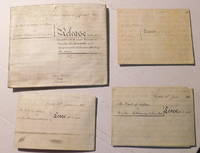
181899422Liverpool June 16 1818. 1818. Fine. - Original vellum document consisting of 2 attached sheets with scalloped top edges. An indenture 24 inches high by 30 inches wide and the assigns 22 inches high by 30 inches wide as usual folded down to 9 inches by 10-1/2 inches. 84 lines of text handsomely calligraphed over the two sheets. Within the initial "T" is the British emblem encircled by the words: "Honi soit qui mal y pense" a motto of the British chivalric Order of the Garter which translated means "Shamed be whoever thinks ill of it". The document has 2 George III embossed revenue stamps with a metal band one for three pounds and the other for one pound. There are also 2 Royal Cyphers.<p>On the rear fold of the document is a sketch of property showing several divisions including "Embleton Street 12 yards wide Dr Solomons land & Cottage". Upper Stanhope Street "20 yards wide" is on the south and Hayton Street "6 yards wide" is on the north. To the west of Solomon's land is land of Bland and another party. Further to the west is a 12 yard plot of land sold to Rowland Owen and "Release dated 23rd & 24th December 1818". This parcel appears to have the signature of Sefton over its description. Another entry on the indenture dated August 11th & 12th 1820 conveys property to Robert Rawlinson and Thomas Hesketh by the trustees of the will of Samuel Solomon. The conveyance is signed by two of Solomon's sons Abraham an oculist in Birmingham and John an amateur boxer and non-practicing lawyer. It is also signed by Ebenezer Daniell the manager of Solomon's Cordial Balm firm. Further in 1828 there is notice of "59 yards including half of Hayton Street" being conveyed to James Watts of Toxteth Park. It was later conveyed to a M J Hicks in October 1832. Both of these later conveyances are accompanied by minimal sketches. <p>The document is signed by the Earl of Sefton a party of the first part Peter Still and Alexander Strong of Lincoln's Inn parties of the second part Joseph Dawson of Liverpool party of the third part John Henderson of Toxteth party of the fourth part John Clare of Liverpool party of the fifth part. The lessees are described as "Samuel Solomon of Gilead House near Liverpool Doctor of Physic" and his Trustees "John Bird of Liverpool aforesaid Architect" and "Thomas Murrow of Liverpool".<p>In addition to the June 16 indenture there are 3 others:<p>1 A 15 inch high by 24 inch wide indenture on parchment dated June 15 1818 and titled "The Earl of Sefton to Doctor Solomon & Trustee / Lease for a year". The trustee is identified as John Bird of Liverpool Architect and it is signed by Sefton.<p>2 A 16 inch high by 23-1/2 inch wide indenture on parchment dated June 15 1818 and titled "The Earl of Sefton to Doctor Solomon & Trustee / Lease for a year". The trustee is identified as John Bird of Liverpool Architect and it is signed by Sefton.<p>3 A 17 inch high by 23 inch wide indenture on parchment dated August 17 1818 and titled "Peter Brown to Dr. Solomon and Trustee / Lease for a year". The trustee is identified as John Bird of Liverpool Architect and it is signed by Peter Brown. The indentures are folded down to approximately 8-1/4 by 6 inches.<p>Each of these 3 indentures on parchment has a George III embossed revenue stamp of one pound fifteen shillings a royal cypher the stamp of James Walker of Bermondsey parchment dealer and the British emblem within the initial "t" encircled by the words: "Honi soit qui mal y pense".<p>The 3 indentures by the Earl of Sefton are of particular interest for this reason - parliamentary elections were being held from June 17 to July 18 1818 and being an Irish peer Sefton was eligible to run for a seat. Dr. Solomon who by this time had become quite wealthy was the chief organizer of the Earl's campaign. Solomon spared no expense on his behalf in Liverpool which was famous for lively electioneering. It was to no avail as Sefton lost his election to George Canning. It seems quite possible that these leases given their dates within 2 days of the campaign served as a kind of reward for Solomon's future efforts.<p>"Doctor" Samuel Solomon c. 1768 - May 21 1819 was born in Cork and moved to Dublin influenced by his uncle Isaac Solomon who worked as a druggist there. Around 1789 he and his uncle went into business in Liverpool's dockland area. In 1796 he began marketing his "Cordial Balm of Gilead" which he claimed would cure one of ulcers of the lung kidneys and liver sexual dysfunction hypochondria female complaints etc. His claim to have been a Doctor of Medicine is suspect. Solomon became very wealthy from the sales of his expensive tincture made from a mixture of brandy and turpentine flavored with herbs as well as from real estate investments. [Liverpool], June 16, 1818. hardcover
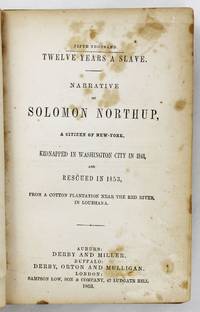
18536011Auburn; Buffalo; London: Derby and Miller; Derby Orton and Mulligan 1853. Good plus. 4336pp. plus frontispiece portrait and six plates. 12mo. Original publisher's cloth spine gilt. Spine ends and corners worn cloth rubbed; patches of discoloration to rear board. Slightly later pencil ownership inscription and annotation on front free endpaper recto. Scattered staining and soiling heavier to initial leaves; moderate toning and dust soiling. Second printing "Fifth thousand" of this classic and powerful slave narrative. The author Solomon Northup was a free Black landowner in New York but was kidnapped into slavery during a trip to Washington DC in 1841 and spent twelve years enslaved under several owners in Louisiana before his freedom was obtained in 1853 after a coordinated search. His story in the words of Frederick Douglass "chills the blood" and Northup's work became one of the most influential and popular anti-slavery narratives of the 1850s. The first edition of 4000 copies was published in early July 1853 and sold out in weeks requiring the immediate undertaking of the present second printing and in the July 15 1853 it is advertised that "To-day the long looked for issue of the fifth thousand.will commence at Derby Orton & Mulligan's." A good copy and only slightly later printing of this cornerstone of American abolitionist literature. Derby and Miller; Derby, Orton, and Mulligan unknown
181131297AB1811. Zürich à Librairie de Gessner 1811. Gr.-folio. Titelblatt mit Vignette von Gessner gest. von Lips gedrucktes Blatt mit Vorwort Widmung an die Kaiserin von Russland der Witwe von Salomon Gessner. Mit Radierung vom Denkmal Salomon Gessner von W. Kolbe und 25 Radierungen von W. Kolbe nach Originalen von Salomon Gessner. Lose Blattsammlung in Mappe mit 4 Orig.-Umschlagblättern beiliegend deuxième und troisième cahier. Gut erhaltene Folge von breitrandigen Kupfertafeln. Nagler VII 133. Thieme-Becker XIII 500. Lonchamp 1227. unknown
185717454London: E. Gambart & Co 25 Berners St. 1857. First printing. In fine condition. The Departure - Second Class" and "The Return - First Class" are a pair of moralistic narrative works a popular genre in Victorian times and demonstrate the growing trend towards emigration particularly to Australia. The Victorian artist Abraham Solomon depicts a family traveling second class to a port where the young boy will go to sea in "The Departure". In "The Return" the boy returns as a successful middle aged squatter in the first class carriage with his son and daughter. <br /> <br /> Both paintings by Solomon are held in the National Railway Museum UK . Of "The Departure" they write "The painting is a contemporary image of rail travel showing the discomfort of the lower classes traveling in a draughty bench-seated second class carriage. Despite their discomfort this shows how the railways opened up travel to the less wealthy as well as those with money. It also shows how the industry allowed travel nationally and internationally with the posters in the background advertising passage to Australia highlighting the growing trend of emigration. " National Railway Museum UK website. The advertising includes ship departures for Port Phillip and Sydney.<br /> <br /> Published 4th April 1857 with a stated edition of 225 pairs. Engraved by W.H. Simmons. 26 3/4 x 20 3/4" image & text on paper 32 1/4 x 25 1/4". Black & white as issued. E. Gambart & Co 25 Berners St. unknown
18052204Title with engraved portrait-vignette by H. Lips 1 leaf dedication by Gessner's widow to the empress of Russia 25 etchings by Carl Wilhelm Kolbe after Gessner. Cont. half calf over marbled sides. Green leather label mounted on front cover. Imperial-folio 574 x 522 mm. Extremeties slightly worn. Foot-cap damaged. <br /><br /><br />Thieme-B. XXI 225. Le Blanc 63-87. Martens Kolbe 282-306. Leemann v. E. p. 84/85. First and only edition. "Nach Gessners Tod wurden von dem wesensverwandten Kupferstecher Kolbe 25 Gouachebilder und getuschte Zeichnungen radiert und gelangten in Lieferungen von 1805-1811 . in den Handel." Thieme-B. XXI p. 225. In 1805 Carl Wilhelm Kolbe was invited to Zurich by the descendants of Salomon Gessner especially his son Heinrich to reproduce a series of gouaches by the deceased artist in etchings. The ambitious project featured a total of 25 etchings with an additional title and dedication sheets. In order to comply with the request of the Gessner family Kolbe sent an application to Prince Franz von Anhalt in which he asked for a one-and-a-half-year vacation. The prince finally granted him the holiday and the assurance that he would be able to return to Dessau so that Kolbe spent the next three years in Switzerland. Beautiful etchings of garden- and landscape fantasies in classicistic style. Slightly foxed mostly to the very broad margins else a beautiful copy. Engraved book-plate of Johannes Gessner mounted on front paste-down. Gessner
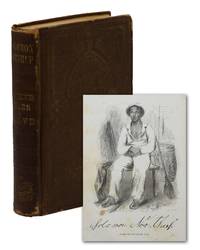
1853009086Auburn: Derby and Miller 1853. 1st Edition 1st Printing. Hardcover. Very Good. The rare true first printing of this famous and very significant book with no mention of "Thousand" at top of title page later printings say "Fifth Thousand" "Tenth Thousand" etc. 1853 stated on both title and copyright pages and no mention of "London" at bottom of title page later printings have this. Octavo 336 pages with four-page publisher's ads in front bound between pastedown and flyleaf as issued and seven full-page illustrations. Very good with professional repair to spine rebacked with original spine laid down and corners. Slight slant to spine. Attractive bookplate on front pastedown and some foxing to pages throughout but cleaner than typically found. Housed in a custom-made slipcase. An excellent first printing of Northup's autobiography which is becoming exceedingly hard to find in collectible condition. Basis for the film of the same name that won the 2014 Academy Award for Best Picture. <br/> <br/> Derby and Miller hardcover
1853197662Auburn: Derby and Miller 1853. First Edition; First Printing. Hardcover. Very Good in a Near Fine clamshell case. Previous owner personalization on 2nd rear end page. Small piece of front pastedown torn scuffed. Bound in publisher's brown cloth spine lettered in gilt boards stamped in blind with original yellow coated endpapers. Illustrated with seven full page illustrations including the frontispiece of the author. Housed in a custom clamshell case. Cloth worn along edges exposed boards along bottom edge rubbed spine lettering. Contents significantly foxed and printing quality of pages varies as is typical. A presentable copy of the sought-after first printing in a repaired rebacked readable condition. Derby and Miller hardcover
1853140944182Auburn Buffalo Cincinnati: Derby and Miller; Derby Orton and Mulligan; Henry W. Derby 1853. First edition. First edition. First printing with no mention of additional printings in thousands at top of title page. 4 ads xvi 17-336pp. Bound in publisher's brown cloth spine lettered in gilt boards stamped in blind with original yellow coated endpapers. Illustrated with seven full page illustrations including the frontispiece of the author. Housed in a leather backed custom clamshell case. About Very Good with cloth worn along edges exposed boards along bottom edge rubbed spine lettering. Contents significantly foxed and printing quality of pages varies as is typical. A presentable copy of the sought-after first printing in its original binding with no discernible sophistications; quite rare thus. <br /> <br /> <p>A ex-slave memoir by an African American man who had been a free landowner in New York but during an 1841 trip to the nation's capitol was drugged kidnapped and sold into slavery. He lived for twelve years in bondage in the Red River region of Louisiana. Upon publication Frederick Douglass hailed his story as a work whose "truth is far greater than fiction. It chills the blood." Also the basis of an award-winning 2013 film. Derby and Miller; Derby, Orton and Mulligan; Henry W. Derby unknown