14 528 résultats
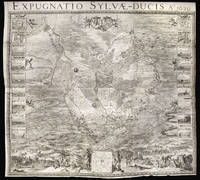
163114959Amsterdam: H.J. Van Wouw 1631. 1274 by 1405mm. 50.25 by 55.25 inches. Engraved wall map on six sheets joined eighteen inset views of the battle and siege works to left and right of the map. Large separately published six sheet map of the Siege of 's-Hertogenbosch during the Eighty Years War. <br/><br/>Hostilities between the Habsburg Empire and the Dutch Republic resumed in 1621 following the ending of the Twelve Years' Truce. The Habsburgs tried to punish the rebellious Dutch Republic by cutting it off from its hinterland by a land blockade. The blockade caused an economic crisis for the Republic and it reacted by trying to harm Spain in its colonies. In 1628 one of the many schemes undertaken met with spectacular success when Admiral Piet Hein of the Dutch West India Company captured the Spanish treasure fleet. With this windfall from the Stadtholder Frederick Henry decided to break the Habsburg blockade by launching a campaign against 's-Hertogenbosch. <br/><br/>'s-Hertogenbosch also known as moerasdraak swamp dragon was the main fortress in the Spanish blockading line and enormous sums of money had been poured into the improvement of its defences. As the ground surrounding the city was a marsh the city was generally deemed to be impregnable as the water-saturated soil seemed to make an application of current siege methods such as trench-digging and undermining impossible. <br/><br/>The Siege <br/><br/>Frederick Hendrik laid siege to the city in April 1629 with an army of 24000 infantry 4000 cavalry and 4000 peasants. He quickly set up a circumvallation and ordered the diverting of the two main streams feeding the swamps the Dommel and the Aa around the city by means of a forty kilometer long contravallation consisting of a double dike which completely enclosed the fortress; having thus created a polder he began to drain it by the use of horse drawn mills. After the soil had sufficiently dried out his siege trenches could begin to approach the city walls. So impressive were the siege works that noblemen travelled from throughout Europe to see them. <br/><br/>Attempts by the Habsburgs under the command of Hendrik van den Bergh Frederik's cousin to relieve the city proved unsuccessful as the circumvallation proved too strong and Frederik's forces dug themselves ever closer to the city along the southern road from the direction of Vught continuously bombarding the defences. During the siege 28517 cannonballs were fired. On 18 July the large Fortress Isabella fell followed the next day by Fort Anthony. Despite repeated sallies by the 2500 men of the garrison the attackers slowly worked their way to the southern city gate. There they undermined Bastion Vught; in the early hours of 11 September a massive explosion caused a large breach in the ramparts. On 14 September its military governor Anthonie Schetz surrendered the city. <br/><br/>The fall of 's-Hertogenbosch was an enormous blow to the prestige of the Spanish monarchy and the worst defeat in the North since the Spanish armada in 1588.3 As a result their position in the North would soon crumble and Frederick Henry encouraged by the success would start a series of other sieges assisted by his cousin Van den Bergh who changed sides after being accused of treason. <br/><br/>The Map <br/><br/>The map on six sheets provides a complete narrative of the siege; to the left and right are 18 inset views nine on each side for seige works dikes and principal forts. To the foreground two figures of Mars and a river god hold up a plan of the city. A group of figures to the lower right depict from right to left Frederick Hendrik surveying the battle field the artist Adriaan van de Venne who turns his head to the viewer and was responsible of the figurative work on the map and the military engineer and author of the map Theodoor Niels who is shown seated consulting a map. Beyond the immediate foreground several battle scenes are shown depicted various stages of the siege. To the centre of the map 's-Hertogenbosch is shown surrounded by the extensive siege works the circumvallation line is clearly marked - a chain of small and larger fortifications connected with a continuous parapet - designed to withstand a relief attempt from the outside and the smaller contravallation line and dike which Hendrick used to drain the swamp. Prominence is given to the Dutch camp at Vught south of the city. The intricate trench works so vital for victory are meticulously delineated and the breaching of the city wall is clearly marked. All prominent landmarks and aspects of the siege are marked by a number that correlated with an explanatory text which accompanied the map. <br/><br/>The author of the map was Theodoor Niels a military engineer in the Dutch army. Niels together with Jan Adriaansz Leeghwater whose water mills and dike work had managed to dry the land surrounding the city were the leading military engineers at the siege. Niels was principally responsible for the construction of the extensive trench network which meant spending a great deal of time on the frontline; a fact that almost cost him his life when on the night of the 22nd June 1629 the defenders exploded a mine under one of his trenches burying him alive. Assumed death he was only rescued when his head and hands were spotted poking out from beneath the rubble. He was fated as a hero and awarded a gold medal for his bravery. Unfortunately his luck would eventually run out when in 1633 he was killed during the battle of Rijnbeek. <br/><br/>On December 7th 1629 the States General recognized Niels vital role by not only awarding him a gold medal and a substantial cash sum but also granting him a privilege of four years in order to produce a great map of the battle. <br/><br/>To enable him to complete the task Niels employed some of the leading artists and engravers working in Amsterdam at the time. These included: the figure and genre painter Adriaan van de Venne who was responsible for the scenes in the foreground and whose sketches would be engraved by Salomon Savery; the plan of the siege would be completed by Balthasar Florenz van Berckenrode whose monumental wall map of Amsterdam published in 1625 had met with such great praise and whose map of Breda of 1637 bears striking similarity to the present work. <br/><br/>Rarity <br/><br/>We are only aware of four institutional examples all of which are located in the Netherlands: Leiden University Library; Amsterdam Rjksprentenkabinet; Dordrecht Museum Simon van Gijn; and Rotterdam Atlas van Stolk. H.J. Van Wouw, unknown
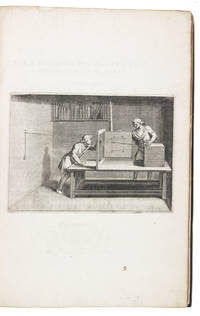
161214945London 1612. Royal folio 52 x 28.5 cm. John Norton printed partly by Jan Mommaert the elder in Brussels and partly by Richard Field in London Contemporary dark brown calf. Rebacked restored and with new endpapers. With an engraved architectural title page with Athena and Hermes representing wisdom and commerce a male and female satyr flanking the title four putti at the top with a sphere made from 12 stars arranged like the sides of a dodecahedron the authors device shown alone in the last illustration the 5 geometric solids and drafting and measuring equipment and 80 etched and engraved illustrations: 64 on otherwise blank pages mostly on integral leaves 2 across double-pages further mostly full-page and 16 on the text pages from small to half-page. The book has no letterpress page or leaf numbers but when a large engraving appears on a recto it usually has an engraved leaf number not a plate number that counts the books leaves beginning with the second leaf of quire a. Further with woodcut head- and tailpieces and dozens of woodcut decorated initials 6 series. engraved title 5 49 16 ll. including engravings. First edition of a famous and original treatise on perspective by the prominent mathematician Salomon de Caus 1576-1626 here in the very rare issue with the imprint of John Norton in London alone in 1612 with the name and date revised in the title-plate. The ESTC records 1611 London and 1612 London/Frankfurt issues of Caus's Perspective but not the present 1612 London issue.Caus was renowned as an inventor of mechanical devices both utilitarian and entertaining. His present work clearly explains and illustrates all aspects of perspective drawing including intricate projections optical illusions shadows anamorphic images and the mirroring of objects. With 2 contemporary perspective construction drawings in the foot margin of one page and some manuscript annotations. One plate has two small abrasions in the corner but the book is further in very good condition with only some small marginal tears and minor marginal water stains. Binding rebacked and restored so structurally sound. A very rare issue of the first edition of a classic work on perspective with 81 beautiful engravings.l Berlin Kat. 4706 not noting the Frankfurt imprint but listed in ESTC as the London/Frankfurt issue; ESTC S124665 1611 London issue & S122163 London/Frankfurt issue; STC 4868.7 1611 London issue & 4869 London/Frankfurt issue; Vagnetti EIIIb7: opera molto chiara splendid work the present 1612 London issue; VD17 1:080353E London/Frankfurt issue; not in BAL; Fowler; Millard but mentioning the London/Frankfurt issue under British 268. ABE CAT Art History unknown
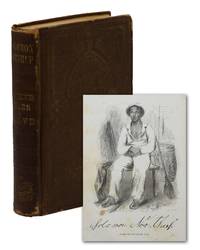
1853140944182Auburn Buffalo Cincinnati: Derby and Miller; Derby Orton and Mulligan; Henry W. Derby 1853. First edition. First edition. First printing with no mention of additional printings in thousands at top of title page. 4 ads xvi 17-336pp. Bound in publisher's brown cloth spine lettered in gilt boards stamped in blind with original yellow coated endpapers. Illustrated with seven full page illustrations including the frontispiece of the author. Housed in a leather backed custom clamshell case. About Very Good with cloth worn along edges exposed boards along bottom edge rubbed spine lettering. Contents significantly foxed and printing quality of pages varies as is typical. A presentable copy of the sought-after first printing in its original binding with no discernible sophistications; quite rare thus. <br /> <br /> <p>A ex-slave memoir by an African American man who had been a free landowner in New York but during an 1841 trip to the nation's capitol was drugged kidnapped and sold into slavery. He lived for twelve years in bondage in the Red River region of Louisiana. Upon publication Frederick Douglass hailed his story as a work whose "truth is far greater than fiction. It chills the blood." Also the basis of an award-winning 2013 film. Derby and Miller; Derby, Orton and Mulligan; Henry W. Derby unknown
174041460Augsburg: Heirs of Jeremias Wolff 1740. Folio. 12 9/10 x 19 4/5 inches. First edition. 2 works bound in one volume. 11 engraved calligraphic title pages in French and German 10 in first work one in second text in French and German one engraved dedication leaf at beginning of first work 102 fine engraved plates after Kleiner 90 in the first work with 9 folding and 12 in the second work. Late nineteenth-century brown half Morocco over wood-grained paper boards gilt-framed spine compartments.<br/> <br/> First edition with 102 fine plates of a masterpiece of Baroque architecture: the Belvedere Palace and Gardens in Vienna brought to life by Salomon Kleiner's unequaled engravings. Together with the wonderful illustrations of the Prince's menagerie.<br/> <br/> These fine engravings depict a masterpiece of Baroque architecture: the Belvedere Palace and Gardens in Vienna summer home of Prince Eugene of Savoy. The masterwork of architect Johann Lukas von Hildebrandt Belvedere is displayed here in all its glory in artist Salomon Kleiner's detailed engravings of the exterior the garden and the many splendid rooms. The second work is a charming view of the Prince's menagerie filled with exotic animals and plants. Born into a noble French family and rumored to be the illegitimate son of Louis XIV Eugene 1663-1736 was thwarted in his military ambitions by the Sun King's disfavor. Consequently he moved to Austria and offered his services to the Holy Roman Emperor. He became Field Marshal of the Austrian army and teacher of Frederick the Great. The rewards Eugene received for his military success enabled him to become a patron of Baroque architecture; the Belvedere planned and constructed by the most distinguished architects engineers landscapers and decorators was the grandest of his residences and a worthy rival to his nemesis Louis XIV's Versailles. Kleiner's scenes show the beautiful palace and grounds enlivened by fashionable figures of the sort Prince Eugene entertained at his many hunting parties. This delightful menagerie established in 1717 comes to life in Kleiner's engravings which depict chatty parrots stately elk exotic birds mischievous apes and a regal and rather disdainful lion.<br/> <br/> Berlin Katalog 2117. Brunet III.674. Goldschmidt XX.8.24. Graesse IV 28. Jessen 1060. Lewine p. 263. Lipperheide 686. MMA Bulletin 1929.XXIV pp.322-326. Nissen ZBI 2212 second work only. S.K.B. 2117. Univ. Cat. I.999. Heirs of Jeremias Wolff unknown
1853197662Auburn: Derby and Miller 1853. First Edition; First Printing. Hardcover. Very Good in a Near Fine clamshell case. Previous owner personalization on 2nd rear end page. Small piece of front pastedown torn scuffed. Bound in publisher's brown cloth spine lettered in gilt boards stamped in blind with original yellow coated endpapers. Illustrated with seven full page illustrations including the frontispiece of the author. Housed in a custom clamshell case. Cloth worn along edges exposed boards along bottom edge rubbed spine lettering. Contents significantly foxed and printing quality of pages varies as is typical. A presentable copy of the sought-after first printing in a repaired rebacked readable condition. Derby and Miller hardcover
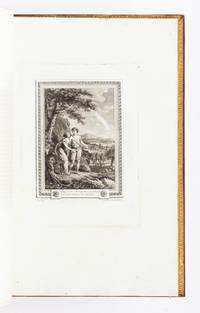
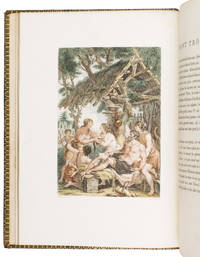
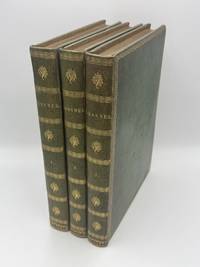
1786ST19671Paris: Chez l'Auteur Veuve Hérissant et Barrois l'aîne 1786-93. First Edition with these Illustrations. 485 x 340 mm. 19 x 13 1/2". Three volumes. <br/> ELEGANT RED STRAIGHT-GRAIN MOROCCO BY BOZERIAN signed in gilt on front free endpaper covers framed by gilt fillets double raised bands separated by a strip of black morocco tooled with gilt chain spine gilt in compartments with a rose or a musical instrument at center turn-ins with gilt arches roll Culot 18 green endpapers all edges gilt. 147 FINE ILLUSTRATIONS AFTER DESIGNS BY JEAN-JACQUES-FRANÇOIS LE BARBIER: three engraved title pages four vignettes 66 tailpieces and 74 leaves of plates including frontispiece portrait of Gessner engraved by Alix Baquoy Dambrun de Longueil et al. ALL IN FIRST STATE those in volumes I and III with original tissue guards. A Large Paper Copy. Cohen-de Ricci 433; Ray 39. For the binding: Culot "Jean Claude Bozerian" roulette #18. ◆Just a hint of rubbing to upper joint of first volume small indent to front cover of volume II occasional mostly marginal mild foxing more frequent in volume II but QUITE A FINE SET clean and fresh internally with beautiful impressions of the engravings and enormous margins in lustrous bindings with few signs of wear.<br/> <br/> This is a sumptuous set approaching 20 inches tall that epitomizes the best in 18th century French book arts: a Large Paper Copy of a book that in Ray's opinion "represents one of the happiest of all collaborations between artist and writer"--all of this in a graceful binding by the preeminent Paris atelier of the day. Gessner 1730-88 was a painter and poet from Zurich who hoped to renew the ancient genre of the eclogue. In his imagined neoclassical world all the shepherdesses are beautiful virtuous and sensitive and the shepherds are always honest and respectful. This struck a chord with illustrator Jean-Jacques-François Le Barbier 1738-1826 who wrote in the dedication "the charm of Gessner's poems filled my imagination and transported it to the happy centuries of the world's innocence." It also inspired him to collaborate with Gessner on this present work. Le Barbier 1738-1826 was one of the first great French neoclassical illustrators and this work is both an important early success in that style and in Ray's words the "most sustained and accomplished series of illustrations" by the artist. Most of Le Barbier's designs for this work are set in the classical world--the exception being "Le Mort d'Abel" based on the story of Cain and Abel in the Bible. There are nymphs fauns and other fantastical creatures mingling with humans in bucolic settings. While Le Barbier illustrates many love scenes they are romantic and wistful rather than passionate; he was a master of nudes but those depicted here seem innocent rather than erotic. As Ray says "Le Barbier's emphasis is on simplicity and naturalness. We are in a different world from the witty gallantry and sophisticated sentiment of the rococo pastoral illustrations." The engravings are characterized by the clarifying use of softly radiant light and by a restrained animation and the book as a whole is "a work of harmonious distinction which admirably realizes the ideals of its author and illustrator." Ray The elegant binding by Bozerian is notable for its refinement and it continues the motif of noble simplicity set by author and illustrator. Jean-Claude Bozerian 1762-1840 was the elder of the Bozerian brothers François is referred to as "le jeune" and was active in Paris from 1795 to about 1810. He began his career in Lyon as an apprentice bookseller printer and bookbinder eventually deciding to focus on the latter craft. Marriage to the widow of binder Pierre Boulier allowed him to establish a binding workshop in Paris where he was joined by his brother. His bindings were soon much in demand by French bibliophiles who appreciated their superior materials tasteful design and flawless execution. A rich man by age 50 he decided to retire and enjoy his leisure turning his business over to his nephew Lefebvre. Gessner's "Oeuvres" typically appears in quarto; Large Paper Copies like this one are very rare especially with all of the plates in first state which according to Cohen-de Ricci is recognizable by the lack of numbering to the plates and their appearance on bluish paper. It would seem next to impossible to imagine a book with margins as wide as are seen here. Chez l'Auteur, V[eu]ve Hérissant et Barrois, l'aîne unknown
1749-22Augsburg Pfeffel 1724-37. Tle. 1-4 v. 5 in 1 Bd. qu.-2°. 34 x 44 cm. Blattgr.; 32 x 34 cm. Plattengr. Mit 4 Kupfertit. 2 gest. Widmungsbll. 3 v. 4 gest. Frontisp. 132 dav. 2 gefalt. Kupferstichtafeln. HPgmt.-Bd. d. Zt. Schönes. breitrandiges Expl. Vereinz. gering braunfleckig im w. Rand. EA. Nebehay-W. 306; Slg. Mayer I 779; Kat. d. Ornamentenstichslg. Berlin 2108; Lanckoronska-Oehler I 28 - 22 x 33 cm. Bildausschn. Das seltene Ansichtenwerk des barocken Wien. Die Kupfer zeigen neben Kirchen und Klöstern des alten Wiens auch die kaiserlichen und königlichen Paläste und Gärten öffentliche Gebäude Denkmäler Häuser Straßen und Plätze der Stadt. Das Werk gilt als das beste Beispiel für Ansichten Wiens des 18. Jahrhunderts es wurde von Johann Andreas Pfeffel 1674-1748 herausgegeben alle Ansichten wurden von Salomon Kleiner gezeichnet und von den besten Künstlern der Zeit gestochen. Das Werk erschien über einen langen Zeitraum und ist daher selten komplett zu finden. Hier vorliegend der erste bis vierte Teil mit je 33 Tafeln komplett. Part 1 to 4 of 5 in 1 volume. Vienna Pfeffel 1724 - 1737. 34 x 47 cm. With 6 engraved titles 2 engraved dedication-plates and 99 2 double-page engraved plates. Half calf in contemporary style. A large paper copy with wide margins. Only the first plates a bit dusty otherwise a fine copy with the plates in strong impressions. - The famous architectural atlas of Baroque Vienna. The plates show beside churches and monasteries from ancient Vienna also all Imperial and Royal Palaces and gardens public buildings monuments houses streets and squares of the city. The work is considered to be the first representation of views of Vienna of the 18th century. The work was edited by Johann Andreas Pfeffel 1674-1748 and all plates were designed by Salomon Kleiner and engraved by the best artists of the time. The work was published over a very long period of time and therefore it is very hard to find complete copies. Aparently the plates were also sold seperately. Here present is the first to the fouth part complete with 33 plates each. Until 1740 there was published a fifth part. Those plates show mainly gardens. Augsburg, Pfeffel 1724-37. unknown
1853009086Auburn: Derby and Miller 1853. 1st Edition 1st Printing. Hardcover. Very Good. The rare true first printing of this famous and very significant book with no mention of "Thousand" at top of title page later printings say "Fifth Thousand" "Tenth Thousand" etc. 1853 stated on both title and copyright pages and no mention of "London" at bottom of title page later printings have this. Octavo 336 pages with four-page publisher's ads in front bound between pastedown and flyleaf as issued and seven full-page illustrations. Very good with professional repair to spine rebacked with original spine laid down and corners. Slight slant to spine. Attractive bookplate on front pastedown and some foxing to pages throughout but cleaner than typically found. Housed in a custom-made slipcase. An excellent first printing of Northup's autobiography which is becoming exceedingly hard to find in collectible condition. Basis for the film of the same name that won the 2014 Academy Award for Best Picture. <br/> <br/> Derby and Miller hardcover
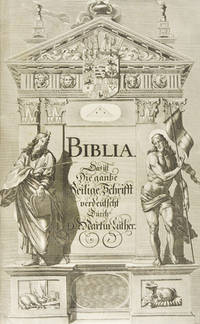
176820419Nürnberg Nuremberg: In Verlegung der Johann Andrea Endterischen Handlung 1768. Later edition. Hardcover. Very good. Three parts folio 17 3/4 x 12". 4: engraved title; main title 12: Preface to the 1736 Second Edition 2: Note to the Christian Reader on this New 1768 Edition 16: Preface to the 1640 i.e. 1641 Edition 2: List of Saxony's Electors pages 11 full-page engraved portraits of the Electors 1: full-page portrait of Martin Luther leaves 8: Short Introduction and Instruction Regarding the Holy Scriptures 2: Calendar 13: General Index 26: Name Index 11: Chronology 1: Personalities in the Maccabean and Herodian Eras 7: Explanations on the Old Testament 5: Charts of calandars weights money measures and distance in biblical times 4: Chronological Order of the Books of the Bible 7: Register/Table of the Old Testament 3: Martin Luther's Preface to the Old Testament; 740 Pentateuch; Former Prophets; Writings; 512 Latter Prophets and Apocrypha; 472 New Testament 473-480 Gospel Harmony 14: Creeds and Augsburg Confession pages. Text in German Gothic script; text within ruled borders marginal column for printed side notes; woodcut initials and ornaments; elaborate woodcut half titles in imitation of calligraphy at verso of initial text leaves for the second and third parts Prophets and New Testament. Complete with 48 copperplate engravings: 12 full-page portraits in the preleminaries Electors and Martin Luther; a full-page depiction of the construction of Noah's Ark; 27 full-page sectional illustrations 20 vignette compositions; 9 portraits of Prophets and Evangelists; 8 double-suite plates biblical lands from Egypt to Babylonia; Egypt and Canaan noting tribal allotments; Canaan in the New Testament era; Greece and Asia Minor with vignettes of the Temple; encampment of the Israelite tribes in the wilderness; bird's eye view of Jerusalem after Adrichem; view of Jerusalem in the New Testament era; Diet of Augsburg with legend.<br /> <br /> Contemporary calf lightly rubbed at extremities with some light scratching at rear board elaborately tooled in gilt depicting a neo-classical sanctuary on both boardsTetragrammaton in pediment on the front a cross in pediment on the rear; exquisite gauffered fore-edges ornamented in gilt against forest green wash depict a sunburst with architectural motifs; gilt turn-ins. Rebacked retaining original spine; endpapers renewed. 15 cm clean tear through text at leaf C4 in the New Testament reparable; final text leaf chipped at bottom edge not affecting text; tears at Diet of Augsburg plate and final text leaf expertly repaired at versos. Overall pages crisp and fresh with mild intermittent toning very occasional light stains and smudges and just a touch of damptstain at fore-edge in later leaves of the New Testament. A very good copy with clean plates in a beautiful magnificent binding complete with the folding plate of the Diet of Augsburg often lacking. Housed and protected in a modern custom red cloth slipcase.<br /> <br /> Final edition of the sumptuously illustrated Kurfürstenbibel Electors' Bible with a full apparatus of introductory and historical materials. Also known as the Weimar Bible it was compiled under the auspices of Ernst I Duke of Saxe-Gotha and Altenburg. Beginning in 1641 all editions were published by the prominent German printing dynasty of Endter. The maps views and illustrated divisional titles by Jacob van Sandrart and others made their first appearance in the edition of 1686. In this latest version the illustrated sectional titles are signed by Johann Chrisopher Claussner and most of the other views lack the signatures found in the 1686 edition. The earlier forewords by Salomon Glass ed. 1641 and Ernst Solomon Cyprian ed. 1736 are reprinted in the present edition.<br /> <br /> The preliminaries feature eleven full page engravings of Saxony's Electors from Friedrich III to Bernhard der Große followed by an engraved portrait of Martin Luther. Often lacking the final fold-out engraving depicts the Holy Roman Emperor and representatives of the German states in a large reception hall during the Diet of Augsburg. Participants are identified in the legend on the facing page. The conference was assembled by Charles V so that the Princes and Free Territories in Germany might explain their religious convictions in an attempt to restore religious and political unity in the Holy Roman Empire and rally support against the Turkish invasion. The consensus of the assembly is expressed in the Augsburg Confession the primary confession of faith of the Lutheran Church and one of the most important documents of the Reformation era. Written in both German and Latin the Confession was presented at the Diet of Augsburg on 25 June 1530; it is the fourth document contained in the Lutheran Book of Concord. References: Bibelsammlung Stuttgart E777; Delaveau & Hillard 16; Cf. Darlow & Moule 4217 note on ed. 1641; 4234 ed. 1736.<br /> <br /> Full title: Biblia Das ist die gantze Heilige Schrift Altes und Neues Testaments. Verdeutscht von Herrn Doctor Martin Luther: Und auf gnädigste Verordnung Des Durchlauchtigsten Fürsten und Herrn Herrn Ernsts Herzogen zu Sachsen Fülich Kleve und Berg von etlichen reinen Theologen dem eigentlichen Wort-Verstand nach erkläret wie hiervon weiter in der Vorrede gehandelt wird. daher über die gewöhnliche mit Fleiß verbesserte Biblische Register unter anderem zu finden ein Bericht von Vergleichung der Jüdischen und Biblischen Monden Maaß Gewicht Müntz und Elen mit den Unserigen: Sowohl auch eine Beschreibung der Stadt Jerusalem samt unterschiedlichen neuen Land-Tafeln und andern schönen Kupffer-Figuren und derselben Beschreibung: Welches alles dem Christlichen Leser zu mehrerm Verstand der Schrifft gute Anleitung geben kan. Zu Ende ist auch nebst den Christlichen Haupt-Symbolis die unveränderte Augspurgische Confession mit beygedruckt worden. Von neuem mit Fleiß übersehen durch fernere sowohl den Verstand als Lutheri Ubersetzung betreffende Anmerckungen erläutert auch mit einer kurzen Anweisung zur Erklärung der Heil. Schrift und andern Einleitungen vermehret. Mit königl. polnischem und Chur-Fürstl. Sächsischem Privilegio. In Verlegung der Johann Andrea Endterischen Handlung hardcover
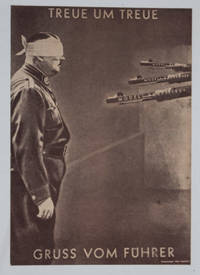
193642802Mockba Moscow: ГоÑударÑтвенное издательÑтво изобразительных иÑкуÑÑтв Gosudarstvennoe izdatelʹstvo izobrazitelʹnykh iskusst 1936. First edition. Hardcover. g to g. Folio 12 x 9". 79 1pp. Original silver-lettered burgundy cloth with round-shape photomontage pasted to front cover. Title page in red and black lettering. <br /> <br /> This scarce Soviet monograph is entirely dedicated to the art of John Heartfield 1891-1968 a German artist whose anti-Nazi and anti-Fascist photomontages made him a pioneer in the use of art as a political weapon. Heartfield also created book jackets for authors such as Upton Sinclair as well as stage sets for such noted playwrights as Bertolt Brecht and Erwin Piscator. <br /> <br /> Designed by Solomon Telingater 1903-1969 a Soviet graphic artist and a founding member of the October group a collective of Constructivist artists formed in 1928 the book is lavishly illustrated throughout with numerous b/w duo-tone and color photographic reproductions dadaist works posters color reproductions of eight Upton Sinclair book jackets and other art. Of course his political photomontages for the weekly Arbeiter-Illustrierte-Zeitung AIZ are well represented along with art for a variety of publications among them a cover for the daily "Die Rote Fahne" an elaborate piece for Vereingung Internationaler Verlagsonstalten a German anti-war publication art for Der Cicerone a magazine for artists and art collectors and covers and interiors from Kurt Tucholsky's book "Deutschland Deutschland über alles."<br /> <br /> Includes a tipped in photographic portrait of Heartfield by Alexander Rodchenko and a tipped-in photomontage showing Lenin leading the way to new housing construction in Moscow.<br /> <br /> Scarce paper errata sheet tipped in at rear. Some soiling to front cover. Previous owner's inscription in German "In Erinnerung an den Ostfeldzug In Memory of the Eastern Campagne" dated 'Zhitomir Herbst 1941' on front free endpaper. "Feindspropaganda" enemy propaganda in red pencil reproduced on inside of each cover. Ex-library copy with Russian stamp at inner gutter of title page at bottom of page 21 and at bottom of last page not affecting lettering. Text in Russian. Binding in overall good interior in good to good condition. "Heartfield himself regarded Tretjakov's study as the best exposition of his work." John Heartfield AIZ: Arbeiter-Illustrierte Zeitung Volks Illustrierte 1930-38 by David Evans; Anna Lundgren ed New York 1992 Kent Fine Art Inc. page 36. ГоÑударÑтвенное издательÑтво изобразительных иÑкуÑÑтв (Gosudarstvennoe izdatel hardcover
17933612Paris: chez Defer de Maisonneuve 1793. Contemporary gold-tooled brown and green mottled calf with red morocco title label lettered in gold gold-tooled board edges and turn-ins gilt edges marbled endpapers. Large 4to. With a stipple-engraved colour-printed frontispiece and 5 stipple-engraved colour printed plates by Colibert Casenave and Clément after the designs of Nicolas Moniau. First edition of Hubert's prose translation of Gessner's celebrated poem Der Tod Abels which was first published in German in 1758. Salomon Gessner 1730-1788 known throughout Europe for literary works of pastoral themes and his rococo style was a bookseller's son and started his career as an apprentice to the bookseller Spener in Berlin. Giving up this employment he lived for a time by painting and engraving. In 1750 he settled in Zurich continuing to live by painting including painting on porcelain. Later he was also a town councillor and a forestry superintendent who also ran an important publishing house from which he published his books with his own excellent etchings. He began to write idylls in poetic prose beginning with Daphnis 1754 and his Idyllen 1756-72 achieved nation-wide success. In Der Tod Abels 1758 he attempted to write an epic in prose in five "chants" quickly becoming his most renowned work and making him the most successful and typical representative of a literary rococo movement. In his idylls Gessner is indebted to Theocritus and Virgil creating an idealized orderly almost horticultural state of nature. The beautiful stipple engraved plates are after the drawings by Nicolas Monsiau. Nicolas-André Monsiau 1754-1837 was a Parisian who attained some reputation as a painter of both classical and modern subjects. He was elected to the Academy in 1789. These scenes were engraved by Colibert Casenave and Clément and printed in colour in one run through the press. The six plates in this copy are in their first state before numbers; two have the artist's and engraver's name; 3 have only the engraver's name.With a small paper library labels on the front board "B 8" and "6" and foot of the spine "207". Further with an inscription on recto of the first blank flyleaf in French and a small oval blue stamp of the library of the St. Elisabeth convent in Heythuysen Limburg The Netherlands on the title-page and p. 91. The binding shows some scratches on the boards the spine is worn but all without affecting the integrity of the binding. Some occasional minor water staining in the top margin otherwise in good condition. A large-paper copy of a rare colour-printed plates-book.l Brunet II 1568; Burch p. 93; Cohen-de Ricci col. 436; Fürstenberg 122 and 205; Ray The Art of the French Illustrated Book pp. 151-2; Sander 780. chez Defer de Maisonneuve, unknown
369151819-1821. Hardcover. Very Good. 4to30cm in 2 volumes 416 & 298pp. some text illustrations printed in three columns in the original marbled boards heavily worn rebacked in brown library cloth hinges are cracked volume one damp stained in the fore margin of the text. Volume one hinges tight first page an indexprobably laid in is damaged as is the last page the somewhat acidic paper often used in periodical during the era is about average housed in a fold-over clamp shell box in dark blue book cloth with double black and red labels marbled interior With a presentation on the inside board of volume one in ink: Lord Dalhousie's best Compt. to Philemon Wright Esq. Copies of "The Plough Boy" are very rare and the value is increased not only as an association copy of Lord Dalhousie but also for the pioneering Wright family. Provenance: B.R. Mackay. The two rare volumes were presented to Phileman Wright for his Wrightville Agricultural library by Lord Dalhousie - Library book numbers 111 & 112on small paper spine labels . were bound by Lord Dalhousie probably had done for Philemon Wright who solicited a donation of books from him when he was with his Excellency in Quebec Dec. 16 1820. . At the bottom of page 378 vol 1 of the Plough Boy there is a comment by Lord Dalhousie in pencil on the article entitled "Flemish Husbandry" with a comparative table of produce of Flemish and English farmers Lord Dalhousie remarks as follows: It is not the bleak mountains of Scotland that have progressed so much beyond the Agriculture of England but the rich Lowlands south of the mountains. On the contrary the System off allowing is the Scottish practice and is readily exploited in England. - to Sir John Sinclair the above comparative table is not very explicit and there appears to be in it some Flemish crop errors not -redley.'The Plough Boy" a pioneer American agricultural weekly magazine published in Albany first appeared in June 1819. The editor originally listed as Henry Homespun Jr. was the pseudonym for Solomon Southwick1773-1839 whose name appeared in the magazine title in Volume 1number 34 with the added title "The Plough Boy and Journal of the Board of Agriculture". The periodical had been selected as the official organ of the Board of Agriculture for the State of New York. A very popular periodical it was printed for over twenty years. Philemon Wright1760-1839 created the first permanent settlement in the Ottawa Valley region in 1800 on the north side of the Ottawa River. It became a primarily agricultural community covering what is now the city of Gatineau and Aylmer. At about 37000 acres it became the most developed farming area in Lower Canada. Farms included Gateno Columbia FallsColumbia Britannia Chaudiere and Dalhousie Farm. Wright shared an interest with Lord Dalhousie in the development and improvement of agriculture in Canada. Certainly a library of agricultural books would have been of prime interest to Wright. George Ramsay 9th Earl of Dalhousie was recognized as having an ardent interest in agricultural improvement and was noted as inspiring the formation of agricultural societies throughout the Colonies. He obviously had studied "The Plough Boy" and on page 381 of Volume I as noted above. In Nova Scotia Lord Dalhousie was a friend and supporter of Scottish agricultural writerJohn Young who dedicated his book on improving Canadian agriculture"Letters of Agricola" Halifax 1822 to the Governor-General. Dr. B.R.MacKay had a long career at the Geological Survey 1907-1953. He was a valued member of the Ottawa Historical Society and was known for leading the campaign to save historical buildings or sites. He had so many books in his large house it began to sink under the weight. He donated many articles to the Bytown museum and claimed among his prizes the present set of books a rope that Wright had used to tie his first timber raft etc. He also had Sir John A. Mcdonald's desk and carried a pictur. 1819-1821 hardcover
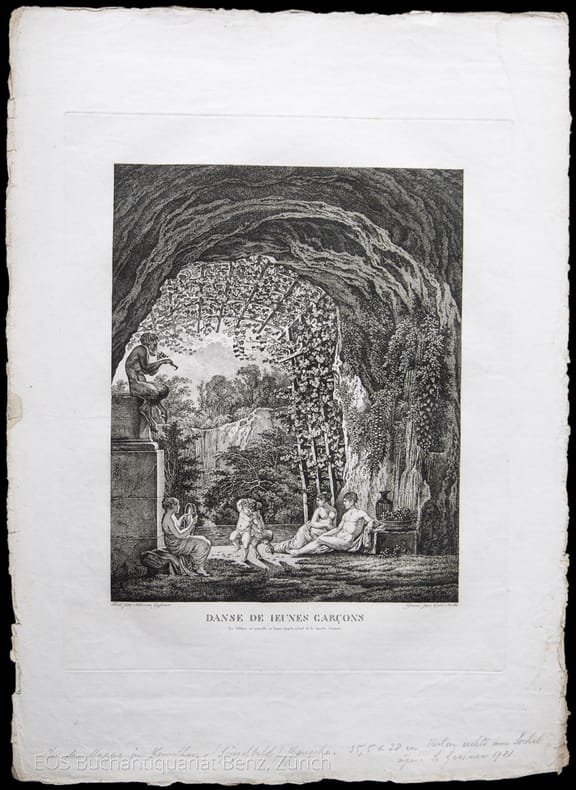
18052204Title with engraved portrait-vignette by H. Lips 1 leaf dedication by Gessner's widow to the empress of Russia 25 etchings by Carl Wilhelm Kolbe after Gessner. Cont. half calf over marbled sides. Green leather label mounted on front cover. Imperial-folio 574 x 522 mm. Extremeties slightly worn. Foot-cap damaged. <br /><br /><br />Thieme-B. XXI 225. Le Blanc 63-87. Martens Kolbe 282-306. Leemann v. E. p. 84/85. First and only edition. "Nach Gessners Tod wurden von dem wesensverwandten Kupferstecher Kolbe 25 Gouachebilder und getuschte Zeichnungen radiert und gelangten in Lieferungen von 1805-1811 . in den Handel." Thieme-B. XXI p. 225. In 1805 Carl Wilhelm Kolbe was invited to Zurich by the descendants of Salomon Gessner especially his son Heinrich to reproduce a series of gouaches by the deceased artist in etchings. The ambitious project featured a total of 25 etchings with an additional title and dedication sheets. In order to comply with the request of the Gessner family Kolbe sent an application to Prince Franz von Anhalt in which he asked for a one-and-a-half-year vacation. The prince finally granted him the holiday and the assurance that he would be able to return to Dessau so that Kolbe spent the next three years in Switzerland. Beautiful etchings of garden- and landscape fantasies in classicistic style. Slightly foxed mostly to the very broad margins else a beautiful copy. Engraved book-plate of Johannes Gessner mounted on front paste-down. Gessner
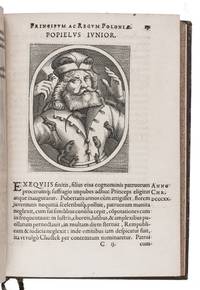
1620D7RBORMFQHCTFrankfurt am Main: Jacob de Zetter Hartman Palthenius 1620. 18th-century gold-tooled calf red sprinkled edges. Small 4to 20 x 14.5 cm. With an engraved title page and engraved portraits in the text. 3 works in 1 volume. With:2 SICCAMA Sybrand editor. Lex Frisionum sive antiquae Frisiorum leges a reliquis veterum Germanorum legibus separatim aeditiae & notis illustratae.Franeker Johannes Lamrinck 1617.3 VENICE. Risposta in difesa delle ragioni del. ser.mo Arciduca Ferdinando contra il manifesto publicato per la Republica di Venetia per occasione della presente guerra. Con l'oratione di Lodovico Eliano oratore di Lodovico XII. re di Francia havvta da lui contro la medesima Republica in augusta nel convento de' Prencipi di Germania alla presenza dell' imperatore Massimiliano I l'anno 1510. Italy Con Licenza de' superiori 1617. Three works from the early 17th century bound together. The first work is a popular illustrated history of Poland with portraits of monarchs theologians and emperors each with a short biography added by Salomon Neugebauer 1611-1654.The second work is the first edition edited by the jurist Sybren Siccama 1571-1622 of a legal work with the laws of Friesland. The first edition based on a now lost manuscript was printed in 1557.The third work is a rare anti-Venetian pamphlet in Italian written on the occasion of the Uskok War 1615-1618. This war was waged by Venice against a group of Balkan pirates Uskoks or Croatian-Habsburg soldiers which was stationed by the Habsburg ruler Archduke Ferdinand of Styria 1578-1637 later Ferdinand II along its frontiers as part of its military borders. The Venetian-Habsburg conflict eventually involved troops from all-over Europe with Venice the Dutch United Provinces and England on one side and the Austrian and Spanish Habsburgs on the other. The pamphlet includes an anti-Venetian Latin oration given in Rome by the French diplomat Louis Hélian in 1510.Tear in one leaf of the second work otherwise in very good condition.l Ad.1: BLC STC German 17th cent. N-136; Czapnik Rare Polonica 340; Hoskins 694; VD17 23:247745G; ad 2: cf. V.d. Aa XVII p. 645; NNBW VI col. 1239; ad 3: WorldCat 6 copies. Jacob de Zetter, Hartman Palthenius, unknown
H555N¸rnberg J. Lantzenberger 1608. 4to 205:155 cm. Mit ganzs. Wappenholzschnitt 8 7 gefalt. Holzschnitt-Tafeln u. 82 Textholzschnitten 1 mit bewegl. Elementen sowie 4 Schrift- und einem Notenbeispiel. 23 Bll. 341 S. Alter Manuskriptpergamentband fleckig. - Etwas fleckig u. gebr‰unt. Ohne das h‰ufig fehlende Verfasserportr‰t. Mod. Exlibris. VD 17 23:246653; Tobler 81f.; Rˆhricht 777; vgl. Blackmer 1512 u. Griep-L. Ausg. 1664. - Erste Ausgabe selten. Der evangelische Theologe Samuel Schweigger 1551-1622 erlangte durch sein Werk internationale Bekanntheit. Er ging 1577 f¸r drei Jahre als Gesandtschaftsprediger nach Konstantinopel und machte auf seiner R¸ckreise 1581 eine Pilgerfahrt nach Jerusalem. "S. schreibt l¸ckenhaft und nicht ohne Vorurtheile im ganzen aber aufgekl‰rter als weitaus die meisten seiner Vorg‰nger" Tobler. First rare edition. With fullpage armorial woodcut 8 7 folding woodcut plates 82 woodcuts in text 1 with movable parts and 4 writing and 1 music note example. "The woodcuts in the 'Reiszbeschreibung' are from considerable interest. They illustrate views of towns buildings costumes processions etc." Blackmer. - Somewhat stained and browned; modern bookplate. Without the often lacking engr. portrait. Contemporary vellum from an old manuscript stained.VD 17 23:246655D; Blackmer 1512; Yerasimos 317; Tobler 81; Griep-L. 1278. hardcover
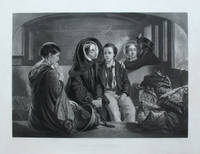
185717454London: E. Gambart & Co 25 Berners St. 1857. First printing. In fine condition. The Departure - Second Class" and "The Return - First Class" are a pair of moralistic narrative works a popular genre in Victorian times and demonstrate the growing trend towards emigration particularly to Australia. The Victorian artist Abraham Solomon depicts a family traveling second class to a port where the young boy will go to sea in "The Departure". In "The Return" the boy returns as a successful middle aged squatter in the first class carriage with his son and daughter. <br /> <br /> Both paintings by Solomon are held in the National Railway Museum UK . Of "The Departure" they write "The painting is a contemporary image of rail travel showing the discomfort of the lower classes traveling in a draughty bench-seated second class carriage. Despite their discomfort this shows how the railways opened up travel to the less wealthy as well as those with money. It also shows how the industry allowed travel nationally and internationally with the posters in the background advertising passage to Australia highlighting the growing trend of emigration. " National Railway Museum UK website. The advertising includes ship departures for Port Phillip and Sydney.<br /> <br /> Published 4th April 1857 with a stated edition of 225 pairs. Engraved by W.H. Simmons. 26 3/4 x 20 3/4" image & text on paper 32 1/4 x 25 1/4". Black & white as issued. E. Gambart & Co 25 Berners St. unknown
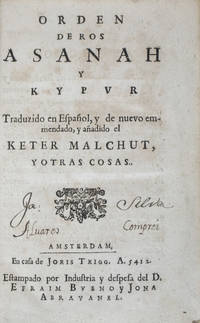
43935Amsterdam: En Casa de Joris Trigg/ D. Efraim Bueno y Jona Abravanel 5412. Hardcover. g- to vg-. Duoecimo. 7x4.5". 478pp. Original dark brown leather with blind-stamped ruling and tooling on the covers and spine. Raised bands on the spine. Metal clasps. Red-speckled edges of the book block. An early Spanish-language edition of the complete Jewish High Holiday prayer book Machzor based on the original translation by Abraham Usque originally printed in Ferarra Italy in 1553. This edition contains some added material not previously present including most prominently Solomon ibn Gabirol's famed philosophical poem "Keter Malkhut" Royal Crown which over the years has come to be read as part of the Yom Kippur service in some Jewish traditions. <br /> <br /> Published by Dr. Efraim Bueno and Jona Abravanel to serve members of the then sizable Sephardic Jewish community in Amsterdam. A significant portion of the community were former Conversos Jews who had outwardly converted to Catholicism during the inquisition in Spain who then emmigrated and were able to reestablish their Jewish identity and thus were unable to read Hebrew hence the text's publication in Spanish. As stated in the foreword this edition includes some additions to the text not included in previous versions and omits some material deemed to have been unnecessary. The prayer book starts with the penitential prayers Selichot p.3-47 which includes decorative head and endpeices. This section is followed by the Rosh Hashanah service p.48-195 and then the Yom Kippur service including the "Keter Malkhut" p.254-289. Title page is has a decorative vignette printed in woodblock and is printed with the Hebrew date "5412". Pages 305-352 are misprinted as "321-368" with their correct numbers handwritten above in ink. All text in Spanish. <br /> <br /> Binding with some rubbing and scratches to extremities and to the covers. Front hinge starting to split slightly at the head and tail of the spine. Missing one of the metal clasps on the back cover. Starting at interior covers. Some minor to light sporadic damp staining and foxing throughout the text. Period signature of the previous owner "Silva" in ink on on the title page and p.200. Name of another previous owner in ink on the interior back cover. Book block tight overall. Binding in good- interior in very good- condition overall. Quite scarce. Dr. Efraim Ephraim Bueno aka Martin Alvarez 1599-1665 was a Portuguese-born Jewish physician in Amsterdam of the famed Iberian-Jewish Bueno medical dynasty and prominent member of the city's Sephardic community. He served for many years as the personal physician to famed artist Rembrandt van Rijn who in fact depicted Bueno in two of his works one an etching and the other a painted portrait. He received his medical education and degree in Bordeaux and was known to have practiced medicine in Amsterdam until the time of his death. In addition to his medical practice Bueno was an accomplished biblical scholar who along with Jona Abravanel published numerous Jewish works the on the bible and Jewish Law. <br /> <br /> Jona Abravanel 1593-1667 was a Sephardic Jewish poet in Amsterdam from the prominent Abravanel family. He was the nephew of Famed Portueguse-Dutch Rabbi and printer Menasseh ben Israel. Together with his uncle and Dr. Efraim Bueno he was responsible for publishing numerous works of Judiaca in the 17th century.<br /> <br /> In this edition the title page was mistaken printed with the word "Kuyper" which was then correct via a scrap of paper pasted on top. References: KAYSERLING 1890 p. 7 31 61 under Abravanel Bueno and Liturgy PALAU 1923 under 202415 with an incorrect dat of 1662 PEETERS 1933 1037. <br /> <br /> This publication follows an edition with same title also from Amsterdam in 1630 but printed by David Pardo and Salom ben Yosseph Menasseh ben Israel with different pagination. En Casa de Joris Trigg/ D. Efraim Bueno y Jona Abravanel hardcover
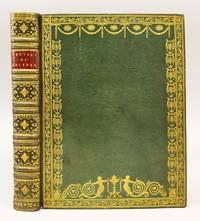
1777ST14864Zurich: Chez l'auteur 1777. First French Quarto Edition. 270 x 200 mm. 10 1/2 x 8". 4 p.l. 184 12 subscribers pp. 1 leaf advice to binder 1 leaf blank 190 pp. 1 leaf advice to binder. Two volumes bound in one. Translated from the German by H. Huber. <br/> EXCEPTIONALLY ATTRACTIVE EARLY 19TH CENTURY GREEN STRAIGHT-GRAIN MOROCCO GILT IN A NEOCLASSICAL STYLE IMITATING THAT OF KALTHOEBER covers with scrolling vine frame central panel with sunbursts and swags across the top palmette tools along the sides and a variant of Kalthoeber's mermaids-and-urn tool at foot raised bands spine compartments with central patera surrounded by small tools leaf frond and volute cornerpieces red morocco label marbled endpapers all edges gilt. In a modern green morocco-lipped slipcase. With two engraved titles 40 engraved vignettes and 20 FINE ENGRAVED PLATES BY GESSNER. Front flyleaf with ink inscription to "Henry S. Pakenham / from his friend / Henry H. Evans" see below. For the binding: Compare and contrast Foot Henry Davis Gift II 189; Maggs 1075 no. 219 and 1212 no. 164; Oldaker Collection 21; British Library Database of Bookbindings Shelfmark Davis194. ◆Spine uniformly sunned to olive brown joints and extremities very slightly rubbed a half dozen small indentations to front board occasional faint foxing to edge of margins but an excellent copy of an extremely handsome book clean fresh and bright with ample margins and rich impressions of the engravings and in a well-preserved binding glistening with gold.<br/> <br/> This is a desirable copy of an important late 18th century French illustrated book a happy marriage of fashionable poetry and beautiful engravings in a binding that carefully imitates the Neoclassical designs and tools of master binder Christian Kalthoeber. Gessner 1730-88 was a painter and poet from Zurich who hoped to renew the ancient genre of the eclogue. According to Britannica he was "the most successful and typical representative of a literary rococo movement. His pastorals were translated into 20 languages including Welsh Latin and Hebrew." He was also an equally talented artist and the preface to this book is quick to note that all the etchings are of his own imagination and executed by his own hand. Gessner's close attention to detail and liberal use of dense crosshatching give each plate an intensity that is almost tactile with the pale figures in high relief against the deeply etched dark backgrounds. <br /> <br /> The binding is an excellent imitation of the work of German émigré binder Christian Kalthoeber "considered during his day to be the finest binder in the world" according to Maggs Catalogue 966. One of Kalthoeber's most recognizable designs used on at least seven bindings employed a roll-tool border enclosing a central panel with garlands and pateras across the top palmettes along the sides and at the foot two mermaids with curling tails flanking an urn. Examples of this can be seen in the sources cited above. Here the mermaids are thicker and less refined in form and the tool has been applied at a very slight angle rather than with the precision characteristic of the master. The urn and palmettes too are less expertly engraved and applied and the complex pateras of varying sizes are replaced with simpler one-size starburst ornaments. Our binder was talented enough to produce an imitation that would stand up to all but the most careful scrutiny; until one sees the binding side-by-side with a genuine Kalthoeber it is hard to register the differences. Perhaps our binder had apprenticed with Kalthoeber for he had certainly had the opportunity to study the tools very closely and he had been trained in a workshop that schooled its apprentices in fine workmanship--if not in professional ethics. <br /> <br /> The inscription notes that this copy once belonged to Henry H. Evans 1836-1917 a member of the Illinois House and Senate who made a name for himself in the ice cream and restaurant business and eventually went on to found two railways following the Civil War. The present item is appealing for its internal and external aesthetics and for the light it sheds on the binding industry and its practices at the turn of the 19th century. Chez l'auteur unknown
181131297AB1811. Zürich à Librairie de Gessner 1811. Gr.-folio. Titelblatt mit Vignette von Gessner gest. von Lips gedrucktes Blatt mit Vorwort Widmung an die Kaiserin von Russland der Witwe von Salomon Gessner. Mit Radierung vom Denkmal Salomon Gessner von W. Kolbe und 25 Radierungen von W. Kolbe nach Originalen von Salomon Gessner. Lose Blattsammlung in Mappe mit 4 Orig.-Umschlagblättern beiliegend deuxième und troisième cahier. Gut erhaltene Folge von breitrandigen Kupfertafeln. Nagler VII 133. Thieme-Becker XIII 500. Lonchamp 1227. unknown
181131297ABZürich, à Librairie de Gessner, 1811. Gr.-folio. Titelblatt mit Vignette von Gessner, gest. von Lips, gedrucktes Blatt mit Vorwort Widmung an die Kaiserin von Russland (der Witwe von Salomon Gessner. Mit Radierung vom Denkmal Salomon Gessner, von W. Kolbe und 25 Radierungen von W. Kolbe nach Originalen von Salomon Gessner. Lose Blattsammlung in Mappe mit 4 Orig.-Umschlagblättern (beiliegend deuxième und troisième cahier).
1619781P24Francofurti: Lucam Jennis 1619. Vellum. Good. 6" by 4". Not Stated. A Latin heraldic work on the insignia of European rulers a notable copy from the library of William Beckford the important English novelist. In the original Latin.From the library of William Beckford. In pencil above the bookplate 'Mr. Beckford's copy from sale of his library - 1883'. As per 'The Hamilton Palace Libraries Catalogue of the Third Portion of the Beckford Library Removed From Hamilton Palace' this book was sold as lot 63 referenced on page 5 of the volume.William Beckford was an English novelist who is best known for his Gothic novel 'Vathek' and for his buildings now lost Fonthill Abbey and Lansdown Tower which is also known as Beckford's Tower in Bath. He was a noted patron of the arts well regarded for his beautiful art collection.The basis for Beckford's library at Fonthill Abbey came when he purchase the complete library of the historians and politician Edward Gibbon.Illustrated with two-hundred in-text engraved emblems.Collated complete.A fascinating study on the insignia of European rulers before the seventeenth century a concise work on the emblems and heraldic devices.By Salomon Neugebauer.Derived from an earlier work by Jacobus Typotius.Bookplate of Hubert John Elliot to the front paste down.Blindstamp of Neatham Mill Library to the rear paste down. In the original limp vellum binding. Externally with some discolouration and marks as is usual with vellum. Ink to the backstrip. Boards have sprung. Bookplate and pencil note to the front paste down. Blindstamp to the rear paste down. Prior owner's ink inscription to the recto to the front endpaper. Internally firmly bound. Pages are lightly age-toned and generally clean with some spots. Small chip to the tail of leaf Y1. Good Lucam Jennis hardcover
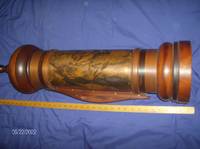
1992DEMO006065IStatesboro GA: The Boxwood Press 1992. First Limited edition. Hardcover. Fine. In a mahogany and copper scroll case with vertical slot and hidden crank handle; with a protective velvet cloth <br/><br/>Only 16cc.Remarkable bilingual presentation / re-interpretation of this Biblical work placing it in the the Reagan / Bush era. Illustrated with 16 color etchings by Bernard Solomon the translator and etcher. He realized there were remarkable parallels between the Biblical story of Esther and that of Anita Hill Clarence Thomas and the U.S. Senate Judiciary Committee. This interpretation unfolds sequentially as each leaf is unrolled from the 33 in. high scroll holder. The body of the scroll holder is one of the original copper plates used for the etchings which is why it is limited to an edition of only 16. The top and bottom of the handcrafted minaret-style case is finely shaped and polished mahogany by Anthony V. Mann. Designed with a hidden crank to rewind the scroll into the case. Altogether remarkable! The Boxwood Press hardcover
193144935Stuttgart: J. Engelhorns Nachf 1931. First edition. Hardcover. g to vg. Octavo. 104pp. Gilt-stamped blue cloth with gilt and blue lettering to cover in original photo-illustrated dustjacket protected in modern mylar. Images of politicians and other famous persons in unposed moments captured by Salomon whose historic work inspired London's Graphic to coin the term "candid camera" while Salomon himself coined the word "Bildjournalist" photojournalist. Magnificently illustrated with full page b/w photographs of Pablo Casals Albert Einstein Wilhelm Furtwängler William Randolph Hearst Thomas Mann Mussolini and others. Description of photos in German English French and Italian. Text in German. Dustjacket with ear along edges one inch chip at left lower corner of back and a few small chips as well as light creasing along edges. Front cover slightly bent outwards. Small abrasion on front free endpaper. Very light foxing to half-title title page and table of contents. Dustjacket in overall good binding and interior in very good condition. J. Engelhorns Nachf hardcover
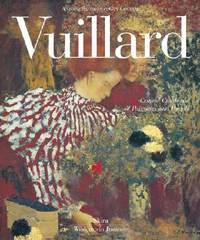
2003C131795Italy: Skira. As New. 2003. Hardcover. 8884911192 . FREE UPGRADE to Courier/Priority Shipping Upon Request IN STOCK AND IMMEDIATELY AVAILABLE FOR SHIPMENT - FLAWLESS COPY BRAND NEW PRISTINE NEVER OPENED - HARDCOVER - 2000 pages; 26.5 pounds -- "The art of Édouard Vuillard 1868-1940 spans two centuries: a leading protagonist of Post-Impressionism Vuillard also took part in the renewal of the decorative arts after 1900. This catalogue raisonné of the paintings and pastels of Édouard Vuillard provides an extraordinary opportunity to look again more carefully and above all comprehensively. Hundreds of photographs taken by Vuillard himself together with an unprecedented collection of preparatory drawings and sketches focus more closely on the artist's creative process than has any previous study. These three voumes present a compelling re-examination of Vuillard's work and recommends itself to experts and art lovers alike. -- AUTHOR: Antoine Salomon a direct descendant of the Vuillard-Roussel family has throughout his life assembled a unique body of documentation on the art and the creative life of Vuillard." Modern Art Art History Post-Impressionism Édouard Catalogue Raisonné Catalogue Raisonne Catalog Raisonnee Complete Works -- with a bonus offer-- - May be EITHER: out of print OOP and extremely rare in this pristine condition; signed by author or contributor; or a first or special edition; inquire for details . Skira hardcover
178688943Paris: la veuve HerissantBarrois l'aîné 1786. Fine. One of the finest illustrated books of the 18th century bound in contemporary full green morocco. la veuve Herissant Barrois l'aîné Paris 1786 - 1793 22 x 30.4 cm Grd. In-4 3 volumes reliés Deluxe edition superbly illustrated with 3 engraved titles a portrait a frontispiece and 72 figures 4 vignettes and 66 tailpieces all by Le Barbier and engraved by Alix Baquoy Dambrun Delignon Gaucher Giraud le jeune Godefroy halbou Langlois jeune Le Beau Lépine Le Villain de Longueil Pauquet Petit Ponce Taxier Thomas Trière and Viguet. The first plates are numbered and within frames with captions in the lower margin the following ones bear pagination indications. Some plates are dated from 1782 to 1792. Fine printing on vellum. Contemporary full green morocco binding. Smooth spine decorated with 4 cornucopia tools and roulettes. Frame roulette on the boards. Roulette on the leading edges and interior. Pink paper on pastedowns. Edges gilt. Traces of rubbing. Darker areas on the boards of volume 2. Spine uniformly lightened. Scattered foxing. Salomon Gessner; poet painter and engraver rapidly acquired great renown throughout Europe for his Idylls and particularly in France. His lively and simpler prose renewed the genre and the baroque language. He himself published most of his books in his printing house and also illustrated them himself. Besides the Pastorals songs and others the edition contains a selection of letters and a short essay on landscape a genre in which Gessner excelled. The great care brought to the printing to the engravings and the remarkable execution of Le Barbier's drawings have contributed to making this work one of the finest of the 18th century. At the end of volume 3 are found 2 letters from Gessner addressed to Barbier regarding the illustrations the author also expressing his pleasure with Barbier's dedication to Madame de Genlis. la veuve HerissantBarrois l'aîné hardcover