Gessner, Salomon (17301788)Biblio.com
15 050 résultats
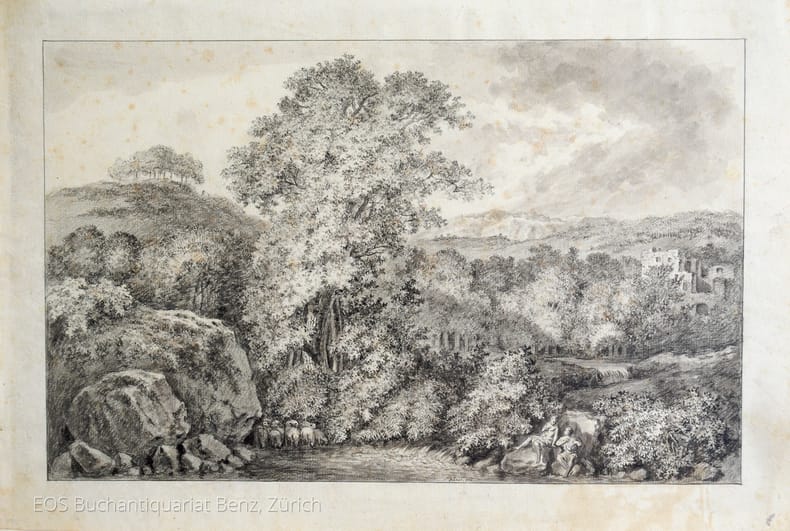
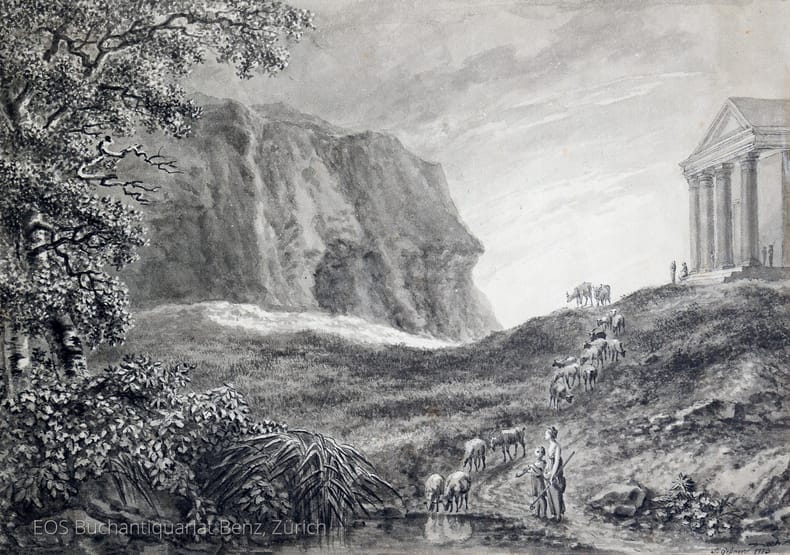
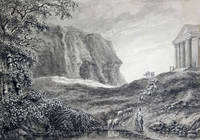
17731823AG1773. 1773. Lavierte Tuschzeichnung mit weiss gehöht. 224 x 32 cm. Unten rechts vom Künstler signiert «S. Gessner f.». Leemann 1930 S.322 Antike Berglandschaft. unknown
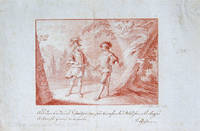
17751821AG1775. Lavierte Tuschzeichnung. Blattformat: 32,4 x 47,8 cm. Tuschzeichnung: 26,4 x 41,8 cm.
17731823AG1773. Lavierte Tuschzeichnung mit weiss gehöht. 22,4 x 32 cm.
172549774Augsburg 1725. Wahrhaffte und genaue Abbildung sowohl der Keyserl.Burg und Lust-Häuser als andere Fürstl. und Gräfl.Paläste u.schöne Prospecte.Pars secunda Vorsatzbl. Knittrig Johann Andreas Pfeffel Quer-2°. Hldr. Oesterreich unknown
1583ABC_50293Lyon: Jean de Tournes 1583. 18th- or 19th-century elaborately gold-tooled pebble-grained dark greenish-blue sheepskin with the titles and place and year of publication for both titles lettered in gold on the spine gold-tooled board edges and turn ins gilt edges marbled endpapers. 8vo. Ad 1: with the title in an ornamental woodcut border with the printers device including two vipers 233 half-page woodcut illustrations and 2 woodcut vignettes. Ad 2: with the title in a historiated woodcut border Cartier "Nains" with the same woodcut printers device Cartier Vipères I1 and 96 half-page woodcut illustrations including one repetition arabesque headpieces and a large woodcut on the last page Cartier "Lac damour. 2 works in 1 volume. With: 2 FONTAINE Charles & Bernard SALOMON. Figures du nouveau testament.Lyon Jean de Tournes 1579. Later edition of this well-known series of woodcut Bible illustrations to the Old Testament engraved by the famous woodcutter Bernard Salomon "le petit Bernard" ca. 1506-ca. 1561 working in Lyon especially for one of the most important Lyon publisher/printers Jean de Tournes 1504-1564. Another collaborator of De Tournes Claude Paradin ca. 1510-1573 is the author of the accompanying quatrains in French which are printed in italics. Claude Paradin is a genealogist and collector of "emblems" or devises published by De Tournes in 1551 as the influential collection Devises Heroïques. The first edition of the Quadrins historiques appeared in 1553 with 199 woodcuts the second and following editions in 1555 1558 and 1560 with 231 cuts. The series is also published with the quatrains in Italian English Spanish and Latin translations. Un pur chef doeuvre de lécole lyonnaise Brun.Ad 2: Fifth edition of the sequel series of woodcut Bible illustrations now to the New Testament also engraved by the famous woodcutter Bernard Salomon. This time the poet Charles Fontaine 1514-ca.1560 who lived in Lyon since 1540 and who was also a close collaborator of Jean de Tournes is the author of the accompanying 96 quatrains in French which are also printed in italics. The first edition of the Figures appeared in 1554 the third in 1558 and the fourth in 1559.With the armorial bookplate "Bibliotheca In memoriam Weiler Trautner Falkiana 1972" on the verso of the first flyleaf and the faint offsetting of a round pair of glasses between the final two leaves of ad 1. Several woodcuts slightly worn out slight browning and foxing throughout. Otherwise in good condition.l Ad 1: Brunet IV col. 995; Cartier Bibliogr. des éditions des De Tournes no. 452; Le livre illustr. De la Renaissance no. 132 2nd ed.; cf. Adams P-293 1st ed.; Brun Le livre illstr. en France 1930 p. 203; Fairfax Murray no. 615; ad 2: Cartier Bibliogr. des éditions des De Tournes II no. 593; Mortimer no. 95 cf. also no. 81; cf. Adams F-706; Brunet IV col. 995. Jean de Tournes, unknown
190148781Broken Bow Nebraska: Copyrighted By Solomon D. Butcher and Ephrain S. Finch 1901. 1901. NEBRASKA. First edition. 8vo. Original edition published in 1901. Blind stamped cloth titles in gilt on the front cover decorated front and rear endpapers 4 403 7 pp. dedication preface illustrated mostly from photographs plates portraits advertisements errata sheet all edges in red. Introduction by Solomon D. Butcher. Butcher came to Nebraska in the early 1880s in time to catch a fleeting glimpse of the fading western frontier and to photograph thousands of scenes. Butcher photographed many scenes of Custer County including wild animals livestock pioneers log and sod buildings prominent citizens cowboys Indians ranches Indian villages and much more. Six Guns 350 says: "Has a long chapter on the lynching of Kid Wade the horse thief one on the exploits of Dick Milton and material on I. P. Olive and the burning of Mitchell and his companion Ketchum." Light wear to spin ends and corners a few nicks to the fore-edges of a few pages front hinge starting to loosen else a very good and internally clean copy of an elusive title and an excellent piece of pioneer history. Copyrighted By Solomon D. Butcher and Ephrain S. Finch, 1901. hardcover
192545523Tel-Aviv/Berlin: Dvir 1925. First edition. Hardcover. g to g. Quartos. Vol.1: xvi 174pp. Vol.2: xii 156pp. Green cloth boards with blind-stamped lettering and motif on the front covers. Gilt lettering and motifs on the spines. Decorative endpapers. Signed and inscribed by acclaimed Hebrew poet Hayim Nachman Bialik and his longtime collaborator Yehoshua Hana Ravnitzki to seminal Hebrew writer and philosopher Ahad Ha'am Asher Zvi Hirsch Ginsberg 1856 - 1927 on the half-title. Both Bialik and Ravnitzky served as the editors arrangers and commentators of these volumes. The inscription states "The fruit of our joint labor in joint suffering a gift of love to Ahad Ha'Am" dated March 27th 1924. Each of the title pages contain the ownership inscriptions of Ahad Ha'Am at the top.<br /> <br /> This set collects the entirety of the poetic works of 11th century Spanish-Jewish poet and philosopher Solomon ibn Gabirol. The set is organized into two volumes with the first 1924 containing his "secular poems" and the second 1925 containing his religious poems "sacred poems" including "Keter Malchut" considered his magnum opus. Commentary organization and editing of the works throughout the volumes by Hayim Nachman Bialik and Y.H. Ravnitski. Each volume contains a table of Hebrew abbreviations roshe tevot used. <br /> <br /> Text in Hebrew.<br /> <br /> Bindings with some degree of bowing to the front boards. Light rubbing to extremities with the second volume with light soling the front cover and some rippling and water stains throughout. Spine of vol.2 repaired along the hinge. Vol.1 with some tears chipping and damp stains to the half-title with some addition damp stains along the gutter of the introductory pages. Decorative endpapers of vol.1 reinforced with japan tissue. Age toning to pages throughout both volumes. Bindings in good- to good interiors in good- to good condition overall. Hebrew title: שירי שלמה בן יהודה ×בן גבירול תרפ"ד<br /> <br /> A later edition from 1927 was released in 5 volumes. Dvir hardcover
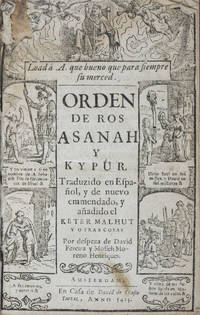
43956Amsterdam: David Fereira y Mosseh Moreno Henriques/ David de Crasto Tartaz David de Castro Tartas 5423. Hardcover. g- to g. Duodecimo. 6.5x4.5". 479pp. Original brown calf boards with gilt-stamped motifs and raised bands on the spine. Blue ribbon marker. Edges of the book block in red. Marbled endpapers. The title page is illustrated with copper plate engravings in the form of small vignettes of biblical scenes surrounding the text. This is an early Spanish-language edition of the complete Jewish High Holiday prayer book Machzor based on the original translation by Abraham Usque originally printed in Ferarra Italy in 1553. This edition contains some added material not previously present including most prominently Solomon ibn Gabirol's famed philosophical poem "Keter Malkhut" Royal Crown which over the years has come to be read as part of the Yom Kippur service in some Jewish traditions. <br /> <br /> This edition of the Machzor was published by David Fereira and Mosseh Moreno Henriques to serve members of the then sizable Sephardic Jewish community in Amsterdam. A significant portion of the community would have been ex-Marranos Jews who had outwardly converted to Catholicism during the inquisition in Spain who then immigrated and were able to reestablished their Jewish identity and thus were unable to read Hebrew hence the text's publication in Spanish. As stated in the foreword this edition includes some additions to the text not included in previous versions and omits some material deemed to have been unnecessary. The prayer book starts with the penitential prayers Selichot p.3-47 which includes decorative head and endpeices. This section is followed by the Rosh Hashanah service p.48-195 and then the Yom Kippur service including "Keter Malkhut" p.254-289. The title page is illustrated with scenes from the biblical stories of King David Saul and Goliath and contain small captions underneath with corresponding biblical passages in Spanish. <br /> <br /> There are a number of pagination printing errors including: p.45-46 are misprinted as 54 and 36 p.264 is misprinted as 164. p.450 is misprinted as 350 p.414 is misprinted as 144. Like in the case of the earlier 1652 edition of the work pages 305-352 are misprinted as "321-368" but in this copy the leaf containing p. 353-354 directly following "368" seems to be missing. Overall this edition follows very closely the 1652 edition of the same work in terms of pagination content and organization. Includes large initials throughout the text. All text in Spanish. <br /> <br /> Binding with rubbing scratches and abrasions to the covers spine and extremities. Some chipping to the head and tail of the spine. Interior front covers with some starting and the loosening of the endpapers. Title page with starting light creases stains and and light chipping on the top left corner resulting in slight loss of image. Some light water staining along the top edge of the pages with some other sporadic light staining throughout. Page 365 torn along the side edge with no loss of text. Starting at a number of pages throughout the book. Binding in good- interior in good condition overall. Binding protected with modern mylar. David ben Abraham de Castro 1630-1698 was a French-born Portuguese Jewish printer/publisher in Amsterdam. Between 1662 and 1701 his press printed the "Gazeta de Amsterdam" a newspaper for the exiled Sephardic Jewish community in Amsterdam. He started his printing career as a typesetter at the printing house of Menasseh Ben Israel a printer and leading Rabbi in community who printed the earliest Amsterdam edition of this work in 1630. Castro started his own business in 1662 making this edition among his earliest publications. <br /> <br /> References: RODRIGUEZ 1781 p. 643 KAYSERLING 1890 p. 62 PALAU1923 202416 PEETERS1933 1038. David Fereira y Mosseh Moreno Henriques/ David de Crasto Tartaz (David de Castro Tartas) hardcover
180440694Kbhvn. 1804-28, 1830, og 1834-35. Indbundet i 51 bind. Bd- 1-49 i samt. halvlæderbind, bd. 1-4 i 8vo, resten i 4to. Bd. 1 og 2 mangler øverste del af ryg, de sidste 2 bind i nyere halvmaroquin, alle med stempler på titelblade og etiketter på rygge. Bd. 16 mangler nr. 96 og 100. I Allernyeste, 1830 mangler spalte 1-4.
180440694Kbhvn. 1804-28 1830 og 1834-35. Indbundet i 51 bind. Bd- 1-49 i samt. halvlæderbind bd. 1-4 i 8vo resten i 4to. Bd. 1 og 2 mangler øverste del af ryg de sidste 2 bind i nyere halvmaroquin alle med stempler på titelblade og etiketter på rygge. Bd. 16 mangler nr. 96 og 100. I Allernyeste 1830 mangler spalte 1-4. <br/><br/><em>Yderst sjælden række af dette omfattende kulturhistorisk/topografiske værk. "Nyeste Skilderie af Kjøbenhavn" grundlages i 1803 af Johan Werfel og eksisterede til 1837. Johan Werfel døbte bladet Nyeste Skilderie af Kjøbenhavn til minde om sin ven samfundsrevseren Niels Ditlev Riegels som var død året før. Riegels havde 1786-1790 udgivet det samfundskritiske blad Månedsskriftet Kjøbenhavns Skilderie men efter Trykkefrihedsforordningen af 1799 var grænserne for hvad man kunne skrive væsentligt indskrænkede. Werfel forsøgte i nogle numre af sit blad at mindes Riegels ved at udgive nogle af hans efterladte skrifter men måtte efter nogle numre stoppe forsøget. Boghandleren og forlæggeren Salomon Soldin blev snart ansat som redaktør og efter at Werfel i 1808 forsvandt og foregav at være død for at undgå sine kreditorer overtog Soldin også udgivelsen af bladet.I de første årgange var bladet et lille ugeblad der udkom i kvartformat men det udvidedes snart så bladet i format og udgivelse kunne konkurrere med tidens andre populære blade såsom Berlingske Tidende og Adresseavisen.Soldin skrev selv en stor del af indholdet i bladet men også flere af tidens betydelige personligheder som Rasmus Nyerup Knud Lyne Rahbek Christian Molbech og Nikolaj Frederik Severin Grundtvig bidrog ofte med indlæg.Nyeste Skilderie af Kjøbenhavn var et særligt københavnsk blad og det læstes fortrinsvis af de dannede borgere. Det var desuden i sin levetid et af de væsentligste blade hvor bl.a. mange af de vigtigste litterære fejder stod.Allerede i 1825 afhændede Soldin redaktionen af bladet til Frederik Thaarup. Omgangskredsen frygtede for bladets skæbne og selv sagde Soldin at han ved overgivelsen til Thaarup havde sørget for at de fik "kristelig Begravelse". Det var dog ikke Thaarup der lagde det i graven for efter 6 år på posten overlodes det til Hans Christian Wosemose Claudius Rosenhoff og J. H. Stabell som omdøbte det til Allernyeste Skilderie. Det levede endnu 6 år men i 1837 samme år som Soldin døde gik bladet endeligt ind. - Bibl. Danica IV: 614. </em> unknown
1967008323New York: Holt Rinehart and Winston 1967. RARE Review Copy of this groundbreaking behind-the-scenes look into the New York art scene of the 1960s. With four 8" x 10" B&W glossy photos from the book laid in; George Segal's "Couple at the Stairs"; Andy Warhol in his studio; Marcel Duchamp in his Manhattan apartment; and Lee Bontecon relaxing in her studio first 3 photos Fine last photo small faint spot bottom margin and faint bottom corner crease. The book is Near Fine small prior owner name 2nd front end page slight bowing to boards. In a Very Good dust jacket 1/4" chip across head and 1 1/2" chip base of spine narrow chip at top edge front flap fold several small closed edge tears. Original photographs from this New York collection are uncommon at auction.RBH. While these four are not originals they would be striking framed as a set. . First Edition. Cloth. Near Fine/Very Good. Tall 4to - over 9¾" - 12" Tall. Review Copy. Holt, Rinehart and Winston Hardcover books
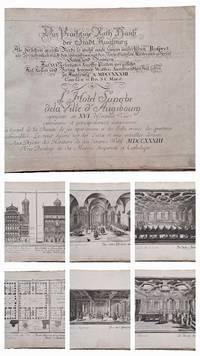
17331602202271<p>Kleiner Salomon / Pintz Johann Georg engraver.</p><p>Das Prachtige Rath-Hauss der Stadt Augsburg / L'Hôtel Superbe de la Ville d'Augsbourg.</p><p>Augsburg: Jeremias Wolff's Heirs 1733.</p><p>Folio approx. 29 × 42 cm. Complete with engraved title and 16 finely executed copper plates.</p><p>Magnificent architectural suite depicting the celebrated Augsburg Town Hall one of the most beautiful civic buildings of the German Baroque. The engravings executed by Johann Georg Pintz after drawings by Salomon Kleiner 1700–1761 present the exterior and richly decorated interiors of the Rathaus including the famed Goldener Saal Golden Hall and princely chambers. Parallel German and French text engraved throughout.</p><p>Collation of plates complete 16 total:</p><p>1. Engraved title page German–French</p><p>2. I. Prospect des schönen Rath-Hauses zu Augsburg General View</p><p>3. II. Zwey Profille des schönen Rath-Hauses zu Augsburg Two Cross Sections</p><p>4. III. Grund-Riße von dreyen Etagen des Rath-Hauses zu Augsburg Three Floor Plans</p><p>5. IV. Das untere Pfletsch oder Saal Entrance Hall with Staffage</p><p>6. V. Die Fürsten-Stube gegen dem Perlach-Platz Princely Chamber toward Perlach Square</p><p>7. VI. Die Fürsten-Stube gegen St. Peters Kirchen Princely Chamber toward St. Peter's Church</p><p>8. VII. Die Gericht-Stuben Courtrooms</p><p>9. VIII. Die Bau-Stuben / Daß Pfleg-Ampt Construction and Administration Rooms</p><p>10. IX. Daß Vor-Zimmer / Die Steuer-Stuben Antechamber and Tax Offices</p><p>11. X. Der große so genandte Guldene Saal auf dem Rath-Hauß zu Augsburg The Great Golden Hall folded plate</p><p>12. XI. Der große Guldene Saal im Grundriß mit A. bezeichnet Golden Hall Plan A</p><p>13. XII. Der große Guldene Saal im Grundriß mit B. bezeichnet Golden Hall Plan B</p><p>14. XIII. Die Erste Fürsten-Stuben First Princely Chamber</p><p>15. XIV. Die Andere Fürsten-Stuben Second Princely Chamber</p><p>16. XV–XVI. Die Dritte und Vierte Fürsten-Stuben Third and Fourth Princely Chambers</p><p>Condition: Complete copy. One plate misplaced bound out of order. Small expert restoration of a pinhole in one plate. Some plates lightly dusty; minor water staining to upper right corner not affecting image areas. Binding worn and requires restoration or replacement but the interior plates are generally clean well-printed and strong impressions throughout.</p><p>References: Katalog der Ornamentstichsammlung Berlin 2118; Schefold Bayerisch Schwaben p. 184; Thieme/Becker XX 452 f.</p><p>A complete and well-preserved example of this rare and important architectural series — one of the most impressive engraved monuments to Baroque civic architecture in southern Germany.</p> Jeremias Wolff’s Heirs
1799CLL-773Paris, Antoine-Augustin Renouard, 1799 4 volumes in-8 de XII, 319 pp. - (2) ff., 282 pp. - (2) ff., 264 pp., (1) f. - (2) ff., 295, (1) pp., maroquin rouge à grain long, plats ornés d'un décor de filets dorés, de pointillés et de fleurons dorés, dos lisses ornés au centre d'un décor à mille points et en tête et en queue d'étoiles dorées petites et grosses, coupes et bordures décorées, tranches dorées (reliures de l'époque).
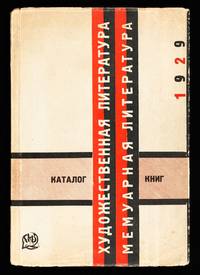
55047Moscow: Gosudarstvennoe izdatel'stvo 1929. Octavo 19.8 × 13.5 cm. Original decorative wrappers; 106 pp. with four sections of different width forming a tabbed structure. Signed and inscribed by Aleksandra Miroliubova to Galina Chichagova on title. Light soil to wrappers; wrapper corners scuffed; still about very good. A Constructivist time capsule this catalog of fiction and memoir publications compiled by Gosizdat the Soviet State Publisher with original typographic design by the graphic artist Solomon Telingater 1903-1969 is inscribed by fellow Constructivist artist Aleksandra Miroliubova: "To the famous Constructivist Galina Dmitrievna Chichagova as a sign of great and everlasting friendship from your best friend. 1917-1963". The tabbed sections of the catalog are reminiscent of Telingater and El Lissitzky's collaborative projects such as the 1927 exhibition catalog on typography "All-Union Printing Trades Exhibition: Guidebook". As Rowell and Wye write: "Despite the content that was far from seductive these volumes show a remarkable graphic invention sometimes imaginatively inspired by this very content and designed for popular appeal" See: MoMA: The Russian Avant-Garde Book 1910-1934 p. 222. Born in Tiflis Georgia Telingater studied at VKhUTEMAS in 1920-1921 often dubbed the Bauhaus of the Soviet Union for its experimental edge. In addition to working on books and catalogs such as this one Telingater did layout design for the Constructivist architecture periodical "CA" Contemporary Architecture as well as architectural periodicals "SSSR na stroike" USSR in Construction and "Stroitel'stvo Moskvy" Construction of Moscow.<br /> <br /> The author of the inscription Aleksandra Miroliubova 1898-1987 and the addressee Galina Chichagova 1891-1967 also studied at VKhUTEMAS with artists such as Aleksandr Rodchenko and Liubov Popova. Galina Chichagova and her sister Olga Chichagova were part of the first working group of Constructivists headed by Rodchenko and would go on to incorporate Constructivist design into Soviet children's books. They also famously experimented with typography turning letters into design elements with the present volume by Telingater engaging in similar graphic play. <br /> <br /> This volume is no. 838 in Rowell/Wye The Russian Avant-Garde Book pictured on p. 230.<br /> <br /> As of March 2025 KVK OCLC show five copies worldwide of which two in North America. unknown
19560012056<p>Vedado Havana Cuba: Rabbi Frederick K. Solomon of Temple Beth Israel Havana Cuba. Good with no dust jacket. 1956. Non-Book. On offer is a spectacular relic of post WWII judaica being a 16-page sermon titled The Will to Be a Jew handwritten and edited by progressive rabbi Dr. Frederick K. "Fritz" Solomon originally Solomonski 1899-1980 SEE BIO NOTES FOLLOWING LISTING. Rabbi Solomon delivered this lecture in 1956 while he was rabbi of the Temple Beth Israel synagogue in Vedado Havana Cuba. In this thoughtfully composed sermon Dr. Solomon argues that Reform Judaism should be accepted as a way forward for the next generation of Jews who view religion differently than the orthodox and older generations. However the sermon is also a meditation on Jewishness more broadly. Solomon opens the sermon by asking that listeners consider the gaps between opinion and fact and how muddled the concepts often become. He then begins to discuss Judaism throughout history. Next Solomon reflects on what it is to be a Jew whether being born to a Jewish mother makes a Jew the racial and political components of Jewishness the Nazis' view of Jews and more. An excerpt of his discussion about what a Jew is follows: "Another conception of a Jew is his membership to the Jewish race and his descent from Abraham as teh first Hebrew. This was a principle laid down by the theorists of the 19th century especially Arthur de Gobineau who maintained that the decline of western civilization was caused by the infiltration of Semites into Europe. It was as you remember the principle adopted by the Nazis who did not care for a person's religion at all and therefore established rule that a Jew is everyone who has at least one Jewish grandparent. This was certainly quite arbitrary as science tells us that even after many generations a pure specimen of the original race can re-appear" p. 6-7. On page 9 the Rabbi states that "a Jew is everyone who adopts the Jewish faith" and then discusses the essence of the Jewish faith being challenged by the wide spectrum of Jewish people. He argues that Reform or Liberal Jews are being driven out of religion and Judaism by "the religiosity of orthodox Judaism". He states: "I am convinced that most of the younger generation who come from orthodox homes join our liberal Synagogues because they realize the discrepancy between observances and religious reality" p. 10. He closes by reading from Micah 6: 6-8 then stating: "When all is said and done it is your heart that makes you a Jew. And nobody can judge whether you are a good Jew but yourself" p. 13-13a. This sermon is a phenomenal piece of judaica that would enhance any collection. Its meditation on what it means to be Jewish is one that many Jews grapple with now as they have throughout history. Solomon's progressive take on Judaism feels ahead of its time and this sermon would make an excellent addition to a religious studies program or a progressive organization. BIO NOTES: Frederick Solomon 1899-1980 painter and Rabbi was born in Berlin Germany in 1899. In 1938 when the synagogue he was serving at was torched by Nazis and he was subsequently summoned by the Gestapo he left Germany with his wife Margot and emigrated to England. Solomonski was interned in the Isle of Man in Hutchinson Square camp in the early 1940s as a prisoner of war along with many other artists. While still in Europe Solomon had studied art under the German-Jewish artists Max Liebermann Martin Brandenburg and Eugene Spiro and German expressionist Willy Jaeckel. In England he continued his artistic career exhibiting his religious and expressionistic work at various galleries throughout the country including the Royal Academy and the Kensington Art Gallery in London where he had a one-man show. His work is in the permanent collections of the Courtauld Institute the Bazalel Museum in Jerusalem and the Ben Uri Art Gallery St. John's Wood London now incorporating the London Jewish Museum of Art. In 1954 he left England to take a position as Rabbi for Temple Beth Ha Shalom in Williamsport PA. After three years in Pennsylvania he sought another position and as a member of the Central Conference of American Rabbis was appointed rabbi at Temple Beth Israel in the Vedado suburb of Havana where he wrote sermons and hosted religious services for his congregation a part of the Union of American Hebrew Congregations. Solomon was also active in the Jewish Progressive movement frequently communicating with representatives of The World Union for Progressive Judaism throughout the 1950s in an attempt to officially associate his congregation with the organization Bio Note Credit to East Coast Books. The sermon pages measure 8x10 inches and there are a total of 16 pages of writing. Solomon has numbered his work pages one through 13 with three additional pages tipped in throughout the sermon as addendums. The sermon is unbound. The pages are all intact with some minor bends and tears that do not interfere with the readability of the document. The sermon is written in blue pen with the Rabbi's changes written in red pen and pencil. The writing is legible though in a somewhat tricky cursive hand. Overall Good. ; Manuscripts; 8vo 8" - 9" tall; 16 pages; Signed by Author .</p> Rabbi Frederick K. Solomon of Temple Beth Israel, Havana, Cuba
179376251793 A Paris: Chez Defer de Maisonneuve, 1793. Grand in-4: 25.5 x 33 cm, 1 front., 161 pp. de titre, préface et texte des cinq chants + 5 pl. grav. Édition ornée dun frontispice et de 5 belles figures hors-texte de Nicolas-André Monsiau gravés au pointillé en couleurs, encrés à la poupée, par Colibert, Casenave et Célment. (Cohen, 436). Luxueuse reliure de lépoque en maroquin rouge à long grains. Dos lisse avec pièce de titre de maroquin vert, caissons ornés de fers floraux et roulettes aux coiffes. Deux roulettes florales en encadrement des plats. Roulette géométrique à boutons de fleurs aux chasses. Gardes recouvertes de papier vert. Toutes tranches dorées. Ex-libris: «Fouques Avocat». Ex-libris: «André Gutzwiller». Bibliophiles et banquier bâlois. Gouttières reteintes. Rares rousseurs.
17501828AG1750. um 1750. Öl auf Leinwand. 152 x 232 cm. Rückseitig bezeichnet «Gessner Salomon ca. 1750». unknown
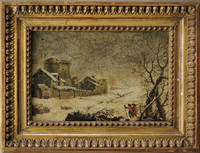
17501828AGum 1750. Öl auf Leinwand. 15,2 x 23,2 cm.
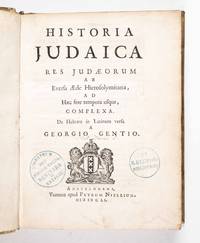
165149175Amsterdam: Pieter Niellius 1651. First edition. Hardcover. Very Good. Small quarto. aster.-2aster.4 A-3M4 = 240 leaves. 16 464pp. Contemporary Dutch vellum very slightly bowed panelled in blind with central stamped vignette spine with raised bands and elegant calligraphic title. Title vignette depicting the arms of Amsterdam. A few old marginal annotations. Various old library stamps at title and bottom margins of two text leaves that on the final leaf bleeds through to text on recto. A very good copy text clean and fresh throughout attractively bound.<br /> <br /> First Latin edition of this late medieval chronicle of Jewish history "one of the outstanding achievements of Hebrew literature in the Renaissance" Enc. Jud. reprinted in 1680 under the Hebrew title Shevet Yehudah The Tribe of Judah. First published in Hebrew at Adrianople in 1554 it was followed by various Hebrew or Yiddish Judaeo-German editions prior to Gentius' version; a Spanish version appeared at Amsterdam in 1640.<br /> <br /> During the 1520s Solomon ibn Verga 1460-1554 wrote his Shevet Yehudah The Tribe of Judah a compilation of accounts of the persecutions undergone by Jews from the destruction of the Second Temple until his own day. At times the author intersperses the historical account with disputations and deliberations of which some are authentic and others imaginary. The author drew his historical material from Josippon the Sefer ha-Kabbalah of Abraham ibn Daud from the narrative of Nathan ha-Babli and from Maimonides’ letters including Iggeret Teiman. He also utilized a brief Hebrew chronicle dealing with the general expulsions and religious persecutions probably that of Profiat Duran and consulted the writings Isaac Abrabanel. For his own period he mentions some of the events which he heard of or witnessed and for which he is sometimes the only source. The work has special importance in the annals of Jewish historical thought. The thoughts and reflections which the author interweaves in his imaginary discussions that is in the literary and not the historical section of the work reflect his dissatisfaction with the traditional outlook and opinions of the Middle Ages.<br /> <br /> The Orientalist and diplomat Georg Gentius 1618-1687 was born in Dhame Saxony and came to study with Heinsius De Dieu Golius and L'Empereur in Leiden as well as the rabbis of Amsterdam. Among the latter Menasseh ben Israel respected Gentius for the courtesy he displayed in his scholarly and personal dealings with the Jews and asked him to complete a Latin translation of the Shevet Yehudah which he himself had begun. With this publication dedicated to the Hamburg consuls Gentius created a larger public for one of the most fascinating historical works of the Hebrew Renaissance and heralded a new era in Jewish history by its critical and empirical approach to the phenomena of history.<br /> <br /> Provenance: old entry of “Nicol. Nonnea D.†at title leaf. References: EJ 8:1203-05 noting the various editions along with Steinschneider 6982. Fürst 3:474. A. Katchen Christian Hebraists and Dutch Rabbis esp. 247-68: Discussion of Gentius leads into Shevet Yehudah. A.A. Neuman “The Shebet Yehudah and Sixteenth Century Historiography†in: Louis Ginzberg Jubilee Volume English Section NY 1945 253-73. Pieter Niellius hardcover
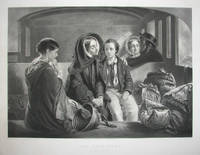
185711291857. Mixed method engraving. <p>A pair of mixed method engravings published by Gambart and Co. in 1857 in a declared edition of 225 pairs. The original paintings were exhibited at the Royal Academy in 1854. In the first picture the scene is the interior of a second class railway carriage with hard unpadded wooden benches. A young mother plainly dressed in a black coat bonnet and shawl clutches the hand of her young son who is evidently on his way to Portsmouth to join the service of the East India Company a recruiting poster is pasted to the wall above his head. His tearful sister sits on the bench opposite next to her brother's baggage a sailor is traveling with his wife in the background numerous posters advertising ship passages to Australia and India and other advertisements are stuck to the walls and ships in the harbour are visible through the carriage window. In the second picture the young man now considerably older has returned to England evidently having made his fortune. He sits in backview in a comfortably upholstered first class carriage wearing smart military uniform chatting to an elderly well dressed fellow passenger while exchanging glances with the old man's pretty fashionably dressed young daughter who sits demurely crocheting in a corner of the carriage. Abraham Solomon was a popular London artist and Simmons was a notable mezzotint engraver. The Departure has some faint spotting lower right corner in margin faint indentation in title area and repaired tear in margin outside the platemark on right hand side. The Return has a repaired tear on left hand side which enters the image about 4cm. It also has a repaired tear in top margin outside image area but within platemark. <br /> <br /> </p> <br /> <p></p> unknown
1839AGLavierte Tuschzeichnung. Blattgrösse: 288 x 245 cm. Zeichnung: 165 x 132 cm. Katalog Kunsthaus 1930 Nr. 623. Entwurf zu den Schriften in Quart nicht erschienen. unknown
1839AGLavierte Tuschzeichnung. Blattgrösse: 28,8 x 24,5 cm. Zeichnung: 16,5 x 13,2 cm.
46231Hamburg B. S. Berendsohn 1854-1857. . Deckel-Titel: "Hamburg und seine reizende Umgebung". - Die Stahlstiche zeigen: Rathhaus-Markt Georgsplatz Esplanade Lombardsbrücke Jungfernstieg Alster im Winter Michaelis-Kirche Catharinen-Kirche Jacobi-Kirche Reesendamm-Brücke Conventgarten Lesehalle Waterloo-Hotel Uhlenhorst Wandsbeker Schloß Andreasbrunnen in Eppendorf Klopstocks Grab Booth's Garten in Flottbek Blankenese Steinwärder Bergedorfer Schloß Friedrichsruh u.a. - Statt Taf. 22 "Die Staats-Wassermühle" hier "Die Poststraße". Zusätzlich eingebunden "Die Börse u. die Börsen-Arcaden". - Bernhard Salomon Berendsohn 1800-1856 Hamburger Buchhändler u. Verleger gründete sein Unternehmen 1833. Das Hauptgeschäft bildeten hochwertige Stadtansichten in Kupfer- bzw. Stahlstich. - Besitzvermerk von alter Hd. - Repräsentatives Exemplar des selten vollständigen Werkes Hamburg, B. S. Berendsohn, ( 1854-1857). unknown
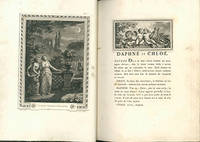
51-3515Paris: Chés l'Auteur des Estampes Veuve Hérissant Barrois l'aîné s.d. 1786-1793. 4to. 23m x30cm.; 3 vols. 19th Century half morocco with marbled boards and endpapers. Fine condition. Numerous plates and engravings in the text. Extra illustrated with 45 engravings by Moreau le jeune for the edition published by Renouard in Paris in 1799 some before lettering. Expertise by Dominique Courvoisier Paris.Salomon Gessner 1730–1788 a Swiss painter and poet devoted himself almost entirely to literature for ten years. He wrote elegiac poetry of an unreservedly sentimental nature. He was a talented painter of classical landscapes and an accomplished draughtsman and engraver producing prints as illustrations to his own works. Notes: Engraved headpieces tailpieces and plates after Le Barbier by Ponce Alix Baquoy Delignon Gaucher Godefroy Halbou de Longueil Pauquet Texier Thomas TrieÌ€re Langlois Viguet Le Beau Le Villain Petit and Dambrun.Description: 3 volumes 1 ¹. 215 pages ; 2 ¹. 182 pages ; 236 pages : illustrations ; 29 cmRay The Art of the French Illustrated Book no. 39; Cohen-de Ricci cols. 433-434 and 435 ffor the Renouard ediiton. OCLC Number: 270944086Engraved headpieces tailpieces and plates after Le Barbier by Ponce Alix Baquoy Delignon Gaucher Godefroy Halbou de Longueil Pauquet Texier Thomas TrieÌ€re Langlois Viguet Le Beau Le Villain Petit and Dambrun.Description: 3 volumes 1 ¹. 215 pages ; 2 ¹. 182 pages ; 236 pages : illustrations ; 29 cmContents: t. 1. Idylles --Evandre et Alcimne pastorale --Eraste --t. 2. Nouvelles idylles --Lettre sur le paysage aÌ€ M. Fueslin --A la cascade --Chanson d'un suisse aÌ€ sa maitresse sous les armes --Ynkle et Yariko --La nuit --Tableau du deÌluge --Le premier navigateur --t. 3. La mort d'Abel --Daphnis.3 volumes in-4 demi-maroquin brun avec coins dos orné de fleurons dorés tête dorée non rogné Reliure vers 1900.Belle édition illustrée de 3 titres gravés 2 frontispices 72 figures 4 vignettes et 66 culs-de-lampe gravés en taille-douce d'aprèsLe Barbier.Exemplaire relié sur brochure auquel on a ajouté 45 gravures de Moreau le jeune pour l'édition publiée chez Renouard à Paris en 1799 dont certaines en double état dont avant la lettre.Tables manuscrites de l'époque ajoutées à la fin des tomes II et III. Paris: Chés l'Auteur des Estampes, Veuve Hérissant, Barrois l'aîné, s.d. [1786-1793]. hardcover
189766711897. Offered here is an original watercolor image size: 15 x 12 inches by the noted British painter Solomon Joseph Solomon 1860-1929 which appeared in the May 1897 edition of the Graphic Magazine. The painting is signed in the lower left corner “S J Solomon 97.†Matted and framed. Solomon Joseph Solomon was a founding member of the New English Art Club and member of the Royal Academy. Solomon made an important contribution to the development of camouflage in the First World War working in particular on tree observation posts and arguing tirelessly for camouflage netting. Solomon’s painting was grounded in his influence from his teacher Alexandre Cabanel but was also influenced by Frederic Leighton and Lawrence Alma-Tadema. Solomon painted mainly portraits to earn a living but also painted dramatic theatrical scenes from mythology and the bible on large canvasses. A large and masterfully executed painting. Provenance: Formerly in the collection of E. W. Phipps. unknown