15 052 résultats
201905582Paris, L'arche, 1988 ; grand in-12, 220 pp., br. Texte en très bon état (1er plat salis).
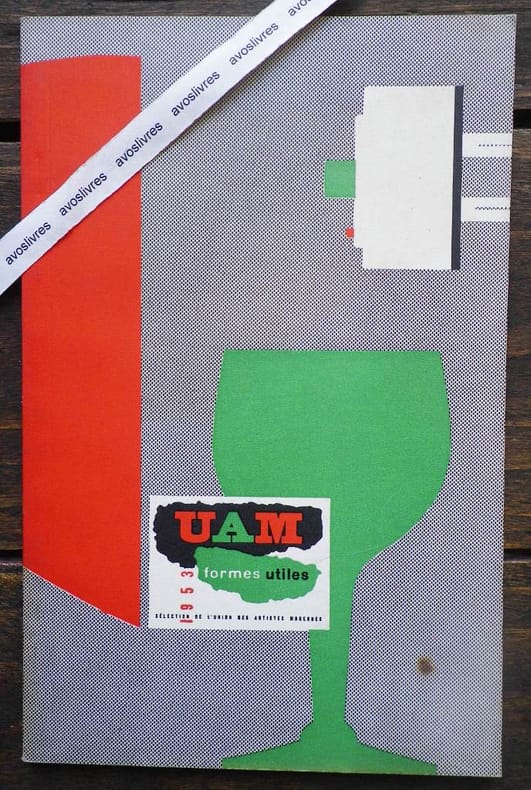
1953166Ed. Salon des Arts Ménagers, Paris. - Imp. Sauvard Frères, Paris. - Sans date (1953). - Format : 23,8 x 15,3 cm. - Non paginé (40 pages). - Nombreuses illustrations HT en noir et blanc (28 pages de photos sur papier glacé). - Broché et agrafé, couverture illustrée en couleurs recto et verso (Pierre Faucheux). - Très bon état général : 1ère de couverture très légèrement tachée.
25294Zurich, Orell, Gessner , Fuessli & Comp., 1773. 1 vol. in-12, cartonnage crème bradel, titre écrit en noir au dos. Reliure moderne. Bon exemplaire, non rogné, à toutes marges, avec témoins. Ex-libris héraldique sur le titre. Titre orné d'une vignette gravée à l'eau-forte, 262 pp. Quelques petites rousseurs.
33565Hennebont, Impr. Méhat, 1928, in 4° broché, 389 pages ; non coupé ; couverture illustrée (fanée et tachée, dos légèrement rapé) ; rarissimes rousseurs éparses ; petite mouillure marginale en pied des 2 derniers feuillets.
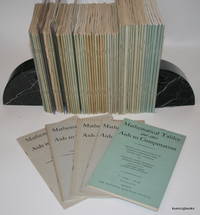
194320095Washington D. C.: The National research Council 1943. First Edition. Wraps. Near Fine. First Edition. We offer a nearly complete run of this important early computer serial: Numbers 1 2 5-59 66-70 each in the original wrappers as published. Small quarto and octavo sizes approx 12 inches shelf space. Occasional minor soiling. From the library of Frank M. Verzuh with his name on some covers. Wraps. MTAC is the first period journal devoted entirely to the literature of computation. The journal had a very small subscription base in the early years. Through 1946 it's subscription list was less than 350 readers. Many were discarded as computing advanced at a rapid pace. As of this writing Worldcat shows less than 80 institutions with even partial runs. <br /> <br /> The first volume contains lists and descriptions of printed tables where they were published as well as new errors discovered in the published sources. These errors introduced by humans whose job description were "computers" continued to appear until mechanical computers significantly reduced and eventually eliminated them. Large businesses military and financial operations used these tables to save time - so error notices were important. Later issues particularly in Volume 2 of this serial contained interesting and groundbreaking material related to the development of computers as we know them today. <br /> <br /> Previous owner Professor FM Verzuh attended the Moore School lectures and was a participant in early computering at MIT. The fact that this serial was still present on his shelf at his retirement is an indication of it's importance. <br /> <br /> Scarce in the marketplace. See Origins of Cyberspace 777 for a detailed description and history of the serial which was published in a total of 14 volumes until a title change in 1960. Important articles included in this run include Origins of Cyberspace 577 579 1077 and 1078. "MTAC remains the primary periodical source of information on the electromechanical and electronic digital computers designed and built during the late 1940s and early 1950s as well as on the scientific uses of punched-card machines mechanical desk calculators etc" It also served as a journal of record for the newly formed Association of Computing Machinery until the founding of their own journal in January 1954. The National research Council unknown
19095440Berlin: Dietrich Reimer Ernst Vohsen 1909. First edition. 28x19cm 11pp text and 74 collotypes on 38 plates thick cardstock recto only. Text in German introduction by Robert Schultze. Publisher's black and gilt stamped cloth boards worn and stained. Binding shaken hinges starting and top of text block pulling away as common for this volume. Ownership stamp of Ernö Metzner to top edge of several preliminaries else clean internally with some bumped upper corners. A good copy. <br /> <br /> Scarce collection of ethnographic photographs from the German Solomon Islands specifically Bougainville and Buka. The images include daily life activities and culture of the indigenous tribes as well as scenic shots of the islands themselves. All pictures were taken by K. J. Schaffrath construction engineer for the German imperial government in Herbertshöhe now Kokopo. <br /> <br /> Interesting ownership stamp of Ernö Metzner 1892-1953 Austro-Hungarian born director art director and production designer perhaps used for research in one of his many films. <br /> <br /> We identify two auction results in the last 10 years for this uncommon volume. Dietrich Reimer (Ernst Vohsen) unknown
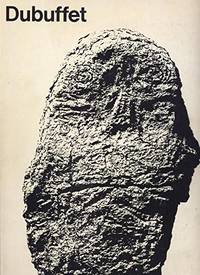
1973PM308405QParis: Centre national d'art contemporain ; Weber 1973. Trade paperback. Good/Not issued. 22 cm. Paperback • Illustrations en noir et en couleurs couverture illustrée • <b><i>French text original</i></b>. Centre national d'art contemporain ; Weber paperback
1911860131911 Aix-les-Bains, Lyon, Montbrison, Saint-Etienne, 1911, plaquette in 8° brochée, 16 pages ; couverture illustrée (le plat inférieur manque) ; cachets.
1912811371912 Arras, 1912, plaquette in 8° brochée, 16 pages ; couvetrure illustrée.
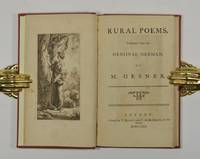
41223London: Printed for T. Becket and P. A. De Hondt 1762. 12mo xxiii 1 106pp. with a half-title engraved frontispiece offset some light spotting throughout rebound in red cloth leather spine label lettered in gilt. London: Printed for T. Becket and P. A. De Hondt, 1762 hardcover
175646404394Rostoc, chez Ant. Ferd. Röse, 1756 ; in-12, veau brun marbré, dos orné, tranches rouges. (Reliure de l’époque). Titre imprimé en rouge avec un bois gravé pp. 3 à 146. - Frontispice gravé par C. Fritsch - Ornements sur bois dans le texte.ÉDITION ORIGINALE. C’est la première traduction française du Daphnis de Gessner. on ignore qui en est l’auteur.Voir P. Van Tieghem. Les Idylles de Gessner in Revue de littér. comparée 1924 pp. 41-72 et 222-69. Après avoir fourni les détails sur cette traduction, Van Tieghem ajoute : “Nous ne la connaissons que par Huber, qui la dit exécrable, et par Hérissant qui la dit très mal écrite”. Mylne-Martin 5615. Michael Huber donnera une nouvelle traduction de Daphnis à Paris en 1764.Relié à la suite : GESSNER (S.) Le Premier marin. Poème en trois chants traduit de l’allemand par M. M***. À Sedan, chez les Frères Jacquemart, 1764 ; Frontispice de Gravelot, titre gravé illustré de Gravelot g. par Legrand, 95 pp., 1 f. errata. ÉDITION ORIGINALE de la traduction du Der erste Schiffer. Le traducteur est SENOLIERES. En tête se trouve un avis des frères Jacquemart, les éditeurs de Sedan, qui fait l’éloge des imprimeurs érudits des XVe et XVIe siècles, un hommage au métier de S. Gessner qui était imprimeur à Zurich. Au sujet des frères Jacquemart (Nicolas-Thierry et Nicolas-François) voir Bouillot. Biogr. ardennaise II pp. 50-52. Ainsi que l’indique une note à la fin de l’ouvrage, celui-ci ne fut tiré à peu d’exemplaires “une seconde édition suivra de peu la première”. Mylne-Martin 6426. Le papier du premier ouvrage est légèrement bruni.
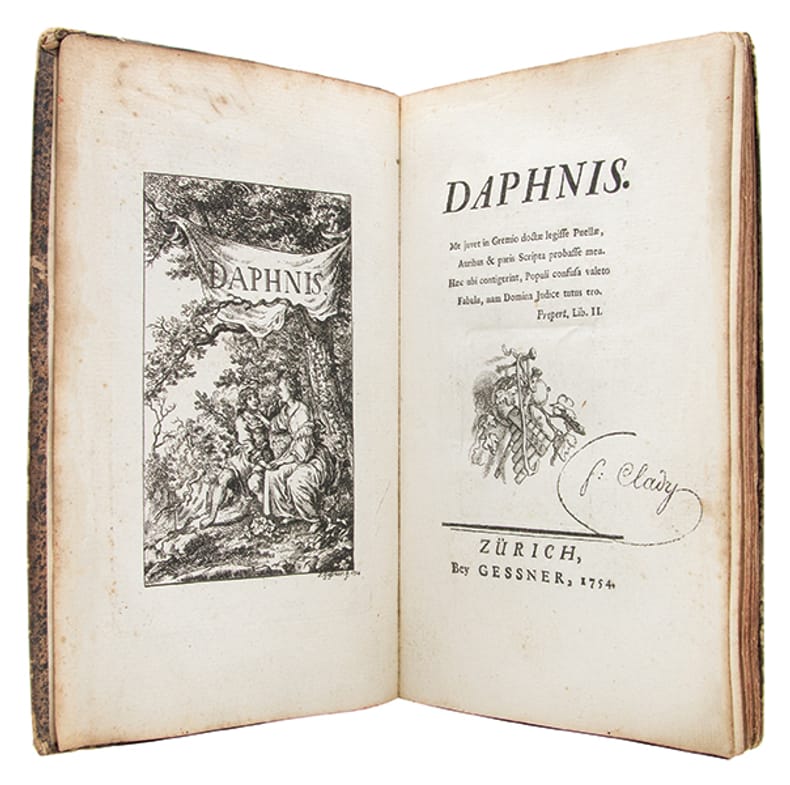
39036In-12 (170 x 105 mm), plein cartonnage marbré de l'époque, tranches rouges, 132 p., Titelvignette und 4 Textvignetten. Zürich, Bey Gessner, 1754
1837100163AB1837. Halifax Printed fro William Milner 1837. Duodecimo / Miniature book. Frontispiece XX 169 pages. Original Hardcover dark green cloth with floral embossement and gilt lettering on spine. Very good condition with only minor signs of external wear. Rare Halifax print ! History of the Halifax Printer William Milner: Born to a single mother in Halifax in October 1803 William Milner was apprenticed as a youth to a printer in Hebden Bridge. After a stint as a grocer he began publishing books himself initially using local printers Hartley & Walker or Whitley & Booth. Then he set up his own printing press at Swine Market now upper Crown Street. It was here that he published John Fielden's revolutionary book The Curse of the Factory System in 1836. Moving his business to Upper George Yard Cheapside he began to publish his series called Cottage Library which were said to be the cheapest books in Britain. At one time he was printing 15000 books per day sold at sixpence 2 new pence and 1 shilling 5 new pence each. Cheap books were a rarity before Milner commenced printing. He would sell copies by travelling round the country from a horse-drawn van. And many of his books were exported to distant parts of the British Empire. Milner was a fervent supporter of the Chartists. Wishing to obtain quantities of Feargus O'Connor's Chartist paper confiscated when found by the Authorities Milner worked out an ingenious plan to obtain supplies. Every week copies of the papers were hidden in a coffin in London which was then conveyed north in a hearse smuggling in banned reading material! Milner lived for many years in Rhodes Street where he died in 1850. He married widowed Mrs Mary Sowerby from Bristol taking her two sons into partnership. The business was left to these stepsons in his death; the firm then traded as Milner & Sowerby. It was in 1858 that the company moved to its new premises in Raglan Street designed by local architect Richard Horsfall later Mayor of Halifax. The street off Hanson Lane below the factory is called Milner Street though the sign has disappeared. The new building's opening was marked by an outing for employees to Hardcastle Crags followed a meal at the White Lion Hotel Hebden Bridge. The number of cheap books turned out by this firm was phenomenal. By 1907 245000 copies of the works of Burns had been sold for example. Hundreds of thousands of working people must have benefited from the company's affordable copies of literary classics. But by 1910 there were many more rivals in the printing trade and business was declining badly for Milner & Sowerby. On 1st June 1910 the company went into liquidation. Of the two Sowerby brothers Francis lived latterly at Bowers Hall Barkisland dying in 1885; and John lived latterly at Green Hayes Savile Park Road now occupied by Lawrence Funeral Service dying in 1898. The firm was headed latterly by Major Reginald John Sowerby son of Francis who lived at Oak Mount Sutherland Road Lightcliffe. He died in 1923 after his company closed. The Raglan Street premises were taken over as an extra worsted factory by Standevens of Ladyship Mills. I am sure there are people around today who can remember them in business there and those firms which later occupied the same building. Author of this article is: David C Glover / Halifax Courier. hardcover
200806310Paris, Librairie hachette, 1909 ; in-12, 336 pp., broché. 6e edition - adapté aux besoins des écoles française.
1359664475.Ghardcover. Good. Access codes and supplements are not guaranteed with used items. May be an ex-library book. hardcover
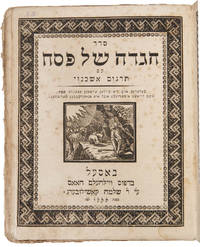
106984Basel Wilhelm Haas 1816. . First edition 4to 21.6 x 17.7 cm; original printed paper boards with a fine geometric design edges rubbed occasional old tape repairs without loss block cracked but holding; 24 woodcut illustrations in text; browning and staining to pages previous owners' signatures to inside cover. Text in Hebrew and Yiddish. 2 54 pp. <br /> Scarce first edition of the Basel Haggadah in its original ornamental binding.<br /><br />One of the more attractive Haggadah editions that were published in 19th century Europe. Its text is a reprint of Joel Brill's German translation of 1785. The magnificent woodcut illustrations of this edition 'were copied from Friedrich Battier's illustrations to a German Bible published in Basel in 1710 by Johann Brandmüller Jr. The woodcut of Moses at the Burning Bush shown here on the title page was taken from the frontispiece of the Amsterdam Haggadah of 1712' Yerushalmi.<br /> Vinograd Basel 284; Yudlov 565; Yaari 399; Yerushalmi 86; Harvard 21.5:17. Basel, Wilhelm Haas, 1816. hardcover
109197Basel Wilhelm Haas 1816. . First edition 4to 21.6 x 17.7 cm; original decorative printed paper boards with a fine geometric design edges and spine rubbed block cracked but holding; 24 woodcut illustrations in text; browning and staining to pages pp. 3-6 professional restoration to edges previous owners' inscription and signature in old brown ink to inside covers; text in Hebrew Aramaic and Yiddish. 2 54 pp.<br /> Scarce first edition of the Basel Haggadah in its original publisher's decorative binding.<br /><br />One of the more attractive Haggadah editions that were published in 19th-century Europe. Its text is a reprint of Joel Brill's German translation of 1785. The magnificent woodcut illustrations of this edition 'were copied from Friedrich Battier's illustrations to a German Bible published in Basel in 1710 by Johann Brandmüller Jr. The woodcut of Moses at the Burning Bush shown here on the title page was taken from the frontispiece of the Amsterdam Haggadah of 1712' Yerushalmi.<br /> Vinograd Basel 284; Yudlov 565; Yaari 399; Yerushalmi 86; Harvard 21.5:17. Basel, Wilhelm Haas, 1816. hardcover
19852528BB1985. Oxford Oxford University Press 1985. 155 x 23 cm. XX 646 pages. Original Softcover. Very good condition with minor signs of external wear. From the library of philosopher Graham Parkes. With his name on the half title and his markings and annotations in the text. Contains among others: The Place of the Phenomenology; Against Reading Hedel Backwards; Hegel as Humanist; Hegel as Anti-Metaphysician Anti-Epistemologist; Phenomenology: The Science of Experience etc. paperback
201220651Paris, Casterman, 1968 ; in-8, 202 pp., cartonnage de l'éditeur. Couverture sali.
201001756Tel Aviv, Am Haddefer, 1968 ; in-8, 54 pp., cartonnage d'éditeur avec jaquette. Bon état - photographs by Dalia Amotz.
65040P., Librairie Bloud, 1907, in 12 broché, 64 pages.
1994LFA00a96N° 461 - Mai 1994 - Revue internationale d'art : 88 pages, format 310 x 240 mm, illustrée, brochée
201902594Bordeaux, Les nouveaux cahiers de jeunesse, 1967 ; in-8, 129 pp., br.
201707045Paris, Albin Michel, 2002 ; in-8, 370 pp., br. Broché bon état.
1936454731936 Lyon, Editions de la "République Lyonnaise", 1936, in 4° broché, 287 pages ; couvertue illustrée (fanée avec petits manques).