3 126 résultats
19892110502151109557Nakoyashi 1989. Soft Cover. Fine. Number of books: 1 Nakoyashi paperback
19892111902152802410Nagoya City Aichi Prefecture 1989. Soft Cover. Fine. Volume: 1 Nagoya City, Aichi Prefecture paperback
199380330Washington DC: National Aeronautics and Space Administration 1993. Presumed First Edition First printing. Wraps. Good. 2 ii 111 1 pages. Map. 13 Appendices. Index. Includes Executive Summary; Space Launch Activities; Space Science; Space Flight and Space Technology; Space Communications; Aeronautical Activities; Studies of the Planet Earth; Other Aeronautical and Space Activities; and Glossary. The annual "President's Report" is a good summary of the Government's aerospace activities each year. Mandated by law it contains information on aerospace activities conducted by 14 Federal departments and agencies as well as appendices containing useful historical data on spacecraft launches and budget figures. The National Aeronautics and Space Act of 1958 directed that the annual Aeronautics and Space Report include a "comprehensive description of the programmed activities and the accomplishments of all agencies of the United States in the field of aeronautics and space activities during the preceding calendar year." This year's report has been prepared on a fiscal year basis which is consistent with the budgetary period now used in programs of the Federal Government. This report presents a fascinating snapshot of the U.S. space activities toward the end of the 20th Century. Fiscal Year FY 1992 was a significant one for U.S. aeronautics and space efforts. It included seven Space Shuttle missions and 14 Government launches of Expendable Launch Vehicles ELVs carrying a variety of payloads ranging from NASA missions to classified payloads. In addition there were eight launches of ELVs by commercial launch service providers operating under licenses issued by the Department of Transportation's Office of Commercial Space Transportation. On December 71991 the Air Force achieved initial launch capability for the new Atlas I1 launch vehicle in a commercial launch by General Dynamics with support from the Air Force. The other ELV missions launched four Navstar Global Positioning System two Defense Satellite Communications System and one Defense Meteorological Satellite Program satellites as well as two classified payloads and four NASA spacecraft. The Shuttle missions included one using the Atmospheric Laboratory for Applications and Science ATLAS-1 to study the Sun and our atmosphere as well as the first flight of the newest orbiter Endeavour which rendezvoused with retrieved and replaced the perigee kick motor of the INTELSATVI F-3 satellite that the International Telecommunications Satellite Organization INTELSAT controllers then deployed into its intended orbit. In aeronautics efforts have ranged from development of new civil and military aircraft and technologies to research and development of ways to reduce aircraft noise and improve flight safety and security. A key environmental effort in FY 1992 was monitoring ozone depletion. One of the major Earth science highlights of the year was finding that like the ozone layer over the Antarctic regions with its well documented annual depletion the ozone layer in the Northern Hemisphere is increasingly vulnerable to depletion by synthetic chemicals. Several Federal agencies have cooperated to study this and other environmental problems so we can improve the prospects for future generations who will inhabit the Earth. The budgets for aeronautics and space-distributed among 14 different Federal agencies have promoted important advances in the Nation's scientific and technical knowledge promising to enhance the quality of life on Earth through improved scientific understanding provide a more viable economy and healthier environment and ensure we live in a safer world. National Aeronautics and Space Administration paperback
197586142Washington DC: U.S. Government Printing Office 1975. Presumed First Edition First printing. One of multiple originals issued. Single sheet printed on both sides. Very good. The format is approximately 8 inches by 10 inches. This is a single sheet with a photograph on the front and printing on both sides in a plastic sleeve. On the front side is a large color photograph of American ASTP Launch ASTP. The other side is largely in two column format with text in English on the left and Russian text on the right. This is titled First International Manned Space Mission/ From Google Translate. The color photograph shows the Apollo liftoff on July 15 1975 for its historic rendezvous with two Soviet cosmonauts aboard their Soyuz spacecraft. ASTP was particularly significant for the USSR's policy of keeping the details of their space program secret from the Soviet people and the world at large especially Americans. The ASTP was the first Soviet space mission to be televised in a live fashion during the launch while in space and during the landing. Soyuz 19 was also the first Soviet spacecraft to which a foreign flight crew had access before flight; the Apollo crew were permitted to inspect it and the launch and crew training site which was an unprecedented sharing of information with Americans about any Soviet space program. Apollo-Soyuz was the first crewed international space mission carried out jointly by the United States and the Soviet Union in July 1975. Millions of people around the world watched on television as an American Apollo spacecraft docked with a Soviet Soyuz capsule. The project and its handshake in space was a symbol of détente between the two superpowers during the Cold War. The mission was officially known as the Apollo-Soyuz Test Project ASTP or. 'Experimental flight Soyuz-Apollo' and commonly referred to in the Soviet Union as Soyuz-Apollo; the Soviets officially designated the mission as Soyuz 19. The unnumbered American vehicle was left over from the canceled Apollo missions and was the last Apollo module to fly. The three American astronauts Thomas P. Stafford Vance D. Brand and Deke Slayton and two Soviet cosmonauts Alexei Leonov and Valery Kubasov performed both joint and separate scientific experiments including an arranged eclipse of the Sun by the Apollo module to allow instruments on the Soyuz to take photographs of the solar corona. The pre-flight work provided useful engineering experience for later joint American-Russian space flights such as the Shuttle-Mir program and the International Space Station. Apollo-Soyuz was the last crewed United States spaceflight for nearly six years until the first launch of the Space Shuttle on 12 April 1981 and the last crewed United States spaceflight in a space capsule until Crew Dragon Demo-2 on 30 May 2020. U.S. Government Printing Office unknown
197180614Washington DC: National Aeronautics and Space Administration Apollo Program Office 1971. Presumed First Edition First printing. Single sheet printed on both sides. Good. Format is approximately 6.5 inches by 5.5 inches folded in half and printed on both sides. Item has some wear and soiling. Front side has a detailed listing of events such as liftoff Translunar Injection Midcourse Correction Lunar Orbit Insertion etc. The other side continues with a listing of events but has two graphics detailing the events of Apollo 14 EVA-1 and Apollo 14 EVA-2. The Apollo program also known as Project Apollo was the third U. S. human spaceflight program carried out by the National Aeronautics and Space Administration NASA which succeeded in landing the first humans on the Moon from 1969 to 1972. It was first conceived during Dwight D. Eisenhower's administration as a three-person spacecraft to follow the one-person Project Mercury which put the first Americans in space. Apollo was later dedicated to President Kennedy's national goal for the 1960s of "landing a man on the Moon and returning him safely to the Earth" in an address to Congress on May 25 1961. It was the third US human spaceflight program to fly preceded by the two-person Project Gemini conceived in 1961 to extend spaceflight capability in support of Apollo. Kennedy's goal was accomplished on the Apollo 11 mission when astronauts Neil Armstrong and Buzz Aldrin landed their Apollo Lunar Module LM on July 20 1969 and walked on the lunar surface and landed safely on Earth on July 24. Five subsequent Apollo missions also landed astronauts on the Moon the last Apollo 17 in December 1972. In these six spaceflights twelve people walked on the Moon. Rare surviving Apollo 14 ephemera. Apollo 14 was the eighth crewed mission in the United States Apollo program the third to land on the Moon and the first to land in the lunar highlands. It was the last of the "H missions" targeted landings with two-day stays on the Moon with two lunar EVAs or moonwalks.<br /> The mission was originally scheduled for 1970 but was postponed because of the investigation following the abort of Apollo 13 and the need for modifications to the spacecraft as a result. Commander Alan Shepard Command Module Pilot Stuart Roosa and Lunar Module Pilot Edgar Mitchell launched on their nine-day mission on Sunday January 31 1971 at 4:03:02 p.m. EST. Liftoff was delayed forty minutes and two seconds due to launch site weather restrictions the first such delay for an Apollo mission. En route to the lunar landing the crew overcame a series of malfunctions that might have resulted in a second consecutive aborted mission and possibly the premature end of the Apollo program. Shepard and Mitchell made their lunar landing on February 5 in the Fra Mauro highlands - originally the target of Apollo 13. During the two walks on the surface 94.35 pounds 42.80 kg of Moon rocks were collected and several scientific experiments were deployed. To the dismay of some geologists Shepard and Mitchell did not reach the rim of Cone crater as had been planned though they came close. In Apollo 14's most famous incident Shepard hit two golf balls he had brought with him with a makeshift club. While Shepard and Mitchell were on the surface Roosa remained in lunar orbit aboard the Command and Service Module performing scientific experiments and photographing the Moon including the landing site of the future Apollo 16 mission. He took several hundred seeds on the mission many of which were germinated on return resulting in the so-called Moon trees that were widely distributed in the following years. After liftoff from the surface and a successful docking the spacecraft was flown back to Earth where the three astronauts splashed down safely in the Pacific Ocean on February 9. National Aeronautics and Space Administration, Apollo Program Office unknown
196545464Washington DC: GPO 1965. fair. Oversized approx. 200 Part II only wraps profusely illus. figures tables references some foxing to fore-edge and a few pages. Covers somewhat worn soiled and creased small tears and small pieces missing at spine. GPO paperback
199213066Washington DC: GPO c. 1992. very good. 8" x 10" 1 photo 1 signed color photograph with short biography on back. GPO unknown
198013074Washington DC: GPO 1980. good. 8" x 10" 1 photo 1 signed color photograph sticker residue on reverse. GPO unknown
195980605Washington DC: National Aeronautics and Space Administration c1959. Presumed First Edition First printing. Booklet. Good. Format is approximately 10.5 inches by 8 inches. 32 pages plus covers. Illustrations. Reference was found on page 21 to selection of candidates having begun in early 1959. Other references to early 1959 and 1958 noted. This work starts out with a brief history of the scientific inquiry into space and space travel. It the discusses sounding rockets Satellites Spacecraft Space Probes Jupiter C Vanguard I Juno II Tracking Station Manned Space Flight Human Factors Project Mercury and space exploration. This is an early NASA general audience publication. The National Aeronautics and Space Administration NASA is an independent agency of the U.S. Federal Government responsible for the civilian space program as well as aeronautics and space research. NASA was established in 1958 succeeding the National Advisory Committee for Aeronautics NACA. The new agency was to have a distinctly civilian orientation encouraging peaceful applications in space science. Since its establishment most US space exploration efforts have been led by NASA including the Apollo Moon landing missions the Skylab space station and later the Space Shuttle. NASA is supporting the International Space Station and is overseeing the development of the Orion spacecraft the Space Launch System and Commercial Crew vehicles. The agency is also responsible for the Launch Services Program which provides oversight of launch operations and countdown management for uncrewed NASA launches. National Aeronautics and Space Administration unknown
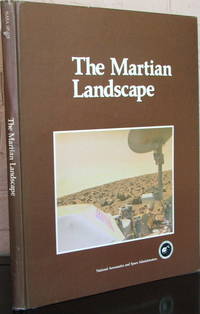
1978008599Washington D. C.: GPO. First edition. Hard cover in original cloth. Published Washington DC: GPO 1978. Folio 11 1/4" x 14 1/4" vii160pp. illustrated with black and white and color images. Includes unused 3D viewer in pocket at rear. Near fine. . Near Fine. Hard. 1st. 1978. GPO unknown
1974005829Washington D.C.: National Aeronautics and Space Administration NASA 1974. "For Release No Date. Photo No. 62-MAS-168". Near Fine faint 1" surface crease. 8" x 10" black and white NASA publication information printed in blue ink verso. "Astronaut John Glenn was photographed in space by an automatic sequence action picture camera as he became the first American to orbit the earth on Feb. 20 1962. His Mercury spacecraft - Friendship 7- made three orbits in its 4 hours 55 minute flight. Glenn was in a state of weightlessness traveling at 17500 mph as this picture was taken." . First Edition. Photograph. Near Fine/No Jacket As Issued. 8" x 10". National Aeronautics and Space Administration (NASA) Paperback books
19992091502135421073Macau Academy of Chinese Medicine 1999. Soft Cover. Fine. Number of books: 1 Macau Academy of Chinese Medicine paperback
19902092902141208035china map 1990. Soft Cover. Fine. Volume: 1 china map paperback
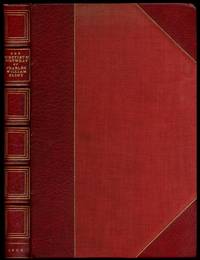
1925016980Cambridge: Harvard University Press 1925. Hardcover. Very Good/No Jacket as Issued. 9x6x1. Half red leather cloth backed boards uncut fore edge marbled end-sheets five raised hubs on spine gilt lettering on spine sturdy binding an overall attractive copy. Inscription on front endpaper. xiii 245 pp. Full refund if not satisfied. Harvard University Press hardcover
194286337Washington DC: Office of Price Administration 1942. Presumed First Edition First printing no Rev. notification. Single sheet printed on both sides. Good. Format is approximately 16 inches by 10.5 inches folded in half creating a four page document. This form has been folded in half and also be creased/folded perhaps to fit into a pocket. The front page as sections for the Name of Registered Owner and applicant information from the Board and details of the application and of the vehicle. The second page asked for additional details about the applicant and associated vehicles. The third page has certification and agreement of applicant and certification by inspector. The back/last page documents the action by the Rationing Board. Tires were the first item to be rationed by the OPA which ordered the temporary end of sales on 11 December 1941 while it created 7500 unpaid volunteer three-person tire ration boards around the country. By 5 January 1942 the boards were ready. Each received a monthly allotment of tires based on the number of local vehicle registrations and allocated them to applicants based on OPA rules. There was a shortage of natural rubber for tires since the Japanese quickly conquered the rubber-producing regions of Southeast Asia. Although synthetic rubber had been invented before the war it had been unable to compete with natural rubber commercially so the US did not have enough manufacturing capacity at the start of the war to make synthetic rubber. Throughout the war rationing of gasoline was motivated by a desire to conserve rubber as much as by a desire to conserve gasoline. To get a classification and rationing stamps one had to appear before a local War Price and Rationing Board which reported to the OPA. The Office of Price Administration OPA was established within the Office for Emergency Management of the United States government by Executive Order 8875 on August 28 1941. The functions of the OPA were originally to control money price controls and rents after the outbreak of World War II. President Franklin D. Roosevelt inaugurated the Council of National Defense Advisory Commission on May 29 1940 to include Price Stabilization and Consumer Protection Divisions. Both divisions merged to become the Office of Price Administration and Civilian Supply OPACS within the Office for Emergency Management by Executive Order 8734 on April 11 1941. Civil supply functions were transferred to the Office of Production Management. It became an independent agency under the Emergency Price Control Act January 30 1942. The OPA had the power to place ceilings on all prices except agricultural commodities and to ration scarce supplies of other items including tires automobiles shoes nylon sugar gasoline fuel oil coffee meats and processed foods. At the peak almost 90% of retail food prices were frozen. It could also authorize subsidies for production of some of those commodities. The War Production Board WPB ordered the temporary end of all civilian automobile sales on 1 January 1942 leaving dealers with one half million unsold cars. Ration boards grew in size as they began evaluating automobile sales in February only certain professions such as doctors and clergymen qualified to purchase the remaining inventory of new automobiles typewriters in March and bicycles in May. Automobile factories stopped manufacturing civilian models by early February 1942 and converted to producing tanks aircraft weapons and other military products with the United States government as the only customer. Office of Price Administration unknown
1972141121Washington DC: U.S. Government Printing Office 1972. Hardcover. ex library-good. Special edition of the Federal Register containing a codification of documents of general applicability and future effect as of April 1 1973. vi 2 487 p. 24 cm. Buckram. Ex library with labels on lower spine and endpapers ink stamps on text block edges and first pages. <br/><br/>Chapter 1: Bureau of Indian Affairs Dept. of the Interior. Chapter 2: Indian Arts and Crafts Board Dept. of the Interior. Chapter 3: Indian Claims Commission. U.S. Government Printing Office hardcover
19982080202102707977Oki Education Committee 1998. Soft Cover. Fine. Page size: 229 pages Size: B5 size Oki Education Committee paperback
19992080202102707572Oki Education Committee 1999. Soft Cover. Fine. Page size: 220 pages Size: B5 size Oki Education Committee paperback
20002080202102707954Oki Education Committee 2000. Soft Cover. Fine. Page size: 219 pages Size: B5 size Oki Education Committee paperback
20002080202102707343Oki Education Committee 2000. Soft Cover. Fine. Page size: 95 pages Size: B5 size Oki Education Committee paperback
19972080202102702030Okinawa Prefectural Archives Administration Department Historical Materials Editing Room 1997. Soft Cover. Fine. Page size: 154 pages Size: B5 size Okinawa Prefectural Archives Administration Department Historical Materials Editing Room paperback
19782090202120405655Not Available 1978. Soft Cover. Fine. Number of books: 1 Not Available paperback
19642090502113716181Not Available 1964. Soft Cover. Fine. The book is in fine condition. Not Available paperback
19652090502113703847Not Available 1965. Soft Cover. Fine. The book is in fine condition. Not Available paperback
19652090502113704995Not Available 1965. Soft Cover. Fine. The book is in fine condition. Not Available paperback