657 résultats
2003RO80078033JURIS ASSOCIATIONS. 2003. In-8. Broché. Bon état, Couv. fraîche, Dos satisfaisant, Intérieur frais. 420 pages.. . . . Classification Dewey : 350-Administration publique
2004RO80169233PRAT EDITIONS. 2004. In-8. Broché. Bon état, Couv. convenable, Dos satisfaisant, Intérieur frais. 154 pages.. . . . Classification Dewey : 350-Administration publique
20012080202102707754Oki Education Committee 2001. Soft Cover. Fine. Size: A5 size Oki Education Committee paperback
20042080202102707889Oki Education Committee 2004. Soft Cover. Fine. Page size: 230 pages Size: B5 size Oki Education Committee paperback
20022080202102707042Oki Education Committee 2002. Soft Cover. Fine. Page size: 239 pages Size: A5 size Oki Education Committee paperback
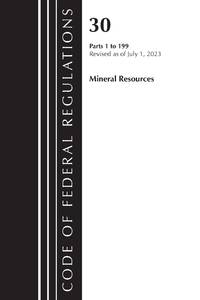
2024x-1636714986Code Fereral Regulations 2024. Paperback. New. 868 pages. 8.75x5.75x2.00 inches. Code Fereral Regulations paperback
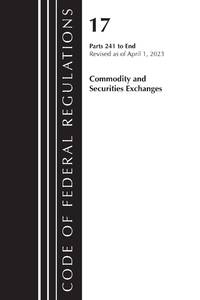
2024x-1636715680Code Fereral Regulations 2024. Paperback. New. 796 pages. 9.00x6.00x1.75 inches. Code Fereral Regulations paperback
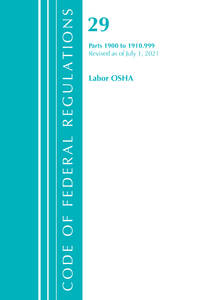
2024x-1636714994Code Fereral Regulations 2024. Paperback. New. 701 pages. 8.75x5.75x1.50 inches. Code Fereral Regulations paperback
2022x-1636718833Bernan Pr 2022. Paperback. New. 989 pages. 8.75x5.75x2.25 inches. Bernan Pr paperback
2008Q-0865875219Government Institutes 2008-03-26. Paperback. New. In shrink wrap. Looks like an interesting title! Government Institutes paperback
2008SONG0865875219Government Institutes 2008-03-26. paperback. Used: Good. 6.03x0.33x9.19. Buy with confidence. Excellent Customer Service & Return policy. Government Institutes paperback
2008DADAX0865875219Government Institutes 2008-03-26. paperback. New. 6.03x0.33x9.19. Buy with confidence. Excellent Customer Service & Return policy. Government Institutes paperback
2008SONG1605902632Government Institutes 2008-07-04. paperback. Used: Good. 8.66x0.24x11.03. Buy with confidence. Excellent Customer Service & Return policy. Government Institutes paperback
2008DADAX1605902632Government Institutes 2008-07-04. paperback. New. 8.66x0.24x11.03. Buy with confidence. Excellent Customer Service & Return policy. Government Institutes paperback
20072111902158903344Shin Nihon hoki 2007. Soft Cover. Fine. Volume: 1 Shin Nihon hoki paperback
20182111902160200078Shin Nihon hoki 2018. Soft Cover. Fine. Number of pages: 1725 pages Size: 18.5cmx13cm 1725p Number of books: 1 Shin Nihon hoki paperback
2010RO80261734Le Grand Livre du Mois - Fayard. 2010. In-8. Broché. Bon état, Couv. convenable, Dos satisfaisant, Intérieur frais. 583 pages.. . . . Classification Dewey : 350-Administration publique
2005LFA-126714634Un ouvrage de 320 pages, format 140 x 225 mm, broché, publié en 2005, Plon, bon état
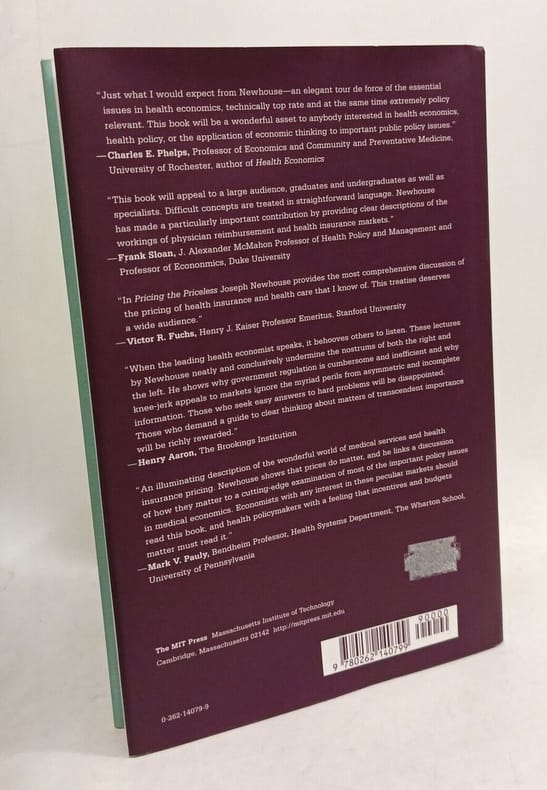
2002100139801MIT Press 2002 248 pages in8. 2002. Cartonné jaquette. 248 pages.
20192-1076302866Independently published 2019. Paperback. New. 303 pages. 11.00x8.50x0.76 inches. Independently published paperback
200485216Washington DC: National Nuclear Security Administration c2004. Presumed First Edition First printing thus. DVD. Very Good/In plastic case. Face of the CD/DVD states: To open double cline the "My Computer" icon on the desktop double click Drive D: double click ;nnsa catalog". There are images of weapons and platforms and technology images. Additional text reads The Nation's Applied Technology Complex. National Security Solutions Provider. Many customers many capabilities one enterprise. The National Nuclear Security Administration issued this catalogue in 2003-2004 and an updated version in 2005 to present information that its Nuclear Security Enterprise provided complete integration of design development application testing and production and that it provided customers of the Nuclear Weapons Complex with access to unsurpassed expertise. Customers were assured that they would receive more than the highest quality product; they were assured of security and safety throughout the entire process--from design to manufacturing to final delivery. NNSA asserted that it was this complete suite of design manufacturing and testing technologies that made it unique. At the time it was encouraging DOD Intelligence Community agencies and others with appropriate requirements to explore working with the NNSA and its management and operating contractors. National Nuclear Security Administration unknown
200280753Washington DC: National Nuclear Security Administration 2002. Contemporary Xerox-style copy. Staplebound. Good. 4 18 18 pages of Risk & Opportunity Assessment 19-21 pages Fold-outs. This 90=day study was commissioned at the request of NA-12 senior management with the express purpose of finding weaknesses in the current ADAPT Campaign-level management and administrative processes and developing fixes alternatives and/or instituting new processes. The study was facilitated by experts from Westinghouse Savannah River Corp. and used their approach to systems engineering. The core members of the analysis team consisted of the seven ADAPT site manages and three MTE Major Technical Effort managers. The team was lead by the NA-12 Campaign Manager in collaboration with the NA-11 and NA-12 HQ ADAPT leads. The team developed a new vision for ADAPT with the future of the Nuclear Weapons Complex NWC in mind. Supporting the vision was a set of eleven goals that were intended to support a balance between short-term vs. long-term development needs efficient processes and procedures vs. effective stewardship and optimization of limited funds site-unique capability improvement vs. increased multi-site cooperation and collaboration; and improved communication of priorities problems expectations and requirements both from and to designers weapons program managers other campaigns and senior management. One of NNSA's core missions is to ensure the United States maintains a safe secure and reliable nuclear stockpile through the application of unparalleled science technology engineering and manufacturing. The Office of Defense Programs carries out NNSA's mission to maintain and modernize the nuclear stockpile through the Stockpile Stewardship and Management Program. The Stockpile Stewardship Program enables NNSA to extend the lifespan and ensure the continued safety reliability and effectiveness of weapons that have reached the end of their original design life through life extension programs. These life extensions address aging and performance issues enhance safety features and improve security.<br/><br/>As with any complex mechanical system components in nuclear weapons degrade over time even when kept in storage. A life extension program comprehensively analyzes all of a weapon's components and determines whether to reuse refurbish or replace them to extend the service life of the weapon. When planning life extension programs NNSA must develop specific solutions to extend the lifetime of each weapon type because each is unique. Life extension programs also require NNSA to certify the weapon's protected period its new lifetime for 20 to 30 years. By extending the time that a weapon can safely and reliably remain in the stockpile NNSA is able to maintain a credible nuclear deterrent without producing new weapons or conducting underground nuclear explosive tests.<br/><br/>NNSA also conducts alterations of weapons at the system sub-system or component level to make sure the weapons is safe secure and effective. An alteration is a limited scope change that affects assembly tests maintenance and/or storage of weapons. An alteration may address identified defects and component obsolescence however it does not change a weapon's operational capabilities. National Nuclear Security Administration unknown
200579903Albuquerque NM: Sandia National Laboratories 2005. Presumed First Edition First printing thus. Wraps. Very good. 2 ii 32 4 pages. Footnotes. Illustrations color. Appendices A-E includes Glossary Visuals. Tables. ASC Timeline. Cover has minor wear and soiling. The Advanced Simulation and Computing Program ASC is a cornerstone of the Stockpile Stewardship Program providing simulation capabilities and computational resources to support the annual stockpile assessment and certification to study advanced nuclear-weapons design and manufacturing processes to analyze accident scenarios and weapons aging and to provide the tools to enable Stockpile Life Extension Programs SLEPs and the resolution of Significant Finding Investigations SFIs. This requires a balanced resource including technical staff hardware simulation software and computer science solutions. This Program Plan describes the ASC strategy and the deliverables required to accomplish the FY 2006-2010 multifaceted objectives defines program goals introduces the new national work breakdown structure and details the new subprograms their strategics and their associated performance indicators. The plan also includes ASC Level 1 Milestones and the top ten risks. To ensure synchronizations with the SSP's needs the Program Plan will be reviewed and updated annually. The Advanced Simulation and Computing Program or ASC is a super-computing program run by the National Nuclear Security Administration in order to simulate test and maintain the United States nuclear stockpile. The program was created in 1995 in order to support the Stockpile Stewardship Program or SSP. The goal of the initiative is to extend the lifetime of the current aging stockpile. After the United States' 1992 moratorium on live nuclear testing the Stockpile Stewardship Program was created in order to find a way to test and maintain the nuclear stockpile. In response the National Nuclear Security Administration began to simulate the nuclear warheads using supercomputers. As the stockpile ages the simulations have become more complex and the maintenance of the stockpile requires more computing power. Over the years due to Moore's Law the ASC program has created several different supercomputers with increasing power in order to compute the simulations and mathematics. Within the ASC program there are six subdivisions each having their own role in the extension of the life of the stockpile. Facility Operations and User Support: The Facility Operations and User Support subdivision is responsible for the physical computers and facilities and the computing network within ASC. They are responsible for making sure the tri-lab network computing storage space power usage and the customer computing resources are all in line. Computational Systems and Software Environment: The Computational and User Support subdivision is responsible for maintaining and creating the supercomputer software according to NNSA's standards. They also deal with the data networking and software tools. The ASCI Path Forward project substantially funded the initial development of the Lustre parallel file system from 2001 to 2004. Verification and Validation: The Verification and Validation subdivision is responsible for mathematically verifying the simulations and outcomes. They help software engineers write more precise codes in order to decrease the margin of error when the computations are run. Physics and Engineering Models: The Physics and Engineering Models subdivision is responsible for deciphering the mathematical and physical analysis of nuclear weapons. They integrate physics models into the codes in order to gain a more accurate simulation. They deal with the way that the nuclear weapon will act under certain conditions based on physics. They also study nuclear properties vibrations high explosives advanced hydrodynamics material strength and damage thermal and fluid response and radiation and electrical responses. Integrated Codes: The Integrated Codes subdivision is responsible for the mathematical codes that are produced by the supercomputers. They use these mathematical codes and present them in a way that is understandable to humans. These codes are then used by the National Nuclear Society Administration the Stockpile Steward Program Life Extension Program and Significant Finding Investigation in order to decide the next steps that need to be taken in order to secure and lengthen the life of the nuclear stockpile. Advanced Technology Development and Mitigation: The Advanced Technology Development and Mitigation subdivision is responsible for researching developments in high performance computing. Once information is found on the next generation of high performance computing they decide what software and hardware needs to be adapted in order to prepare for the next generation of computers. Sandia National Laboratories paperback
200275970Washington DC: National Nuclear Security Administration 2002. Presumed First Edition First printing thus. DVD. Very good. The National Nuclear Security Administration's NNSA nuclear weapons complex NWC has identified developed and deployed successful high-value technologies in support of national security. The production plants testing facilities and national laboratories are a reservoir of technological capabilities unmatched in depth or breadth by any other institution. Cooperation between facilities involves interdisciplinary cross-facility knowledge exchanges at all levels of design and development to build perfectibility into the product. For example the Interplant Technology Team IPTT facilitates technical integration between NWC sites. This team promotes inter-site cooperation by helping to coordinate and focus resources that provide technology solutions. Reporting directly to the IPTT the Network of Senior Scientists and Engineers NSSE comprised of five scientists and engineers from each site meet quarterly to acknowledge and reward scientific excellence and to promote technical cooperation. The NWC is the steward of the Nation's defense nuclear mission-the military application of nuclear energy and the reducing of global danger from terrorism and weapons of mass destruction. The ability to address the threat of nuclear biological and chemical attacks and to protect high-value assets has assumed a higher priority. To that end the NNSA focus is on products and technologies that are immediately deployable. We can provide the crucial advantage needed to meet the terrorist threat in all conceivable forms and advance our national knowledge base to maintain the technological edge. This catalog of capabilities highlights those proven field-tested applications for deterrence and for rapid-response. National Nuclear Security Administration unknown
201174113Amarillo TX: National Nuclear Security Administration Pantex Plant c2011. Presumed First thus. Patches. Very good. The patch is about 3.5 inches by 3.5 inches but the top is rounded so it is more like an arched window than a full square. It has a black border. The center has the image of the bomb a big dog and the text "B53" and "Last of the Big Dogs. On an orange border in black letters is "NNSA SS-21 Dismantlement DOE Pantex LANL LLNL SNL Y12 OST" From Wikipedia: The Mk/B53 was a high-yield bunker buster thermonuclear weapon developed by the United States during the Cold War. Deployed on Strategic Air Command bombers the B53 with a yield of 9 megatons was the most powerful weapon in the U.S. nuclear arsenal after the last B41 nuclear bombs were retired in 1976. The B53 was the basis of the W-53 warhead carried by the Titan II Missile which was decommissioned in 1987. Fifty B53s were retained during that time as part of the "hedge" portion of the Enduring Stockpile. The last B53 was disassembled on 25 October 2011 a year ahead of schedule. Development of the weapon began in 1955 by Los Alamos National Laboratory based on the earlier Mk 21 and Mk 46 weapons. In March 1958 the Strategic Air Command issued a request for a new Class C bomb to replace the earlier Mk 41. A revised version of the Mk 46 became the TX-53 in 1959. The Mk 53 entered production in 1962 and was built through June 1965. It entered service aboard B-47 Stratojet B-52G Stratofortress and B-58 Hustler bomber aircraft in the mid-1960s. From 1968 it was redesignated B53. Some early versions of the bomb were dismantled beginning in 1967. The B53 was also intended to be retired in the 1980s but 50 units remained in the active stockpile until the deployment of the B61-11 in 1997. At that point the obsolete B53s were slated for immediate disassembly; however the process of disassembling the units was greatly hampered by safety concerns as well as a lack of resources. In 2010 authorization was given to disassemble the 50 bombs at the Pantex plant in Texas. The process of dismantling the last remaining B53 bomb in the stockpile was completed in 2011. It was intended as a bunker buster weapon using a surface blast after laydown deployment to transmit a shock wave through the earth to collapse its target. Attacks against the Soviet deep underground leadership shelters in the Chekhov/Sharapovo area south of Moscow envisaged multiple B53/W53 exploding at ground level. It has since been supplanted in such roles by the earth-penetrating B61 Mod 11 a bomb that penetrates the surface to deliver much more of its explosive energy into the ground and therefore needs a much smaller yield to produce the same effects. The B53 was intended to be retired in the 1980s but 50 units remained in the active stockpile until the deployment of the B61-11 in 1997. At that point the obsolete B53s were slated for immediate disassembly; however the process of disassembling the units was greatly hampered by safety concerns and a lack of resources. The last remaining B53 bomb began the disassembly processes on Tuesday 25 October 2011 at the Energy Department's Pantex Plant. National Nuclear Security Administration, Pantex Plant unknown