GROLIER CLUB ARMORIAL BOOKBINDINGSBiblio.com

13 résultats
39677New York: Grolier Club 1895. First edition 4to xvi 75 1pp. one of 353 copies on Holland paper frontis. 23 plates orig. cloth gilt uncut covers lightly stained final 3 leaves showing light waterstain to lower margin. New York: Grolier Club, 1895 hardcover
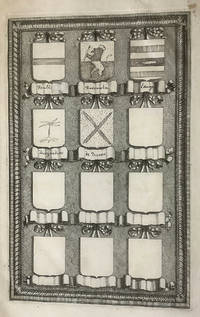
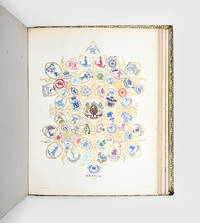
1790159535Holland: NP 1790. Hardcover. Very Good. ARMORIAL SHIELDS. An unusual collection of 13 engraved plates identical unnumbered and each with twelve blank 'shields' for the owner to create their own armorial. The shields are set within a decorative framework and the first five have been completed in pen and ink by an early owner. The families are Poulle Rademaker Edinge Dugardin and de Buure. In very good clean condition and bound in late 19th century linen backed marbled boards. The plates do not have any note of engraver or printer. 300mm x 258mm. Dutch c1790. ~ Origin and dating of the paper is possible on the basis of the watermark "I Villedary" with a Fleur de Lys. This watermark belongs to the well-known French paper maker Jean Villedary who in the middle of the 18th century was employed in France and in Angouleme whose paper was exported to Holland. From 1758 Villedary also had a paper mill in Hattem in Overijssel where he paper produced for the Dutch market. <br/> <br/> NP hardcover
23934Without date or place but late Victorian. Each of the two items attributed to Wright in pencil note on reverse. Both in good condition lightly aged. ONE: On 11 x 17.5 cm piece of paper. At head: ‘Book Plate of Morrall A vox stellarum vox Dei’. At foot: ‘M. J. Morrall’. Unlikely to be the Brooklyn architect of this name active at this time. Up left-hand margin: ‘Mr. Edward Morrall / Mayor 1885-6’. Down right-hand margin: ‘Presented to Mr Edward Morrall Quay House Bridgnorth’. Full achievement from crest to motto with colours indicated. TWO: On back of 9 x 11 cm printed ‘at Home’ card. Text at foot: ‘Three Roses on bend are red’. Less detailed illustration of coat of arms with crest and helmet but no motto. See image. Without date or place, but late Victorian. unknown
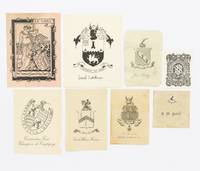
133115The bookplates are for: <p>1. The Honorable Henry Ayers CMG Premier of South Australia circa 1871 before his knighthood in 1872; foxed. Peake 169. <p>2. Sir Samuel James Way Bart. Chief Justice and Lieutenant Governor of South Australia after his elevation to the Baronetcy in 1899; signed in the image 'C.E.Tute'; slightly marked. Peake 5481. <p>3. H.M. Pollitt a little marked; Harry Muir has written 'Parson SA' in pencil on the verso. Peake 4311. <p>4. John Varley a little marked; Harry Muir has written 'SA Colonial Magistrate' in pencil on the verso. Peake 5327. <p>5. Thomas Thornton Reed Anglican Bishop of Adelaide signed in the image 'B.McM.'; in fine condition. Peake 4450. <p>6. Constantine Trent Champion de Crespigny previously mounted; minor loss at the edges. Peake 1360. <p>7. Cromwell Scott Hooper previously mounted; a little marked and bubbled. Not in Peake. <p>8. Charles William Bowman. Not in Peake. <p>Provenance: H.B. Harry Muir 1909-1992 bookseller publisher and bookplate collector; by descent. 8 items. unknown
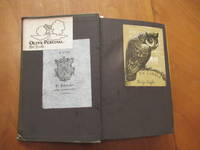
1900052975London Uk: Pickering & Chatto 1900. 1st Edition . Hardcover. Good. 484 Pp. Green Cloth Printed Spine Label. Original 1900 Catalog. Worn. Presentation Inscription February 1909 From C. B. M. Kawa----; Armorial Bookplate Of Karl Daniel Franz Schroeder As "F. Schroeder Editor 'Eastern World'"; Illustrated Bookplate Of Well-Known Southern California Bibliophile And Author Olive Percival A House With Two Trees; Later Bookplate Of George Seigler. Pink Bookmarks Probably Percival's At Caxton's "The Mirrour Of The Worlde" A Defective Copy But Still Paper Shred At Burton's Anatomy Of Melancholy Ribbon Again At Whitney's "A Choice Of Emblems" 1586 Ad Again At The First English Printing Of Uncle Tom's Cabin In Original Parts Illustrated By Cruikshank. With A Handwritten Poem By Kipling On A Front Blan K. <br/> <br/> Pickering & Chatto hardcover
2121346contains: L'Office de la Semaine-Sainte . En Latin et en Francois. Paris: Jacques Collombat. 1768. 8vo. Full morocco with raised bands one compartment directly lettered in gilt others ornamented D'Apchon coat-of-arms in the centre of both covers richly ornamented in gilt all over all edges gilt marbled endpapers; engraved frontispiece and title-page 4 plates woodcut head and tail pieces pp.1-708; three upper corners bumped and rubbed hinges with short repaired slits otherwise well preserved and very decorative.Pierre-Paul Dubuisson is together with his father Rene died about 1776 among the most famous of this dynasty of French bookbinders. Piere-Paul had become Binder to the King in 1758. The recipient of this book was the archbishop of Auch the bibliophile Claude Marc Antoine d'Apchon 1721-1783. His library comprised specimens of all genres and sciences. Beautiful bindings were well represented and appreciated as well as examples of important specimens of outstanding typography see Guigiard Armorial du bibliophile. hardcover
1880190753c.1880-1920. An attractive example of this 19th- and early 20th-century popular pastime containing many finely printed armorials associated with the royal family the cream of the British peerage and the Shah of Iran and other international royals as well as guilds the Royal Navy the British Army and civic institutions. Included are badges of dozens of ships and military formations alongside samples connected to European hotels the War Office and the Metropolitan Police. The emblem of the Ypres League formed in 1920 for First World War veterans is among the latest. Quarto. With hundreds of clipped coats of arms monograms devices and other insignia laid onto recto of 26 pre-printed leaves and rear blank; neat manuscript captions. Printed title page. Original green sheep Marcus Ward & Co. album spine boards board edges turn-ins and edges gilt white moiré-pattern linen on inner covers and backing first and final blank. Bookplate of bookseller and antiquarian Robin de Beaumont 1926-2023. Light wear a few leaves a little loose at gutter but volume still sturdy and easily handled finger-soiling: very good. hardcover
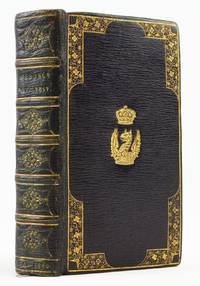
1640ST19814Lugd. Batavorum Leyden: Ex officina Elzeviriana 1640. Third Elzevier Edition. 130 x 72 mm. 5 1/8 x 2 7/8". 4 p.l. 536 30 47 pp. <br/> Excellent late 18th century dark blue straight-grain morocco in the style of Roger Payne gilt covers with floral vine cornerpieces gilt supralibros of George Spencer-Churchill 5th Duke of Marlborough Stamp 3 featuring the head and wings of a griffin emerging from a ducal coronet surmounted by the coronet of a marquess raised bands spine panels with gilt fleuron centerpiece gilt lettering gilt-ruled turn-ins all edges gilt. Title page with engraved frame featuring the Four Evangelists and their symbols. Rahir 500; Willems 505. For the binding: Smith and Benger p. 46; "British Armorial Bindings" https://armorial.library.utoronto.ca/node/31988. ◆Spine evenly faded and gilt consequently a little dulled a touch of rubbing to extremities tail margin of text with half-inch wide light dampstain extending an inch up on the fore-edge margin of the last couple quires a hint of foxing and browning other trivial imperfections but still a pleasing copy without serious defects internally and in a scarcely worn binding with lustrous covers.<br/> <br/> This Elzevier printing of the first lexicon of New Testament Greek comes in an elegant binding and with illustrious provenance. First printed in 1619 the "Manuale" is the work of German philologist Georg Pasor 1570-1637 and was the authority on New Testament Greek throughout the 17th century. Printed by Bonaventure and Abraham Elzevier our volume is bound in the style of the venerable English artisan Roger Payne using the straight-grain morocco process developed by Payne with delicately tooled gilt panels framing the cover. The supralibros of a man whose love of books brought him to ruin was added at the center both boards sometime before 1817. The coronet above the griffin indicates that George Spencer-Churchill 1766-1840 was at that time the Marquess of Blandford before his father's death in 1817 made him the 5th Duke of Marlborough. According to DNB "He spent great sums on his gardens and his library at White Knights near Reading." His extravagance eventually ruined him financially and most of his collection had to be auctioned during his lifetime. According to the University of Toronto's "British Armorial Bindings" this volume was Lot 3017 in the sale of the "Distinguished and Celebrated" White Knights Library conducted by R. H. Evans of London in June of 1819; it sold for eight shillings. Our book was later sold at Sotheby's on 13 June 1934 lot 725; the catalogue for that sale described the binding as "in the style of Roger Payne." We find ourselves inclined to believe even more heartily in this association. Ex officina Elzeviriana unknown
1779230747n.p. Bavaria 1779. 31 multi-colored coats-of-arm in red blue green black and gilt. 1 vols. 51 x 42.8 cm. Folded twice minor soiling otherwise fine and bright. 31 multi-colored coats-of-arm in red blue green black and gilt. 1 vols. 51 x 42.8 cm. Handsome and beautifully drawn genealogical tree of this noble Bavarian family whose members of have served for Bavarian Kings and Electors. Theodor Graf Topor von Morawitzky 1735 -1810 whose descent is given here had a disinguished career as a public servant and was the first President of the provincial government of Bavaria. unknown
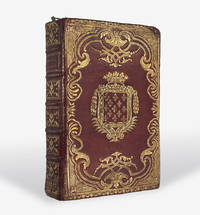
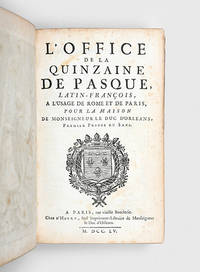
1755178721Paris: d'Houry seul imprimeur-libraire de monseigneur le Duc d'Orleans 1755. Royal Easter in Paris A beautiful copy of the Easter liturgy for the year 1755 printed and finely bound in Paris for the House of Orléans. The covers bear the arms of Louis-Philippe I 1725-1785 Duke of Orléans Valois and Montpensie premier prince du sang and grandfather of Louis-Philippe I the last king of France. Editions of the Easter liturgy were produced every year and printed by d'Houry the official printer to the duke of Orléans. Copies in fine bindings such as this bearing the arms of the current duke were destined for members of the family and court and to faithful subjects. The binding was very likely made by Jean-Charles-Henri LeMonnier le jeune who is documented as bookbinder to the duke of Orléans from 1759. The LeMonniers were one of the most famous families of bookbinders of the period. Henry le jeune son of Jean-Charles senior "lived with his father in the Rue Saint-Jean-de-Beauvais probably sharing his atelier and his tools and it is difficult to distinguish their work. The bindings for the duke of Orléans and his family are most probably the work of le jeune" Foot p. 199. Octavo 193 x 122 mm. Copper-engraved frontispiece. Contemporary red morocco spine with raised bands lettering in second compartment other compartments framed in gilt with floral corner pieces and armorial centrepieces covers bordered with gilt fillets and two fleur-de-lis rolls gilt armorial centrepieces of Louis Philippe I Duke of Orléans board edges and turn-ins tooled in gilt marbled endpapers edges gilt. Small printed illustration of a fly hand-coloured loosely inserted. Binding sometime skilfully polished a little wear to corners front inner hinge split but firm faint small damp stain to lower margin of a couple of gatherings. A handsomely bound copy. Mirjam M. Foot The Henry Davis Gift I 1978. Stamp: close to OHR 2572 no. 1; Guigard attributes it to Philippe-Égalité see p. 39. hardcover
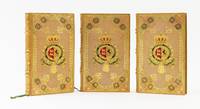
1825ST17589Paris: L. Daubry 1825. First French Edition text in English. 170 x 103 mm. 6 3/4 x 4". Three volumes. <br/> REGAL CONTEMPORARY BEIGE MOROCCO GILT AND INLAID covers with gilt frame and inlaid cornerpieces of pink and burgundy morocco in floral designs ARMS OF WILLIAM DUKE OF BRUNSWICK at center inlaid in red and green morocco and lavishly gilt raised bands spine panels with graceful design of flowers and acanthus leaves gilt lettering gilt-ruled turn-ins all edges gilt. Front pastedowns with bookplate of Wilhelm Herzog zu Braunschweig printed in colors and embossed with gilt; title pages with ink stamp "Prinz von Braunschweig." ◆Spines darkened to tan head panels with traces of brown residue possibly from library labels boards faintly soiled at edges but A FINE SET with no signs of use inside or out.<br/> <br/> This is an exceptionally fine copy with distinguished provenance of the first Paris printing of a nautical adventure by a great American writer who enjoyed unusual popularity in France. Set during the American Revolution and first printed in 1823 "The Pilot" has for its protagonist a real-life American naval hero John Paul Jones. Cooper 1789-1851 had himself worked as a commercial seaman and served in the U.S. Navy and his firsthand knowledge of both the technical aspects of seamanship and the day-to-day realities of life at sea lend a ring of authenticity to his sea novels of which this was the first. According to Encyclopedia Americana "Cooper may be said in 'The Pilot' to have created a new literary type the tale of adventure on the sea . . . . Smollett had already discovered the racy humors of seamen but he had seen little else in their calling; it remained for Cooper to capture for fiction the mystery and beauty the shock and thrill of the sea which in his pages has much of the proud pomp of Byron's ocean." Cooper spent the years 1826-28 in Paris where his literary reputation gained him access to the best salons and where he became a close friend of the marquis de Lafayette. Given the ornate decoration and the quality of materials and execution this binding was very likely done by a Parisian workshop as a commission for Duke William of Brunswick-Lüneburg 1806-84 the last member of his family to rule the duchy of Brunswick. Although he was the ruler of the Duchy of Brunswick for more than 50 years he preferred to spend his time enjoying the life of an aristocrat and left most of the official business to his ministers. He also failed to produce a legitimate heir though he had a number of illegitimate children and ended the House of Brunswick's rule over the duchy. L. Daubry unknown
1760260692Brünn: Johann Paul Krauss 1760. Engraved title in each volume vols. II-IV reading "Unser Lieben Frauen .". 189; 2 193-390; 2 393-590; 190 pp. 8vo. Contemporary Italian binding of full brown morocco covers gilt with two outer border rolls corner-pieces and arms of Prince-Bishopric of Trent spine gilt in six compartments a.e.g. Dutch gilt endpapers. Light wear to corners else fine. In original morocco pull-off case tooled in gilt to match lined with Dutch gilt paper. Some wear and splitting to edges of box. Engraved title in each volume vols. II-IV reading "Unser Lieben Frauen .". 189; 2 193-390; 2 393-590; 190 pp. 8vo. A beautiful Italian armorial binding of the mid 18th-century similar in style to those promoted by the Salvioni firm in the original pull-off case. OCLC locates only one copy of this scarce German breviary in the Bayerische Staatsbibliothek. Johann Paul Krauss unknown
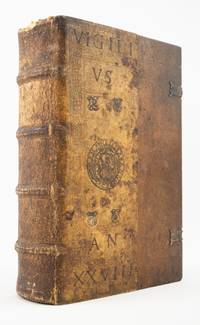
1527ST20749Tübingen Cologne or Basel 1527-28. 315 x 205 mm. 12 1/2 x 8 1/4". 6 p.l. XXII leaves; CCXLII leaves; 12 p.l. 211 pp.; 14 110 1 leaves; 10 p.l. 3-77 leaves 1 leaf. <br/> EXCELLENT CONTEMPORARY HALF PIGSKIN over wooden boards UPPER COVER WITH "VIGILIUS" at top and the year "ANNO MDXXVIII" at the bottom AND WITH JOHAN HESS' SUPRALIBROS composed of his family coat of arms surrounded by the text "ARMA HESSICA ANNO 1525" this flanked by four smaller heraldic stamps rear covers with two Agnus Dei and one oval arabesque ink stamps raised bands spine panel diapered in blind each lozenge-shaped compartment with a small flower stamped at center Medieval manuscript scraps used as sewing guards visible at front and back two brass catchplates one pigskin strap and brass catch remnants of other strap. Each with woodcut printer's device; the first third fourth and fifth with attractive woodcut initials. Front pastedown with contemporary ink inscription listing the works included title page of first work WITH THE INK OWNERSHIP INSCRIPTION OF JOHAN HESS and later 18th century ink inscription; evidence of book label removal at foot of title page. The final two works with occasional contemporary ink underlining and marginalia. VD16 V 1185; VD16 B 3835 and Adams R-935; VD16 P 2459 and Adams P-1024; VD16 S 5250 and Adams S-855; VD16 B 5208. For the binding: EBDB m001169. Pigskin rather soiled lower cover with a handful of irregular holes in the pigskin but with blind-tooled decoration clearly visible in these openings front flyleaves and first half dozen quires of first work with a sprinkling of small round wormholes title page lightly soiled leaves faintly browned at edges first work with occasional minor browning due to paper quality text with isolated spots of foxing or trivial marginal stains but still quite an excellent contemporary copy the text clean and fresh the binding sturdy with considerable antique appeal.<br/> <br/> In its imposing original binding this is a famous Reformer's copy of five now-scarce theological works and a volume that ironically later belonged to a counter-Reformation mission. The most important Reformation figure after Martin Luther and Philip Melanchthon Johan also Johann Hess 1490-1547 was educated in Leipzig and Wittenberg where he was initially exposed to Luther's preaching. After several years serving as secretary to the bishop of Breslau now Wroc aw he traveled to Italy to complete his studies in theology and was ordained a priest upon his return to Breslau in 1520. His misgivings about the Church had increased in the years leading up to his ordination and he publicly voiced his support for the Reformation in a 1523 sermon in Nuremburg. He became the first Protestant pastor elected in Breslau and played a major role in the spread of the Reformation within the region. He participated in the major theological debates of the day taking part in the Diet of Regensburg the final attempt at reconciliation between the Reformers and the Catholic Church within the Holy Roman Empire. The present volume's selection demonstrates the range of his theological interests: its five works while all published in a one-year period span 1000 years of biblical scholarship and a variety of topics. The first is the original printing of the 5th century theologian Vigilius of Thapsus' condemnation of Eutyches whose beliefs about Christ's blended divine and human nature had been deemed heretical. This is followed by the 12th century Benedictine abbot Rupert of Deutz's discussion of the minor prophets a rare imprint USTC finds only one copy in a U. S. institution. The third work is a commentary on the Book of Job by Phillipus Presbyter an otherwise little-known disciple of St. Jerome. This was the only printing of this work under the author's own name the only other 16th century edition being credited to the Venerable Bede. This edition provides the text as taken from a now-lost manuscript at Fulda Abbey. The fourth included work is 9th century Irish monk Sedulius Scotus' scriptural commentary on Paul's letters. This and the previous work were printed by the Officina Petri the oldest extant Basel publishing house. The fifth and final text is by a contemporary of Hess the French humanist Jacques Lefèvre d’Étaples ca.1455 - ca. 1536. While Lefèvre remained committed to reform within rather than separation from the Roman Church his ideas and writings greatly influenced the Reformers. The present work is the first edition of his commentaries on the New Testament epistles published by major Basel printer Andreas Cratander. Ironically nearly two centuries after Hess' death this volume was owned by a group working precisely counter to his own goals and ideals. The 1739 inscription indicates that the copy was the property of the Franciscan mission in Dessau which was founded in 1719 to convert the now largely Protestant population back to Catholicism. Since Hess was the leading Protestant pastor in Breslau in Silesia from the time our five works were issued until he died two decades later the present binding was very probably done in a nearby Silesian workshop. Other Hess volumes appearing on the market over the years have mostly been unremarkable octavos so the present thick folio with its distinctive forceful decoration and titling stands out as unusually impressive. unknown