177 résultats
1971WRCAM56376Mostly various locations in Tennessee and Virginia plus Salt Lake City 1971. 240 letters various paper stocks and sizes including some Mormon-related stationery most letters at least three pages in length each stapled plus a handful of clippings postcards assorted photographs and an appointment book. Neatly organized chronologically and by sender in labeled manila folders and stored in a single document box. Minor tears to a few letters else mostly clean and very good overall. An important archive of correspondence centering on Mormon missionary activities in the American South during the Great Depression and the years of World War II. All of the letters were written to Ruby Marion a Mormon woman from Virginia. The most significant letters come from Ralph Horrock a Mormon missionary operating mostly out of Tennessee but also Virginia. Horrock's letters to Marion number almost eighty and are filled with interesting information on Mormon missionary efforts. Other important letters were written to Marion by Mormon Elder Gaell Lindstrom from both Virginia and Salt Lake City her husband William "Bill" Tragdon and Ruby Marion's mother and sister. The letters from Marion's husband mother and sister mostly concern family matters but the letters from Horrock and to a lesser degree from Lindstrom are highly significant for their voluminous content on Mormon missionary activities in the American South. <br> <br> Ralph Horrock was sent to Tennessee to spread the Mormon faith at the end of 1934. He and a companion were ordered to travel throughout the countryside and preach the tenets of Mormonism. Horrock is reserved in his letters at first writing that he would have preferred to stay in Virginia where Marion was located. He is clearly smitten with Ruby Marion however and writes more and more about his love for her as his correspondence continues. Marion visited Horrock in Tennessee in the summer of 1935 and their correspondence continues to January of 1936 but their romantic relationship clearly did not flourish. Marion would eventually marry William Tragdon some time after 1948. <br> <br> Often traveling by foot through the South Ralph Horrock and his companion elders visited both the cities and the small country towns they found preaching the Mormon faith at local town halls and school houses sometimes finding challenging audiences. They established Sunday school classes held prayer meetings preached at funerals of deceased Mormons living in Tennessee and more. Horrock mentions proselytizing to some of the country people and even holding river baptisms. Inevitably he also relates to Marion various gossip about the inner workings of the Mormon Church in Tennessee and Virginia asks Marion for gossip she might know and also asks about the movements of other missionaries in the region. Horrock finds much joy in his work for quite a long time - at one point a local community in Tennessee asks him to build a church and stay there as their preacher - but by the conclusion of his letters to Marion the joy seems to have faded. A handful of brief excerpts of Horrock's letters to Marion reveal the compelling and informative nature of his correspondence: <br> <br> March 23 1934. Marysville Tn.: "I don't think I will have any more lonesome and blue spells for a while now because I am too busy what I mean they sure do the Missionary work here in Tenn. We get in about six hours tracting per day and I sure love to tract here for people love to talk with you on religion and no fooling some of them are sure interested. Since I came here I sure have had plenty of opportunities to preach. We hold cottage meetings three and some times four times a week. There is one thing I can say about this state of Tennessee - it sure is a land of opportunity for a missionary. I am now really learning to be a preacher you ought to hear me some time but I better shut up for self praise is not very good is it" <br> <br> May 30 1935. Silver Point Tn.: "We had a swell meeting at Knoxville but I guess I told you about it in my last letter. We are now away out in the sticks right out with the good old hill billies I think we are about forty miles from Nashville. We are having wonderful success out here we are holding cottage meetings most every night so you can see we are getting plenty of preaching.We would have been in McMinnville last Sunday but at the last moment before we left Knoxville the D.P. changed his mind and sent us to Silver Point. They are holding a big memorial celebration here next Sunday and they wanted two Elders here to preach for them so here we are. I have to go about five miles to a little old country post office to mail this letter so I will have to hurry to get it there before the afternoon mail arrives." <br> <br> June 25 1935. Spencer Tn.: "I am glad to say I am still all together and healthy even though we are in a somewhat hostile section. The people here would like to be tough but after all they are only wind bags. You recall I told you we were going to hold some meetings in the County Court House at Spencer and I thought that we might meet up with some opposition. Well we held our first one last night and we had the building almost full. No one caused us a bit of trouble rather they were all ears and I am sure they heard something last night they had never heard before. The thing that gets the best of these people is this - even though we do present strange doctrine to them we have scripture to prove each point we bring out. People might come to hear us with the intention of giving us trouble. But after they hear us prove our points so clearly from the Bible the only thing they can do is take it and keep still. I feel that the Lord has greatly blessed us in our work here and if we have succeeded in doing a good work I do not want to take the honor to my self.We are having more success here than any other place I have been in since I came to Tennessee. We held an open air meeting here Sunday and almost a hundred people came to hear us. Tonight we are holding services again at the Court House and I am expecting the House to be full." <br> <br> July 21 1935. Smithville Tn.: "You said something about the Elders going to Harrisonburg to Baptize those people over there. Do you know whether or not they did I would really like to know of them coming into the Church because I had such a large part in bringing them to a knowledge of the Truth. If they are Baptized then I can look back and with the assurance that I really did accomplish something while I was there.Who is the new D.P. in Virginia or do they know yet I really pity the poor fellow who gets the job.Virginia is the best District in the Mission in lots of ways but when it comes to getting real practical experience then give me Tennessee. I have ten chances to preach here where I get one there. And another good thing the people like to hear the Gospel here and they come out in such large crowds we have to hold our meetings outside. Whenever we held cottage meetings in Va. we never did get over twenty people out but here it is nothing at all to get over a hundred. You know it is really some difference. Are the Elders still laboring in the cities yet I really would hate to do that. The city don't provide half the fun and experiences that the country does. I would go wild if I had to stay in the city. We held a baptism the other day and after the services we went swimming and some also went wading so you see we have some real fun too once in a while." <br> <br> September 2 1935. Spencer Tn.: "We really have so much work to do we really don't have time to stop and see if we are well or sick. I can say though that I am really enjoying myself more than words can tell. There is one thing about missionary work that makes it better than any thing I have ever done before and that is the more you work the better you like it. I really did not know what real missionary work was until I came to Tennessee. Over in Virginia it was just easy come easy go and we only got to preach about once or twice in a week and even at that I thought I really was doing something. But since I came here I am fully convinced that I only wasted time in Va. We get to preach somewhere here every night and twice on Sunday and we get many other experiences that goes to make this the greatest work in the world." <br> <br> September 7 1935. Spencer Tn.: "As usual we are having wonderful success in presenting the Gospel before the people and we have made lots of friends which I am very thankful for. We have just come today out of a back woods country which is so far out of the way the Elders haven't visited it for years. The people there sure did turn out to hear us preach. We used the School House to hold our meetings in and so many people came there wasn't room for them so they had to sit outside and listen. I wish we could stay there longer but it was impossible for we had to come into Spencer and get our mail. I have a job ahead of me that is going to be hard to do. There is an old woman that lives in the county that has a husband that is dead and he has been dead for about ten years. When he died she could not get any Elders to preach his funeral so she buried him without holding a funeral with the intention of having the first Elders that came hold it at his grave. We happened to be the first ones to come so the job is ours. It's going to be hard to do but I guess we will have to do it. There is no other way out. Well you know this Missionary work is not all sunshine and roses if we didn't get the bitter once in awhile we would not enjoy the sweet." <br> <br> December 2 1935. Morristown Tn.: "I am not enjoying my work here in the least. I never was in such a dirty hole as this little town is. We haven't a friend or a member within fifty miles. I haven't preached for so long I really believe I have forgotten how. I never was so divested of spiritual will power in my life as I am right now and I don't mind saying I am getting sick of it. Every other Elder in this District is laboring in a city where there is a brand that will provide them some place to work where they can at least see where they are accomplishing something. Still I suppose I shouldn't bother you with my troubles no doubt they do not interest you." <br> <br> Horrock concludes his correspondence the next month by relating that he is getting transferred to Chattanooga where he "will have plenty of good work to do." He writes to Marion for the last time that he does not know what his address will be so he asks Marion "not to write until you hear from me again." Perhaps Marion never heard from Horrock again. <br> <br> Other letters in the archive are written to Ruby Marion from another Mormon Elder named Gael Lindstrom who also appears to have served as a missionary in Virginia and West Virginia. In his fifty-two letters Lindstrom writes sparingly about his experiences as a Mormon missionary but when he does he provides interesting details. For instance on July 30 1943 in Huntington West Virginia Lindstrom writes: <br> <br> "We have spent a few days of this week in Huntington W.Va. as we are not so very far from there. It seemed good to return to the place where I had spent about seven months before coming into Virginia. Elder Price's father will be here in about ten days to work the rest of his mission with him. That will leave Elder Bray and I as the only Elders left in the district. Your guess is as good as mine as to what will happen then. He is coming down to Home Creek next Tuesday to do a little traveling with us in this section. He can't take us out of here too soon for me. This is really woods. Last nite we held a meeting in a small miner's union hall which was dimly lit by three gas lamps. There were about 35 present but I'm afraid all they came for was the novelty of it as they have a complete lack of amusements around here of any description." <br> <br> He also writes frequently of other elders or members of the church other church activities and leadership changes his travels to Mirror Lake and more. Lindstrom spent about six months in Louisville Kentucky where he was assigned in early 1944; two of his letters from Louisville are written on LDS stationery. By June 1944 he is back in Salt Lake City where he misses "being back in the mission field." The bulk of his letters emanate from Salt Lake City during the rest of 1944 and through mid-1947. Many of his letters concern his activities in the antiques trade which Marion may have been involved with as well. The two apparently corresponded about opening an antiques shop in Salt Lake City. Lindstrom's correspondence concludes with news that he is opening his own photography studio after working some time in the camera department at Auerbach's Department Store in Salt Lake City. <br> <br> The archive also includes correspondence from Ruby Marion's husband William Tragdon and Marion's mother and sister. Tragdon worked in the aeronautical engineering field and traveled extensively throughout the country. He was quite smitten by Marion evidenced by his thirty-seven letters home to "Kitten" from February to September 1948. Tragdon's letters are deeply personal missives to his wife and eventually to both his wife and son Howard in the late-1950s with occasional information on larger family matters. His two somber letters from 1970 and 1971 indicate that he and Marion had divorced. <br> <br> The letters from Marion's mother and sister are also mostly concerned with family matters. One interesting letter from Marion's sister Evelyn dated 1946 mentions a recent banquet where she "saw quite a few of the old missionaries that we once knew." Evelyn's letter also mentions Mormon presidents Tew and Doxey and a few other church colleagues she encountered at the banquet. <br> <br> There is also a folder containing ten letters from various correspondents to Marion from the 1930s to the 1970s. Some of these letters concern missionary matters from Virginia to as far away as the Dutch East Indies. The latter are written by a correspondent who signs his name as "Dee." Dee writes on Dec. 23 1944 that "We hold L.D.S. services on the island & have 100 present each Sunday." This folder also contains a selection of unused photo postcards from two photographs of Mormon Church elders one inscribed to Marion by Elder Clark O. Thompson and the other inscribed to "Dear Sister Ellinger" from Elder Frank Miller. <br> <br> The archive is rounded out by a small appointment book presumably kept by Marion or a family member from 1955 to 1960. The book is almost entirely comprised of appointments notes and schedules of Masonic meetings. The final folder contains several letters sent to Ruby Marion by V-Mail during World War II. The various letters appear to come from family friends named Jesse Terry Sgt. D. Sanders and H. Kenneth Coburn who also sent a signed photograph to Marion. All of these letters were sent to Marion at her address in Waynesboro Va. <br> <br> An engaging and far-ranging collection of correspondence to a Mormon woman from Virginia with illuminating information on Mormon missionary activities in the American South during the Great Depression. unknown books
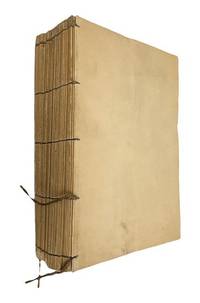
1919124931à Lyon, chez M. P. Rusand, imprimeur-libraire, Librairie ecclésiastique de Poussielgue-Rusand 1919 72 volumes. In-8 20,5 x 12,5 cm. Reliures de l’époque composites demi-basane aubergine, dos lisses ornés de filets dorés encadrés de petits fers à froid & à partir du vol. n 48, demi-basane vert-émeraude, dos lisses ornés de filets à froid, environ 550 pp. par volume, table en fin de chaque volume. Ex-libris marquis de Monteynard.
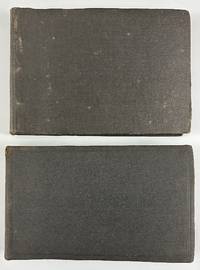
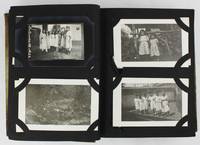
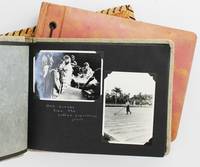
193912870Various locations mostly in India 1939. Two contemporary photograph albums bound in matching black cloth. Album 1: 47 leaves illustrated with 347 mounted photographs including a handful of real photo postcards profusely captioned in white pencil on album leaves. Album 2: 30 leaves illustrated with 285 photographs including some real photo postcards and commercial images with only a few manuscript captions. Oblong quarto. A unique pictorial record of American Christian missionary service in India during the years of the Great Depression detailing the life and work of Seventh Day Adventists Edward and Edna Mabel Pohlman. Edward Pohlman 1906-1970 and Edna Mabel 1906-1997 married in 1928 and served in the Northern India Union NIU Section which was part of the Southern Asia Division from 1929 to 1946. While in India it appears that the Pohlman family lived at least in Mussoorie Roorkee and Poona during which time they had one son Edward Wendell born in Punjab in 1933. The father Edward received an M.A. and PhD from Ohio State University. The couple likely lived in Roorkee early on where Pohlman likely taught at Roorkee Adventist College as there are images of the faculty at Roorkee their bungalow and so forth. They may also have been associated with the Vincent Hill School in Mussoorie of which there are several images. He definitely taught theology at Spicer Missionary College Now Spicer Adventist University in Poona Pune and became president of Spicer in 1939 a position he held until 1946. Spicer College was the church’s flagship educational institution in India. Pohlman also held SDA conference positions including educational and missionary volunteer secretary for the Southern Asia Division.<br /> <br /> The SAD NIU section focused on establishing mission schools doing medical work publishing and direct preaching aiming to spread the gospel this way. The organization worked to establish churches and develop indigenous leadership and self-supporting missions in communities across northern India. The albums only pertain to his time in India but following his time there Pohlman taught at the Western College for Women in Oxford Ohio then in 1958 was a Fulbright lecturer in sociology and anthropology at the University of Karachi and then served as executive director of the U. S. Educational Foundation in Pakistan. In 1960 he joined Queens College in Charlotte North Carolina where he taught and was head of the sociology and anthropology departments until his death. He was fluent in Urdu and Hindustani.<br /> <br /> The first few images in the first album document the Pohlman's trip from New York to India as a young married couple in 1929. They spent some time in England and the Holy Land before arriving in India. The first images from India show their first house in Mussoorie and the Vincent Hill School which was part of the SDA educational system. Other early India images feature Najababad including a dispensary a village meeting and their colleagues the Kimble's bungalow there plus an image of a building captioned "Northwest Union Headquarters of our work" in Lucknow. The next group of photos are of Roorkee in 1931 picturing another SDA school the Roorkee Adventist College the faculty a group of students a sewing class a Bible class and a dispensary. Numerous images include Edna and Edward as well as their colleagues the Steeves the Kimbles the Garners and others. One shows Edna and four young men and is captioned "my first English class."<br /> <br /> Several historic photographs relate to important SDA events meetings and facilities. One of the bigger photographs shows a very large group and is captioned "workers from India Burma & Ceylon at Poona SDA Council 1931." Another shows the Division Headquarters at Poona and a third shows attendees from the Northwest India Union that attended the Poona Council in 1931. Another group of images shows workers and students at the SDA Colporteur Institute a school that trained people to evangelize and pass out literature. Another shows 17 Abbott Road in Lucknow the location of the SAD Publishing House. There are also images of the Seventh Day Adventist Training School many uncaptioned images of SDA student and graduate groups and some of Edna or Edward with their students.<br /> <br /> Other photographs illustrate the missionaries' lives through their bungalows outings trips to Kashmir a large group of images Lahore and Delhi riding elephants celebrating Christmas and more. Other images show local people harvesting sugar cane bathing in the Ganges a pilgrim knee-walking a street sewing service Indian weddings a group in front of the Seventh Day Adventist Training School many uncaptioned images of SDA large and small student and/or graduate groups and more.<br /> <br /> The albums also provide images of the couple's missionary colleagues including several who traveled out to India with them and some who were especially notable. These include:<br /> <br /> John Milton Steeves 1905-1998 an important SDA missionary and educator who became a career diplomat serving as acting ambassador to Jakarta Indonesia deputy assistant secretary of state for Far Eastern Affairs 1959-62 and ambassador to Afghanistan 1966-69. The Steeves family lived in Western Washington between 1919 and 1927 where Steeves graduated from Walla Walla College an SAD-affiliated school and the University of Washington.<br /> <br /> Raleigh and Edna Garner from Nampa Idaho who served sixteen years in India then pastored in Idaho. Garner also graduated from Walla Walla College.<br /> <br /> Ray LeRoy R.L. Kimble 1890-1972 and his wife Jessie M. Estep Kimble. Kimble was a pastor and missionary who served in India from around 1915 to 1950 and was president of the Northern India Union Section from 1946 to 1950. His wife was principal of the North Agra Mission Girl's School from 1930 to 1932; earlier they ran a sanitarium at Bombay. After India's independence Kimble was part of a delegation in August 1947 that met with Nehru Gandhi and Jinnah to explain the role of the Seventh Day Adventist Church in India.<br /> <br /> Marion Hulda Belchambers 1886-1949 a pioneer teacher administrator and publishing house pioneer who became secretary and treasurer of the Northwest / Northern India Union in 1923.<br /> <br /> The two albums document important contributions made by the Pohlmans and their colleagues to education and healthcare in India and also provide visual documentation of important Seventh Day Adventist events and meetings and insights into the daily lives of missionaries of the period. unknown
19235584Various locations in Guatemala and Mexico 1923. Very good. 145 real photo postcards photographs and printed pictorial postcards thirty-eight with manuscript notes on verso. Minor wear overall. A wonderful collection of images featuring the people and places involved with the educational missionary work of Lula Maud Jackson later Tolosa of Birmingham Michigan. Jackson was a Baptist missionary teacher at schools in El Salvador Cuba Mexico and Guatemala before returning to Michigan in the early-1920s. Not long after her return Lula married an El Salvadorian minister named Ramon Alberto Tolosa in Michigan on June 26 1923; apparently Tolosa moved to Michigan to be with Lula and thereafter established the First Mexican Baptist Church in Saginaw where he remained as pastor until his retirement in 1975. The present collection of photographs feature numerous people and places Jackson knew during her time in Latin America.<br /> <br /> The collection contains a few photographs that appear to include Jackson but the great majority show various native settings and subjects including the children she was teaching pictured in class group shots. Most are not captioned but many of these images are dated in 1921. The images feature students at play fruit vendors carrying large baskets churches and other buildings and more. Almost forty of the images however which are mostly portrait postcards or photographs include inscriptions to Lula on the verso from the numerous named subjects. All of the captions are written in Spanish. Seventeen of these identify various subjects in Mexico by name including multiple members of the same family in one case. One postcard is covered completely on the verso with the musical notation and lyrics of a song called "Ven a El pecador!" Two of these postcards were actually postmarked to Lula in Cuba while she was there in 1916 and 1919. Eighteen of these annotated real photo postcards were sent to Lula by her soon-to-be husband Ramon Tolosa all but one in either May or early June 1923 before the couple married later in June of that year. At the time Ramon was working in Tampico Mexico from where he sent all of these postcards. The postcards are not postmarked indicating Ramon may have sent them inside other letters; plus the captions contain straightforward descriptions of the subjects and settings of the postcards and not the personal correspondence that might be expected from two people about to be married. All in all a diverse and personal collection of images of Mexico kept by a missionary teacher from Michigan to memorialize her earlier work there offering several avenues for further research. unknown
19556091Various locations in Costa Rica and Panama 1955. Very good. Three photograph albums: 10 leaves illustrated with thirty photographs most with manuscript annotations in white pencil; 22 leaves illustrated with seventy-one photographs most with manuscript annotations; 20 leaves illustrated with forty-nine photographs each with manuscript annotation. Each album oblong octavo in different colored cloth bindings string tied. Minor overall wear with a handful of loose photographs. A collection of three annotated vernacular photograph albums documenting the activities of Methodist missionaries in Costa Rica and Panama in the mid-20th century. The photographs picture the subjects traveling in the two countries scenes inside and outside the classroom views of native peoples and dwellings a mission in Costa Rica and the associated language school headed by Denton Powell Royster who is pictured here and identified as "Pastor Royster". The images capture missionaries on the road at roadside picnics enjoying leisure time at meetings and dinner celebrations and engaging in similar activities. Many of the subjects are named providing excellent opportunities for deeper study; individuals here include Stan Sheldon Jean Spahr or Spahn Virginia Miller Virginia Forkell Naomi Calkine Lois Henry Lorraine Roth Betty Brown Gordon and Marilyn Marken Norm Piersma Wally DeSmet John Gilmore and others. The album was compiled by a female missionary likely a member of the Benz family as one image is captioned "Peggy Daddy Mom and Steve Benz." Another photograph of a young woman is captioned "Me enroute to the falls at Catalina." She also identifies herself in other photos including one of her swimming at Ojo de Agua but never seems to indicate her name. She appears to have been an instructor at the language school; one image shows her and a few others in "Phonetics" class and another pictures her with other teachers of the grammar class.<br /> <br /> A couple of the image indicate some of the missionaries are part of a "Honduran prayer meeting." Other scenes of interest feature a group photograph of the language school "scenes from a woodworking shop on our paseo to the Roysters" activities in a coffee processing plant and views of the Irazu volcano among others. The indigenous or local peoples pictured here include the Baltadano family of the Central American Church a woman named Angela de Varga an oxcart operator in Costa Rica a young woman identified as "Maria una buena empleada" a man named Don Antonio and a few others. Identified South American locations include Cartago Church "the ruins of the oldest church in Costa Rica" Gatun Locks and other scenes in the Panama Canal Roble Alto the countryside near Cartago and the interior of a church in Cartago. A diverse collection of images memorializing American missionary activities in South American in the Eisenhower years with excellent potential for further study. unknown
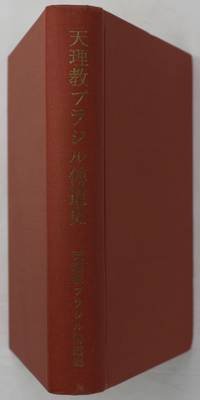
19585047Sao Paulo: Tenrikyo Brazil Mission 1958. Very good. 52162511pp. including 32pp. of photographically-illustrated plates. Original orange cloth gilt spine titles housed in original cardboard slipcase with black spine lettering. Very minor wear internally clean. Some chipping and toning to slipcase. An unrecorded history of the Japanese immigrant Tenrikyo Mission in Brazil providing valuable information on many Tenrikyo churches across the country. Tenrikyo was a new Japanese religion founded in the 19th century in Japan by Nakayama Miki and spread to Hawaii Brazil and other regions where Japanese immigrants moved over the course of the first few decades of the 20th century. The photographic plates contain portraits of some mission members views of churches scenes from church life and more. The text is almost wholly in Japanese save for occasional listings of Spanish names and other information. Not reported in OCLC. Tenrikyo Brazil Mission unknown
19575046Honolulu: Tenrikyo Hawaii Mission 1957. Very good. 1632365pp. including 32pp. of photographically-illustrated plates errata slip laid in. Original orange cloth gilt spine titles housed on the original cardboard slipcase with black spine lettering. Very minor wear to boards internally clean. Small puncture and some wear to spine of slipcase. A rare history of the Tenrikyo Mission in Hawaii beginning with the founding of its first church in Honolulu in 1929. Tenrikyo was a new Japanese religion founded in the 19th century in Japan by Nakayama Miki. The present work also includes information on many other churches on the islands including the Hilo Church Kauai Church the Maui Church and more. The photographic plates contain portraits of some mission members views of churches scenes from church life and more. The text is mostly in Japanese save for a fifteen-page section printing a series of English-language lectures on the Tenrikyo religion by members of the Hawaiian mission. OCLC records just a single physical copy of this rare Japanese-American work at the University of Hawaii at Manoa. Tenrikyo Hawaii Mission unknown
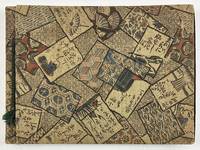
192812860Various locations in Hawaii and Japan 1928. 12 leaves illustrated with 123 mounted sepia-toned photographs many captioned in the image area occasional manuscript captions on the album leaves. Oblong folio. Contemporary pictorial cloth illustrated with various Japanese motifs string tied. Minor wear to cloth. Internally clean. Very good. An attractive and informative vernacular photograph album memorializing the experiences of Protestant missionaries in the Pacific. Protestant missionaries came to Hawaii starting in the 1820s and eventually became quite socially and politically influential. The first Protestant missionaries arrived in Japan in the mid-1840s. They were relegated to treaty ports and prohibited from proselytizing but once these restrictions were lifted they were fairly successful with 300 churches and 34000 converts by 1889. Their main avenue was education and by the 1920s they were well established in this sector. The present album of photographs were taken by an American missionary in Hawaii and Japan in 1927 and 1928. It is not entirely clear whether the photographer did any missionary work in Hawaii or if it was just a stop on the way to Japan; the photos from Hawaii show Honolulu harbor from the deck of the President Madison the "Club House" and Diamond Head.<br /> <br /> The photographs from Japan are more clearly missionary. The photographer was involved in teaching in Kyoto; captions include "Kami Kyoku Bishamon Cho" listed as a theological school in the 1928 Japan Mission Year Book "Japanese Language School" "The Faculty" "Nihongo Faculty" and "St Agnes Ena -- Music." There are two St. Agneses in the Year Book both middle schools one in Tokyo and one in Kyoto. Two photos of an older Japanese man in a clerical collar captioned "Mr Hayakawa" suggest this is the St. Agnes in Kyoto as Mr. K. Hayakawa is listed as the head of that school. Other individuals listed in the Year Book include Sally Rembert Thora Johnson and "Maxine" who is probably Maxine Schannep with the ABCFM. Generally the school shots are exteriors of buildings and people posing outside of them; there are also shots of Christmas trees at St. Agnes the students of "Helen’s Kindergarten" in Koriyama girls in school uniform with deer at Nara Park and several of the nurse's home at St. Luke's Hospital in Tokyo.<br /> <br /> Other photos show life around Kyoto and other cities including Nikko and Fukui. Most of the men are in Western dress while the women and children wear kimono. Two photos of Buddhist monks included in the album were taken by Japanese photographer Kurokawa Suizan; these show a KomusŠin a tengai hat playing the flute and a kasa-hatted monk on the steps of a building. Finally some uncaptioned shots show a procession taking place in front of an audience. Some in the procession carry flags a few are on horseback and a few carry plants on their heads and part of the procession carries a litter.<br /> <br /> Overall the album documents both religious education and everyday life in late 1920s Japan; of particular interest to historians of Protestant missionaries. unknown
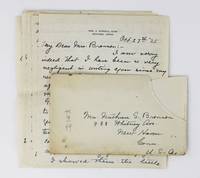
19255493Okayama 1925. Very good. 15pp. Old fold lines minor wear. With original envelope. Lengthy letter written by Mrs. C. Burnell Olds to a friend and donor back in Connecticut Mrs. Nathan S. Bronson. Okayama is located to the west of Osaka and Kyoto in the southern portion of the country; Mrs. Olds was born to a missionary family stationed in Japan and had worked in that country since 1903. In her letter Olds relates her current round of activities the ways in which Mrs. Bronson's funds have been of great use and the other activities she observes and participates in within the local community. She opens recounting a visit to the True Beauty Girls' School to which Mrs. Bronson has donated. She writes "The fact that an American woman was willing to give to a non-Christian school way over here in Japan has made a great impression here in Okayama." She goes on to discuss the building of a new church by some "earnest young men" briefly noting that they still need money to furnish the church. "We are very anxious to start some kind of social work here -- if possible to open an amusement hall where young men can come to have a good time in a good way -- with good women. There is no such place in our city and how many evil resorts there are." She relates further activities an endless stream of clubs and activities and teaching efforts for the Lord closing with family news. An interesting missive chock full of information on a local missionary's efforts in 1920s Japan. unknown
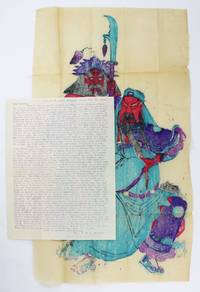
19286054Shanghai China: February 24 1928. Very good. 1p. plus colored woodblock print 21.5 x 12.5 inches. With original envelope. Old folds minor wear. Mimeographed fundraising letter sent by Reverend H.G.C. Hallock to a supporter in Vermont. Henry Galloway Comingo Hallock 1870-1951 was a West Virginia native who studied at Princeton Theological Seminary. He moved to China as a Presbyterian missionary and teacher in 1905 where he taught Sunday School served as a pastor and also taught theology at St. John's University in Shanghai. He survived war disease famine and a Japanese prison during World War II; he died in China in 1951. One thing that set Hallock apart was his inclusion of local Chinese woodblock prints with his fundraising letters which today have become desirable collectibles. Such a print is present here showing the God of War Wu-ti. His letter opens discussing the print:<br /> <br /> "Wars in China suggest sending you 'Wu-ti' the Chinese god-of-war. . The general idea about Wu-ti is that he delights in war. That is not the Chinese idea of him. . Officials and scholars worship him as the ideal of loyalty soldiers do it to make them brave and protect them in battle and the people worship him to protect them from war's horrors. He's called 'Peace Bringer Protector Great God of Loyalty.' But he makes not peace nor protects nor makes loyal so is a failure. He's also called 'Warrior Prince.' As to that name he's a great success! There are lots of wars."<br /> <br /> He goes on to discuss the many conflicts which are like "a real Chinese puzzle" noting that it's not the people of China who are at issue or fault. "Recently I have received letters from America suggesting that since 'China has altogether gone to the bad and the Chinese are absolutely impossible' and since our 'work among them has gone for nothing' then I should 'quit and come home.' I hope you don't think thus. The masses of Chinese tho reminding me of 'dumb driven cattle' are still friendly as ever. The war-lords the Nationalists the Reds the bandits wars and evil propaganda are disturbing elements; but they are NOT China nor the Chinese. . The troubles in China have come from a fiercely aggressive and 'noisy minority' who make the great mass of Chinese suffer untold hardships." He goes on to defend the Christian work being done in China as of great benefit to the people. February 24 unknown
19752412050448xbvkHoniara, British Solomon Islands Protectorate, printed by the Government Printer, 1971-1975. Detailed collation: I. Annual titlepage, v pages 'Index', 224 pages (Issue #1-#4 individually paginated [16 p. in total], Issue 5 starts with p. 17, then onwards to p. 224). / II. Annual titlepage, xiii pages 'Index', 245 pages. / III. Annual titlepage, xi pages 'Index', 200 pages. / IV. Annual titlepage, x pages 'Index', 245 pages. / V. Annual titlepage, xi pages 'Index', 196 pages. - 'Publisher's' titled greyblue halfcloth bindings with yellow thick cardboard-panels; 8vo.(ca. 20,5 x 14 x 9 cm; ca. 2,5 kg.).
19351552Los Angeles 1935. Very good. 169 leaves plus 5 leaves laid in. Mimeograph typescript. Folio. Original blue paper folder title printed on cover. Light wear and fading to covers heavier at edges. Contents with minor toning and wear heavier to leaves laid in. Informative manual compiled by a missionary to the Fuzhou Parish in China providing numerous details about membership the Foochow Parish and projects of the mission together with information on the work of the outreach work of the California Methodist Episcopal Church. The work designed to be used with adults interested in missionary work is illustrated with hand-drawn maps as well as small illustrations and Chinese characters. In addition to Christianizing efforts there is significant information on life in Fuzhou such as agriculture climate population handcrafts topography and plants native to the area. The foreword describes the purpose of this volume:<br /><br />"This is not a text book of missions. This unpretentious Manual does attempt to answer everybody's question 'How can I with the resources within reach make our church a co-operating unit of the world parish -- enthusiastically missionary whole-heartedly sustaining the Kingdom of God at its frontier' It proposes to help introduce you to our Parish the Foochow Area and to our missionary co-workers both Chinese and American. . The Manual will not work for arm chair missionaries; it will not substitute for your personal interest. . But to those who with ready will and offered talents seek ways new or old to better fulfill the Great Commission we dare to hope that this simple cluster of idioms may be of assistance."<br /><br />An interesting glimpse into the life of a Chinese Christian parish and the missionary efforts there. One similar item found in OCLC -- prepared by a different person but also on the Foochow Parish -- at the Graduate Theological Union Library in California. books
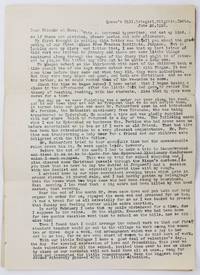
19264568Queen's Hill Kotagiri Nilgiris India: June 26 1926. Very good. 5pp. typed on plain folio sheets. Old folds minor wear. An informative and entertaining correspondence by Kate M. French written while serving as a missionary teacher at the Preston Institute in Jangaon India. Writing to "Friends at Home" French opens by reporting that the school year started well "except for two of the boys whose mother was ill with Plague" the mother subsequently died. French also mentions students getting stung by scorpions a cobra snake killed by the headmaster of the school making valentines for the entire school on Valentine's Day and much more. French also recounts the comings-and-goings of various officials to her mission writes in detail about her attendance at a "teachers' institute" composed of teachers from "the American Methodist the English Wesleyan the American Mennonites and our own" details the school's commencement at the end of the term and more. The local plague is mentioned several times in French's letter. She mentions her own inoculation against the plague. She also records that "before long we learned that there had been several deaths from plague in our town. We had nearly all our Christians innoculated some time before and Mrs. Rutherford at once had the stragglers attended to those who had fever when the doctor was innoculating and one or two who were not very strong and would only be done if the disease came near." Shortly thereafter French notes that "people are leaving town on account of the plague." An interesting letter from an American woman teaching at a mission in India in the midst of the Roaring Twenties. June 26 unknown
190930962Hongkong, Imprimerie de la Société des Missions étrangères, 1902. Grandin-8 relié demi-basane rouge à coins. Titre doré sur le dos, (21,4 x 17 cm), XXXX pages pour l'introduction, 333 pages + XII pages d'appendice. Une petite auréole dans la marge des derniers feuillets, sinon intérieur très frais, reliure solide. Fort rare.
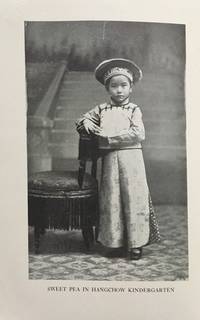
191658517Chicago: Women’s American Baptist Foreign Mission Society ca. 1916. 12mo. 182 pp. Photo frontisp. numerous photo plates tables charts. Colour-illustrated softcovers Arts & Crafts cover art of an Italianate garden minor scuffing couple bent corners shelfwear still a VG copy. First edition of this exceedingly scarce report and handbook for women missionaries distributed throughout Burma China Japan India Africa the Philippines & Assam. Employing an array of gardening metaphors the compiler details Women’s American Baptist Mission efforts in founding kindergartens Sunday Schools as well as many other health & welfare programs through their East Asia South Asia and India missions. Of particular interest are their ongoing efforts for training girls and women to succeed in their societies founding and sustaining of Woman’s Medical Colleges along with nursing schools in China Burma and Japan. In addition there are detailed tables outlining locations of WABFMS and affiliated missions’ schools boarding schools women native teachers boys & girls pupils village schools kindergartens and more. The detailed biographies and index offer excellent period references. Prescott b. 1874 was a Wellesley College graduate high school biologist and Baptist Sunday School Advocate who began with the WABFMS in 1914 as associate foreign secretary and in 1916 succeeded Mrs. Safford as foreign secretary. After publishing this report in memoriam to Martha Covert 1875-1916 she would carry out a four month tour 1919-1920 to Japan East China South China and the Philippines. Worldcat locates 1 physical copy Yale with the remaining as computer copies microfilm and online digital copies. Women’s American Baptist Foreign Mission Society, paperback
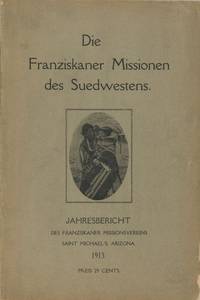
1913List3016St. Michaels Arizona: Anselm Weber and Berard Haile 1913. Sixty-eight page booklet measuring 6 ¾ x 10 inches. Wear mainly to covers; excellent. Catholic missionaries—Franciscans in particular—have been present in what is now the American Southwest since the 16th century. For most of this time these were Spanish missionaries missioning to the Pueblo people mainly in New Mexico; these missionaries’ presence waned over time. In 1898 several decades after the Navajo were allowed to return to a reservation on part of their former territory the first permanent Catholic mission to the Navajo was organized. St. Michael’s was founded by Fathers Anselm Weber and Berard Haile German Franciscans from Cincinnati. <br /> <br /> Their approach was different from the Spanish friars’ and that of the United States government primarily in that Weber and Haile advocated learning the Navajo language understanding the culture and approaching their conversion from that angle especially focusing on children who were more impressionable.1 Haile in particular became an expert in the language and culture translating many Catholic texts and producing dictionaries and writing anthropological studies of Navajo culture and religion.<br /> <br /> Offered here is a German-language copy—both Haile and Anselm were German—of the first volume of St. Michael’s yearly publication The Fransiscan Missions of the Southwest Die Franziskaner Missionen des Suedwestens. The illustrated journal was published from 1913 to 1922 and discussed the Navajo and Pueblo people and cultures and the activities of the missionaries in the area. Among other topics this volume contains an article about the Navajo Fire Dance “Der Feuertanz der Navajo-Indianer" with photographs taken from Haile’s Ethnologic Dictionary of the Navaho Language 1910.<br /> <br /> We find sixteen holdings on OCLC of the full run of the journal and three of this specific volume. Of interest to historians of Catholic missionaries to the Pueblo and Navajo people.<br /> <br /> 1 Ross Enochs “The Franciscan Mission to the Navajos: Mission Method and Indigenous Religion 1898–1940†The Catholic Historical Review 92 no. 1 January 2006: 46–73. Anselm Weber and Berard Haile unknown
1903164381903. Africa Women's Education Social Activist Life and Light for Women. Vol. XXXIII. Vol. 8. August 1903. Boston: Woman's Board of Missions 1903. First Edition Frontispiece photo of pupils at a missionary school in Zimbabwe. Original paper wraps. Staplebound. Starting in the mid-19th century there was a growing movement of international missionary trips for women who felt they had a special duty to Christianize other women who for cultural and societal reasons would not be able to hear the gospel from male missionaries. Most often female missionaries worked in educational capacities establishing schools abroad or worked in medical clinics as nurses and doctors. This report details various projects being done by women missionaries worldwide including medical work being done by Dr. Ruth Hume in India and updates on schools in Africa and Asia. Very good condition. unknown
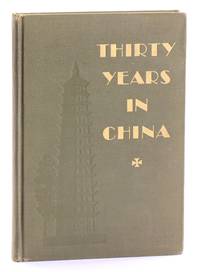
1935512689The Board of Foreign Missions of the Augustana Synod 1935. Hardcover. VERY GOOD. 230pp. B/w map and frontispiece portrait collage extensively illustrated throughout with in-text b/w photos. 8vo sewn binding in green cloth with gilt-stamped lettering and blind-stamped Pagoda to front cover. Tips rubbed text very clean and sharp with sound binding. The Board of Foreign Missions of the Augustana Synod hardcover
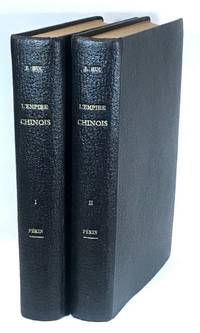
1926SB10483Pekin Peking/Beijing China: Imprimerie Des Lazaristes 1926. A beautiful set of two volumes published in French; Originally published in Paris in 1850 this set of the New Edition was produced in 1926 annotated and illustrated by J.M. Planchet; Vol. II has chip at the top corner and small stain on 2nd rear free endpaper otherwise the textblocks are clean and tight; Rebound in black textured cloth. Vol. I - 479p.; Vol. II is 493p. Illlustrated with maps drawings and photographs. Rear free endpaper of Volume II bookseller's ticket shows this set was sold by The Oriental Book Store in Tientsin China. "Évariste Régis Huc C.M. also known as the Abbé Huc 1813-1860 was a French Catholic priest Lazarite missionary and traveller. He became famous for his accounts of Qing-era China Mongolia then known as "Tartary" and especially.Tibet from this work: Remembrances of a Journey in Tartary Tibet and China. He and his companion Joseph Gabet were the first Europeans who had reached Lhasa since Thomas Manning in 1812. from Wikipedia. Nouvelle Edition. Cloth. Near Fine. Illus. by Plates/Decorations/Engravings/Folded Map. 8vo - over 7¾" - 9¾" tall. Hardcover. Imprimerie Des Lazaristes Hardcover
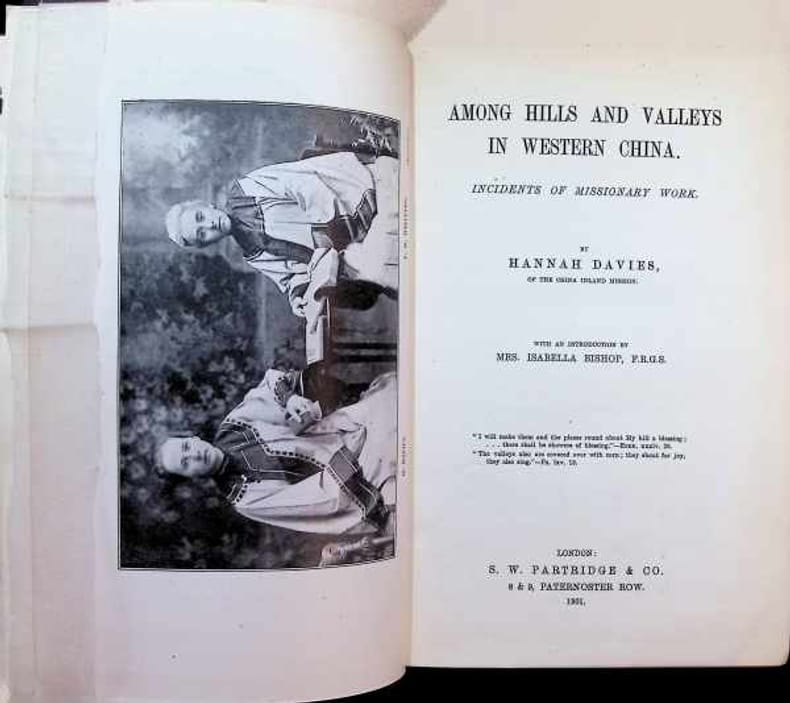
1901027843London 1901 S. W. Partridge & Co Hardcover
1906464941906 Chang-Hai, Imprimerie de la mission catholique 1906 - Reliure demi-percaline à coins (défraîchie), pièce de titre doré - Texte en chinois avec traduction française et phonétique en regard - In-8 - VI-482 pages - Très frais intérieurement - - Bon exemplaire - Réf. 49494
190320105paris Armand Colin 1903 -in-4 demi-percale un volume, reliure demi-percale rouge in-quarto Editeur à coins (half hard-back percale in-4 Editor with corners)(19,7 x 28,2 cm) à plaques spéciale monochrome pour le dos (editor hard-back percale with special covers editor for the spine), reliure d'époque, dos long (spine without raised band), titre frappé or, plaque spéciale à motif de "roses" doré pour le dos, Hatier doré en pied, mors et coins ornés d'un double filet doré, papier marbré rouge foncé aux plats, toutes tranches lisses dorées, orné de 218 photographies in-texte en noir + 21 photographies hors-texte en noir d'après des documents originaux, 520 pages, 1903 Paris Librairie Armand Colin Editeur,
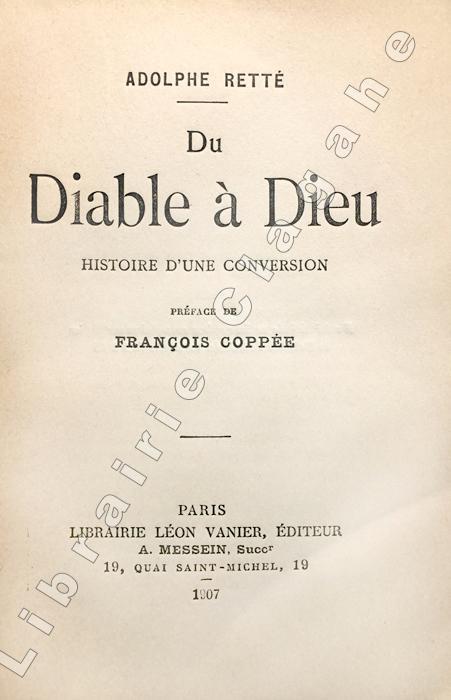
190721845Paris, Léon Vanier, A. Messein successeur, 1907 ; in-16 (187 mm), broché ; VIII, 208 pp., couverture jaune paille.
195821379Huila Angola: Tip. Missao da Huila 1958. From the collection of Dr. Gordon Gibson former curator of African Ethnology in the Department of Anthropology at the National Museum of Natural History Smithsonian Institution with his signature. Cloth backed light blue boards lettered in black. . Hard Cover. Very Good. Tip. Missao da Huila Hardcover
191195663n.p.: West African African Mission A. B. F. F. M. 1911. Good. 400 248p. Lacks cover we don't know whether this uncommon linguistic item was originally hard or soft cover. Outer leaves soiled. This 1911 edition appears to be much explanded from the first edition of 1885. The first part Umbundu-English is longer and more detailed than the second part English-Umbundu. This feature is explained or excused in the Preface: "Having as a basis the Engliush-Umbundu vocabulary which fairly enough gathers up the Umbundu-English each one can prepare for his own use a serviceable English-Umbundu vocabulary. The work of printing has been so exacting on all concerned that adding to correcting or classifying the Umbundu words in the second part could not be attempted." The Preface also warns that "The necessity of substituting ordinary c for c with cedilla in Portuguese words containing that letter is one among several infelicities occasioned by an inadequate supply of type which are much regretted." Umbundu is spoken by about a third of the inhabitants of Angola making it that country's most widely spoken indigenous language. West African African Mission, A. B. F. F. M. unknown