615 résultats
1891BB009<p> CHINA: Propaganda against Western Missionaries<br /></p><p>The Cause of the Riots in the Yangtse Valley. A "Complete Picture Gallery" by CHOU HAN. Hankow China 1891. With 32 full=page woodblock plates printed in color. Oblong 4to original printed wrappers sewn spine soiling minor repairs.</p><p>The author Chou Han is described by the translator Griffith John 1831-1912 as 'a gentleman of high official rank Taotai in Hunan' and was part of an orchestrated propaganda campaign aimed at discouraging Western Christian missionaries from working and traveling in China. This volume was perhaps his most significant and horrific attack on western culture managing a "reptile press" in Hunan creating unrest and distrust amongst the Chinese people see John's "A Voice from China" 1907 p. 220. Chou Han himself is probably represented in plates IX XIII XXVI and XXIX; the images are virulently anti-foreigner and specifically anti-Christian. John translated and circulated the present work to draw attention to the British authorities of the problems faced by missionaries in Asia. </p><p>Very Rare. ONLY 3 COPIES CAN BE TRACED AT AUCTION IN THE PAST 40 YEARS ABPC & RBH. </p><br /> paperback books
Very Good Turkish, Ottoman (1500-1928) Contemporary fine quarter leather binding. Five raised bands to spine, second gilt title as "Tarih-i seyyâh", others gilt decorations. Brown boards are embossed decoratively. Demy 8vo. (21 x 15 cm). In Ottoman script (Old Turkish with Arabic letters). [12], 194 p. Hegira: 1142 = Gregorian: 1729. Slightly wear on colophon and the first page. Otherwise a good copy. Extremely uncommon first Ottoman edition printed in the first printing house of the Islamic world as the third Islamic incunabula, of this eye witness and first-hand account, and one of the most important chronicles describing the history of late Safavid Iran in the 18th century, the Iranian invasion of Afghanistan and the siege and the fall of Isfahan in 1722 written by Kruzinski who was a Polish Jesuit missionary served in the Persia in the early 18th century. In 1720 he was nominated advocate general of the mission in Persia and became the secretary to the Bishop of Isfahan. Krusinski himself, however, claimed later on that he is not only the author but also the translator of this work. As a chronicle, this is a history of Iran under the Safavids from 1499 up to 1727 with a special focus on the 1722 Afghan invasion that terminated the Safavid dynasty. "His account of the conditions and events preceding and during the siege and the subsequent demise of the Safavids is unique. It also offers key insights into the workings of the late Safavid state and government as well as the functions of the royal harem." (Bloomsbury). Translated and expanded by Ibrahim Müteferrika of Kruzinski's Latin manuscript written in 1726 in Istanbul and entitled "Historia revolutionis monarchia Persica". The book was first published in Italian, French, and English translations, in Rome (1727), Paris (1728), and London (1728). The founder of the legendary first printing house in the Islamic world, Ibrahim Müteferrika (1674-1745), was the editor and translator of this book. Ceridehâne [i.e. Journal House] Printing House is the successor of the Müteferrika Press in the early 19th century. "The book is a Turkish translation of the history of Iran written in Latin by the Jesuit missionary Judas (Jan) Tadeusz Krusinski (1675-1751). The work, whose title can be translated as 'A voyager's description on the apparition of the Afghans and on the reasons of the Safavid Empire being undermined', focuses on the Afghan invasion of 1722 which led to the fall of the Safavid dynasty, but also offers an overview on the historical processes of early 18th-century Safavid Iran. The publication of this work was made actual not only by the vicinity of Iran to the Ottoman Empire but also by the historical turn reorganizing the relations of power in the region and triggering the intervention of the Ottomans as well. This may have been the reason that among the first Turkish incunabula this was the work published in the highest number of copies. This publication also offers an early example of copyright disputes, as Krusinski considered the Turkish translation as his own work, while Müteferrika, who does not mention his name in the printed version, suggests himself to be the translator". (Source: The Mysterious Printer Ibrahim Muteferrika and the Beginnings of Turkish Book Printing: Library of Hungarian Academy of Sciences Online). The workshop of Müteferrika began its historical mission in 1728. They published 17 works in 22 volumes. The printing house served as a means to the long-term goal of Müteferrika, his efforts to broaden the horizon and modernize the knowledge of Ottoman society and Islamic civilization. This is evidenced by the subjects of the books selected for publishing, the motivations put forth in the publisher's introductions, as well as by the documents illuminating the background of the publication of each book, also published in print. One of 1200 copies. OCLC: 312516053 (For printed copies: Two copies).; Özege: 19897.
17473878FBRostock, Verlag Christian Koppe, 1747-1749. 4°. 26,5 x 21,5 cm. [1] Blatt, 58, 472 Seiten; [1] Blatt, 56, 748; 28 Seiten, [2] Blatt, 548; 56, 264, 552 Seiten, [16] Blatt. Ganzlederbände der Zeit auf 4 Zierbünden mit Streicheisenlinien auf den Deckeln und rotem Sprengschnitt. [12 Warenabbildungen]
1900531900s or earlier No Worldcat/OCLC record in French. SIENHSIEN Mission had been one of the biggest mission in Old China. This was a SIENHSIEN RECRUIT LETTER IN OLD CHINA.<br />Some wear on covers. 12pp. Good. SIENHSIEN Mission, China paperback
1971WRCAM56376Mostly various locations in Tennessee and Virginia plus Salt Lake City 1971. 240 letters various paper stocks and sizes including some Mormon-related stationery most letters at least three pages in length each stapled plus a handful of clippings postcards assorted photographs and an appointment book. Neatly organized chronologically and by sender in labeled manila folders and stored in a single document box. Minor tears to a few letters else mostly clean and very good overall. An important archive of correspondence centering on Mormon missionary activities in the American South during the Great Depression and the years of World War II. All of the letters were written to Ruby Marion a Mormon woman from Virginia. The most significant letters come from Ralph Horrock a Mormon missionary operating mostly out of Tennessee but also Virginia. Horrock's letters to Marion number almost eighty and are filled with interesting information on Mormon missionary efforts. Other important letters were written to Marion by Mormon Elder Gaell Lindstrom from both Virginia and Salt Lake City her husband William "Bill" Tragdon and Ruby Marion's mother and sister. The letters from Marion's husband mother and sister mostly concern family matters but the letters from Horrock and to a lesser degree from Lindstrom are highly significant for their voluminous content on Mormon missionary activities in the American South. <br> <br> Ralph Horrock was sent to Tennessee to spread the Mormon faith at the end of 1934. He and a companion were ordered to travel throughout the countryside and preach the tenets of Mormonism. Horrock is reserved in his letters at first writing that he would have preferred to stay in Virginia where Marion was located. He is clearly smitten with Ruby Marion however and writes more and more about his love for her as his correspondence continues. Marion visited Horrock in Tennessee in the summer of 1935 and their correspondence continues to January of 1936 but their romantic relationship clearly did not flourish. Marion would eventually marry William Tragdon some time after 1948. <br> <br> Often traveling by foot through the South Ralph Horrock and his companion elders visited both the cities and the small country towns they found preaching the Mormon faith at local town halls and school houses sometimes finding challenging audiences. They established Sunday school classes held prayer meetings preached at funerals of deceased Mormons living in Tennessee and more. Horrock mentions proselytizing to some of the country people and even holding river baptisms. Inevitably he also relates to Marion various gossip about the inner workings of the Mormon Church in Tennessee and Virginia asks Marion for gossip she might know and also asks about the movements of other missionaries in the region. Horrock finds much joy in his work for quite a long time - at one point a local community in Tennessee asks him to build a church and stay there as their preacher - but by the conclusion of his letters to Marion the joy seems to have faded. A handful of brief excerpts of Horrock's letters to Marion reveal the compelling and informative nature of his correspondence: <br> <br> March 23 1934. Marysville Tn.: "I don't think I will have any more lonesome and blue spells for a while now because I am too busy what I mean they sure do the Missionary work here in Tenn. We get in about six hours tracting per day and I sure love to tract here for people love to talk with you on religion and no fooling some of them are sure interested. Since I came here I sure have had plenty of opportunities to preach. We hold cottage meetings three and some times four times a week. There is one thing I can say about this state of Tennessee - it sure is a land of opportunity for a missionary. I am now really learning to be a preacher you ought to hear me some time but I better shut up for self praise is not very good is it" <br> <br> May 30 1935. Silver Point Tn.: "We had a swell meeting at Knoxville but I guess I told you about it in my last letter. We are now away out in the sticks right out with the good old hill billies I think we are about forty miles from Nashville. We are having wonderful success out here we are holding cottage meetings most every night so you can see we are getting plenty of preaching.We would have been in McMinnville last Sunday but at the last moment before we left Knoxville the D.P. changed his mind and sent us to Silver Point. They are holding a big memorial celebration here next Sunday and they wanted two Elders here to preach for them so here we are. I have to go about five miles to a little old country post office to mail this letter so I will have to hurry to get it there before the afternoon mail arrives." <br> <br> June 25 1935. Spencer Tn.: "I am glad to say I am still all together and healthy even though we are in a somewhat hostile section. The people here would like to be tough but after all they are only wind bags. You recall I told you we were going to hold some meetings in the County Court House at Spencer and I thought that we might meet up with some opposition. Well we held our first one last night and we had the building almost full. No one caused us a bit of trouble rather they were all ears and I am sure they heard something last night they had never heard before. The thing that gets the best of these people is this - even though we do present strange doctrine to them we have scripture to prove each point we bring out. People might come to hear us with the intention of giving us trouble. But after they hear us prove our points so clearly from the Bible the only thing they can do is take it and keep still. I feel that the Lord has greatly blessed us in our work here and if we have succeeded in doing a good work I do not want to take the honor to my self.We are having more success here than any other place I have been in since I came to Tennessee. We held an open air meeting here Sunday and almost a hundred people came to hear us. Tonight we are holding services again at the Court House and I am expecting the House to be full." <br> <br> July 21 1935. Smithville Tn.: "You said something about the Elders going to Harrisonburg to Baptize those people over there. Do you know whether or not they did I would really like to know of them coming into the Church because I had such a large part in bringing them to a knowledge of the Truth. If they are Baptized then I can look back and with the assurance that I really did accomplish something while I was there.Who is the new D.P. in Virginia or do they know yet I really pity the poor fellow who gets the job.Virginia is the best District in the Mission in lots of ways but when it comes to getting real practical experience then give me Tennessee. I have ten chances to preach here where I get one there. And another good thing the people like to hear the Gospel here and they come out in such large crowds we have to hold our meetings outside. Whenever we held cottage meetings in Va. we never did get over twenty people out but here it is nothing at all to get over a hundred. You know it is really some difference. Are the Elders still laboring in the cities yet I really would hate to do that. The city don't provide half the fun and experiences that the country does. I would go wild if I had to stay in the city. We held a baptism the other day and after the services we went swimming and some also went wading so you see we have some real fun too once in a while." <br> <br> September 2 1935. Spencer Tn.: "We really have so much work to do we really don't have time to stop and see if we are well or sick. I can say though that I am really enjoying myself more than words can tell. There is one thing about missionary work that makes it better than any thing I have ever done before and that is the more you work the better you like it. I really did not know what real missionary work was until I came to Tennessee. Over in Virginia it was just easy come easy go and we only got to preach about once or twice in a week and even at that I thought I really was doing something. But since I came here I am fully convinced that I only wasted time in Va. We get to preach somewhere here every night and twice on Sunday and we get many other experiences that goes to make this the greatest work in the world." <br> <br> September 7 1935. Spencer Tn.: "As usual we are having wonderful success in presenting the Gospel before the people and we have made lots of friends which I am very thankful for. We have just come today out of a back woods country which is so far out of the way the Elders haven't visited it for years. The people there sure did turn out to hear us preach. We used the School House to hold our meetings in and so many people came there wasn't room for them so they had to sit outside and listen. I wish we could stay there longer but it was impossible for we had to come into Spencer and get our mail. I have a job ahead of me that is going to be hard to do. There is an old woman that lives in the county that has a husband that is dead and he has been dead for about ten years. When he died she could not get any Elders to preach his funeral so she buried him without holding a funeral with the intention of having the first Elders that came hold it at his grave. We happened to be the first ones to come so the job is ours. It's going to be hard to do but I guess we will have to do it. There is no other way out. Well you know this Missionary work is not all sunshine and roses if we didn't get the bitter once in awhile we would not enjoy the sweet." <br> <br> December 2 1935. Morristown Tn.: "I am not enjoying my work here in the least. I never was in such a dirty hole as this little town is. We haven't a friend or a member within fifty miles. I haven't preached for so long I really believe I have forgotten how. I never was so divested of spiritual will power in my life as I am right now and I don't mind saying I am getting sick of it. Every other Elder in this District is laboring in a city where there is a brand that will provide them some place to work where they can at least see where they are accomplishing something. Still I suppose I shouldn't bother you with my troubles no doubt they do not interest you." <br> <br> Horrock concludes his correspondence the next month by relating that he is getting transferred to Chattanooga where he "will have plenty of good work to do." He writes to Marion for the last time that he does not know what his address will be so he asks Marion "not to write until you hear from me again." Perhaps Marion never heard from Horrock again. <br> <br> Other letters in the archive are written to Ruby Marion from another Mormon Elder named Gael Lindstrom who also appears to have served as a missionary in Virginia and West Virginia. In his fifty-two letters Lindstrom writes sparingly about his experiences as a Mormon missionary but when he does he provides interesting details. For instance on July 30 1943 in Huntington West Virginia Lindstrom writes: <br> <br> "We have spent a few days of this week in Huntington W.Va. as we are not so very far from there. It seemed good to return to the place where I had spent about seven months before coming into Virginia. Elder Price's father will be here in about ten days to work the rest of his mission with him. That will leave Elder Bray and I as the only Elders left in the district. Your guess is as good as mine as to what will happen then. He is coming down to Home Creek next Tuesday to do a little traveling with us in this section. He can't take us out of here too soon for me. This is really woods. Last nite we held a meeting in a small miner's union hall which was dimly lit by three gas lamps. There were about 35 present but I'm afraid all they came for was the novelty of it as they have a complete lack of amusements around here of any description." <br> <br> He also writes frequently of other elders or members of the church other church activities and leadership changes his travels to Mirror Lake and more. Lindstrom spent about six months in Louisville Kentucky where he was assigned in early 1944; two of his letters from Louisville are written on LDS stationery. By June 1944 he is back in Salt Lake City where he misses "being back in the mission field." The bulk of his letters emanate from Salt Lake City during the rest of 1944 and through mid-1947. Many of his letters concern his activities in the antiques trade which Marion may have been involved with as well. The two apparently corresponded about opening an antiques shop in Salt Lake City. Lindstrom's correspondence concludes with news that he is opening his own photography studio after working some time in the camera department at Auerbach's Department Store in Salt Lake City. <br> <br> The archive also includes correspondence from Ruby Marion's husband William Tragdon and Marion's mother and sister. Tragdon worked in the aeronautical engineering field and traveled extensively throughout the country. He was quite smitten by Marion evidenced by his thirty-seven letters home to "Kitten" from February to September 1948. Tragdon's letters are deeply personal missives to his wife and eventually to both his wife and son Howard in the late-1950s with occasional information on larger family matters. His two somber letters from 1970 and 1971 indicate that he and Marion had divorced. <br> <br> The letters from Marion's mother and sister are also mostly concerned with family matters. One interesting letter from Marion's sister Evelyn dated 1946 mentions a recent banquet where she "saw quite a few of the old missionaries that we once knew." Evelyn's letter also mentions Mormon presidents Tew and Doxey and a few other church colleagues she encountered at the banquet. <br> <br> There is also a folder containing ten letters from various correspondents to Marion from the 1930s to the 1970s. Some of these letters concern missionary matters from Virginia to as far away as the Dutch East Indies. The latter are written by a correspondent who signs his name as "Dee." Dee writes on Dec. 23 1944 that "We hold L.D.S. services on the island & have 100 present each Sunday." This folder also contains a selection of unused photo postcards from two photographs of Mormon Church elders one inscribed to Marion by Elder Clark O. Thompson and the other inscribed to "Dear Sister Ellinger" from Elder Frank Miller. <br> <br> The archive is rounded out by a small appointment book presumably kept by Marion or a family member from 1955 to 1960. The book is almost entirely comprised of appointments notes and schedules of Masonic meetings. The final folder contains several letters sent to Ruby Marion by V-Mail during World War II. The various letters appear to come from family friends named Jesse Terry Sgt. D. Sanders and H. Kenneth Coburn who also sent a signed photograph to Marion. All of these letters were sent to Marion at her address in Waynesboro Va. <br> <br> An engaging and far-ranging collection of correspondence to a Mormon woman from Virginia with illuminating information on Mormon missionary activities in the American South during the Great Depression. unknown books
In-8°, 16 cc, pp. 327, più errata, c. di tav. ripiegata (Situs provinciarum imperii Sinici), occhietto, vignetta calcografica sul frontespizio, illustrazioni calcografiche. Rilegatura in pergamena con nervi e titolo al dorso. ROUGEMONT (Franciscus de), b. a Maastricht il 2 aprile 1624, d. a Chang-chu (Cina) il 4 novembre 1676. Nelle scuole dei gesuiti a Bruxelles e Anversa fece i suoi studi inferiori con risultati brillanti e nel1641entrò nella Compagnia di Gesù. All'assedio di Kortrijk nel 1646 si distinse, sebbene non fosse ancora un sacerdote, per il suo zelo nella cura dei soldati feriti. Nel 1654 ricevette la consacrazione del sacerdote e, quando padre Martino Martini, procuratore della missione cinese in Europa, venne a cercare missionari per questo lavoro, riuscì a convincere i suoi genitori a richiedere quella missione a favore del figlio dal Generale dell'Ordine. L'anno seguente partì da Amsterdam per Lisbona con il gesuita di Amsterdam Ignazio Hartoghvelt. Dopo un ritardo a Coimbra, lasciarono Lisbona il 30 marzo 1656 e arrivarono il 6 novembre a Coa. A piedi, continuò il suo viaggio lungo la costa di Malabar, Visschersen Transvancore, e poi attraversò il Siam, dove il suo compagno Hartoghvelt morì a Yoethia nel 1658. Nello stesso anno, de Rougemont raggiunse Macao, e nel 1659, raggiunse la corte imperiale, in Cina. I cristiani da lui formati sono stati riconosciuti per il loro zelo e conoscenza della religione. In seguito a una violenta persecuzione dei cristiani durante la minore età dell'imperatore Kang-hi i missionari furono portati prigionieri a Pechino, poi esiliati nel Canton e imprigionati nella chiesa per 6 anni. R. capì che questa persecuzione aveva la sua ragione principale nella nazionalità straniera dei missionari. Per togliere quest'arma dalle mani degli avversari, pensò di addestrare un clero nativo e pensò che consentire una liturgia della chiesa in lingua cinese avrebbe promosso questo piano. Nel 1667 inviò un dettagliato memorandum al generale dell'ordine Oliva (stampato in Analecta Bollandiana XXXIII (1914), 279-93). Solo nel 1671, quando l'imperatore Kang-hi fu convinto dell'innocenza dei missionari, questi tornarono alle loro congregazioni cristiane. Il Rougemont ha continuò il lavoro interrotto per altri 5 anni. Durante un viaggio verso l'isola di Tsong-ming, si ammalò a Tsang-chu e morì tra le braccia di Padre Couplet. I suoi fedeli cristiani vennero per raccogliere il corpo del loro padre spirituale e dopo due giorni di cammino lo seppellirono solennemente sul Monte Voxan fuori dalla città di Changsho. Egli aveva usato il tempo della sua disoccupazione forzata per compilare la sua Historia Tartaro-Sinica nova (Lovanii 1673), in cui racconta ampiamente la persecuzione subita. Il Rougemont ha dato un ottimo contributo alla conoscenza della letteratura cinese. Con i padri Intorcetta, Herdrich e Couplet, intraprese l'importante lavoro: Confucius Sinarum philosophus, messo in stampa nel 1687 per ordine di Luigi XIV a Parigi. In-8 °, 16 cc, pp. 327, plus errata, folded table (Situs provinciarum imperii Sinici), half-title, woodcut on the title page. ROUGEMONT (Franciscus de), b. in Maastricht on April 2, 1624, d. in Changchu (China) on November 4, 1676. In Jesuit schools in Brussels and Antwerp he made his lower studies with brilliant results and in 1641 he entered the Society of Jesus. At the siege of Kortrijk in 1646 he distinguished himself, even if he was not yet a priest, for his zeal in caring for wounded soldiers. In 1654 he received the priest's consecration and, when Father Martino Martini, procurator of the Chinese mission in Europe, came to look for missionaries for this job, he managed to convince his parents to carry out that mission in favor of his son by the General of the Order. The following year he left Amsterdam for Lisbon with the Jesuit of Amsterdam Ignazio Hartoghvelt. After a delay in Coimbra, they left Lisbon on 30 March 1656 and arrived on 6 November in Coa. On foot, he continued his journey along the coast of Malabar, Visschersen Transvancore, and then he crossed Siam, where his companion Hartoghvelt died in Yoethia in 1658. In the same year, Rougemont reached Macau, and in 1659, he reached the imperial court , in China. The Christians he trained were listed for their zeal and knowledge of religion. Following a violent persecution of Christians during the minor age of Emperor Kang-hi, the missionaries were taken prisoner to Beijing, then exiled to the Canton and imprisoned in the church for 6 years. R. understood that this persecution had its main reason in the foreign nationality of the missionaries. To remove this weapon from the hands of opponents, he thought of training a native clergy and thought that allowing a Chinese-language church liturgy would promote this plan. In 1667 he sent a detailed memorandum to the general of the order Oliva (printed in Analecta Bollandiana XXXIII (1914), 279-93). Only in 1671, when Emperor Kang-hi was convinced of the innocence of the missionaries, did they return to their Christian congregations. Rougemont continued the interrupted work for another 5 years. During a trip to Tsong-ming Island, a Tsang-chu fell ill and died in the arms of Father Couplet. His faithful Christians came to collect the body of their spiritual father and after two days of walking they saw him solemnly on Mount Voxan outside the city of Changsho. He had used the time of his forced unemployment to compile his Historia Tartaro-Sinica nova (Lovanii 1673), in which he widely recounts the persecution he endured. Rougemont made an excellent contribution to the knowledge of Chinese literature. With his fathers Intorcetta, Herdrich and Couplet, he undertook the important work: Confucius Sinarum philosophus, printed in 1687 by order of Louis XIV in Paris.
1704PHO-2363Amsterdam, Chez Adriaan Braackman, 1704. In-12 (16x10cm) de 19ff.-604pp.-16ff.,Titre gravé en frontispice, 2 grandes cartes dépliantes et 6 planches dépliantes h.-t., Basane postérieure, dos à nerfs orné, pièce de titre rouge et auteur verte, tête dorée, rajout sur l’adresse de l’imprimeur à la seconde partie. Frottements et épidermures, traces de renforcements aux cartes.
1919124931à Lyon, chez M. P. Rusand, imprimeur-libraire, Librairie ecclésiastique de Poussielgue-Rusand 1919 72 volumes. In-8 20,5 x 12,5 cm. Reliures de l’époque composites demi-basane aubergine, dos lisses ornés de filets dorés encadrés de petits fers à froid & à partir du vol. n 48, demi-basane vert-émeraude, dos lisses ornés de filets à froid, environ 550 pp. par volume, table en fin de chaque volume. Ex-libris marquis de Monteynard.
1875126715à Lyon - à Paris, chez M. P. Rusand, imprimeur-libraire, à la Librairie écclésiastique 1875 42 volumes. In-8 20,5 x 12,5 cm. Reliures de l’époque composites demi-basane aubergine, dos lisses ornés de filets dorés encadrés de petits fers à froid, environ 550 pp. par volume, table des matières en fin de chaque volume. Ex-libris Monteynard. Manque en pied de dos vol. 28. Intérieur frais. Ensemble en bon état.
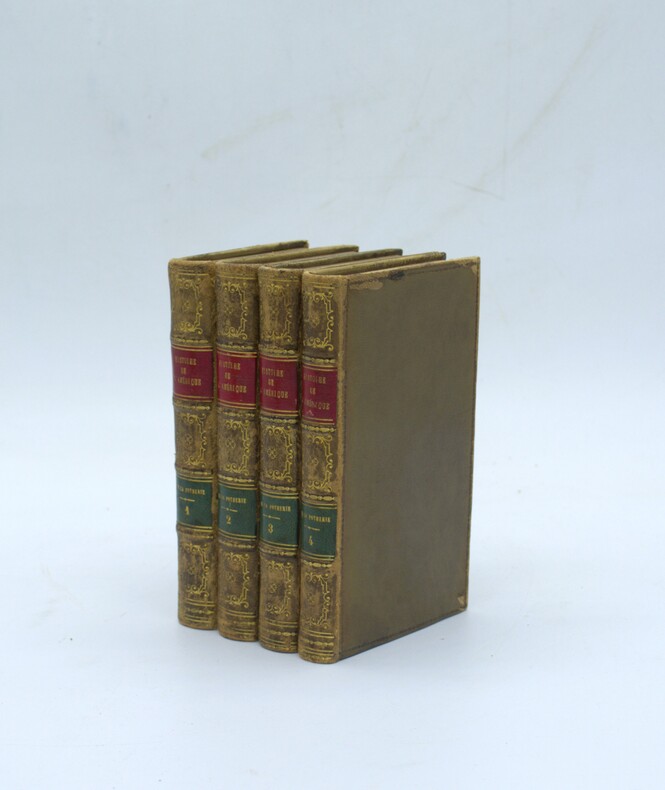
1753PHO-2353Paris, Broca, 1753, 4 volumes in-12 (16x9,5cm), 7pp.-370pp.-2ff./ titre-356pp.-4ff./6ff.-310pp.-3ff./titre-271pp.-2ff., basane postérieure (19ème ), dos à nerfs orné avec pièce de titre rouge et tomaison verte, ex-libris manuscrit répété, étiquette de libraire (Beauchemin & Valois, Montréal). Frottements et épidermures, 1 planche détachée (t1), 1 feuillet de table monté à l’envers (t4), défaut au titre (t1) Illustré de 25 (28) cartes et gravures, dont dépliantes, manque les 2 planches de musique et la carte de l’Hudson.
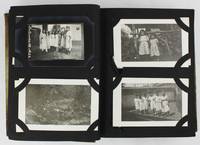
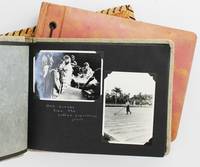
193912870Various locations mostly in India 1939. Two contemporary photograph albums bound in matching black cloth. Album 1: 47 leaves illustrated with 347 mounted photographs including a handful of real photo postcards profusely captioned in white pencil on album leaves. Album 2: 30 leaves illustrated with 285 photographs including some real photo postcards and commercial images with only a few manuscript captions. Oblong quarto. A unique pictorial record of American Christian missionary service in India during the years of the Great Depression detailing the life and work of Seventh Day Adventists Edward and Edna Mabel Pohlman. Edward Pohlman 1906-1970 and Edna Mabel 1906-1997 married in 1928 and served in the Northern India Union NIU Section which was part of the Southern Asia Division from 1929 to 1946. While in India it appears that the Pohlman family lived at least in Mussoorie Roorkee and Poona during which time they had one son Edward Wendell born in Punjab in 1933. The father Edward received an M.A. and PhD from Ohio State University. The couple likely lived in Roorkee early on where Pohlman likely taught at Roorkee Adventist College as there are images of the faculty at Roorkee their bungalow and so forth. They may also have been associated with the Vincent Hill School in Mussoorie of which there are several images. He definitely taught theology at Spicer Missionary College Now Spicer Adventist University in Poona Pune and became president of Spicer in 1939 a position he held until 1946. Spicer College was the church’s flagship educational institution in India. Pohlman also held SDA conference positions including educational and missionary volunteer secretary for the Southern Asia Division.<br /> <br /> The SAD NIU section focused on establishing mission schools doing medical work publishing and direct preaching aiming to spread the gospel this way. The organization worked to establish churches and develop indigenous leadership and self-supporting missions in communities across northern India. The albums only pertain to his time in India but following his time there Pohlman taught at the Western College for Women in Oxford Ohio then in 1958 was a Fulbright lecturer in sociology and anthropology at the University of Karachi and then served as executive director of the U. S. Educational Foundation in Pakistan. In 1960 he joined Queens College in Charlotte North Carolina where he taught and was head of the sociology and anthropology departments until his death. He was fluent in Urdu and Hindustani.<br /> <br /> The first few images in the first album document the Pohlman's trip from New York to India as a young married couple in 1929. They spent some time in England and the Holy Land before arriving in India. The first images from India show their first house in Mussoorie and the Vincent Hill School which was part of the SDA educational system. Other early India images feature Najababad including a dispensary a village meeting and their colleagues the Kimble's bungalow there plus an image of a building captioned "Northwest Union Headquarters of our work" in Lucknow. The next group of photos are of Roorkee in 1931 picturing another SDA school the Roorkee Adventist College the faculty a group of students a sewing class a Bible class and a dispensary. Numerous images include Edna and Edward as well as their colleagues the Steeves the Kimbles the Garners and others. One shows Edna and four young men and is captioned "my first English class."<br /> <br /> Several historic photographs relate to important SDA events meetings and facilities. One of the bigger photographs shows a very large group and is captioned "workers from India Burma & Ceylon at Poona SDA Council 1931." Another shows the Division Headquarters at Poona and a third shows attendees from the Northwest India Union that attended the Poona Council in 1931. Another group of images shows workers and students at the SDA Colporteur Institute a school that trained people to evangelize and pass out literature. Another shows 17 Abbott Road in Lucknow the location of the SAD Publishing House. There are also images of the Seventh Day Adventist Training School many uncaptioned images of SDA student and graduate groups and some of Edna or Edward with their students.<br /> <br /> Other photographs illustrate the missionaries' lives through their bungalows outings trips to Kashmir a large group of images Lahore and Delhi riding elephants celebrating Christmas and more. Other images show local people harvesting sugar cane bathing in the Ganges a pilgrim knee-walking a street sewing service Indian weddings a group in front of the Seventh Day Adventist Training School many uncaptioned images of SDA large and small student and/or graduate groups and more.<br /> <br /> The albums also provide images of the couple's missionary colleagues including several who traveled out to India with them and some who were especially notable. These include:<br /> <br /> John Milton Steeves 1905-1998 an important SDA missionary and educator who became a career diplomat serving as acting ambassador to Jakarta Indonesia deputy assistant secretary of state for Far Eastern Affairs 1959-62 and ambassador to Afghanistan 1966-69. The Steeves family lived in Western Washington between 1919 and 1927 where Steeves graduated from Walla Walla College an SAD-affiliated school and the University of Washington.<br /> <br /> Raleigh and Edna Garner from Nampa Idaho who served sixteen years in India then pastored in Idaho. Garner also graduated from Walla Walla College.<br /> <br /> Ray LeRoy R.L. Kimble 1890-1972 and his wife Jessie M. Estep Kimble. Kimble was a pastor and missionary who served in India from around 1915 to 1950 and was president of the Northern India Union Section from 1946 to 1950. His wife was principal of the North Agra Mission Girl's School from 1930 to 1932; earlier they ran a sanitarium at Bombay. After India's independence Kimble was part of a delegation in August 1947 that met with Nehru Gandhi and Jinnah to explain the role of the Seventh Day Adventist Church in India.<br /> <br /> Marion Hulda Belchambers 1886-1949 a pioneer teacher administrator and publishing house pioneer who became secretary and treasurer of the Northwest / Northern India Union in 1923.<br /> <br /> The two albums document important contributions made by the Pohlmans and their colleagues to education and healthcare in India and also provide visual documentation of important Seventh Day Adventist events and meetings and insights into the daily lives of missionaries of the period. unknown
1777PHO-990Paris , Gide , 1797 , 3 volumes (1,2,3) in-4° (260x200) relié plein basane époque , dos lisse orné avec tomaison et pièce de titre . Tome 1 (1797) , chez Gay & Gide , xvi-500pp , illustré de 9 planches sur papier bleuté , ex-libris de la maison de Maistre avec sa devise , Tome 2 (1777), chez Nyon l’ainé, viii-278pp 234pp , charnière légèrement fendue , coin usé , Tome 3 (1778) chez Nyon l’ainé , vi-504pp , illustré de 6 portraits ,petits défauts , tome 2 et 3 , ex-libris de Jean-François-Charles Laval de La Loubrerie .
243 pages. Tissue-protected frontis photo portrait of author. Attractively decorated maroon cloth-covered front board. All seventeen black and white plates present. "An autobiographical account of the author's first twelve years (from 1862 to September 1873) as a Methodist missionary among the Cowichan and Nanaimo Indians." - Lowther. Average wear. Prior owner's name in light pencil upon front free endpaper. Faint moisture marks to fore-edge of first twenty-five pages. Hinges starting. Issued without dust jacket. LOWTHER 1556, RICKS p.75, AMTMANN 3499, SMITH 2134, WALLACE p.52, MATTHEWS 295, TOD & CORDINGLEY p.85. Book
19235584Various locations in Guatemala and Mexico 1923. Very good. 145 real photo postcards photographs and printed pictorial postcards thirty-eight with manuscript notes on verso. Minor wear overall. A wonderful collection of images featuring the people and places involved with the educational missionary work of Lula Maud Jackson later Tolosa of Birmingham Michigan. Jackson was a Baptist missionary teacher at schools in El Salvador Cuba Mexico and Guatemala before returning to Michigan in the early-1920s. Not long after her return Lula married an El Salvadorian minister named Ramon Alberto Tolosa in Michigan on June 26 1923; apparently Tolosa moved to Michigan to be with Lula and thereafter established the First Mexican Baptist Church in Saginaw where he remained as pastor until his retirement in 1975. The present collection of photographs feature numerous people and places Jackson knew during her time in Latin America.<br /> <br /> The collection contains a few photographs that appear to include Jackson but the great majority show various native settings and subjects including the children she was teaching pictured in class group shots. Most are not captioned but many of these images are dated in 1921. The images feature students at play fruit vendors carrying large baskets churches and other buildings and more. Almost forty of the images however which are mostly portrait postcards or photographs include inscriptions to Lula on the verso from the numerous named subjects. All of the captions are written in Spanish. Seventeen of these identify various subjects in Mexico by name including multiple members of the same family in one case. One postcard is covered completely on the verso with the musical notation and lyrics of a song called "Ven a El pecador!" Two of these postcards were actually postmarked to Lula in Cuba while she was there in 1916 and 1919. Eighteen of these annotated real photo postcards were sent to Lula by her soon-to-be husband Ramon Tolosa all but one in either May or early June 1923 before the couple married later in June of that year. At the time Ramon was working in Tampico Mexico from where he sent all of these postcards. The postcards are not postmarked indicating Ramon may have sent them inside other letters; plus the captions contain straightforward descriptions of the subjects and settings of the postcards and not the personal correspondence that might be expected from two people about to be married. All in all a diverse and personal collection of images of Mexico kept by a missionary teacher from Michigan to memorialize her earlier work there offering several avenues for further research. unknown
FIRST AND ONLY EDITION of this fascinating document concerning Eastern and Western beliefs, and the activities of Danish missionaries on the Southeast Coast of India during the early 18th century. 8, xxii, 2, 352 pp, COMPLETE WITH THE HALF-TITLE, WHICH IS OFTEN MISSING. 8vo. Beautifully bound in quarter calf and marbled boards. Spine in six compartments with embossed fleurons, leather title-piece. Minor traces of old, faint staining in the lower margins of a few leaves, else a VERY FRESH COPY, COMPLETE AND ATTRACTIVELY BOUND. Rare.
Very Good Turkish, Ottoman (1500-1928) Contemporary handsome petrol green quarter leather, five raised bands to spine with decorative gilt edges, marbled boards. Roy. 8vo. (24 x 17 cm). In Ottoman script (Old Turkish with Arabic letters. 118 p., 14 unnumbered woodcut plates (one is full of two pages). Hegira: 1314 = Gregorian: 1896. Extremely rare first and illustrated edition of the journey of civil servant Ali Bey, who went from Istanbul to Baghdad and to India through his duty in Düyûn-u Umûmiye [i.e. Ottoman Public Debt Administration] covering the years 1885-1888, vividly describing Baghdad, Musul; and India. In 1884 Ali Bey started his journey as an ex-governor of Trabzon city and a new OPDA officer from Constantinople (Istanbul), and he arrived in Baghdad through Lesbos, Ayvalik, Smyrna (Izmir), Mersin, and Alexandretta (Iskenderun). On their way to Baghdad, they cross the Tigris River on rafts that local people call "Kelek". His descriptions of Baghdad city are very important and first-hand accounts of the region including the details of the walls of the city, hospitals, health organizations, industry, a transportation company on the river, a new settlement near the center of Kadhimiya with a tram line to through the city built. Ali Bey landed on the Indian continent in Karachi (today's Pakistan). He made a detailed description of the big cities that were the British Colony and states that he was influenced by these cities as a Reform period Turkish intellectual. He also describes Islamic India, Parsi traditions, costumes and funerals, Portuguese culture in India, Victoria Garden Zoo, silk weaving factories founded by David Sossoon, who came from Baghdad, architecture, music, theater, etc. List of ills.: General view from Ayvalik, the port of Smyrna (Izmir), the port of Mersin, two panoramas of Diyarbakir and Aleppo cities, the bridge of Musul, "Keleks" on the Tigris, a local woman of Aleppo, Famous water mill of Aleppo, Fortress of Aleppo, Eagles of Parsi people in Bombay, A Parsi family from Bombay, Arcadia ship in Bombay, Straight of Hormuz in Basra. Ali Bey was a playwright originally. He learned French in private lessons and firstly he worked at the Babiâli (The Sublime Port) Translation Office as a clerk, then he became a member of the Health Council and the first secretary of the Directorate of Quarantine. He went to Eastern Anatolia, Iraq, and Japan as an inspector of public debts (1855-88). After his duty as the Governor of Trabzon (1890-93) he became the director of the Office of Public Debts (1890-93), which would last until the end of his life. It is for this reason that he was called Direktör Ali Bey. His first work was published in Diyojen (1869-72), the first humorous review, published by Teodor Kasap. Ali Bey, who was one of the regular writers of this review, wrote plays for the Gedik Pasa Theater, which was founded by the Armenian Güllü Agop and his friends, and wrote scripts adapted from French plays. He gave Turkish diction lessons to the Armenian actors and participated in theater activities. His plays were performed under the authorship 'A Person' to hide his official identity. He explained the meanings of words satirically in his dictionary Lehçetü'l Hakayik (Language of Realities) which he wrote in 1897 and was the first work of its field; the faults of the 19th-century Ottoman Empire were also criticized in this dictionary. Özege 17900.; TBTK 3068.; OCLC 218189547 (One copy in Bayerische Staatsbibliothek), 602878049 (one copy in Universitatbibliothek), 879555766 (Four copies), 56944884.
19556091Various locations in Costa Rica and Panama 1955. Very good. Three photograph albums: 10 leaves illustrated with thirty photographs most with manuscript annotations in white pencil; 22 leaves illustrated with seventy-one photographs most with manuscript annotations; 20 leaves illustrated with forty-nine photographs each with manuscript annotation. Each album oblong octavo in different colored cloth bindings string tied. Minor overall wear with a handful of loose photographs. A collection of three annotated vernacular photograph albums documenting the activities of Methodist missionaries in Costa Rica and Panama in the mid-20th century. The photographs picture the subjects traveling in the two countries scenes inside and outside the classroom views of native peoples and dwellings a mission in Costa Rica and the associated language school headed by Denton Powell Royster who is pictured here and identified as "Pastor Royster". The images capture missionaries on the road at roadside picnics enjoying leisure time at meetings and dinner celebrations and engaging in similar activities. Many of the subjects are named providing excellent opportunities for deeper study; individuals here include Stan Sheldon Jean Spahr or Spahn Virginia Miller Virginia Forkell Naomi Calkine Lois Henry Lorraine Roth Betty Brown Gordon and Marilyn Marken Norm Piersma Wally DeSmet John Gilmore and others. The album was compiled by a female missionary likely a member of the Benz family as one image is captioned "Peggy Daddy Mom and Steve Benz." Another photograph of a young woman is captioned "Me enroute to the falls at Catalina." She also identifies herself in other photos including one of her swimming at Ojo de Agua but never seems to indicate her name. She appears to have been an instructor at the language school; one image shows her and a few others in "Phonetics" class and another pictures her with other teachers of the grammar class.<br /> <br /> A couple of the image indicate some of the missionaries are part of a "Honduran prayer meeting." Other scenes of interest feature a group photograph of the language school "scenes from a woodworking shop on our paseo to the Roysters" activities in a coffee processing plant and views of the Irazu volcano among others. The indigenous or local peoples pictured here include the Baltadano family of the Central American Church a woman named Angela de Varga an oxcart operator in Costa Rica a young woman identified as "Maria una buena empleada" a man named Don Antonio and a few others. Identified South American locations include Cartago Church "the ruins of the oldest church in Costa Rica" Gatun Locks and other scenes in the Panama Canal Roble Alto the countryside near Cartago and the interior of a church in Cartago. A diverse collection of images memorializing American missionary activities in South American in the Eisenhower years with excellent potential for further study. unknown
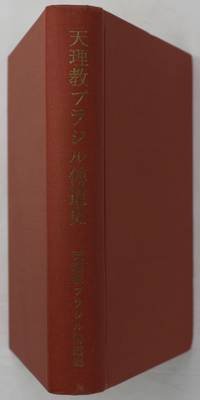
19585047Sao Paulo: Tenrikyo Brazil Mission 1958. Very good. 52162511pp. including 32pp. of photographically-illustrated plates. Original orange cloth gilt spine titles housed in original cardboard slipcase with black spine lettering. Very minor wear internally clean. Some chipping and toning to slipcase. An unrecorded history of the Japanese immigrant Tenrikyo Mission in Brazil providing valuable information on many Tenrikyo churches across the country. Tenrikyo was a new Japanese religion founded in the 19th century in Japan by Nakayama Miki and spread to Hawaii Brazil and other regions where Japanese immigrants moved over the course of the first few decades of the 20th century. The photographic plates contain portraits of some mission members views of churches scenes from church life and more. The text is almost wholly in Japanese save for occasional listings of Spanish names and other information. Not reported in OCLC. Tenrikyo Brazil Mission unknown
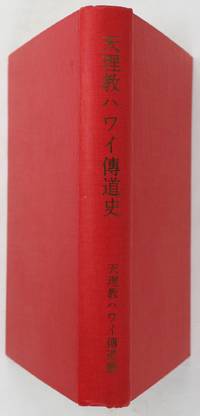
19575046Honolulu: Tenrikyo Hawaii Mission 1957. Very good. 1632365pp. including 32pp. of photographically-illustrated plates errata slip laid in. Original orange cloth gilt spine titles housed on the original cardboard slipcase with black spine lettering. Very minor wear to boards internally clean. Small puncture and some wear to spine of slipcase. A rare history of the Tenrikyo Mission in Hawaii beginning with the founding of its first church in Honolulu in 1929. Tenrikyo was a new Japanese religion founded in the 19th century in Japan by Nakayama Miki. The present work also includes information on many other churches on the islands including the Hilo Church Kauai Church the Maui Church and more. The photographic plates contain portraits of some mission members views of churches scenes from church life and more. The text is mostly in Japanese save for a fifteen-page section printing a series of English-language lectures on the Tenrikyo religion by members of the Hawaiian mission. OCLC records just a single physical copy of this rare Japanese-American work at the University of Hawaii at Manoa. Tenrikyo Hawaii Mission unknown
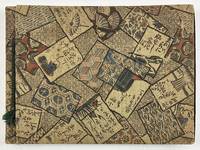
192812860Various locations in Hawaii and Japan 1928. 12 leaves illustrated with 123 mounted sepia-toned photographs many captioned in the image area occasional manuscript captions on the album leaves. Oblong folio. Contemporary pictorial cloth illustrated with various Japanese motifs string tied. Minor wear to cloth. Internally clean. Very good. An attractive and informative vernacular photograph album memorializing the experiences of Protestant missionaries in the Pacific. Protestant missionaries came to Hawaii starting in the 1820s and eventually became quite socially and politically influential. The first Protestant missionaries arrived in Japan in the mid-1840s. They were relegated to treaty ports and prohibited from proselytizing but once these restrictions were lifted they were fairly successful with 300 churches and 34000 converts by 1889. Their main avenue was education and by the 1920s they were well established in this sector. The present album of photographs were taken by an American missionary in Hawaii and Japan in 1927 and 1928. It is not entirely clear whether the photographer did any missionary work in Hawaii or if it was just a stop on the way to Japan; the photos from Hawaii show Honolulu harbor from the deck of the President Madison the "Club House" and Diamond Head.<br /> <br /> The photographs from Japan are more clearly missionary. The photographer was involved in teaching in Kyoto; captions include "Kami Kyoku Bishamon Cho" listed as a theological school in the 1928 Japan Mission Year Book "Japanese Language School" "The Faculty" "Nihongo Faculty" and "St Agnes Ena -- Music." There are two St. Agneses in the Year Book both middle schools one in Tokyo and one in Kyoto. Two photos of an older Japanese man in a clerical collar captioned "Mr Hayakawa" suggest this is the St. Agnes in Kyoto as Mr. K. Hayakawa is listed as the head of that school. Other individuals listed in the Year Book include Sally Rembert Thora Johnson and "Maxine" who is probably Maxine Schannep with the ABCFM. Generally the school shots are exteriors of buildings and people posing outside of them; there are also shots of Christmas trees at St. Agnes the students of "Helen’s Kindergarten" in Koriyama girls in school uniform with deer at Nara Park and several of the nurse's home at St. Luke's Hospital in Tokyo.<br /> <br /> Other photos show life around Kyoto and other cities including Nikko and Fukui. Most of the men are in Western dress while the women and children wear kimono. Two photos of Buddhist monks included in the album were taken by Japanese photographer Kurokawa Suizan; these show a KomusŠin a tengai hat playing the flute and a kasa-hatted monk on the steps of a building. Finally some uncaptioned shots show a procession taking place in front of an audience. Some in the procession carry flags a few are on horseback and a few carry plants on their heads and part of the procession carries a litter.<br /> <br /> Overall the album documents both religious education and everyday life in late 1920s Japan; of particular interest to historians of Protestant missionaries. unknown
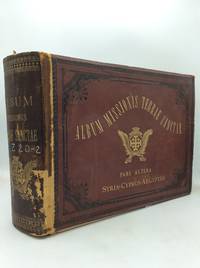
215047Milan: P. Luigi Michieli. Hardcover. Fair. Map plates 147-263 continuously paginated with volume one not present plus index. A large oblong hardcover book with a leather spine and decorated brick-red cloth boards. Ex-library with call number on spine and a few stamps on edges and endpapers. POOR CONDITION; OFFERED AS-IS. Spine is heavily scuffed and the binding is completely cracked with all plates detached but present. Plates 212-213 have small chips to edge. Plates have tanned edges but minimal edgewear overall. Otherwise the plates are clean and the images unmarred. A damaged copy in need of rebinding but still an excellent time capsule of the late 19th-century regions it depicts. Title in English is ALBUM OF THE MISSION OF FRANCISCANS IN HOLY LAND Second Book - Syria Cyprus Egypt. Volume 2 of 2 only. An album of black and white plates depicting Franciscan missionary activity in the Eastern Mediterranean. Each full-page plate has a decorative gilt border and includes descriptive captions in Latin Italian French English and German. Measures approximately 12.75"x 9.5." No copyright date given; book is circa 1890. P. Luigi Michieli hardcover
1892124929à Paris - à Lyon, Perisse, frères, impr. Imprimerie de Rusand, à Lyon 1892 24 volumes. In-8 20,5 x 12,5 cm. Reliures de l’époque demi-basane vert-émeraude, dos lisses ornés de filets dorés, environ 400 pp. par volume. Ensemble en bon état.
012482Révérend Père Augustin Colombel (1833-1905), missionnaire jésuite en Chine, père de l'astronomie moderne en Chine à qui on doit la construction de l'observatoire de Shanghai. L.A.S., Ousi [actuelle Shanghai ?], 17 avril 1872, 4p in-8. A sa soeur Marie-Thérèse Colombel (1839-1912), baronne Richerand : « Ma bien chère sour, Je reviens du nord de mon district où j'ai passé toutes les fêtes de Pâques, depuis deux mois je suis en course et je dois repartir après demain matin. Je te trouve toujours fidèle à ton affection pour moi et ta lettre du 6 février m'attendait ici. J'ai reçu aussi les journaux que vous m'envoyiez, l'album des ruines de Paris et la photographie de mgr Surat. Je vous remercie de vos attentions délicates. [....] Vous pensez bien que parmi mes chrétiens j'ai toute sorte de personnes, les riches exceptés toutefois. Ici plus que partout ailleurs la malédiction de l'Evangile pèse sur eux. Outre cette raison principale, on peut ajouter qu'ici plus que partout ailleurs cette classe tient d'autant plus à la terre qu'elle y jouit davantage. La grande majorité de ces pauvres gens cultive quelques arpents de terre. L'admirable fécondité du sol leur demande au plus quatre mois de travail et ils ont une récolte de riz qui leur donne la nourriture de la famille d'abord puis de quoi vendre assez pour pourvoir aux vêtements et aux autres besoins. Je n'ai qu'un catéchumène qui possède 200 arpents, il n'en cultive que 40 qui suffisent amplement pour ses besoins, mais le pauvre homme est trop simple, il se laisse gruger par tous ses parents et amis payens, il en est toujours à la misère. J'ai aussi parmi mes chrétiens deux anciens prêtres des idoles, l'un brûlait l'encens devant Fo et les autres dieux que la Chine a empruntés à l'Inde, il avait la tête rasée, c'est un Bonze. Il est maintenant cuisinier dans un thé tenu par des payens (comme qui dirait dans un café). L'autre faisait pousser sa queue et récitait les prières chinoises devant je ne sais quel héros du céleste empire, c'est un Fao sse (?). Comme j'avais refusé la communion au Fao sse qui n'était pas assez instruit et accordé cette faveur au Bonze qui dans sa simplicité savait et croyait le nécessaire. L'orgueil du Fao sse se réveilla et se traduisit en coup de poing sur la tête de son émule. C'était au moins un signe qu'il désirait le bienfait de la communion. Mais ce désir ne me paraissant pas assez surnaturel je lui donnais pourtant tous les torts. Parmi mes catéchumènes, j'ai aussi d'anciens rebelles, ils ont bien des meurtres à se reprocher, Dieu leur a pardonné, la justice chinoise ne s'en préoccupe pas, mais si jamais on établit les lois françaises en Chine et qu'il vienne un procureur de la république ou du Roi, je le prierais bien sincèrement de ne pas trop chercher à savoir le passé. Vous voyez combien nous avons besoin du secours de Dieu, priez beaucoup pour ces pauvres gens, pour que les payens ouvrent les yeux, j'espère que le Bon Dieu, à son heure, aura pitié d'eux. Ici comme en France on s'attend à de grands évènements. Prions pour que Dieu les tourne à sa gloire. Priez aussi pour moi, que vos prières m'accompagnent partout et nous aurons ainsi tous part à la même récompense. Adieu tout à tous et à chacun. Mon respect et mon affection toute entière, surtout à notre bien aimé père. Ton frère tout dévoué. Aug. M. Colombel s.j. » Magnifique témoignage sur le développement des missions en Chine et à Shanghai. Cette lettre a été publié avec quelques autres sur le blog du Bibliomane Moderne le 14 octobre 2021. Elles apportent un éclairage particulièrement intéressant sur le développement des missions jésuites en Chine et à Shanghai en particulier. [242]
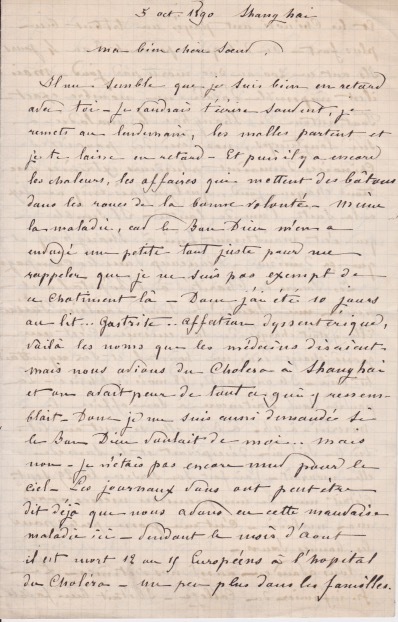
012489Révérend Père Augustin Colombel (1833-1905), missionnaire jésuite en Chine, père de l'astronomie moderne en Chine à qui on doit la construction de l'observatoire de Shanghai. L.A.S., Shanghai, 5 octobre 1890, 4p in-8. A sa soeur Marie-Thérèse Colombel (1839-1912), baronne Richerand : « Ma bien chère sour, Il me semble que je suis bien en retard avec toi. Je voudrais t'écrire souvent, je remets au lendemain, les malles partent et je te laisse en retard. Et puis, il y a encore les chaleurs, les affaires qui mettent des bâtons dans les roues de la bonne volonté. Même la maladie, car le Bon Dieu m'en a envoyé une petite tout juste pour me rappeler que je ne suis pas exempt de ce châtiment là. Donc j'ai été 10 jours au lit... gastrite... affection dysentérique, voilà les noms que les médecins disaient mais nous avions du choléra à Shanghai et on avait peur de tout ce qui y ressemblait. Donc je me suis demandé si le Bon Dieu voulait de moi... mais non. Je n'étais pas encore mur pour le ciel. Les journaux vous ont peut-être déjà dit que nous avons eu cette mauvaise maladie ici. Pendant le mois d'août, il est mort 12 ou 15 européens à l'hôpital du choléra. Un peu plus dans les familles. Et les chinois ont payé un tribut bien plus fort. On dit que pendant 3 ou 4 jours, ils ont eu 200 ou 300 morts par jour. Mais il est impossible d'avoir un nombre exact. Tout autour de Shanghai, la maladie a sévi longtemps, nos Pères des paroisses chinoises donnaient plusieurs extrêmes onctions chaque jours, quelques fois cinq ou six à la suite l'une de l'autre. Il semble que c'est maintenant fini à Shanghai et que ça diminue beaucoup dans les campagnes. Les sours de Charité à l'hôpital ont perdu une sour, la sour Pauline Faisais. Elle y était chargée de la cuisine - c'est une grosse charge dans un hôpital - et s'en acquittait très bien. 36 ans d'âge. 18 mois de Chine. La pauvre sour était en cure à son office le mercredi à 11h. A 3h elle se met au lit. Dès le soir on désespérait et le samedi elle mourait. J'ai fait son service le 29 sept. C'était une de mes premières messes après ma maladie. C'est une grosse perte pour les bonnes sours. Nous avons eu aussi nos victimes. Le fr. infirmier du collège. Il était bien faible déjà, le choléra a eu beau jeu sur lui. Puis un Père italien de 64 ans, très fort, mais tout dévoué à ses 4000 chrétiens qu'il saignait à 2 heures d'ici. Le Bon Père avait donné de 60 à 80 extrêmes onctions dans le mois de septembre. Il fut pris le 27 mais continua à donner des extrêmes onctions. Le 28, il dit encore la messe à grand peine, p[ar]c[e] q[ue] c'était dimanche et pour consommer les saintes espèces. Mais déjà les chrétiens qui connaissent bien cette maladie le regardaient comme perdu. Ils nous l'amenèrent aussitôt après la messe, il nous arrivait à 11hŸ et mourait à 4h malgré les efforts des médecins qui ont essayé des remèdes héroïques. Ce bon Père avait été chassé par la révolution de plusieurs provinces. Il était venu se consacrer à la mission. Il meurt les armes à la main. C'est là une belle mort de missionnaires. Chez la m. St Dominique, deux enfants ont été prises. Toutes deux en sont revenues. L'une d'elles (11 ans) était bien à l'extrémité, condamnée par le médecin. Je crois qu'elle doit la vie aux prières faites pour elle. On tenait beaucoup à ne pas la perdre pour la réputation de la maison. [...] Je vous embrasse tous bien fort. ton frère Augustin. » Belle lettre sur les difficultés des missions en Chine, le choléra, les nombreux morts, etc. Cette lettre a été publié avec quelques autres sur le blog du Bibliomane Moderne le 14 octobre 2021. Elles apportent un éclairage particulièrement intéressant sur le développement des missions jésuites en Chine et à Shanghai en particulier. [242]
44Very fine Not used as new. About 1900s or 1910s. 30 plates paged continuously with envelope.It is a textbook by missionaries at COLLÈGE ST-IGNACE ZI-KA-WEI which is a famous school in Shanghai China for its first time in China to introduce the western educational courses and mode.