4 142 résultats
179258895Kiøbenhavn, Høppfner, (16. Martius, 1792). 4to. The entire volume of ""Forordninger..."", 1792 bound with the entire volumes of 1790 and 1791 as well in a very nice strictly contemporary brown full calf binding with four raised bands, gilt title-label and lovely gilt ornamentatiions to spine as well as the gilt, crowned monogram of King Chritian the VII to top of spine. Light wear and a closed tear to top capital. Otherwise in splendid condition, in- as well as ex-ternally. Stamp from the Danish Royal Military Library to front free end-paper. Pp. 69-71. [Entire volume: 146, 12 pp., 1 f. blank + 288, (8) pp., two folded tables + 323, (13) pp. woodcut vignettes of the Danish Elephant-order to title-pages].
1720135019Leipzig: in der Missisippischen Staats-Druckerey 1720. John Law and the Mississippi Company Rare first edition of this anonymous account of the State of France under Louis XIV and under the Regent who "under the clever guidance of Mr. Law has to the amazement of all fortunately improved it" our translation. Dedicated to "Mons. Law" who "der Welt bey anderthalb Jahren so viel zu reden gemacht hat" the stubbornly anonymous author he signs himself so gives an account of the rise and decline of France under Louis XIV the state of France following his death its subsequent recovery under the Prince Regent and an account of Law's activities and Mississippi Company. Bound after this work is a copy of the life of Cardinal Giulio Alberoni prime minister of Anjou a German translation apparently from the Italian published in 1718. The work is attributed in WorldCat to Jean Rousset de Missy. Octavo 163 x 100 mm. With engraved portrait frontispiece of John Law. Bound with another work in contemporary speckled paste paper boards paper spine label lettered in manuscript. Housed in a dark brown flat-back cloth box by the Chelsea Bindery. Spine ends joints and corners rubbed with some flaking of sprinkled paper coverning paper stock lightly browned with occasional spotting; a very good copy. Alden 720/58; Goldsmiths' 5608; Kress 3185; Sabin 39308. hardcover
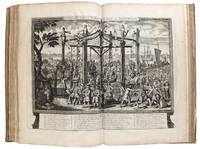
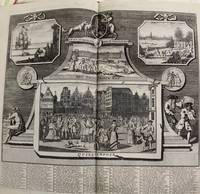
172520771Amsterdam 1725. Folio. 15 3/8 x 9 3/4 inches. Title printed in red and black. Folding engraved frontispiece engraved list of plates within a decorative surround 72 engraved plates maps and broadsides on 73 leaves 5 of the single-page plates cut to the edge of the image and mounted as issued 45 double-page 19 folding and including 10 which combine both engraving and letterpress text one plate loosely inserted 2 with sections of blank margins torn away some other clean tears occasionally affecting the image area. Contemporary Dutch speckled calf spine in eight compartments with raised bands red morocco lettering-piece in the second compartment repeat decoration in gilt in the others joints slightly split extremities scuffed<br/> <br/>A very rare collection of contemporary satirical prints relating to the financial exploits of John Law and his infamous Mississippi Bubble.<br/> <br/>John Law bap. 21 April 1671 - 21 March 1729 was a Scottish economist who believed that money was only a means of exchange that did not constitute wealth in itself and that national wealth depended on trade. He is said to be the father of finance responsible for the adoption or use of paper money or bills in the world today. Law was a gambler and a brilliant mental calculator and was known to win card games by mentally calculating the odds. An expert in statistics he was the originator of economic theories including two major ideas: The Scarcity Theory of Value and the Real bills doctrine. The present work records the economic crisis precipitated by Law. The crisis had its origins in the decision of the French regent Philippe d'Orléans to appoint John Law the Controller General of Finances for France. In May 1716 the Banque Générale Privée which developed the use of paper money was set up by Law. It was a private bank but three quarters of the capital consisted of government bills and government accepted notes. In August 1717 he bought the Mississippi Company to help the French colony in Louisiana. In 1717 he also brokered the sale of Thomas Pitt's diamond to the regent Philippe d'Orléans. In the same year Law floated the Mississippi Company as a joint stock trading company called the Compagnie d'Occident which was granted a trade monopoly of the West Indies and North America. The bank became the Banque Royale in 1718 meaning the notes were guaranteed by the king. The Company absorbed the Compagnie des Indes Orientales Compagnie de Chine and other rival trading companies and became the Compagnie Perpetuelle des Indes on 23 May 1719 with a monopoly of commerce on all the seas. The system however encouraged speculation in shares in The Company of the Indies the shares becoming a sort of paper currency. In 1720 the bank and company were united and Law was appointed Controller General of Finances to attract capital. Law's pioneering note-issuing bank was extremely successful until it collapsed and caused an economic crisis in France and across Europe. Law exaggerated the wealth of Louisiana with an effective marketing scheme which led to wild speculation on the shares of the company in 1719. In February 1720 it was valued for a very high future cash flow at 10000 livres. Shares rose from 500 livres in 1719 to as much as 15000 livres in the first half of 1720 but by the summer of 1720 there was a sudden decline in confidence leading to a 97 percent decline in market capitalization by 1721. Predictably the bubble burst at the end of 1720 when opponents of the financier attempted en masse to convert their notes into specie. By the end of 1720 Philippe II dismissed Law who then fled from France. Originally published by a group of Amsterdam booksellers the work has a convoluted bibliographic history owing to the ongoing enlargement of the number of prints published between late 1720 and the ensuing years coupled with the issuance of the plates as separate unbound sheets as well as later editions with yet more plates which maintained the title page dated 1720. In short nearly every extant example is unique in composition. "This remarkable complexity helps to explain why the book continues to fascinate scholars and readers to the present day: Het groote tafereel der dwaasheid in its many diverse copies represents an important witness to the events of 1720 and their aftermath which makes it valuable to cultural and economic historians . The book presents the rise progress and downfall of the deceptive trade of 1720 what that a group of booksellers who published it in 1720 when in Amsterdam where in order to restore social and ethical norms in Dutch society why by making fools of the greedy in a theatrical setting how. In short the Tafereel is an Amsterdam-born satirical comedy in disguise" Kuniko Forrer "Het groot tafereel der dwaasheid: A Bibliographical Interpretation" in The Great Mirror of Folly: Finance Culture and the Crash of 1720 Edited by William N. Goetzmann et. al. pp. 35-36. The present example corresponds to Forrer's third edition issued shortly after 1723 with the "Register" listing 73 plates and bound in a contemporary binding attributed to the Double Drawer Handle Bindery. This edition noted as the final edition published in the 1720s and the most complete including portraits of Madame Law and the King of the Mississippi "Der Koning van Missisipi" not found in earlier issues among other additions.<br/> <br/>Goldsmiths 5829; Kress 3217; Muller 3535; Sabin 28932; A.H. Cole The Great Mirror of Folly . an economic-bibliographical study Harvard: 1949; The Great Mirror of Folly: Finance Culture and the Crash of 1720 Edited by William N. Goetzmann et. al. Yale University Press: 2013. unknown books
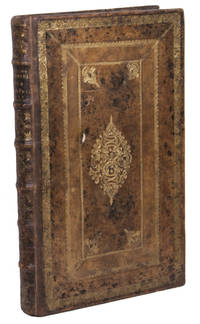
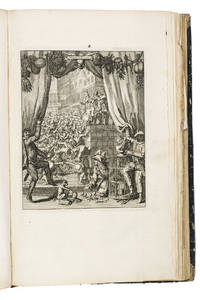
1720J68DA7J71DZAAmsterdam 1720. Folio ca. 39 x 25.5 cm. Contemporary elaboratly gold-tooled mottled calf sewn on 6 supports with corresponding raised bands on the spine and with the title lettered in gold on the spine gold-tooled board edges marbled edges bound by the so-called Double Drawer Handle Bindery in Amsterdam between 1720 and 1742 - Storm van Leeuwen With the title-page printed in red and black and 76 engraved plates mostly double-page and several are larger folding sheets including several maps the plate with the complete set of 52 playing cards and an extra copy of plate 18 Muller loosely inserted at the front of the work. 1 1 blank 25 1 52 "31" = 29 1 blank 8 10 pp. and engraved ll. A famous collection of texts and plates satirizing the Englishman John Law his Mississippi Company and the international land and trading speculation in worthless shares of the South Sea Bubble of 1719-1720 which resulted in an international scandal. The speculation began in Paris London and Hamburg spreading to the Netherlands in the summer of 1720. While plays satirizing the speculation already opened in September 1720 the bubble really burst in October. Pieter Langendijk and Gysbert Tysens have been identified as authors of some of the plays. The book also provides the texts of official documents relating to the Dutch trading companies involved.Text and plates were originally issued in parts and were continuously supplemented over a longer period. Work on the book as a whole must have begun after the Amsterdam disturbances of 5 October 1720 though some of the plays and other items had been separately published before that. There are four editions known of the letterpress of which this one is listed as the first by Muller. Within each edition the number and makeup of the plates varies greatly from copy to copy. Muller gives a list of 74 plates in the most extensive contemporary published list but no copy of any edition includes them all some are alternatives and several plates frequently included are not in those lists. The present copy includes 72 in Muller's list of 74 omitting nos. 57 and 74 and includes 4 not in that list Muller 3611-3613 and 3615. The book is an important source for multidisciplinary research e.g. iconology economic history colloquial proverbs and idioms.The binding is very slightly rubbed the joints have been professionally reinforced slightly browned throughout some plates show small tears along the folding lines without any loss. Otherwise in very good condition.l De Bruyn "Het Groote Tafereel . " in: Eighteenth-Century Life XXIV 2000 pp. 62-87; Kress 3217 eds. not distinguished; Muller Historieplaten II pp. 103-124; Van Rijn het groote tafereel der dwaasheid 1905; Sabin 28932 eds. not distinguished; STCN 254984576; cf. slightly differing collation or fingerprint STCN 254984185 293084076 228136539; for the binding: Storm van Leeuwen vol. I pp. 228-284. hardcover
1720B6829Amsterdam. 1720. Plates are clean and crisp.<br><br>. Edition: First Edition. Binding: Full contemporary mottled Dutch calf expertly rebacked in matching calf. Matching upper and lower boards with triple frame of decorative gilt fillet and a panel of darker calf between inner two gilt frames. Gilt stamp in centers of boards. Spine with 5 raised bands decorative gilt fillet on bands and in compartments. Title in gilt lettering on brown label in 2 remaining compartments with gilt stamps. Decorative gilt rolls on board edges. Notes: “The engravings which illustrate the rise and fall of the great speculation are full of humor; many of them are exceedingly ludicrous and some very obscene†Sabin. “Published in Amsterdam the giant tome includes pamphlets legal documents economic analyses maps satirical plays poems playing cards and more than seventy prints. The volume attracted wide audiences feeling the sting of the financial crises taking place in England France and the Dutch Republic that together resulted in the first international stock market crash.â€<br>“Het Groote Tafereel der Dwaasheid references Tulipmania in the Dutch Republic where the prices of tulip bulbs spiked and abruptly plummeted in 1637; the South Sea Bubble in England and Mississippi Bubble in France that burst in 1720; and other British French and Dutch enterprises that failed in 1720. Investing frenzy is characterized as a form of contagion moving from one country to the next: a consequence of the craze for international emulation as was evident in the English for example adopting the measures of John Law’s Mississippi Company that ultimately resulted in the South Sea Bubble. Prints in the volume commonly depict the dreams disordered states of mind and moral failures of investors caught up in the speculative zeal—alluding to herd behavior gambling corruption insanity immorality and demonic possession.â€<br>The text first appeared in 1720/21 and continued to be reprinted throughout the 18th century. Very few copies of this book survive as most were broken apart so that engravings could be sold individually. Professor Arthur Cole writes: “Rarely does a single volume combine in itself so much economic interest and so many bibliographical puzzles as Het Groote Tafereel Der Dwaasheid. There is scarcely another item just like it. Not merely are the identity of the compiler and the place of publication unknown and not merely is the date of original issuance uncertain but the volume went through an evolutionary process over time quite unnoticeable by ordinary superficial inspection. Moreover so strange was the mode of issuance that no two specimens even of approximately the same actual issue date are exactly the same. Neither the textual material nor the engraved prints are always identical nor do they appear in the same sequence within the volume.â€<br><br> Size: Folio 390x248 mm Illustration: Text in Dutch.<br>With the exceedingly rare index leaf. Extra illustrated with 80 plates.<br>A near fine example of this “extraordinary visual record of the first banking crash showing the shocking effects of the South Sea Bubble in France England and Holland and placing John Law 1671-1729 with his Mississippi company scheme squarely at the centre of the disastrous chain of events. ‘A unique historical document … of real significance’†Cole p.1. This copy is complete with the 74 plates listed in the very scarce index leaf included in this text in addition to 6 extra plates; 80 plates in total. With many folding and double-page plates. Includes frontispiece original engraving of John Law and a deck of “bubble cards.†Title in red and black. Pg. 43 mislabeled as 23. In full contemporary decorative Dutch calf. References: Cole Great Mirror of Folly 1949; Goldsmiths' 5879; Kress 3217; Sabin 28932. Pages: Blank 2. Frontispiece. Blank. Title. Blank. Index. P. 1 – 25. Aanwyzinge Der Projecten. 1 – 52. Versameling van Gedigten… 1 – 31. Blank. Papegaay of Actie-Kaart… 1 – 8. Copye Van Een Brief… 1 – 10. 80 plates. Blank 2. Category: Book Caricatures; Book Europe Benelux; Book Plate Books General; hardcover
1720297394Amsterdam 1720. First. hardcover. very good. Rubricated title 25 1 52 31 10 pages 74 copper engraved plates 58 folding including 3 maps 2 folding and 1 plate laid in. Bookplate of Dutch writer Jan Te Winkel pasted on upper corner of title page. Light dampstain on the top margin of some plates. Folio full contemporary mottled calf elaborately gilt spine and covers black leather spine label rubbed at corners and bottom of spine. Amsterdam: 1720. Very good.<br/><br/> Contemporary Dutch account of the Mississippi Land bubble. A renowned monument for the speculative mania of 1720: The great mirror of folly showing the rise progress and downfall of the bubble in stocks and windy speculation in France England and the Netherlands. It constitutes a collection of mostly satirical plates on the operations of John Law in France and the South Sea Bubble in England together with the text of the charters of speculative companies in Holland and a number of satyrical plays and comedies published during the bubble. The first text-part reprints the charters of some 30 speculative companies of commerce navigation and assurance' established or at least projected in Holland between June and October 1720. The following parts contain comedies and poetry published during the mania an explanation of the large print with playing cards known as April-kaart'. The book is divided into six sections with no general table of contents. The first part contains the articles of various Dutch companies. The second section consists of comedies and farces; the third part poems often containing street language; the fourth part descriptions of playing cards satirizing speculators; the fifth part four letters to "N.N."; and the sixth section chiefly pictures. A.H. Cole The Great Mirror of Folly Boston 1949; Kress 3217; Sabin 28932.<br/><br/> unknown books
1720297394Amsterdam 1720. First. hardcover. very good. Rubricated title 25 1 52 31 10 pages 74 copper engraved plates 58 folding including 3 maps 2 folding and 1 plate laid in. Bookplate of Dutch writer Jan Te Winkel pasted on upper corner of title page. Light dampstain on the top margin of some plates. Folio full contemporary mottled calf elaborately gilt spine and covers black leather spine label rubbed at corners and bottom of spine. Amsterdam: 1720. Very good.<br/> <br/> Contemporary Dutch account of the Mississippi Land bubble. A renowned monument for the speculative mania of 1720: The great mirror of folly showing the rise progress and downfall of the bubble in stocks and windy speculation in France England and the Netherlands. It constitutes a collection of mostly satirical plates on the operations of John Law in France and the South Sea Bubble in England together with the text of the charters of speculative companies in Holland and a number of satyrical plays and comedies published during the bubble. The first text-part reprints the charters of some 30 speculative companies of commerce navigation and assurance' established or at least projected in Holland between June and October 1720. The following parts contain comedies and poetry published during the mania an explanation of the large print with playing cards known as April-kaart'. The book is divided into six sections with no general table of contents. The first part contains the articles of various Dutch companies. The second section consists of comedies and farces; the third part poems often containing street language; the fourth part descriptions of playing cards satirizing speculators; the fifth part four letters to "N.N."; and the sixth section chiefly pictures. A.H. Cole The Great Mirror of Folly Boston 1949; Kress 3217; Sabin 28932.<br/> <br/> unknown
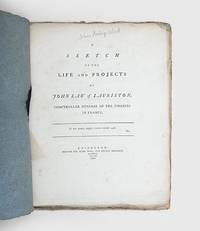
1791173742Edinburgh: for Peter Haill and George Kearsley London 1791. The first biography of the economic pioneer First edition of the first biography of Law whose financial schemes of an expanded paper money supply brought economic ruin to France yet paved the way for the modern credit economy. The biographer John Philip Wood was a local historian of Cramond where Law was born. He had "access to certain materials which are not now available" and "included a number of interesting genealogical and personal details in his book" though he "made no attempt to examine the 'system' objectively or even to analyse his subject's character in the light of his career" Hyde pp. 36 216. Both Antoin Murphy and James Buchan cite Wood's work in their scholarly biographies of Law although part of Wood's account of Law's genealogy is challenged by Murphy. The work was republished in an expanded edition in 1824. Quarto pp. 4 ii 48. Original stab-sewn blue wrappers edges uncut. Housed in 20th-century clamshell portfolio backed with earlier marbled paper. Rear wrapper detached a little chipped and torn at extremities light spotting and patch of toning to title page else contents fresh: a very good copy. ESTC T8458; Goldsmiths' 14941; Kress B2240. H. Montgomery Hyde John Law 1969. unknown
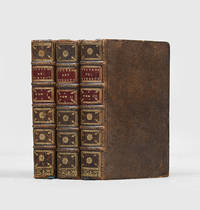
1739164842The Hague: Pierre de Hondt 1739. The best contemporary account of John Law's system First edition of Marmont's history of French finance during the minority of Louis XV an important record of the activities and operations of John Law. A tax collector from Flanders Marmont was a great admirer of Law's system despite its dramatic collapse in 1720. He covers Law's foundation of the Banque Générale through to the formation of the Compagnie des Indes which by absorbing various other chartered companies acquired the monopoly on trade to Africa America and the Far East. This finally transformed into the Mississippi Company giving Law control of France's finances most notably tax collection and debt management. 6 vols bound in 3 duodecimo 160 x 93 mm. Engraved plate in vol. 4 2 folding letterpress tables printed on both sides in vol. 6 woodcut devices and vignettes title pages printed in red and black. Contemporary sprinkled calf spines decorated in gilt in compartments red morocco labels marbled endpapers red edges silk bookmarkers. Head of spines of vols 2 and 3 slightly chipped corners worn front cover of vols 1 and 2 slightly darkened in places; marginal stain to fore edge of preliminary leaves of vol. 1 contents otherwise clean and fresh: a very good copy. Einaudi 3728; Goldsmiths' 7712; INED 1553; Kress 4447; Mattioli 2247; Sraffa 3776. unknown
172542567Amsterdam 1725. Folio. 15 3/8 x 10 inches. Title printed in red and black. Folding engraved frontispiece engraved list of plates within a decorative surround 1 title page and 87 engraved plates maps and broadsides 40 double-page 22 folding single-page 6 folding double-page and 17 single-page. Includes some plates with multiple variants. Vellum tooled gilt with 8 raised bands forming 9 compartments spine gilt morocco lettering piece in second compartment<br/> <br/> A rare work exhibiting a collection of contemporary satirical prints relating to the financial exploits of John Law and his infamous Mississippi Bubble.<br/> <br/> John Law 21 April 1671 - 21 March 1729 was a Scottish economist who believed that money was only a means of exchange that did not constitute wealth in itself and that national wealth depended on trade. He is said to be the father of finance responsible for the adoption or use of paper money or bills in the world today. Law was a gambler and a brilliant mental calculator and was known to win card games by mentally calculating the odds. An expert in statistics he was the originator of economic theories including two major ideas: The Scarcity Theory of Value and the Real bills doctrine. The present work records the economic crisis precipitated by Law. The crisis had its origins in the decision of the French regent Philippe d'Orléans to appoint John Law the Controller General of Finances for France. In May 1716 the Banque Générale Privée which developed the use of paper money was set up by Law. It was a private bank but three quarters of the capital consisted of government bills and government accepted notes. In August 1717 he bought the Mississippi Company to help the French colony in Louisiana. In 1717 he also brokered the sale of Thomas Pitt's diamond to the regent Philippe d'Orléans. In the same year Law floated the Mississippi Company as a joint stock trading company called the Compagnie d'Occident which was granted a trade monopoly of the West Indies and North America. The bank became the Banque Royale in 1718 meaning the notes were guaranteed by the king. The Company absorbed the Compagnie des Indes Orientales Compagnie de Chine and other rival trading companies and became the Compagnie Perpetuelle des Indes on 23 May 1719 with a monopoly of commerce on all the seas. The system however encouraged speculation in shares in The Company of the Indies the shares becoming a sort of paper currency. In 1720 the bank and company were united and Law was appointed Controller General of Finances to attract capital. Law's pioneering note-issuing bank was extremely successful until it collapsed and caused an economic crisis in France and across Europe. Law exaggerated the wealth of Louisiana with an effective marketing scheme which led to wild speculation on the shares of the company in 1719. In February 1720 it was valued for a very high future cash flow at 10000 livres. Shares rose from 500 livres in 1719 to as much as 15000 livres in the first half of 1720 but by the summer of 1720 there was a sudden decline in confidence leading to a 97 percent decline in market capitalization by 1721. Predictably the bubble burst at the end of 1720 when opponents of the financier attempted en masse to convert their notes into specie. By the end of 1720 Philippe II dismissed Law who then fled from France. Originally published by a group of Amsterdam booksellers the work has a convoluted bibliographic history owing to the ongoing enlargement of the number of prints published between late 1720 and the ensuing years coupled with the issuance of the plates as separate unbound sheets as well as later editions with yet more plates which maintained the title page dated 1720. In short nearly every extant example is unique in composition. "This remarkable complexity helps to explain why the book continues to fascinate scholars and readers to the present day: Het groote tafereel der dwaasheid in its many diverse copies represents an important witness to the events of 1720 and their aftermath which makes it valuable to cultural and economic historians . The book presents the rise progress and downfall of the deceptive trade of 1720 what that a group of booksellers who published it in 1720 when in Amsterdam where in order to restore social and ethical norms in Dutch society why by making fools of the greedy in a theatrical setting how. In short the Tafereel is an Amsterdam-born satirical comedy in disguise" Kuniko Forrer "Het groot tafereel der dwaasheid: A Bibliographical Interpretation" in The Great Mirror of Folly: Finance Culture and the Crash of 1720 Edited by William N. Goetzmann et. al. pp. 35-36. The present example corresponds to Forrer's third edition issued shortly after 1723 with the "Register" listing 73 plates and bound in a contemporary binding attributed to the Double Drawer Handle Bindery. This edition noted as the final edition published in the 1720s and the most complete including portraits of Madame Law and the King of the Mississippi "Der Koning van Missisipi" not found in earlier issues among other additions.<br/> <br/> Goldsmiths 5829; Kress 3217; Muller 3535; Sabin 28932; A.H. Cole The Great Mirror of Folly . an economic-bibliographical study Harvard: 1949; The Great Mirror of Folly: Finance Culture and the Crash of 1720 Edited by William N. Goetzmann et. al. Yale University Press: 2013. unknown
1720B5707c. 1720 . Altogether a very good and attractive copy of this important caricature platebook.<br>. Edition: First Edition Binding: Contemporary full calf with raised bands in 7 compartments. Text on 2 gilt centerpieces and decorative borders in compartments. Notes: Text is in Dutch. “This great Theatre of Folly representing the origin progress and downfall of the South Sea Bubble in France England and Holland is an exceedingly curious collection of emblematical plates and caricatures on the scheme of J. Law and the Mississippi Company and the imitations of it in Holland with their fatal results. Not a few of the scenes here depicted have been reproduced in the New York Exchange. The engravings which illustrate the rise and fall of the great speculation are full of humor; many of them are exceedingly ludicrous and some very obscene. They are finely engraved on copper and are accompanied with full descriptions in prose and poetry. So much offence was given to the English and French by this book that medals were struck by them in ridicule of the Dutch which was perhaps the beginning of the hostility which long existed in the minds of the English against the latter. The number of the plates in copies varies from sixty to seventy-four.†<br><br>This first edition of the most elaborate publication was inspired by the economic events of 1720 primarily satirizing Dutch manifestations of the speculative mania that led to the Mississippi Bubble in France a financial scheme that shook the French economy to its core and instigated the use of paper money in the country; engineered by Scottish economic theorist John Law and the South Sea Bubble in England.†Sabin<br> Size: Folio 394x235mm. Illustration: Illustrated with red and black title 74 engraved plates including many double-page or folding; 70 of 74 plates as listed in Koninck's rarely preserved index of plates of early editions; plates 26 29 39 and 71 of this list are not included but instead four other plates one of these a map entitled “Louisiana by the River Mississippiâ€. References: Alden European Americana 720/114; Cole The Great Mirror of Folly pages 23-35; Sabin Bibliotheca Americana 28932; Goldsmith 5879; Howes G 442; Muller America 1503 Pages: Title bl. 25 list of towns; 1-52; 1-14; detached insert of four letters 195x156mm: 1st: title bl. 1-10; 2nd: title bl. 1-10; 3rd: title bl. 1-10; 4th: title bl. 1-9; 15-26 29-31 bl. 1-8. Category: Book Caricatures; Book Europe Benelux; Book Europe France; Book Plate Books General; hardcover
172520771Amsterdam 1725. Folio. 15 3/8 x 9 3/4 inches. Title printed in red and black. Folding engraved frontispiece engraved list of plates within a decorative surround 72 engraved plates maps and broadsides on 73 leaves 5 of the single-page plates cut to the edge of the image and mounted as issued 45 double-page 19 folding and including 10 which combine both engraving and letterpress text one plate loosely inserted 2 with sections of blank margins torn away some other clean tears occasionally affecting the image area. Contemporary Dutch speckled calf spine in eight compartments with raised bands red morocco lettering-piece in the second compartment repeat decoration in gilt in the others.<br/> <br/> A rare work exhibiting a collection of contemporary satirical prints relating to the financial exploits of John Law and his infamous Mississippi Bubble.<br/> <br/> John Law 21 April 1671 - 21 March 1729 was a Scottish economist who believed that money was only a means of exchange that did not constitute wealth in itself and that national wealth depended on trade. He is said to be the father of finance responsible for the adoption or use of paper money or bills in the world today. Law was a gambler and a brilliant mental calculator and was known to win card games by mentally calculating the odds. An expert in statistics he was the originator of economic theories including two major ideas: The Scarcity Theory of Value and the Real bills doctrine. The present work records the economic crisis precipitated by Law. The crisis had its origins in the decision of the French regent Philippe d'Orléans to appoint John Law the Controller General of Finances for France. In May 1716 the Banque Générale Privée which developed the use of paper money was set up by Law. It was a private bank but three quarters of the capital consisted of government bills and government accepted notes. In August 1717 he bought the Mississippi Company to help the French colony in Louisiana. In 1717 he also brokered the sale of Thomas Pitt's diamond to the regent Philippe d'Orléans. In the same year Law floated the Mississippi Company as a joint stock trading company called the Compagnie d'Occident which was granted a trade monopoly of the West Indies and North America. The bank became the Banque Royale in 1718 meaning the notes were guaranteed by the king. The Company absorbed the Compagnie des Indes Orientales Compagnie de Chine and other rival trading companies and became the Compagnie Perpetuelle des Indes on 23 May 1719 with a monopoly of commerce on all the seas. The system however encouraged speculation in shares in The Company of the Indies the shares becoming a sort of paper currency. In 1720 the bank and company were united and Law was appointed Controller General of Finances to attract capital. Law's pioneering note-issuing bank was extremely successful until it collapsed and caused an economic crisis in France and across Europe. Law exaggerated the wealth of Louisiana with an effective marketing scheme which led to wild speculation on the shares of the company in 1719. In February 1720 it was valued for a very high future cash flow at 10000 livres. Shares rose from 500 livres in 1719 to as much as 15000 livres in the first half of 1720 but by the summer of 1720 there was a sudden decline in confidence leading to a 97 percent decline in market capitalization by 1721. Predictably the bubble burst at the end of 1720 when opponents of the financier attempted en masse to convert their notes into specie. By the end of 1720 Philippe II dismissed Law who then fled from France. Originally published by a group of Amsterdam booksellers the work has a convoluted bibliographic history owing to the ongoing enlargement of the number of prints published between late 1720 and the ensuing years coupled with the issuance of the plates as separate unbound sheets as well as later editions with yet more plates which maintained the title page dated 1720. In short nearly every extant example is unique in composition. "This remarkable complexity helps to explain why the book continues to fascinate scholars and readers to the present day: Het groote tafereel der dwaasheid in its many diverse copies represents an important witness to the events of 1720 and their aftermath which makes it valuable to cultural and economic historians . The book presents the rise progress and downfall of the deceptive trade of 1720 what that a group of booksellers who published it in 1720 when in Amsterdam where in order to restore social and ethical norms in Dutch society why by making fools of the greedy in a theatrical setting how. In short the Tafereel is an Amsterdam-born satirical comedy in disguise" Kuniko Forrer "Het groot tafereel der dwaasheid: A Bibliographical Interpretation" in The Great Mirror of Folly: Finance Culture and the Crash of 1720 Edited by William N. Goetzmann et. al. pp. 35-36. The present example corresponds to Forrer's third edition issued shortly after 1723 with the "Register" listing 73 plates and bound in a contemporary binding attributed to the Double Drawer Handle Bindery. This edition noted as the final edition published in the 1720s and the most complete including portraits of Madame Law and the King of the Mississippi "Der Koning van Missisipi" not found in earlier issues among other additions. This copy is accompanied by: GOETZMANN William N. et al. The Great Mirror of Folly: Finance Culture and the Crash of 1720. New Haven: Yale University Press 2013. The definitive modern study of the present work edited by William N. Goetzmann Catherine Labio K. Geert Rouwenhorst and Timothy Young. The volume reproduces and interprets the full range of plates satires and texts situating it within the broader visual and cultural history of the early modern financial revolution. Richly illustrated and deeply researched it brings together essays by leading scholars on economic thought print culture theatre and art illuminating how Law's System and the speculative mania of 1720 transformed Europe's understanding of credit risk and value.<br/> <br/> Goldsmiths 5829; Kress 3217; Muller 3535; Sabin 28932; A.H. Cole The Great Mirror of Folly . an economic-bibliographical study Harvard: 1949; The Great Mirror of Folly: Finance Culture and the Crash of 1720 Edited by William N. Goetzmann et. al. Yale University Press: 2013. unknown
1720ABC_50107Amsterdam 1720. Contemporary gold-tooled mottled calf with the title and year lettered in gold on the spine sewn on 7 supports with the corresponding raised bands on the spine bound by the Double Drawer Handle Bindery in Amsterdam Storm van Leeuwen. Folio. With the title page printed in red and black and 79 engraved plates most double-page and several larger folding sheets including several maps and the plate with the complete set of 52 playing cards. The copy contains the register listing 74 items and 4 plates not in Mullers principal list Muller 3611note 3612 3613 and 3615. Second edition according to Muller of one of the most remarkable works in the history of finance. Few books equal the visual power satirical brilliance or bibliographical complexity of Het groote tafereel der dwaasheid. First published in Amsterdam in 1720 in the very year of the financial collapses it depicts this extraordinary work stands as the most ambitious and visually arresting contemporary response to the speculative mania that engulfed France England and the Dutch Republic.The work chronicles the rise frenzy and catastrophic collapse of the Mississippi Scheme in France under John Law 1671-1729 and the South Sea Bubble in England speculative ventures designed in part to consolidate and manage national debt in Englands case tied to the funding of the navy but which spiralled into one of the first great international stock market crashes. Laws Compagnie dOccident with its monopoly over Louisiana and trade along the Mississippi ignited feverish dealing in Paris Rue Quincampoix London answered with its own speculative excesses and the contagion swiftly spread to Amsterdam.The Dutch seasoned participants in organised finance responded not merely with alarm but with satire of unparalleled inventiveness. The Tafereel der dwaasheid gathers together emblematic engravings caricatures poems plays pamphlets and moralising texts all exposing the greed credulity and collective madness of the wind trade transactions in nothing more substantial than air.The engravings are by turns humorous grotesque theatrical and occasionally deliberately obscene. They chart the entire arc of speculation: the seduction of investors the carnival atmosphere of trading houses and coffee rooms the frenzied crowds and finally ruin and flight. Law himself appears in portrait placed squarely at the centre of events.The publication history of the Tafereel der dwaasheid is famously intricate. Four editions of the letterpress are known the present work corresponds to the second edition as classified by Muller. Within each edition the number and arrangement of plates varies considerably from copy to copy. Muller recorded 74 plates in the most extensive contemporary published list and several plates frequently encountered are listed seperately. The present work is complete according to the engraved register listing 74 items also present at the start of the work although several plates appear here in their variant often later states. It also includes 4 plates showing portraits and a map of Louisiana not in Mullers principal list Muller 3611-3613 and 3615 including different portraits and the map of Louisiana on the Mississippi.Together they form one of the most striking and bizarre monuments in all economic literature a merciless visual anatomy of financial hysteria.The present work appears here in a striking contemporary gold-tooled binding. This binding is the work of the so-called Double Drawer Handle Bindery according to Jan Storm van Leeuwen. The decorations are made up from numerous impressions of 12 different stamps and 4 different rolls. The bindery was active in Amsterdam between circa 1697 and 1742 and is regarded as the most important Amsterdam workshop of the eighteenth century.The binding is very slightly rubbed the hinges and edges and corners of the boards show signs of wear. Occasional browning and staining some plates show small tears mainly along the folding lines and often repaired/reinforced with paper on the verso without any loss. Plates 33 no. 32 in Muller 77 and 78 nos. 73 and 74 in Muller loose in binding. Otherwise in very good condition.l Cole The Great Mirror of Folly nrs. 1-4 6-8 10-71 73; De Bruyn Het Groote Tafereel in: Eighteenth-Century Life XXIV 2000 pp. 62-87; Goetzmann The Great Mirror of Folly 2013 esp. pp. 35-51 bibliogr. analysis by K. Forrer; Kress 3217; Landwehr 230; Lipperheide Xf 5; Muller Historieplaten esp. nos. 3536-3609; pp. 103-131; Sabin 28932; STCN various issues and made-up copies: the present work resembles 254984185; cf. for the binding: Storm van Leeuwen Dutch Decorated Bookbinding in the Eighteenth Century pp. 228-284. hardcover
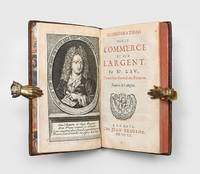
1720182235The Hague: Chez Jean Neaulme 1720. Stimulating the French economy after the wars of Louis XIV First edition in French of Law's seminal disequilibrium theory of money published as the Mississippi Bubble was coming close to bursting. By 1720 Law had finally been appointed minister of finance in France and was in near-total command of the French economy. At the same time his scheme to monopolize the commercial development of French North America was running into difficulties: shares in the Mississippi Company stagnated amid increasing reports of underdevelopment in the French colonies. By December these shares had crashed completely sparking a general stock market crash in France and prompting Law to flee to Venice. Considerations had originally been published in English as Money and Trade Considered in 1705 when Law was attempting to persuade the Scottish government of his ideas. He was bitterly opposed to this French edition not least because it revealed details of the man he had killed in a duel 25 years earlier. Although ruinous to many individual investors Law's system is generally credited with stimulating the French economy exhausted after Louis XIV's wars. Octavo 158 x 95 mm pp. viii 168 167-187 19. Engraved portrait frontispiece title page printed in red and black and with woodcut device woodcut headpiece. Contemporary mottled calf spine ruled and decorated in gilt and with red morocco label marbled endpapers edges red green silk book marker. With 20th-century library ticket. Restoration to joints and extremities. Minor browning and foxing to contents: a very good copy. Einaudi 3274; Goldsmith's 5820; Kress 3235; STCN 202328686. unknown
179360748Paris, Impremerie du depot des lois, An II (1793). 4to. In contemporary half calf with gilt lettering and ornamentation to spine. Wear to extremities. Upper part of back hinge split, with minor loss of letters. Small dampstain to upper inner margin, otherwise a nice copy. (2), VII, (2)-116, 100, 8 pp.
1720B4227Netherlands c. 1720. A few tears in the plates expertly repaired; mispagination in 3rd part pp. 26 jumps to 29 but foliation remains constant no loss; see below for information on plates; otherwise a fine copy of this infamous work bound in decorative gilt 18th-century Dutch full calf.<br>Plates and text are clean and crisp.<br>. Edition: First edition later issue Binding: Contemporary 18th-century gilt-panelled mottled calf with arabesque centerpiece on covers spine in seven compartments of raised gilt bands and gilt floral motifs morocco label on two board edges gilt-tooled. Rebacked skillfully. Notes: Text in Dutch. “This great Theatre of Folly representing the origin progress and downfall of the South Sea Bubble in France England and Holland is an exceedingly curious collection of emblematical plates and caricatures on the scheme of J. Law and the Mississippi Company and the imitations of it in Holland with their fatal results. Not a few of the scenes here depicted have been reproduced in the New York Exchange. The engravings which illustrate the rise and fall of the great speculation are full of humor; many of them are exceedingly ludicrous and some very obscene. They are finely engraved on copper and are accompanied with full descriptions in prose and poetry. So much offence was given to the English and French by this book that medals were struck by them in ridicule of the Dutch which was perhaps the beginning of the hostility which long existed in the minds of the English against the latter. The number of the plates in copies varies from sixty to seventy-four.†<br><br>The first edition of the most elaborate publication was inspired by the economic events of 1720 primarily satirizing Dutch manifestations of the speculative mania that led to the Mississippi Bubble in France a financial scheme that shook the French economy to its core and instigated the use of paper money in the country; engineered by Scottish economic theorist John Law and the South Sea Bubble in England.†Sabin<br> Size: Folio 390x240mm Illustration: With 61 copper engraved plates including caricatures portraits and 2 maps – one finely hand-coloured- of which some are single- page many double-page and larger some folding. Title in red and black.<br>At publication copies of this book were composed with whichever caricature plates were at hand at the time resulting in a great variation in the number of plates contained in each some as few as 46 others as many as 84. Generally the typical complement of illustrations of the first edition was 74 plates --this copy has 61 in total. It contains plates# 3-8 10-26 28-33 35-37 39-43 45 47-56 58 60-64 66x2-68 70 73 according to Koninck's rarely preserved list of plates seen in early editions plus a portrait entitled ‘’een schooner Lotkrans…’’. Volume: 5 parts in 1 volume. References: Ref: Alden European Americana 720/114; Cole The Great Mirror of Folly pages 23-35; Sabin Bibliotheca Americana 28932; Goldsmith 5879; Howes G 442; Muller America 1503 Pages: P. Plate 64 Map illustrated title bl. 1-25 list of towns in report 1-31 bl. 1-26 29-52 1-8 1-9 bl. including 60 engravings. Category: Book Caricatures; Book Plate Books General; Book Europe Benelux; unknown
1720ABC_50108Amsterdam 1720. Near- Contemporary gold-tooled mottled calf with the title and year lettered in gold on the spine sewn on 7 supports with the corresponding raised bands on the spine. Bound by the Bird's Head Bindery in Amsterdam ca. 1728-1765 see Storm van Leeuwen. Folio. With the title page printed in red and black and 79 engraved plates including 1 repeat of plate 54 3589 Muller most double-page and several larger folding sheets including several maps and the plate with the complete set of 52 playing cards Pasquin variant. The copy contains the register listing 74 items and 4 plates not in Mullers principal list Muller 3611-3613 and 3615 but unfortunately lacks plate 18 3553 Muller. Third edition of one of the most remarkable works in the history of finance. Few books equal the visual power satirical brilliance or bibliographical complexity of Het groote tafereel der dwaasheid. First published in Amsterdam in 1720 in the very year of the financial collapses it depicts this extraordinary work stands as the most ambitious and visually arresting contemporary response to the speculative mania that engulfed France England and the Dutch Republic.The work chronicles the rise frenzy and catastrophic collapse of the Mississippi Scheme in France under John Law 1671-1729 and the South Sea Bubble in England speculative ventures designed in part to consolidate and manage national debt in Englands case tied to the funding of the navy but which spiralled into one of the first great international stock market crashes. Laws Compagnie dOccident with its monopoly over Louisiana and trade along the Mississippi ignited feverish dealing in Paris Rue Quincampoix London answered with its own speculative excesses and the contagion swiftly spread to Amsterdam.The Dutch seasoned participants in organised finance responded not merely with alarm but with satire of unparalleled inventiveness. The Tafereel der dwaasheid gathers together emblematic engravings caricatures poems plays pamphlets and moralising texts all exposing the greed credulity and collective madness of the wind trade transactions in nothing more substantial than air.The engravings are by turns humorous grotesque theatrical and occasionally deliberately obscene. They chart the entire arc of speculation: the seduction of investors the carnival atmosphere of trading houses and coffee rooms the frenzied crowds and finally ruin and flight. Law himself appears in portrait placed squarely at the centre of events.The publication history of the Tafereel der dwaasheid is famously intricate. Four editions of the letterpress are known the present work corresponds to the third edition as classified by Muller. Within each edition the number and arrangement of plates varies considerably from copy to copy. Muller recorded 74 plates in the most extensive contemporary published list yet barely any copy of any edition contains them all some serving as alternatives and several plates frequently encountered are absent from that list. The present work includes 73 plates from Muller's list of 74 omitting no. 18 contains a duplicate of no. 54 and includes the engraved register listing 74 items together with 4 plates not in Mullers principal list Muller 3611-3613 and 3615 including different portraits and the map of Louisiana on the Mississippi. Together they form one of the most striking and bizarre monuments in all economic literature a merciless visual anatomy of financial hysteria.The present work appears here in a striking contemporary gold-tooled binding. This binding is the work of the so-called Bird's Head Bindery active ca. 1728-1765 according to Jan Storm van Leeuwen. The decorations are made up from several impressions of 5 different stamps and 5 different rolls. Two stamps on the present binding seem to be unrecorded by Storm van Leeuwen for this bindery namely the lozenge-shaped stamp on the spine and the small cornerpieces on the spine surrounding the lozenge-shaped stamp. These seem to be variants of the bindery's recorded stamps but several stamps also do bear similarities to other major Amsterdam binderies of the early 18th century like the so-called "Double Drawer Handle Bindery".With plate "Lauw-maands herdenking . Nieuwjaarsgeschenk" no. 54 - 3589 Muller included twice as plates 54-55 and lacking plate "Monument consacré - Ter eeuwiger gedagtenisse." no. 18 - 3553 Muller. The hinges are weakened the head of the spine is slightly damaged the corners and edges of the boards show slight signs of wear with a 3.5 x 1 cm repair to the leather on the back board not affecting the gold-tooling. The first flyleaf is partially loose a large tear in plates 7 and 12 resp. nos. 6 and 11 Muller repaired on the verso some plates with small tears along the folding lines slightly affecting the illustration of plate 51 same no. Muller and the map of Enkhuisen is torn along the paper stub it is mounted on not affecting the plate. Some occasional browning foxing and staining. Otherwise in very good condition.l Cole The Great Mirror of Folly nrs. 1-4 6-8 10-71 73; De Bruyn Het Groote Tafereel in: Eighteenth-Century Life XXIV 2000 pp. 62-87; Goetzmann The Great Mirror of Folly 2013 esp. pp. 35-51 bibliogr. analysis by K. Forrer; Kress 3217; Landwehr 230; Lipperheide Xf 5; Muller Historieplaten esp. nos. 3536-3609; pp. 103-131; Sabin 28932; STCN various issues and made-up copies: the present work resembles 228136539; Van Leeuwen Dutch Decorated Bookbinding I 2006 pp. 228-284. hardcover
170959593(København), 1709. Folio. 53x35 cm. Contemporary full mottled calf. Boards with a bit of wear and a few scratches. Corners and capitals repaired. 19 leaves, all with engraved text and ornamental frames. The broad frames that all differ from each other ornamentally depict animals and plants as well as the different trades of the country. A few leaves with minor weak dampstaining to upper margin. Upper margin slightly soiled. Otherwise a nice and clean copy on thick heavy paper.
170954195(København), 1709. Folio. In contemporary full calf Cambridge-style mirror binding with blindstamped borders. Light wear to extremities. Seven leaves with minor repairs to margins, one leaf with a 15 cm long closed tear, and one leaf with an 30 cm long closed tear, all professionally executed and with no loss of imprint. Margins slightly soiled. 19 leaves, -text and frames engraved. The broad frames that all differ from each other ornamentally depict animals and plants as well as the different trades of the country. A nice copy printed on thick, heavy paper. Housed in a cardboard box.Provenance: From the collection of Danish book collector Viggo Lohse. The present copy was exhibited at 'Dansk Bibliofil-Klubs 50 års Jubilæumsudstilling' in 1992 (The 50 year anniversary exhibition for the Danish Society of Bibliophiles), no. 94.
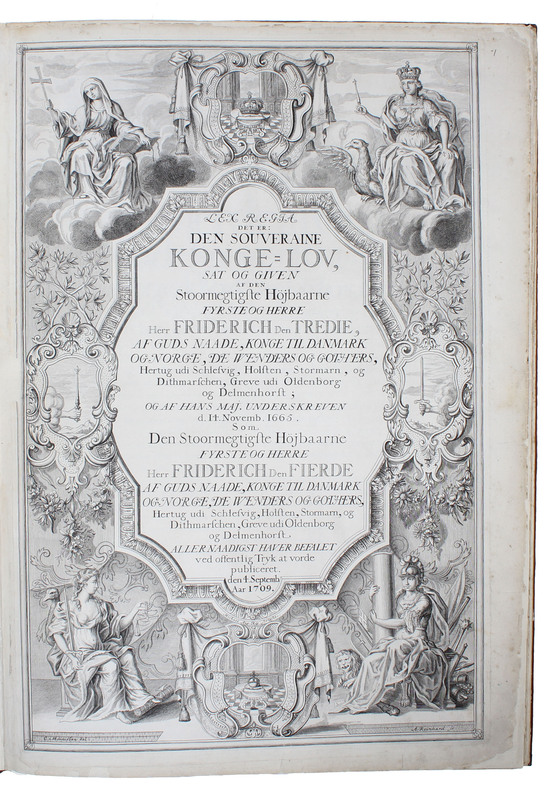
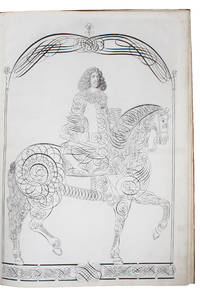
170954195København 1709. Folio. In contemporary full calf Cambridge-style mirror binding with blindstamped borders. Light wear to extremities. Seven leaves with minor repairs to margins one leaf with a 15 cm long closed tear and one leaf with an 30 cm long closed tear all professionally executed and with no loss of imprint. Margins slightly soiled. 19 leaves -text and frames engraved. The broad frames that all differ from each other ornamentally depict animals and plants as well as the different trades of the country. A nice copy printed on thick heavy paper. Housed in a cardboard box.Provenance: From the collection of Danish book collector Viggo Lohse. The present copy was exhibited at 'Dansk Bibliofil-Klubs 50 års Jubilæumsudstilling' in 1992 The 50 year anniversary exhibition for the Danish Society of Bibliophiles no. 94. <br/><br/><em>First edition of this landmark work of Danish book production and the constitution of the Danish absolute monarchy. The Royal Law established the absolute right of the Monarch to rule and it defined the line of royal succession. It was more rigorous than the other monarchal laws of Europe at the time.The text which is written by Peder Griffenfeld is engraved in copper throughout in order to prevent the possibility of re-printing pirated editions and text-counterfeiting. Frederik Rostgaard the King's state archivist who was famous for his excellent taste in books was in charge of the editing and issuing of the work. In front of the actual law text a leaf is inserted with the portrait of King Frederik III on his horse and everything except for the head of the king which was engraved after his death-mask is executed in the beloved flourishing- or scroll- manner of the time. The titles and the text are engraved throughout by Michael Røg. </em> unknown
1720B7274Nakomelingen c.1720. Edition: First Edition. Binding: No binding. Notes: Text in Dutch.Folio. Approx. 410 x 260 mm. <br>A very good example of this “extraordinary visual record of the first banking crash showing the shocking effects of the South Sea Bubble in France England and Holland and placing John Law 1671-1729 with his Mississippi company scheme squarely at the centre of the disastrous chain of events. ‘A unique historical document … of real significance’†Cole p.1; “the engravings which illustrate the rise and fall of the great speculation are full of humor; many of them are exceedingly ludicrous and some very obscene†Sabin. “Published in Amsterdam the giant tome includes pamphlets legal documents economic analyses maps satirical plays poems playing cards and more than seventy prints. The volume attracted wide audiences feeling the sting of the financial crises taking place in England France and the Dutch Republic that together resulted in the first international stock market crash.â€<br>“Het Groote Tafereel der Dwaasheid references Tulipmania in the Dutch Republic where the prices of tulip bulbs spiked and abruptly plummeted in 1637; the South Sea Bubble in England and Mississippi Bubble in France that burst in 1720; and other British French and Dutch enterprises that failed in 1720. Investing frenzy is characterized as a form of contagion moving from one country to the next: a consequence of the craze for international emulation as was evident in the English for example adopting the measures of John Law’s Mississippi Company that ultimately resulted in the South Sea Bubble. Prints in the volume commonly depict the dreams disordered states of mind and moral failures of investors caught up in the speculative zeal—alluding to herd behavior gambling corruption insanity immorality and demonic possession.â€<br>The text first appeared in 1720/21 and continued to be reprinted throughout the 18th century. Very few copies of this book survive as most were broken apart so that engravings could be sold individually. Professor Arthur Cole writes: “Rarely does a single volume combine in itself so much economic interest and so many bibliographical puzzles as Het Groote Tafereel Der Dwaasheid. There is scarcely another item just like it. Not merely are the identity of the compiler and the place of publication unknown and not merely is the date of original issuance uncertain but the volume went through an evolutionary process over time quite unnoticeable by ordinary superficial inspection. Moreover so strange was the mode of issuance that no two specimens even of approximately the same actual issue date are exactly the same. Neither the textual material nor the engraved prints are always identical nor do they appear in the same sequence within the volume.â€<br><br>This copy with 68 plates many folding out and/or double-page. Includes frontispiece original engraving of John Law and a deck of “bubble cards.†Title in red and black. Papegaay of Actie-Kaart-Klap… pages unnumbered but all text present. Pg. 29 mislabeled as 92. Page numbers jump from 26 to 29 where noted in pagination above but text continuous. Unbound all leaves loose.<br><br><br>TEXT<br>-Pg. 29 mislabeled as 92 signature H<br>-Goes from pg. 26 – 29 but matches complete bound book same online<br>-Last text pgs. 1-8 are unnumbered but all present<br>-Online copy has Copye Van Een Brief as very last text before plates so did that<br><br>PLATES<br>Missing<br>-Y Pg. 139 on Gale resource/163 on NYPL: “De Kermis-Kraam Van De Actie-Knaapenâ€<br>-Pg. 281 on NYPL/185 Gale: man’s portrait ‘QUINQU/ENPOIX’<br>-Pg. 299 on NYPL: Louisiana <br>-Pg. 327 on NYPL: woman’s portrait<br>-Pg. 329 on NYPL: man’s portrait #2 profile<br><br>-Not seeing plate #29 Tonneel<br>-#65 Kaart-spel van Momus<br>-#68 B have card decks in place<br>-#70 Ronde Godt Have Biespieling… in place<br>-#73 Tooverkaart magic card; have De Wintgot there instead<br>-#74 Tooverkaart twede Stuk magic cad; have other cards there<br><br>Y = confirmed missing plate with contents plate<br><br> Size: Folio Provenance: Ex-Library Chicago Historical Society; embossed and perforated stamps on title elsewhere. References: Cole Great Mirror of Folly 1949; Goldsmiths' 5879; Kress 3217; Sabin 28932. Pages: P Frontispiece. Blank. Title. Blank. Pp. 1 – 25. Aanwyzinge Der Projecten. Pp. 1 – 52. Versameling van Gedigten… 1 – 26 pagination jumps 29 – 31. Blank. Papegaay of Actie-Kaart-Klap… 8. Copye Van Een Brief… 1 – 10. 67 plates. Category: Book Caricatures; Book Europe Benelux; Book Plate Books General; Nakomelingen, unknown
1720ABC_49340Amsterdam 1720. Folio. Contemporary gold-tooled half blueish green roan with a red morocco title label lettered in gold on the spine blue paste paper sides. With the title page printed in red and black 78 mostly double-page or folding engraved plates with caricatures on the 1720 Bubble and a double-page hand-coloured plate of the foundations of a house near Leiden loosely inserted in the back. 1 1 blank 25 1 52 "31" = 29 1 blank 8 9 1 blank pp. and engraved ll. A famous collection of texts and plates satirising the Englishman John Law his Mississippi Company and the international land and trading speculation in worthless shares of the South Sea Bubble of 1719-1720 which resulted in an international scandal. The speculation began in Paris London and Hamburg spreading to the Netherlands in the summer of 1720. While plays satirizing the speculation already opened in September 1720 the bubble really burst in October. Pieter Langendijk and Gysbert Tysens have been identified as authors of some of the plays. The book also provides the texts of official documents relating to the Dutch trading companies involved.In The great mirror of Folly Cole presents lists of plates which can be found in various copies the total of which however is never found in a single copy. The present copy contains no. 22 with a German title and no. 65 the famous playing cards in the later "Pasquin" version. Rare prints that are seldom present are no. 73 the magic cards and supplement nos. 2 3 4 and 6. The interest and importance of the collection is hardly to be exaggerated. It presents a unique source on one of the most interesting periods in economic history commenting on the feverish activity of speculation accompanying the introduction of the stock market not only in the Netherlands itself but also in France and England including the activities of John Law the Mississippi Bubble in France and the South Sea Bubble in England. The prints also include a map of the American State of Louisiana near the Mississippi River.With the bookplate of B. Eveleigh Winthrop mounted on the front pastedown. The binding is worn. The text is partly browned the plate with the playing cards has a large horizontal tear and the upper left corner has been torn off but is still present. Otherwise a good copy.l Cole The great mirror of folly nrs. 1-4 6-8 10-71 73; Muller Historieplaten 3535 ff.; Van Rijn Atlas van Stolk 3452 ff.; STCN 254984576; cf. slightly differing collation or fingerprint STCN 254984185 293084076 228136539. unknown
1790143822Paris: Buisson 1790. Uncut in original wrappers First collected edition of the works of the French finance minister John Law whose financial schemes led to the Mississippi Bubble and economic collapse during regency France. Apart from Money and Trade Considered all the works in the collection including two Mémoires sur les Banques and a number of letters were previously unpublished. The publication of the collection during the French Revolution reflected a revived interest in solutions to deficit financing and a re-appraisal of the previously discredited Law and his grand schemes of long-term government finance. The editor Gabriel-Étienne de Sénovert "made a point of highlighting its current relevance. 'Credit' he wrote at the beginning of his introduction to the edition citing Sir James Steuart for corroboration 'plays so considerable a role in the political economy of modern nations and is connected so intimately to their prosperity and even to their existence that it could be said that the science of government is nothing but the science of credit itself'. Sénovert's assessment of Law was however judiciously neutral. As he went on to emphasise both in the rest of his introduction and in the notes that he added to Law's own works it was difficult to decide whether Law's system was a real example or a dreadful warning" Sonenscher pp. 314-15. The revolutionary government's solution to the economic situation issuing the assignats backed by land and confiscated property was not dissimilar to Law's solution of notes tied to French land in North America; both rapidly lost value and further destabilized France's economy. Octavo. Uncut in contemporary marbled paper wrappers paper spine label lettered in manuscript printer's waste pastedowns. Occasional light spotting. A remarkably well preserved copy. Goldsmiths' 14361; Kress B.1919. Michael Sonenscher Sans-Culottes: An eighteenth-century emblem in the French Revolution 2008. unknown
1723135461Paris: Ches Louis-Denis Delatour & Pierre Simon 1723. John Law accused of illegally building on claimant's land First edition setting out the claim of Jean Pasquier in the legal action brought against the financier John Law and others concerning a building in Chaillot in Paris. The claimant disputes Law's title to the land and calls for the building's demolition and the claimant's renumeration. The land in question is across the river from where the Eiffel Tower now stands. Pasquier claims he inherited the land through his wife but that his neighbour Jean Des Vaux acquired it on false legal pretexts. Des Vaux partnered with John Law who built an iron foundry there in 1719 using English workmen. Pasquier repeatedly appealed to the Paris parlement for his right seeking the return of the land to him and demolition of the foundry as well as damages. This publication presents his claims making extensive observations on private rights and public welfare and the nature of property law in France and its relation to civil society. The Mémoire implies that Law was arguing that as the enterprise was of national importance and built on good faith with Des Vaux it should not be demolished. Law moved his then-skyrocketing wealth into various enterprises and had already invested in a factory in Harfleur in 1718 similarly bringing over English workmen including the engineer Richard Jones. The British parliament was concerned by these enterprises due to the mercantilist perception that France's gain would be England's loss - they drafted a law forbidding any British manufacturer to develop enterprises abroad Buchan p. 187. The Mémoire is dated 5 July 1723. Pasquier had printed another claim the previous year with the same publishers and under the same title which is dated 5 September 1722; the same ground is covered but the text is different and this further elucidates and updates the case into 1723. We could trace only one other copy that in the Bibliothèque nationale de France who also have the only traced copy of the 1722 publication. Folio 394 x 239 mm 14 pp. Recent blue boards red label. Neat early annotation and notation to first page. Slightly spotted faint staining at head of inner margin. A very good copy. James Buchan John Law 2018. hardcover
1773665487 vol. in-4 reliure uniforme début XIXe demi-basane marron, dos lisse orné numéroté de 1 à 6 avec un 3bis. Détail [ Contient Notamment ] : Tome I 1755-1773 : Mémoire pour Maître Bourdon, Greffier en chef de l'Hôtel de Ville de Péronne 1755 - Arrests de la Cour de Parlement portant défenses aux nommés Bazin, De La Sauvagère, Mormont & De Renty de récidiver leurs Libelles & diffammations - Sommaire pour Me Jean-Baptiste Ropiquet, Procureur en la Cour contre Messire De La Folie de Vorme, Seigneur de Reincheval - Sommaire pour Jacques Maillard, Fermier de la Ferme de Renancourt - Précis sur Délibéré pour le Sieur Gallot & les Héritiers du Sr Savoye, Propriétaires des Moulins bannaux du Bourg d'Ault - Mémoire pour Me Etienne Lalau, Prêtre Chapelain de la Cathédrale d'Amiens - Mémoire pour la Dame veuve Masset et les Sieurs Masset... tous Marchands Commissionnaires à Saint-Valéry sur Somme, Intimés Contre la prétendue Communauté des Gribaniers de la même Ville - Mémoire sur Délibéré pour le Sieur Dubus Avocat en Parlement... Elu en l'Election de Senlis - Observations Sommaires pour les Habitans, Corps & Communautés d'Wavant & Beauvoir-Rivière contre le Vicomte de Marle & la Dame son Epouse - Mémoire et Consultation pour M. Luneau de Boisjermain, Soucripteur de l'Encyclopédie contre le Sieur Briasson et le Sieur Lebreton - Mémoire pour Me Boistel, Ecuyer, Seigneur de Belloy-sur-Somme, Avocat en Parlement au Bailliage & Siège Présidial d'Amiens - Mémoire pour les Maïeurs & Echevins de la Ville d'Abbeville, Défendeurs ; contre le receveur Général des Domaines & Bois de la Généralité de Picardie - Mémoire pour les Maire, Echevins et Officiers Municipaux de la Ville d'Amiens, Intervenans, contre le Sieur Le Seneschal, Receveur Général des Domaines & Bois de Picardie, Demandeur - Précis pour Me Jean-Baptiste Hesse, Curé d'Agnière, Doyen de Chrétienté de Grandvilliers - Précis pour les Srs Claude & Balthazar Picquet Seigneurs de Belloy-sur-Somme - Mémoire pour le Marquis de Gouy contre la Marquise de Gouy, par Le Go, Procureur. 1772 - Addition au Mémoire par De Vergès et Linguet - A Messieurs les Grands Bailli, Lieutenant-Particulier & Hommes de Fiefs, Gradués de la Gouvernance & Bailliage Royal d'Arras. 1773 - Mémoire signifié pour les Sieurs Dégardin, Bailli-Général de la Châtellenie & Comté d'Oisy - Mémoire pour le Sieur Ducandas, Chanoine de l'église Cathédrale d'Amiens - etc... ; Tome II 1774-1777 : Consultation pour le Marquis de Soyecourt 1774 - Mémoire pour la Communauté des Procureurs au Parlement contre les Prévot et Echevins de la Ville de Paris, les Conseillers et Quartiniers, les Six Corps des Marchands, De l'Imprimerie de Louis-Charles Caron, Amiens, 1774 - Mémoire pour Anéglique Galletn Veuve Clément, Contre Joseph & Jean-Baptiste Leroi, neveux & héritiers de Me Jean-Baptiste Leroi, en son vivant Curé de Warloy 1774 - Mémoire pour le Sieur Louis-Pierre-François Assegond Marchand Corroyeyr à Dieppe Contre Charles Duval, Marchand Tanneur à Blangy en Normandie - Mémoire sur Délibéré pour le Sieur Jean Marchant du Casseau, Avocat en Parlement, Intimé, Contre Timothée Girault, ci-devant Meunier du moulin de Saint-Eloy de Ferrière, Appelant, et les Abbé Prieur & Religieux de l'Abbaye Royale de Ferriere - Précis pour Gabriel Bos é Consors intimés Contre Me Jean Martin, Prêtre, Curé d'Allenay, appellant et contre Firmin Machet, Ménager à Bourseville - Mémoire pour les Maire, Echevins, Habitans & Corps commun de la Ville d'Albert en Auvergne contre M. le Comte de Merle, Brigadier des Armée du Roi, ci-devant son Ambassadeur en la Cour de Portugal 1775 - Précis pour la Demoiselle Elizabeth Mouret, Demanderesse, Contre Maître Watier & le Sieur Calixte Vilbault, dit Condé - Observations pour le Receveur-Général des Domaines & Bois de la Généralité d'Amiens, Demandeur, Contre le Sieur François-Alexandre de Bucy, Chevalier, Seigneur de Villers-Saint-Christophe, 1755 - Réponses Sommaires du Sieur de Bucy, Chevalier, Seigneur de Villers, aux Observations du Sieur le Sénéchal - Extrait de Titres et Observations Sommaires pour Monsieur le Comte de Crequi Canaples contre les Habitans de Beauquêne 1775 - Mémoire pour la Comtesse de Béthune, De l'Imprimerie de Philippe-Denys Pierres, Paris, Seguier, Avocat, Linguet Avocat 1775 - lettre de M . le Président de Meinières à Madame la Comtesse de Béthune - Mémoire pour la Comtesse de Béthune, Seconde Partie - Observations sur un Imprimé ayant pour titre : Mémoire pour Me Gerbier ancien Avocat, De l'Imprimerie de Philippe-Denys Pierres, Paris, 1775 - Supplêment aux Réflexions pour Me Linguet, Avocat de la Comtesse de Béthune - Mémoire pour la ville d'Amiens 1776 - Mémoire pour le sieur Isidore-Parfait Mimerel Chapelain de la Chapelle de Notre-Dame, dite de l'Aurore, érigée dans l'Eglise Cathédrale d'Amiens, Défendeur, contre le Sieur Asselin, Vicaire de la Paroisse de Notre-Dame, 1776 - Précis pour le Sieur Flesselle, Entrepreneur de l'un des Manufactures de la Ville d'Amiens, & encore les Sieurs Mercier & Doucet tous deux Voituriers au Village de Saint-Maurice-lès-Amiens, Contre les soi-disant Compagnons Fluqueurs & Déchargeurs de la Ville d'Amiens 1776 - Affaire très-intéressante pour le Commerce, en ce que l'Arrêt à intervenir doit faire réglement 1776 - mémoire pour les Syndic, Habitans, Corps & Communauté de la Paroisse de Vaux sous Amiens , Contre les Abbé, Prieurs & Religieux de l'Abbaye de Saint Jean d'Amiens, Ordre de Prémontré 1776 - Mémoire pour Firmin Sannier, Laboureur demeurant au Village de Métigny-Laleu, Défendeur, 1777 - Mémoire Me Cochepin, Seigneu de Métigny 1777 (avec plan dépliant en couleurs) - Mémoire Signié pour Sieur Louis-Robert Cocu, ci-devant négociant à Amiens, Appellant, contre Louis Vautour, Marchand de Modes à la même ville, 1777 - Précis pour Messie Vollant de Bervill, Marquis de Lisbourg, contre Messire Marie de Berne, Ecuyer, Seigneur de Lahaye - Précis pour la Dame Veuve du Comte de Fercourt, Tutrice de ses Enfans Mineurs, Défendresse, contre le Sieur Papin de Caumesnil, Demandeur - Précis dans l'Instance sur sur Référé pour le Sieur de La Morlière, Teinturier à Amiens, Contre le Sieur Cordier Duflos, Négociant à Abbeville 1777 - Précis pour les Frères Coquillard, Négocians à Amiens ; Tome III 1777 - 1783 : Précis pour le Sieur de Crocquoison de la Cour de Fiefs 1778 - Mémoire sur Délibéré pour les Sieurs Auguste & Augustin Coquillart, Frères, Négocians à Amiens, Appelans 1779 - Mémoire pour Jean-Baptiste Morgan, Ecuyer, Seigneur de Frucourt, Dondelainville & Warcheville, demeurant à Amiens, Contre le Sieur Sanson Leprince, Agent de Change, demeurant audit Amiens 1779 avec grand plan dépliant en couleurs - Mémoire signifié pour le Sieur Henry, Bourgois d'Amiens, Défendeur, contre le sieur Dotttin, 1779 - Précis pour les Habitans de Vignacourt, contre Philippe Duboisle, Habitant dudit lieu, et contre le Sieur de Famechon, Chevalier, Seigneur de Canteleu, Etouvi & autres lieux - Mémoire pour Me Pierre Bardoux, Notaire Royal au Bailliage d'Amiens, à la résidence de Fienvillez, et pour Jean-Baptiste Bardoux, Majeur Coutumier vivant de son Bien, contre Augustin Destrée, Tisserand, demeurant au village de Fief 1779 - Mémoire sur Appointement à mettre pour les Sieurs Paillieux négocians contre le Sieur Florimond d'Wailly, Fabricant, demeurant à Saint-Maurice-les Amiens, 1779 - Plaidoyer pour le Sieur Jean Tranel contre le Sieur de Portelance 1773 (nombreux mémoires sur la même affaire) - Mémoire pour les Officiers de la Sénéchaussée de Ponthieu & Siège Présidial d'Abbeville Contre Me Lavernier, Notaire Royal en la même ville 1780 - Mémoire pour Messire Louis-François Pingré, Ecuyer, Seigneur de Fricamps, La Houssoye, Vadancourt, Dutronquoy et autres lieux, 1781 - Mémoire signifié pour les Syndics, Habitans, Corps & Communautés du Bourg d'Auxi-le-Château, Picardie & Artois contre Messire Charles-Antoine, 1782 - Mémoire pour François Demonchy, Laboureu, demeurant à Woignarue, contre Jean-Baptiste Boinat, Tisserand, demeurant à Chepy, contre les Sieurs Navier du Coudray et Jean-Gaspard Testard-Desportes, intéressés dans les affaires du Roi, fermiers de la Mense Abbatiale de Saint-Valéry-sur-Somme, 1782 - Précis pour Adrien d'Arragon, Maître Sellier demeurant à Lignières-Châtelain, Conre Alexis Mouret, ci-devant Domestique à Paris, 1782 - Mémoire pour le Sieur Pierre-François Beauvarlet, Marchand Cirier, demeurant Abbeville, contre ses soeurs - Précis pour le sieur Nicolas Boulnois, Négociant à Sarcus en Picardie, contre le Sieur Robert, Négociant, ci-devant à Amiens, depuis à Philadelphie en Pensylvanie, & actuellement à Amiens, 1782 - Mémoire signifié pour Demoiselle Pélagie Monchaux, veuve du Sieur carretten Laboureur au village de Bussun contre Nicolas-Joseph Carrette, Laboureur, demeurant au village de Noyelles-en-Chaussée - Consulation pour Jean-Baptiste Boint, Tisserand à Chepy, 1783 - etc. ; Tome III bis 1776 - 1783 [ Recueil d'une vingtaine de mémoires, réponses ou consultations sur l'Affaire de la Baronie de Picquigny vendue au Comte d'Artois ] : Consutlations pour le Sr Calmer, Seigneur de la Baronie de Picquigny & du Vidamé d'Amiens, sur la question de savoir s'il est dû un droit de Quint & Requint à M. l'Evêque d'Amiens, pour la vente faite au prix de 1500500 livres de la Baronie de Picquigny, du Vidamé d'Amiens & dépendances, tenus en un seul Fief de son Evêché, 1776 - etc ; Tome IV 1784-1792 : Mémoire pour le Sr Bernard de Nolongue contre Bernard de Cléry, 1784 - Mémoire pour Messire Danzel Vicomte de Boismont, demeurant en son Château au Village d'Aigneville, 1784 - Requête au Roi et Pièce Justificative pour le Marquis de Wargemont ; contre le Comte de Wargemont, en présence de Monsieur le Comte d'Artois, 1785 - Mémoire pour Me De La Haye, Ecuyer, Seigneur de Vaulx-sous-Corbie, Sailly-le-Secq, 1785 - Mémoire et Consultation pour les Engagistes du Greffe des Présentations d'Amiens, 1786 - Mémoire Signifié pour Pierre-Marie Delahaye, Ecuyer, Seigneur de Molliens-le-Vidame, contre Langlois Seigneur de Courcelles - Mémoire Signifié pour les Seigneurs, Syndic, Habitans, Corps et Communauté du Village de l'Hortoy, Contre Me Antoine Marminia, Prêtre, Vicaire perpétuel à portions congrue de la Warde-Mauger, & Curé seul gros Décimateur de la Paroisse de l'Hortoy, 1787 - Mémoire pour Me Léonor Scribe, Notaire au Bailliage d'Amiens, 1787 - Mémoire pour le Sieur Brandicourt, Curé de Saint-Firmin le Confesseur, à Amiens, 1788 - Mémoire à Consulter pour Claude Boullet, Ecuyer, Sieur de Lamothe - Mémoire à Consulter et consultation contre les Srs Administrateurs de l'Hôpital-Général d'Amiens, 1789 - Mémoire pour les sieurs de Vermont contre le Sieur de Morel de Foucaucourt, 1789 - Mémoire pour le Sieur Delamarre, Laboureur à Sarcus, contre le Marquis de Grasse, 1789 - Observations des Sieurs Eloy-Louis et Dominique-César Leleu Frères, négocians, Sur un écrit intitulé "Second Mémoire pour les Maîtres Boulangers", 1789 - Compte-Rendu au Public par les Sieurs Leleu sur l'établissement des Moulins de Corbeil, 1789 - Rapport fait au Roi, par M. Taboureau, Contrôleur Général, le 23 Février 1777 - Réflexions d'un Citoyen sur la conduite du Peuple envers M. Jourdain de Leloge, Négociant à Amiens, 1789 - Mémoire pour le Sieur Jean Baptiste Alexandre Leleu Fils, Négociant & Consul en exercice de la Ville d'Amiens, 1789 - Réplique du Sieur Caron-Berquier, imprimeur, 1790 - Mémoire pour M. Bussilot, négociant à Amiens, 1790 - Observations de Germai-Louis Chambosse, receveur du district d'Amiens ; Tome V An 4 - 1806 : Précis servant de réponse pour le Cotoyen Guidé le jeune, Négociant demeurant à Amiens contre le Citoyen Barbieux, Négociant à Lille, An IV - Mémoire sur délibéré pour les Héritiers d'Honoré Delaporte contre les Enfan Lesouef - Mémoire à consulter et consultation pour les citoyens Durieux le jeune, et Morgan, négocians à Amiens, Contre la citoyenne Dujardin du Royal, an VI - Mémoire à Consulter, pour les intéressés à la Manufacture de draps et ratines d'Andely, stipulés et representés par les citoyens Ribard et Levieux, Négociants à Rouen - Mémoire à Consulter et Consultation pour le Citoyen Mille Marchand à Amiens, contre les Citoyens Mallet-Dessommes et Rousseau, An VII - Mémoire présenté à la Commission consulaire exécutive de la République Française, par les négocians et manufacturiers d'Amiens, An VIII - Mémoire pour le Cotoyen Pierre Louis, Négociant demeurant à Lille, contre le Citoyen Ladame, Négociant demeurant à Amiens An VIII - Mémoire pour Jean-Baptiste Canaples ci-devant Marchand à Oisemont contre Villeret, Cultivateur demeurant à Avelège, An IX - Réhabilitation Coulon Frères, An XI - Mémoire pour François-Joseph Lecus, Agent de Change, à Abbeville, Demandeur en Cassation, etc. - Tome VI 1806-1813 : Mémoire en réponse pour les Frères Enfantin, Demandeurs en homologation, poursuites et diligences de marcel Enfantin, l'un deux, Liquidateur, contre le Sieur Herbel fils - Affaire Veuve Dewarsy contre Poujol D'Avankerque (nombreux mémoires) - Mémoire pour Mme De Bussy de Folleville contre Musnier, Général de Division - Résumé pour Charpentier, Comte de l'Empire, Général de Division, contre Brayer Maison Neuve demeurant à Soissons - Précis pour le Sieur Dumoiron contre le Sieur Stubert - Consultation pour MM les Syndics à la Faillite de la Maison Virnot de Lille - Précis pour le Sieur Jean-Baptiste Laurent, ancien Négociant demeurant à Amiens - Conclusions motivées pour les Habitans de la Commune de Magny-le-Freule, etc...