248 résultats
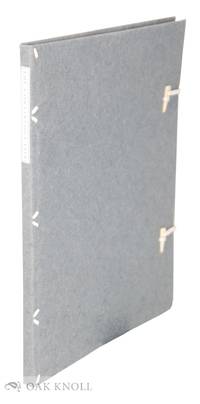
1990689Iowa City: Windhover Press 1990. First edition. One of 26 specially bound lettered copies signed by Strand & Welliver with two separate prints laid in at the back; the only signed issue of this publication. As new. Folio original wrappers with Japanese style clasps. As new. Windhover Press unknown books
19838564New York. The Aperture Foundation. 1983. Plates laid loose into sand linen cloth Portfolio which is further encased in a like linen Solander box. Gilt titled morocco Title Label inset to front cover of box. Tall Folio. 17" x 21 This Edition Limited to 300 numbered copies of which this is #120. Portfolio is accompanied by a Text Folio by noted photography critic Ben Lifson and Michael E. Hoffman former Executive Director of Aperture and bears the stamp of the Paul Strand Archive and Limitation Colophon. Illustrated by 10 hand-pulled dust-grain photogravures by Paul Strand made from the original glass plates in 1973. Printed by master photogravure printer Jon Goodmanthese works were the subject of a major exhibition at the Metropolitan Museum of Art New York in February 1998. The collection is comprised by : Still Life Pear and Bowls Twin Lakes Connecticut 1916 Paper Size 20" X 16" Image Size 10" X 11 1/4" Hudson River Pier New York 1914 Paper Size 20" X 16" Image Size 9 1/4" X 12 1/4" City Hall Park New York 1915 Paper Size 20" X 16" Image Size 13 1/8" X 6 1/4" Fifth Avenue New York 1915 Paper Size 20" X 16" Image Size 12 1/4" X 8" Yawning Woman New York 1916 Paper Size 20" X 16" Image Size 12 1/2" X 9 1/2" Man Five Points Square New York 1916 Paper Size 20" X 16" Image Size 9 1/2" X 10 1/4" From the Viaduct 125th Street New York 1915 Paper Size 20" X 16" Image Size 10" X 12 7/8" Railroad Sidings New York 1914 Paper Size 20" X 16" Image Size 12 1/2" X 9 1/2" From the El New York 1917 Paper Size 20" X 16" Image Size 12 3/4" X 9 1/8" Abstraction Porch Shadows Twin Lakes Connecticut 1916 Paper Size 20" X 16" Image Size 13" X 9 1/8" In the earlier years of his formidable career Paul Strand 18901976 was befriended and mentored by Alfred Stieglitz. A fierce proponent of modern art in America Stieglitzs infamous 291 Gallery on Fifth Avenue was the first to champion the avant-garde of European and American art and photography. His stewardship of Strand had a profound effect cultivating in Strand one of the greatest modernist photographers of the era. Aperture has drawn some of his most notable images for this portfolio from the Paul Strand Archive; they include City Hall Park New York 1915; From the El New York 1917; and Yawning Woman New York 1916. Describing Strands oeuvre Stieglitz said: In the history of photography there are but few photographers who from the point of view of expression have really done much work of any importance. And by importance we mean work that has some relatively lasting quality that element which gives all art its real significance. . . . The work is brutally direct. Devoid of any flim-flams; devoid of trickery and any ism devoid of any attempt to mystify an ignorant public. A Very Fine Pristine As New copy. The Aperture Foundation. hardcover books
1977WRCLIT59117New York: Aperture Inc. 1977. Quarto. Printed cloth with ribbon marker. Illustrated with over one hundred photographs by Paul Strand. Very fine in cloth slipcase and publisher's shipping box. First enlarged edition limited issue. Preface by Paul Metcalf afterword by Beaumont Newhall. One of 450 numbered copies assembled from hand-selected sheets and specially bound. Accompanied by hand-pulled grain photogravure made from Strand's original negative in an edition of 450 prints. The plate was made by Jon Goodman and Richard Benson and the edition was printed at Atelier de Taille Douce St. Prex. Signed by Hazel Strand for the Paul Strand Foundation on the limitation sheet. Aperture, Inc. hardcover books
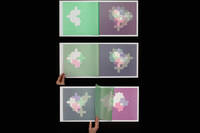
201510194Norway 2015. Limited Edition. Hardcover. Fine. Tight bright and unmarred. Black stiff board black cloth spine Japanese string binding relief prints hand printed using hand cut stencils on 11-12 gram Japanese paper. Oblong fo. np each iteration has 4 to 7 sheets. Illus. color plates. Numbered limited edition this being 1 of 3 copies. <br/><br/>Some of the books in the series were made into a film and the film becoming an artwork unto itself. The film was awarded the Critic’s Prize on the juried regional exhibition in Trondheim 2017. <br />“The paper is translucent soft airy and completely silent. Quick movements of the papers is physically impossible. Each sheet has one visual element a shape which is mirrored as you turn the page. The fragile paper is printed with motives developed from Arabic ornamentation. This expression was originally created out of mathematics and geometry to avoid imagery that might lead to idolatry. I wanted to combine the book as a system with this geometry to see what that could bring. I find it fascinating how the images switch between flat and spatial" and that despite the strict patterns associations may vary and go towards modernism the oriental and paradoxically also towards figuration. The transparency causes overlaps between the pages that create new shapes and new colors. <br />The sheets melt together in a way which makes it almost impossible for the reader to predict the next sheet’s exact pattern and color or to remember precisely the last motif. It plays with the illusions of form color space and order. The image is transformed with each turn of a page and becomes ephemeral. A book starts to exist the moment its pages are turned. Since the book is a media of intimacy presence and touch haptic communication inevitably establishes meaning in itself a communication which invariably will be in some kind of relation to the mental content. It is an arena where perception and thinking operate together it might also bring awareness of your own perception. <br />Books have been holy objects for many different reasons. The fragility of the paper and the actions necessary may add a ritualistic element to the act of reading. I see the reader’ act as a performance a slow motion ballet. In a materialistic culture of mass consumption and noisy offensive expressions I find it appropriate to react by focussing on tranquility care and consideration. Like mandalas which often are written in sand to be washed away I have tried to create a space for a contemplative experience displaying the ever changing character and relativeness of existence where different elements always are colored and influenced by their surroundings.” Artist statement <br />Randi Annie Strand visual artist born in Norway 1962. Lives in Oslo. MA from Bergen Academy of Art and Design 92. Language signs and sensory experiences are central elements in her works. Her ideas have been realised through different media and techniques. hardcover books
201610196Norway 2016. Limited Edition. Hardcover. Fine. Tight bright and unmarred. Black stiff board black cloth spine Japanese string binding relief prints hand printed using hand cut stencils on 11-12 gram Japanese paper. Oblong fo. np each iteration has 4 to 7 sheets. Illus. color plates. Numbered limited edition this being 3 of 5 copies. <br/><br/>Some of the books in the series were made into a film and the film becoming an artwork unto itself. The film was awarded the Critic’s Prize on the juried regional exhibition in Trondheim 2017. <br />“The paper is translucent soft airy and completely silent. Quick movements of the papers is physically impossible. Each sheet has one visual element a shape which is mirrored as you turn the page. The fragile paper is printed with motives developed from Arabic ornamentation. This expression was originally created out of mathematics and geometry to avoid imagery that might lead to idolatry. I wanted to combine the book as a system with this geometry to see what that could bring. I find it fascinating how the images switch between flat and spatial" and that despite the strict patterns associations may vary and go towards modernism the oriental and paradoxically also towards figuration. The transparency causes overlaps between the pages that create new shapes and new colors. <br />The sheets melt together in a way which makes it almost impossible for the reader to predict the next sheet’s exact pattern and color or to remember precisely the last motif. It plays with the illusions of form color space and order. The image is transformed with each turn of a page and becomes ephemeral. A book starts to exist the moment its pages are turned. Since the book is a media of intimacy presence and touch haptic communication inevitably establishes meaning in itself a communication which invariably will be in some kind of relation to the mental content. It is an arena where perception and thinking operate together it might also bring awareness of your own perception. <br />Books have been holy objects for many different reasons. The fragility of the paper and the actions necessary may add a ritualistic element to the act of reading. I see the reader’ act as a performance a slow motion ballet. In a materialistic culture of mass consumption and noisy offensive expressions I find it appropriate to react by focussing on tranquility care and consideration. Like mandalas which often are written in sand to be washed away I have tried to create a space for a contemplative experience displaying the ever changing character and relativeness of existence where different elements always are colored and influenced by their surroundings.” Artist statement <br />Randi Annie Strand visual artist born in Norway 1962. Lives in Oslo. MA from Bergen Academy of Art and Design 92. Language signs and sensory experiences are central elements in her works. Her ideas have been realised through different media and techniques. hardcover books
1964132901Iowa City IA: Stone Wall Press 1964. cloth. Stone Wall Press. 8vo. cloth. unpaginated. One of 225 numbered copies. This copy inscribed by Mark Strand. Spine light faded gilt lettering rubbed. Covers lightly soiled. Interior tight and bright. Lacking the very rare acetate wrapper. Mark Strand was a Pulitzer Prize winning author. Stone Wall Press unknown books
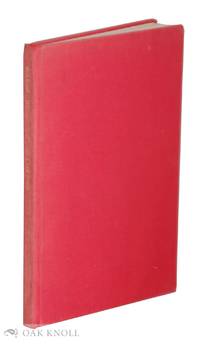
1964902321964. STRAND Mark. SLEEPING WITH ONE EYE OPEN. Iowa City: Stone Wall Press 1964. Limited First Edition. 8vo. 53pp. Red cloth stamped in gilt to spine.Author's first book #40 of limited edtion of 225. Inscribed by athor on ffep. "For Gary/with both eyes open/-Mark Strand/July 28 1966 Small split to paper at front hinge. Spine faded and lightly soiled. Lacks dj. Very good. unknown books
1964180723001Iowa City: The Stone Wall Press 1964. First Edition. Hardcover. Very Good. First edition. Copy 184 of only 225 copies. 53 1 pp. Red cloth lettered in gilt on spine. Very Good with slightly soiled cloth rubbed gilt and slight cigar odor. In original acetate wraps slightly irregularly trimmed along top edge and thoroughly wrinkled but still quite rare thus. The poet's first book. The Stone Wall Press hardcover books
195224925Lausanne: Guilde du Livre 1952. First edition. Paperback. Very Good /very good . Lovely first edition of this volume of black and white photographs by Strand with text in French by Claude Roy. Photo-illustrated wrappers over stiff cardboard covers. 123 pp plus list of illustrations at rear of volume. A most handsome copy with only some light handling wear and very minor spotting to edges. Considered by many to be one of Strand's crowning achievements of the era. Laid in to this copy is a one-page handwritten letter from Strand to a Mr. Oring. Letter is dated Dec. 15. 58 and is SIGNED by Strand in full at the bottom of the letter. Strand is responding to questions related to the publication of this and one other of his books. Letter is quite legible. Guilde du Livre paperback books
1990132910Iowa City IA: Windhover Press 1990. original handmade paper wrappers with Japanese style binding paper spine label cords on fore-edge. Windhover Press. folio. original handmade paper wrappers with Japanese style binding paper spine label cords on fore-edge. unpaginated. Two Woodcuts by Neil Welliver. Limited to 225 numbered copies printed on Windhover paper Berger 97 of which this is one of 26 deluxe lettered copies signed by Strand and Welliver. Two Woodcuts by Neil Welliver. Windhover Press unknown books
197122304New York: Aperture 1971. First edition. Hardcover. Near Fine. Large hardbound quarto. 373 pp plus credits and selected bibliography at rear of volume. The combined one volume monograph on Strand that stands above all others. Boards lightly scuffed else a fine example. This copy nicely INSCRIBED by Strand to Harry Amdur former longtime owner of ModernAge Photo Camera Club member and photographer himself. Inscription is dated in 1974. Please note that this is a large and heavy volume. Additional shipping charges may apply. <br/><br/> Aperture hardcover books
199911751N. Y.: ACA Galleries 1999. First edition of this collaboration between the poet Mark Strand & the artist Wendy Mark. One of only 20 copies specially bound with an original signed monotype by Wendy Mark laid into a pocket at the back of the book which is also signed by Strand & Mark. As new. MARK Wendy. Square 8vo reproductions of monotypes by Wendy Mark original handmade Roma paper over boards with printed paper label on the spine by Claudia Cohen. As new. ACA Galleries unknown books
1993RSTRPOE00FPRed Butte Press 1993. Fine. Strand Mark. A Poet's Alphabet of Influences. Sucec Bonnie. Salt Lake City UT: Red Butte Press 1993. copy #25 of 75. Illustrated. Tall narrow quarto. Brown cloth with painterly decorations in black. Signed by author. Book condition: Fine in very good taupe linen clamshell box with faint moisture stain at opening. Signed by Mark Strand and Bonnie Sucec on limitation page. Each poem headed with decorative hand-colored initials. Red Butte Press hardcover books
196726968New York: Da Capo Press 1967. Loose sheets fine as issued housed in a paper folder toned near fine cloth chemise toned at spine and worn slipcase split at the edges. First of this reissue of Strand's landmark 1940 portfolio. Folio in slipcase. Number 189 of 1000 numbered copies SIGNED by Strand. 20 hand-pulled gravure plates with tissue guards; text gathering. Strand preferred the quality of images in this edition to the original. New York: Da Capo Press unknown books
194925006France: Not Published 1949. These very personal letters & ephemeral items were written to friends of the Strands William Golden & Cipe Pineles and after Golden's death to Cipe & her son Tom. The friendship extended back to their mutual participation in the Group Theater in New York in the 1930s. After WWII Strand and his wife Hazel Kingsbury took up residence in Orgeval France and traveled extensively often in relation to their photographic projects. Background: Cipe Pineles 1908 - 1991 Austrian-born American graphic designer & art director; William Golden 1911 - 1959 American graphic designer especially noted for his work at CBS. Paul Strand 1890 -1976 American photo-artist; Strand and his fellow-photographer wife Hazel Kingsbury took up residence in Orgeval France after moving to Europe in 1950 "driven into self-exile Strand later would suggest by the repressive anti-Communist climate in America" John B. Rohrbach in the ANB Group includes: Aug. 29 1949 autograph letter signed 1 ½ pages condolences addressed to Cipe on hearing the news of the death of her mother: "sad news reached me yesterday evening upon my return to Paris from Switzerland. My heart felt sympathy and understanding of what this loss means to youI remember your mother so well just the few times we met at your house - the kind of wholeness she had of one who quietly does things and always does them beautifully and wellsigned Paul" Approx. 8 ¼" x 10 ½" size; light cream airmail paper old fold lines light wear; in very good condition; with the original post-cancelled mailing envelope return addressed Paul Strand c/o Kleinholz 25 Rue Mademoiselle Paris France; envelope opened roughly corner torn. ALS dated Oct. 28 1959 Orgeval 2 page. "On our return home we find here a telegram from Louise with the terrible news about BillYou know what dear friends Bill and you have been and for many yearssigned Paul" with and additional short note of condolence signed from Hazel these written on the sudden death of Bill Golden Cipe Pineles' husband Approx. 8 ¼" x 10 ½" size; light blue airmail paper old fold lines light wear; in very good condition. With the original postally cancelled mailing envelope return addressed Paul & Hazel Strand Orgeval. ALS dated Nov. 12 1959 Orgegal 1 ½ pages. "It was kind of Bernarda to have written to us and above all we were so glad to know that such good friends were with you as Bernarda and Ben ShahnYou know how close Bill and I always were - how long and splendid the friendship between us - unmarred by even the slightest misunderstanding over the many years. No one could have a more wonderful friend than he was - an artist in his work and in his human relationships - bothsigned Paul" Approx. 8 ¼" x 10 ½" size; light blue airmail paper old fold lines light wear; in very good condition. With the cancelled mailing envelope return addressed Paul Strand Orgeval. ALS dated May 12 1962 Orgeval. 3 handwritten sides thanking Cipe for the book regarding Bill Golden a posthumous tribute to his work and discussing her participation in the Strand Scotland book and Morocco work: "I am happy to be part of it with the photograph made just before coming to France - which Bill used so beautifullyplus the remarkably clear statements he made about design and designers - These complimenting each other & reveal both the man and his workHazel and I are reasonably well. We spent two months in Morocco working almost every day - and driving over almost all of this remarkably beautiful country some 6000 klms. I am in the middle of developing the negativescan expect to receive a copy of Tir a'mhurain in the next months. It is a good job that however could have been better. I never had the opportunity of checking the cover at all which is printed on paper much too thin for a jacket and very much different in color from what we had discussed and chosen. If one is not right there to control every part anything can happen. In fact it does happen. Nevertheless your design stands up. Hope you will not feel badly about the inadequacy of its carrying outAffectionately signed Paul & Hazel" Approx. 8 ¼" x 10 ½" size; light blue airmail paper old fold lines light wear; in very good condition. Miscellaneous: French Postes et Telecommunications printed 'Telegramme' form; not dated. Address: Hoffman Aperture New York. "Thanks Million Cipe Will and You All Suggestions received fully accepted stop footnote different titles Mexican Film necessary sure Cipe can solve Love Paul Paul Strand Orgeval Yvelines" approx. 5 ¼" x 8 ¼" size; old fold line; light wear very good condition. Postcard dated March 1966 Mexico. "Had sun & rain and all the diseases going - Better now - see you soon H. & P." Light wear post-cancelled; in very good condition. Postcard not dated postal cancellations obscure and circa 1959 Dakar Afrique Occidentale Francaise. To Cipe & son Tom probably just after Bill Golden's death "Sent you a painting from Caracas which we hope you like - a night watchman has been painting some pretty exciting things with crayons - We have two ourselves. The trip has been fineP. made some photos but he said 'not seriously.' Hope the heat and humidity have not ruined themlove H & P" Light wear in very good condition. Postcard May 5 1958 Orgeval. "Started my semi-annual postcard correspondence on a trip to the film festival and only managed to address the things! We visited with many friends Paul swam a few timessaw a couple of films and travelled a few different roadslove from us both Hazel & Paul" Light wear post-cancelled; in very good condition. Autograph note signed July 8 1975. A condolence letter to Cipe: "Paul is always so much better than I am at expressing himself but can't write at all. We both send our deepest lovesigned Hazel" Approx. 6" x 7 ½" size light gray notepaper; with the original postally cancelled mailing envelope return addressed Strand 244 E. 5th St. New York; light wear; in very good condition. . Manuscript. Not Bound. Very Good. Not Published paperback books
196722541New York: De Capo Press 1967. Second edition. Hardcover. Folio plates loose as issued in fine cream stiff wrappers in fine brown chemise and housed in near fine beige pebble grained cloth clam shell box backstrip slightly darkened. Strand Paul. 8 pages text. 40.5 x 31.5 cm. The twenty loose photogravure plates measure 25.4 x 20.3 cm: all contain tissue guards. Limited edition copy 532 of 1000 signed by Strand who in the limitation statement notes that he believes the plates herein superior to the original printing of 1940. Original photogravures made by Otto Wackernagel with an introduction by David Alfaro Siquieros and Introduction by Leo Hurwitz. Strand presents the people architecture and religious folk sculpture of Mexico. Interior contents crisp and clean. De Capo Press hardcover books
1967175452New York: Da Capo Press 1967. Hardcover. VG--plate 6 has crease to lower left corner; plate 15 has tiny copper-like marks to bottom left corner. slipcase covers have shelf-wear rubbing & numerous scratches & scuffs; top corner is bumped & rubbed; top bk cover edge has chip/dent; bottom back cover rubbed w/ 1.5 split to cover paper but no separation to boards; back cover has some fading to grey boards. 7 pg folder of text w/ 20 loose plates & tissue guard housed in a cloth covered oversized portfolio. edition includes grey black printed slipcase. 1000 Signed Copies By The Photographer. This Is Copy 364. A Very Nice Edition Of Strand's Work. Da Capo Press hardcover books
196251433London: MacGibbon & Kee 1962. First UK edition. Hardcover. Strand Paul. 4to. 151 pp. 145 b&w photographs. There is a slight leaning at the spine and light toning to the endpapers else near fine in the publisher's cloth. The photo-illustrated dust jacket shows light wear at the edges with a soft crease on the rear panel else very good. Laid-in is a printed complimentary slip from the author. Published under this title in England the U.S. and Germany with no priority. Bodly SIGNED and presented " To Louise and Mike photographer Louise Dahl-Wolfe and her husband Meyer With affection Paul Strand & Hazel. Frenchtown July 1963." Presentation copies by Strand are rare especially to another prominent photographer. <br/><br/> MacGibbon & Kee hardcover books
195424812Orgeval France: Not Published 1954. The letters give much background to the creative process of Strand and were written to the designer-artist couple William Golden & Cipe Pineles here addressed as 'Bill & Cipe' who were friends and professional colleagues extending back to their collaborations as participants in the Group Theater in New York in the 1930s. Paul Strand 1890 -1976 American photo-artist Strand and his fellow-photographer wife Hazel Kingsbury took up residence in Orgeval France after moving to Europe in 1950 "driven into self-exile Strand later would suggest by the repressive anti-Communist climate in America after publishing La France de Profil 1952 a portrait of postwar small-town French lifeStrand would spend the rest of his life assembling and completing similar book portraits celebrating primarily rural cultures" as Un Paese & others "Many established photographers from Walker Evans to Eliot Porter have admitted to having been strongly influenced by Strand's impeccably rich and detailed prints concern for formal relationships respect for his subjects and ability to distill the essence of his subjects. However through much of the 1950s and 1960s his reputation fell into eclipse. His dedication to view cameras and fine printing his largely frontal compositions and his devotion to creating politically motivated celebrations of traditional largely rural cultures did not fit an artistic world fascinated with the hand camera and the constant change of contemporary life. By the late 1960s however Strand received renewed acclaim first through European exhibitions and then by means of a retrospective exhibition sponsored by the Philadelphia Museum of Art 1971." John B. Rohrbach in the ANB Cipe Pineles 1908 - 1991 Austrian-born American graphic designer & art director associated with Conde Nast Vogue & others; William Golden 1911 - 1959 American graphic designer especially noted for his work at CBS. Letter 1: Four handwritten pages with very good content throughout; dated May 10 1954 just prior to the publishing of "Un Paese" the Italian-produced photograph & text collaboration between photographer Paul Strand and neo-realist screenwriter Cesare Zavattini. Written in blue ink on airmail paper: "just back from Milan with very good news. The book is finished and accepted by Einaudi one of the best and biggest publishers in Italy. Zavattini has written a fine and moving text very direct very simplethis outcome after months of nothing happening made us both feel pretty good. Printing is going to be done by Pizzi in Milanone of the best around for gravure. We had one conference and find that the nephew of the boss speaks English and seems both intelligent and cooperative. Won't be any problem of putting my finger in the pie I think. We have to be back in Milan on the 20th with the negatives and Pizzi offered to make a few quick tests for us to see. Einaudi is being very flexible as to size and format cover etc. They seem to want to do a good job and one that doesn't look like the present rash of photo book. I mentioned that my good friend Golden might take a crack at the cover and they were only too pleased. We decided on a slightly larger page size than La France de Profil both to get away from the standard thinking and also to give more space for text. Size we chose was 23 x 29 cms. Naturally the cover will be a little larger. I would say add about 3mm for the cover size length & width. The title so far chosen is "Un Paese." In Italian this has the double meaning of a village and the whole country. This is Zavattini's title and we think it is good - Simple and excites curiosity by not being too explicit. As for other printing on the cover - Cesare Zavattini and Paul Strand. He is a big name in Italy and I have the feeling that both names can be larger and more effective than in "La France de Profil." Lastly this publisher usually puts his own name Einaudi on the cover not too conspicuously. Now as to the photographs for the cover. The publishers are favorable to one of people and there are two which attracts them. One you have. It is the photograph of a family the mother in the doorway and five sons. For me it is one of the most important photographs and one that many people respond to. That is a horizontal. The other is a vertical portrait of a little girl which I will print this week and mail to you before we go back to Milan. I have the feeling that the impact of the cover should not rely entirely on the photograph itself but rather on a total layout in which the whole page is eye compelling. In short not like the French book. What do you think Last of all we thought the photograph of the white wall with all the iron things- sides etc. might do well for the back cover - no type. The photograph you mentioned of the people in front of the café is good but perhaps too sad - for most of those folks are from the old people's home across the street. Einaudi are not interested in bleed pages. If I wanted some they would agree. If you were around maybe there would be some. On my own I think to have none at least at this stage. But that doesn't mean I guess that the cover photos can't be bled if you see it that way on one or more sides. Guess that about covers the news. I think we will go to Scotland in June at least to have a look around and perhaps work if it looks good. It's awfully damn kind of you think about the cover of the new book and to let us have your ideas.As always signed Paul." The cover photograph discussed was used as planned on the finished "Un Paese" photo-volume; the Scotland trip mentioned eventually led to the publication of Strand's "Tir a'mhurain Outer Hebrides." Letter 2: Dated June 13 1955; three pages handwritten and also sent to Cipe Bill and Tom their son Golden. Strand inquires as to Bill Golden's opinion on the final version of 'Un Paese': "for I just received the first letters from America from very enthusiastic people. Everyone comments on the beauty of the cover such words as 'superb.' We think it is swell and a real 'Golden' job. The general feeling is that although the Swiss printing is a bit better that as a whole this is a better book more warm and human. I think that is so because it was much more planned and concentratedhoping there may be an edition in French and one American publisher has expressed interest. If this develops I may have to call on you Bill again for we must keep the cover intact" Also about half the letter is concerned with the purchase redesign and descriptions of the property & gardens of their home in Orgeval France which was eventually a subject of another Strand photo-book and was the haven from which much work originated. The letter signed by Paul and Hazel. The letter-sheets approx. 8 1/4" x 10 1/4" size; old fold lines little bit of edge-wrinkling; in very good condition. . Manuscript. Not Bound. Very Good. Not Published paperback books
196423321Iowa City: The Stone Wall Press 1964. First edition of Strand's scarce first book. One of 225 copies printed from Romanee type on Curtis Rag paper by Kim Merker at the Stone Wall Press. Berger Printing & the Mind of Merker 16. The printer's copy inscribed by Strand to Kim Merker on the first page of text: "For Kim with both eyes open . . . Mark Strand. Spine a touch faded although much less so than usual otherwise a fine copy in specially made matching slipcase. 8vo original bright red cloth publisher's matching slipcase. Spine a touch faded although much less so than usual otherwise a fine copy in specially made matching slipcase. The Stone Wall Press unknown books
50258Strand Paul. Original vintage hand-colored platinum photograph of a dormitory at Bryn Mawr College 9 3/8 x 7 inches tipped to original mounting board. Framed and glazed. No date but circa 1908. Titled and SIGNED by Paul Strand in the lower margin. Fine condition. At the beginning of Paul Strand's career as a photographer he traveled to the Ivy League colleges and made hand-colored platinum photographs which he sold to the students and alumni. <br/><br/> unknown books
19161576New York: Alfred Stieglitz 1916. 1st Edition. Hardcover. Very Good. FIRST EDITION OF ONE OF THE MOST CELEBRATED ISSUES OF CAMERA WORK: Issue number 48 introducing the work of Paul Strand. Complete with 9 original photogravures including 1 by Frank Eugene 6 by Paul Strand 1 by Arthur Allen Lewis and 1 by Francis Bruguière as well as 6 half-tone reproductions after photographs of '291' by Alfred Stieglitz. With original texts by Marius De Zayas and Marsden Hartley. "When in 1915 Stieglitz saw Strand's radically new approach to photography which embraced the inherent characteristics of the medium and its materials together with the ideas of the artistic avant-garde he felt committed once again to communicate in Camera Work the importance of photography as a vital art form. Stieglitz had been striving for precisely this synthesis of formal abstraction and poetic expressiveness a synthesis which embodied an American aesthetic and syntax. In his October 1916 issue of Camera Work Stieglitz wrote of Strand: 'His work is rooted in the best traditions of photography. His vision is potential. His work is pure. It is direct. It does not rely upon tricks of process. In whatever he does there is applied intelligence. In the history of photography there are but few photographers who from the point of view of expression have really done work of any importance. And by importance we mean work that has some relatively lasting quality that element which gives all art its real significance'" Kaspar M. Fleischmann in American Photography: Local and Global Contexts. Photogravures entitled in the order they appear The Cat by Frank Eugene New York Wall Street Telegraph Poles New York Fifth Avenue and 42nd Street New York Rooftops New York Washington Heights New York and New York City Hall Park by Paul Strand; Winter by Arthur Allen Lewis; and A Portrait by Francis Bruguière. Containing original articles entitled "From '291'-July-August Number 1915" by Marius De Zayas and "Epitaph for Alfred Stieglitz" by Marsden Hartley. New York: Alfred Stieglitz October 1916. Quarto 23 cm x 35 cm approx. 9" x 12" original gray wrappers; custom box. General edgewear to fragile wrappers with upper hinge split. VERY RARE COMPLETE IN THE ORIGINAL WRAPPERS. Alfred Stieglitz hardcover books
161923330N. Y.: Camera Work 1916-1917. First only editions oftThe final two issues of Alfred Stieglitz's monumental photographic periodical Camera Work including in number 48 the earliest appearance in print of the work of Paul Strand and in number 50 an issue entirely dedicated to the work of Strand. Limited to 500 copies printed. "The work of Paul Strand was the first photography to excite Stieglitz in a long time. He saw Strand as practicing a truly photographic version of the kind of forceful representation he found in painters like Picasso and Matisse and he presented Strand's work as a clean break even changing the time-tested production methods of Camera Work Strand's photogravures were printed on thicker paper and with different inks." - Roth 101 pp. 42-43. Issue No. 48 includes six photographs by Strand six halftones by Steiglitz of installations at his gallery 291 and single photographs by Frank Eugene Arthur Allen Lewis and Francis Bruguiere. Issue No. 49/50 includes eleven original photogravures all after work by Strand among them "The White Fence" "Abstraction Porch Shadows" and "Abstraction Bowls". One cannot overestimate the importance of these two issues of Camera Work. As Milton Brown has noted the appearance of Strand's portrait series herein "was a revelation. Even today they are strikingly powerful images; they were then a new stage in photographic realism. The close-up views and cropping of negatives cut off the subjects from their environment sometimes even breaking the frame and riveting attention entirely on the physiognomic and psychological revelation of individuality character and social condition. . . . Strand's experiments with abstraction and the machine were his unwitting contribution to the history of photography: the portraits basic to the rest of his development are the first clear expression of his own aesthetic philosophy." - Milton W. Brown "The Three Roads" in Paul Strand: Essays on His Life and Work. Edited by Maren Stange. Aperture 1990 p. 29. Although not noted in the volumes these two issues of Camera Work came from the collection of James Johnson Sweeney at various times the Curator of Painting and Sculpture at MOMA the second Director of the Guggenheim Museum and the Director of the Museum of Fine Arts Houston. . Among the most sought-after issues of Camera Work these two numbers are complete and in remarkable condition. The plates are clean free of foxing and creasing. The text blocks are clean bright and sound largely unopened. A bit of offsetting from plates to the facing pages as usual somewhat more pronounced in No. 49/50 but not affecting the images themselves. Wrappers are clean with only very light wear; the hinges are firm and there is no creasing or darkening of the spines. Overall both issues are in near fine and extremely scarce thus. . 2 volumes small folio illustrated with 9 and 11 original photogravures respectively original printed wrappers. Among the most sought-after issues of Camera Work these two numbers are complete and in remarkable condition. The plates are clean free of foxing and creasing. The text blocks are clean bright and sound largely unopened. A bit of offsetting from plates to the facing pages as usual somewhat more pronounced in No. 49/50 but not affecting the images themselves. Wrappers are clean with only very light wear; the hinges are firm and there is no creasing or darkening of the spines. Overall both issues are in near fine and extremely scarce thus. . Camera Work unknown books