Strand PaulABAA

1 040 résultats
1971184962New York: Aperture Inc 1971. Hardbound. Good scuffs rubbing and marks to covers. spine top sponge; textblock & pgs firm. two pgs have light tanning from laid-in newspaper articles. Greenish-gray boards with duotone illustration black lettering. 380 2 pp. Numerous BW illustrations and reproductions. Cover flyleaf has a square white sticker with a handwritten 'Free Copy With Compliments Of Paul Strand.' There is a letter written and signed by Paul Strand's last wife Hazel Kingsbury and addressed to the renowned Maine writer Miriam Colwell. Colwell and Strand were friends. The envelope is stamped May 17th 1976. Strand died March 31 1976. This copy also includes various New York Times newspaper clippings related to Strand. A wonderful collectible of the great photographer's life. Aperture, Inc unknown books
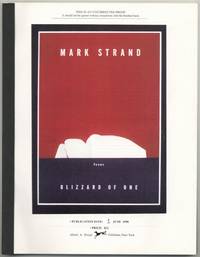
1998603350New York: Alfred A. Knopf 1998. Softcover. Fine. Uncorrected proof. Quarto. 55 2pp. Printed sheets in vellux wrappers. Fine. Winner of the Pulitzer Prize for poetry. Not designated as such but from the library of poet Donald Justice. Alfred A. Knopf unknown
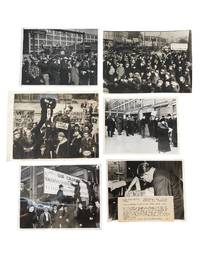
1937234461937. Labor Organization Chrysler strike press photo archive documenting the 1937 sit down strikes and picketing campaigns at Dodge Main and other Chrysler facilities in Detroit and Highland Park Michigan during the decisive phase of industrial unionization in the American automobile industry. The archive records workers occupying plants mass picket mobilizations outside factory gates anti injunction demonstrations and violence connected to the struggle between Chrysler management the United Automobile Workers and competing independent unions. These events unfolded only weeks after the February 1937 settlement of the Flint sit down strike against General Motors which established the UAW as a major industrial union and accelerated organizing efforts across Detroit's auto plants. Chrysler initially resisted recognition obtaining court injunctions ordering workers to evacuate occupied factories while thousands of laborers remained inside the plants or formed flying squadrons to block strikebreakers from entering. The scenes here capture the atmosphere of confrontation in Depression era industrial labor conflict at a time when mass production workers forced some of the largest corporations in the United States to negotiate with organized labor.<br /> <br /> Photo archive of 6 silver gelatin press photographs from 6 x 8 inches to 8 x 10 inches Detroit and Highland Park Michigan 1937. Affixed captions on versos with filing stamps dated March and August 1937. Crowds of striking workers gather outside Dodge Division and Chrysler factory gates beneath signs reading "Dodge Division of Chrysler Corporation Employment Office" and "We Are Here To Stay Dept. 82." Several men hold placards reading "82 is Sittin Too" "Spirit of 1937" and "Fence Jumper" while an effigy labeled "Injunction" hangs over the crowd in open defiance of a court order directing workers to vacate occupied plants. A large calendar board records the passing days of the sit down occupation beginning March 8 1937. Another scene shows relatives and supporters communicating with occupying workers through numbered department cards hung along the perimeter fence after union organizers established an improvised locating system for men inside the plant. One caption identifies "flying squadrons" directing picket activity outside Chrysler headquarters. The latest photograph records Frank A. Dillon identified as president of an independent Chrysler union receiving questioning from Detective Sergeant Harry Scher after an alleged beating connected to union violence that led Chrysler officials to temporarily close a plant pending investigation.<br /> <br /> The Chrysler strike formed part of the larger wave of industrial labor upheaval that reshaped American manufacturing during the New Deal. Passage of the Wagner Act in 1935 legally protected collective bargaining but enforcement depended on workers physically preventing corporations from continuing production with replacement labor. Sit down strikes became one of the most controversial tactics of the era because occupying workers halted machinery while denying employers access to their own factories. The archive preserves not only the mechanics of strike organization but also the public theater of industrial conflict in Depression era Detroit: marching pickets improvised communication systems anti injunction symbolism and massive worker assemblies outside factory gates. Moderate surface wear occasional creasing editorial markings and toning to versos with captions firmly affixed; images remain sharp and highly legible. Overall very good condition. unknown
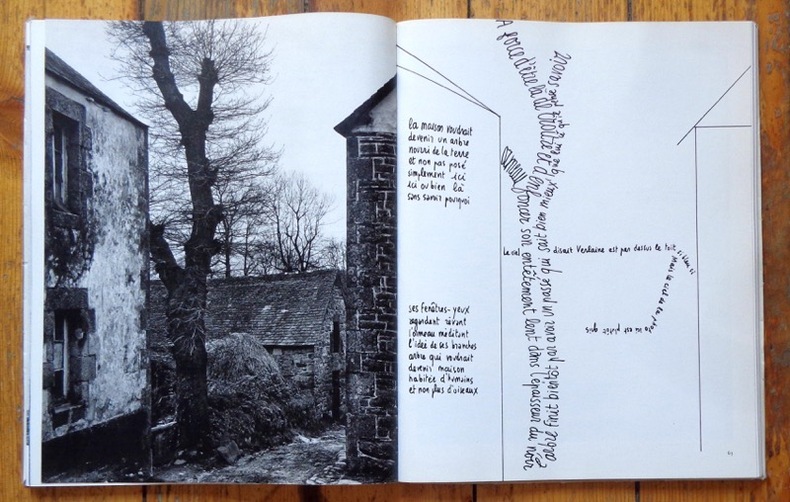
195211331Lausanne La Guilde du livre, 1952. In-4, cartonnage photographique, papier cristal d'éditeur. Petits accros au papier cristal, avec infime manque au dos, ne touchant pas la couverture, petite tache au premier plat (voir image).
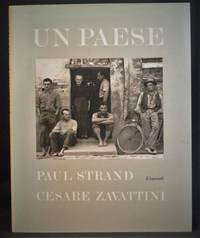
19552022-M61Giulio Einaudi editore S.p.A. 1955. Hardcover. Fine/Fine. Strand Paul. Italian screenwriter Cesare Zavattini joins with renown photographer Paul Strand to capture in word and photo the daily rhythms and spirit of Luzzara the birthplace of Zavattini. 2 tiny chips on back jacket less than 1 cm. Sunning to front cover of dust jacket. Pages are clean and unmarked. Giulio Einaudi editore S.p.A. hardcover
1964106048Iowa City: The Stone Wall Press 1964. Hard cover. Very good/No jacket. Limited edition of 225 copies printed by K. K. Merker. This copy out-of-series.<br /> <br /> Cover cloth is sunned around top edges. Binding is tight and inside is clean and unmarked. The Stone Wall Press unknown
196485420The Stone Wall Press 1964. #43/225 copies. Inscribed by the author to fellow author Al Lee. Good condition. Foxing to covers. The Stone Wall Press unknown
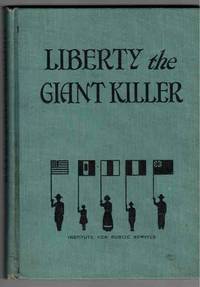
191932394New York: Institute for Public Service 1919. First edition. Blue cloth blocked in black back cover slightly marked; very good copy of a scarce book. 96 pp. illustrated. Lessons of the war for children. Largely written and illustrated with stick-figure drawings by the painter and future wife of photographer Paul Strand. <br/><br/> Institute for Public Service hardcover books
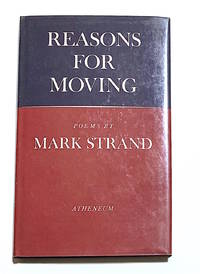
19681940New York: Atheneum 1968. First edition. 47 pp. Full deep blue cloth lettered in gilt and blind with the dust jacket. A fine copy of Strand's second book and first trade publication following the limited Stone Wall Press edition of his first book. The hardcover edition is uncommon. Signed by Strand on the title-page. Atheneum unknown
1955BOOKS092615ITorino: Giulio Einaudi Editore. Fine copy in fine dust jacket. 1955. 1st. hardcover. 4to 105 pp. . Giulio Einaudi Editore hardcover
1999017970West Chester PA: Aralia Press 1999. First Edition. Softcover. Fine. Letter with horizontal crease from mailing otherwise Fine. Sewn wraps 8 pages. Of a total of 130 copies this is one of 100 printed on Johannot Paper. Though not called for this copy is SIGNED by the poet on the limitation page and is additionally SIGNED by the poet Mark Strand on the front endpaper whose copy this was. Laid in is a fine AUTOGRAPH LETTER SIGNED as "Don" from Justice to Strand thanking him for a copy of Strand's WEATHER OF WORDS and giving his reaction to the book. Justice also mentions an article he enclosed no longer present as well as commenting on this book: "I don't remember whether you've seen it or not or whether you liked it or not. Frankly I have my own mixed feelings about it but at least it's different from most of what's going on now." <br/><br/> Aralia Press paperback
1984513655Vancouver British Columbia: William Hoffer 1984. Hardcover. Fine. First edition of this translation. Translated with an Introduction by Barry Asker. Quarto. 58pp. Quarter black morocco with raised bands spine lettered in gilt and marbled paper-covered boards. A fine bright copy in publisher's cardboard slipcase box. Special issue copy number 6 of 10 numbered copies handbound in leather by Charlotte Bagshawe published in a total edition of 106 numbered copies. William Hoffer hardcover
1955168762Torino Italy: Giulio Einaudi 1955. First edition. Hardcover. First printing. Text in Italian by Cesare Zavattini. A terrific collection of Strand's black and white photographs of rural life in Italy. A tight very near fine copy in a close to near fine dust jacket that has a few small edge tears and some of the usual fading to the spine and edges of the front panel. Still a nicer than usual copy. Giulio Einaudi unknown books
1971050524-M01Aperture Inc 1971. Inscribed by Paul Strand. 382 pages one volume edition to accompany exhibition at St. Louis City Art Museum inscribed "To Quinta Scott with best wishes Paul Strand St. Louis Feb 24 1972" Cover has wear spine bumped scuffed scratches small black mark on front cover. Signed. First Edition. Hard Cover. Good/No Dust Jacket. Illus. by Strand Paul. Folio. Aperture, Inc Hardcover
1955179175Torino Italy: Giulio Einaudi 1955. First edition. Hardcover. First printing. Features text in Italian by Cesare Zavattini. A terrific collection of Strand's black and white photographs of rural life in Italy. A tight very near fine copy in a close to near fine dust jacket that has a few small edge tears and some of the usual fading to the spine and edges of the front panel. Still a very nice copy. Giulio Einaudi unknown
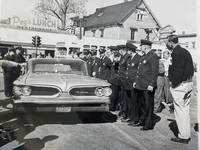
1960232971960. Labor OrganizingIndustry General Electric strike photo archive documenting the 1960 IUE Local 201 strike at the GE River Works plant in Lynn Massachusetts press photographs of workers and labor organizers resisting GE's take-it-or-leave-it bargaining practice at the factory gate. These images record the early days of the national IUE walkout. In the Fall of 1960 contract demands over wages cost of living protection and job security stalled when General Electric refused to bargain on terms acceptable to the union a move later condemned in federal litigation over the company's duty to bargain in good faith. Formal negotiations ran through 45 meetings from July into October 1960. The strike lasted three weeks and the dispute resulted in charges over unfair labor practice that became part of the major legal and labor history of "Boulwarism" GE's long campaign to dictate contract terms while exploiting division among the unions organized in its plants. <br /> Photo archive of 20 large silver gelatin press photographs measuring between 7 x 8 and 8 x 10 inches Lynn Massachusetts September-October 1960. The images show dense exterior picket scenes outside the GE plant with men and women carrying tall placards reading "LOCAL 201 IUE AFL CIO ON STRIKE" police officers linking arms and shoving crowds back from arriving automobiles and knotting lines of workers pressed against car hoods and fenders as management and police attempt to force entry through the picket. Several photographs isolate the mechanics of the strike itself: a car with rooftop loudspeaker positioned near the line an indoor union meeting beneath a huge banner attacking company leadership women pickets pointing and shouting across a fence line and a man stooping to gather tacks scattered across pavement with the caption explaining that picketers left tacks and nails at plant entrances to puncture the tires of management and scabs. One typescript caption reads "POLICE PUSH STRIKERS BACK" and states that officers acted "to clear way for cars entering or leaving the plant" while another notes that "A nationwide strike was called by the union Saturday at midnight." Additional versos carry date stamps for October 4 and 5 1960 typed caption slips and handwritten identifications such as "Mass. Lynn strikes G.E. Co." fixing the archive firmly within the first phase of the strike.<br /> Lynn held an important place in GE labor history well before 1960. Plant workers had challenged company control since the 1930s; by the postwar period the city had become one of the clearest sites where GE tested union-busting methods. This strike did not defeat GE on its own and the settlement came largely on company terms but resulting litigation condemning GE unfair bargaining practices became central to American labor organizing. The 1960 conflict thus stands as a precursor to the broader interunion coordination that emerged later in the decade and culminated in the national GE strike of 1969 to 1970 when unions finally forced a real challenge to Boulwarism. Scattered staining creasing and minor chipping at margins; most prints captioned on verso; overall good to very good condition. Primary source documentation of one of the country's most consequential corporate labor battlegrounds preserving the ground level struggle through which workers tested the limits of industrial union power in mid-century America. unknown
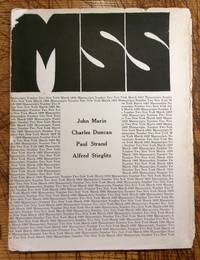
192214233New York 1922. Magazine. Poor. An unusual little publication. Kind of like a zine. Corners and edges have multiple chips and areas that have flaked away. there is some mild foxing. the cover is completely separated. It's fragile. Contains some meh poetry by Duncan Marin and Stieglitz and a terrific essay by Paul Strand. From an original edition of 2000 copies. . unknown
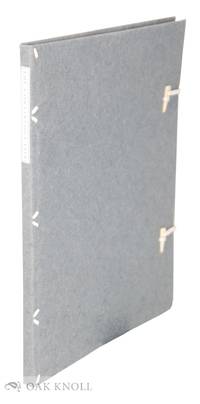
1990132910Iowa City IA: Windhover Press 1990. original handmade paper wrappers with Japanese style binding paper spine label cords on fore-edge. Windhover Press. folio. original handmade paper wrappers with Japanese style binding paper spine label cords on fore-edge. unpaginated. Two Woodcuts by Neil Welliver. Limited to 225 numbered copies printed on Windhover paper Berger 97 of which this is one of 26 deluxe lettered copies signed by Strand and Welliver. Two Woodcuts by Neil Welliver.<BR> <br /> <BR> <br /> Mark Strand b.April 11 1934 in Summerside Prince Edward Island - d. November 29 2014New York was a American man of letters. Strand who would go on to win many awards in his career including the Pulitzer Prize thought highly enough of this his first collection to include ten of these poems in his 1980 Selected Poems. Windhover Press unknown
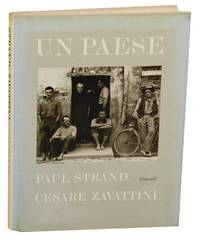
195572619E-131: Giulio Einaudi Editore S. P. A. Very Good in Very Good dust jacket. 1955. First Edition; First Printing. Hardcover. Hardcover. 4to. Giulio Einaudi Editore S. P. A. Milan Italy. 1955. 104 pgs. Includes 88 duotone illustrations. Text in Italian. First Edition/First Printing. DJ has light shelf-wear present to the DJ extremities. Bound in cloth boards with titles present to the spine. Boards have light shelf-wear present to the extremities. No ownership marks present. Text is clean and free of marks. Binding tight and solid. "Wherever I happened to be" wrote Paul Strand "I sought the signs of a long partnership that give each place its special quality and create the profiles of its people. . . . " In 1953 the renowned American photographer Paul Strand who was then living in France suggested to Italian screenwriter Cesare Zavattini that they do a book together about a small town in Italy a town that would reveal the spirit of a people. Strand asked Zavattini to choose a village with the elusive "special quality" he sought. Zavattini knew just such a village: his own birthplace of Luzzara in the Po Valley. The collaboration of these two remarkable artists resulted in the classic book Un Paese. Published in Italian in 1955 Un Paese captures in photographs and in spoken testimony the essential experience of daily life in Luzzara. It presents a series of intense portraits graceful landscapes and images of everyday objects. Paul Strand's photographs are carefully distilled deeply powerful; they contain the flavors and the rhythms of an entire culture crystallized in a single village. Zavattini successfully synthesizes text and image aligning with the new cinematic trend of the day a movement known as Italian neorealism. Their Luzzara is an ordinary village neither overly picturesque nor greatly unusual yet it is a town sustained by a grounded humanity and a profound love for the land by its people. ; Italian Edition; 4to 11" - 13" tall; 105 pages . Giulio Einaudi Editore S. P. A. hardcover
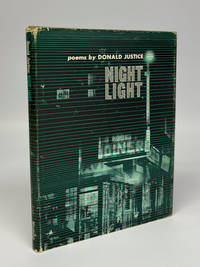
196712774Middletown CT: Wesleyan University Press 1967. First Edition. Hardcover. Near fine/very good. Squarish octavo 77pp. A crisp clean copy near fine in the publisher's grey cloth just a touch shaken and with the spine a tinge cocked. In a very good dust jacket with some light rubbing along the extremities. A presentation copy with a pleasing association SIGNED and INSCRIBED by Justice to fellow poet Mark Strand and his then-wife Antonia in the year of publication: "This copy is for Mark & Antonia who kept the light on. Don Justice March 1967." Laid in is a postcard postmarked in August of 1970 from Justice to Strand: "Aug 22. Dear Mark--Went to the horse races Monday decided to apply my new irrational 'system' of betting my age in perfectas & in the very 1st race on which I did so 45 came in paying $269.80 for $2. Today is our 23rd wedding anniversary--fantastic! Perhaps I should switch to betting 23 now. I might as well amuse myself if possible--I don't seem to be able to concentrate on any 'work' here: it's climate & family I think. Love Don." On pp. 40-41 there are some light pencil edits to the poem "The Missing Person" likely in either Justice's or Strand's hand. A meaningful presentation copy with some correspondence that sheds light on Justice's life in the years following the publication of his fourth book of poetry. Wesleyan University Press hardcover
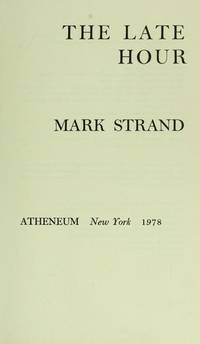
1978McClatchy-338Atheneum New York 1978 First printing. A fine copy in a fine jacket. A clean copy with price $6.95 intact on front flap. Comes with archival-quality jacket protector. This book came from the library of poet and literary critic J.D. McClatchy from his estate in Stonington Connecticut. This copy is SIGNED and inscribed by Strand to McClatchy "Sandy" on the half-title page. ASSOCIATION copy. Inscribed by Authors. 1st Edition. Hardcover. Fine/Fine. Atheneum, New York hardcover
1990140948332New York: Alfred A. Knopf 1990. Uncorrected proof. Very Good. Mark Strand's personal copy of the uncorrected proof issued before the first edition. Signed by him on the title page. viii 63 4 pp. Bound in publisher's off-white wraps lettered in black. Very Good with light edge wear faint soiling and foxing to covers with pen correction made at first leaf to "moons of light"; a creased portion of "Orpheus Alone" from another book laid-in at rear. A small collection of poems by the Pulitzer-winning poet. Provenance: from the estate of the late poet bookseller and publisher Charles Seluzicki who wound up with a number of books from Strand's library. Alfred A. Knopf unknown
1950203264New York: Oxford University Press 1950. First edition. Cloth. Slight lean; some rumples from dampness; near vg in rubbed duast jacket with a handful of chips and short tears. 4to 248pp; original cloth. Signed by Strand in blue ink on the dedication page scarce thus. Oxford University Press unknown
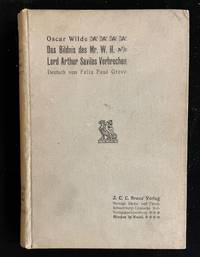
1903013011Minden in Westf: J. C. C. Burns 1903. 1st Edition Thus. Hardcover. Very Good. First German translation of Wilde's short story "The Portrait of Mr. W. H." first published in Blackwood's Magazine in 1889. It was later added to the collection Lord Arthur Savile's Crime and Other Stories 1891. The story is about an attempt to uncover the identity of Mr. W. H. the enigmatic dedicatee of Shakespeare's sonnets. which has led to speculation of the Bard's bisexuality. From the library of famous American art collector lawyer and bibliophile John Quinn 1870 - 1924 with his book plate designed by Yeats on the pastedown. 8vo gray cloth printed in black. 8 L 136. Art-Nouveau style endpapers. Book ticket from The Burrows Brothers Company Cleveland Ohio bottom rear pastedown. Covers moderately soiled slight lean to spine solid binding clean internals. Prelims include publisher's descriptions of its other Wilde titles. Scarce edition with a unique provenance. J. C. C. Burns hardcover
19611904New York: New York Committee for the General Strike for Peace 1961-1963. <br /><br />A collection of nine rare leaflets and letters concerning the General Strike for Peace which in the early 1960s sought a ban on the testing of nuclear weapons as well as global disarmament. This material belonged to Jackson Mac Low 1922-2004 poet performance artist and peace activist.<br /><br />Eight of these items were issued by the New York Committee for the General Strike for Peace for which Mac Low was one of the organizers. Julian Beck and Judith Malina of the Living Theatre were also organizers. The collection also includes a letter from the Committee for Nonviolent Action. <br /><br />The General Strike for Peace consisted of three different phases the first of which took place in early 1962 followed by additional calls to strike in November 1962 and then again in May 1963. <br /><br />On January 29 1962 more than 300 people marched down Fifth Avenue in New York calling for a worldwide general strike for peace. The New York Times was there: "The demonstrators' appearance ranged from button-down to beatnik with the latter somewhat more conspicuous in the heart of the fashionable shopping district. Pete Seeger and Gil Turner folk singers strummed songs against war and against civil defense." The New York Times January 30 1962 page 3.<br /><br />This collection includes material from each of the three phases of the General Strike for Peace. All appear to be photomechanically reproduced including the letters:<br /><br />--Three leaflets calling for a general strike from January 29 to February 4 1962. Two of these leaflets are identical titled general strike while a third titled general strike for peace appears to be an updated version with a fuller list of members on the Action Committee as well as the addition of International Sponsors. Each is a single sheet folded to create 4 pages measuring 8 1/2 x 5 1/2 inches when folded.<br /><br />--A Dear friend letter from the Committee for Nonviolent Action expressing sympathy for the General Strike but saying that the Committee could not undertake organizationally to work on this project. Single sheet measuring 11 x 8 1/2 inches.<br /><br />--A leaflet This is the SECOND CALL for a WORLD WIDE GENERAL STRIKE FOR PEACE set for November 5 to November 11 1962. Single sheet folded to create 4 pages measuring 8 1/2 x 5 1/2 inches when folded.<br /><br />--A Dear Friend letter from the New York Committee explaining the second call. The letter is signed by Donn Reed who was an antiwar activist. Stapled to the letter is a leaflet with the same text as the example listed immediately above although in a different color. Letter: Single sheet measuring 11 x 8 1/2 inches. Leaflet: Single sheet folded to create 4 pages measuring 8 1/2 x 5 1/2 inches when folded.<br /><br />--A leaflet general strike announcing a worldwide general strike for peace for May 8 1963. Single sheet folded to create 4 pages measuring 8 1/2 x 5 1/2 inches when folded.<br /><br />--A leaflet crisis strike seeking support for an emergency general strike for peace in times of crisis. Undated. Printed recto only. Single sheet measuring 8 1/2 x 5 1/2 inches.<br /><br />Provenance: From the collection of poet composer and performance artist Jackson Mac Low one of the organizers of the New York Committee. <br /><br />This material is rare. OCLC shows only one institutional holding at Northwestern for "This is the SECOND CALL." of 1962. The University of Kansas holds a copy of "general strike" of 1963. We assume there are other examples held by institutions probably in ephemera collections that have not been fully catalogued.<br /><br />A rare collection of General Strike material formerly owned by one of the organizers of the New York Committee the poet and performance artist Jackson Mac Low. <br /><br />CONDITION: Some modest creasing and soiling. Overall Very Good or better copies. New York Committee for the General Strike for Peace books