248 résultats
19611904New York: New York Committee for the General Strike for Peace 1961-1963. <br /><br />A collection of nine rare leaflets and letters concerning the General Strike for Peace which in the early 1960s sought a ban on the testing of nuclear weapons as well as global disarmament. This material belonged to Jackson Mac Low 1922-2004 poet performance artist and peace activist.<br /><br />Eight of these items were issued by the New York Committee for the General Strike for Peace for which Mac Low was one of the organizers. Julian Beck and Judith Malina of the Living Theatre were also organizers. The collection also includes a letter from the Committee for Nonviolent Action. <br /><br />The General Strike for Peace consisted of three different phases the first of which took place in early 1962 followed by additional calls to strike in November 1962 and then again in May 1963. <br /><br />On January 29 1962 more than 300 people marched down Fifth Avenue in New York calling for a worldwide general strike for peace. The New York Times was there: "The demonstrators' appearance ranged from button-down to beatnik with the latter somewhat more conspicuous in the heart of the fashionable shopping district. Pete Seeger and Gil Turner folk singers strummed songs against war and against civil defense." The New York Times January 30 1962 page 3.<br /><br />This collection includes material from each of the three phases of the General Strike for Peace. All appear to be photomechanically reproduced including the letters:<br /><br />--Three leaflets calling for a general strike from January 29 to February 4 1962. Two of these leaflets are identical titled general strike while a third titled general strike for peace appears to be an updated version with a fuller list of members on the Action Committee as well as the addition of International Sponsors. Each is a single sheet folded to create 4 pages measuring 8 1/2 x 5 1/2 inches when folded.<br /><br />--A Dear friend letter from the Committee for Nonviolent Action expressing sympathy for the General Strike but saying that the Committee could not undertake organizationally to work on this project. Single sheet measuring 11 x 8 1/2 inches.<br /><br />--A leaflet This is the SECOND CALL for a WORLD WIDE GENERAL STRIKE FOR PEACE set for November 5 to November 11 1962. Single sheet folded to create 4 pages measuring 8 1/2 x 5 1/2 inches when folded.<br /><br />--A Dear Friend letter from the New York Committee explaining the second call. The letter is signed by Donn Reed who was an antiwar activist. Stapled to the letter is a leaflet with the same text as the example listed immediately above although in a different color. Letter: Single sheet measuring 11 x 8 1/2 inches. Leaflet: Single sheet folded to create 4 pages measuring 8 1/2 x 5 1/2 inches when folded.<br /><br />--A leaflet general strike announcing a worldwide general strike for peace for May 8 1963. Single sheet folded to create 4 pages measuring 8 1/2 x 5 1/2 inches when folded.<br /><br />--A leaflet crisis strike seeking support for an emergency general strike for peace in times of crisis. Undated. Printed recto only. Single sheet measuring 8 1/2 x 5 1/2 inches.<br /><br />Provenance: From the collection of poet composer and performance artist Jackson Mac Low one of the organizers of the New York Committee. <br /><br />This material is rare. OCLC shows only one institutional holding at Northwestern for "This is the SECOND CALL." of 1962. The University of Kansas holds a copy of "general strike" of 1963. We assume there are other examples held by institutions probably in ephemera collections that have not been fully catalogued.<br /><br />A rare collection of General Strike material formerly owned by one of the organizers of the New York Committee the poet and performance artist Jackson Mac Low. <br /><br />CONDITION: Some modest creasing and soiling. Overall Very Good or better copies. New York Committee for the General Strike for Peace books
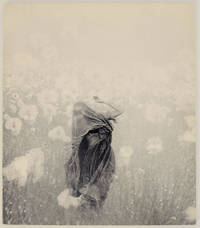
1967168889New York: Da Capo Press 1967. First edition thus. Single plate from Strand's Mexican Portfolio which was published in an edition of 1000 copies. A beautifully printed photogravure on a sheet that measures 12.375" wide by 15.875" high and with the image measuring 8" wide by 10" high. A very near fine copy and ready to be framed. Da Capo Press unknown books
1998120458New York: DCA Gallery 1998. First edition. Softcover. Exhibition catalog for a show that ran May 16 through June 20 1998. Essays by Ann Lumbye Sorensen and Jacob Greve. Includes numerous black and white illustrations. A very near fine copy in white printed wrappers. Seemingly fairly uncommon. DCA Gallery unknown books
2000Embry 178149Turtle Point Press 2000. First edition. Fine in fine dust jacket in mylar cover. Turtle Point Press, 2000. First edition. unknown books
200048125NY: Turtle Point Press 2000. Uncorrected proof. 91 pp. Very near fine in printed wrappers. Laid into a near fine dust jacket mis-folded but as issued with a light fade to spine. NY: Turtle Point Press, unknown books
2000WRCLIT49693New York: Turtle Point Press 2000. Small octavo. Printed wrappers. Uncorrected page proofs of the first edition. Small rub and corner crease else fine with promo material laid in. Turtle Point Press unknown books
19161576New York: Alfred Stieglitz 1916. 1st Edition. Hardcover. Very Good. FIRST EDITION OF ONE OF THE MOST CELEBRATED ISSUES OF CAMERA WORK: Issue number 48 introducing the work of Paul Strand. Complete with 9 original photogravures including 1 by Frank Eugene 6 by Paul Strand 1 by Arthur Allen Lewis and 1 by Francis Bruguière as well as 6 half-tone reproductions after photographs of '291' by Alfred Stieglitz. With original texts by Marius De Zayas and Marsden Hartley. "When in 1915 Stieglitz saw Strand's radically new approach to photography which embraced the inherent characteristics of the medium and its materials together with the ideas of the artistic avant-garde he felt committed once again to communicate in Camera Work the importance of photography as a vital art form. Stieglitz had been striving for precisely this synthesis of formal abstraction and poetic expressiveness a synthesis which embodied an American aesthetic and syntax. In his October 1916 issue of Camera Work Stieglitz wrote of Strand: 'His work is rooted in the best traditions of photography. His vision is potential. His work is pure. It is direct. It does not rely upon tricks of process. In whatever he does there is applied intelligence. In the history of photography there are but few photographers who from the point of view of expression have really done work of any importance. And by importance we mean work that has some relatively lasting quality that element which gives all art its real significance'" Kaspar M. Fleischmann in American Photography: Local and Global Contexts. Photogravures entitled in the order they appear The Cat by Frank Eugene New York Wall Street Telegraph Poles New York Fifth Avenue and 42nd Street New York Rooftops New York Washington Heights New York and New York City Hall Park by Paul Strand; Winter by Arthur Allen Lewis; and A Portrait by Francis Bruguière. Containing original articles entitled "From '291'-July-August Number 1915" by Marius De Zayas and "Epitaph for Alfred Stieglitz" by Marsden Hartley. New York: Alfred Stieglitz October 1916. Quarto 23 cm x 35 cm approx. 9" x 12" original gray wrappers; custom box. General edgewear to fragile wrappers with upper hinge split. VERY RARE COMPLETE IN THE ORIGINAL WRAPPERS. Alfred Stieglitz hardcover books
161923330N. Y.: Camera Work 1916-1917. First only editions oftThe final two issues of Alfred Stieglitz's monumental photographic periodical Camera Work including in number 48 the earliest appearance in print of the work of Paul Strand and in number 50 an issue entirely dedicated to the work of Strand. Limited to 500 copies printed. "The work of Paul Strand was the first photography to excite Stieglitz in a long time. He saw Strand as practicing a truly photographic version of the kind of forceful representation he found in painters like Picasso and Matisse and he presented Strand's work as a clean break even changing the time-tested production methods of Camera Work Strand's photogravures were printed on thicker paper and with different inks." - Roth 101 pp. 42-43. Issue No. 48 includes six photographs by Strand six halftones by Steiglitz of installations at his gallery 291 and single photographs by Frank Eugene Arthur Allen Lewis and Francis Bruguiere. Issue No. 49/50 includes eleven original photogravures all after work by Strand among them "The White Fence" "Abstraction Porch Shadows" and "Abstraction Bowls". One cannot overestimate the importance of these two issues of Camera Work. As Milton Brown has noted the appearance of Strand's portrait series herein "was a revelation. Even today they are strikingly powerful images; they were then a new stage in photographic realism. The close-up views and cropping of negatives cut off the subjects from their environment sometimes even breaking the frame and riveting attention entirely on the physiognomic and psychological revelation of individuality character and social condition. . . . Strand's experiments with abstraction and the machine were his unwitting contribution to the history of photography: the portraits basic to the rest of his development are the first clear expression of his own aesthetic philosophy." - Milton W. Brown "The Three Roads" in Paul Strand: Essays on His Life and Work. Edited by Maren Stange. Aperture 1990 p. 29. Although not noted in the volumes these two issues of Camera Work came from the collection of James Johnson Sweeney at various times the Curator of Painting and Sculpture at MOMA the second Director of the Guggenheim Museum and the Director of the Museum of Fine Arts Houston. . Among the most sought-after issues of Camera Work these two numbers are complete and in remarkable condition. The plates are clean free of foxing and creasing. The text blocks are clean bright and sound largely unopened. A bit of offsetting from plates to the facing pages as usual somewhat more pronounced in No. 49/50 but not affecting the images themselves. Wrappers are clean with only very light wear; the hinges are firm and there is no creasing or darkening of the spines. Overall both issues are in near fine and extremely scarce thus. . 2 volumes small folio illustrated with 9 and 11 original photogravures respectively original printed wrappers. Among the most sought-after issues of Camera Work these two numbers are complete and in remarkable condition. The plates are clean free of foxing and creasing. The text blocks are clean bright and sound largely unopened. A bit of offsetting from plates to the facing pages as usual somewhat more pronounced in No. 49/50 but not affecting the images themselves. Wrappers are clean with only very light wear; the hinges are firm and there is no creasing or darkening of the spines. Overall both issues are in near fine and extremely scarce thus. . Camera Work unknown books
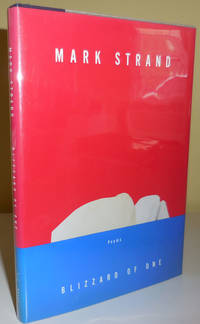
199841199NY: Knopf 1998. First Edition. 8vo pp. 55. A nice copy in slightly scratched dj. One time poet laureate of the US. Knopf unknown books
199989062NY:: Knopf. Fine in Fine dust jacket. 1999. Hardcover. 0375401393 . Pulitzer Prize winner. Sixth printing. SIGNED by the author on the title page. Fine in a fine dust jacket. ; Signed by Author . Knopf, hardcover books
199880442NY:: Knopf. Fine in Fine dust jacket. 1998. Hardcover. 0375401393 . Pulitzer Prize winner. Stated first edition. Fine in a fine dust jacket. . Knopf, hardcover books
199829371New York: Alfred KNopf 1998. First edition. Hardcover. Fine/fine. Hardbound volume of poems by Strand. Stated first edition. A handsome fine copy in unclipped dustwrapper. SIGNED by Strand on the title page. Alfred KNopf hardcover books
199931261New York: Alfred Knopf 1999. First edition slim 8vo pp. 10 55 4; fine copy in the dust jacket. Inscribed on the title-p. "To Gwin and Ruth Kolb / Mark Strand." In 1990 Strand was chosen Poet Laureate of the United States and he is the winner of the Pulitzer Prize. Gwin Kolb was an eminent Johnsonian scholar and longtime professor at the University of Chicago. <br/><br/> Alfred Knopf unknown books
2013019488Philadelphia PA: Coachbuilt Press. Fine. 2013. First Edition; First Printing. Hardcover. 0988273314 . Black boards with gilt embossing. Dust jacket with title on front and spine. In fine condition. This collection of photographs by various photographers showcases the details of automotive jewelry found in the front or rear of exquisite vehicles. ; B&W & Color Photographs; 4to 11" - 13" tall; 287 pp . Coachbuilt Press hardcover books
2013009854rosPhiladelphia: Coachbuilt Press. Fine with no dust jacket. 2013. First Edition. Hardcover. Black cloth boards with silver imprint. Extra shipping required due to the large size. A striking collection of color photographs of ornaments and emblems from the 1937 Cadillac V-16 Aero-Coupe to a 1955 Porsche 550 Spyder. ; Color Photographs; 12 1/4" x 9 3/4"; 287 pp . Coachbuilt Press hardcover books
195272453N.P.: n.p. 1952. stiff paper wrappers dust jacket. Bookbinding. 8vo. stiff paper wrappers dust jacket. pp. 9-391 followed by 17 plates showing bindings. Text in Swedish. Limited to 100 copies according to a handwritten note in the back. A study of the binding work executed by August Sandgren. With a presentation from the author dated 1952 on the inside of the front cover. Jacket is split along hinge. With the Randeria bookplate. n.p. unknown books
1983175930New York: C.N. Potter 1983. Hardcover. VG/VG- light tanning to dust jacket edges and corner snipped. Green cloth boards with gilt lettering on spine color illustrated dust jacket 240 pp 111 full color paintings and 78 bw drawings paintings and pastels. This book presents the work of nine of today's foremost figurative painters; Lennart Anderson William Bailey Jack Beal Jane Freilicher Alex Katz Louisa Matthiasdottir Philip Pearlsteain Wayne Thiebaud and Neil Welliver. -from dust jacket. C.N. Potter hardcover books
198369078New York: Clarkson N Potter Inc. Very Good. 1983. Hardcover. 0517547597 . Former owner name on the front free endpaper. Green cloth with gilt printing to the spine. Very Good in a nice dust jacket. ; 239 pages . Clarkson N Potter, Inc. hardcover books
201610196Norway 2016. Limited Edition. Hardcover. Fine. Tight bright and unmarred. Black stiff board black cloth spine Japanese string binding relief prints hand printed using hand cut stencils on 11-12 gram Japanese paper. Oblong fo. np each iteration has 4 to 7 sheets. Illus. color plates. Numbered limited edition this being 3 of 5 copies. <br/><br/>Some of the books in the series were made into a film and the film becoming an artwork unto itself. The film was awarded the Critic’s Prize on the juried regional exhibition in Trondheim 2017. <br />“The paper is translucent soft airy and completely silent. Quick movements of the papers is physically impossible. Each sheet has one visual element a shape which is mirrored as you turn the page. The fragile paper is printed with motives developed from Arabic ornamentation. This expression was originally created out of mathematics and geometry to avoid imagery that might lead to idolatry. I wanted to combine the book as a system with this geometry to see what that could bring. I find it fascinating how the images switch between flat and spatial" and that despite the strict patterns associations may vary and go towards modernism the oriental and paradoxically also towards figuration. The transparency causes overlaps between the pages that create new shapes and new colors. <br />The sheets melt together in a way which makes it almost impossible for the reader to predict the next sheet’s exact pattern and color or to remember precisely the last motif. It plays with the illusions of form color space and order. The image is transformed with each turn of a page and becomes ephemeral. A book starts to exist the moment its pages are turned. Since the book is a media of intimacy presence and touch haptic communication inevitably establishes meaning in itself a communication which invariably will be in some kind of relation to the mental content. It is an arena where perception and thinking operate together it might also bring awareness of your own perception. <br />Books have been holy objects for many different reasons. The fragility of the paper and the actions necessary may add a ritualistic element to the act of reading. I see the reader’ act as a performance a slow motion ballet. In a materialistic culture of mass consumption and noisy offensive expressions I find it appropriate to react by focussing on tranquility care and consideration. Like mandalas which often are written in sand to be washed away I have tried to create a space for a contemplative experience displaying the ever changing character and relativeness of existence where different elements always are colored and influenced by their surroundings.” Artist statement <br />Randi Annie Strand visual artist born in Norway 1962. Lives in Oslo. MA from Bergen Academy of Art and Design 92. Language signs and sensory experiences are central elements in her works. Her ideas have been realised through different media and techniques. hardcover books
201510194Norway 2015. Limited Edition. Hardcover. Fine. Tight bright and unmarred. Black stiff board black cloth spine Japanese string binding relief prints hand printed using hand cut stencils on 11-12 gram Japanese paper. Oblong fo. np each iteration has 4 to 7 sheets. Illus. color plates. Numbered limited edition this being 1 of 3 copies. <br/><br/>Some of the books in the series were made into a film and the film becoming an artwork unto itself. The film was awarded the Critic’s Prize on the juried regional exhibition in Trondheim 2017. <br />“The paper is translucent soft airy and completely silent. Quick movements of the papers is physically impossible. Each sheet has one visual element a shape which is mirrored as you turn the page. The fragile paper is printed with motives developed from Arabic ornamentation. This expression was originally created out of mathematics and geometry to avoid imagery that might lead to idolatry. I wanted to combine the book as a system with this geometry to see what that could bring. I find it fascinating how the images switch between flat and spatial" and that despite the strict patterns associations may vary and go towards modernism the oriental and paradoxically also towards figuration. The transparency causes overlaps between the pages that create new shapes and new colors. <br />The sheets melt together in a way which makes it almost impossible for the reader to predict the next sheet’s exact pattern and color or to remember precisely the last motif. It plays with the illusions of form color space and order. The image is transformed with each turn of a page and becomes ephemeral. A book starts to exist the moment its pages are turned. Since the book is a media of intimacy presence and touch haptic communication inevitably establishes meaning in itself a communication which invariably will be in some kind of relation to the mental content. It is an arena where perception and thinking operate together it might also bring awareness of your own perception. <br />Books have been holy objects for many different reasons. The fragility of the paper and the actions necessary may add a ritualistic element to the act of reading. I see the reader’ act as a performance a slow motion ballet. In a materialistic culture of mass consumption and noisy offensive expressions I find it appropriate to react by focussing on tranquility care and consideration. Like mandalas which often are written in sand to be washed away I have tried to create a space for a contemplative experience displaying the ever changing character and relativeness of existence where different elements always are colored and influenced by their surroundings.” Artist statement <br />Randi Annie Strand visual artist born in Norway 1962. Lives in Oslo. MA from Bergen Academy of Art and Design 92. Language signs and sensory experiences are central elements in her works. Her ideas have been realised through different media and techniques. hardcover books
1968171937New York: Aperture 1968. First edition. Softcover. 62 pages. Inclues images from Henri Cartier-Bresson Paul Strand Manuel Alvarez Bravo and John Spence Weir. Includes reviews of two books by Harry Callahan as well. A close to near fine copy in wrappers with some very minor wear. Aperture unknown books
1994122685New York: Aperture Foundation Inc 1994. First edition. Softcover. An intimate portrait by Catherine Duncan. Includes over 120 black and white photographs from Strand's travels throughout the world. A very near fine copy in wrappers. Aperture Foundation, Inc unknown books
197626774New York: Ecco Press 1976. First edition. Cloth. Very Good /very good. Clothbound 8vo in dustwrapper. 247 pp. A collection of poems and short fictions by so17 European and South American writers as translated by a host of talented folk. Writers include Italo Calvino Henri Michaux Francis Ponge and oCtavio Paz among others. A very good clothbound copy in lightly used dustwrapper with a couple of very short tears. This copy has been SIGNED BY BOTH SIMIC AND STRAND who edit this collection. Quite uncommon thus. Ecco Press unknown books
197637097NY:: Ecco Press. Near Fine in Near Fine dust jacket. 1976. Hardcover. 0912946288 . Includes contributions by Henri Michaux Julio Cortazar Octavio Paz Czeslaw Milosz Paul Celan Yannis Ritsos and Italo Calvino among others. First edition. Near fine in a near fine dust jacket. . Ecco Press, hardcover books
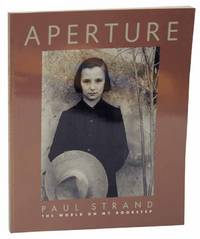
1990007110Washington D.C.: Aperture Foundation 1990. First Edition. Hardcover. Fine/Fine. Attractive copy of this oversize clothbound book featuring the work of Paul Strand with text by Sarah Greenough. Fine copy in fine unclipped dustwrapper. <br/><br/> Aperture Foundation hardcover books