603 résultats
1976mon0000187383Harvard University Press 1/1/1976 12:00:01 AM. hardcover. Good. 1.0000 in x 8.4000 in x 5.5000 in. very clean hardcover wtih jacket. text has a very few pen underlines. sold binding. dj has light edge wear minor corner bumping and tear at top by spine. ISBN matches listing Harvard University Press hardcover
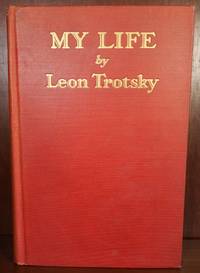
19304718New York: Charles Scribner's Sons 1930. First American Edition. First American edition with the Scribner "A" and Seal present on the copyright page. Measuring approximately 9" x 6" with 599 numbered pages. <br /> <br /> This book is in very good minus condition. Minor surface wear and staining to the red cloth boards. Spine is sun-faded. Front hinge cracked at the title page. <br /> <br /> Please view the many other rare titles available for purchase at our store. We are always interested in purchasing individual or collections of fine books.<br /> <br /> Inventory# N7-67. Charles Scribner's Sons unknown
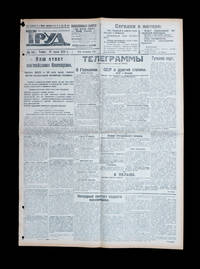
1924109<p>The Soviet newspaper Trud with an interview with Leon Trotsky in the Japanese newspaper Osaka Mainichi about Soviet-Japanese relations. 1924. Stalin era. Newspapers and books mentioning Leon Trotsky were confiscated from stores and libraries and destroyed.</p><p>The newspaper also published an article by Kamenev later declared an enemy of the people and executed about Lenin.</p><p>The newspaper was stored folded and will be shipped folded. The yellowing of the pages the deterioration of the paper and minor tears and creases are due to storage folded.</p><p>Trud Russian: Труд English: Labor is a Russian newspaper.</p><p>Trud's first issue was on February 19 1921 in Moscow in what would soon become the Soviet Union. Under the Soviet state the paper published the work of famous writers and poets including Vladimir Mayakovsky Nikolai Rubtsov Yuri Nagibin and Yevgeny Yevtushenko. Prior to the dissolution of the Soviet Union Trud was the press organ of the All-Union Central Council of Trade Unions.</p>
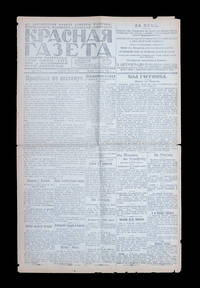
1921110<p><strong>A Soviet newspaper from the Russian Civil War "Krasnaya Gazeta" Krasnaya Gazeta Russian: КраÑÐ½Ð°Ñ Ð“Ð°Ð·ÐµÑ‚Ð° English: Red Newspaper with an military order from Leon Trotsky. 1921. Stalin era. </strong></p><p>Newspapers and books mentioning Leon Trotsky were confiscated from stores and libraries and destroyed.</p><p>The newspaper was stored folded and will be shipped folded. The yellowing of the pages the frayed paper and small tears and creases are due to the newspaper being stored folded.</p><p>Krasnaya Gazeta Russian: КраÑÐ½Ð°Ñ Ð“Ð°Ð·ÐµÑ‚Ð° English: Red Newspaper was a daily newspaper of Soviet Russia the USSR founded in Petrograd by V. Volodarsky. The first issue was published on January 25 1918. It was published by the party and state authorities: at various times it served as the organ of the central provincial and city committees of the All-Union Communist Party Bolsheviks and the Petrograd Soviet Lensovet. The newspaper described important political events taking place in Petrograd-Leningrad throughout the country and abroad. Considerable attention was devoted to the daily life of the city. In its early years Krasnaya Gazeta without exaggeration can be called one of the main revolutionary newspapers in the country and also characterized as "the second most important propaganda mouthpiece of the St. Petersburg Bolsheviks after Petrogradskaya Pravda."</p>
1930009077New York: Charles Scribner's Sons 1930. 1st Edition 1st Printing. Hardcover. Very good plus. First American edition with Scribner "A" on copyright page. Very good plus with spine a bit sunned and touch of wear at top. Attractive bookplate on front pastedown and neat repair to paper along rear hinge otherwise clean and unmarked. A very nice copy. <br/> <br/> Charles Scribner's Sons hardcover
1989x-0810319519Gale / Cengage Learning 1989. Hardcover. New. 11.50x7.75x2.00 inches. Gale / Cengage Learning hardcover
1990x-081031956XGale / Cengage Learning 1990. Hardcover. New. 350 pages. 11.50x8.75x1.50 inches. Gale / Cengage Learning hardcover
1989x-0810319527Gale / Cengage Learning 1989. Hardcover. New. 500 pages. 11.25x8.00x1.25 inches. Gale / Cengage Learning hardcover
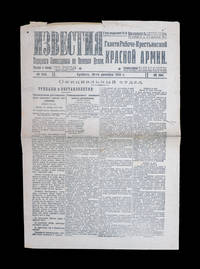
1919111<p><strong>A Soviet newspaper from the Russian Civil War era "Izvestia of the People's Commissariat for Military Affairs" Russian: ИзвеÑÑ‚Ð¸Ñ Ð½Ð°Ñ€Ð¾Ð´Ð½Ð¾Ð³Ð¾ комиÑÑариата по военным делам with a military order from Leon Trotsky. 1919. Newspapers and books mentioning Leon Trotsky were confiscated from stores and libraries and destroyed.</strong></p><p>The newspaper was stored folded and will be shipped folded. Yellowing of the newspaper pages and frayed paper small tears and creases from storing the newspaper folded as well as repairing the tears with tape.</p><p>"Izvestia of the People's Commissariat for Military Affairs" also "Izvestia of the People's Commissariat for Military and Naval Affairs" was the official periodical of the People's Commissariat of War of the RSFSR published during the Civil War specifically in 1918–1919. It published decrees resolutions of the Defense Council and the most important orders. The documents of this commissariat headed by L. D. Trotsky and previously N. I. Podvoisky covered a wide range of topics.</p>
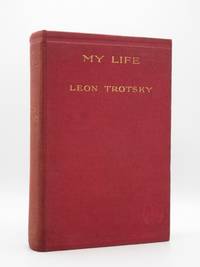
19301211J077London: Thornton Butterworth Ltd. 1930. 1st Edition . Hardback. Printed pages: 512. Very Good. 6.5 x 9.5 inches 16.5 x 24 cm. Lacking jacket. Red cloth binding with gilt title to front board and spine. Light stain to lower corner of rear board. Light browning to page edges offsetting to leading blank and final page of text. Ecclesiastical library stamps to title page and final page of text title page stamp has also offset to the frontis there are also three inked numbers to front pastedown endpaper two crossed out. Small stain to outer margin of pages 47-50. Good solid binding. Very clean text throughout. First English language edition of Trotsky's autobiography following a Russian language paperback edition published in Germany in the same year. Scarce. Overall condition is Very Good. Size: 6.5 x 9.5 inches 16.5 x 24 cm. Thornton Butterworth Ltd. hardcover
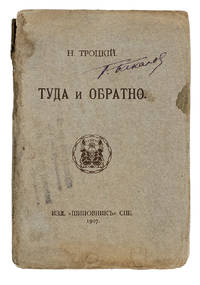
1907ABC_45588St. Petersburg: Shipovnik 1907. Original publisher's printed wrappers. With a lithographed device on the front cover. Rare first edition of Leon Trotsky's seventh publication in the original Russian set in Cyrillic type. In this pre-revolutionary work he describes his second exile to Siberia in 1906 and his return in 1907.Owner's inscription in ink on front cover and title-page. Covers slightly dirty and frayed head of spine worn. Faint stain in the foot margin of the first 15 pages. Otherwise in good condition.l Robert Service Trotsky: a bibliography p. 567; WorldCat 83038814 1 copy; not in Kerssemakers Social liberation. Shipovnik, unknown
1930015345Thornton Butterworth. Publisher's red cloth with gilt topstain spine sunned corners bumped. Light toning and foxing on end pages but not body of the book. Frontis bright. 1/4" tear in title page. . Very Good. Hardcover. 1st Edition. 1930. Thornton Butterworth hardcover
1930463h5704London: Thornton Butterworth Limited. Fair. 1930. First English Edition. Hardcover. 6-512 pp. Index. Black and white photo frontispiece photo of Trotsky 1879-1940. A sound working copy of this tumultuous and impactful life story published in the year following Trotsky's exile from the Soviet Union and ten years before his murder in Mexico. No dust jacket. Faint prior owner's name upon front free endpaper otherwise unmarked. Moderate scattered foxing. Somewhat above-average wear to publisher's red cloth which is sunned on spine and lettered in gilt. Binding intact with moderate lean. Chip from top corner of pages 7-16. Smele 273.; 8vo - over 7¾ - 9¾" tall; Leon Trotsky - biography Leon Trotsky - autobiography Russian Revolution Soviet Union - history Communism Trotskyism Lev Bronstein Marxists Marxism Marxist Revolutionaries October Revolution . Thornton Butterworth, Limited hardcover
1930013524New York: Charles Scribner's Sons 1930. Small faint stain on rear cover; browning on endpapers from old newspaper clippings. Has the letter "A" on the verso of the title page. First Edition In English. Original Red Cloth. Very Good/No Jacket. Charles Scribner's Sons Hardcover
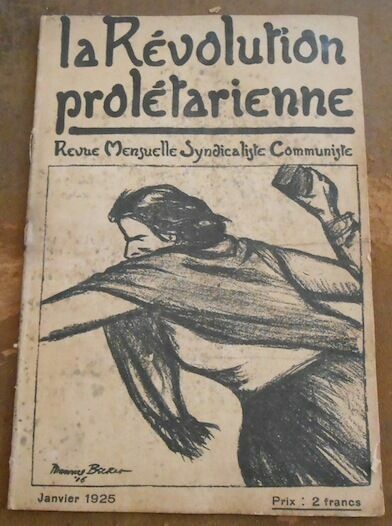
1925124121925. Paris La Révolution Prolétarienne du n°1 (janvier 1925) au n°112 (5 décembre 1930) ; D'abord mensuelle la revue est bimensuelle à partir de 1927 - Brochés 18 cm x 26 5 cm puis 20 5 cm x 26 5 cm à partir du n°49 (1 janvier 1928) 32 pages par numéro puis 16 puis 32 ; seule la couverture du premier numéro est illustrée ; de blanche elle deviendra orange au n°49 - Textes de Pierre Monatte Alfred Rosmer Maurice Chambelland Robert Louzon Léon Trotsky J. Péra R. Mouzeau V. Godonnèche G. Lacoste V. Delagarde Marthe Bigot C. Talès Marcel Martinet Boris Souvarine E. Berth Romain Rolland B. Giauffret Frans Liebaers Fernand Loriot Upton Sinclair Max Eastman etc.. - Etat moyen tous ces numéros ayant été mal reliés avec une toile collée ! mais ils sont complets - Très rare tête de collection
196751312160006Sphere Books 1967. Paperback. Very Good. Very good SET OF 3 paperbacks. in slipcase. Pages are clean and unmarked. Covers show minor shelf wear. 2 books have minor corner bump/bend. Slipcase shows light edge wear with rubbing.; 100% Satisfaction Guaranteed! Ships same or next business day! Sphere Books paperback
1937015351Doubleday Doran & Co. Stated First Edition. Unclipped DJ in archival cover edge wear small chips. . Fine. Hardcover. 1st Edition. 1937. Doubleday, Doran, & Co. hardcover
19231<p>The unfindable first edition of one of the most important books of Leon Trotsky Lev Davydovich Bronstein 1879-1940 in which one of the main architects of the Russian revolution and Stalin´s principal opposite desploys his literary theories and performs a crytical analysis of the cultural panorama of the early USSR. The entire run of the book has been destroyed during the anti-Trotskyist campaign. The possession was punishable during the Soviet period. This is one of the scarce surviving copies in a near flawless condition. Conserves the original editor´s full-cloth binding.</p><p>392 pages.</p> Krasnaya Nov hardcover
1930469117Berlin: Granit 1930. Hardcover. Very Good. First edition. Text in Russian. Two volumes. 12mos. Bound in red cloth over boards without the wrappers gilt spines. The text pages are modestly toned vol. 1 has a few light marginal check marks in pencil vol. 2 has one small quarter-inch line of worming at the back upper right corner and is slightly cocked very good overall. The rare first edition of Trotsky’s now classic autobiography My Life: An Attempt at an Autobiography. Written and published in the first year of Trotsky’s exile it covers both revolutions of 1905 and 1917 the Russian Civil War and the beginning of his epic conflict with Stalin. A plain attractive set appropriately bound in red cloth boards. Granit] hardcover
193678255Paris: Grasset 1936. Fine. Grasset Paris 1936 11.50 x 18.50 cm relié First edition of the French translation by Victor Serge one of 26 numbered copies on deluxe paper the only large-paper issue. Half red morocco binding spine with five raised bands grey paper endpapers and boards original wrappers and spine preserved top edge gilt signed binding by Goy & Vilaine. Born in Belgium to anti-tsarist émigré parents Victor Serge became politically engaged from the age of fifteen militating within the ranks of the Young Socialist Guard. An antimilitarist and libertarian he took part in numerous anarchist demonstrations and was sentenced for having sheltered members of the Bonnot Gang. In 1919 he placed himself at the service of the revolution and became a member of the Russian Communist Party before strongly condemning the Stalinist degeneration of the Soviet state. Expelled from the Party and stripped of his Soviet nationality he was ultimately banished from the U.S.S.R. in 1936 a few months before the first Moscow Trial. Close to Leon Trotsky he translated several of his works before distancing himself from him judging his ideology to be overly sectarian. A rare and very fine copy of this essay written by Trotsky during his exile in Norway which would not be published in the U.S.S.R. until 1991. Grasset hardcover
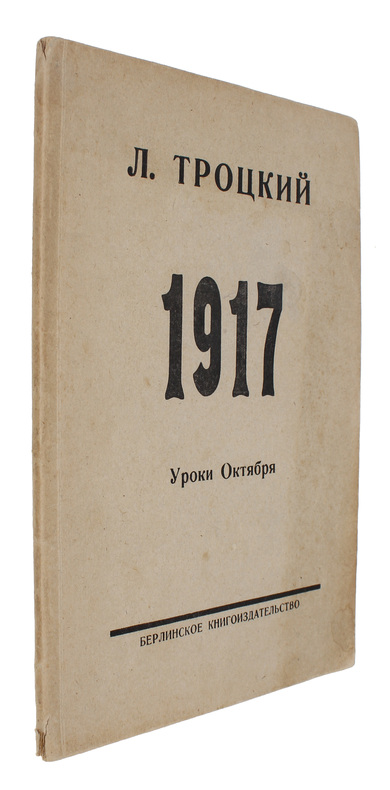
192458185(Berlin, 1924). Original printed wrappers. A bit of browning to wrappers and a bit loose at the inner hinges. But overall in very nice condition. 59pp.
192458185Berlin 1924. Original printed wrappers. A bit of browning to wrappers and a bit loose at the inner hinges. But overall in very nice condition. 59pp. <br/><br/><em>First edition in the extremely scarce separate off-print of this seminal essay which appeared in October 1924 as the preface to the third volume of Trotsky's collected works. The essay now counts as a work in its own and was subsequently reprinted numerous times on its own by the Trotskyist movement. This seminal essay came to play a defining role in the development of post-Lenin politics in Russia. It was extremely critical of the purported revolutionary failings of two key members of the collective leadership that ruled Soviet Russia in the months after Lenin's death Grigory Zinoviev and Lev Kamenev and Trotsky was seen as main threat to the accession of power. The publication of his foundational essay on the October Revolution was used as a pretext for the Soviet leadership to isolate and attack Trotsky. It now constitutes a cornerstone of post-Revolutionaly Russian politics. "When Lenin was stricken with his first cerebral hemorrhage in May 1922 the question of eventual succession to the leadership of Russia became urgent. Trotsky owing to his record and his charismatic qualities was the obvious candidate in the eyes of the party rank and file but jealousy among his colleagues on the Politburo prompted them to combine against him. As an alternative the Politburo supported the informal leadership of the troika composed of Grigory Zinovyev Lev Kamenev and Stalin.In the winter of 1922-23 Lenin recovered partially and turned to Trotsky for assistance in correcting the errors of the troika particularly in foreign trade policy the handling of the national minorities and reform of the bureaucracy. In December 1922 warning in his then secret "Testament" of the danger of a split between Trotsky and Stalin Lenin characterized Trotsky as a man of "exceptional abilities" but "too far-reaching self-confidence and a disposition to be too much attracted by the purely administrative side of affairs." Just before he was silenced by a final stroke in March 1923 Lenin invited Trotsky to open an attack on Stalin but Trotsky chose to bide his time possibly contemplating an alliance against Zinovyev. Stalin moved rapidly to consolidate his hold on the Central Committee at the 12th Party Congress in April 1923.By fall alarmed by inroads of the secret police among party members and efforts to weaken his control of the war commissariat Trotsky decided to strike out against the party leadership. In October he addressed a wide-ranging critique to the Central Committee stressing especially the violation of democracy in the party and the failure to develop adequate economic planning. Reforms were promised and Trotsky responded with an open letter detailing the direction they should take. This however served only as the signal for a massive propaganda counterattack against Trotsky and his supporters on grounds of factionalism and opportunism. At this critical moment Trotsky fell ill of an undiagnosed fever and could take no personal part in the struggle. Because of Stalin's organizational controls the party leadership easily won and the "New Course" controversy was terminated at the 13th Party Conference in January 1924 the first substantially stage-managed party assembly with the condemnation of the Trotskyist opposition as a Menshevik-like illegal factional deviation. Lenin's death a week later only confirmed Trotsky's isolation. Convalescing on the Black Sea coast Trotsky was deceived about the date of the funeral failed to return to Moscow and left the scene to Stalin. His eulogy for the late party leader was in effect delivered in a biography of Lenin that Trotsky wrote for the 13th edition 1926 of the Encyclopædia Britannica.Attacks on Trotsky did not cease. When the 13th Party Congress in May 1924 repeated the denunciations of his violations of party discipline Trotsky vainly professed his belief in the omnipotence of the party. The following fall he took a different tack in his essay "The Lessons of October 1917" linking the opposition of Zinovyev and Kamenev to the October Revolution with the failure of the Soviet-inspired German communist uprising in 1923. The party leadership replied with a wave of denunciation counterposing Trotskyism to Leninism denigrating Trotsky's role in the Revolution and denouncing the theory of permanent revolution as a Menshevik heresy. In January 1925 Trotsky was removed from the war commissariat." Encycl. Britt. </em> unknown
193697388New York: Pioneer Publishers 1936. First edition of this collection of writings and speeches by Trotsky. Octavo original cloth. Presentation copy inscribed by the author on the front free endpaper in the year of publication "To Comrade Max Sterling fraternally Leon Trotsky 8/7 1936 Weksel Norway." After being exiled from the Soviet Union Trotsky lived in a number of places Norway among them. The Norwegian Labor Party which rose to power in 1935 had had previous affiliations with the Communist International and the Second International prompting Trotsky to seek and obtain a visa from Oslo. Bookplate to the front pastedown very good in a very good dust jacket. Translated by John G. Wright. With an introduction and explanatory notes by Max Shachtman. Uncommon signed and inscribed. Written in 1928 this is Trotsky's alternative to Stalin's course toward gutting the revolutionary program of the Communist International. "An international communist program is in no case the sum total of national programs or an amalgam of their common features" Trotsky wrote. "In the present epoch to a much larger extent than in the past the national orientation of the proletariat must and can flow only from a world orientation and not vice versa." Suppressed by Stalin in the Soviet Union its publication elsewhere in the world helped gather the forces that continued the fight to build a revolutionary international movement of the working class. Pioneer Publishers hardcover books
193697388New York: Pioneer Publishers 1936. First edition of this collection of writings and speeches by Trotsky. Octavo original cloth. Presentation copy inscribed by the author on the front free endpaper in the year of publication "To Comrade Max Sterling fraternally Leon Trotsky 8/7 1936 Weksel Norway." After being exiled from the Soviet Union Trotsky lived in a number of places Norway among them. The Norwegian Labor Party which rose to power in 1935 had had previous affiliations with the Communist International and the Second International prompting Trotsky to seek and obtain a visa from Oslo. Bookplate to the front pastedown very good in a very good dust jacket. Translated by John G. Wright. With an introduction and explanatory notes by Max Shachtman. Uncommon signed and inscribed. Written in 1928 this is Trotsky's alternative to Stalin's course toward gutting the revolutionary program of the Communist International. "An international communist program is in no case the sum total of national programs or an amalgam of their common features" Trotsky wrote. "In the present epoch to a much larger extent than in the past the national orientation of the proletariat must and can flow only from a world orientation and not vice versa." Suppressed by Stalin in the Soviet Union its publication elsewhere in the world helped gather the forces that continued the fight to build a revolutionary international movement of the working class. Pioneer Publishers hardcover
1965mon0000121044University of Michigan Press 1965-01-01. Paperback. Acceptable. 0.5512 in x 8.5433 in x 5.5906 in. Pages clean binding sound. Good reading or working copy. Bent corner to back few pages. Mild shelf wear and aging to cover. Former owner's name on first page. University of Michigan Press paperback