566 résultats
191833679Belp-Bern: Promachos-Verlag 1918. First edition. Softcover. fair. Octavo. 119 1pp. Uncut. Original printed wrappers with red and black lettering on front cover. Publisher's logo on title page. This work was written in 1918 at Brest-Litvosk during the negotiations between the new Soviet government lead by Lenin and Trotsky and the Kaiser’s army while the Russian front was falling apart with Russian soldiers evacuating the front in the face of a German onslaught. In order to save the situation and prevent the collapse of the Revolution Leon Trotsky Soviet Commissar of Foreign Affairs was dispatched to the front to start these negotiations on behalf of the new revolutionary government. The Soviet government was under attack not just by German imperialism but by those on the left who attacked even the very idea of negotiations with imperialists. This left wing opposition was manifested also inside the Communist movement in Germany as well. Confusion reigned on both sides of the front. This booklet was written and addressed in large part to these German workers and soldiers who were confused by the Bolshevik and Soviet negotiations with representatives of their own ruling class. The Comintern later translated and distributed this book throughout the world. Despite this very few copies have survived the Stalinist purges of the Communist Party in the 1930s. This copy is the first Swiss edition published the same year than the German one 1918. Wrappers creased age-toned and partly chipped along edges. Corners bumped thus slightly affecting pages throughout. Tip of upper and lower corners of very first pages creased throughout. Moderate age-toning along paper margin. Text in German. Wrappers in overall fair interior in fair to good condition. Promachos-Verlag unknown
1938001249Paris: Librairie du Travail 1938. Softcover. Single issue - 10th Year March 1938 No. 64; 7 1/4 x 10 3/4; pp. 16; stapled wraps; uniform age-toning; horizontal fold line through middle; last leaf with a thin split along crease; illustrated with photographs; good to very good. A special issue commemorating Lev Sedov and his death a few weeks prior to publication. He was Leon Trotsky's son and editor of the journal from July 1929 to February 1938. Though the official cause of his death was ruled as complications after an appendectomy it is believed he was murdered by agents of Stalin in Paris. Though he was a leader in his own right in the Trotskyist Movement and worked alongside his father on the journal his name was hardly mentioned in print until this current issue as a way of protection. The Bulletin of the Opposition was published alternately in Paris and Berlin from 1929 to 1941 - at irregular intervals and never exceeding 1000 copies - by Leon Trotsky who wrote the majority of the content and with contributions by various exile authors. The journal was intended "to serve the present needs of the oppositional struggle" and would ultimately number 65 issues several of them double for a total of 87 numbers and would be of various page count and size so as to make it easier to be smuggled into the Soviet Union by diplomats sailors etc. The current volume contains history of the life of Lev Sedov as well as letters of condolences received after his passing. Paris: Librairie du Travail paperback
2026100133767Quatrième internationale 2026. bords frottés manque sur le 2e plat intérieur propre. in8. 2026. Broché. Quatrième internationale unknown
19612111902158904944Hyundai Shichosha 1961. Soft Cover. Fine. Number of books: 3 Hyundai Shichosha paperback
BW2 29MICHIGAN Book. Very Good. Hardcover. First Edition. First Edition First Printing of the University of Michigan Press one-volume edition. Complete: 3 volumes in 1 volume. Translated by Max Eastman. MICHIGAN Hardcover
Y5-DMY7-M6IXHardcover. Very Good. hardcover
19892080502106912481Not Available 1989. Soft Cover. Fine. The book is in fine condition. Not Available paperback
19682091202132703818Chiku ma shobo 1968. Soft Cover. Fine. The book is in fine condition. Chiku ma shobo paperback
1969H-429-116editions de minuit 1969. Good. No dust jacket. Different cover. Edition 1969. Ammareal gives back up to 15% of this item's net price to charity organizations. editions de minuit unknown
1963100138914De minuit 1963. Bon état jaquette défraîchie ternie intérieur propre bonne tenue. in8. 1963. Cartonné jaquette. De minuit unknown
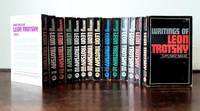
195803New York: Pathfinder Press 1975-1979. 14 vols. 8vo. Original pictorial card covers softbacks all vols rather rubbed and creased at edges. Pp. various previous owners' neat inscriptions on front inside covers of some vols. New York: Pathfinder Press, 1975-1979 unknown
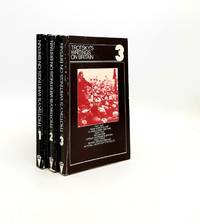
195804New Park Publications 1974. 3 vols. 8vo. Original pictorial card covers softbacks all vols rather rubbed and creased at edges. Pp. various previous owner's neat inscription on front inside covers. New Park Publications, 1974 unknown
20152-2343048428Editions L'Harmattan 2015. Paperback. New. 266 pages. French language. 9.29x6.06x0.79 inches. Editions L'Harmattan paperback
19892080502106917108Not Available 1989. Soft Cover. Fine. The book is in fine condition. Not Available paperback
19892111902160801324Chiku ma shobo 1989. Soft Cover. Fine. Number of books: 2 Chiku ma shobo paperback
191939790London British Socialist Party 1919. 8vo. 149pp. Original wrappers covers soiled. unknown
19682080502106917420Not Available 1968. Soft Cover. Fine. The book is in fine condition. Not Available paperback
Z1-F-043-00722Random House. Used - Good. Ships from UK in 48 hours or less usually same day. Your purchase helps support Sri Lankan Children's Charity 'The Rainbow Centre'. Ex-library so some stamps and wear but in good overall condition. 100% money back guarantee. We are a world class secondhand bookstore based in Hertfordshire United Kingdom and specialize in high quality textbooks across an enormous variety of subjects. We aim to provide a vast range of textbooks rare and collectible books at a great price. Our donations to The Rainbow Centre have helped provide an education and a safe haven to hundreds of children who live in appalling conditions. We provide a 100% money back guarantee and are dedicated to providing our customers with the highest standards of service in the bookselling industry. Random House unknown
1971ANAIS-0394471776Random House 1971-01-01. First Edition. hardcover. Good. 23.9x16x3.8. Buy with confidence. Excellent Customer Service & Return policy. Random House hardcover
0394471776.Ghardcover. Good. Access codes and supplements are not guaranteed with used items. May be an ex-library book. hardcover
SONG0394471776Random House 0000-00-00. First Edition. hardcover. Used: Good. 0.00x0.00x0.00. Buy with confidence. Excellent Customer Service & Return policy. Random House hardcover
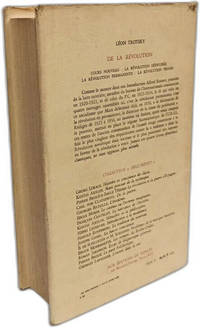
192458185Berlin 1924. Original printed wrappers. A bit of browning to wrappers and a bit loose at the inner hinges. But overall in very nice condition. 59pp. <br/><br/><em>First edition in the extremely scarce separate off-print of this seminal essay which appeared in October 1924 as the preface to the third volume of Trotsky's collected works. The essay now counts as a work in its own and was subsequently reprinted numerous times on its own by the Trotskyist movement. This seminal essay came to play a defining role in the development of post-Lenin politics in Russia. It was extremely critical of the purported revolutionary failings of two key members of the collective leadership that ruled Soviet Russia in the months after Lenin's death Grigory Zinoviev and Lev Kamenev and Trotsky was seen as main threat to the accession of power. The publication of his foundational essay on the October Revolution was used as a pretext for the Soviet leadership to isolate and attack Trotsky. It now constitutes a cornerstone of post-Revolutionaly Russian politics. "When Lenin was stricken with his first cerebral hemorrhage in May 1922 the question of eventual succession to the leadership of Russia became urgent. Trotsky owing to his record and his charismatic qualities was the obvious candidate in the eyes of the party rank and file but jealousy among his colleagues on the Politburo prompted them to combine against him. As an alternative the Politburo supported the informal leadership of the troika composed of Grigory Zinovyev Lev Kamenev and Stalin.In the winter of 1922-23 Lenin recovered partially and turned to Trotsky for assistance in correcting the errors of the troika particularly in foreign trade policy the handling of the national minorities and reform of the bureaucracy. In December 1922 warning in his then secret "Testament" of the danger of a split between Trotsky and Stalin Lenin characterized Trotsky as a man of "exceptional abilities" but "too far-reaching self-confidence and a disposition to be too much attracted by the purely administrative side of affairs." Just before he was silenced by a final stroke in March 1923 Lenin invited Trotsky to open an attack on Stalin but Trotsky chose to bide his time possibly contemplating an alliance against Zinovyev. Stalin moved rapidly to consolidate his hold on the Central Committee at the 12th Party Congress in April 1923.By fall alarmed by inroads of the secret police among party members and efforts to weaken his control of the war commissariat Trotsky decided to strike out against the party leadership. In October he addressed a wide-ranging critique to the Central Committee stressing especially the violation of democracy in the party and the failure to develop adequate economic planning. Reforms were promised and Trotsky responded with an open letter detailing the direction they should take. This however served only as the signal for a massive propaganda counterattack against Trotsky and his supporters on grounds of factionalism and opportunism. At this critical moment Trotsky fell ill of an undiagnosed fever and could take no personal part in the struggle. Because of Stalin's organizational controls the party leadership easily won and the "New Course" controversy was terminated at the 13th Party Conference in January 1924 the first substantially stage-managed party assembly with the condemnation of the Trotskyist opposition as a Menshevik-like illegal factional deviation. Lenin's death a week later only confirmed Trotsky's isolation. Convalescing on the Black Sea coast Trotsky was deceived about the date of the funeral failed to return to Moscow and left the scene to Stalin. His eulogy for the late party leader was in effect delivered in a biography of Lenin that Trotsky wrote for the 13th edition 1926 of the Encyclopædia Britannica.Attacks on Trotsky did not cease. When the 13th Party Congress in May 1924 repeated the denunciations of his violations of party discipline Trotsky vainly professed his belief in the omnipotence of the party. The following fall he took a different tack in his essay "The Lessons of October 1917" linking the opposition of Zinovyev and Kamenev to the October Revolution with the failure of the Soviet-inspired German communist uprising in 1923. The party leadership replied with a wave of denunciation counterposing Trotskyism to Leninism denigrating Trotsky's role in the Revolution and denouncing the theory of permanent revolution as a Menshevik heresy. In January 1925 Trotsky was removed from the war commissariat." Encycl. Britt. </em> unknown
087348424X.Ghardcover. Good. Access codes and supplements are not guaranteed with used items. May be an ex-library book. hardcover
2001SONG087348424X2020-01-06. 1st ed. hardcover. Used: Good. 6.00x1.25x8.50. Buy with confidence. Excellent Customer Service & Return policy. hardcover
1258009285.Ghardcover. Good. Access codes and supplements are not guaranteed with used items. May be an ex-library book. hardcover