1 299 résultats
L15446Éditions Sociales, 1949. In-8 br. Texte précédé de deux études par J. Fréville. E.O.
1979100145699Stock 1979 in8. 1979. Broché. Dans cet ouvrage Louis Althusser propose une lecture critique de Montesquieu présentant son œuvre comme ambivalente : à la fois révolutionnaire pour avoir fondé une science philosophique de l'histoire avant Hegel et Marx et réactionnaire car marquée par les intérêts de sa classe sociale. L'analyse met en lumière comment Montesquieu rejette le droit naturel et le contrat social tout en posant les bases d'une science de la politique et de l'histoire
C21269, Paris, Edimpra 1967, 276pp., qqs. cachets, bon état, C21269
23026Norrkoeping, Eric Biornström, (below, on printed cover: En Commission - Londres, Trübner & Co), 1863. (2), iv, (2, blank), 96 pp. 8vo. Modern boards, original covers preserved. Anderson 302; Kilgour 436; Zaleski 197. First separate edition: Herzen's letters to Turgenev, which first appeared in My Past and Thoughts, published here with a new introduction. 'Herzen's renewed interest in Russia's past and future was closely linked to his bitter disappointment in the "old world". He was a discerning critic of bourgeois society, even if his strictures were not always fair. The modern reader is struck especially by certain far-sighted observations, that seem to anticipate criticism of a complex phenomenon we have come to refer to as "mass culture". Herzen's most interesting comments in this respect are to be found in a series of articles entitled Ends and Beginnings, in which he conducted a polemic with Ivan Turgenev, who had become the moral authority for liberal Westernizers in Russia' (Andrzej Walicki, A History of Russian Thought, Oxford, Clarendon Press, 1980, p. 170). Alexander Herzen (1812-70) was a prominent nineteenth-century Russian social thinker and is known as the 'father of Russian socialism.' Early in his intellectual development, Herzen was influenced by German idealist thinkers such as Schiller and Schelling. He believed in the autonomy and dignity of the individual and opposed forces, such as family and state, that oppressed the individual. Later, under the influence of French socialist thinkers such as Charles Fourier, Herzen's thought became more radical. Herzen projected his earlier concern for the oppressed individual onto society at large and he became a supporter of socialism. The socialism he envisioned was a loose federation of self-governing communes. Only in such a system could the ideal society be achieved- according to Herzen that society would be a free association of individuals which provided for the full flowering of each personality. Herzen initially placed his hopes for this future order in the European socialist movement. After the failure of the 1848 revolutions to achieve socialist principles, however, Herzen became disillusioned about European prospects and turned his attention to Russia. Herzen argued that socialist transformation would actually come first to Russia because communal institutions such as the peasant commune survived and bourgeois attitudes hadn't yet emerged. This sense of the advantages of Russian 'backwardness' was influential among the Populists in the 1870s. Herzen has been called a 'gentry revolutionary.' The illegitimate son of a wealthy landowner, Herzen viewed the gentry as a progressive class. The revolution he envisioned was for the people but not necessarily by them. Also, his socialism was a national destiny rather than a class one, and because he promoted the value of individualism in collectivist form--in other words, the full flowering of the individual could best be realized in a socialist order. Among Herzen's works are From the Other Shore (1848-50) and The Russian People and Socialism and his autobiography, My Past and Thoughts.He founded a periodical, the famous Kolokol, in whose pages the free word first appeared in the Russian language, unhampered by censor or police, exposing the government's secrets, criticizing bureaucratic abuses, approving the good intentions of the czar, the 'liberator', and trying to dictate to him a reform program.
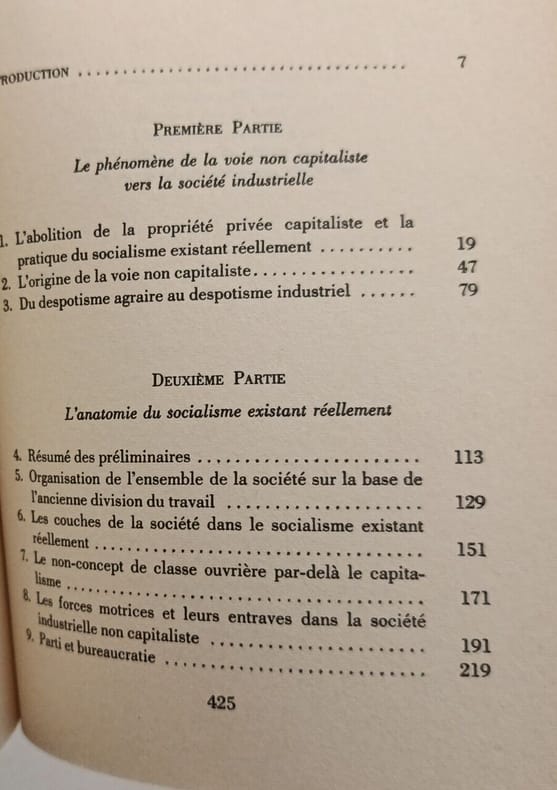
1983X113952Pyongyang (Coree), Editions en Langues Etrangères 1983 345pp. + frontispice (portrait), 21cm., texte en français, reliure cart. D'éditeur, jaquette illustrée, avec signet, bon état, X113952
1998100137322Palgrave Macmillan 1998 237 pages 13 8x1 4x21 6cm. 1998. Relié. 237 pages.
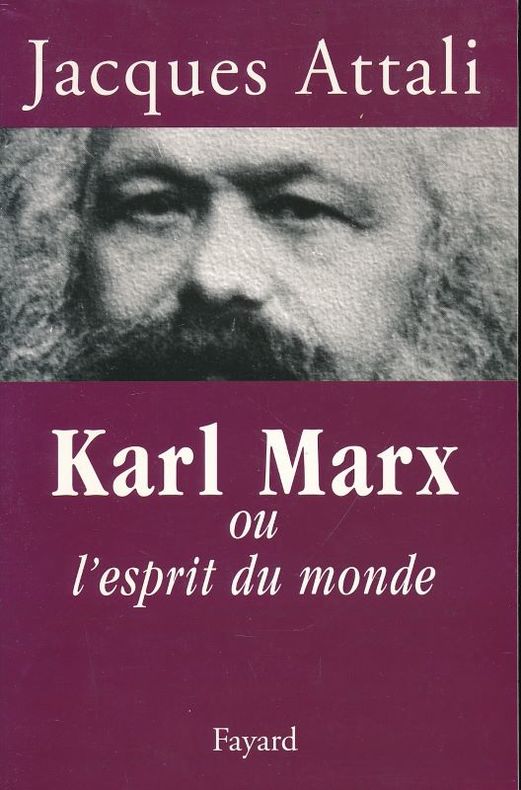
2005145835Fayard Fayard 2005, fort In-8 broché, 537 pages + photos. Bibliographie et index. Très bon état
200510087Fayard 2005 537 pages 15x23x3cm. 2005. Broché. 537 pages. Cette biographie de Karl Marx par Jacques Attali retrace la vie et la trajectoire intellectuelle du philosophe en les replaçant dans le contexte du XIXe siècle. L'auteur propose une analyse objective et détaillée intégrant des découvertes issues des archives ouvertes après la chute du Mur de Berlin et présente Marx comme le fondateur d'une nouvelle forme de pensée influente
98731Paris, Editions Hatier, 2002. 12 x 17, 96 pp., quelques illustrations en N/B et en couleurs, broché, très bon état.
16DwBruxelles Office Du Livre 14x22,5 359 pages - broché - non coupé - envoi de l'auteur - trés bon etat
1962F112400Wien, 1962 176pp., 30cm., Doctoral Dissertation (Dissertation zur Erlangung des Doktorgrades an de philosophischen Fakultät der Universität Wien), bound in hardcover, stamp at verso of title page, F112400
2001144654Couverture souple. Broché. 93 pages.
1976LFA-126725886Un ouvrage de 431 pages, format 140 x 225 mm, broché, publié en 1976, Bernard Grasset, collection "Figures", bon état
197695081Bièvres, Pierre de Tartas, impr. Bherndt, à Copenhague, coll. « Religions et Philosophies » 1976 In-4 26 x 19 cm. Reliure éditeur pleine peau rouge cerise sous étui, dos lisse, premier plat orné de filets dorés, tête dorée, 184 pp., illustrations en couleurs à pleine page, bibliographie. Exemplaire en très bon état.
2296Pierre de Tratas, Bièvres, 1976. Un volume in-8 reliure pleine basane rouge, dos lisse et plats ornés, tête dorée, 185 pages, nombreuses illustrations en couleurs de Hans Erni. Bel exemplaire numéroté (677/4800) sur Grand Bouffant des Papeteries Buhn, sans les 4 lithographies originales.
24374Paris, Procure Générale du Clergé, 1946. 12 x 18, 137 pp., broché, bon état (1 découpe mais sans manque de texte à la page de titre).
2005BIO256C1082005 / 537 pages. Broché. Editions Fayard.
19193Paris, Editions Champ Libre, 1971 1 volume 12,4 x 21,5cm Broché sous couverture à rabats au 1er plat illustré couleurs. 287p. Bon état (pli marqué au dos).
1961F109079Berlin, 1961 191pp., 21cm., softcover, text in German, Doctoral dissertation (Inaugural-Dissertation zur Erlangung des Grades eines Doktors der Philosophie der Philosophischen Fakultät der Freien Universität Berlin), stamp at verso of title page, text is clean and bright, good condition, F109079
95339Moscou, Editions du Progrès, 1966. 11 x 18, 73 pp., broché, couverture à rabats, bon état.
103.734Paris, Bernard Grasset, 1976. 14 x 22, 428 pp., broché, bon état (table des matières annotée au crayon).
27677Paris, Fayard, 2005. 15 x 23, 539 pp., quelques illustrations, broché, très bon état.
19651131521965 Editions du Club des amis du livre progressiste - 1965 - In-8, cartonnage toilé rouge sous rhodoïd - 350 pages
2083In 12 broché,couverture illustrée,faux-titre,titre,317 pages.Gallimard 1937 très bon état