883 résultats
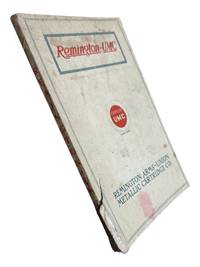
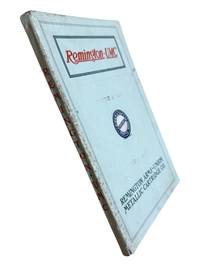
19139186New York: Remington Arms-Union Metallic Cartridge Co 1913. 8vo 212pp. Illustrations. Publisher's pale green wraps lettered in gray and red. Seattle sporting good store stamp and label to front cover some foxing along spine and stain to rear cover. Clean internally and very good. <br /> <br /> Iconic early 20th century illustrated catalogue from Remington. Scarce. Remington Arms-Union Metallic Cartridge Co unknown
19119185New York: Remington Arms-Union Metallic Cartridge Co 1911. 8vo 191pp. Illustrations. Publisher's plain wraps lettered in gray and red. Some soiling and staining to covers base of spine split. Clean internally and very good. <br /> <br /> Iconic early 20th century illustrated catalogue from Remington. Scarce. Remington Arms-Union Metallic Cartridge Co unknown
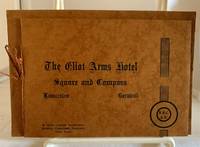
1920A47330Cornwall England: The Eliot Arms Hotel. 1920. Other. Very Good. C1920's This brochure is in Very Good condition and was issued without a dust jacket but have a mailing envelope with the hotel's imprint on the reverse. This is an oblong brochure with a string binding. The covers are of heavy cardstock as are the inner pages. There is photo of the hotel on the first text page. I The brochure and its contents are in clean bright condition. The text pages are clean and bright. The reverse of the last text page includes "Suggested Motor Runs" that can be taken by motorists from the hotel. including Kennard's House Camelford Bodmin and more. "The Eliot Arms or Square & Compass Square and Compass Tregadilett was once a Freemason’s Lodge for French prisoners of war on parole in Launceston: History supplied by R. F. Gilbert The original building was built in the 14th century and it became a coaching inn during 1625. The Inn fell into disarray in the early 19th century becoming a blacksmith’s shop until 1840 when it reverted back to a pub and the second name ‘Eliot Arms’ was added. The French POW’s lodge is thought to have existed for five to seven years of the war and this is shown by two certificates of ‘The Lodge Consulate Maconne’ dated 1762 and 1763; one in French and one in English issued to Robert Martin organist at St Mary Magdalene Church. Both certificates had French signatures five on the one of 1762 and four on the other dated 1763. Several of the Frenchmen joined the Dunheved Lodge which must have existed during 1756-1773. The Eliot is reputed to be haunted by a not unfriendly ghost which is said to have been seen by customers and staff in recent years. Mr T Richards landlord of the Eliot Arms Compass made an application to the Bench for an hours extension on the occasion of the Polyphant Cricket Club dinner given by Dr Serpell. The application was granted. ." from The Post and Weekly Feb 1911; Put in world history. Pictured 12/5/23 . The Eliot Arms Hotel unknown
192961264Hartford CT & London: Colt’s Patent Fire Arms Manufacturing Co. ca. 1929. 8vo. 45 1 pp. Over 100 illusts. photos & diagrams. Brown illustrated softcovers armorial and Colt logo front cover in green & black minor dustsoiling edgewear still VG. Early printing A-70-10th of this nicely illustrated catalogue first issued in 1922 of Colt revolvers and automatics including the New Service Double Action Revolver Colt New Service Target Colt Official Police Colt “Detective Special†Colt “Camp Perry†Model Colt Automatic .38 caliber Military Model Automatic Pistol decorative grips medallion inserted for ivory and pearl handle grips and parts. Colt’s Patent Fire Arms Manufacturing Co., paperback
196762610New Milford CT: N. Flayderman & Co. Inc. 1967. 4to. 6 153 15 pp. Frontisp. illustrated title 100’s of illustrations throughout. Brown publisher’s cloth decorative black lettering front cover & spine minor shelfwear w/ d.j. minor scuffing edgewear rubbing still VG/VG- copy. Second printing of this invaluable facsimile printing of the famed Schuyler Hartley & Graham catalogue offering an essential reference for Civil War era arms & ammunition uniforms horse equipment flags guidons Masonic goods and coats of arms. N. Flayderman & Co., Inc., hardcover
193256488New York: Macmillan Co. 1932. 4to. xv 1 217 1 pp. Colour-tinted frontisp. 55 plates. Brick-red publisher’s cloth gilt lettering front cover & spine w/ d.j. minor chipping & edgwear to fore-edges some scuffing across lower fore-edge front cover still NF/VG- partially unopened and uncut copy from the collection of Mabel E. Clark with her bookplate on front pastedown. First edition of this finely illustrated and well-written automobile travel account through Northern Italy. Dorothy Arms recounts folk legends views of flowering fields pastoral lakes all illustrated with fine etchings and pen & ink drawings of Arms noted for his technically flawless interpretations of Gothic Cathedrals. Macmillan Co., hardcover
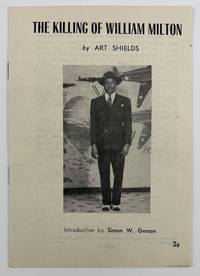
19484781New York: The Daily Worker 1948. Near fine. 16pp. Illustrated. Original pictorial self wrappers stapled. Mild toning and light wear. A scarce account of the events surrounding the death of William Milton described as "a useful hard-working law-abiding citizen.a devoted husband and loving father.sympathetic to his neighbors' problems.what people call a good man" who was also "a Negro and so marked out for that special torture that American society visits upon men and women who are colored." On July 14 1948 Milton was killed by Brooklyn Patrolman Peter Kilcommons in the hallway of his own building. Milton and three friends ran from police after being thrown out of a Williamsburg bar by a racist bartender named Charles Kennefick who "didn't want Negroes around." Kilcommons chased Milton to his front door then shot him once in the back and twice in the chest in front of about ten witnesses including Milton's wife Irene and their son Eugene Milton. Eugene describes the incident in a heartbreaking passage: "I saw Daddy drop as the first bullet hit him. I saw Daddy drop and then stagger inside. Kilcommons and O'Neil were shooting at him as he went in." There are also further accounts of the shooting recorded here from young neighbors. The text also includes the measures sought by the Committee for Justice in the Milton Case. The Committee argued for the dismissal and indictment of Kilcommons and O'Neil the dismissal of Police Commissioner Wallander financial support for Irene Milton and for continued support of Milton's brother Joseph who was with William in the bar on the fateful night. Joseph was charged with felonious assault on the bartender Kennefick after William was killed likely as a cover for the police in William's killing. Shields argues a motive for the arrest and beating of Joseph Milton: "The cops were trying to make him confess that William and himself had started the fight. The cops thought that such a 'confession' would give them an 'out' for the killing."<br /> <br /> A possible motive for the killing of William Milton also emerged after his murder. Milton was a member of the Communist Party and a community activist in New York who was often critical of the police violence he encountered in the city. He would also bring copies of The Daily Worker to his neighbors and was instrumental in organizing a renter's strike in a nearby building. Milton was especially vocal in his criticism of police following the killing of two African-American men by a police officer named Joseph Romeika in Freeport Long Island. Four young African-American siblings named Ferguson - Charles Joseph Alonzo and Richard - three of whom were U.S. Army veterans were refused coffee by a white manager of a diner. After they vigorously protested the manager called the police on the brothers. They left but were soon confronted by Romeika a rookie police officer. Romeika lined the men up and after two of the brothers protested Romeika kicked them in the groin and shot them an eerily-similar situation to the one that eventually led to Milton's murder.<br /> <br /> The author of the present work Art Shields was a legendary labor journalist who had previously written about the Sacco & Vanzetti case and would spend his career on the side of unions and laborers notably miners. He was highly critical of police actions such as the one recorded here which he described "as brutal a homicide as if the cops had been working for Heinrich Himmler the Nazi Gestapo leader instead of for Police Commissioner Arthur Wallander of New York." The Introduction was written by Simon W. Gerson one of the foremost leaders of the Communist Party in the United States and editor of The Daily Worker who writes passionately about the murder of Milton: "Yes William Milton lived under Jim Crow right here in New York. In fact he died from Jim Crow. He was lynched my friends lynched. What matter is it if a man is lynched by a hempen rope from a Georgia cottonwood-tree or lynched by a police revolver in the trigger-happy hands of a Brooklyn cop" The penultimate page of the pamphlet contains a group photograph which includes Gerson along with a Brooklyn councilman Mrs. Joseph Milton Irene Milton and Eugene Milton "at Madison Sq. Garden Rally" presumably in support of the Committee for Justice in the Milton Case. An important story that still resonates today about police crimes against the African-American population. The Daily Worker unknown
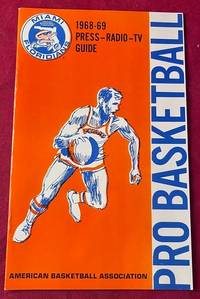
19688944Miami FL: The Miami Floridians 1968. First Edition. Original wraps. Near Fine. 5 X 8 Inches. 12 PP. Original 1968 press guide to the short-lived "Miami Floridians" basketball team in the short lived NBA rival association the American Basketball Association ABA. This was the first year the Floridians played in the league having just rebranded from the Minnesota Muskies. Original stapled binding clean and tight. The Miami Floridians unknown