Dürer, Albrecht - 1471 - Nürnberg - 1528Antiquariat.de

4 860 résultats
067-Ao.J. Kupferstich, um 1503, auf Bütten mit Wasserzeichen: Kleines Stadtwappen mit einem Spitzturm und zwei Zinnentürmen (vgl. Meder 275, um 1560/80). 18,5:12,1 cm. Literatur: Bartsch 100; Meder 97, f (von g). - Mit dem Monogramm in der Platte. Mit ca. 1 cm breitem Rändchen um die Plattenkante. - Guter, tiefschwarzer Abdruck mit feinen Kratzern, schwach fleckig und mit winziger Nadelspur. Dieser Kupferstich entstand in einer Zeit, in der sich Dürer ganz besonders in die Arbeit mit dem Grabstichel vertiefte und die unterschiedlichen Materialoberflächen zu gestalten suchte. Provenienz: Verso Sammlervermerk von 1861.
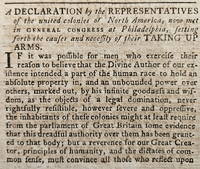
17753823<p>The complete text of the <em>Causes and Necessity of their Taking Up Arms</em> appears on pages 2 and 3 of the newspaper.</p><p>The Second Continental Congress convened in Philadelphia on May 10 1775 only about seven months after the First Continental Congress had adjourned. But with the battles at Lexington and Concord occurring in April 1775 hostilities had begun and the Congress needed to act. The action was the issuance on July 6 of the "Causes and Necessity of Taking Up Arms" a pivotal founding document that laid out the colonies' justification for war while making it clear that it was a defensive action and not a declaration of independence.</p><p>An initial draft of the <em>Causes </em>was rejected by the Congress as being too harsh. Thomas Jefferson and John Dickinson produced the new draft which the Congress approved. In the end the <em>Causes</em> was a masterful blend of airing grievances and reaching out for reconciliation while also clearly stating that independence was on the table if necessary.</p><p>While the British Parliament was the primary intended audience of the <em>Causes</em> it was also critical that the document satisfy the strongly divided Congress itself. At the time there was extreme tension between those advocating for independence and those in favor of a peaceful reconciliation. The final document provided enough justification to satisfy both sides - and allowed the journey to nationhood to continue to the next watershed moment the Declaration of Independence just a year later.</p><p>In addition to the important publication of the <em>Causes</em> this issue of the Virginia Gazette includes a brief mention debunking a report of an engagement in the days following that at Bunker Hill. It also prints "General Gage's false and audacious account of the late battle near Boston Bunker Hill."</p><p>As an aside it should be noted that during 1775 there were <u>three newspapers</u> all named the <em>Virginia Gazette</em> and all published concurrently in Williamsburg. They are easily distinguished by their respective publishers Pinkney in the case of the offered newspaper.</p><p>A rare and important paper very nicely preserved.</p><p><strong>Reference: </strong> Brigham <em>History and Bibliography of American Newspapers 1690 1820</em> noting holdings only at Library of Congress and New York Historical Society.</p><p><strong>Condition: </strong>Disbound; untrimmed. Expected age toning. Small ink blot in masthead and a spot of foxing to the first leaf. Overall a very good example.</p><p>ICN 7811.</p> John Pinkney
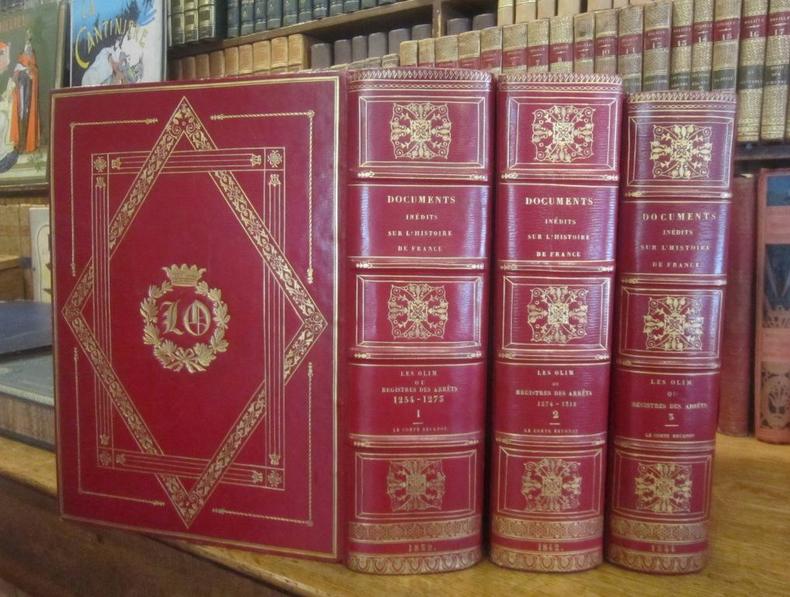
1839001064Paris Imprimerie Royale 1839
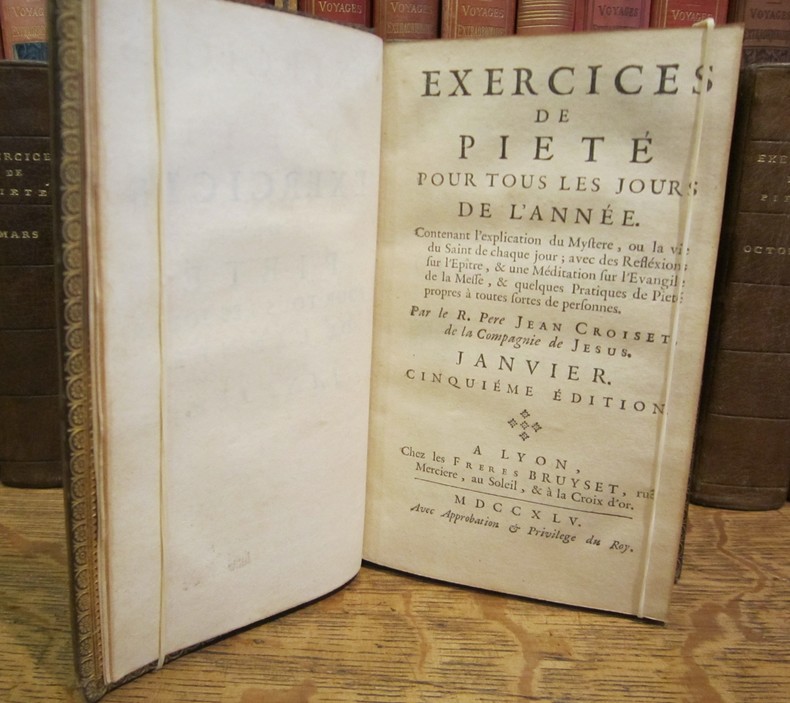
1745003350Frères Bruyset, 1745. 12 volumes in-12 (169 x 104 mm), maroquin vert olive, dos lisse, armes frappées à froid au centre des plats, filet à froid en encadrement avec fleurs de lys aux angles, filet de coupes, dentelle intérieure, contre-plats et gardes de tabis rose, tranches dorées (dos passé, quelques défauts d'usage, quelques traces, coins émoussés, quelques rousseurs). Exemplaire aux armes de Louis de France, Dauphin (Versailles 1729-Fontainebleau 1765), troisième enfant et aîné des fils de Louis XV et Marie Leczinska. Chevalier de la Toison d'Or en 1739 et chevalier des ordres du Roi en 1742, il épousa en premières noces, le 23 février 1745, Marie-Thérèse-Antoinette, Infante d'Espagne, dont il eut une fille, morte à deux ans, et en secondes noces, le 9 février 1747, Marie-Josèphe de Saxe qui lui donna huit enfants. Ex-libris de La Rochefoucauld Duc de Bisaccia. // 12 twelvemo volumes (169 x 104 mm), green-olive morocco, smooth spine, central arms stamped in blind on covers, blind-fillet border with fleurs-de-lys on corners, fillet on turns-in, inner dentelle, gilt edges (spine faded, some defects of use and stains, corners used, some spots). Precious copy bearing the arms of Louis de France, Dauphin (Versailles 1729 - Fontainebleau 1765), third child and elder son of Louis XV and Marie Leczinska. " Chevalier de la Toison d'Or " in 1739 and " Chevalier des Ordres du Roi " in 1742, he first married on february 23rd 1745 Marie-Thérèse-Antoinette, Infante d'Espagne, with whom he had a daughter, dead at two-years-old, and secondly, on february 9th 1747, Marie-Josèphe de Saxe with whom he had eight children, including five sons, three of them being Louis XVI, Louis XVIII and Charles X. Bookplate La Rochefoucauld Duc de Bisaccia.
In -4°, 56 cc. Cartonato. Frontespizio inciso con bordura ai quattro lati; secondo frontespizio compreso entro bordura di quattro legni. La prima parte del libro è in latino, la seconda in spagnolo. Esemplare particolarmente fresco e marginoso, cartonato d’aspetto (cm. 20 x 15,4). Engraved title page with border on sides; the second title page is included in wooden border: the first part of book is in latin, the second in spanish. A very fresh and wide margined copy, boards.
13880Arms John Taylor American 1887-1953. DOWNTOWN NEW YORK. F.108. Etching and Aquatint 1921. Edition of 75. Numbered 19/75 and signed and dated 1921 all in pencil. 8 3/8 x 4 7/8 inches 214 x 125 mm plate plus margins. Framed to 16 1/4 x 12 1/2 inches with the label of The Old Print Shop.In excellent condition. unknown
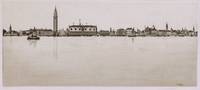
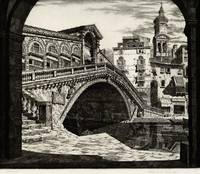
1930482New York: John Taylor Arms 1930. Etching on antique cream laid paper with a fancy "G" watermark 7 1/8 x 16 1/2 inches 182 x 442 mm full margins. Signed dated and inscribed "Ed. 70" in pencil lower margin. From a total edirion of 81 plus 5 trial proofs. Printed by Henry E. Carling. Number 18 from the Italian Series. A superb impression of this scarce print with all of the subtleties and details of the reflections in the water printing clearly. <br /> <br /> Fletcher 232<br /> Illustrated: Page 192 Arms Dorothy Noyes "Hilltowns and Cities of Northern Italy". Along with his constant companion and wife Dorothy Noyes Arms spent decades exploring and documenting gothic structures throughout Europe. Noyes an accomplished travel writer had gifted Arms an etching set for Christmas in 1913 during the time that the couple called New York home. Arms having been trained in architecture was sparked and fascinated by the potential for exceptional precision that etching provided as a media. His immediate projects focused on the architectural wonderland that Manhattan presented but he quickly realized that it was no love affair for him. Jane Glaubinger PhD. Curator of Prints Cleveland Museum of Art quotes a manuscript owned by the Museum in which Arms confides "I can admire the skyscrapers of New York that unbelievable city which is a very gold mine for the architectural etcher but I do not love them and I cannot etch what I do not love." Glaubinger explains in her 2012 essay Images of Inspiration that Arms opined that the creation of art furthered the spiritual and moral improvement of mankind and he believed that Gothic cathedrals represented "the most significant expression of man's aspirations." Arms a dedicated and industrious devotee to detail saw printmaking as a vehicle for inspiring joy and uplift in contemporary society. Glaubinger continues "Over several decades Arms traveled throughout France Italy England and Spain drawing Gothic structures. These studies were the basis for the etchings he produced back in his Connecticut studio. Arms admired the craftsmanship of medieval art and aided by magnifying glasses used fine-gauge sewing needles set into wooden handles to draw the elaborate churches on copper plates. Extremely dedicated and industrious Arms rendered each building with exceptional precision spending 1000 hours or more on a single plate. He was a gifted draftsman and technical virtuoso who created compositions full of keenly observed details and nuanced light." <br /> <br /> Glaubinger Jane "Modern Gothic: The Etchings of John Taylor Arms" Cleveland Museum of Art 2012. John Taylor Arms unknown
In -4°, pp. (8), 220; con 17 tavv. di cui quattro ripiegate e una doppia, tagli dorati. L’impaginazione delle tavole è apparentemente disordinata, ma corrisponde a quella riscontrata in altre copie: libro completo e in ottime condizioni. Legatura alle armi del vescovo John Ernest Emmanuel von Harrach. Binding with arms of Harrach Bishop.
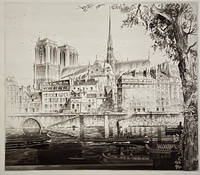
7751Arms John Taylor. Arms John Taylor. LE PENSEUR DE NOTRE DAME. F.136. Etching 1923. 1st State edition of 150. 12 5/8 x 10 1/8 inches; 322 x 252 mm. Signed in pencil. In excellent condition. Framed. unknown
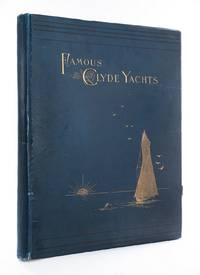
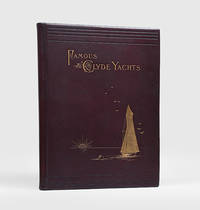
54897Glasgow & London: Oatts & Runciman. 1888. FIRST EDITION. Large folio. 50 x 38 cm. Title preface index "frontispiece" mounted on verso of index and 31 lithographed plates mounted one per page as published each with accompanying leaf of descriptive text. Original publisher's navy blue pictorial cloth with gilt title and decorations to upper cover all edges gilt. Slight rubbing at extremities of binding a few finger smudges to margins of some pages. Generally a very nice clean copy. The Royal Clyde Yacht Club was the biggest in Britain at the end of the nineteenth century larger even than the Solent Yacht Club and Clyde yachts were world-famous as pioneers of the relatively new sport of yacht racing. This book reproduces in chromolithography a series of watercolours by Henry Shields RBA 1859-1935 showing famous yachts or "white wings" mostly built 1880-87 with four boats built prior to 1880 included as notable precursors of the Clyde yacht boatbuilding style. Three of them the "Genesta" "Galatea" and "Thistle" had made attempts to win the America's Cup. Glasgow & London: Oatts & Runciman. 1888 hardcover
166716335A La Haye; A Brusselles, Chez Jean Rammazeyn; chez l'auteur & aussi chez François Foppens, 1667. In-folio de [34]-484 (chiffrée 496)-[12] pages, plein en veau marron du temps, dos orné de filets et fleurons dorés, supra-libros "G. Gomer van Berckmans 1667" au premier plat, et au second la devise "Desir · Romp · Repos".
1579182021579 un volume, reliure plein veau vert petit in-quarto (binding full calfskin in-quarto), reliure tardive (XVIIIème), dos long (spine without raised band), décoration or (gilt decoration) à filets et roulettes or (gilt lines and fillets), fers spéciaux (special blocking stamps), titre frappé or (gilt title), roulette encadrée de part et d'autre d'un filet or en place des nerfs, dos encadré de deux double filets or, entre-nerfs avec fers spéciaux or : "croix fleurie", fleuron branche et fleur en pied, plats décorés d'un triple filet or en encadrement, dos et plats légèrement insolés, roulettes sur les coupes et sur les chasses (fillets decoration on the turn-ins), toutes tranches lisses dorées (all edges gilt), pages de garde en papier peigné caillouté (endpapers with painting paper ),"ex-Libris manuscrit à la mine de plomb : " Au Baron de Wismes, acheté en 1859, 21 rue de Varennes, Il Vient de chez les JACOBSEN à Noirmoutier (Cornil Guilain, Jean Corneille et Auguste Jacobsen (1709-1870) d'une famille originaire de Dunkerque qui construisirent de nombreuses digues et polders, ils descendaient du corsaire Michel Jacobsen), Jost Amman etc Feyrabend Frankfort 1579 signé des initiales Y.W. au crayon violet (Yves de Wismes, Baron), Texte en latin, L'illustration se compose d'une Marque de l'Editeur en bas de la page de titre, gravée sur bois en noir + une gravure Frontispice gravée sur bois en noir + 274 superbes figures sur bois gravées par Jost Amman représentant, face aux armoiries des notables, des sujets de la vie quotidienne : danseurs, musiciens, hommes à cheval, scènes de chasse, marchands, médecins, juges, ainsi que différentes divinités. L'ouvrage comporte une deuxième partie avec des écussons vides et se termine par 7 feuillets contenant à chaque fois quatre blasons vides identiques, sans pagination (123 ff), 1579 Francofurti ad Moenum : apud G. Corvînum, impensis S. Feyerabendii, (1579 Francfort, Sigmond Feyrabend pour G. Gorvin Editeur),
In-12°, (24cc), 560pp, (4cc), occhietto, fregi e iniziali xilografiche, bellissima legatura in marocchino rosso alle armi dell’Arcivescovo di Tarso Francesco Maria Febei su entrambi i piatti, titolo in oro al dorso, fregi, nervature, tagli in oro. Esemplare di dedica allo stesso Arcivescovo Febei. Si tratta dell’opera più famosa del giurista umbro Antonstefano Cartari. In-12°, (24cc), 560pp, (4cc), half-title, wooden engraved ornaments and tail ornaments, splendid red morocco binding, gilt coat of arms of Archbishop of Tarsus Francesco Maria Febei on both sides, gilt title at the spine, ornaments, bands, gilt edges. It is the most known work of Umbrian jurist Antonstefano Cartari. Dedication copy to the same Archbishop Febei.
In -4°, pp. (16), 557, (9) - errore di numerazione alle pp. 120-23; antiporta incisa in rame; legatura in pelle con fregi in oro alle armi di Benedetto XIV. Tagli dorati. Calf binding with golden ornaments, gilt edges.
In -folio, pp. (42), 489, (71); frontespizio inciso in cornice, con vignette che raffigurano cinque concilii. Manca un ritratto all’antiporta. Legatura alle armi del Cardinale Barberini. A portrait missing at frontispiece; binding with Barberini coat of arms.
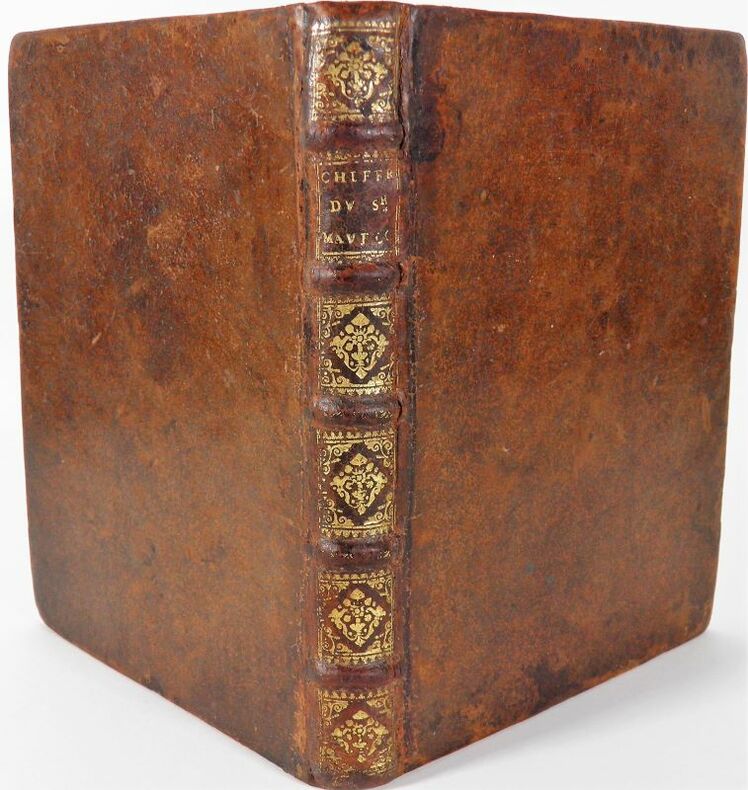
16802171Paris, chez l'auteur, 1680. Petit in-4, 17 x 21,5 cm. Reliure de l’époque en plein veau brun, dos à nerfs orné, tranches mouchetées rouges. 3 ff., 21 pl., 58 pl., 2 ff. Edition originale de ce rare et remarquable ouvrage, l’un des plus utiles et connus de son époque, dont se servaient les artistes et les artisans. Il s’agit d’un recueil de deux séries de 79 planches gravées au total. La première série comprend, à pleine page, 21 « chiffres fleuronnez » des plus importantes personnalités de la fin du XVIIe siècle. La seconde série comprend 58 planches représentant 348 combinaisons de chiffres de 2 à 5 lettres, classées par ordre alphabétique, à raison de 6 chiffres par planche. Comme souvent, il manque la page aux armes de la Dauphine, avec l’adresse de l’auteur, qui faisait office de frontispice pour la deuxième série. Saffroy signale une planche dépliante à la fin, elle n’est cependant pas décrite par Brunet et n’est présente dans aucun des exemplaires que nous avons pu consulter. Saffroy, I, 2682 ; Brunet, III, 1547-1548 et Supplément II, 1060. Planche XVIII de la 1ère série reliée entre les planches XV et XVI.
192512221925. Etching with aquatint on watermarked handmade F.J. Head & Co. laid paper 12 3/8 x 13 15/16 inches 315 x 354 mm full margins. Signed and dated in pencil lower right margin. Edition of 150 printed by Frederick Reynolds. In excellent condition with some minor toning and minor edge wear well outside of the image area. <br /> <br /> Fletcher 167<br /> <br /> French Church series #7; illustrated in Dorothy Noyes Arms Churches of France p. 4. unknown
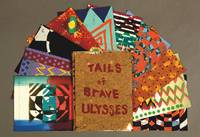
1972WRCLIT57595Madison WI: Shenanigan Press Ltd and the Omar Space Corp Ltd. 1972. Portfolio of ten mixed media prints 20 x 16cm enclosed in screen-printed fiber paper over stiff card portfolio. One internal plain card fold-in flap in portfolio torn portfolio paper covering perhaps naturally a bit frayed with a couple small chips; the prints are in fine state. A scarce early portfolio of Shields's work limited to ten copies with each print signed and dated on the verso by the artist. Shields 1944 - 2006 was widely known for his colorful prints and collages which often involve multiple processes such as stitching dyeing application of fabrics or other materials and screen-printing. This is a very uncommon portfolio exhibiting an early approach to his characteristic methods. Acton JONES ROAD PRINT SHOP AND STABLE 1971 - 1982: A CATALOGUE RAISONNÉ 78. Shenanigan Press Ltd and the Omar Space Corp, Ltd. unknown books
197586111Art Center. As New. 1975. Paperback. FREE UPGRADE to Courier/Priority Shipping Upon Request - IN STOCK AND IMMEDIATELY AVAILABLE FOR SHIPMENT - AS NEW THE TEXT BLOCK IS PRISTINE CLEAN UNMARKED AND IN EXCELLENT CONDITION - - Corresponds to ASIN: B000VUMBAQ. 76 pages; 28 illustrations. Catalogue Raisonne Catalog Raisonné Complete Works Life and Work Raisonnee -- with a bonus offer . Art Center paperback
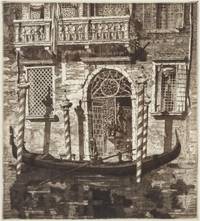
19314731931. Etching and drypoint on cream-colored handmade laid paper with deckle edges 7 1/4 x 6 3/4 inches 185 x 171 mm edition of 100 full margins. Signed dated and numbered "Ed. 100" in pencil lower margin second state of three. Printed by Henry Carling New York. Extremely minor mat tone and some inky residue in the top right corner all unobtrusive and well outside of image area. An exquisite impression of this intricate image with astonishing detail and all the fine lines printing clearly. The image represents the first print which Arms printed on his own handmade paper. Framed handsomely with archival materials and museum grade glass in a wood gilt frame with a flower and garland motif. <br /> <br /> Illustrated: Dorothy Noyes Arms Hill Towns and Cities of Northern Italy p. 180; Anderson American Etchers Abroad 1880-1930; Eric Denker Reflections & Undercurrents: Ernest Roth and Printmaking in Venice 1900-1940 p. 116. <br /> <br /> Fletcher 233. Born in 1887 in Washington DC John Taylor Arms studied at Princeton University and ultimately earned a degree in architecture at the Massachusetts Institute of Technology in 1912. With the outbreak of W.W.I Arms served as an officer in the United States Navy and it was during this time that he turned his focus to printmaking having published his first etching in 1919. His first subjects were the Brooklyn Bridge near the Navy Yard and it was during his wartime travel that Arms created a series of extraordinarily detailed etchings based on Gothic cathedrals and churches he visited in France and Italy. He used what was available to him namely sewing needles and a magnifying glass to create the incredibly rich and fine detail that his etchings are known for. Upon his return to New York after the war Arms enjoyed a successful career as a graphic artist created a series of etchings of American cities and published Handbook of Print Making and Print Makers Macmillan 1934. He served as President of the Society of American Graphic Artists and in 1933 was made a full member of the National Academy of Design. <br /> <br /> In its most modern incarnation Palazzo dell'Angelo was constructed in or around 1570. The building which has a rich and storied history was erected upon the ruins of an earlier structure which predates the Gothic period. Some remnants of the earliest features of the residence were most certainly still visible when Arms visited as they are today. Having a background in architecture there's no question that Arms was moved by the beauty history and ingenuity represented in the physical structure. One thing specifically gives away Arms's passion for the architecture and that is the fact that he focused on the building's Moorish entranceway balustrade and two mullioned windows and not on the curious Gothic era bas-relief of an angel nestled into the facade of the building after which the structure is named. The sculpture itself doesn't appear in Arms's composition at all despite the fact that it is the feature of the building that is most famous in its folklore. Arms instead focuses on the oldest portion of the architecture even documenting some of the remnants of a fresco and a funerary stele for the freedman Tito Mestrio Logismo and his wife Mestria Sperata visible above the water level to the left of the door behind the gondola which was first described in 1436. <br /> <br /> Among the many notable bits of history regarding the Palazzo it has been documented that Tintoretto painted frescos of battle scenes on the facade of the building. The paintings have been lost to time and the elements but not entirely to history. The empty frame-like structure appearing in the brickwork to the left of the doorway an area which now lays oddly bare would have originally housed a fresco but now sits like a ghost where an untold number of eyes once gazed at something beautiful. Most famously however is the story of the origin of a small hole which appears in the facade of the building atop the figure of the bas-relief angel. Folklore has it that in 1552 Friar Matthew Bascio was invited to dinner by the Pallazzo's then resident Iseppo Pasini. Pasini was a very successful albeit unscrupulous attorney who made his fortune exploiting the poor. Pasini's exploits were so egregious it was rumored that he was perhaps under the influence of an evil spirit. The disturbing legend says that to his complete surprise when Friar Bascio was seated to dine that night he was waited upon by Pasini's bewitched pet monkey who he recognized immediately as the Devil himself. Upon this recognition Bascio was moved to squeeze the table cloth with his hand and saw that blood had leaked out of the linen. In this moment he cast the demon out of the house and during its departure the Devil made a hole in the wall through which he fled. It is said that the angel was placed in the facade below the hole to prevent the spirit from reentering. The hole is visible to this day above the angel on the building which still stands along a small canal behind the Piazza San Marco. After the building's Neoclassical remodel it served at the the senatorial residence of Italy's noble Ratta family. <br /> <br /> Arms's Palazzo dell'Angelo was awarded the Member's Prize at the 22nd Annual Exhibition Chicago Society of Etchers Art Institute of Chicago 1932. unknown
1778117520Jean- Michel Briolo 1778-1780 4 in-folio A Turin, Chez Jean-Michel Briolo, 1778-1780, 4 volume in-folio de 255x400 mm environ, XXVIII, 435 - 458 - 444 - (3) ff. (faux-titre, titre, Au lecteur), 675 pages, (2) ff., 174 pages (Bibliothecae Sebusianae), contient 1 frontispice, 1 portrait gravé et 3 planches. Demi basane mouchetée à coins, dos lisses portant titres et tomaisons dorés, tranches mouchetées de rouge. Coiffes, coins, coupes et plats frottés, des traces de mouillures au tome I et III, légères salissures sur certains feuillets, quelques rousseurs sinon intérieur propre, assez bon état.
1888176492Glasgow: Oatts & Runciman 1888. A beautifully illustrated yachting monograph First and only edition of this handsome visual record this copy in the scarcer publisher's morocco binding it is usually found in blue cloth. The Royal Clyde Yacht Club founded in 1856 was the biggest in Britain at the end of the 19th century and Clyde yachts were world famous as pioneers of the relatively new sport of yacht racing. "It will be seen that for the most part the period dealt with is that lying between the beginning of 1880 and the end of 1887. Four boats built prior to 1880 have been given a place in our book - namely the Cyprus Madge Neva and Viril - because they were amongst the most notable of the boasts which ushered in the type so popular in after years" Preface. The fine chromolithographs reproduce a series of watercolours by Henry Shields RBA 1859-1935 showing famous yachts or "white wings". Three of them were America's Cup challengers: the Genesta 1884 Galatea 1886 and Thistle 1887. Folio. Chromolithograph frontispiece bound after list of plates us usual and 31 mounted chromolithographic plates small sketches of Clyde Regatta incidents in the text. Publisher's dark purplish red hard-grain morocco bevelled boards smooth spine covers with four blind rules at head and foot front cover with gilt yacht vignette back cover with blind ornamental cartouche French Curl pattern marbled endpapers original dark red cloth inner hinges gilt edges. Ownership inscription on title page verso of one S. C. Graham Robertson dated June 1888; possibly the Graham Robertson who was Marine Surveyor to the Government of Bengal and in 1894 elected a member of the Royal Institute of Naval Architects. A few shallow scratches and abrasions to covers more noticeably to back cover some skilful recolouring of leather at extremities scattered foxing. A very good copy. hardcover
19304981930. Etching and aquatint on antique laid paper 10 1/4 x 12 1/8 inches 262 x 308 mm wide margins. Signed dated and inscribed "Edition of 100" in pencil lower margin. Second state of 2. A rich and inky impression of this extraordinary image. Bottom edge is irregularly trimmed with the Conseil Départemental de la Haute-Garonne's tarriff stamp on the verso in two places. Areas of minor toning paper tape hinges at the top sheet edge some minor scattered surface soiling.<br /> <br /> Fletcher 229ii/II <br /> Illustrated: Page 208 Arms Dorothy Noyes "Hilltowns and Cities of Northern Italy". Born in 1887 in Washington DC John Taylor Arms studied at Princeton University and ultimately earned a degree in architecture at the Massachusetts Institute of Technology in 1912. With the outbreak of W.W.I Arms served as an officer in the United States Navy and it was during this time that he turned his focus to printmaking having published his first etching in 1919. His first subjects were the Brooklyn Bridge near the Navy Yard and it was during his wartime travel that Arms created a series of extraordinarily detailed etchings based on gothic cathedrals and churches he visited in France and Italy the plate for Guardians of the Spire was created in 1921. He used what was available to him namely sewing needles and a magnifying glass to create the incredibly rich and fine detail that his etchings are known for. Upon his return to New York after the war Arms enjoyed a successful career as a graphic artist created a series of etchings of American cities and published Handbook of Print Making and Print Makers Macmillan 1934. He served as President of the Society of American Graphic Artists and in 1933 was made a full member of the National Academy of Design. Arms died in Fairfield Connecticut in 1953. unknown
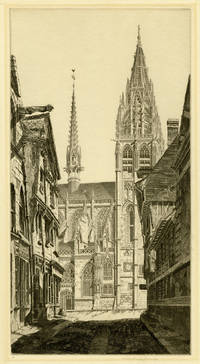
193110361931. Etching on watermarked antique laid J Whatman Japon paper 14 1/2 x 7 5/8 inches 368 x 195 mm full margins. Signed dated and inscribed "II" in pencil in the lower margin. One of only 26 impressions of the second state of 2 printed in 1931. With the John Taylor Arms ink stamp in black ink in the lower-center margin. <br /> <br /> Fletcher 241 II; French Church Series No. 31. This magnificent etching was awarded the Mrs. Henry F. Noyes Prize Society of American Etchers 1931; the Carle Blenner Best Entry Prize New Haven Paint and Clay Club 1950; and the Best Print Annual Exhibition Arts and Crafts Association Meridan Connecticut 1952.<br /> <br /> Paper: Arms was typical of the artists of this period - he was obsessed with paper a mania for collecting paper that could/would improve an edition. The quantity he left after his death distributed by his wife to fellow artists witnesses his love for finely made paper -paper interesting because of texture color distinctive weave. The earliest paper known to have been used by Arms came from a Baptismal Register Kirchen Ordnung The Reformed Church Middletown Dauphin County Pennsylvania 1708 bought in a bookshop in Philadelphia. His early prints 1915-1919 evidence paper taken from old books with gilded edges. Some prints appear on stationary from the Cisalpine Napoleonic Italy still bearing the estampe of the office or department; others carry penned ink page numbers taken from old ledgers of the Eighteenth Century-all beautiful shades of grey blue and green handmade ribbed and otherwise. Some of his color aquatints were printed on full sheets of heavy chine or Japanese vellum giving a sense of luxury in the richness of the stock and the width of the margins. There was a myriad of modern papers gleaned in England France Italy and the United States. <br /> <br /> - William Dolan Fletcher A Man For All Times p. 15. unknown