443 résultats
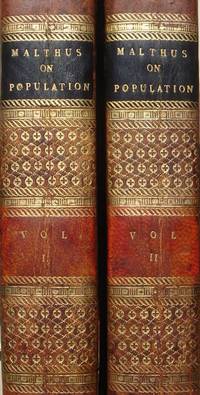
1807AQ28409London: Printed for J. Johnson.by T. Bensley 1807. In two volumes. xvi 580; vii 484pp 60. With half-titles. Contemporary gilt-ruled half-calf marbled paper boards contrasting green and tan calf lettering-pieces marbled edges. Lightly rubbed corners exposed. Hinges exposed later inked ownership inscription of Arthur Johnson to recto of front blank fly-leaf of Vol. I very occasional light spotting. The fourth edition greatly extended from the anonymous first of 1798 of this cornerstone of early studies of demography and an influential work in the history of political economy. Contrary to the prevailing Whig theory of history English cleric and scholar Thomas Robert Malthus 1766-1834 argued that the agricultural output of modern Britain would not be able to support the rapid population growth witnessed in the eighteenth-century and thus that society would return to earlier subsistence levels following catastrophic outbreaks of disease and famine. The second edition of 1803 was substantially revised and extended to include observations made from European data and most notably the recognition that human agency and especially moral restraint could alleviate the plight of the poorest elements of society. The third edition of 1806 added an appendix in which Malthus replied to his many contemporary critics. This fourth edition incorporates all of the previous revisions and additions. Provenance: Arthur Henry Johnson 1845-1927 historian and chaplain of All Souls College Oxford; author of inter alia The history of the Worshipful Company of the Drapers of London Oxford 1914-22 and The disappearance of the small landowner Oxford 1909. . Fourth edition. 8vo. Printed for J. Johnson...by T. Bensley hardcover
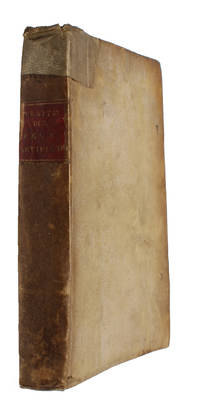
1826149989London: John Murray 1826. The definitive text in original boards Sixth edition the final lifetime edition and the definitive text with Malthus's final revisions marking a significantly expanded and amended text from the first edition of 1798. The Essay is one of the most important and influential works in the history of economic thought and the foundation text of modern demography. 2 vols octavo. Original purple cloth-backed drab grey paper boards printed spine labels. Ownership signature dated 1882 to front free endpaper old price label to front cover of vol. II. Spines lightly sunned label of vol. II chipped with loss paper covering on front cover of vol. II peeling around front joint tips a little worn light foxing partly unopened. A very good copy. hardcover
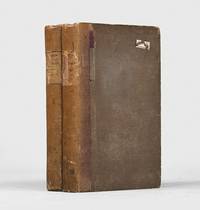
1817231696London : John Murray 1817. 1st edition. Hardcover. Contemporary aniline calf over marble boards. Front hinge loose with wear to the spine bands and panel edges. A good copy. Physical description; iv 327 1 p. ; 22 cm. Includes bibliographical references.Subjects; Population.Malthusianism. Population control. Population growth.Referenced by: Kress Lib B.6973. London : John Murray hardcover
1809013706Washington City: Chew Weightman 1809. First american from the third London edition. Due volumi 13x22 cm di XVI-510-XXXIII pp e VI-542 pagine. Scritta di proprietà datata 5 march 1834 sulle pagine di titolo. Una gora alla metà inferiore del volume nelle prime ed ultime 30 pp del volume 1. Qualche altra brunitura sparsa. Legatura coeva in tutta pelle marmorizzata dorsi lisci con tassello di titolo; qualche usura e abrasioni ai piatti del volume 2 ma nel complesso bell'esemplare di questa prima edizione americana dell'opera di Malthus. Chew Weightman unknown
1986394863London : W. Pickering 1986. 1st edition. Hardcover. Fine copies in the original gilt-blocked cloth. The set remains particularly well-preserved overall; tight bright clean and strong. Series: The Pickering Masters. Physical description: 8 volumes : facsimiles ; 24 cm. Notes: Reprint of works originally published 1798-1836. Includes bibliographical references and indexes. Edited by E. A. Wrigley and David Souden. Contents: v. 1. An essay on the principle of population 1798 -- v. 2-3. An essay on the principle of population 1826 -- v. 4. Essays on population -- v. 5-6. Principles of political economy -- v. 7. Essays on political economy -- v. 8. Definitions in political economy. Subjects: Malthus T. R. Thomas Robert 1766-1834; Population; Economics; Economics History; Economics Study and teaching; Demography Great Britain. London : W. Pickering hardcover
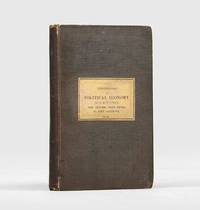
182123029Boston: Wells and Lilly 1821. First American edition of this landmark work in political economy. Octavo bound in three quarters leather over marbled boards black leather morocco spine label. In near fine condition. In his Principle of Political Economy Malthus was proposing investment in public works and private luxury as a means of increasing effective demand and hence as a palliative to economic distress. The nation he thought must balance the power to produce and the will to consume" DSB. Wells and Lilly hardcover
18265417London: John Murray 1826. Hardcover. Very Good. 2 volumes. 8vo. Pp. xviii 535; iv 528. Both volumes with one blank at the front and at the end. No half-title in volume 1. In the original boards with a patterned cloth spine strip the paper spine labels chipped spine cloth faded board corners worn ink name to the upper edge of the front boards with the previous owner's bookplate to paste-down and an ownership signature to the front endpaper of the first volume. Light foxing to the prelims and very light foxing throughout the text is very clean and the bindings are tight and square. A nice clean set. The sixth edition and the last edition to be published in his lifetime. Lowndes 1459. John Murray hardcover
1817720P18London: John Murray 1817. First edition. Hardback. Very Good. 9" by 5.5". None. The first edition of this additions volume to Thomas Robert Malthus' immensely influential essay on the issue of growing population. The first edition of this work.This work is Malthus' additions to his influential book 'An Essay on the Principle of Population' added to the fourth and earlier editions.'An Essay on the Principle of Population' is a treatise warning of the future difficulties with a growing population on Earth.The essay was not the first work to be published on population but it was incredibly influential as contributed to the passing of the 1800 Census Act.This addition volume highlights key issues in the original work and expands upon them giving the reader a wider understanding of the issue of population.Written by Thomas Robert Malthus a scholar who is best known for this work and for his influential economics.Bound without publisher's adverts. In the original publisher's marbled paper boards. Externally smart. A small amount of bumping to the head and tail of the spine and to the extremities. A little rubbing to the boards and spine resulting in fading of the marble pattern. Internally firmly bound. Pages are lightly age-toned and generally clean with some scattered spotting. Very Good John Murray hardcover
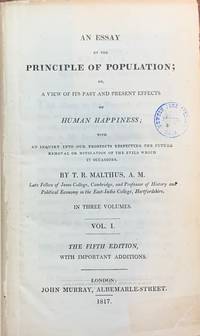
1817140901001London: John Murray 1817. Hardcover. Very Good. xvi 496 p; iv 507 p; 500 p. "The fifth edition with important additions." Complete and unrestored in three volumes. Original boards with orginal paper spines most of which are not surprisingly gone given their fragility. In protective mylar wraps. Very Good condition overall: bindings degraded over time but completely unrestored and text in very nice shape. Clean pages-- no marks-- generally bright for age. Some foxing throughout text and typical waviness. Bumped corners. Not ex-library! Old London bookseller's stamp on front paste downs. Secodn volume front cover creased missing small strip o paper. Third volume front board detached the other covers are intact; the mylar wraps keep them all in place. Nice condition overall. A greatly revised and expanded edition of Malthus' most famous work the second-to-last published during his lifetime. Contains revisions of his views on rent a deeper look at how the political organization of states was determined by population and what limits to population growth were already occurring in Europe and an appendix with replies to critics. An enormously influential and controversial work that inspired Charles Darwin and Alfred Russel Wallace. John Murray hardcover
180785583J. Johnson in St. Paul's Church Yard 1807. Hardcover. Very Good. 1807 2 volume set full leather bindings 4th edition London. Bookplates to front pastedowns both volumes. Volume one shows borer damage to margins not to text. Also shows contemporary ownership ink to title. Text is unmarked bindings are tight. Spines are sunfaded. oversized and overweight. Please email for photos. J. Johnson in St. Paul's Church Yard hardcover
1996JE-GYNI-TGYWRoutledge 1996. Hardcover. Very Good. Very faint small pink mark to long page edge. No other marks to book or cover. Clean bright pages tight binding pristine cover. Looks like new. An excellent copy of this rare volume. Items are dispatched the following or the same day. Please note our excellent customer feedback. <br/> <br/> Routledge hardcover
30964Paris & Genève J. J. Paschoud 1809. 3 vol. 120 x 195 mm de 424 395 et 392 p. Demi-veau brun dos ornés de fleurons à froid et roulettes dorées pièces de titre et de tomaison tranches jaunes mouchetées reliure légèrement postérieure. . Édition originale de la traduction française. . Au début des années 1790 le philosophe anglais William Godwin expose un « principe de population ». Réagissant principalement à la thèse alors développée par Godwin Malthus fait alors paraître la première édition de son Essai sur le principe de population un pamphlet qui paraît - anonymement - en 1798. Il y substitue en 1803 ce qui se veut un traité plus scientifique dans lequel il se réfère aussi à quatre autres sources importantes : Of the Populousness of Ancient Nations de David Hume A Dissertation on the Numbers of Mankind de Robert Wallace Observations on Reversionary Payments de Richard Price et An Inquiry into the Nature and Causes of the Wealth of Nations d'Adam Smith. Deux ans après cette parution l'Essai fait l'objet d'une traduction partielle par le Suisse Pierre Prévost qui fut professeur de physique et de philosophie à l'Université de Genève. Certains chapitres sont intégralement traduits tandis que d'autres ne le sont que partiellement. Prévost accompagne sa traduction de notes et commentaires personnels ; encouragé par Malthus il fait paraître en 1809 à Paris et à Genève cette nouvelle édition la première complète donnée d'après la dernière établie par Malthus en 1807 la quatrième édition anglaise. « Malthus m'a même autorisé en conséquence à y faire les changements que j'estimerais nécessaires. Je n'ai pas abusé de cette permission. Je me suis prescrit au contraire de faire connaître l'ouvrage de M. Malthus tel qu'il l'a lui-même publié. L'appendice est la seule partie où j'ai fait des retranchements et quelques modifications sans les indiquer en détail ; parce que les objections que l'auteur y discute m'ont paru quelquefois trop faibles ou trop particulières pour mériter d'être exposées et réfutées dans une traduction avec autant d'étendue qu'elles le sont dans l'original. Mais j'ai supprimé certains morceaux et même des chapitres entiers qui s'écartent un peu du sujet principal ou qui sont trop immédiatement relatifs à l'Angleterre. » « L'Essai du révérend Malthus causa en 1798 un véritable choc idéologique dans une Angleterre en crise traumatisée par la Révolution française. Ce texte contient la première formulation - inchangée dans les cinq éditions suivantes - du principe de population. Avancée fondamentale ce principe affirme que les vitesses de croissance de la population et des subsistances sont très différents la première augmentant plus rapidement que la seconde .» INED préface à l'édition critique de 2017. Son analyse des crises de surproduction l'oppose à Jean-Baptiste Say et en fait un précurseur de Keynes - par l'accent qu'il met sur l'insuffisance de la demande - ce dernier soulignant qu'il est « le premier des économistes de Cambridge ». Rare première traduction française de cette référence majeure dans l'histoire des idées. Bon exemplaire. De la bibliothèque Antoine Larue avec ex-libris. Dirigeant de plusieurs entreprises de l'industrie chimique dans la deuxième partie du XXe siècle sa bibliothèque sera dispersée en 1985 puis 1993 à l'Hôtel Drouot par Claude Guérin. Printing and the Mind of Man n° 251 pour l'édition originale anglaise de 1798 ; Kress B 5591. Paris & Genève, J. J. Paschoud, 1809. 3 vol. (120 x 195 mm) de 424, 395 et 392 p. Demi-veau brun, dos ornés de fleurons à fro unknown
1807314917London: Printed for J. Johnson in St. Paul's Church-Yard by T. Bensley 1807. Fourth edition. 2 vols. 8vo. Contemporary mottled calf marbled edges. Rebacked in gilt calf one hinge tender. Fourth edition. 2 vols. 8vo. Malthus is as controversial as he is influential. "The central idea of the essay . was a simple one. The population of a community . increases geometrically while food supplies increase only arithmetically. If the natural increase in population occurs the food supply becomes insufficient and the size of the population is hecked by 'misery'" PMM. PMM 251 first edition; Kress 5219 Printed for J. Johnson in St. Paul's Church-Yard, by T. Bensley unknown
18177080<p><em>An Essay on the Principle of Population or A View of its Past and Present Effects on Human Happiness; With An Inquiry into our Prospects Respecting the Future Removal or Mitigation of the Evils which it Occasions.</em><br /><br />8vo. Modern ½-brown calf leather binding over marbled boards gilt decorated spine with 5 raised bands two black and red gilt lettered morocco labels; new endpapers added. London: Printed for John Murray 1817. <strong>Fifth Edition with Important Additions.</strong> <strong>3 volumes. </strong><br /><br /><em>An Essay on the Principle of Population </em>was first published anonymously in 1798 through J. Johnson London. The author was soon identified as The Reverend Thomas Robert Malthus. In 1803 a second and much enlarged edition was published with the author acknowledged. Later editions were taken from the second edition and there are additional changes throughout the sixth edition. It has been acknowledged as one of the most influential economic works in history. Library stamps on the title pages; some numbers in pencil on the copyright pages; title page of volume 1 worn with a small tape repair; o/w Fine. Rare.</p> Printed for John Murray hardcover
0472060317New. Brand new and still unused unknown
1806ZB1325657London: J. Johnson 1806. Price HAS BEEN REDUCED by 10% until Monday June 29 SALE item 2 vols. xvi 505 58 index vii 559 pp. contemporary full leather bindings now dry and worn a few areas of the spine of the first volume now lacking the leather covering masonic library and private book plate to the front paste down of each volume scant foxing else internally clean and tight. - If you are reading this this item is actually physically in our stock and ready for shipment once ordered. We are not bookjackers. Buyer is responsible for any additional duties taxes or fees required by recipient's country. Photos available upon request. London: J. Johnson hardcover
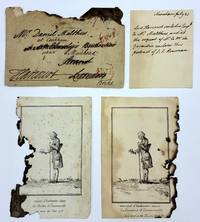
17791748Original manuscript / ink drawing. c.1779-1788. Pen and ink portrait of Jean Jacques Rousseau in the garden at Ermenonville titled beneath "venant d'herboriser dans les Jardins d'Ermenonville au mois de Juin 1778" along with a printed version of the image signed Mayer Georg Friedrich Meyer engraved by J. M. Moreau in 1779. Each 15 x 10cm. Accompanied by an ink manuscript letter 10.5 x 8cm headed "Nuneham July 21" presenting the images: "Lord Harcourt sends his compts. to Mr. Malthus and at the request of Mr. le Mqs. de Girardin encloses this portrait of J: J: Rousseau". Contained within the original postal cover addressed to Mr. Daniel Malthus redirected from his London address to Cookham signed at the foot by Harcourt under the parliamentary privilege franking system with additional "free" handstamps to the front panel and further postal markings to the reverse the specific types of postal markings on the cover indicate a date range of 1779-1788. The ink portrait engraved portrait and postal cover all have historical burn marks and associated loss as well as toning and light foxing; the letter remains in good order. A fascinating and intimate gift linking several late eighteenth-century intellectuals all connected to the French philosopher Jean Jacques Rousseau in the form of two portraits of the philosopher one ink one engraved sent from Rousseau's last pupil René de Girardin Marquis of Vauvray 1735-1808 via the radically-inclined politician and gardener George Harcourt 2nd Earl Harcourt 1736-1809 to the father of the famous economist Thomas Malthus Daniel Malthus 1730-1800 himself a friend of Rousseau.</p><p>The present portrait depicts Rousseau in the final weeks of his life 'botanizing' in the garden at Ermenonville the first French landscape garden created by his pupil René de Girardin who here sends the portrait. Ermenonville was itself inspired by Rousseau's ideas created by Girardin as an illustration of his philosophical and social beliefs regarding the place of man in nature. Within the garden Girardin began construction of a house for Rousseau modelled after the "Élysée" of Julie in Rousseau's novel <em>La Nouvelle Héloïse</em>. Rousseau himself visited the garden in May 1778 staying in a small thatched cottage where he remained until his death in July that year. Girardin subsequently made a tomb for Rousseau at Ermenonville which became a destination of pilgrimage for his admirers until his body was re-interred at the Pantheon in Paris in October 1794. Following Rousseau's death Girardin and two other of his friends of prepared a complete edition of his works using the manuscripts of some of his most important writings including <em>Les Confessions </em>and <em>Les Rêveries du promeneur solitaire</em> which he had left behind at Ermenonville. This new edition was published in Geneva between 1780 and 1782 and contributed greatly to the spread of Rousseau's ideas throughout France and beyond in the years leading up to the French Revolution.</p><p>The original drawing of Rousseau at Ermenonville was executed by the German artist Georg Friedrich Meyer 1733-1779 who also resided with Girardin at Eremenonville during his final years and where he became well acquainted with Rousseau. Other similar versions of this drawing by Meyer exist one being in the collection of the Fine Art Museum of San Francisco and it is unclear as to whether the present pen and ink drawing is an original work by Meyer or a contemporary copy of the engraving - either way its origin from the hands of Girardin himself provide it with sufficient interest. </p><p>The present two portraits subsequently made their way to the politician George Harcourt 2nd Earl Harcourt previously Viscount Nuneham a supporter of John Wilkes friend of Catherine Macaulay opponent of the war against the American colonies and pioneering garden designer. Here he apparently acted as an intermediary in this distinguished friendship circle sending the pictures on to Daniel Malthus - enlightened gentlemen friend of David Hume and Rousseau and father to Thomas Malthus.</p><p>Daniel Malthus had first become acquainted with Rousseau when he visited him at Môtiers in May 1764. He later invited Rousseau and his wife Thérèse to stay at his estate "The Rookery" near Dorking Surrey during the couple's visit to England in 1766 with Malthus hoping to find them a place to settle nearby. They visited the Malthus home for a day with Hume about three weeks after Thomas's birth but ultimately settled in Derbyshire for the remainder of their visit. Daniel and several family members subsequently went north to visit Rousseau joining him on botanical expeditions - a shared passion. Rousseau and Malthus maintained a lifelong correspondence and botanical exchange with the pair enthusiastically swapping English and French literature botanical specimens and philosophical musings. Later in life Rousseau would divide his personal herbarium among his friends sending parts of it to Daniel who also ultimately purchased his botanical library.</p><p>Daniel Malthus was - like Girardin - a dedicated Rousseauist using like many enlightened families of the period Rousseau's <em>Émile</em> as a guide to the education of his children; as he described in a letter to Rousseau of 1768 his children botanized in their local area went on nature walks carried out farm work and conducted their own little experiments. Indeed in his last known letter to Rousseau he declared "if I am ever known it will be as the friend of Rousseau". He would however ultimately be best known by his progeny Thomas who would go on to famously argue against the writings of the thinkers who proclaimed humanity's perfectibility preferred by his father including Rousseau William Godwin and the Marquis de Condorcet. Regardless of this Daniel keenly supported his adult son's endeavours with Thomas's earlier unorthodox education itself also having played a key role in shaping his knowledge of natural law and mathematics. MacDonald J. Marc "Malthus and the Philanthropists 1764–1859: The Cultural Circulation of Political Economy Botany and Natural Knowledge" Social Sciences 2017 61 4. [Original manuscript / ink drawing]. unknown
1853133496London: Simpkin and Marshall 1853. Presentation copy to the editor of The Economist Second edition presentation copy of Malthus's Definitions edited and with a new preface notes and additional remarks by John Cazenove 1788-1879 an intimate friend and protégé of Malthus who described him as "a very clever man and good political economist." Cazenove's writings are "a worthwhile contribution to political economy in their own right and an important part of the anti-Ricardian tradition" New Palgrave. This copy is inscribed on the half-title: "To the Editor of The Economist with Mr Cazenove's Comps." The founder and first editor of The Economist was James Wilson 1805-1860 a businessman economist and Liberal politician who continued as editor until 1857. Octavo. Original green cloth printed paper label to front board yellow coated endpapers. Pencil annotation to one or two pages. Spine ends and corners rubbed joints with short splits to extremities occasional marginal finger marks: a very good copy. Sraffa 3702. hardcover
1836ELTinMAL26London: William Pickering 1836. 1836. 8vo. pp. liv 1 leaf 446. untrimmed & partly unopened in original cloth spine dull & frayed at ends label chipped. Second Enlarged Edition of Malthus's chief contribution to general economic theory in which he explains in particular his differences with Ricardo. ".Ricardo's work.started with the Wealth of Nations and recoined the latter's theoretical contents by a method that centered in the concept of value. Exactly the same thing is evidently true of the work of Malthus.Except for his theory of saving and investment which on the face of it seems to be Malthus's own all the elements that enter into the analytic apparatus of that work and even its terminological arrangements point to the First Book of the Wealth of Nations. Only whereas Richardo recoined the doctrine of the Wealth by means of the labor-quantity theory of value Malthus recoined it by the means of the theory of value that A.Smith actually used namely the theory of supply and demand.whereas Ricardo's analytic apparatus is geared to the problem of distribution.Malthus.geared his apparatus to the analysis of the whole economic process.Therefore Malthus should.stand in the history of analysis not only as the author of a valid alternative to Ricardo's theory but as the sponsor or rather as one of the sponsors of the victorious one." Schumpeter This edition enlarged with additions from Malthus's own manuscript was published two years after the author's death and includes William Otter's important Memoir pp. xiii-liv one of the chief original authorities for James Bonar's Malthus and His Work 1886. Einaudi 3681. Goldsmiths' 29340. Kress C.4188. McCulloch p. 18. NCBEL III 1294. Palgrave II p. 677. Schumpeter p. 482-83. Hardcover. London: William Pickering, 1836. Hardcover
180940999Washington City: Roger Chew Weightman 1809. 2 volumes 8vo. 8 1/4 x 5 inches. Vol. 1 xvi 510 xxxiv pp.; Vol. 2 vii 542 pp. Contemporary tree calf skilfully rebacked. Spines gilt ruled forming six compartments lettering pieces in the second compartmenrs<br/> <br/> Provenance: Possibly John Barclay 1749-1824 former Mayor of Philadelphia from 1791 to 1793<br/> <br/> First American edition of a fundamental text of Modern Economics.<br/> <br/> Thomas Robert Malthus was an English economist cleric and scholar influential in the fields of political economy and demography. Malthus came to prominence for his publication of the present work first published in 1798. Between 1798 and 1826 Malthus published six versions of the essay updating each edition to incorporate new material to address criticism and to convey changes in his own perspectives on the subject. Writing in response to Jean-Jacques Rousseau and William Godwin specifically their approaches to the improvement of society Malthus opposed the optimistic view in 18th-century Europe that saw society as improving and in principle as perfectible. Malthus saw population growth as inevitable whenever conditions improved thereby precluding real progress towards a utopian society: "The power of population is indefinitely greater than the power in the earth to produce subsistence for man." Malthus laid the "theoretical foundation of the conventional wisdom that has dominated the debate both scientifically and ideologically on global hunger and famines for almost two centuries" Daoud. He remains a much-debated writer.<br/> <br/> Shaw 17975; Daoud Ade "Robbins and Malthus on scarcity abundance and sufficiency: The missing sociocultural element" in American Journal of Economics and Sociology 69.4: 1206-1229; Harvey David "Population Resources and the Ideology of Science"in Economic Geography 503: 256277. Roger Chew Weightman unknown
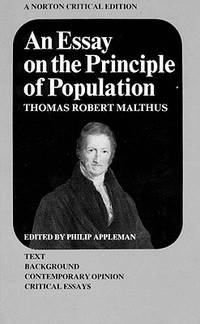
197656124W. W. Norton & Company Inc. As New. 1976. Paperback. 039309202X . FREE UPGRADE to Courier/Priority Shipping Upon Request IN STOCK AND IMMEDIATELY AVAILABLE FOR SHIPMENT - AS NEW THE TEXT BLOCK IS PRISTINE CLEAN UNMARKED AND IN EXCELLENT CONDITION - appears unread - 260 pages. -- with a bonus offer-- . W. W. Norton & Company Inc. paperback
71831E-090. Very Good. Hardcover. Leather. 8vo. Printed for J. Johnson by T. Bensley London UK. 1806. Two Volumes xvi 505 pgs; vii 559 pgs. Third Edition. Bound in gilt ruled fine calf leather with titles present to the spine. Boards have light shelf-wear present to the extremities boards are lightly rubbed and worn. Previous owner's bookplate present to the front pastedown. Text is clean and free of marks. Binding tight and solid. Third edition the first to be published in 2 volumes and the first published after the Great Quarto edition of 1803 of one of the most important and influential books in the history of economic thought. The third edition contained numerous revisions among which was a text entitled A Reply to the Chief Objections which have been urged against the Essay on the Principle of Population which was also published separately so that it might be bound with earlier ones. As the world's population continues to grow at a frighteningly rapid rate Malthus's classic warning against overpopulation gains increasing importance. An Essay on the Principle of Population examines the tendency of human numbers to outstrip their resources and argues that checks in the form of poverty disease and starvation are necessary to keep societies from moving beyond their means of subsistence. Malthus's simple but powerful argument was controversial in his time; today his name has become a byword for active concern about humankind's demographic and ecological prospects. ; 8vo 8" - 9" tall . hardcover
180752022<p>HANDSOME COPY IN CONTEMPORARY BOLDLY SPECKLED CALF<br />2 vols. tall 8vo. iii-xvi 580; iii-viii 484 58 indexpp. contemporary boldly speckled calf smooth spines richly decorated in gilt in panels using two different designs black lettering and russet numbering labels gilt board edges gilt rolled spines a trifle chaffed at headbands some cracking at ends of some joints but overall a very nice copy.<br />Near contemporary pencilled shelf number "D198" of Lord Dunraven of Adare Manor Co. Limerick on endpaper.<br /><br />KRESS B5219<br />This is edition incorporates the substantial revisions and additions which Malthus had made for his third edition of 1806. They are listed and described in full in his preliminary 'Advertisement' to that edition also printed here. The most substantial of the changes made was that "The chapters which were the fourth and sixth of the second book are nearly rewritten on account of an error into which the author had fallen in an attempt to estimate the fruitfulness of marriages and the number born living to be married from the data in registers" 'Advertisement'. Furthermore he added as an appendix here vol.2 p.429-484 his important Reply to the Chief Objections to the second edition of 1803. This appendix he had also published separately in quarto "for the accomodation of the purchasers of the former edition" 'Advertisement'.Malthus recommends that "those who have not the leisure or inclination to read the entire work will find in the appendix such notice of its most prominent arguments as will give them a good general idea of the aim and bent of the whole". In it he writes "My object is to correct some of the misrepresentations which have gone abroad respecting two or three of the most important points of the Essay. . The first grand objection that has been made to my principles is that they contradict the original command of the Creator to increase and multiply and replenish the earth . The next grand objection which has been urged against me is my denial of the right of the poor to support. . and lastly and rather a matter of feeling than of argument. Many persons have accused him of excessive pessimism in throwing a darker shade over our views of human nature and tending particularly to narrow our prospects of future improvement". All of these objections he attempts to refute.<br />From the library of Edwin R. W. Wyndham-Quin Viscount Adare F.R.S. of Adare Manor Co. Limerick.</p> Printed for J. Johnson .. by T. Bensley hardcover
1806156997London: for J. Johnson by T. Bensley 1806. The foundation text of modern demography Third edition the first edition to be published in two octavo volumes the format which was to remain the standard in Malthus's lifetime. This third edition has important alterations and additions particularly the appendix in which Malthus replied to some of his many critics; it follows the first edition of 1798 in a single octavo volume and the expanded second edition in quarto in 1803. Malthus's treatise on population is one of the most important and influential works in the history of economic thought and the foundation text of modern demography. "For today's readers living in a post-Malthus era the world's population problems are well known and serious but no longer sensational. It is difficult therefore to appreciate the radical and controversial impact made by the Essay at the time of publication. It challenged the conventional notion that population growth is an unmixed blessing. It discussed prostitution contraception and other sexual matters. And it gave vivid descriptions of the horrendous consequences of overpopulation and of the brutal means by which populations are checked" ODNB. Despite its unpopularity with liberal critics Malthus's principle of population became accepted as a central tenet of classical political economy and Charles Darwin acknowledged Malthus's influence in the development of his theory of natural selection. 2 vols octavo 209 x 128 mm. Bound without half-titles. Recent half calf red morocco label marbled sides. A few contemporary annotations in vol. II. Repairs to closed tears at head of A7 and A8 into text without loss slight sporadic spotting light dampstaining at lower outer corner of vol. II towards rear. A very good copy. Einaudi 3689; Goldsmiths' 19210; Kress B5067. unknown
163234728Paris Pierre Gvillemot 1632. 8vo. Cont. full limp vellum remains of ties. Titlelabel in red leather on back this with a small nick. Top of spine strenghtened with a strip of vellum. Engraved title with Neptun & Mars. 627710 pp. 28 half-page textengravings and 15 large wood-cut illustrations. A few scattered brownspots. A good copy. <br/><br/><em> Second enlaged edition of this scarce treatise of fireworks for war and recreation. The work is divided in five sections: the first 56 pp. to war pp. 57-146 to 'recreation' and pp. 147-277 to sundials fortification geometry and arithmetics. Of the English edition of 1629 Cockle says "This work though in advance of anything so far written on the subject in English does not attain to the standard of Thibourel and Appier. Yet it is with foreign treatises it must be weighed for Malthus received his training in pyrotechnics abroad.It was Malthus who about the year 1634 introduced the mortar into the French service." - Klaus Jordan: 2328 ed. 1629 - Chris Philip: M 040.3 - Cockle Nos 118 a. 939. </em> hardcover