542 résultats
1963029609Editions Gonthier broché Bristol illustré Paris 1963 236 pages en format 11 - 18 cm
1963045144Editions Gonthier broché Bristol illustré Paris 1963 bibliothèque médiations - 234 pages en format 11 - 18 cm
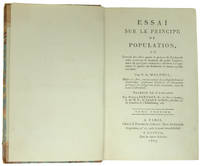
30964Paris & Genève J. J. Paschoud 1809. 3 vol. 120 x 195 mm de 424 395 et 392 p. Demi-veau brun dos ornés de fleurons à froid et roulettes dorées pièces de titre et de tomaison tranches jaunes mouchetées reliure légèrement postérieure. . Édition originale de la traduction française. . Au début des années 1790 le philosophe anglais William Godwin expose un « principe de population ». Réagissant principalement à la thèse alors développée par Godwin Malthus fait alors paraître la première édition de son Essai sur le principe de population un pamphlet qui paraît - anonymement - en 1798. Il y substitue en 1803 ce qui se veut un traité plus scientifique dans lequel il se réfère aussi à quatre autres sources importantes : Of the Populousness of Ancient Nations de David Hume A Dissertation on the Numbers of Mankind de Robert Wallace Observations on Reversionary Payments de Richard Price et An Inquiry into the Nature and Causes of the Wealth of Nations d'Adam Smith. Deux ans après cette parution l'Essai fait l'objet d'une traduction partielle par le Suisse Pierre Prévost qui fut professeur de physique et de philosophie à l'Université de Genève. Certains chapitres sont intégralement traduits tandis que d'autres ne le sont que partiellement. Prévost accompagne sa traduction de notes et commentaires personnels ; encouragé par Malthus il fait paraître en 1809 à Paris et à Genève cette nouvelle édition la première complète donnée d'après la dernière établie par Malthus en 1807 la quatrième édition anglaise. « Malthus m'a même autorisé en conséquence à y faire les changements que j'estimerais nécessaires. Je n'ai pas abusé de cette permission. Je me suis prescrit au contraire de faire connaître l'ouvrage de M. Malthus tel qu'il l'a lui-même publié. L'appendice est la seule partie où j'ai fait des retranchements et quelques modifications sans les indiquer en détail ; parce que les objections que l'auteur y discute m'ont paru quelquefois trop faibles ou trop particulières pour mériter d'être exposées et réfutées dans une traduction avec autant d'étendue qu'elles le sont dans l'original. Mais j'ai supprimé certains morceaux et même des chapitres entiers qui s'écartent un peu du sujet principal ou qui sont trop immédiatement relatifs à l'Angleterre. » « L'Essai du révérend Malthus causa en 1798 un véritable choc idéologique dans une Angleterre en crise traumatisée par la Révolution française. Ce texte contient la première formulation - inchangée dans les cinq éditions suivantes - du principe de population. Avancée fondamentale ce principe affirme que les vitesses de croissance de la population et des subsistances sont très différents la première augmentant plus rapidement que la seconde .» INED préface à l'édition critique de 2017. Son analyse des crises de surproduction l'oppose à Jean-Baptiste Say et en fait un précurseur de Keynes - par l'accent qu'il met sur l'insuffisance de la demande - ce dernier soulignant qu'il est « le premier des économistes de Cambridge ». Rare première traduction française de cette référence majeure dans l'histoire des idées. Bon exemplaire. De la bibliothèque Antoine Larue avec ex-libris. Dirigeant de plusieurs entreprises de l'industrie chimique dans la deuxième partie du XXe siècle sa bibliothèque sera dispersée en 1985 puis 1993 à l'Hôtel Drouot par Claude Guérin. Printing and the Mind of Man n° 251 pour l'édition originale anglaise de 1798 ; Kress B 5591. Paris & Genève, J. J. Paschoud, 1809. 3 vol. (120 x 195 mm) de 424, 395 et 392 p. Demi-veau brun, dos ornés de fleurons à fro unknown
180912840Paris and Geneva: Chez J.J. Paschoud 1809. 3 volumes. First Edition in French. Provenance: With the contemporary engraved bookplate of H. Trouchin and that of the subsequent owner Pierre Sciclounoff. 8vo very handsomely bound in a fine French binding of contemporary half calf over speckled boards spines with gilt ruled bands red morocco title label and green morocco volume label lettered in gilt. xxiii 424 3 ad; 395 3; 392. A very fine and handsome set very clean and sturdy in absolutely period state. The first French edition of Malthus’ landmark work. The translation from the English is by Pierre Prevost probably from the third English edition which was corrected and expanded by Malthus. French editions of Malthus are uncommon and this set is in exceptional condition in its original and contemporary state.<br> Originally written in response to a discussion with the author's father on the perfectibility of society the book was reprinted several times with many alterations and additions as Malthus defended his views against a host of critics.<br> "The central idea of the essay--and the hub of Malthusian theory--was a simple one. The population of a community Malthus suggested increases geometrically while food supplies increase only arithmetically. If the natural increase in population occurs the food supply becomes insufficient and the size of the population is checked by 'misery'--that is the poorest sections of the community suffer disease and famine. Malthus recognized two other possible checks to population expansion: first 'vice'--that is homosexuality prostitution and abortion all totally unacceptable to Malthus; and second 'moral restraint'--the voluntary limitation of the production of children by the postponement of marriage. This was the solution to the population problem that Malthus advocated. The 'Essay' was highly influential in the progress of thought in early nineteenth-century Europe" PMM. Marx Engels Paley Darwin Wallace Keynes and Ricardo were all influenced by Malthus--either working off his ideas or reacting against them. Chez J.J. Paschoud hardcover
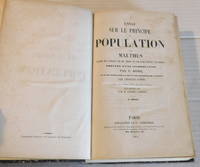
1852101094<p>Paris: Guillaumin et Cie Libraires 1852. 1852. Good. - Octavo 9-5/8 inches high by 6-1/2 inches wide. Hardcover bound into black & white marbled boards backed with a black cloth spine titled & ruled in gilt on the spine. The covers are rubbed & soiled. lvi & 688 pages. There is foxing throughout particularly at the front & rear. Good.</p> Paris: Guillaumin et Cie, Libraires, 1852. hardcover
1021910120.Gpaperback. Good. Access codes and supplements are not guaranteed with used items. May be an ex-library book. paperback
1021729191.Gpaperback. Good. Access codes and supplements are not guaranteed with used items. May be an ex-library book. paperback
1020009284.Ghardcover. Good. Access codes and supplements are not guaranteed with used items. May be an ex-library book. hardcover
1020075929.Ghardcover. Good. Access codes and supplements are not guaranteed with used items. May be an ex-library book. hardcover
1120503574.Gpaperback. Good. Access codes and supplements are not guaranteed with used items. May be an ex-library book. paperback
1166782018.Gpaperback. Good. Access codes and supplements are not guaranteed with used items. May be an ex-library book. paperback
1166788164.Gpaperback. Good. Access codes and supplements are not guaranteed with used items. May be an ex-library book. paperback
1166806200.Gpaperback. Good. Access codes and supplements are not guaranteed with used items. May be an ex-library book. paperback
1175428353.Gpaperback. Good. Access codes and supplements are not guaranteed with used items. May be an ex-library book. paperback
1286960479.Gpaperback. Good. Access codes and supplements are not guaranteed with used items. May be an ex-library book. paperback
1120497418.Gpaperback. Good. Access codes and supplements are not guaranteed with used items. May be an ex-library book. paperback
1120521637.Gpaperback. Good. Access codes and supplements are not guaranteed with used items. May be an ex-library book. paperback
1179178939.Gpaperback. Good. Access codes and supplements are not guaranteed with used items. May be an ex-library book. paperback
180931327Paris & Genève Chez J.J. Paschoud 1809. 8vo. Bound in three nice uniform cont. hcalfbdgs. w. gilt backs red leather title-labels w. gilt lettering and gilt round green tome-labels on backs. Capitals w. a bit of wear. Internally nice and clean. W. half-titles in all three volumes and advertisement-leaf in vol. one. XIII 1 424 5; 6 395 1; 4 392 pp. <br/><br/><em>First French edition of this political and economic classic which constitutes Malthus' first major publication and his main work because of which he is considered the father of demography and the main source of inspiration of Darwin and Wallace.The first edition was printed anonymously in London in 1798 and in 1803 the second edition which also according to Malthus himself can be said to constitute a new work appeared; -the great quarto edition from 1803 is thoroughly revised and much enlarged the title has been changed and Malthus' name appears on the title-page it is on this edition that all the preceding editions are based and in consequence also the early translations. All the later editions were minor revisions of the second one. In 1807 the fourth edition appeared and in 1809 the first French one which is translated from the revised fourth edition "A la suite de cette préface on trouve dans la 4.e édition sur laquelle je traduis une notice de tous les changements que la 3.e édition a apportés à la 2.e. Le plus considérable est celui qui a rapport à l'estimation de la fécondité des mariages. Il est absolument inutile pour les lecteurs francois de connoître le détail minutieux des autres changemens qui ne peuvent intéresser que les acquéreurs des précédentes éditions. P.P.p" Préface p. xxiij. New revisions of the text kept appearing till the sixth edition in 1826.The book then as now is considered highly controversial and it has influenced all demographers ever since as well as being of immense importance to the study of economic theory and genetic inheritance. "The "Essay" was highly influential in the progress of thought in the early nineteenth-century Europe. "Parson" Malthus as Cobbett dubbed him was for many a monster and his views were often grossly misinterpreted. But his influence on social policy whether for good or evil was considerable. The Malthusian theory of population came at the right time to harden the existing feeling against the Poor Laws and Malthus was a leading spirit behind the Poor Law Amendment Act of 1834." PMM 251.Thomas Robert Malthus 1766-1834 called the "enfant terrible" of the economists was an English demographer statistician and political economist who is best known for his groundbreaking views on population growth presented in his "Essays on the Principle of Population" which is based on his own prediction that population would outrun food supply causing poverty and starvation. Among other things this caused the legislation which lowered the population of the poor in England. Malthus actually turned political economic and social thought upside down with this work which has caused him to be considered one of the 100 most influential persons in history Hart The 100: A Ranking of the most Influential Persons in History 1978. Of course he was condemned by Marx and Engels and opposed by the socialists universally but the work was of immense impact on not only politics economics social sciences etc but also on natural sciences. "Later in the "Origin of Species" he Darwin wrote that the struggle for existence "is the doctrine of Malthus applied with manifold force to the whole animal and vegetable kingdoms; for in this case there can be no artificial increase of food and no prudential restraint from marriage" p. 63. Alfred Russel Wallace who arrived at a worked-out formulation of the theory of evolution at almost precisely the same time as Darwin acknowledged that "perhaps the most important book I read was Malthus's "Principles of Population" My Life p. 232. Although there were four decennial censuses before Malthus' death he did not himself analyze the data although he did influence Lambert Quetelet and Pierre Verhulst who made precise statistical studies on growth of populations in developed countries and showed how the early exponential growth changed to an S curve." DSB IX p. 69.As Malthus realized that his theories were not satisfactorily presented or sufficiently demonstrated in the first edition from 1798 he travelled for three years through Europe gleaning statistics and then published the second edition in 1803. Among other places he travelled through France and Switzerland in 1802 and his detailed diaries of these journeys provided him with some of the evidence necessary for the development of his theory on population growth. The observational information that he gathered on his travels in Europe were crucial to the development of his theories which also means that the work is of great interest for other European countries and not only Britain. "In 1819 the Royal Society elected Malthus to a fellowship. He was also a member of the French Institute and the Berlin Academy and a founding member of the Statistical Society 1834." DSB IX p. 67. Printing and the Mind of Man 251 </em> hardcover
180993446Paris: J. J. Paschoud 1809. The most influential work of its era on population in a contemporary binding First French edition translated by Pierre Prévost. First published in English in 1798 it was perhaps the most influential work of its era on population arguing that the growth of a population would always outrun its ability to feed itself. The first edition was so successful that Malthus soon elaborated on it under his real name culminating in the sixth edition of 1826 which was a scholarly expansion of the first. A political economist who occupies a hallowed place in the history of biology Malthus was acknowledged by both Charles Darwin and Alfred Russel Wallace as a key influence in developing the theory of natural selection. 3 vols octavo. Contemporary quarter calf marbled boards brown morocco labels spines lettered in gilt with gilt and black motifs edges uncut. Board edges slightly faded and a little scuffed joints tender tips bumped and lightly rubbed. A very good set. Carpenter XXXII 7; Kress B.5591. hardcover
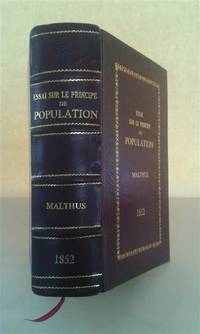
2019BIBSD0099323142019. Full Leather Bound. NEW. Size: 14.60 x 22.86 cms A Unique Premium Leather-Bound book for elite readers/collectors of old rare books. An Original Leather is being used for binding this book with Golden Leaf Printing and designing on Spine front and Back of the book with edge gilding. WE HAVE MULTIPLE OPTIONS IN COLOR OF LEATHER RED GREEN BLUE MAGENTA TAN PURPLE DEEP BROWN BLACK AND WITH DIFFERENT COLOR LABELS. YOU MAY CHOOSE ANY COLOR OF YOUR CHOICE AND MAIL US. This service is chargeable. Original edition was published in 1852 and this unique edition is Reprinted in 2019 with the help of original edition. Black & white printing on high quality natural shade paper with sewing binding for longer life professionally processed without changing its contents. As these are old books we processed each page manually on computer and make them readable. We give our best to give you the best book but in some cases we have to adjust few pages which are blur or missing or black spots. If it is multi volume set then it is only single volume. We hope that you understand these issues in these old treasure. This is an important book for the readers who want to know more about our old treasure. Our dedicated team is trying to bring these rare books back to the shelves. We are also giving service of printing the hard-to-find books which are not listed in our store. Hope you will like it and give your comments and suggestions. Lang: - French Pages 750. Product Disclaimer: Please be aware that because leather is a natural material slight discoloration or change in texture may be visible. FOLIO EDITION Size 12x19 Inches IS ALSO AVAILABLE ON REQUEST. Please Note - Text Destroyed hardcover
1391518454.Ghardcover. Good. Access codes and supplements are not guaranteed with used items. May be an ex-library book. hardcover
1841018705Bruxelles: Société Typographique Belge Wahlen 1841. .suivi de quelques recherches relatives à l'espérance de guérir ou d'adoucir les maux qu'elle entraine. Traduit de l'anglais sur la 5me édition par P. Prevost et G. Prevost de Génève. Nouvelle édition revue corrigee et augmentee . d'apres MM. Balbi et d'Omalius d'Halloy. Due volumi 19 cm di 4-422 e 4-448 pagine. Qualche fioritura. Timbro di possesso Polesini alle pagine di titolo; ex libris al retro della copertina. In lingua francese. Brossura editoriale una gora e dorsi restaurati muti. Société Typographique Belge, Wahlen unknown
0460006924.Ghardcover. Good. Access codes and supplements are not guaranteed with used items. May be an ex-library book. hardcover
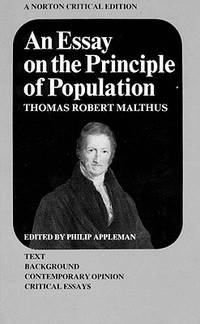
197600003634W W Norton & Co Inc 1976. Third printing. Paperback. New. r. 260 pages. <br/><br/> W W Norton & Co Inc, paperback