80 résultats
19362111902158501807Gifu Branch of Japan Seamen's Election 1936. Soft Cover. Fine. Number of pages: 82p. Size: 19cm Gifu Branch of Japan Seamen's Election paperback
19572110502150412528Hogaku no Tomosha 1957. Soft Cover. Fine. Volume: 1 Hogaku no Tomosha paperback
19812091502135414764Not Available 1981. Soft Cover. Fine. Number of books: 2 Not Available paperback
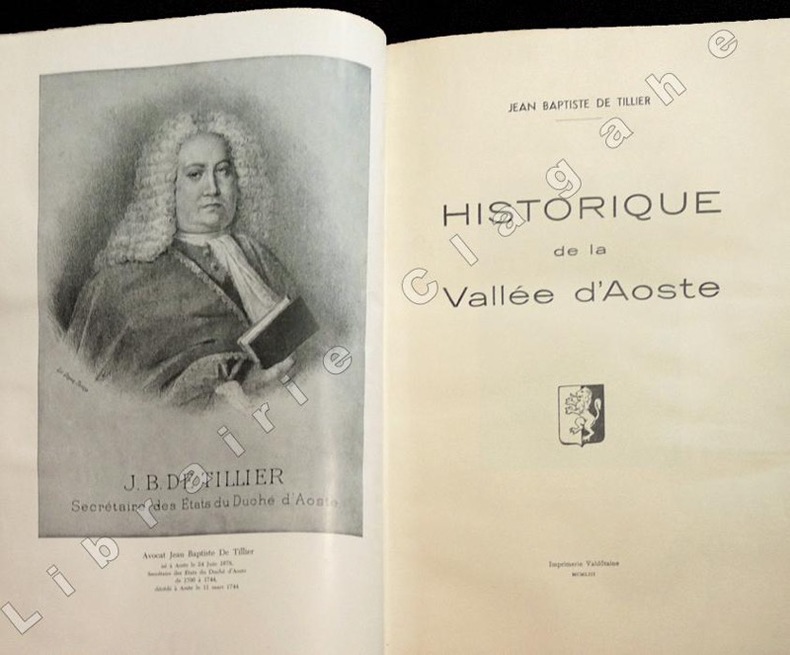
195318425Aoste, Imprimerie Valdôtaine, 1953 ; grand in-8, pleine basane havane, dos à nerfs décoré de motifs géométriques à froid, titre doré, premier plat décoré et doré, roulette dorée d'intérieur (reliure de l’éditeur) ; XXXII, 510, (6) pp., 36 illustrations dy compris le frontispice, dont 8 en couleurs.
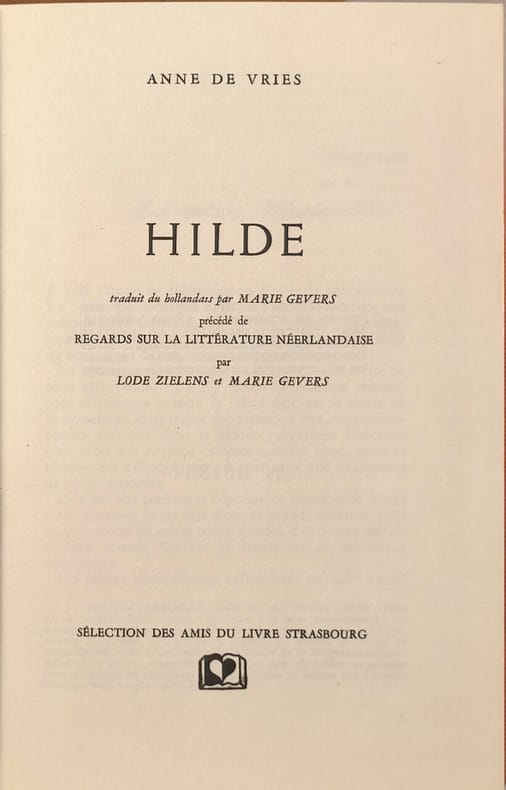
19624190Sélection des Amis du Livre Strasbourg 1962 257 pages in8. 1962. Reliure éditeur pleine toile sous rodhoid. 257 pages.
19533042836St. Louis, Pio Decimo Press (1953). 63 Seiten, 8° (22 x 14 cm), Hardcover (gebunden), Priv.-Halbleineneinband.
2000014249U.S. Government Printing Office 2000. Good condition Ex-Library Softcover Octavo 2000 1st edition 148 pages. Clear tape is reinforcing the edges of the wraps. Usual library disfigurements otherwise interior is unmarked and solid. NOT A REPRINT! THIS IS THE REAL DEAL!. First Edition. Trade Paperback. Good. 8vo - over 7" - 9" tall. Book. U.S. Government Printing Office Paperback
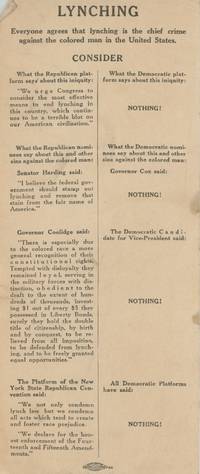
1920List2706Chicago or New York 1920. 6 x 9 inches single sided. Toning several small stains small fold at top left corner; near fine. An anonymous handbill decrying lynching in the United States and advertising the differences in anti-lynching policy between the Republican and Democratic parties. The header states that “Everyone agrees that lynching is the chief crime against the colored man in the United States†and the remainder illustrates the great disagreement over just what to do about it. The left column quotes the Republican platform and its then-nominees Warren G. Harding and Calvin Coolidge who would shortly be elected to office on their support for federal anti-lynching legislation. The right column points out that the Democratic platform and its nominees James M. Cox and Franklin D. Roosevelt all “said: NOTHING!†on this issue. Lynching would not be made a federal hate crime until 2022 nearly 100 years later. As of writing we find no other copies of this handbill in OCLC. unknown
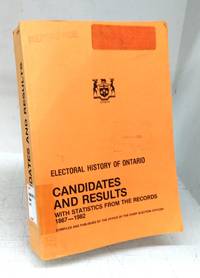
1983146381Toronto ca. 1983. Softcover. ex library-good. 36 668 p. 24 cm. Orange card covers. Ex library with labels outside ink stamps outside and on first leaf. <br/><br/> paperback
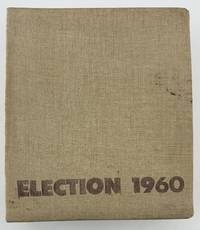
19604337Various locations in and around Chicago Il: likely early November 1960. Very good plus. Title leaf plus 25 leaves illustrated with forty-seven silver gelatin photographs pasted one per leaf or page all about 5.5 x 7.5 inches plus five loose images two duplicates and three other images not pasted in. Square quarto. Contemporary tan cloth custom photograph album metal-hinged spine front cover printed with title reading "ELECTION 1960." Minor wear and soiling to album. Light occasional thumb-soiling to album leaves ownership signature reading "G. Robert Hillman" on title leaf. Photographs in excellent condition. An utterly charming vernacular photograph album assembled during the seminal Presidential Election of 1960 one of the closest presidential elections in United States history which pitted Vice President Richard Nixon against the junior Senator from Massachusetts John F. Kennedy. The album features about fifty original photographs on the campaign trail in Illinois beginning with about a dozen-and-a-half images of Richard Nixon and his local supporters. The photographs capture various angles of Nixon during his stump speech a young boy waving an "I'm for Nixon" handmade sign another young boy with a Nixon button on his coat crowd scenes a large campaign sign for Nixon-Lodge outside a local store and more. One image featuring a mixed crowd of Nixon and Kennedy supporters transitions into the next section of photographs which concentrates on JFK's campaign. The first image in this section is a closeup of a "Kennedy for President" hat followed by four images of JFK's campaign manager Robert Kennedy making a speech three images of Eleanor Roosevelt stumping for Kennedy five images of Lyndon Johnson and his airplane numerous shots of Kennedy supporters and crowd shots outside Chicago Blackhawks stadium. The photographs then feature the inside of Chicago Auditorium where the first three images depict John F. Kennedy - the first shaking hands with Chicago's longtime Mayor Richard Daley and two during his speech likely his speech of November 4 1960 - just four days before Election Day. The final three images show supporters of both candidates.<br /> <br /> The 1960 United States Presidential Election was a watershed moment for the campaign politics of the country. Senator Kennedy won the election with a clear Electoral College margin of 303 to 219. However Vice President Nixon won three more states than Kennedy and lost the popular vote only by about 110000 votes out of more than 68 million votes cast. The election set the course for most of the remainder of the 1960s but left Nixon soured and suspicious that the election had been stolen from him - a feeling he never let go and one with ominous echoes today. As indicated in the present album the 1960 presidential election was passionate on both sides with each candidate drawing large enthusiastic crowds for their appearances.<br /> <br /> The signature on the title leaf of the present album likely identifies the compiler. G. Robert Hillman is a Senior Editor for Politico. Hillman was born in Peoria and grew up on a farm near Flanagan Illinois about a hundred miles from Chicago. He went to college at the University of Illinois at Urbana-Champaign and began his career at Chicago Today and the Chicago Sun-Times. Hillman would have been in middle school during the 1960 election campaign not too precocious for a young man obsessed with politics especially during one of the most heated and media-intensive campaigns of the 20th century. likely early November unknown
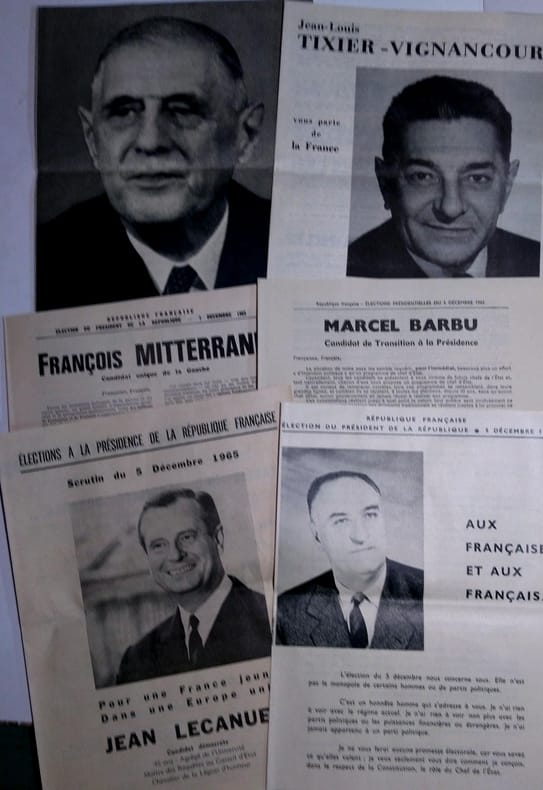
1965137832- 6 documents 21 x 27 cm de 1 à 4 pages.
1985111516Nanterre, Archives départementales des Hauts de Seine 1985 In-8 broché 24 cm sur 17,8. 445 pages. Couverture écornée Bon état d’occasion.
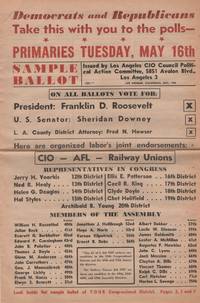
1944204433Los Angeles: Los Angeles CIO Council 1944. Piece of one corner missing; folded once horizontally; evenly toned. Four-page flyer printed on a single bifolium of newsprint approx. 11-1/2 X 16-1/2 inches. Fragile tabloid-style sample ballot for union members with recommendations from organized labor for national and local offices. Los Angeles CIO Council unknown
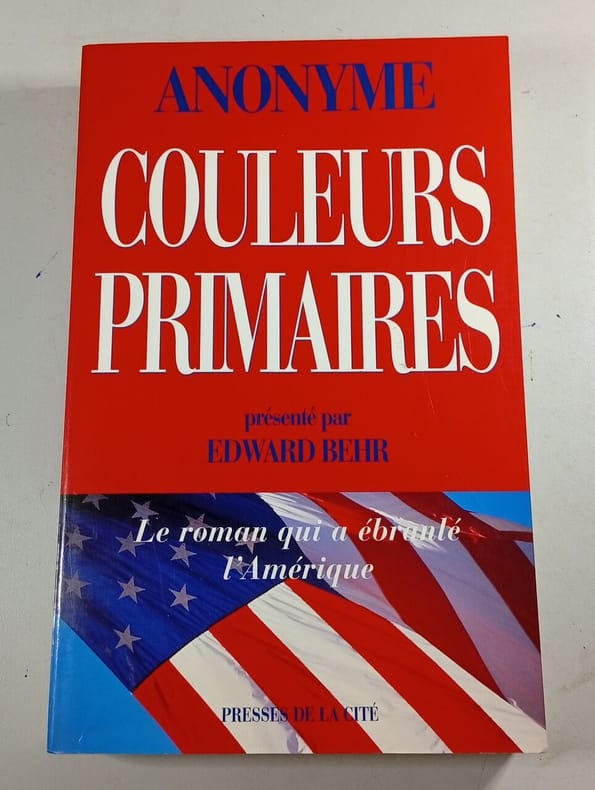
1996500375724Presses de la cité / Document 1996 401 pages in8. 1996. Broché. 401 pages. Le roman qui a ébranlé l'Amérique
19952090502126803112New Japan Hoki Publishing 1995. Soft Cover. Fine. Number of pages: 1567 pages Size: A5 size New Japan Hoki Publishing paperback
197914898Paris, Imprimerie Repso-Laffitte (imprimé à compte d'auteur), 1979 ; in-8, broché ; (4), 175 pp., (1) f. de table, couverture orange, nombreuses cartes, tableaux et photographies.
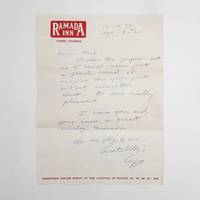
1979375947Casper Wyoming 1979. 8vo. One sheet Ramada Inn letterhead written in blue ink recto only. 8vo. "Dear Mace- Pardon the paper-but as I head home just a quick word of thanks for your part in that successful event-I was really pleased. I hope you and yours have a great Holiday Season. We underlined are going to win. Gratefully George. unknown
193624942<p>This sheet contains five rough sketches of graphics calling on the workers and voters of America to support Franklin D. Roosevelt's reelection in 1936. They did in record numbers.</p> <b>PRESIDENTIAL ELECTION OF 1936.</b>Typed Document Signed. Artwork by Franz Felix and Ideas and Copy by Richard Barron "Set of Rough Sketches Containing Some Suggested Promotion Ideas to be Used in the 1936 Democratic Presidential Campaign" July 2 1936. 1 p. 12 x 10½ in.<p><b><br /></b></p><p><b>Excerpts:</b></p><p>"<i>1. Sounding the call against 'economic royalists' in the spirit of 1776.</i>"</p><p>"<i>2. Appropriating the well-known symbol of violence</i> upraised fist<i> diverting it to peaceful democratic use. To include the farmer phrase the appeal: TOILERS OF AMERICA – UNITE FOR ROOSEVELT.</i>"</p><p>"<i>3. The statue of 'The Thinker' as a symbol of the man today who thinks the toiler with brawn and brain.everyman.</i>"</p><p>"<i>4. Direct appeal to radical labor and leftists in general.</i>"</p><p>"<i>5. Another way of appealing to the working class men and women.</i>"</p><p>"<i>This collaborative effort respectfully submitted for consideration to the Chairman of the Democratic National Committee Mr. James A. Farley.</i>"</p><p><b>Historical Background</b></p><p>After unseating incumbent Republican President Herbert Hoover in 1932 President Franklin D. Roosevelt ran for reelection in 1936. His Republican opponent was Governor Alf Landon of Kansas. Although the Great Depression had entered its eighth year Roosevelt's New Deal policies were broadly popular. He won the highest share of the popular and electoral vote since the uncontested 1820 election. Roosevelt attracted more than 60 percent of the popular vote and won the electoral votes of 46 states; Landon won the electoral votes of only Maine and Vermont.</p><p>Democratic Party chairman James Farley had predicted that Roosevelt would lose only Maine and Vermont. After the results of the 1936 election Farley quipped that the nation needed to revise the conventional political wisdom of "As Maine goes so goes the nation" to "As Maine goes so goes Vermont."</p><p>These ideas for campaign imagery employed or modified common images to support Roosevelt's campaign. One drew on the imagery of artist Archibald Willard's 1875 painting <i>The Spirit of '76</i> and employed three figures of workers to match the subjects of Willard's image. Another appropriated the upraised fist as a symbol of violence and repurposed it as a symbol of defiant unity against "<i>economic royalists</i>." A third used an image of <i>The Thinker</i>by French sculptor Auguste Rodin 1840-1917 to appeal to thinking voters. Another image appeals to the fears of radicals that the alternative to Roosevelt is "<i>Reaction</i>."</p><p>Richard Barron and artist Franz Felix submitted these ideas to Democratic National Committee chairman James A. Farley on July 2 1936 three weeks before the Democratic Party held its convention in Philadelphia. There is no evidence that these images were used in the campaign and it is possible that Farley rejected them. At the end of the campaign the Democratic National Committee had a campaign deficit of approximately $850000. To help offset those expenses the treasurer convinced President Roosevelt to sign 2500 brief Forewords which were bound into <i>The Democratic Book 1936</i> and sent to donors of $250. Purchases brought in more than $400000 for the party and led Republicans to charge corrupt practices for allowing corporations to contribute to the campaign by buying copies.</p><p><b>Franz Felix</b> 1892-1967 was born in Vienna Austria and developed an ability as a child to draw portraits in charcoal. He studied portraiture in Vienna and immigrated to the United States shortly after World War I. He settled in San Francisco where he established himself as a portrait artist and commercial illustrator. In the late 1920s he moved to New York and established a studio in the suburb of Spring Valley where he produced book and magazine illustrations. During World War II he painted a series of murals of wartime activities of Spring Valley residents.</p><p><b>James A. Farley</b> 1888-1976 was born in New York into an Irish Catholic family. After his father died he helped his mother with a small business to support the family. After graduating from Packard Business College in New York City where he studied bookkeeping and other business skills Farley got a job with the U.S. Gypsum Corporation. He served as a Democratic town clerk in Stony Point New York and became chairman of the county's Democratic Party in 1918. He organized upstate Democrats and helped elect Alfred E. Smith as Governor that year. He served in the New York State Assembly in 1923 but was defeated at the next election for supporting the repeal of Prohibition. As chair of the state Athletic Commission Farley fought for the civil rights of African American athletes. Farley founded he General Builders Corporation from smaller firms to become New York City's largest building supply company. Farley directed Franklin D. Roosevelt's narrowly successful New York gubernatorial campaign in 1928 and his reelection in 1930. Farley served as chairman of the New York State Democratic Committee from 1930 to 1944 and helped build the national New Deal coalition that elected Roosevelt to the Presidency four times. In 1932 Farley became the chairman of the Democratic National Committee and in 1933 U.S. Postmaster General. He held both positions until 1940. Farley and Roosevelt broke on the two-term tradition of the Presidency in 1940 and he later helped propose the 22nd Amendment to the U.S. Constitution limiting a person to two elections as president approved by Congress in 1947 and ratified in 1951. Farley became chairman of the board of the Coca-Cola Export Corporation in 1940 and held that position for more than thirty years.</p> books
193624942<p>This sheet contains five rough sketches of graphics calling on the workers and voters of America to support Franklin D. Roosevelt's reelection in 1936. They did in record numbers.</p><p><strong>PRESIDENTIAL ELECTION OF 1936.</strong> Typed Document Signed. Artwork by Franz Felix and Ideas and Copy by Richard Barron "Set of Rough Sketches Containing Some Suggested Promotion Ideas to be Used in the 1936 Democratic Presidential Campaign" July 2 1936. 1 p. 12 x 10½ in.</p><p><strong>Excerpts:</strong></p><p>"<em>1. Sounding the call against 'economic royalists' in the spirit of 1776.</em>"</p><p>"<em>2. Appropriating the well-known symbol of violence</em> upraised fist<em> diverting it to peaceful democratic use. To include the farmer phrase the appeal: TOILERS OF AMERICA – UNITE FOR ROOSEVELT.</em>"</p><p>"<em>3. The statue of 'The Thinker' as a symbol of the man today who thinks the toiler with brawn and brain.everyman.</em>"</p><p>"<em>4. Direct appeal to radical labor and leftists in general.</em>"</p><p>"<em>5. Another way of appealing to the working class men and women.</em>"</p><p>"<em>This collaborative effort respectfully submitted for consideration to the Chairman of the Democratic National Committee Mr. James A. Farley.</em>"</p><p><strong>Historical Background</strong></p><p>After unseating incumbent Republican President Herbert Hoover in 1932 President Franklin D. Roosevelt ran for reelection in 1936. His Republican opponent was Governor Alf Landon of Kansas. Although the Great Depression had entered its eighth year Roosevelt's New Deal policies were broadly popular. He won the highest share of the popular and electoral vote since the uncontested 1820 election. Roosevelt attracted more than 60 percent of the popular vote and won the electoral votes of 46 states; Landon won the electoral votes of only Maine and Vermont.</p><p>Democratic Party chairman James Farley had predicted that Roosevelt would lose only Maine and Vermont. After the results of the 1936 election Farley quipped that the nation needed to revise the conventional political wisdom of "As Maine goes so goes the nation" to "As Maine goes so goes Vermont."</p><p>These ideas for campaign imagery employed or modified common images to support Roosevelt's campaign. One drew on the imagery of artist Archibald Willard's 1875 painting <em>The Spirit of '76</em> and employed three figures of workers to match the subjects of Willard's image. Another appropriated the upraised fist as a symbol of violence and repurposed it as a symbol of defiant unity against "<em>economic royalists</em>." A third used an image of <em>The Thinker</em> by French sculptor Auguste Rodin 1840-1917 to appeal to thinking voters. Another image appeals to the fears of radicals that the alternative to Roosevelt is "<em>Reaction</em>."</p><p>Richard Barron and artist Franz Felix submitted these ideas to Democratic National Committee chairman James A. Farley on July 2 1936 three weeks before the Democratic Party held its convention in Philadelphia. There is no evidence that these images were used in the campaign and it is possible that Farley rejected them. At the end of the campaign the Democratic National Committee had a campaign deficit of approximately $850000. To help offset those expenses the treasurer convinced President Roosevelt to sign 2500 brief Forewords which were bound into <em>The Democratic Book 1936</em> and sent to donors of $250. Purchases brought in more than $400000 for the party and led Republicans to charge corrupt practices for allowing corporations to contribute to the campaign by buying copies.</p><p><strong>Franz Felix</strong> 1892-1967 was born in Vienna Austria and developed an ability as a child to draw portraits in charcoal. He studied portraiture in Vienna and immigrated to the United States shortly after World War I. He settled in San Francisco where he established himself as a portrait artist and commercial illustrator. In the late 1920s he moved to New York and established a studio in the suburb of Spring Valley where he produced book and magazine illustrations. During World War II he painted a series of murals of wartime activities of Spring Valley residents.</p><p><strong>James A. Farley</strong> 1888-1976 was born in New York into an Irish Catholic family. After his father died he helped his mother with a small business to support the family. After graduating from Packard Business College in New York City where he studied bookkeeping and other business skills Farley got a job with the U.S. Gypsum Corporation. He served as a Democratic town clerk in Stony Point New York and became chairman of the county's Democratic Party in 1918. He organized upstate Democrats and helped elect Alfred E. Smith as Governor that year. He served in the New York State Assembly in 1923 but was defeated at the next election for supporting the repeal of Prohibition. As chair of the state Athletic Commission Farley fought for the civil rights of African American athletes. Farley founded he General Builders Corporation from smaller firms to become New York City's largest building supply company. Farley directed Franklin D. Roosevelt's narrowly successful New York gubernatorial campaign in 1928 and his reelection in 1930. Farley served as chairman of the New York State Democratic Committee from 1930 to 1944 and helped build the national New Deal coalition that elected Roosevelt to the Presidency four times. In 1932 Farley became the chairman of the Democratic National Committee and in 1933 U.S. Postmaster General. He held both positions until 1940. Farley and Roosevelt broke on the two-term tradition of the Presidency in 1940 and he later helped propose the 22nd Amendment to the U.S. Constitution limiting a person to two elections as president approved by Congress in 1947 and ratified in 1951. Farley became chairman of the board of the Coca-Cola Export Corporation in 1940 and held that position for more than thirty years.</p>
1928164641928 une plaquette Electorale, brochée verte in-octavo Editeur (paperback great in-8 editor) (13,3 x 21 cm), dos muet insolé (spine without title fading), 1ère de couverture Imprimée en noir (first cover printed), orné d'un portrait photographiques en noir en Frontispice + 7 photographies hors-texte en noir, 32 pages, 1928 Nantes Imprimerie du Commerce Editeur,
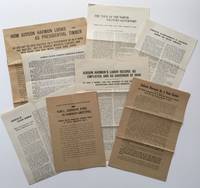
1912371Columbus Oh 1912. About very good. Eight pieces including one 12pp. pamphlet and seven broadsides and bifolia. Old folds light wear. Several items evenly tanned. An informative group of eight extremely scarce or unrecorded pieces promoting the presidential campaign of Ohio Governor and former U.S. Attorney General Judson Harmon in 1912. Harmon eventually lost out to Woodrow Wilson at the Democratic National Convention. The most substantial piece a twelve-page pamphlet concerning Harmon's "presidential timber" located only at the Ohio History Center lavishes praise upon his character and provides a lengthy discussion and defense of his legislative record as Governor. The remaining pieces are not recorded by OCLC and include an endorsement from the late mayor of Cleveland Tom L. Johnson a broadside comparing Harmon's record with Wilson's a four-page endorsement by Charles H. Wirmel leader of the Ohio Steam Engineers Union a broadside printing of endorsements from Progressive leaders in the Democratic Party and two printings of remarks made by Harmon before Democratic Party gatherings. Scarce and ephemeral material on the Democratic contest for the presidential nomination in 1912. unknown books
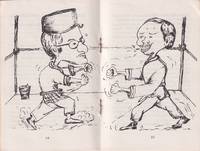
1986222683Johor Bahru.: Partai Sosialis Rakyat Malaysia. Circa1986. Three black and white political cartoons 28pp. 15 x 10pp. Original stapled wrappers little browned a prior owner's name lightly pencilled in red upper wrapper overall in good condition. A short publication issued by the Malaysian People's Party at the time still operating as the Malaysian Socialist People's Party in the lead up to the 1986 election. Within are a few short commentaries on the dysfunction within UMNO with particular interest in the so-called AIDS faction in the party. Scarce; we have only been able to find one institution holding this publication. . Partai Sosialis Rakyat Malaysia. unknown
191412419Lyon, A. Rey, 1914 ; in-8, broché ; (4), VI, 406 pp., portrait de M. Prost de Royer en frontispice, couverture vieux rose imprimée.
191416279Lyon, A. Rey, 1914 ; in-8 ; demi-veau fauve flammé, dos à quatre nerfs encadrant l'auteur et le titre dorés, premier plat conservé (reliure de l'époque) ; (4), VI, 406 pp., portrait de M. Prost de Royer en frontispice.
19522110502150303332Aichi County Election Administration Commission 1952. Soft Cover. Fine. Volume: 1 Aichi County Election Administration Commission paperback