collectifLivre Rare Book
1 369 résultats
55971276 pages en un fort volume in 4 plein cuir fauve raciné à nerfs, pièce de titre et tomaison absentes. Fers dorés. Raccommodages,coiffes,coins, mors;Intérieur très bon état, à signaler,cependant, quelques pâles mouillures en marge inférieure en fin de volume.Ensemble très correct et très solide.1754:2janvier au 31 décembre, 212 pages. 1755:2 janvier au 25 décembre 208 pages, 1756 2janvier au 26 décembre,212 pages,1757:vignette en tête 2 janvier 23 décembre 208 pages.Suite des additions aux nouvelles ecclésiastiques des années 1750 & 1753,24 pages.1758: vignette en tête 2 janvier 24 décembre ,208pages. 1759 2 janvier 22 décembre 204 pages. Rare "Fondateurs, collaborateurs, directeurs, contributeurs Jacques FONTAINE DE LA ROCHE; de 1761 à 1793, Marc-Claude GUENIN DE SAINT-MARC, Louis GUIDI, Pierre-Etienne GOURLIN, Noël CASTERA DE LARRIÈRE, Jean HAUTEFAGE Les N.E. se proposent de faire l'histoire des persécutions subies par les jansénistes de France depuis la promulgation de la bulle Unigenitus en 1713. Elles se composent d'abord de témoignages des fidèles persécutés, des martyrs de la foi; chaque suite est généralement faite de plusieurs lettres particulières, souvent regroupées autour d'un thème, d'un événement, d'un livre. Elles imitent en cela, comme l'avaient fait les Suppléments à la Gazette d'Hollande imprimés par les jésuites, la forme traditionnelle des gazettes. De plus en plus, sous l'influence de Fontaine de La Roche, elles se rapprochent d'une revue ecclésiastique; les comptes rendus d'ouvrages et d'assemblées, la controverse sur des points de dogme y tiennent une place grandissante. L'imitation des Provinciales de Pascal, qui était assez nette dans les premiers numéros (oct. 1728, 24 févr. 1731, p. 38), disparaît au profit de l'argumentation doctrinale Les Nouvelles ecclésiastiques sont fondées en 1728 par l'abbé Alexis Désessarts (1687-1774) pour lutter contre la mise en application de la Bulle Unigenitus (1713) et soutenir les jansénistes inquiétés par le pouvoir royal ou ecclésiastique. La périodicité des Nouvelles ecclésiastiques est hebdomadaire et le périodique est tiré rapidement à 6000 exemplaires. Elles sont publiées de manière clandestine. Les rédacteurs des Nouvelles ecclésiastiques ont la particularité pour l'époque d'être particulièrement bien informés, y compris de ce qui se passait dans les milieux gouvernementaux. L'influence de ce journal a largement dépassé les milieux ecclésiastiques concernés par le jansénisme. Les historiens considèrent qu'il a contribué à la naissance de l'esprit public à Paris. Les Nouvelles ecclésiastiques sont caractérisées par un ton polémique et partial. Elles sont militantes et fustigent les jésuites, accusés de tous les maux. Les partisans de la Bulle Unigenitus sont unanimement critiqués, sans qu'on leur trouve jamais le moindre côté positif. À l'inverse, les jansénistes sont toujours injustement persécutés et les curés jansénistes inquiétés sont vus comme de véritables martyrs. Les Nouvelles ecclésiastiques sont assez réservées au sujet des convulsionnaires. Les rédacteurs estiment qu'il ne faut pas exclure l'intervention divine dans ces événements mais ils critiquent les excès des convulsionnaires. Au long du XVIIIe siècle, les Nouvelles ecclésiastiques jouent le rôle du seul journal populaire d'opposition religieuse et politique en France. Les Nouvelles ecclésiastiques sont considérées comme un modèle d'organisation de journal clandestin. L'organisation était très aboutie et exemplaire : le responsable de la publication n'était connu que de trois personnes qui passaient chez lui à une demi-heure d'intervalle et recevaient ensuite de la même manière les sous-correspondants qui étaient à leur tour visités par les sept imprimeurs. Enfin, neuf colporteurs se rendaient selon le même processus auprès des imprimeurs prendre livraison du journal pour le diffuser. Chaque individu ne connaissait que le correspondant auquel il avait affaire et si, dans la demi-heure indiquée, il ne l'avait pas vu, il se rendait immédiatement dans une maison qui servait de refuge et d'où on pouvait donner l'alerte. Ainsi, toute arrestation isolée ne pouvait provoquer le démantèlement du réseau. Malgré le harcèlement de la police, qui traquait rédacteurs et imprimeurs, le journal pouvait se diffuser et les échecs de la police provoquaient l'ironie narquoise du peuple. Une anecdote est révélatrice de l'efficacité de ce réseau clandestin: un jour, un lieutenant de police effectue une perquisition chez un imprimeur clandestin. Il arrête celui-ci et est occupé dans la cave où étaient imprimées les Nouvelles ecclésiastiques à saisir le matériel. Lorsqu'il ressort, il trouve sur le siège de son carrosse un exemplaire des Nouvelles ecclésiastiques si fraîchement imprimé que l'encre est encore humide. On voit bien que l'efficacité du réseau se doublait d'une ironie cinglante envers le pouvoir considéré comme persécuteur."
170049512London, 1700. Folio. 1 Bl., XLIV, 546 S., 1 Bl. Mit gestochenem Frontispiz, gestochenem Porträt (mitpaginiert) u. 1 Kupfertafel. Moderner Halbleder mit Rückenvergoldung. [4 Warenabbildungen]
003265London: Printed for Charles Harper William Crooke and Richard Tonson at the Flower-de-Luce in Fleetstreet at the Green Dragon without Temple Barr and at Grays-Inn Gate next Grays-Inn Lane 1688. Hardcover. Very Good. Folio. xvipp. 215ff. xxviiipp. Modern half calf over marbled boards. With the bookplate of William S. Johnson one of the signers of the American Constitution. ESTC R4204; Wing 2nd ed. K134. <br/> <br/> London: Printed for Charles Harper, William Crooke and Richard Tonson, at the Flower-de-Luce in Fleetstreet, at the Green Dragon hardcover
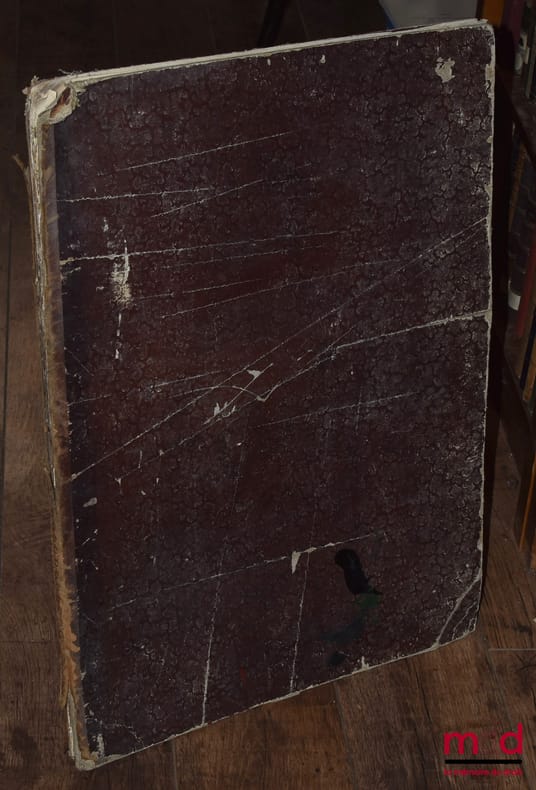
57471, Paris, Dusillion ss date [1841], in-plano, 60x 45cm, cartonnage d’époque, dos lisse orné d’une frise dorée, 2 tableaux, 9 planches gravées, (rel. et plats usés, dos décollé avec des mq. de cuir, coupes frottées, mq. un coin, taches sur la p. de tit. et des mouillures sur le papier de protection), int. frais hormis qq. rousseurs sur les papiers de protection, gravures très bien conservées, 3p.[et] 9pl.
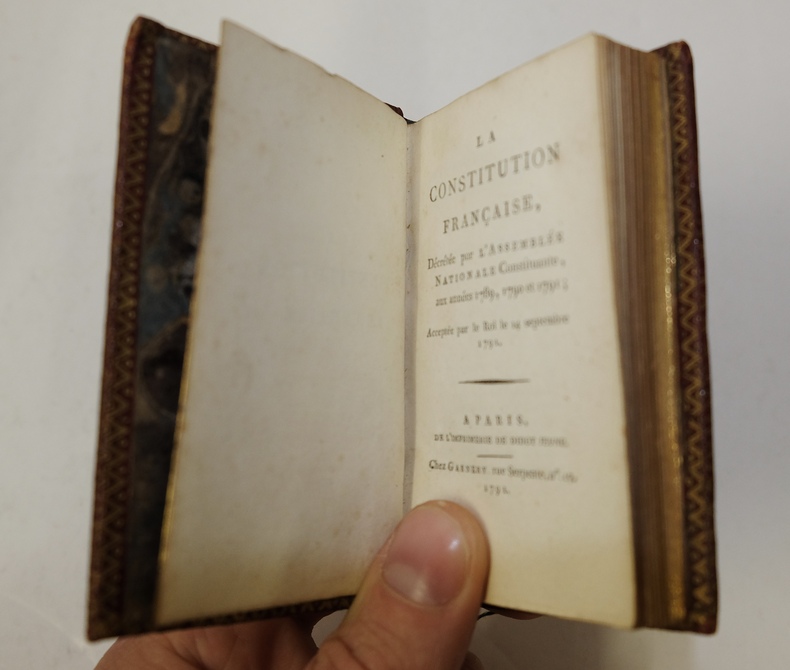
DROIT306M1791, de l'Imprimerie de Didot Jeune, chez Garnery, Paris. In-32, reliure d'époque plein maroquin, dos lisse orné de fers révolutionnaires, pièce de titre, plats encadrés de filets, coiffes et chasses ornées, roulettes intérieures, signet, 160pp. Première Constitution française, acceptée par le Roi dans une lettre puis un serment et comprenant la Déclaration des Droits de l'Homme et du Citoyen puis les différents articles. Intérieur très frais. Infimes frottements d'usage aux coins et coiffes. Très bon exemplaire de ce superbe témoignage.
1827374087Philadelphia: R. Desilver 1827. Typeset frontispiece within typographic border approx. 15x18-1/2 inches detached from the accompanying almanac. 67 1pp. 8vo. Disbound. Old folds tear to gutter. Typeset frontispiece within typographic border approx. 15x18-1/2 inches detached from the accompanying almanac. 67 1pp. 8vo. Shaw & Shoemaker 27484; Drake 11567 R. Desilver unknown
1802106375<p>8vo period calf rebacked with leather 2 266 pp. Joints cracked rebacking crude some wear to covers paper slightly fragile front endpaper detached other front endpaper with piece missing ink name on front pastedown some darkening to contents; otherwise about very good. This is a rich volume of early American government. In addition to the United Sates Constitution and Declaration of Independence this volume also contains the constitutions of the original states and the ordinances for the government of the North West Territory. Printed under the title is the notation that "This edition contains the constitutions of Vermont Delaware Georgia and Kentucky with the regulations for the government of the territory north west of the river Ohio." This material was not in any other edition. </p> William Duane,
1802106375<p>8vo period calf rebacked with leather 2 266 pp. Joints cracked rebacking crude some wear to covers paper slightly fragile front endpaper detached other front endpaper with piece missing ink name on front pastedown some darkening to contents; otherwise about very good. This is a rich volume of early American government. In addition to the United Sates Constitution and Declaration of Independence this volume also contains the constitutions of the original states and the ordinances for the government of the North West Territory. Printed under the title is the notation that "This edition contains the constitutions of Vermont Delaware Georgia and Kentucky with the regulations for the government of the territory north west of the river Ohio." This material was not in any other edition. </p> William Duane, books
200676533Washington DC: U. S. Government Printing Office 2006. Presumed First Edition First printing. Wraps. Good. Serial No. 109-79. Two volumes. Volume I v 1 1684 6 pages Volume II v 1 1685-3375 pages. During this hearing Representative John Lewis of Georgia stated "The Voting Rights Act helped expand our democracy and open up our democracy to elect hundreds of thousands and millions of our citizens who had been kept out let them in. The Voting Rights Act was needed then and it is needed now. The purpose of section 5 is very unique and very important. It prevents discriminatory plans from being enacted in the first place. It put the burden on the judiciary to show that the plan does not discriminate against minority voters. Congress Lewis continued "Prior to section 5 the burden was on the minority voters to challenge the voting practice; and every section was good at coming up with different procedures that had the same result discrimination. Anita Earls' testimony talks in some detail about the recent example how this is still happening. The difference is that we have section 5 to prevent these practices from harming minority voters. Many people like the court said that we have come a long ways; and again today I would say that we've come a distance. We've come a long way and that is true. We're not the same Nation that we were 40 years ago but it's clear today that we have not come far enough. Section 5 is still needed. Today section 5 prevents discrimination and redistricting and changes that move voting locations out of minority neighborhoods into less accessible areas. These are issues that are different from the fight to register to vote but they are no less fundamental." U. S. Government Printing Office paperback
186318599Cali: Imprenta de Nicolas Hurtado 1863. 12mo. 50 pp. plus wrps. <br><br>The political pendulum swung to the liberals in 1863 and a new constitution was promulgated at Rionegro which was to last until 1886. It renamed the nation the United States of Colombia gave to the states all powers not reserved to the central government contained fully defined individual liberties and guarantees and guaranteed Colombians full religious freedom.<br>Â Â Â Â This states' printing occurred very shortly after the official Bogotá printing as seen by the ownership date of 11 August the document having been approved on 8 May! It is also very rare: We trace no copies via WorldCat and NUC. Further searches of the OPACs of the National Library of Colombia and of the universities of Cali and the Andes failed to locate a copy.<br>Â Â Â Â Provenance: Ownership inscription of B. Núñez dated 11 Aug. 1863 on front wrappers; so too of Simon Arboleda 20th century undated and of J. R. Arboleda dated 29 Aug. 1900. <br>Â Â Â Â <br>Â Â Â Â Not in Palau. Original printer wrappers. Ownership inscriptions on front cover. Private ownership stamps on two pages. A very good copy. Imprenta de Nicolas Hurtado unknown books
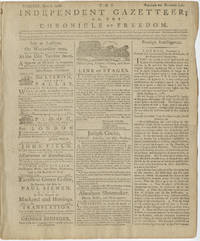
178830007.003Philadelphia PA 1788. No binding. Fine. Independent Gazetteer; or The Chronicle of Freedom. Newspaper. Independent Gazetteer; or The Chronicle of Freedom Philadelphia Pa. May 6 1788. 4 pp. 9 1/2 x 11 1/2 in. The Maryland ratifying convention suggests some amendments along with their approval of the Constitution. ExcerptsFrom page 3:""From the MARYLAND GAZETTE or April 29 1788. The CONVENTION of this state on Saturday last determined to ratify the proposed plan of Federal Government. -YEAS 63 NAYS 11-And then appointed a committee of thirteen members to consider and report amendments to be recommended to the people. -The following amendments were proposed by a member and referred to the committee who are now sitting-And it is hoped that the great and essential rights of the people will be declared and secured.- PROPOSED AMENDMENTS.Wherefore whenever the ends of Government are perverted and public liberty manifestedly endangered and all other means of redress are ineffectual the people may and of right ought to object to reform the old or establish a new Government-that the doctrine of nonresistance against arbitrary power and oppression is absurd slavish and destructive of the good and happiness of mankind. All imposts and duties laid by Congress shall be placed to the credit of the state in which the same be collected. That there shall be no national religion established by law; but that all persons be equally entitled to protection in their religious liberty. That the Supreme Federal Courts shall not admit to fictions to extend its jurisdiction; nor shall citizens of the same state having controversies with each other be suffered to make collusive assignments of their rights to the citizens of another state for the purpose of defeating the jurisdiction of the State Courts; nor shall any matter or question already determined in the State Courts be revived or agitated in the Federal Courts. That Congress have no power to lay a Poll-Tax. That the people have a right to freedom of speech of writing and publishing their sentiments and therefore that the freedom of the PRESS ought not to be restrained and the printing presses ought to be free to examine the proceedings of Government and the conduct of its officers.""From page 2: Protesting the Slave Trade by Boycotting West Indian Produce""A CAUTION.WHEREAS in the year 1787 some vessels were fitted out at the port of Philadelphia for the iniquitous purpose of stealing the inhabitants of Africa from all the endearments of domestic life; one of which vessels has succeeded in obtaining a number of poor blacks and has taken the to a port in the West Indies where they are under the iron hand of oppression. From this shameful traffic this horrid source the proprietors of the vessel have purchased some West India produce which after landing at Wilmington they have brought up to this city and offered for sale. It is a grateful circumstance to the supporters of the common rights of mankind that the virtuous inhabitants of the city reprobate the horrid idea.-A correspondent hopes that the citizens will further testify their disapprobation of the practice by turning with indignation from the purchase of any property thus basely procured by men so lost to the common feelings of humanity; notwithstanding the patriotic convention at which Washington presided have declared that this abominable traffic shall be continued for TWENTY years by the people of America.From page 1:An advertisement with engraving for a ""Line of Stages"" between Philadelphia and New York started by four partners who split off from an established stage line and promising better service. From page 4:An advertisement for another different ""New Line of Stages."" And a report on the creation of a Philadelphia committee for the relief of the nearly 100 Americans captured by Algerian corsairs and Barbary pirates. unknown
178830007.003Philadelphia PA 1788. No binding. Fine. Independent Gazetteer; or The Chronicle of Freedom. Newspaper. Independent Gazetteer; or The Chronicle of Freedom Philadelphia Pa. May 6 1788. 4 pp. 9 1/2 x 11 1/2 in. The Maryland ratifying convention suggests some amendments along with their approval of the Constitution. ExcerptsFrom page 3:""From the MARYLAND GAZETTE or April 29 1788. The CONVENTION of this state on Saturday last determined to ratify the proposed plan of Federal Government. -YEAS 63 NAYS 11-And then appointed a committee of thirteen members to consider and report amendments to be recommended to the people. -The following amendments were proposed by a member and referred to the committee who are now sitting-And it is hoped that the great and essential rights of the people will be declared and secured.- PROPOSED AMENDMENTS.Wherefore whenever the ends of Government are perverted and public liberty manifestedly endangered and all other means of redress are ineffectual the people may and of right ought to object to reform the old or establish a new Government-that the doctrine of nonresistance against arbitrary power and oppression is absurd slavish and destructive of the good and happiness of mankind. All imposts and duties laid by Congress shall be placed to the credit of the state in which the same be collected. That there shall be no national religion established by law; but that all persons be equally entitled to protection in their religious liberty. That the Supreme Federal Courts shall not admit to fictions to extend its jurisdiction; nor shall citizens of the same state having controversies with each other be suffered to make collusive assignments of their rights to the citizens of another state for the purpose of defeating the jurisdiction of the State Courts; nor shall any matter or question already determined in the State Courts be revived or agitated in the Federal Courts. That Congress have no power to lay a Poll-Tax. That the people have a right to freedom of speech of writing and publishing their sentiments and therefore that the freedom of the PRESS ought not to be restrained and the printing presses ought to be free to examine the proceedings of Government and the conduct of its officers.""From page 2: Protesting the Slave Trade by Boycotting West Indian Produce""A CAUTION.WHEREAS in the year 1787 some vessels were fitted out at the port of Philadelphia for the iniquitous purpose of stealing the inhabitants of Africa from all the endearments of domestic life; one of which vessels has succeeded in obtaining a number of poor blacks and has taken the to a port in the West Indies where they are under the iron hand of oppression. From this shameful traffic this horrid source the proprietors of the vessel have purchased some West India produce which after landing at Wilmington they have brought up to this city and offered for sale. It is a grateful circumstance to the supporters of the common rights of mankind that the virtuous inhabitants of the city reprobate the horrid idea.-A correspondent hopes that the citizens will further testify their disapprobation of the practice by turning with indignation from the purchase of any property thus basely procured by men so lost to the common feelings of humanity; notwithstanding the patriotic convention at which Washington presided have declared that this abominable traffic shall be continued for TWENTY years by the people of America.From page 1:An advertisement with engraving for a ""Line of Stages"" between Philadelphia and New York started by four partners who split off from an established stage line and promising better service. From page 4:An advertisement for another different ""New Line of Stages."" And a report on the creation of a Philadelphia committee for the relief of the nearly 100 Americans captured by Algerian corsairs and Barbary pirates. unknown books
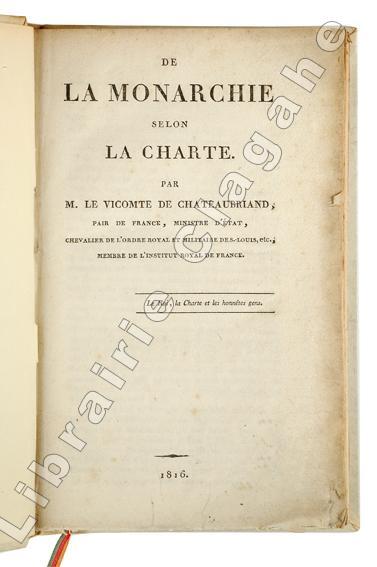
19830S.l, s.n., 1816 ; grand in 8, bradel cartonnage simili velin ivoire, pièce de titre rouge, tête arasée, tranches non rognées (reliure du XIXe), 176 pp.
187118311Bogotá: Imprenta i Estereotipia de Medardo Rívas 1871. 12mo. 45 pp. <br><br>The political pendulum swung to the liberals in 1863 and a new constitution was promulgated at Rionegro which was to last until 1886. It renamed the nation the United States of Colombia gave to the states all powers not reserved to the central government contained fully defined individual liberties and guarantees and guaranteed Colombians full religious freedom.<br>Â Â Â Â "Edicion oficial revisada por una comision de la Camara de Representantes compuesta de un miembro por cada estado."<br>Â Â Â Â Uncommon: we locate fewer than half a dozen copies in U.S. libraries. Late 19th- or early 20th-century quarter cloth with marbled paper sides. Ownership mark on rear free endpaper. A very good copy. Imprenta i Estereotipia de Medardo Rívas hardcover books
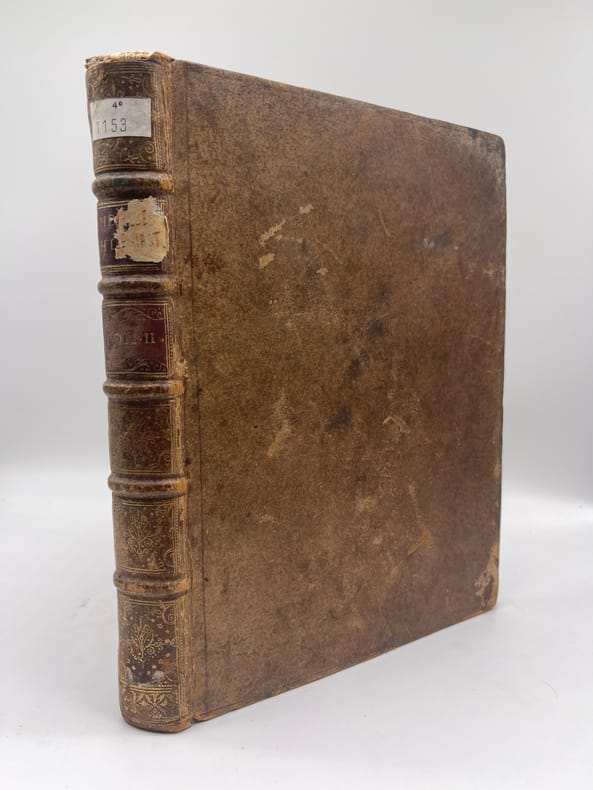
017373[Jansénisme] Nouvelles ecclésiastiques ou mémoires pour servir à l'histoire de la Constitution Unigenitus pour l'année M.DCC.XXVIII. Paris, s.n., 1728. In-4, environ 370p, paginations diverses. Année 1728 complète, commençant le 23 février 1728, avec des formats légèrement différents (certains numéros sont remargés à l'époque) et similaire à l'exemplaire de la BnF (numérisé sur gallica). Toutefois le volume débute par 5 feuilles « extrait d'une lettre de. » datées d'août à octobre 1727 (9 feuillets). On voit la trace de deux feuillets retirés (un autre extrait) et un exemplaire de « l'extrait d'une lettre d'Ambrun du 11 août 1727 » a été ajouté (volant). A la fin du volume se trouvent diverses pièces : « Supplément aux recueils des ordres émanés de la cour », un « avis de l'éditeur », une « ordonnance de Monseigneur l'évêque d'Auxerre » et une « très humble remontrance de M. de Montempuis au R.P. du Cerceau ». On remarquera que le volume, dont la reliure est d'époque, porte toutefois « tome II ». En effet, rapidement après la publication, un volume fut publié pour la période 1713-1728, considéré probablement comme le tome I. Provenance : Charles-Armand-René de La Trémoille (1708-1741), membre de l'Académie française, avec une grande vignette à ses armes en garde. TOUTEFOIS, nous supposons cette provenance purement fantaisiste, cela ressemblant à une vignette découpée (même si un second volume dans la même reliure porte la même vignette). Plein veau, dos à nerfs orné, pièces de titre et tomaison, tranches rouges. Coiffe supérieure arasées, étiquette sur le dos, cachet du petit séminaire de Caen p.100.
273 pages. Black and white frontisplate of author. Three black and white plates in appendices. New preface to this edition discusses events which transpired in the fifteen months since the first French edition was published. "Surveys the political situation in Yugoslavia between the two World Wars, and shows how the Yugoslav state was created for the simple purpose of implementing Serbian domination over the non-Serb nations within Yugoslavia." - Croation Information Centre. Unmarked. Hinges and binding intact. Moderate wear and soiling to red cloth-covered boards. Light foxing near endpapers. A sound copy. Book
1848493464Frankfurt am Main, Sauerländer, 1848-49. Zusammen 6886 S. Neue einheitliche Ppbde.
1971619314Berlin, Schmidt, 1971/90. OLwd.
1793167251793 A PARIS BARBOU, (1793.) .in 32mo.reliure pleine basane epoque,dos lisse titre,manque de cuir bas dos et charnieres,texte frais,pagination: 64+64+30 p.,tres rare- le 24 juin 1793, la Convention adopte et promulgue la Constitution de l’An I, la première Constitution républicaine et sociale française. Dans le préambule est énoncée la Déclaration des droits complétant celle du 26 août 1789. Assurément, la Constitution montagnarde de 1793 se singularise par l’élargissement des droits. En effet, aux simples droits formels individuels bourgeois proclamés en 1789, la Constitution de 1793 inclut les droits économiques et sociaux réels, tels que le droit au travail, le droit à la protection sociale, le droit à l’instruction.
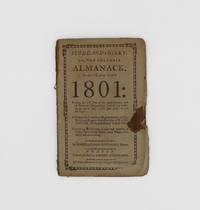
1800374113Hudson: Printed and sold by Ashbel Stoddard 1800. 36pp. Some interleaving with contemporary manuscript annotations recording weather deaths etc. 12mo. Stitched final leaf trimmed close with minor loss to final line on H2r staining and chipping at fore-edge other minor chips and tears. 36pp. Some interleaving with contemporary manuscript annotations recording weather deaths etc. 12mo. With a printing of the U.S. Constitution and the Bill of Rights on the final 12 pages. This almanac calculated by Beers Hutchins died in 1782. Evans 37670; ESTC W33544; Drake 6126 Printed and sold by Ashbel Stoddard unknown
1789100147<p>8vo later calf backed marbled boards 320 202 pp. Edges and covers rubbed occasional bit of foxing but overall very good. The most important feature of this collection is an early British printing of the United States Constitution p.289-300. Also contains a curious description of two Negro children with some unusual physical markings see p.53-55. Very interesting coverage of a few executions including a woman who was hanged for forgery is also provided.</p> J. Dodsley hardcover
1789100147<p>8vo later calf backed marbled boards 320 202 pp. Edges and covers rubbed occasional bit of foxing but overall very good. The most important feature of this collection is an early British printing of the United States Constitution p.289-300. Also contains a curious description of two Negro children with some unusual physical markings see p.53-55. Very interesting coverage of a few executions including a woman who was hanged for forgery is also provided.</p> J. Dodsley hardcover books
1795NS0005Paris L'An 3 de la Republique Française une & indivisible. Hard Cover. 8vo; 56 pages a-c8 d4. Dated p. 56: 5 Fructidor l'an troisième i. e. 22 Aug. 1795. Signed p. 56 by Chenier président; Dersey Solignac Bernier Laurenceat Dentzel Quirot sécrétaires. The French Convention Nationale 1792-1795 had governed without a constitution. That of 1791 had been replaced by a more radical one of 1793 which was never activated. "The post-Robespierrist Convention continuing the reaction against popular revolutionism. elements of direct democracy that had characterized the earlier constitution were abandoned but the new one preserved the basic changes brought by the Revolution" see R.R. Palmer <i>Age of Democratic Revolution</i> 2: 214. This edition seems to be unrecorded. It is signed by the members of the committee that drafted it chaired by playwright Marie-Joseph Chenier 1764-1811. The edition seems to be an attempt to persuade people to accept its terms. This Constitution was rejected by even more reactionary elements and led to establishment of the Directorate in October 1795. Not in NUC; not in Martin & Walter cf. 4: 2: 4140. Very Good in contemporary boards leather spine. Stock#NS0005. L'An 3 de la République Française une & indivisible. hardcover
222920Dijon, Imprimerie de Capel, 1791 in-4, 35 pp., dérelié.
215221Paris, Maret, Brigitte Mathé, an III (1795) in-8, 144 pp., en feuilles, cousu.