5 709 résultats
17131394685London: Printed by John Baskett 1713-1717. First Editions. Hardcover. Folio 61-174 2179-191 6 203-206 2 211-218 2 223-270 2 275-357 3 361-362 2 367-382 2 387-422 4. In Good minus condition. Bound in full contemporary calf with banded spine and tooling to boards. Boards show moderate wear to edges moderate plus wear and bumping to corners and several gouges to the front board. Cracking to leather along joint of front board. A clear lacquer appears to have been applied to the boards. Text block has light age toning to edges. Ex-Library institutional plate appears on front paste down. Ex libris of former owner appears on front pastedown. Several ink "doodles" in an 18th-century hand appear on the front paste down and front free end page. Square-inch tear to fore-edge of front free end page. Pages tightly trimmed by binder impacting some of the printed marginal annotations. BB Consignment. Shelved in Room A Oversized. Appears to contain two collections of public statutes passed in 1713 and 1714 but printed between 1713 and 1717 each with a closing contents page. The first collection contains Acts II - XVIII of 18 acts and the second contains Acts II - XXIII of 23 acts. The acts cover a range of topics including duties tariffs and taxes; the paying and management of military personnel and militias; and the management of churches. The most significant of the acts however is Act 15 of the second set of acts entitled "An Act for Providing a Publick Reward for such Person or Persons as shall Discover the Longitude at Sea". This formally established the Commissioners of the Longitude and the reward of £20000 for "the first Author or Authors Discoverer or Discoverers of any such method ." that to the satisfaction of the committee accurately determined a ship's longitude at sea accurate to within 20 geographical miles. This reward would not be claimed until 1765 when clockmaker John Harrison developed his "time-keeper" or marine chronometer. 1394685. Special Collections. Printed by John Baskett hardcover
192195293London: His Majesty's Stationary Office 1921. Rare collection of original documents relating to the Palestine Question 1917-1947. Octavos 3 volumes unbound. Scarce and desirable. With the failure of the Anglo-American Committee of Inquiry in 1946 the British government requested the General Assembly of the United Nations to form a special committee to investigate the Palestine problem. The United Nations Special Committee on Palestine UNSCOP arrived in Palestine on 15 June 1947. The Arab Higher Committee believed UNSCOP to be pro-Zionist and so boycotted proceedings although some members of the AHC did meet the committee in a private capacity. While UNSCOP was in Palestine the SS Exodus arrived in Haifa with Jewish Displaced Persons seeking to illegally immigrate to Palestine and some have stated that it was this that changed the UN's outlook to support the creation of the state of Israel. UNSCOP's final recommendations delivered on 3 September 1947 at Geneva supported the termination of the Mandate with a majority of committee members recommending the partition of Palestine into two separate states and a minority favouring a federal union with Jerusalem as its capital. Having originally boycotted UNSCOP the Arab Higher Committee must have realised that there would have been only a very small window of opportunity between the Geneva meeting and the General Assembly vote to present their case and so compiled the present lot. Published on 1 October 1947 it contains 46 different documents 'Including the texts of correspondence memoranda and notes submitted to British and international authorities by Palestinian Arab organisations between 1921 and 1947' Khalidi & Khadduri. One assumes it was distributed to members of the UN General Assembly prior to the vote on Partition; this occurred on 29 November 1947 with the General Assembly adopting Resolution 181 based on the UNSCOP majority plan with only slight modifications to the proposed recommendations. We can only trace 11 copies in institutions: 2 in the UK LSE and Oxford 8 in the US and one at the American University of Beirut Khalidi & Khadduri 780. His Majesty's Stationary Office unknown
elala6164London: 1804. The second Anglo-Maratha War 1803-05 saw the British gain significant territories and influence including regions around Delhi and in present-day Gujarat falling into direct Company rule. The two rulers who fought the EIC were Daulat Rao Sindhia 1779-1827 and Raghuji Bhonsle II d. 1816. General Gerard Lake and General Arthur Wellesley commanded the EIC army. Included here are the texts of government dispatches government correspondence with the secret committee of the EIC agents ministers and military officers commanding in the field and correspondence and proceedings with the Maratha Princes of States. The plates include two maps of India by A.Arrowsmith and six plans showing General Lake’s encampment at Secundra Aug. 26 1803 the battle of Assye Sept. 23 1803 the attack on Perron's Camp before Allyghur Aug. 29 1803 the entrance into the fort on Sept. 4 the Battle of Delhi Sept. 11 1803 and the Battle of Laswaree November 1 1803. “At the Battle of Assaye on 23 September 1803 General Sir Arthur Wellesley 1769-1852 the future Duke of Wellington masterminded victory for the EIC over the Maratha army of Daulat Rao Sindhia head of the Gwalior state. The cause was greatly helped by Wellesley first steadily building up supplies and then bribing British and Anglo-Indian mercenary officers in the Marathas' employ not to fight. When the Marathas heard of this subterfuge they promptly dismissed all their European officers believing them all of suspect loyalty. The unfortunate consequence for the Marathas was that their army now had no command structure and was routed but not before their artillery had caused tremendous damage to the British. The costs for the EIC victory in this bloody battle were high with around one-third of its army killed or wounded. 6000 Maratha soldiers were killed at Assaye. The experienced British officers were all in agreement that the Maratha artillery was as well organized and deadly as that of any European army they had ever faced. There was some consolation for the human losses in the capture of 98 Maratha cannons. Wellesley then won another battle at Argaum aka Argaon in November 1803 but at the end of his career and even after defeating Napoleon Bonaparte at Waterloo in June 1815 Wellesley declared that his greatest ever military challenge had been at Assaye. On 1 November 1803 the EIC won another decisive victory at the Battle of Laswari this time with a force of 10000 men under the able command of General Gerard Lake 1744-1808 a veteran of the American War of Independence. Again the costs of victory were high with around 838 EIC troops killed or wounded. The EIC then took over Delhi and its surrounding territory. There were a few minor Maratha successes such as the defence of Bhurtpore aka Bharatpur against multiple British attacks in early 1805 but with the large losses in central India to Wellesley and in northern India to Lake the Maratha Confederacy was now but a shadow of its former self. The Hindu princes were largely obliged to follow EIC policies and put up with a permanent resident backed by sepoys EIC Indian troops. However there would be one more conflict to come in a doomed effort to regain the Marathas' lost independence.†Mark Cartwright The World History Encyc. folio. pp. xix 1 587. 2 folding hand-coloured maps & 6 folding partly hand-coloured plans. modern half calf a few minor marks on spine. elala6164 [London]: 1804 unknown
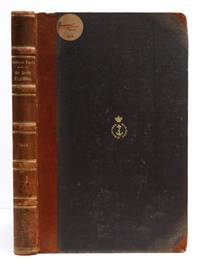
1852144684London: George Edward Eyre and William Spottiswoode 1852. iii368 pp. Folio. Bound in 19th century diced calf and Victorian cloth. Spine ruled into 6 compartments. Paste paper endpapers. Gilt maritime library stamp on front board otherwise no other stamps. Binding a bit worn. With 28 maps mostly sledge tracks including 6 folding maps. Numerous illustrations mostly in the text. A very clean crisp copy internally. Arctic Bibliography 45228. Contains extensive and detailed reports by sledgers from Austin's and Penny's expeditions. Provenance is the Marinens Bibliothek The library of the Danish Navy. Very scarce and the second largest volume produced during the Franklin Search period. 1852 George Edward Eyre and William Spottiswoode hardcover
15621278941562. HENRY VIII PARLIAMENT. Acts. Anno XXXIIII et. V. Henrici VIII. London: T. Powell 1562. Slim folio 8 by 11-1/2 inches modern full brown morocco. $3800.Early edition of the Parliamentary Acts of 1542 featuring 25 acts featuring the important Act for the Advancement of True Religion and the first English act dealing with Bankruptcy finely printed in black-letter with lovely historiated woodcut initials.The first and most important act passed by the Parliament in 1542 banned the reading or owning of the Bible in Englishat that point Tyndale's translationin England for most of the population. Exceptions were made for the clergy the gentry wealthy merchants and the wives of the gentry and nobility who were only allowed to read it in private effectively barring the Bible in English from the vast majority of the population. By the time of the act's passage Tyndale was already dead executed near Brussels in 1536 after being convicted of heresy for his promotion of theology influenced by Martin Luther. And Tyndale himself had never actually published a full Bible in English having only managed individual publications of the New Testament the Pentateuch and a few other books of the bible; the first full Bible in English was actually produced by Miles Coverdale in 1536 based heavily on Tyndale's earlier publications. The act also banned numerous other categories of books although it did provide exceptions for ""statutes and lawes of the realme cronicles Canturbury tales Chaucers bookes Gowers bookes and stories of menns lives."" The acts from this year are also notable for containing the Statute of Bankrupts the first codification of law for bankruptcy in England. First published in 1543 with several editions or issues following soon after; this is one of two editions published in 1562. Without the acts for Wales. STC 9409. Foxing to a few leaves mild dampstaining to inner margin of some early leaves but text readable and clear; handsomely bound. Rare. unknown
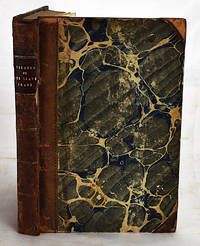
18082605200078W. Phillips and John Hatchard London 1808. First Edition. Hardcover. Good. An Extremely Rare Early Abolitionist Work : British Parliamentary debates on Slave Trade Abolition Bill of 1807 Bound in period marbled half calf. 12mo. 19.75 x 13.25 cm. iv 273 pp. Front joint cracked. Small chip off spine leather. Period manuscript note in shorthand on pages 66-67. <br> A detailed account of the debates of the British Parliament on the abolition of the slave trade including full transcripts of speeches made by MPs. The speeches show the diversity of arguments opposing the slave trade. It includes rousing speeches against slavery on a religious and moral level; utilitarian speeches discussing the low profits of the slave trade and the ability of plantation owners to maintain the current slave population; testimonies on the complex social structure and craftsmanship of African societies and thus their humanity; and arguments that by abolishing slavery France will become Britain's "inferior in virtue". <br> Includes numerous speeches by Lord Grenville the Prime Minister who shepherded the Slave Trade Abolition Bill through Parliament: "I know my Lords that on this subject strange notions of morality have been suggested as if what were just to one race of the species might be unjust to another. I know not my Lords on what principle of law divine or human such sentiments are founded. My Lords I have been always taught to consider justice to be one uniform consistent rule of conduct; to that it has been enough for me to listen to the proof that any particular acts are unjust with respect to certain individuals of classes of the species to convince me that the same acts must be unjust to all the rest of mankind." Grenville and other MPs advocate for a universal form of justice under the law that precludes the natural legal inequality of slavery. <br> This book was printed by William Phillips the son of James Phillips a Quaker printer and abolitionist activist and founding member of the Society for Effecting the Abolition of the Slave Trade who published first hand accounts of the evils of the slave trade which were highly influential in the bills passage. <br> Refs: Sabin 93370. <br> A rare edition only one copy has appeared at public auction in the last 125 years. No other copies are available for sale. <br> Cataloged by Anastasia Rittenhousesmith. W. Phillips and John Hatchard, London hardcover
1852127366London: George Edward Eyre and William Spottiswoode 1852. Hardcover. very good. 1st printing. 216pp. Folio 32.5 X 21.5 cm. Original 19th century marbled boards which have been rebacked with a new leather spine and new leather corners. Original endpapers have been salvaged. Edged sprinkled in red. 3 maps 1 folding. Minor wear to binding but overall a clean attractive copy. Old rubber stamp on the title page. Arctic Biblio. 45229 There are two rubber stamps on the title page. The first is from the Royal College of surgeons and the second is a presentation stamp Inscribed by R.McCormick R.N. who was on the North Star one of the search for Franklin ships. - "Major document. Contains reports covering 1850-52 of expeditions in Bering Strait under Collinson's command reports of expeditions in the eastern Canadian arctic by DeHaven John Ross Austin & Penny; and reports by Rae of his expedition to southwest Victoria Island. Numerous letters are included speculations on the activities of the Franklin Expedition various proposals for further search etc.".</p><p>An interesting association copy by a Search for Franklin officer. 1852 George Edward Eyre and William Spottiswoode hardcover
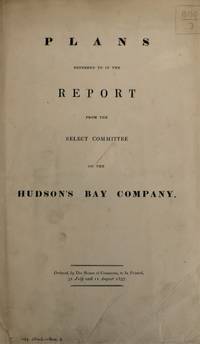
1857143185London 1857 31 July and 11 August. xviii547 pp. Two parts. Folio. Original printed blue wrappers. Wrappers and spine are a bit rough with some professional restoration. Portfolio of plans including three large folding hand-coloured maps original printed wraps with cover title and document title on right-half of back wrapper. Maps printed by Henry Hansard entitled: Map of North America Drawn by J. Arrowsmith; Map of the North-West Part of Canada Hudson's Bay & Indian Territories Drawn by Tho. Devine and Aboriginal Map of North America denoting the Boundaries and the Locations of various Indian. Some mild chipping to the edges of the wrapper with tears along joints. Overall very good and with a clean tight text block. Uncommon in the original blue and plain paper wraps. All housed in a custom fold over box. Peel 3 - 347 - "An important document containing the evidence of many witnesses on the suitability of Rupert's Land for agricultural settlement." TPL 3729/30; Sabin 33549; Smith 1514. "Ordered by the House of Commons to be Printed 31 July and 11 August 1857." Document 224 260-I- Sess. 2. "The Maps referred to in the accompanying Report were in progress and will be delivered as early as possible." 5 October 1857. The maps all show the high Arctic and Western Canada from Hudson's Bay to the West Coast. This report is complete with the maps and in wrappers has become very scarce in the market place. 1857 paperback
1730102277Bound volume of 89 acts folio 11 3/4" x 7" period full calf 446 pp. Various paginations actual page count is done by hand and a manuscript index at the front lists the acts and indicates the page it is on. Binding is worn backstrip is gone hinges are cracked covers almost detached and some signatures are loose some early ink notations and page numbering are on top of pages it appears there are some remnants of wax seals on the margin of the last page some soiling at endpapers normal aging and browning but internally pretty clean; despite the mentioned flaws the contents are in very good shape but the binding needs work. While this collection of Acts passed under George II and George III is not sequential a previous owner has provided a useful index as to the contents and location of various acts. The laws cover a very broad area of issues from the more mundane such as dog stealing punishments for disorderly houses and preventing abuses in making bricks and tiles to more important issues including the raising and training of the militia regulating the price of corn preservation of public highways and the punishment for selling ale and apiarist without a license. Other important acts include regulating places of entertainment regulating the trials of controverted elections establishing trade agreements in the East Indies changing some of the rules passed by Queen Elizabeth on providing relief to the poor and wildlife preservation. A fascinating glimpse at another time and issues of the day. Charles Eyre and William Strahan, Mark Baskett & Others,
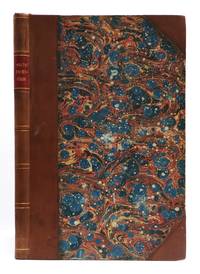
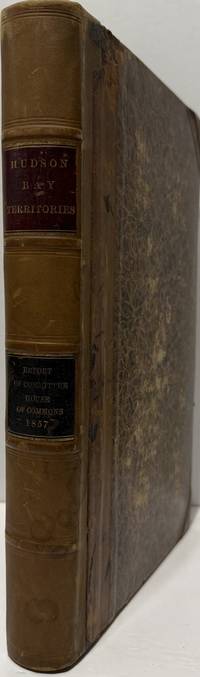
185767368Printed in the UK: Great Britain. Parliament. House of Commons. Select Committee on the Hudson's Bay Company 1857. First edition. Leather and paper over boards. As described. Hardcover 1/4 leather brown over paper marbled over boards. 4to. xviii 547 pp. Illustrated with 3 large colour folded maps in a pocket on the inside of the back board 2 of the maps have 4'' enclosed tears without loss of substance. Maps by John Arrowsmith. Sympathetically rebound with a new spine. Six compartment spine with five raised ribs. Red label in compartment two and black label in compartment four have the the title and subtitle in gilt. Head darkened. Six small ink stains on the fore edge. Bookplate on front pastedown. Previous own was Mr. John White 1863-1928 appointed Chief Geographer of the Canadian Department of the Interior in 1899. Pages 212-225 329 and 374-379 have pen markings and some marginalia by Mr. White. Mild age toning mostly to the edges. The text block is clean unmarked except where noted and square with a strong binding. Boards are rubbed with some of the marbling worn off. Edges are worn through in places. The spine is rubbed and has some small water stains near the tail. Corners bumped. An extremely rare volume this copy is supple and easy to handle despite its rough exterior. Condition as described. References: TPL 3729/30 Sabin 33549 Lowther 52 Peel 188. Laid in this copy is a bibliographical description from Acadia Book Store. Great Britain. Parliament. House of Commons. Select Committee on the Hudson's Bay Company unknown
17671098111767. First Edition. CUSTOMS COMMISSIONERS ACT. Act to enable His Majesty to put the Customs and other Duties in the British Dominions in America and the Execution of the Laws relating to Trade there under the Management of Commissioners. London: Mark Baskett 1767. Folio 20th-century marbled stiff paper boards. $3200.Rare first printing of the 1767 Customs Commissioners Act one of the controversial Townshend Acts that united patriot opposition to British rule and provoked the Boston Massacre.Following the Stamp Act which had united colonial opinion against British authority ""as no issue before a new period of agitation began in 1767 with the passage of the Townshend Acts"" Morison Sources xv. Engineered by Charles Townshend Chancellor of the Exchequer these were intended to raise revenue from the American colonies by imposing duties on goods Americans were already forced to import only from England punish New York's opposition to the Quartering Act and establish a board of customs commissioners in America. This is the first printing of that Customs Commissioners Act. ""To guarantee that colonial duties raised as much money as he had promised to Parliament Townshend was tightening control over America's slack customs procedures"" by appointing commissioners in England and sending them to Boston ""with broad powers. Since colonial jurors rarely convicted a local merchant of smuggling Townshend's acts set up new admiralty courts that could try smugglers without a jury. And the acts made it easier for customs officials to obtain writs of assistance"" Langguth 93. In addition ""the moneys thus raised in the colonies were to be used to render the royal governors and judges independent of colonial assemblies"" Morison xv. To Samuel Adams ""these new commissioners of customs were 'the greatest political curses that could be sent amongst us From the time the acts took effect November 20 1767 many Bostonians had been boycotting luxury goods from Britain by signing a 'nonimportation agreement Stricter enforcement at the customs offices was drawing off hard currency from America and bad times were spreading across the colonies"" Langguth 94 102-103. With increased colonial opposition to the Customs Commissioners Act and other Townshend laws ""the customs administration to enforce them became especially in ports like Boston increasingly militarized"" provoking merchants such as John Hancock into ""calling one of his sloops Liberty and flaunting his intention of 'running Madeira ashore"" Schama History of Britain II:463. The day after the Liberty was seized by customs officials Sam Adams was overheard challenging the crowd ""If you are men behave like men. Let us take up arms immediately and be free and seize all the king's officers"" Langguth 98. With the Board of Commissioners of the Customs headquartered in Boston the city became the ""rowdiest of all the centers of protest"" and those who broke the boycott were often tarred and feathered. As tempers grew shorter and customs officers were accused of bribery and extortion matters often ""got completely out of control. On 23 February 1770 an eleven-year-old boy Christopher Seider joined by a noisy protest of schoolboys and apprentices outside the shop of an importer was shot dead by a customs officer"" and his funeral turned into a mass protest led by Sam Adams. Only one month later on March 5th amidst these already heightened tensions ""a wigmaker's apprentice ragged a soldier all the way to the Custom House for an allegedly unpaid bill. When a guard struck the pursuing youth a tocsin normally used as a fire alarm was sounded and mobilized a large and angry crowd"" Schama History of Britain II 463. In the melee that followed the redcoats opened fire killing fiveamong them Crispus Attucksand the day would be memorialized in history as the Boston Massacre. Printed in gothic type indicative of the first edition. This first printing excised from the Sessional Volumes of Parliament pages 563-66 precedes all American printings. Minor rubbing spine. Very nearly fine condition. hardcover
1760339119London: John Baskett; Thomas Baskett; and others 1760. Together approx. 35 Acts each with separate title with Royal arms. Small folio. Disbound. Some with foxing some trimmed a few leaves detached. Overall very good. A couple in duplicate. Together approx. 35 Acts each with separate title with Royal arms. Small folio. Includes the following:<br /> <br /> An Act for the Continuing the Liberty of Exporting Irish Linen Cloth to the British Plantations in Amerca Duty-free 1717<br /> An Act for Importing Salt from Europe into the Province of Pensilvania in America 1727<br /> An Act for the better Preservation of His Majesty's Woods in America 1729<br /> An Act for Importing Salt from Europe into the Colony of New York in America 1730<br /> An Act for importing from his Majesty's Plantations in America directly into Ireland Goods not enumerated in any Act of Parliament 1731<br /> An Act to explain and Act . intituled An Act for importing from his Majesty's Plantations in America 1732<br /> An Act for the more easy Recovery of Debts in His Majesty's Plantations and Colonies in America 1732<br /> An Act for granting a Liberty to carry Sugars of the Growth Produce or Manufacture of any of His Majesty's Sugar Colonies in America 1739<br /> An Act for the more effectual securing and encouraging the Trade of His Majesty's British Subjects to America 1739<br /> An Act for the more easy and effectual Conviction of Offenders found at large within the Kingdom of Great Britain after they have been ordered for Transportartion to America 1742<br /> An Act for further regulating the Plantation Trade 1742<br /> An Act to revive several Acts . relating to Rice to Frauds in Customs to the clandestine running of Goods and to Copper Ore of the British Plantations 1742<br /> An Act for continuing several LAws relating to the Allowance upon the Exportation of British made Gunpowder; to the Importation of Naval Stores from the British Colonies in America 1743<br /> An Act to continue Two Acts of Parliament . for encouraging the Growth of Coffee . for the better securing and encouraging the Trade of His Majesty's Sugar Colonies in America 1746<br /> An Act for the better encouragement of the Trade of His Majesty's Sugar Colonies in America 1746<br /> An Act to extend the Provisions of an Act . for Naturalizing Foreign Protestants . in America 1747 two copies<br /> An Act for encouraging the making of Indico in the British Plantations in America 1748<br /> An Act for encouraging the People known by the name of Unitas Fratrum or United Brethren to settle in . America 1749 three copies<br /> An Act to encourage the Importation of Pig and Bar Iron from His Majesty's Colonies in America 1750<br /> An Act for encouraging the Growth and Culture of Raw Silk in . America. 1750<br /> An Act for encouraging the making of Pott Ashes and Pearl Ashes in . America 1750<br /> An Act for continuing several Laws . upon the importation of Masts 1751<br /> An Act for avoiding and putting and end to certain doubts and questions . concerning Real Estates . in America. 1752<br /> An Act for reducing the number of Directors of the Corportatioin of the Governor and Company of Merchants of Great Britain trading to the South Seas and other parts of America 1753<br /> An Act for continuing several Laws . and for the encourging the trade of the Sugar Colonies in America 1753<br /> An Act for continuing an Act . for encouraging the making of Indico in the British Plantations in America 1755<br /> An Act for extending the Act . as shall serve on Board His Majesty's Ships or Vessels employed upon the Lakes Great Waters or Rivers in North America 1756<br /> An Act to enable His Majesty to grant Commissions to a certain number of Foreign Protestants . in America 1756<br /> An Act to extend the Liberty . of importing Bar Iron from His Majesty's Colonies in America 1757<br /> An Act to prohibit for a limited time the exportation of corn grain meal malt flour bread biscuit starch beef pork bacon . from His Majesty's Colonies and Plantations in America 1757<br /> An Act to continue . a Liberty to carry sugars of the growth produce or manufacture of any of His Majesty's Sugar Colonies in America 1758<br /> An Act for continuing certain laws . and to the Encouragement of the Trade of the Sugar Colonies in America 1758<br /> An Act to continue several laws . to the encouraging the growth of Coffee in His Majesty's Plantations in America 1759<br /> An Act to continue several laws . to the granting Liberty to carry Rice from his Majesty's Province of Carolina in America 1760. John Baskett; Thomas Baskett; [and others] unknown
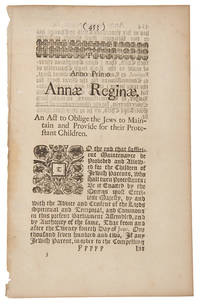
107594London Charles Bill 1702. . Folio 27.5 x 17.5 cm; woodcut headpiece and initial black letter; single leaf from 'Anno Regni Annæ Reginæ Angliæ Scotiæ Franciæ & Hiberniæ primo. At the Parliament begun at Westminster the thirtieth day of December. 1701' acts of Parliament for the last year of the reign of William III and the first year of Anne; unbound; 453-454pp.<br /> An act of Parliament 'To the end that sufficient maintenance be provided and allowed for the children of Jewish parents who shall turn Protestants' p.453. <br /><br />The law arose from the curious case of Mary de Mendez Berta an eighteen-year-old who was disowned and expelled from the family home following her conversion to Protestantism. A petition was brought before Parliament in an attempt to make Mary's father Jacob de Mendez Berta pay for his daughter's upkeep after which it was resolved that a bill be produced to address her case. <br /><br />The resultant act had some effect in the eighteenth century and was considered by the Lord Chancellor Thomas Parker in the 1718 case of Vincent vs. Fernandez. Here it was found that the law could apply equally to the adult child of a Jewish parent in this instance a 44-year-old married woman who had been cut-out of her father's will. The law remained in effect until 1846 when it was repealed by the Religious Disabilities Act.<br /> ESTC N53589; Roth Magna Bibliotheca Anglo-Judaica p.246 no.1; Henriques The Jews and the English Law Oxford 1908. [London], [Charles Bill], [1702]. unknown
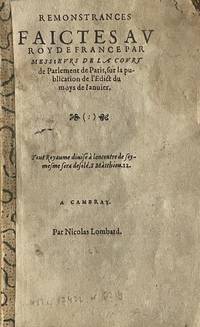
15622557Cambray: Nicolas Lombard 1562. First edition. Papered spine. With contemporary underlines throughout and occasional marginal notes in ink. Upper outer corners stained and chipped throughout first leaves with small loss. Closed tear on the title page not affecting the text. Overall in very good condition. First edition. Papered spine. ff. 14 2 blank. Sign.: A–D4 D3–4 blank. First edition of this scarce and important document of the French Wars of Religion.<p><br /> <br /> A protest against the Edict of Toleration also known as the Edict of January or Saint-Germain which was issued by the French Crown on January 17 1562 after a long series of repressive measures against the Protestant Huguenots in order to restore peace in the kingdom torn by civil and religious dissensions. <p><br /> <br /> The registration process of the edict led to the bitterest legislative struggles of the century between the Parlement and the Crown. After a vote on 7 February the Parlement very Catholic refused to verify or publish the edict and on 12 February a remonstrance the present publication was drawn up and sent to the Court. Eventually the Parlement had to capitulate and the edict was registered on March 6 five days after the Massacre of Vassy which triggered the first of the series of eight civil wars lasting some thirsty-six years in France the Wars of Religion. <p><br /> <br /> The Edict of Tolerance remained a reference for the Huguenots in the later negotiations between them and the royal power and became the foundation of the subsequent toleration edicts such as the Edict of Ambroise the resolution of the first war in 1563 and the Edict of Nantes which marked the end of the period of the French Wars of Religion in 1598.<br /> Seemingly two different editions 16- and 24-leaves were published by Lombard in 1562. Due to their substantial similarities the presence or lack of the last blank leaves and the peculiar dating “mil cinq cens soixante & un†the bibliographies list these editions under at least six different entries dated 1561 or 1562 later editions also by Lombard appeared in 1565 and 1566.<p><br /> <br /> USTC 6319 2 copies: Nîmes - Bibliothèque Carré d’art; Paris - Bibliothèque Mazarine or 17432 1 copy: La Rochelle- Bibliothèque municipale<br /> Literature: Keller A.-C. 1952. Michel de l’Hospital and the Edict of Toleration of 1562. Bibliothèque d’Humanisme et Renaissance 142 301–310. Nicolas Lombard unknown
182633099London: printed by John Baskett and others 1826. Folio various paginations; approximately 38 Acts of Parliament relating almost entirely to the finances of the Royal Navy 3 folding tables; contemporary red straight-grain morocco yellow binder's ticket of Smith 49 Long Acre; rubbed and worn but sound. Includes several acts on the wages of seamen seamen's' hospitals harbor moorings the Royal Navy treasury prize money benefits for seamen's' families bounty money pensions etc. printed by John Baskett [and others] unknown
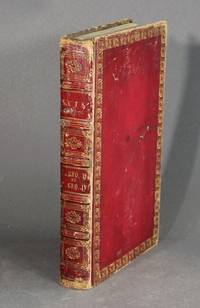
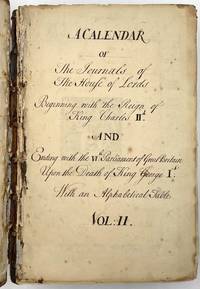
2787Binding split in half along center spine with boards still attached by cords; title strip peeling; boards heavily rubbed and worn with loss to corners and board edges; slight toning scattered foxing throughout; manuscript pages are remarkably bright and clean. Overall a very appealing document with binding a challenge in need of restoration. <p>A Calendar of the Journals of the House of Lords Beginning with the Reign of King Charles II d and Ending with the VI th Parliament of Great Britain Upon the Death of King George I: with an Alphabetical Table Vol. II 1660 - 1727. April 25th 1660 - May 9th 1727. </p> <br /> <p>Manuscript Calendar of the Journals of the House of Lords April 25th 1660 - May 9th 1727. </p> <br /> <p>Folio approx. 15 x 10 inches. 722pp Alphabetical Table. Contemporary full leather gilt-stamped title to spine spine and board edges tooled in gilt lettered paper thumb tabs large contemporary armorial engraving tipped-in. Housed in modern cloth-covered clamshell case by Ruth L. Heginbottom. </p> . unknown
164617558London: Printed by T.W. Thomas Warren for Ed. Edward Husband 1646. FIRST EDITION. Engraved frontispiece woodcut headpieces. Contemporary calf worn especially at spine joints somewhat tender; first blank appears to be torn out leaf with frontispiece repaired some browning and soiling mostly on edges. Overall a good copy from the library of the Earls of Macclesfield with their dated 1860 bookplate motto “Sapere aude†on the paste-down and blind embossed stamp of armorial on first three leaves. First edition. In 1640 King Charles I established the Long Parliament in order to acquire funds for the Bishop’s War against the Scots. However as soon as the Long Parliament took control they began dismantling the monarchy’s authority by removing the king’s advisors and sympathizers. The orders and ordinances collected in this copy begin at this crucial moment and cover the duration of the English Civil War from 1642 to 1646. It is therefore an excellent reference source for laws and statutes during the English Civil War. It also contains several matters of Colonial interest including An Order for advancement of the Plantations in New England; An Order to make the Earl of Warwick Governor of the Plantations in America; An Ordinance against Importation of Whale-oyl; and An additional Committee for ordering Foreign Plantations among others.<br /> <br /> Wing provides the name of the printer for this copy and lists several other volumes containing records of orders over a range of years. Printed by T.W. [Thomas Warren] for Ed. [Edward] Husband unknown
elala2079London: c1780. Later issue of one of the most important reports on the Hudson's Bay Company. The parliamentary investigation into the activities of the Hudson's Bay Company was undertaken as a result of a petition made to the Lords in Council in 1749 aimed at depriving the Company of its charter. The petitioners argued that the charter of 1670 granting sole rights of trade and commerce in the entire area beyond the entrance of the Hudson Straits was either invalid or forfeited and requested an incorporation giving them similar rights over the adjacent region. Arthur Dobbs had provided the initial stimulus and basic grounding for the petition; his was the most sustained and vociferous attack on the meanness rapacity secrecy and jealousy of the Hudson's Bay Company alleging that their policies and attitudes had thrown the fur trade into the hands of the French in Canada and were stifling the exploration of the Canadian North-West. Among the travelers traders and merchants summoned as witnesses to give testimony before the committee were Joseph Robson Matthew Serjeant Arthur Dobbs and William Moore. Appended is the Hudson's Bay Company Charter as well as the valuable narrative of French Canadian fur trader Joseph La France describing the state of the French fortresses in Montreal and Quebec and their lucrative trade with the Indians. The Papers Presented to the Committee contain information regarding voyages undertaken in search of the north-west passage sales made by the Hudson's Bay Company Henry Kelsey's journals of his attempt to open commerce with the Naywatamee Indians in 1691-92 &c. Although the impeachment failed and the monopoly was to continue for another hundred years it did alarm the Company into initiating serious and concerted exploration of the unknown western reaches of the Charter. TPL 213. Lande 1203. Vlach 353. Gagnon I 1712. Dionne II 470. Peel 10 not seen. cfJCB I 906. cfSabin 33548. cfStreeter VI 3644. Winsor VIII Chapt. 1. folio. pp. 1 p.l. 215-286. text in double columns. A fine copy in modern quarter calf [London: c1780] unknown
1882K3MA5M6XLK31London: Harrison and sons 1882. Modern blue paper wrappers. Folio. Official document presented to the British Houses of Parliament regarding Assab Eritrea and its politics. It includes a wide variety of letters and reports written by British naval officers generals the India Office tradesmen etc. concerning the politics of the Sultan of Raheita the Italian government in Eritrea territorial shifts the relations with Egypt and Ethiopia and more. Slightly browned around the margins with manuscript page numbers on the upper outer corner 627-831 otherwise in very good condition.l Lockot Bibliographia Aethiopica 8127. Harrison and sons, unknown
87450William Applegate Gullick Government Printer Sydney 1914-1925; Australian Government Printer 1997; Melbourne University Press 2003 & 2006. Octavo; hardcover with gilt spine titles. Series I: 26 volumes. Vol. I reprint 1971: xxvii 822pp.; vol. II 1914: xx 796pp; vol. III 1915: xxi 863pp; vol. IV 1915: xvii 758pp; vol. V 1915: xiv 909pp; vol. VI 1916: xxxvii 800pp; vol. VII 1916: xx 908pp; vol. VIII 1916: xviii 739pp; vol. IX 1917: xxi 967pp; vol. X 1917: xvii 937pp; vol. XI 1917: xxvi 1039pp; vol. XII 1919: xvii 911pp; vol. XIII 1920: xviii 947pp; vol. XIV 1922: xxi 1024pp; vol. XV 1922: xiv 981pp; vol. XVI 1923: x 958pp; vol. XVII 1923 xvii 859pp; vol. XVIII 1923: xxviii 926pp; vol. XIX 1923: xii 891pp; vol. XX 1924: xxiv 950pp; vol. XXI 1924: xiv 849pp; vol. XXII 1924: xvii 923pp; vol. XXIII 1925: xviii 937pp; vol. XXIV 1925: xvii 936pp; vol. XXV 1925: xiv 857pp; vol. XXVI 1925: xvii 873pp. Series III: 9 volumes. Vol. I 1921: xxxiii 920pp; vol. II 1921: xxi 8744pp; vol. III 1921: xvi 1052pp; vol. IV 1921: xviii 975pp; vol. V 1922: xxi 959pp; vol. VI 1923: xxi 959pp; vol. VII 1997 - Resumed Series: lxxxvi 930pp; vol. VIII 2003: cviii 1379pp; vol. IX 2006: cxxxix 1091pp. Series IV: 1 volume. Vol. I 1922: xlv 1027pp. Minor wear; owner's name stamp to front endpapers and text block edges; foxed preliminaries; spotted and toned text block edges; series I vol. XIX has small tape repairs to the final pages. Very good copy of the complete set. Postage quoted is for a standard format octavo book. Final charges may vary depending on size and weight. Series II never issued. William Applegate Gullick, Government Printer, Sydney, 1914-1925; Australian Government Printer, 1997; Melbourne University Pres hardcover
AQ33467Edinburgh: Printed by Evan Tyler 1633 between 1640 and 1651 66pp 10. ESTC S122278 Wing S1168A. Bound with: The acts made in the second parliament of our most high and dread sovereign charles.Acts past and done in this present Session of Parliament the eleventh of June 1640. Edinburgh. Printed by Robert Young and Evan Tyler 1641. 160pp 20. ESTC R33336 Wing S1168D. And: The acts done and past in the first session of the third parliament.Holden at Edinburgh and beginning the fourth of June 1644. and ending the 29. day of July the same year 1644. Edinburgh. Printed by Evan Tyler 1644. 2 104pp 6. ESTC R12952 Wing S1162. And: Acts Done and Past in the second third fourth & fifth sessions Of the First Triennal parliament.Holden at Edinburgh Stirling Pearth and St. Andrews respective: Beginning at Edinburgh the seventh day of January 1645. and ending at St. Andrews the 4. of February 1646. Edinburgh. Printed by Evan Tyler 1646. 2 102pp 4. ESTC R208334 Wing S1163. And: Acts done in the sixth session of the first triennial parliament.Holden at Edinburgh; Beginning the third of November 1646. and ending the twenty seventh of March 1647. Edinburgh. Printed by Even Tyler 1647. 2 78pp 12. ESTC R11735 Wing S1164. And: Acts done and past in the first session of the second triennial parliament.Holden at Edinburgh; Beginning the second day of March 1648. and Ending the tenth of June 1648. Edinburgh Printed by Evan Tyler 1648. 2 69 68-70pp 6. ESTC R21983 Wing S1165. And: Acts Done and Past in the second session Of the second Triennal parliament.Holden at Edinburgh Beginning the 4. of January And ending the 16. of March 1649. 2 112pp 10. Short tear to title. ESTC R19064 Wing S1166. And: Acts Done and past in the third session Of the second Trienniall parliament Of our Soveraign Lord Charles the II Holden at Edinburgh Beginning the twenty third of May and ending the seventh day of August 1649. Edinburgh. Printed by Evan Tyler 1649. 2 20pp 21-22 leaves 21-43pp 15. With a folding table. Short tear to folding table at gutter. ESTC R19030 Wing S1167. Folio. Contemporary blind-ruled calf. Rubbed and marked joint starting. Pastedowns sprung armorial bookplate of Maule of Kellie engraved by A. Burden to verso of upper board scattered spotting occasional damp-staining. A comprehensive collection of the complete printed output of the Scottish Parliamentary Sessions which occurred during the reign of Charles I reflecting perhaps the most tumultuous period of political and social history in early modern Scotland and printing some key constitutional tenets of an increasingly independent Scottish government. The first Scottish Parliament of Charles I's reign met at Edinburgh in June 1633 and whilst it marked the highpoint of his authority in the country it also sowed the seeds for what would supersede it; the establishment of a coherent opposition to increasingly burdensome royal rule the declaration of a National Covenant and the outbreak of the Bishops Wars. By the time Charles I's second Scottish parliament met seven years later power over the legislature had been secured by the Covenanting party; the acts passed and the resulting constitutional settlement which endured for over a decade saw the newly muscular body securing control over the executive and future judicial appointments. Included in this printed account of the acts are 'Act XXXIII. Act for the Committees of Estates' and 'Acts XXXVIII. Ordaining the whole subjects and leiges of this Kingdome to obey maintaine and defend the Conclusions Acts and Constitutions of this present session of Parliament' which respectively established a revolutionary committee structure replacing the Lords of the Articles and tied - by oath - individual Members of Parliament to the authority of decisions made by the body. The result of these steps and the clamorous British context in which they existed during the Wars of the Three Kingdoms was - as witnessed by this large volume - far more frequent sittings of parliament and a considerable growth in the remit and output of its Acts. The sixth act of the second sitting of the second parliament for example ratified the London Treaty - a considerable victory for the Covenanting Party - whilst the fifth act of the first sitting of the Triennial parliament of 1644 ratified with a full printing of it within the text the Solemn League and Covenant preserving the sanctity of the reformed religion in Scotland and leading to an alliance between the Scottish Parliament and the English Parliament of Cromwell. Much of the remainder of these acts which record the output of the full six sittings of the first Triennial parliament and the first three sittings of the second Triennial parliament concerns the preparations for a military invasion of England in 1648. However on defeat a coup ensured the replacement of the regime by radical Covenanters who after the execution of Charles I by the English Parliament as the 14th Act of the second session of the second triennial parliament Proclaimed Charles II as 'King of great Britain France and Ireland' the condition that he subscribed to the National Covenant of 1637 for the subjects of all his kingdoms. The Maule of Kellie bookplate engraved presumably by Archibald Burden of Edinburgh in this copy suggests early eighteenth-century Scottish ownership; given the content of the volume a likely candidate would be Harry Maule of Kellie 1659-1734 Scottish Jacobite army officer and scholar the third son of George Earl of Panmure. . Printed by Evan Tyler, 1633 [between 1640 and 1651] unknown
1777599<p>Anno Regni GEORGII III REGIS Magnae Britaniiae Franciae & Hiberniae DECIMO SEPTIMO. At the Parliament Begun and holden at Westminster the Twenty-ninth Day of November Anno Domini 1774 in the Fifteenth Year of our Sovereign Lord GEORGE the Third by the Grace of God of Great Britain France and Ireland King Defender of the Faith. </p><br /><p>FIRST EDITION 4 1039-1042 woodcut coat of arms on title woodcut floriated initial text in black letter unbound folio 320 x 200mm London Charles Eyre and William Strahan 1777</p><br /><p>This important act emphasised the Government's dedication to improving general science and navigation by offering rewards to those who could find an accurate method for determining longitude at sea. </p><br /><p>The first Longitude Act of 1714 was Parliament's response to the loss of 2000 lives in 1707 when four British navy ships ran aground after miscalculating the longitude. The Act offered prize money of £10000 reduced from £20000 for a reliable and accurate method of determining longitude at sea. Research and related experimentation were also encouraged and award money was made available for lesser discoveries and specific improvements. The competitions attracted the skill and imagination of the greatest scientific minds and mariners of the time.</p><p>The most prominent and successful competitor was John Harrison 1693-1776 who received disbursements of £22000 over a period of 35 years for his brilliant discoveries and invention of the marine chronometer. This was however not without a struggle for recognition. The marine chronometer was quicker but the preferred avenue of institutionalisation was the Lunar Distance Method. The Lunar Distance method was a method to determine longitude using certain astrological measurements and specific corrections marked in yearly almanacks. The Act of 1765 put caveats and conditions on the original act of 1714 and included stipulations that applied specifically to Harrison. It even named him in the opening language and described the current status of his contrariety with the board. Only with the relentless championing from his son and the personal intervention of King George III Harrison was awarded the monetary prize he was due. The Longitude Act 1777 reiterated specific goals of the program as revised by the 1774 Longitude Act and approved an additional £5000 for continued research work and experimentation and for awards to recognize lesser contributory discoveries as approved by the Commissioners of the Board of Longitude.</p><p>The Longitude at Sea program was successful in multiple ways and facilitated important advances in mathematics astronomy horology navigation and Arctic exploration. Over the life of the program a total of £53000 in prize money was awarded to more than sixty participants.</p><br /> Charles Eyre and William Strahan
1745583<p>Anno Regni GEORGII II REGIS Magnae Britaniiae Franciae & Hiberniae DECIMO OCTAVO. At the Parliament Begun and holden at Westminster the First Day of December Anno Domini 1741 in the Fifteenth Year of our Sovereign Lord GEORGE the Second by the Grace of God of Great Britain France and Ireland King Defender of the Faith. </p><br /><p>FIRST EDITION 2 483-486 woodcut coat of arms on title woodcut floriated initial text in black letter folio 320 x 200mm London Thomas Baskett 1745</p><p>The third Act to be published on the Northwest Passage the act of 1745 offered the enormous sum of £20000 for the discovery of a north-west passage providing that they were a British subject. </p><p>The preamble to the Act stated the expected economic benefits of the discovery of the passage and that it would be "a great encouragement to adventurers" to offer a prize. The allocated sum was £20000 to be paid to the owners of the first ships to successfully make such a passage.</p><p>The Board of Longitude existed from 1714 until 1828 after the original Act of Parliament was passed in 1714. First added to in 1741 the act was subsequently amended or repealed and replaced on numerous occasions until the Board was dissolved by Act of Parliament in 1828. </p><p>This Act established a group of commissioners to determine the validity of any claims and restricted the scope of the Act to only apply to British subjects. It further required all British subjects to provide help and assistance to the explorers when necessary. In setting a hefty monetary reward and promoting the potential benefits to society this act of Parliament likely intensified the Northwest Passage fervour and motivated explorers to venture deep into the Arctic.</p><p>When the Act was extended in 1775 and the reward reiterated Cook took up the mantle leading to his third voyage. </p> Thomas Baskett
181528825London. Printed by R.G. Clarke. 1815 1815. Hardcover. thick8vo 21.2cm xii786xivpp. index rebound in full burgundy sheep raised bands crushed green morocco label gilt marbled endpapers fine thus very rare. cgc Worldcat cites only 1 copy at Harvard. British Museum Catalogue locates 1 copy. Not in Amicus. Not in T.P.L. Lande etc. No listings or price records located. An extensive collection of correspondence and treaties presented to the British Parliament under the titles; "Slave Trade" 46 Papers; "Genoa" 10 Papers October 1811 to March 1815; " Naples" 19 Papers January 1814 to March 1814; "Italy" 8 Papers October 1811; "War with America" 9 Papers June 1812 to November1 1813; The Person and Family of Napoleon Buonaparte" April 1814 to August 1814; and "Correspondence on Alliance against France"2 papers & Treaty copies April -May 1815. The War in America papers concern the War of 1812 and are primarily naval; with the Royal Navy on the Great Lakes and Lake Champlain. Of particular interest are extracts of the proceedings of the court martial of Captain Barclay and others resulting from the Battle of Lake Erie September 1813. The slavery papers from 1813 to 1814 containing extracts of treaties between Britain and European countries give an overview of the gradual abolishment of the slave trade. Correspondents include the Duke of Wellington Viscount Castlereagh Henry Wellesley and Earl Bathurst. The Genoa Naples and Italy papers relate to risings against the French in 1814 with much of the correspondence by Lord Bentinek. The material on the Napoleon Wars deals with the period between The Treaty of Paris in 1814 and the Hundred Days campaign of 1815. The last correspondence is between Viscount Castlereagh and Earl of Clancarty the month before the Battle of Waterloo in June 1815. An wealth of contemporary material on a critical period in British and European history. London. Printed by R.G. Clarke. [1815] hardcover
1891675561891. Debates in Parliament 1892-1908 Great Britain. Parliament. The Parliamentary Debates Fourth Series. London: Reuter's Telegram Co. and Others 1892-1908. 136 of 199 volumes lacking Volumes 16-77 1893-1899 and 100 1901. Contemporary cloth blind frames to boards gilt titles to spine. Several volumes bound in three-quarter calf over paper-covered boards some with cloth-reinforced spines a few bound in recent buckram. Moderate to heavy shelfwear with chipping to spine ends most hinges cracked several boards loose or detached interiors clean. Ex-law school library. Location labels to spines bookplates and other markings to pastedowns and endleaves. $1995. Fourth Series. Authorized by Parliament this series was the successor to Hansard's Parliamentary Debates which succeeded the series commenced by William Cobbett in 1804. unknown