5 709 résultats
1993x-1555409059Amer Academy of Religion 1993. Paperback. New. 1st edition. 384 pages. 9.25x6.25x1.00 inches. Amer Academy of Religion paperback
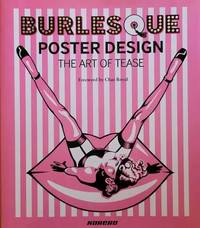
2009263972Korero Books LLP London 2009. First Edition. Hardcover. As New/As New. The finest raunchiest most teasing burlesque poster art from the Follies Bergere of 1880 to the London Burlesque of 2008. More than 150 poster designs illustrate the history of bumping and grinding flirting and subverting. GIFT QUALITY. Quantity Available: 1. Shipped Weight: 2-3 kilos. Category: Art; Art & Design; ISBN/EAN: 9780955339820. Inventory No: 263972. 9780955339820 This book is extra heavy and may involve extra shipping charges to some countries. Korero Books LLP hardcover
139680658X.Gpaperback. Good. Access codes and supplements are not guaranteed with used items. May be an ex-library book. paperback
1396807276.Ghardcover. Good. Access codes and supplements are not guaranteed with used items. May be an ex-library book. hardcover
0548780374.Gpaperback. Good. Access codes and supplements are not guaranteed with used items. May be an ex-library book. paperback
116409209X.Gpaperback. Good. Access codes and supplements are not guaranteed with used items. May be an ex-library book. paperback
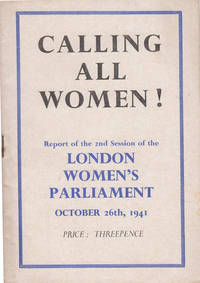
194116577London: Women's Parliament 1941. First Edition. 12mo. 32 pp. Cream staple-bound wrappers with black & blue lettering. A near fine copy minor wear. "With the successful carrying through of its Second Session the London Women's Parliament definitely established itself as a widely representative and authoritative institution speaking with the voice of the women of London and having an important part to play in society now and in the future. Women's Parliament unknown
133451691X.Gpaperback. Good. Access codes and supplements are not guaranteed with used items. May be an ex-library book. paperback
0243069650.Gpaperback. Good. Access codes and supplements are not guaranteed with used items. May be an ex-library book. paperback
1333235003.Gpaperback. Good. Access codes and supplements are not guaranteed with used items. May be an ex-library book. paperback
1527739392.Gpaperback. Good. Access codes and supplements are not guaranteed with used items. May be an ex-library book. paperback
1527856739.Gpaperback. Good. Access codes and supplements are not guaranteed with used items. May be an ex-library book. paperback
036686100X.Gpaperback. Good. Access codes and supplements are not guaranteed with used items. May be an ex-library book. paperback
19105595Eyre & Spottiswoode 1910. 4to. 34 leaves with fine woodblock arms of Edward VII at head; sewed as issued a remarkably bright clean copy ideal for framing and display. 10 Edw. 7 & 1 Geo. 5. The Wimbledon and Sutton Railway Company Ltd. incorporated in law by the present Act continued in operation from 1910 to 1925. When in 1923 the Southern Railway Company was formed by merging the five major southern lines and several smaller operators the Wimbledon & Sutton fought to stay apart. It was one of the last to remain independent before its inevitable absorption in 1925. VERY SCARCE ESPECIALLY IN THIS CONDITION. Not in Ottley. Eyre & Spottiswoode, unknown
25851‘Mansion House London / 20 July 1829’. An excellent slice of Georgian London history. See his entry and Hook’s in the Oxford DNB. 4pp 12mo. Fifty-five lines of text. On bifolium. In fair condition on discoloured and lightly-worn paper with closed tear at foot of gutter. Also present is a typed transcript. The letter concerns a proposed three-day ‘excursion to the Medway’. Hook has engagements that will interefere but Thompson undertakes to land him ‘safe at the Tower by seven o’clock on Saturday’. Thompson’s plan is ‘as follows the city of London Steamer leaves the Tower Stairs a little before ten oClock on Thursday with my friends & as I have official business at Woolwich I shall go on board there we stop near Southend at the boundary of the Lord Mayors jurisdiction where we dine & I shall there be joined by the Lords of the Admiralty Mr. Croker i.e. John Wilson Croker 1780-1857 etc but from there I fear they will return to town We proceed to Wrights at Rochester where we sleep Friday morning we shall visit Upnor Castle which is the boundary of my jurisdiction in the Medway & then proceed to Sheerness & view that great naval arsenal Admiral Blackwoods flag ship Vice-Admiral Sir Henry Blackwood 1770-1832 &c. at this place I give a boat to be sailed for by the Fishermen & after this engagement I return to Wrights where I entertain the Port Admiral & His Officers the Corporation of Rochester & the nobility & gentry of the neighbourhood.’ He will return to town on the Saturday by steamer. Hook now has ‘a hasty sketch’ of Thompson’s plans and he will ‘feel extremely obliged by whatever time you can give me during this cockney expedition’. ‘Mansion House [London] / 20 July 1829’. unknown
20653Both from Roupell Park Brixton. March 1857 and 25 April 1859. The first letter has the damaged signature 'William: Roupe<ll>' the second is signed 'W: Roupell'. ONE March 1857: 1p. 8vo. Signed autograph draft of a circular Roupell made for his election agent at the time of his first parliamentary contest. On the reverse of a letterhead of 4 Wolsingham Place Lambeth which was the office of solicitor R. C. Barton who was Roupell's election agent see George Hill 'Electoral History of the Borough of Lambeth' 1879. In poor condition heavily worn with loss to the outer edges and text including the end of Roupell's signature. Reads: 'My Dear Sir I have been urged <to> become a Candidate for the <B>orough of Lambeth – There is to be a meeting of my friends & support<ers> at “The Horns Tavern†Kennington o<n> BLANK evening at BLANK o'clock preci<sely> when I hope to have the honor of you<r> attendance & support'. TWO 25 April 1859: Autograph Letter Signed to unnamed recipient or more likely another draft of an intended circular. 1p. 12mo. In good condition lightly aged with wear at foot and to signature. Reads: 'The Nomination Day having been fixed for Thursday and the Polling for Friday next I have the pleasure to enclose your Polling Card. Conscious that during the time I have sat in Parliament I have endeavoured faithfully to represent you and at the same time have not been unmindful of your local interests I rely upon your cordial & hearty support early last word underlined at the Poll'. Both from Roupell Park, Brixton. March 1857 and 25 April 1859. unknown
19838Roupell Park Brixton. 28 April 1859. 2pp. 12mo. Bifolium with mourning border. In good condition on aged and worn paper. Possibly produced in court as docketed at head: 'facsimile printed 1st & 3rd' the present item is not a facsimile. The male recipient is not identified. He wishes to reiterate his thanks 'for the hearty support and valuable assistance you have so kindly tendered in securing my Reelection as one of your Representatives for the Borough of Lambeth'. He will 'bear a pleasing recollection of those services' and hopes that his 'future course in Parliament may be such as fully to justify the confidence you have reposed in me'. Over a number of years and to the tune of more than £100000 Roupell plundered the estate of his father Richard Palmer Roupell 1782–1856 scrap-metal dealer and property developer. A committee was convened in the House of Commons to investigate irregularities in his parliamentary campaign in the 1857 general election. Roupell Park, Brixton. 28 April 1859. unknown
16411409300024Printed at London : For M.S 1641-01-01. Hardcover. Very Good. Octavo. 2 48 226 pages. Bound in early 20th century 3/4 leather. Gilt letterig on spine. 5 raised bands. Cloth boards. Page ends washed red. Good binding and cover. Wear to extremities. Owners leather bookplate on inside board of Laurence Roberts Carton. Lacks the 4 portraits. Errata leaf present at end of text but well-worn showing only a quarter of original text. Clean unmarked pages with tanning. R13582. Wing P4018. <br><br> Like many Puritans abhorring decadent celebrations Prynne was strongly opposed to religious feast days including Christmas and revelry such as stage plays He included in his Histriomastix 1632 a denunciation of actresses which was widely felt to be an attack of Queen Henrietta Maria. This book led to the most famous incidents in his life but the timing was accidental. <br> About 1624 Prynne had begun a book against stage-plays; on 31 May 1630 he obtained a license to print it and about November 1632 it was published. Histriomastix is a volume of over a thousand pages showing that plays were unlawful incentives to immorality and condemned by the scriptures Church Fathers modern Christian writers and pagan philosophers. By chance the queen and her ladies in January 1633 took part in the performance of Walter Montagu's The Shepherd's Paradise: this was an innovation at court. A passage reflecting on the character of female actors in general was construed as an aspersion on the queen; passages which attacked the spectators of plays and magistrates who failed to suppress them pointed by references to Nero and other tyrants were taken as attacks on the king Charles I. <br>William Noy as attorney-general instituted proceedings against Prynne in the Star-chamber. After a year's imprisonment in the Tower of London he was sentenced 17 February 1634 to be imprisoned during life to be fined to be expelled from Lincoln's Inn to be deprived of his degree by the university of Oxford and to lose both his ears in the pillory. Prynne was pilloried on 7 May and 10 May. On 11 June he addressed to Archbishop Laud whom he regarded as his chief persecutor a letter charging him with illegality and injustice. Laud handed the letter to the attorney-general as material for a new prosecution but when Prynne was required to own his handwriting he contrived to get hold of the letter and tore it to pieces. In the Tower Prynne wrote and published anonymous tracts against episcopacy and against the Book of Sports. In one he introduced Noy's recent death as a warning. Elsewhere he attacked prelates in general 1635. An anonymous attack on Matthew Wren bishop of Norwich brought him again before the Star-chamber. <br> On 14 June 1637 Prynne was sentenced once more to a fine to imprisonment for life and to lose the rest of his ears. At the proposal of Chief-justice John Finch he was also to be branded on the cheeks with the letters S. L. signifying 'seditious libeller'. Prynne was pilloried on 30 June in company with Henry Burton and John Bastwick and Prynne was handled barbarously by the executioner. He made as he returned to his prison a couple of Latin verses explaining the 'S. L.' with which he was branded to mean 'stigmata laudis' sign of praise. He was released by the Long Parliament in 1640. The House of Commons declared the two sentences against him illegal restored him to his degree and to his membership of Lincoln's Inn and voted him pecuniary reparation as late as October 1648 he was still trying to collect it. He supported the Parliamentary cause in the English Civil War particularly in the press and in many pamphlets while still pursuing the bishops. Printed at London : For M.S hardcover
12201Whitehall Place London; 3 February 1817. 3pp. 12mo. 27 lines. Fair on aged paper with some closed tears along crease lines. Huskisson informs Morley that as long as 'Mr Wilbraham a member of one of the biggest landowning families in Cheshire will use his utmost endeavours to keep down and destroy Hares and Rabbits in the Crown Plantations of Delamere Forest the Deputy Surveyor shall be instructed not to oppose any obstacle to his arrangements for the prevention of the winged Game and to co:operate with Him in preventing other Persons from trespassing in the said Inclosures for the purpose of its destruction.' He concludes by stating that the Board may take its own steps 'for the destruction of Hares and Rabbits'. Whitehall Place [London]; 3 February 1817. unknown
14313Both from Treasury Chambers London. 12 December 1805 and 24 January 1806. Both documents 1p. folio. Both in good condition on lightly-aged laid paper the first with pin-holes from its attachment to another item. The first letter relates to 'the Expences incurred in constructing the Royal Military Canal' with reference to a 'Letter from Sir Brook. Watson Bt' and 'Lieut. Col. Brown's Accounts for expenditure'. The second letter again deals with communications from Watson and Brown the latter 'enclosing Accounts & Vouchers for the Expenditure on the Royal Military Canal & Rampart'. The Royal Military Canal conceived by Lieutenant-Colonel John Brown as a defence against invasion runs for 28 miles between Seabrook near Folkestone and Cliff End near Hastings. In mid-1805 due to the slow progress of the work the contractors and consultant engineer John Rennie had been dismissed and replaced by the Quartermaster-General’s department with Brown in command. Both from Treasury Chambers [London]. 12 December 1805 and 24 January 1806. unknown
105171 4 and 8 July 1901; all on letterheads of Broadwater Cross Tunbridge Wells. All three items good on lightly-aged paper. All bifoliums. Letter One 1 July 1901: 12mo 4 pp. 42 lines. He is pleased to have received Childers' life of his father published that year. 'I knew your Father well . I was in the House in the Parliaments of 68 & 80 when he had his most serious work'. Praises his 'amazing pluck in going out as he did to Australia Childers was first Vice-Chancellor of the University of Melbourne & in his conduct there in the early days & during the gold discoveries time the story of which in his letters is very curious'. He is interested to learn that he 'had Jewish blood in his veins'. He finds it 'evident that he was very doubtful as to Gladstone's wisdom on several points & in that I agree with him'. He believes that though 'most anxious to help Ireland' he was not 'really happy about Home Rule' wanting to 'separate the Imperial from the Local' which 'could not be done'. Ends: 'Where should we have been in 99 if we had given Ireland over to an Irish Parlmt in 93' Letter Two 4 July 1901: 12mo 4 pp. 33 lines. Having received Childers' reply he is pleased he wrote. Childers' 'Jewish blood' is 'very interesting to me'. Praises Disraeli's comments on the subject in his biography of Lord George Bentinck - 'a most interesting book & written by a most remarkable specimen of that famous nation'. Attacks Gladstone's handling of the Home Rule question. The recipient is 'right that Gladstone acted in a hurry . but he did more - He broke faith with his old friends to whom in Septr 1885 he sent a message utterly opposed to the plans which he developed even before the Election of that year. He was not straight & he had his reward. And he destroyed the Liberal party. - Where is it now' Letter Three 8 July 1901: 12mo 3 pp. 31 lines. He thanks him for 'the Copy of that very remarkable letter - It does the Father credit'. Until the recent case of 'Mr J. E. Backhouse of Darlington' he had 'never heard before of a boy being made a Baronet'. He does not 'altogether agree with your history as to 79-80 - I remember well saying after that terrible Afghan disaster at end of 79 that it would finish the Govmt - that & the Zulu war were too much for the Electors.' 1, 4 and 8 July 1901; all on letterheads of Broadwater Cross, Tunbridge Wells. unknown
B9781019499238Hardback. New. hardcover
B9781021262189Paperback / softback. New. paperback
22600Headed 10 Downing Street Whitehall 6 March 1891. Three pages cr. 8vo bifolium fold marks good condition. "I have read your letter with reference to Mr Justice Stephen with care and I observe that while you throw the whole responsibility on the Government for the continuance of a condition which you describe as 'notorious' and creating 'a general dissatisfaction' you do not advance a single specific allegation as to a failure of justice on which it would be possible to take action. The only course of action open to the Government in the case of a judge whose conduct merits removal is by address to the Crown in both Houses of Parliament. The constitution has very properly made the judges absolutely independent of the Government of the day which so far as they are concerned possesses no Paternal or Disciplinary authority and any Member of Parliament is equally entitled to move an Address with any member of the Government. But this power which you possess in common with ourselves should obviously be exercised with abundant specific proof of the necessity in the public interest of that course. I am not in possession of evidence of that character on which I could feel it my duty to proceed." At this time Smith was First Lord of the Treasury and Leader of the House. [Headed] 10 Downing Street, Whitehall, 6 March 1891. unknown
0331050862.Gpaperback. Good. Access codes and supplements are not guaranteed with used items. May be an ex-library book. paperback