585 résultats
Mm 140x210 Collana "Biblioteca Storica di tutte le Nazioni" - Opera completa nei suoi tre volumi pubblicati tra il 1825 ed il 1826. Rilegatura in mezza pelle coeva con nervature e titolo in oro al dorso che presenta leggere abrasioni, bella carta ai piatti con disegno a rilievo con tracce d'uso leggere al primo volume, tagli marezzati, vii-411 + 503 + 482 pagine con tenui fioriture concentrate in apertura e chiusura dei tomi. Copia in buone-ottime condizioni complessive nelle sue legature ben salde, spedizione in 24 ore dalla conferma dell'ordine.
Mm 115x200 Collana "Temi". Brossura editoriale di 142 pagine, etichetta di biblioteca dismessa in apertura. Ottimo stato. Spedizione entro 24 ore dalla conferma dell'ordine.
193131026Dr. Selle-Eysler, Berlin, 1931. 128 Seiten, einige Abbildungen; 8° , ca. 19 x 13 cm, Halbleder
in-8°, 251 pp., index, broche, couverture illustree plast. Bel exemplaire (pli au premier plat). [MI-2]
Mm 130x210 Collana "Aneddotica". Brossura editoriale con bandelle, 283 pagine. Strappi alla copertina, interno in buono stato. SPEDIZIONE IN 24 ORE DALLA CONFERMA DELL'ORDINE.
199783986Schleswig, Landesarchiv Schleswig-Holstein, 1997. 203 S. Mit über 50 Abb. im Text, 2 Kartenskizzen, 1 Stammtafel u. 12 Farbtafeln (= Veröffentlichungen des Landesarchivs Schleswig-Holstein, 57). 21 cm. Farb. illustr. OKart. - Mit beilieg. Korrigendablatt u. Ausstellungsfaltbl. mit Vortragsverzeichn.
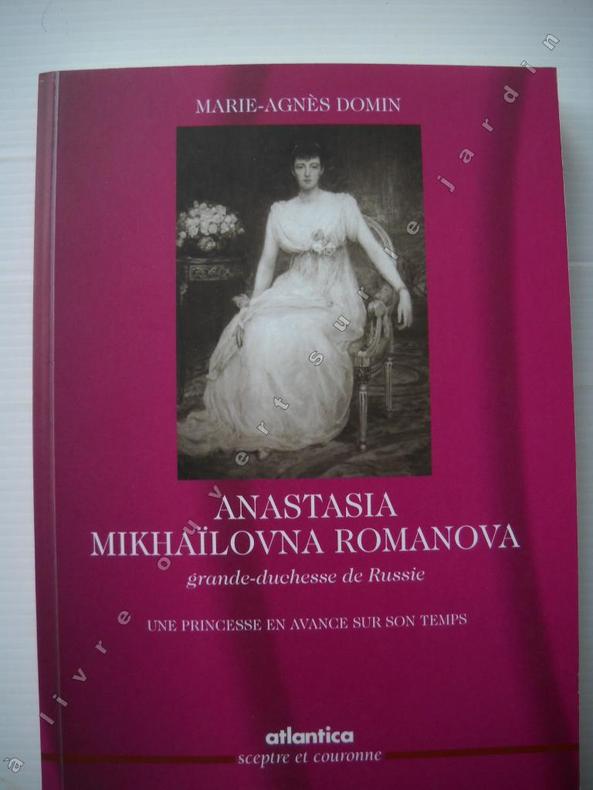
17110Broché - 15 x 21 - 215 pp - année 2002 - Editions Atlantica - généalogie -
5202in 8 demi chagrin bleu titre,filets dorés,faux-titre noir et rouge,frontispice titre en noir et rouge,XI,368 pages, 26 gravures hors-texte inédites par QUESNAY de BEAUREPAIRE. Firmin Didot & Cie 1888, pâles rousseurs éparses habituelles.La question des saints lieux.Projets de l'Empereur Nicolas,etc.Préparatifs des Turcs. Forces des Russes.etc.Entrée des flottes de France et d'Angleterre dans la Mer Noire.etc.Incertitudes touchant le plan d'opérations.etc.description de la Crimée.etc.L'armée perd deux jours après la bataille d'Alma.etc.Description de Sébastopol. etc.Division de l'armée française en corps de siège et en corps d'observation.etc.Causes de la défaite des Russes à Inkermann.etc.Mission du général Niel.etc. Mort de l'Empereur Nicolas,avènement de l'Empereur Alexandre II.etc.Affaires du 1er et 2 mai.etc.Conquêtes des contre approches russes du cimetière et du fond de la baie de la Quarantaine.etc.Physionomie du soldat français et du soldat russe
Marc Raeff La russia degli zar. , Editori Laterza 1984, Copertina rigida plastificata con alette informative con segni d'uso ai margini; pagine leggermente ingiallite Molto buono (Very Good) . <br> <br> Copertina rigida <br> 240<br>
199315000Gütersloh & München, Bertelsmann Verlag, 1993. 4°, 105 S., mit zahlreichen farb. Abb., Zeichn., Tab. U.Karten. Einband min. beschabt, sonst min. Gebr.sp., Pappband, gebunden
Mm 150x230 Brossura editoriale di XV-260 pagine. Rotture alla cerniera e piccole lacune al dorso, interno in buono stato. SPEDIZIONE IN 24 ORE DALLA CONFERMA DELL'ORDINE.
74708Paris, Fayard, 1985. 13 x 21, 863 pp., quelques illustrations en N/B, 2 cartes, broché, couverture à rabats, bon état.
Collana Storica Rizzoli -La Vecchia Moscovia - La grande ambasceria - La grande guerra del Nord - Sulla ribalta europea - La nuova Russia - Appendici: Bibliografia - Cronologia - Indice dei nomi 1 21,5x14,5 cm., legatura in piena tela, fregi e titoli in oro su tassello sul dorso, sopraccoperta con ritratto dello Zar a colori, alle sguardie carte geografiche, pp. 781 (1), 8 tavole su carta patinata con illustrazioni in bianconero, fuori testo, prima edizione italiana, ottimo stato. La vita dello zar che trasform? la Russia medievale in una grande potenza dell'Europa moderna - ... Pietro il Grande, Padre della Patria, Imperatore di tutte le Russie
198619685Gütersloh : Bertelsmann-Club; Kornwestheim : EBG-Verl.-GmbH; Wien : Buchgemeinschaft Donauland; Zug/Schweiz : Buch- u. S, [1986]. 782, [20] S. : Ill. 8°. Lizenzausg. OPpbd. mit Rückengoldpräg. u. SU. (Buch ; 66761)
Third impression, xvii; 584 pages. Index. 34 illustrations. Light wear to cover extremities.
P., Didot, 1859. In-12 relié demi basane vert, 462 pages. Plats et coupes un peu frottés, rousseurs sur les gardes, quelques rousseurs par ailleurs. Etat correct. Tome de la Bibliothèque des Mémoires relatifs à l'Histoire de France pendant le 18° siècle.
BN166757MAZDAZNAN Verlag. Mazdaznan Ernährungskunde und Kochbuch <br/><br/>Mazdaznan Ernährungskunde und Kochbuch Mazdaznan Verlag GmbH; Hanish Otoman Zar Adusht and Rauth Otto MAZDAZNAN Verlag unknown
Cm. 21,5, tela rig. edit., pag. 352 (4) più 12 tavole f.t.. Piacevolissimo. Manca la sovracop., buon esemplare.
Very Good Turkish, Ottoman (1500-1928) Original newspaper. Folio. (49 x 33 cm). In Ottoman script (Old Turkish with Arabic letters) and imprint details in bilingual in Russian and Turkish. 4 p. An early issue of this extremely rare newspaper published in Tbilisi by Mehemmedaga Sahtahtli between 1903 and 1905 as 392 issues in total, published for all Turks and Islamic groups in Russia, which had a significant position in the modernization history of Azerbaijani and Russian Turks and the political and social changes at the end of the 19th and the early 20th centuries for Islamic minorities in Russia. The articles were included in this issue as follows: Tiflis-Musahabe by Mehemmed Bey Kasimbekov, pp. 1-2 (about the Girls' Schools in the Caucasus.; Türkistan'a Seyahat by Tacir Arif, pp. 2-3 [Voyage into Turkestan], Öz Muhbirlerimizden-Uralsk'dan-Men Garra' Gurra'-Tercüman ve Muharriri, pp. 3 [an article criticizing "Sark-i Rus"' publishing policy]; Kirim, Öz Muhbirlerimizden-Kirim'dan-Akmescid'de Darü'l-Muallimîn, pp. 3-4 [about the school for theachers, which was opened in Akmescit (Simferopol) in 1870 and provides education in Russian, the number of students and the education program and the inadequacy of the Muslim education of the same school]; Öz Muhbirlerimizden-Bakû'dan, pp. 4 [about the Muslims of Baku losing their influence from the commercial life of the city]; etc. The first Turkish newspapers titled "Ziya", "Ziya-yi Kafkasiye" and "Keshkul" published in Tbilisi in the 19th century were closed by the Russian authorities. The newspaper "Sark-i Rus", published in 1891, long after the closure of Keskul, became the first Turkish newspaper published in the Caucasus at the beginning of the 20th century. Mehemmedaga Sahtahtli, or Mammad agha Shahtakhtinski (1846-1931), was an Azerbaijani linguist and public figure. In 1902, Shahtakhtinski returned to Caucasus and settled in Tiflis. Here in March 1903, he founded the Azeri-language newspaper Sharg-i Rus ("The Russian Orient") dedicated to the academic enlightenment of the Muslims of the Caucasus. His articles propagated the necessity of Europeanisation, which he saw as the only possible way to a stable and developed future. He sharply criticised Islamic fanaticism, which in his opinion was a major obstacle in the development of Azeri culture and was incompatible with the idea of progress. He also dismissed Pan-Turkism, a popular theory among Turkic-speaking scholars and political activists of the time, and propagated the use of folk Azeri as a literary language, as opposed to the common practice of using Ottoman Turkish. He was among the peacemakers during the bloody Armenian-Tatar massacres of 1905-1907. In 1907, he was elected to the State Duma of the Russian Empire (second convocation). After dissolution of the duma, he worked for Petersburg-based newspaper "Russia", then edited by Pyotr Stolypin. Between 1908 and 1918, Shahtakhtinski lived in various parts of the Middle East, including Anatolia, Iraq and Persia, meanwhile writing articles for "Turkestan Times" (Russian: Turkestanskie Vedomosti). During this time abroad, he worked at the Russian embassy to the Ottoman Empire as translator between 1909 and 1912. In 1919, he returned to then-independent Azerbaijan to give lectures at the newly established Azerbaijan State University. Shahtakhtinski was among the numerous scholars who had followed Mirza Fatali Akhundov in proposing an alphabet reform for Azeri, suggesting to reform the existing Perso-Arabic script. The unsuitability of the Arabic alphabet to Turkic languages in general was in his opinion a major obstacle to the spread of literacy among Azeris. Between 1879 and 1903, Shahtakhtinski designed several model alphabets for Azeri, some of them Roman-based, however none of them was implemented in practice. He attended Congress of the Peoples of the East, acting as an interpreter for Turkish, French, German, Persian and Arabic in 1920. In 1923, Shahtakhtinski as member of a special four-mem
In-8 (cm. 21.70), cartonato editoriale, sovracoperta editoriale illustrata, pp. 168, con illustrazioni in bianco e nero ed a colori nel testo. In buono stato (good copy).
Very Good Turkish, Ottoman (1500-1928) Original six albumen print photographs. Each 12x9 cm. Fine photographs in its original feuille in very good condition. Very early, unique and historically significant six albumen prints, showing the mass executions of Turkish soldiers by the Russian army on the Caucasus Front (probably in Bayazid region) during the Russo-Turkish War of 1877-1878, in its original feuille of Gewaert - "Blaustern" Papier (L. Gewaert & Cie.) in Berlin and Vienna, with the seal of photographer "Michael Vogel; Zemen" on verso. All photos focus on the executions on death rows taken from different angles. In the Turkish village where the events took place, military barracks, mosques in the background, snowy ground in winter, Russian soldiers and captive Turkish soldiers are clearly visible. 'War of '93', named for the year 1293 in the Islamic calendar; (Russko-Turetskaya Voyna, or "Russian-Turkish War) was a conflict between the Ottoman Empire and a coalition led by the Russian Empire, and including Bulgaria, Romania, Serbia, and Montenegro. Fought in the Balkans and in the Caucasus, it originated in emerging 19th century Balkan nationalism. Additional factors included the Russian goals of recovering territorial losses endured during the Crimean War of 1853-56, re-establishing itself in the Black Sea and supporting the political movement attempting to free Balkan nations from the Ottoman Empire. The Russian-led coalition won the war, pushing the Ottomans back all the way to the gates of Constantinople, leading to the intervention of the western European great powers. As a result, Russia succeeded in claiming provinces in the Caucasus, namely Kars and Batum, and also annexed the Budjak region. The principalities of Romania, Serbia, and Montenegro, each of which had had de facto sovereignty for some years, formally proclaimed independence from the Ottoman Empire. After almost five centuries of Ottoman domination (1396-1878), an autonomous Bulgarian state emerged with the help and military intervention of Russia: the Principality of Bulgaria, covering the land between the Danube River and the Balkan Mountains (except Northern Dobruja which was given to Romania), as well as the region of Sofia, which became the new state's capital. The Congress of Berlin in 1878 also allowed Austria-Hungary to occupy Bosnia and Herzegovina and Great Britain to take over Cyprus. The initial Treaty of San Stefano, signed on 3 March 1878, is today celebrated on Liberation Day in Bulgaria, although the occasion somewhat fell out of favour during the years of Communist rule. The Russian Caucasus Corps was stationed in Georgia and Armenia, composed of approximately 50,000 men and 202 guns under the overall command of Grand Duke Michael Nikolaevich, Governor General of the Caucasus. The Russian force stood opposed by an Ottoman Army of 100,000 men led by General Ahmed Muhtar Pasha. While the Russian army was better prepared for the fighting in the region, it lagged behind technologically in certain areas such as heavy artillery and was outgunned, for example, by the superior long-range Krupp artillery that Germany had supplied to the Ottomans. The Caucasus Corps was led by a quartet of Armenian commanders: Generals Mikhail Loris-Melikov, Arshak Ter-Gukasov (Ter-Ghukasov/Ter-Ghukasyan), Ivan Lazarev and Beybut Shelkovnikov. Forces under Lieutenant-General Ter-Gukasov, stationed near Yerevan, commenced the first assault into Ottoman territory by capturing the town of Bayazid on 27 April 1877. Capitalizing on Ter-Gukasov's victory there, Russian forces advanced, taking the region of Ardahan on 17 May; Russian units also besieged the city of Kars in the final week of May, although Ottoman reinforcements lifted the siege and drove them back. Bolstered by reinforcements, in November 1877 General Lazarev launched a new attack on Kars, suppressing the southern forts leading to the city and capturing Kars itself on 18 November. On 19 February 1878, the strategic fortress to
Good Turkish Missing covers with original end-papers. Slight tears on end-papers. Overall a good copy. Roy. 8vo. (24 x 16 cm). In Gagauz Turkish. 40, 4 p., b/w ills. First edition of this extremely rare translation in book form, which is the first comprehensive book on the Bessarabian Gagauz people, translated from the magazine "Viata Bessarabiei" in 1933... Ciachir worked for the Romanian magazine titled "Viata Basarabiei" [i.e. The life of Bessarabia] between 1933-34. Mihail Ciachir (or Çakir) was a Protoiereus and educator in the Gagauz language, and the first publisher of Gagauz books in the erstwhile Russian Empire and in the Soviet Union. Ciachir was born in the Bessarabian village of Ceadîr-Lunga, in a Gagauz deacon's family. Bessarabia is a historical region in Eastern Europe, bounded by the Dniester river on the east and the Prut river on the west. About two-thirds of Bessarabia lies within modern-day Moldova, with the Ukrainian Budjak region covering the southern coastal region and part of the Ukrainian Chernivtsi Oblast covering a small area in the north. In the aftermath of the Russo-Turkish War (1806-1812), and the ensuing Peace of Bucharest, the eastern parts of the Principality of Moldavia, an Ottoman vassal, along with some areas formerly under direct Ottoman rule, were ceded to Imperial Russia. The acquisition was among the Empire's last territorial acquisitions in Europe. The newly acquired territories were organized as the Bessarabia Governorate of the Russian Empire, adopting a name previously used for the southern plains between the Dniester and the Danube rivers. Following the Crimean War, in 1856, the southern areas of Bessarabia were returned to Moldavian rule; Russian rule was restored over the whole of the region in 1878, when Romania, the result of Moldavia's union with Wallachia, was pressured into exchanging those territories for the Dobruja. In 1917, in the wake of the Russian Revolution, the area constituted itself as the Moldavian Democratic Republic, an autonomous republic part of a proposed federative Russian state. Bolshevik agitation in late 1917 and early 1918 resulted in the intervention of the Romanian Army, ostensibly to pacify the region. Soon after, the parliamentary assembly declared independence, and then union with the Kingdom of Romania. However, the legality of these acts was disputed, most prominently by the Soviet Union, which regarded the area as a territory occupied by Romania. The Gagauz people is living mostly in southern Moldova (Gagauzia, Taraclia District, Basarabeasca District) and southwestern Ukraine (Budjak). Gagauz is mostly Eastern Orthodox Christians. The term Gagauz is also often used as a collective naming of Turkic people living in the Balkans, speaking Balkan Gagauz Turkish. The origin of the Gagauz is obscure. At the beginning of the 20th century, a Bulgarian historian counted 19 different theories about their origin. A few decades later the Gagauz ethnologist M. N. Guboglo increases the number to 21. In some of those theories, the Gagauz people are presented as descendants of the Pechenegs, Cumans-Kipchaks, or a clan of Seljuk Turks, or a mix of all. The fact that their confession is Eastern Orthodox Christianity may suggest that their ancestors already lived in the Balkans prior to the Ottoman conquest in the late 14th century. (Wikipedia). Not in OCLC.
Mm 150x210 Volume cartonato di pp. 550 con rilegatura posticcia in mezzza tela rossa, piatti marmorizzati, titolo in oro al dorso. Ex-libris al contropiatto anteriore, le primissime 3-4 carte, dal frontespizio all'indice, presentano il margine interno incollato a causa di un vecchio restauro. Per il resto il libro è perfettamente fruibile ed in buone condizioni. SPEDIZIONE IN 24 ORE DALLA CONFERMA DELL'ORDINE.
67855Paris, éd. des Syrtes, septembre 2005, EDITION ORIGINALE, en français, sur papier ordinaire, très fort in-8, br., couv. photo en noir sur fond rouge éd., 800 pp., très nb. cartes et photos en noir, personnages, sources, bibliographie, index, table des matières, dates au marqueur dans les marges sans toucher au texte, Une remarquable biographie du tsar rouge de toutes les Russie, Joseph Staline. Elu livre de l'année en 2004 ! Ce livre est LA vraie référence sur le sujet ! Très bon état
Uomini e storie dipinti in questo libro con estremo, impetuoso e convincente risalto.