9 383 résultats
1479ABC_49714Colophon on i6v: Gouda: Geraert Leeu 1479. Modern vellum sewn on 4 vellum tapes laced through the joints gold-tooled spine with a burgundy morocco title label lettered in gold. Small folio ca. 26 x 20 cm. The text is set in Gothic type in double columns of 35 lines to a page with large manuscript initials in red ink at the start of every chapter rubricated throughout. Further with Geraert Leeu's printer's device and his initials below the colophon on i5v. Extremely rare early Dutch incunable edition of Dat scaecspel printed by Geraert Leeu in Gouda; one of the earliest editions of the Dutch translation of the celebrated classic work titled De ludo scachorum by the Italian Dominican friar Jacobus de Cessolis ca. 1250-ca. 1322. It is likely the earliest precisely dated edition of this text in Dutch. The colophon clearly states the date of printing: "Int iaer ons heren dusent vier-hondert ende neghentseventich op ten anderden dach van october ." = 2 October 1479. Another early edition exists which was printed in Zwolle ca. 1478-1480 but this edition is not clearly dated and thus could have been printed after the present edition. We have not been able to trace any other copies of the present 1479 edition in sales records of the last 100 years.De ludo scachorum is a moral allegory in which the rules and pieces of the game of chess serve as a framework for reflections on society duty and governance. It had already become one of the most popular didactic texts of the later Middle Ages and with the publication of De Cessolis' text in print in several European languages it definitively became a classic in European literary tradition. The present work is the first book in the Dutch language to concern the game of chess and the first printed edition of the Latin text was also produced in the Netherlands by the printers Nicolaus Ketelaer and Gerardus de Leempt in Utrecht in 1474.The original text in Latin consisted of four parts each divided into chapters. The first part discusses the origins of chess and the purposes behind its creation: to reform the misconduct of rulers to ward off idleness and melancholy and to provide endless novelty through the games variety. The next two parts interpret the chess pieces as symbols of the different social estates with each class illustrated through stories and examples. The final part turns to the game itself: the board is likened to the city of Babylon the starting positions of the pieces are described and their movements are explained in detail. The present Dutch translation mainly focuses on the first 3 parts which are here divided into 14 chapters. It focuses more on the moralising allegory of the text than on the way game of chess itself is played. It does include an epilogue by the adapter/translator named Franco leaf i5v.With a manuscript annotation in reddish-brown pencil on the recto of the first leaf "Dat Scaecspell". The blank spaces before each chapter except the first are filled with manuscript summaries of that chapter in a 17th-century hand. Further with some contemporary in red and 17th-century in brown annotations in the margins mostly numbers and small asterisks etc. The first and last leaves are somewhat browned some minor restorations to the paper in the margins not affecting the text and some dust soiling and minor foxing throughout. Otherwise in very good condition. A rare copy of a captivating 14th-century allegorical treatise on the game of chess that became a classic in European literary tradition.l BMC IX pp. 32-33; Campbell-Kronenberg 419; Elloitt-Loose 318; Gesamt Kat. Wiegendrucke 06535; Goff C411; Hain-Copinger 4904; Heel De Goudse drukkers en hun uitgaven. I Gerard Leeu p. 8; ISTC ic00411000 8 copies incl. 2 incomplete; Pellechet 3507; Polain 2158; Proctor 8917; Thienen IDL 1217; Thienen & Goldfinch ILC 553; USTC 435433 7 copies; WorldCat 1079782638 7450101 1415095142 5 copies. Geraert Leeu, hardcover
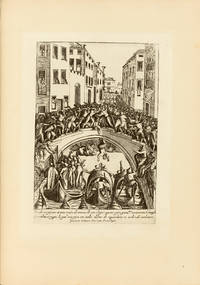
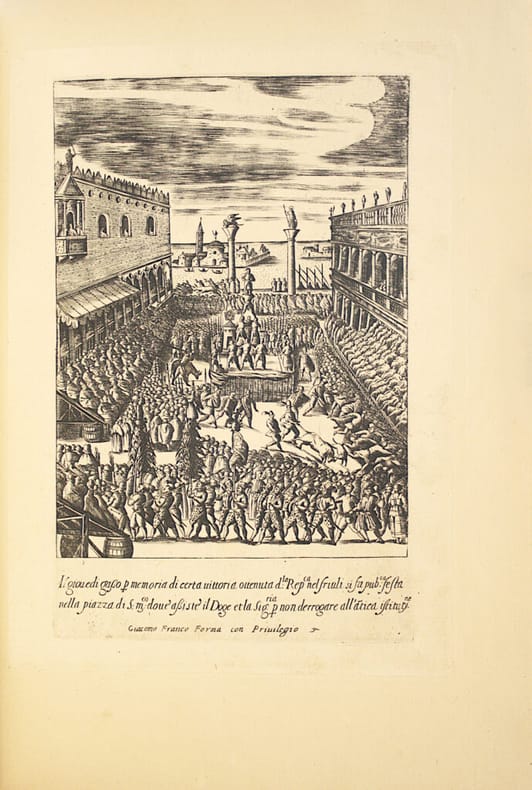
NY24<p>Venice Giacomo Franco Forma in Frezzaria al Insegna del Sole con privilegio s.d. 1610.</p><p>Small folio volume.</p><p>"<i>1 . title engraved with same view of Venice than the one for "Habiti delle Donne" 1 l. not numbered dedication to Vincent de Gonzague de Mantoue dated 1st January 1610 and printed in roman characters 25 plates out of pagination and not numbered.</i></p><p><i>Those plates represent 34 figures of men and women in very rich Venitian costumes life scenes </i></p><p><i>festivities.</i>" Colas n° 1108.</p><p>360 x 260 mm. Dimensions of the engravings: 258 x 190 mm.</p><p><b>Very rare first edition of one of the most famous books on Venice its festivities costumes and activities around 1600.</b></p><p>Colas <i>Bibliographie Générale du Costume</i> n°1108 col. 384-5; <i>Katalog Der Freiherrlich Von Lipperheide'schen Kostümbibliothek</i> repr. 1963 n°1324 p. 527.</p><p>"This collection offers great interest in the costumes of Venice during its greatness. It is sought after today especially as it has become extremely rare ". Vinet Bibliographie méthodique des Beaux-Arts.<br /><br /><b>This collection is so rare that Brunet never found a complete copy and only described an incomplete one</b> Brunet II 1378. As for Vinet he doubts the number of plates following the number 24 with a "" Vinet col 283 n° 2291.<br /></p><p>The copy of the <i>British Museum </i>only contains 20 plates out of 25 and one title leaf is missing. <br /></p><p><b>Title engraved with a birds 'eye view of Venice on an architectural frame with a view of the Rialto bridge and 24 extremely fine engravings.</b><br /><br /><b>The book shows in an extraordinary detailed way the various festivities processions and past times of the city as well as great moments in its history.</b><br /><br />"Assimilated to the genre of the costume book the work by Giacomo Franco 1556 - 1620 drawer and engraver born in Venice also shows engravings of a strong interest for the history of manners and customs of the Serenissima in the 16th and 17th centuries: festivals entertainment maritime games regattas… and carnival. The 1610 edition is probably the first. The number and order of the engravings vary greatly from one edition to another and between copies of the same edition.<br /></p><p>The copy is composed of 26 copper plates including one double plate all except one signed by Giacomo Franco. The engraving named Feste che si sogliono fare per la città della caccia del toro amazzar la Gata col capo raso pigliar l'anadre pigliar l'occa nell'acqua et altro features games with animals: a bear fighting with dogs a tied up cat a goose being plunged into water a duck hanging from a mast and a chased bull. Attested since the Middle Ages bull hunting is a traditional carnival game in the Renaissance particularly in Rome and Venice". Virtual exhibition organized by the Mazarine Library<i> Libri italiani lecteurs français</i> "Balls festivals and banquets".</p><p>"This book of engravings depicts the costumes festivals and social life of early seventeenth-century Venetians. There is no text other than a short descriptive sentence at the bottom of each engraving. Major Venetian landmarks are easily recognizable <b>and the small ovoid map on the title-page is regarded by some scholars as an important example of early Venetian cartography.</b></p><p>Very little is known about the Venetian engraver Giacomo Franco. The son of painter Giovanni-Battista Franco 1510-1561 with whom he began his artistic training at the age of eleven he worked as a painter engraver woodcutter and dealer in graphics and books. For a while he studied in Bologna with Agostino Carracci 1557-1602. In the early 1580s they opened a private teaching academy that soon became a center for progressive art. In their teaching they laid special emphasis on drawing from life and clear draughtsmanship became a quality particularly associated with their school. </p><p>In 1595 Franco took over his father's workshop and eventually became a well-known publisher. Although he was not documented as belonging to the booksellers' or printers' guilds he is recorded in 1606 and again in 1619 as belonging to the painters' guild. Franco's determination to be recognized as an artist is reflected in his will in which he refers to himself as a "designer."</p><p>The <i>Habiti d'huomini</i> is a potpourri of depictions of Venetian costumes processions and celebrations. Citizens are seen watching regattas fighting on bridges conversing in the Piazza San Marco and on the Rialto Bridge and marching in ceremonial procession into the Doge's Palace with flags flying and horns and flutes playing. Even the ubiquitous laundry is seen hanging on the line in the background. Men with rifles hunt ducks in the lagoon. The Doge's mighty Bucintoro warship returns from battle escorted by gondolas and saluted by cannon explosions. Carnival of course has a page of its own which depicts citizens in masks some of whom seem to be making best use of the cover of darkness to contact a prospective lover. The appropriately dressed widow is pictured heavily veiled and a married gentlewoman has two outfits from which to choose one for inside the house another for outside. The men are almost as ornately dressed as the women. The Doge in his palace wearing fine brocade and a crown moves his hand in a sort of blessing as – through a window behind him – life in the Piazza San Marco goes on". The Boston Athenaeum Museum</p><p><i>"From the middle of the 15th century the Venetian institutions came to maturity which allows Venice to parade every week in the fullness of its myth under the eyes of the Venetians and the whole world Urbi et orbi - including the Turks and the Chinese. Venice then shows itself united eternal strong and indestructible</i>. "<br /><br />One of the great moments of this frenzied proclamation of the political perfection of Venice is the rite of the <i>trionfo </i>- or ducal procession - where hierarchy order harmony and collective respect are the characteristics of this state liturgy.<br /><br />This urban rite we could even say ritual is a great moment in the political life - and in the life itself - of Venice. Indeed the ducal procession is intended to be a proclamation of the cohesion of the State and its strong structure in the eyes of the Venetians as in the eyes of foreigners who will necessarily receive echoes. The Milanese Pietro Casolo passing through Venice at the end of the 16th century was impressed by the unchanging - and disciplined - ordering of these Venetian processions:<br /><br /><i>In my opinion one man seemed to rule all things and he was obeyed by all without resistance. It filled me with admiration as I have never seen such a discipline at similar shows.</i><br /><i>They walk two by two behind the doge in a completely different order from what I have seen in many religious or secular courts where as soon as the prince has passed everything goes in all directions and in disorder. Here in front and behind everything is as in a perfect order as possible.</i><br /><br />The ordering and place of each are not the result of chance but the result of a rigorously thought out and unchanging ceremony. This immutability is demonstrated by the existence of commented engravings that is to say that the artists note the order of the succession of the characters as an element as perennial as the architectures that frame this ceremony. An example the engraving of Giacomo Franco which shows us the beginning of the procession which enters the basilica. The frieze arrangement evokes the Roman triumphs of the Ara Pacis or Trajan's Column." Marie-Viallon The Ducal procession in Venice.<br /></p><b>Precious and beautiful copy coming from the library of the 19th century </b><i><b>A. Brölemann</b></i><b> with ex-libris.</b><p><b><br /></b></p><p><u>Français :</u><br /></p><p>Venice Giacomo Franco Forma in Frezzaria al Insegna del Sole con privilegio s.d. 1610.</p><p>Petit in-folio.</p><p>" <i>1 f. titre gravé avec la même vue de Venise que pour " Habiti delle Donne " 1 f. non chiffr. dédicace à Vincent de Gonzague de Mantoue datée du 1er janvier 1610 et imprimée en caractères romains 25 planches h. t. gr. non chiffr.</i></p><p><i>Ces planches portent 34 figures d'hommes et de dames dans de très riches costumes vénitiens des scènes de mœurs des réjouissances.</i> " Colas n° 1108.</p><p>Le présent exemplaire compte 1 titre gravé avec vue de Venise et 24 planches portant 30 figures d'hommes et de dames ; manquent le feuillet de dédicace et une planche portant 4 figures mais le nombre et l'ordonnancement des gravures sont très variables entre les exemplaires d'une même édition " this fine collection of detailed views and scenes of Venetian life and costume was issued with varying numbers of plates ". Qq. rousseurs en marge du frontispice. Le tout monté sur grand papier et relié vers 1850 par <i>Duru</i> en demi-maroquin rouge à coins. </p><p>360 x 260 mm. Dimensions des gravures : 258 x 190 mm.</p><p><b>Edition originale rarissime de l'un des livres les plus célèbres sur Venise ses fêtes costumes et activités vers l'année 1600.</b></p><p>Colas <i>Bibliographie Générale du Costume</i> n°1108 col. 384-5; <i>Katalog Der Freiherrlich Von Lipperheide'schen Kostümbibliothek</i> repr. 1963 n°1324 p. 527.</p><p>" <i>Ce recueil offre un grand intérêt pour les costumes de Venise pendant sa grandeur. On le recherche aujourd'hui d'autant plus qu'il est devenu d'une extrême rareté</i> ". Vinet <i>Bibliographie méthodique des Beaux-Arts</i>.</p><p><b>Ce recueil est si rare que Brunet n'a jamais rencontré d'exemplaire complet et ne décrit qu'un exemplaire incomplet</b> Brunet II 1378. Quant à Vinet il doute du nombre de planches faisant suivre le chiffre 24 d'un " " Vinet col 283 n° 2291.</p><p>L'exemplaire du <i>British Museum</i> ne contient que 20 planches sur 25 et il manque le feuillet de titre. </p><p><b>Titre gravé avec vue à vol d'oiseau de Venise dans un cartouche architectural surmonté d'une vue sur le pont du Rialto et 24 gravures extrêmement fines. </b></p><p><b>Le livre montre avec un détail extraordinaire les différentes festivités processions et temps passés de la ville ainsi que de grands moments de son histoire.</b></p><p>" Assimilé au genre du livre de costumes l'ouvrage de Giacomo Franco 1556 - 1620 dessinateur et graveur né à Venise montre également des gravures d'un fort intérêt pour l'histoire des mœurs et coutumes de la Sérénissime aux XVIe et XVIIe siècles : fêtes divertissements joutes maritimes régates… et carnaval. L'édition de 1610 est probablement la première. Le nombre et l'ordonnancement des gravures sont très variables d'une édition à l'autre et entre les exemplaires d'une même édition.</p><p>L'exemplaire exposé comporte 26 planches gravées sur cuivre dont une double planche toutes sauf une signées de Giacomo Franco. La gravure intitulée Feste che si sogliono fare per la città della caccia del toro amazzar la Gata col capo raso pigliar l'anadre pigliar l'occa nell'acqua et altro met en scène des jeux avec des animaux : un ours se battant avec des chiens un chat ligoté une oie que l'on plonge dans l'eau un canard accroché à un mât et un taureau pourchassé. Attestée depuis le Moyen Âge la chasse au taureau est un jeu traditionnel du carnaval à la Renaissance en particulier à Rome et à Venise ". Exposition virtuelle organisée par la Bibliothèque Mazarine <i>Libri italiani lecteurs français</i> " Bals fêtes et banquets ".</p><p>"This book of engravings depicts the costumes festivals and social life of early seventeenth-century Venetians. There is no text other than a short descriptive sentence at the bottom of each engraving. Major Venetian landmarks are easily recognizable and <b>the small ovoid map on the title-page is regarded by some scholars as an important example of early Venetian cartography</b>.</p><p>Very little is known about the Venetian engraver Giacomo Franco. The son of painter Giovanni-Battista Franco 1510-1561 with whom he began his artistic training at the age of eleven he worked as a painter engraver woodcutter and dealer in graphics and books. For a while he studied in Bologna with Agostino Carracci 1557-1602. In the early 1580s they opened a private teaching academy that soon became a center for progressive art. In their teaching they laid special emphasis on drawing from life and clear draughtsmanship became a quality particularly associated with their school. </p><p>In 1595 Franco took over his father's workshop and eventually became a well-known publisher. Although he was not documented as belonging to the booksellers' or printers' guilds he is recorded in 1606 and again in 1619 as belonging to the painters' guild. Franco's determination to be recognized as an artist is reflected in his will in which he refers to himself as a "designer."</p><p>The <i>Habiti d'huomini</i> is a potpourri of depictions of Venetian costumes processions and celebrations. Citizens are seen watching regattas fighting on bridges conversing in the Piazza San Marco and on the Rialto Bridge and marching in ceremonial procession into the Doge's Palace with flags flying and horns and flutes playing. Even the ubiquitous laundry is seen hanging on the line in the background. Men with rifles hunt ducks in the lagoon. The Doge's mighty Bucintoro warship returns from battle escorted by gondolas and saluted by cannon explosions. Carnival of course has a page of its own which depicts citizens in masks some of whom seem to be making best use of the cover of darkness to contact a prospective lover. The appropriately dressed widow is pictured heavily veiled and a married gentlewoman has two outfits from which to choose one for inside the house another for outside. The men are almost as ornately dressed as the women. The Doge in his palace wearing fine brocade and a crown moves his hand in a sort of blessing as – through a window behind him – life in the Piazza San Marco goes on". The Boston Athenaeum Museum</p><p><i>" Dès le milieu du XVe siècle les institutions vénitiennes sont parvenues à maturité ce qui permet à Venise de parader chaque semaine dans la plénitude de son mythe sous les yeux des Vénitiens et du monde entier </i><i>Urbi et orbi</i><i> - y compris les Turcs et les Chinois. Venise se montre alors unie forte éternelle et indestructible.</i>"</p><p>Un des grands moments de cette proclamation forcenée de la perfection politique de Venise est le rite du<i> trionfo</i> - ou procession ducale - où hiérarchie ordre harmonie et respect collectif se veulent les caractéristiques de cette liturgie d'État.</p><p>Ce rite voire rituel urbain est un grand moment de la vie politique - et de la vie tout court - de Venise. En effet la procession ducale se veut une proclamation de la cohésion de l'État et de sa forte structuration aux yeux des Vénitiens comme aux yeux des étrangers qui en recevront nécessairement des échos. Le milanais Pietro Casolo de passage à Venise à la fin du XVIe siècle a été impressionné par l'ordonnancement immuable - et discipliné - de ces processions vénitiennes : </p><p><i>Selon moi un seul homme semblait ordonner toutes choses et il était obéi de tous sans résistance. Cela m'a rempli d'admiration car je n'ai jamais assisté à une telle discipline lors de spectacles similaires. Ils marchent deux par deux derrière le doge dans un ordre tout différent de ce que j'ai vu dans de nombreuses cours religieuses ou profanes où dès que le prince est passé tout part dans tous les sens et en désordre. Ici devant et derrière tout est aussi parfaitement en ordre que possible.</i></p><p>L'ordonnancement et la place de chacun ne sont pas le fruit du hasard mais le résultat d'un cérémonial rigoureusement pensé et immuable. Cette immuabilité est démontrée par l'existence de gravures commentées c'est-à-dire que les artistes notent l'ordre de la succession des personnages comme un élément aussi pérenne que les architectures qui encadrent cette cérémonie. Un exemple la gravure de Giacomo Franco qui nous montre le début de la procession qui entre dans la basilique. L'ordonnancement en frise évoque les triomphes romains de <i>l'Ara pacis</i> ou de la colonne Trajane. " Marie-Viallon La procession ducale à Venise.</p><p><b>Précieux et bel exemplaire provenant de la bibliothèque du </b><b>XIXe siècle </b><i><b>A. Brölemann</b></i><b> avec ex-libris. </b></p> hardcover
LCS-17886Édition originale et très bel exemplaire provenant de la bibliothèque A. Brolemann. Venice, Giacomo Franco Forma in Frezzaria al Insegna del Sole con privilegio, s.d. [1610]. Petit in-folio. « 1 f. (titre gravé avec la même vue de Venise que pour « Habiti delle Donne »), 1 f. non chiffr. (dédicace à Vincent de Gonzague de Mantoue datée du 1er janvier 1610 et imprimée en caractères romains), 25 planches h. t. gr. non chiffr. Ces planches portent 34 figures d’hommes et de dames dans de très riches costumes vénitiens, des scènes de mœurs, des réjouissances. » (Colas, n° 1108). Le présent exemplaire compte 1 titre gravé avec vue de Venise et 24 planches portant 30 figures d’hommes et de dames ; manquent le feuillet de dédicace et une planche portant 4 figures mais le nombre et l’ordonnancement des gravures sont très variables entre les exemplaires d’une même édition (« this fine collection of detailed views and scenes of Venetian life and costume was issued with varying numbers of plates »). Qq. rousseurs en marge du frontispice. Le tout monté sur grand papier et relié vers 1850 par Duru en demi-maroquin rouge à coins. 360 x 260 mm. Dimensions des gravures : 258 x 190 mm.
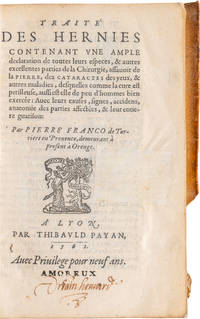
1561954Lyon: Thibauld Payan 1561. Second edition of Franco's most famous work greatly expanding the 1st 1556 with 25 new woodcuts 22 instruments and 3 skeletons. 8vo 175 x 119mm pp. 34 554 2. Contemporary ink ownership inscription to the title page title with old paper restoration 30mmx40mm to blank right margin paper reinforcements to lower margin of G2 ‘F2’ T6 Bb8 Ii2 worming to the final 26 leaves not effecting text errata with a 28mmx44mm piece of the lower blank margin removed and the whole page laid down some very minor sporadic foxing and browning else internally clean very good. Bound in contemporary vellum remnants of from an old manuscript chipped at the lower rear corner lacking the ties toned else very good. Only 3 other copies at auction in at least 85 years. Norman 828. Pierre Franco's "Traité des Hernies" is a groundbreaking work in the history of medicine originally published in 1556 and greatly expanded in this second edition from 1561. Franco one of the most innovative surgeons of the Renaissance despite his humble origins made significant contributions to the field of operative surgery elevating it from the hands of charlatans and itinerant 'cutters' and bringing it back into the realm of respected medical practice.<br /> <br /> Born to a poor family in Provence Franco never received formal university education—a remarkable detail considering his impact. Instead he trained as a barber-surgeon a less prestigious position that provided extensive practical experience. Franco's importance stems from several groundbreaking achievements. The Traité represents the first comprehensive text dedicated entirely to hernias and their surgical treatment. Franco meticulously documented various types of hernias and standardized their classification when most practitioners relied on unstructured knowledge passed through apprenticeship.<br /> <br /> Franco introduced new techniques and instruments such as performing the first documented suprapubic lithotomy removal of bladder stones in 1556 on a child when traditional approaches proved impossible a technique that eventually became standard practice. He also refined techniques for cataract treatment perfecting the "couching" method and pioneering early forms of lens extraction. His work on hernia surgery was particularly groundbreaking as he developed a method for performing herniotomies without castration a common practice at the time.<br /> <br /> Unlike many contemporaries who deferred to ancient authorities Franco prioritized direct observation and experience. By publishing in French rather than Latin he made surgical knowledge accessible to practicing surgeons without classical education. The detailed work on specific procedures laid the groundwork for surgical specialization and the woodcuts in this expanded second edition featuring 25 new illustrations not found in the first edition documented specialized instruments many of Franco's own design serving as prototypes for surgical tool development well into the 19th century.<br /> <br /> Franco's systematic approach established standards that elevated the reputation of surgery as a legitimate medical discipline. He directly influenced later surgical giants including Ambroise Paré who acknowledged Franco's contributions. This 1561 edition represents a crucial moment in the development of modern surgery documenting techniques that established principles that remain relevant in contemporary surgical practice nearly five centuries later.<br /> <br /> “… influential in bringing operative surgery back into the realm of regular surgical practice recapturing it from the ignorant hands of charlatans and itinerant ‘cutters'â€. Thibauld Payan unknown
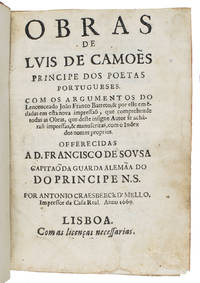
1669LB5CV0F176R3Lisbon: Antonio Craesbeeck de Mello 1669. Later mottled calf red spine labels red edges. 8vo. With 8 woodcut tailpieces. 3 volumes bound as 1. Rare edition of the collected works of Luis de Camões including Os Lusiadas and three Rimas. In the same year Antonio Craesbeeck published another edition with the same title but with less content and with a different frontispiece. This collection of works is made up of separate publications.Os Lusiadas is the great epic poem of Portuguese exploration in the original Portuguese a monument of Portuguese literature that gave a Homeric aura to Renaissance voyages of discovery and colonial conquests here together with the other works of Camões. Camões's work was first published in Portuguese at Lisbon in 1572. In the early 1530s the great Portuguese historian João de Barros most famous for his Decadas de Asia had called for an epic poem of Portuguese exploration and discovery. Luis de Camões 1524-1580 answered that call four decades later. Camões was educated in a monastic school in Coimbra and produced poetry and plays at an early age. In his early twenties he was banished from Lisbon after producing a play considered disparaging to the royal family. He served as a soldier in the Portuguese forces besieging Ceuta in North Africa where he lost an eye. Camões returned to Lisbon in 1550 but found himself in more trouble and was pardoned by the King on condition that he serve the Crown in India for five years. He arrived at Goa in late 1553 and stayed there briefly before joining an expedition to the Malabar Coast. Later he participated in a campaign against pirates on the shores of Arabia. In 1556 he left Goa again for the East Indies taking part in the military occupation of Macao where he remained for many months. On his return trip to India he was shipwrecked off the Mekong and wandered in Cambodia before reaching Malacca and eventually returning to Goa. He did not return to Lisbon until 1570. The Lusiads gives a fine description not only of Portuguese exploits in the East but also of the flora and fauna of Asia and India the ethnographic details of the peoples there and the geography of the region informed by Camões's own experiences as well as his familiarity with Ptolemy and Barros. With the bookplate of "Aulo-Gélio" 1961 with a view of Lisbon. First few pages slightly worn with some repairs. Stained throughout. Some contemporary annotations in ink in the margins.l Bibliotheca Lusitana p. 62; Inocêncio vol. 14 p. 78; José de Canto 37. Antonio Craesbeeck de Mello, unknown
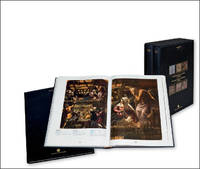
201192212Franco Cosimo Panini Acc. New. 2011. Hardcover. 882480344X . FREE UPGRADE to Courier/Priority Shipping Upon Request - IN STOCK AND IMMEDIATELY AVAILABLE FOR SHIPMENT - Flawless copy brand new pristine never opened -- TWO 2 VOLUME SET. 774 pages; 619 illustrations including 402 in color. -- with a bonus offer-- . Franco Cosimo Panini (Acc) hardcover
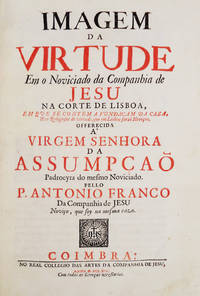
1511NM011<p>EM QUE SE CONTEM A FUNDACAM DA CAZA & os Religiosos de virtude que em Lisboa foraõ noviços OFFERECIDA à VIRGEM SENHORA DA ASSUMPÇAÕ Padroeyra do mesmo Noviciado. PELLO P. ANTONIO FRANCO Da Companhia de JESU Noviço que foy na mesma caza. COIMBRA: NO REAL COLLEGIO DAS ARTES DA COMPANHIA DE JESU ANNO M. DCC. XVII. 1717.</p>_x000d_<p>In 4º gr. de 29x21 cm com 16 979 págs.</p>_x000d_<p>Encadernação da época inteira de pele com ferros a ouro na lombada e rolados em esquadria nas pastas. Corte de folhas carminado.</p>_x000d_<p>Exemplar com ex-libris do século XX de António Sousa Falcão.</p>_x000d_<p>Livro muito raro.</p>_x000d_<p>O Padre António Franco empenhado na transmissão da memória da sua Ordem descreve nesta obra as biografias retiradas das cartas anuais ou registos anuais da Companhia de Jesus dos padres jesuÃtas formados nos diversos Noviciados de Lisboa e que se distinguiram nas suas diversas missões pelo mundo.</p>_x000d_<p>Esta obra está dividida em 4 livros com diversos capÃtulos cada:</p>_x000d_<p>Livro I: Descrição do noviciado da Companhia de Jesus e dos seus diversos domicÃlios em Lisboa. Biografia do Padre M. Simão Rodrigues terceiro companheiro de Santo Inácio de Loyola e primeiro provincial da Companhia Jesus em Portugal. Biografias dos “servos de Deus” da Casa de Santo Antão o Velho. Entre estes jesuÃtas encontram-se o Padre Vilela que contactou com o Padre Francisco Xavier e desempenhou um papel importante na conversão ao Cristianismo do povo de Nagasaki; o grande historiador Padre Fróis e a sua ida para o Japão bem como as suas dificuldades advindas das perseguições de que foi alvo e da guerra que então decorria entre os senhores feudais japoneses.</p>_x000d_<p>Livro II: Biografias dos Noviços da Casa de São Roque e da de Campolide. Entre estes noviços encontra-se o Padre António de Andrade que descobriu o Tibete. O Padre António Franco descreve este paÃs e o lamaÃsmo apontando a falta de comunicação como a razão pela qual se extinguiu a missão no Tibete após a morte do Padre Andrade. Na biografia do Padre Francisco Pimentel relata a sua missão em Tonquim e a vida dos missionários na China.</p>_x000d_<p>Livro III: Biografias dos Noviços da Casa do Monte Olivete. Entre estes jesuÃtas está o Padre André Fernandes eleito Bispo de Japão e outros padres envolvidos nas missões em Angola Cuanza e na Ãndia Maduré.</p>_x000d_<p>Livro IV: Continuação das biografias dos Noviços da Casa do Monte Olivete. Trata da missão dos jesuÃtas na Suécia e a conversão da Rainha Cristina. É também referida a ida para Angola do padre João Tavares e a reitoria do Colégio de Luanda bem como as missões no Dande no Bengo no Congo no Dongo e em Massangano. São João de Brito é também biografado neste livro. É um dos mais importantes santos da Igreja Católica tendo sido dos primeiros a adaptar-se aos povos que ia evangelizar. Morreu como mártir na Ãndia e era já considerado santo no seu tempo apesar de apenas ter sido canonizado em 1947 pelo Papa Pio XII. </p>_x000d_<p>EN <strong>FRANCO Padre António. IMAGE OF VIRTUE in the Novitiate of the Company of JESUS IN THE COURT OF LISBON</strong> Free translation of the title page IN WHICH IT IS INCLUDED THE FOUDATION OF THE HOUSE & the religious of virtue who were novices in Lisbon OFFERED TO OUR LADY OF ASSUMPTION patroness of that novitiate. BY FATHER ANTONIO FRANCO Of the Company of Jesus who has also been a novice in that same house. COIMBRA: AT THE ROYAL COLLEGE OF THE ARTS OF THE COMPANY OF JESUS YEAR M. DCC. XVII. 1717.</p>_x000d_<p>In 4º large 29 x 21 cm with xvi 979 pp.</p>_x000d_<p>Binding: Contemporary full calf with gilt tools on spine and boards. Red edges.</p>_x000d_<p>Copy presents an ex-libris of the 20th century António Sousa Falcão.</p>_x000d_<p>Very rare book.</p>_x000d_<p>Father António Franco committed to transmit the memory of his Order describes in this work the biographies taken from the yearly registries of the Company of Jesus of the Jesuit priests from the several Novitiates in Lisbon and who stood out in their several missions across the world.</p>_x000d_<p>This work is divided in 4 books with several chapters each:</p>_x000d_<p>Book I: Description of the Novitiate of the Company of Jesus and its several colleges in Lisbon. Biography of Father M. Simão Rodrigues third company of St. Ignatius of Loyola and first Provincial Superior of the Company of Jesus in Portugal. Biographies of the “servers of God” from the House of Santo Antão o Velho. Among them there is Father Vilalela who worked with Francis Xavier and had an important role in converting the population of Nagasaki; the great historian Father Fróis and his travel to Japan and his difficult life there resulting from persecutions and also from the wars going on between the Japanese lieges.</p>_x000d_<p>Book II: Biographies of the novices of the House of São Roque and of the House of Campolide. Among these novices Father António de Andrade who discovered Tibet which is described in detail as well as the Lamaism. It is pointed out that the reason for the mission in Tibet to be extincted was the lack of communication after the death of Father Andrade. The biography of Father Francisco Pimentel describes his mission in Tonquim and the life of missionaries in China.</p>_x000d_<p>Book III: Biographies of the Novices of the House of Monte Olivete. Among these there is Father André Fernandes elected Bishop of Japan and other priests involved in the missions of Angola Kuanza and India Maduré.</p>_x000d_<p>Book IV: More biographies of the Novices of the House of Monte Olivete. Includes the missions of Jesuits in Sweden and the conversion of Queen Christine. It is also described the voyage of Father João Tavares to Angola and the Rectorate of LuandaÂ’s College as well as the missions to Dande Bengo Congo Dongo and Massangano. The biography of São João de Brito is also included here. He is one of the most important saints of the Catholic Church being one of the first priests to adapt to the customs of the people he wanted to evangelise. He died as a martyr in India and was already considered a saint in his time although he was only canonised in 1947 by Pope Pio XII.</p>_x000d_<p>Inocêncio I 145: «P. António Franco Jesuita insigne Mestre de humanidades e Reitor no Collegio de Setubal afora outros cargos que exerceu em Evora Lisboa Coimbra e na ilha de S. Miguel como pode ver se em Barbosa. N. na villa de Montalvão bispado de Portalegre em 1662 e m. em Evora a 3 de Maio de 1732 com 70 annos d"edade e 55 de Companhia. - E. 706 C Imagem da virtude em o Noviciado da Companhia de Jesus no Real Collegio do Espirito Sancto de Evora. Lisboa na Off. Deslandesiana 1714. fol. de XX 886 pag. - Pouco vulgar. Preço 1:200 a 1:600 réis. 707 C Imagem da virtude em o Noviciado da Companhia de Jesus na Corte de Lisboa. Coimbra na Off. do Real Collegio das Artes 1717. fol. de XVI 976 pag. - Tambem pouco vulgar e preços os mesmos do antecedente. 708 C Imagem da virtude em o Noviciado da Companhia de Jesus uo Real Collegio de Coimbra. Tomo I. Evora na Off. da Universidade 1719 o pseudo Catalogo da Academia diz erradamente Coimbra 1718 fol. de XVI 856 pag. - Tomo II. Coimbra no Real Collegio das Artes 1719. fol. de XVI 785 pag. - Como os antecedentes. Preço de 2:400 a 3:200 réis. Estas três obras do P. Franco são estimadas e equivalem no seu todo á crónica da Companhia de Jesus n"este Reino contendo muitas notÃcias históricas de grande valor e alguns documentos interessantes».</p> M-9-D-26 hardcover
176739389Paris: Briasson 1767. 8vo 3 vols. 7 11/16 x 4 5/8 inches. 36 571; 6 656; 6 290 286 1 pp. 30 engraved plates some folding. Contemporary half calf and marbled boards spines in six compartments with raised bands ruled and lettered in gilt with armorial crests in two compartments red edges.<br/> <br/>First and only edition of this comprehensive catalog of the Parisian curiosity collection of Pedro Dávila.<br/> <br/>Pedro Franco Dávila was born in Guayaquil in present-day Peru and studied natural sciences in Lima before moving to Paris in 1740. He took an interest in collecting around that time and over the course of 20 years he amassed the largest collection of natural history specimens in all of Paris. He sought to preserve it by establishing an institution in Spain but after King Carlos III rejected his request Dávila was forced to put the collection up for auction to settle the debts he incurred in building it. The Dávila catalogue as it became known was prepared as a sale catalogue when he sold the collection off in Paris prior to returning to his native Peru. Considering the size of the collection the sale became one of the major auction events of that time period and the catalogue was distributed widely in Paris London Amsterdam Rotterdam and Basel. The catalogue describes 8096 mineral specimens from a broad range of places including Canada Mexico and Paraguay. It further describes over 12000 prints and engravings 1741 original artworks 441 maps plus various scientific instruments and precious stones. It also lists 5253 shells 600 preserved animals 101 plants 3915 fossils 154 bezoars and calculi and 402 books. "Dávila had already written many descriptions but it was his introduction through Balthasar Sage to the young Romé de l'Isle that created this remarkable record of the collection. Romé de l'Isle took the existing material added considerably to the mineralogical descriptions and put the catalog into publishable form. In this task he was assisted by Abbé Duguat who helped with the mineralogical descriptions and Abbé Gua de Malves 1712-1786 who described the shells. Through their efforts two volumes describing natural history specimens were produced one of which was entirely devoted to minerals. In addition a third volume written by Romé de l'Isle probably with assistance from Pierre Remy describes the fossils artwork and books. "The published catalog provides a detailed insight into his collection his special tastes and preferences. The major value of the collection lay in its superb mineral specimens many of which were finely crystallized examples. Romé de l'Isle fully described the many fine mineralogical specimens which included examples of native silver from Norway cassiterite from the Dutch East Indies crocoite from Siberia pyrite from Columbia and calcite from Saxony etc." The Mineralogical Record. Dávila was able to make more than enough to pay off his creditors and subsequently began to amass a second collection. Within three years in October 1771 King Carlos III agreed to accept this second collection and Dávila became the founder and first director of the Royal Cabinet of Natural History of Madrid now known as the National Museum of Natural Sciences where his specimens are still located today.<br/> <br/>Nissen ZBI 1050; Wilson 209; Conlon 67:1238; Sinkankas 1594. Briasson unknown books
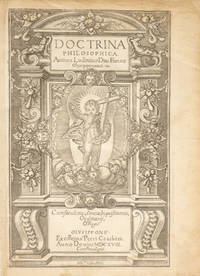
2407SB005<p>Auctore Ludouico Dias Franco Olysipponensi. Cum facultate Sanctæ Inquisitionis Ordinarij & Regis. OLYSIPPONE. Ex officina Petri Crasbeck. Anno Domini MDCXVIII. 1618. Cum Preuilegio.</p>_x000d_<p>De 275x205 cm. Com xxvi 425 i.e. 405 cxi págs. Encadernação da época inteira de pele com nervos e ferros a ouro na lombada.</p>_x000d_<p>Ilustrado com um belo frontispÃcio gravado em chapa de metal com uma estética marcadamente barroca representando o Menino Jesus ao centro com a Cruz sobre glória de anjos. Está assinado «Dñc Urbin fecit.» - Dominicus Urbinus Domingo de Urbino. Tem também uma grande Rosa dos Ventos xilogravada na página 207 e uma bela gravura com duas penas e o lema <em>In utrumque paratus </em>preparado para tudo no verso da última folha numerada.</p>_x000d_<p>Inclui ainda diversos e elaborados cabeções distintos florões de remate e iniciais decoradas com cenas alegóricas figuras antropomórficas motivos arquitetónicos e motivos vegetalistas. Estes ornamentos xilogravados que adornam a obra contêm várias vezes o trigrama sagrado IHS geralmente usado pela Companhia de Jesus nomeadamente ao inÃcio dos Ãndices e nas elaboradas gravuras que se encontram ao inÃcio dos tratados com exceção do primeiro.</p>_x000d_<p>Texto em caracteres redondos e alguns itálicos enquadrado por uma moldura composta por dois filetes simples. Encontra-se disposto em duas colunas com exceção dos textos preliminares nas páginas em numeração romana. Os tÃtulos correntes a paginação e as notas impressas à margem estão colocadas no interior da moldura entre os filetes.</p>_x000d_<p>Exemplar com ex-libris de Francisco da Gama Caeiro com o mote <em>Fideliter non serviliter</em> Fielmente não servilmente na pasta anterior e etiqueta com cota 3.373 na guarda anterior. Pequenas falhas de pele na lombada e desgaste superficial da encadernação. Leves manchas de humidade mais notáveis entre as páginas 1-50 e nas últimas páginas numeradas. Apresenta picos de traça a partir da página 229 a maior parte sem atingir a mancha tipográfica mas com alguns afetando por vezes as notas marginais e a dita moldura sem nunca impedir a leitura. VestÃgios de restauros amadores com papel colado sobre alguns dos picos de traça.</p>_x000d_<p>A página 66 está numerada 96 a 257-287 a 337-338 corrigida a tinta por cima e a 396-384. Tem dois saltos na numeração da página 267 para a 278 e da 322 para a 333. Estes erros tipográficos não afetam a integridade da obra que se encontra completa.</p>_x000d_<p>Primeira e única edição. Muito raro e ainda mais no comércio já que não aparece em nenhum dos principais catálogos de leilões e livreiros.</p>_x000d_<p>Obra muito importante que compreende uma vasta compilação de conhecimentos filosóficos que cobrem uma ampla gama de áreas do conhecimento desde a filosofia natural até a ética. Trata-se de uma referência essencial para o estudo da filosofia escolástica e das ciências naturais do inÃcio do século XVII em Portugal e em todo o mundo católico onde existiam colégios jesuÃtas. Como muitas outras obras da segunda escolástica terá tido influência mesmo em escolas de paÃses protestantes.</p>_x000d_<p>O seu excepcional valor é confirmado pelo facto de apesar do escasso número de exemplares conhecidos nos nossos dias a obra ter tido uma vasta influência no ensino nos colégios da Companhia de Jesus e em escolas de outras entidades pois sabe-se que foi remetida de Sevilha para a cidade de Lima no Peru uma encomenda de 30 exemplares. O remetente considera que: «é livro novo que até agora nunca foi enviado para a América Espanhola. Contém toda a filosofia e é muito importante para todos os que estudam artes e teologia» ver Maria da Graça Mateus Ventura Vol. I Tomo II pág. 24.</p>_x000d_<p>Primeiras páginas não numeradas com licenças de Frei Melchior de Abreu Pedro de Novais Bartolomeu da Fonseca Damião Viegas António Dias Cardoso; dedicatória do autor ao <em>Collegio Olysipponensis D. Antonii Societatis Iesu</em> Colégio de Lisboa da Companhia de Jesus; prefácio ao leitor; três poemas em louvor do autor dois do Licenciado Ãlvaro Fernandes e um Epigrama latino de Francisco Nunes de Ãvila; e finalmente um Ãndice de assuntos.</p>_x000d_<p>No primeiro poema Ãlvaro Fernandes faz uma personificação prosopopeia da obra elogiando a sua profundidade e a sabedoria do autor. Destaca a importância da filosofia e como o autor consegue através da sua escrita guiar os leitores pelos complexos caminhos do conhecimento. No segundo poema constituÃdo por versos <em>Asclepiadeus</em> volta a louvar o autor ressaltando as suas virtudes intelectuais e a qualidade da obra contribuindo para o legado filosófico e educativo. Francisco Nunes num epigrama elogia a erudição e a habilidade do autor considera obra um marco importante na literatura filosófica e celebra o impacto que ela terá nos leitores e estudiosos.</p>_x000d_<p>Inclui um Ãndice de assuntos nas últimas 8 páginas preliminares e um extenso Ãndice remissivo no final com mais de 100 páginas.</p>_x000d_<p>A «Doctrina Philosophica» é uma obra da autoria de Baltazar do Amaral publicada sob o pseudónimo de LuÃs Dias Franco conforme o testemunho de Barbosa Machado que afirma ter visto o manuscrito original com o verdadeiro nome do autor. A obra reflete a profundidade do seu conhecimento e a sua habilidade em sintetizar e explicar conceitos filosóficos complexos tendo contribuindo significativamente para a disseminação da filosofia escolástica em Portugal.</p>_x000d_<p>Foi publicada em 1618 durante um perÃodo de intensos debates filosóficos e teológicos na Europa especialmente influenciados pela Escolástica e pelos ensinamentos de Santo Tomás de Aquino. A Contra-Reforma estava em pleno vigor com a Igreja Católica a reafirmar os seus dogmas e doutrinas contra as ideias protestantes. A filosofia escolástica predominava nos centros educativos e nas universidades sendo fundamental para a formação intelectual da época.</p>_x000d_<p>A Ordem dos JesuÃtas desempenhou um papel crucial na educação e na disseminação do conhecimento cientÃfico e filosófico durante este perÃodo. A obra reflete os esforços dos jesuÃtas em sistematizar o ensino da filosofia seguindo as diretrizes educacionais estabelecidas pelo ConcÃlio de Trento e promovendo a ortodoxia católica em face das reformas protestantes.</p>_x000d_<p>No prefácio o autor introduz a obra explicando a importância e o propósito dos estudos filosóficos ressaltando que a filosofia é uma ciência fundamental para compreender a natureza e as causas das coisas. Destaca a necessidade de uma abordagem meticulosa e rigorosa para a investigação filosófica ressaltando que a obra está organizada de forma a guiar o leitor através dos princÃpios fundamentais até aos tópicos mais complexos.</p>_x000d_<p>A «Doctrina Philosophica» reflete a profunda influência de Aristóteles tanto ao nÃvel da organização como do conteúdo. A obra não apenas adota a terminologia e os temas aristotélicos mas também aplica a metodologia e o rigor analÃtico caracterÃsticos da filosofia do Estagirita. Esta influência aristotélica é um indicativo da adesão do autor à s tradições filosóficas escolásticas que se baseavam amplamente na sÃntese das obras de Aristóteles com a teologia cristã.</p>_x000d_<p>A obra está dividida em oito tratados que se subdividem em questões e capÃtulos. Esta estrutura reflete uma abordagem abrangente e sistemática da filosofia natural começando com princÃpios gerais e progredindo para tópicos especÃficos e avançados. Os tratados abordam temas centrais das principais obras aristotélicas como a filosofia natural a alma a cosmologia e a ética estruturando-se de modo a proporcionar uma compreensão abrangente e sistemática das questões filosóficas de acordo com a tradição escolástica. Esta influência aristotélica confirma a importância da obra como uma sÃntese e continuação do pensamento filosófico clássico dentro do contexto jesuÃta e do século XVII.</p>_x000d_<p>Explicação de cada tratado:</p>_x000d_<p><em>Tractatus Primus: De rebus naturalibus in communi & earum principiis & proprietatibus. Quid sit Philosophia & quomodo dividatur. </em>Este primeiro tratado apresenta e explora o conceito de<em> corpos naturais </em>na filosofia aristotélica esboçando os princÃpios gerais da filosofia natural discutindo a definição de filosofia as suas divisões e a relação entre ela e as várias ciências naturais. Os temas abordados incluem os princÃpios da natureza a matéria e a forma e as propriedades essenciais dos <em>corpos naturais</em>. Relaciona-se com a «MetafÃsica» e a «FÃsica» de Aristóteles.</p>_x000d_<p><em>Tractatus Secundus: De caelo et mundo. </em>Focado no estudo do céu e do mundo este tratado explora a estrutura do universo e os corpos celestes. Discute o conceito de esferas celestes os movimentos dos planetas e a cosmologia aristotélica. Baseia-se na «De Caelo» Sobre o Céu de Aristóteles explorando a substância movimento e partes do céu.</p>_x000d_<p><em>Tractatus Tertius: De rerum naturalium ortu & interitu. </em>Este tratado aborda a origem e a destruição das<em> coisas naturais</em>. Investiga os processos de formação de um corpo a partir de outro a natureza das mudanças e transformações que ocorrem nas <em>coisas </em>e as causas subjacentes a esses fenómenos. Relaciona-se intimamente com a «De Generatione et Corruptione» Sobre a Geração e Corrupção.</p>_x000d_<p><em>Tractatus Quartus: De Meteoris. </em>Focado nos fenómenos atmosféricos este tratado explora a natureza e as causas dos meteoros. Discute fenómenos como chuva vento trovões relâmpagos e outros eventos atmosféricos seguindo a tradição aristotélica de estudo dos meteoros que se encontra na «Meteorologica».</p>_x000d_<p><em>Tractatus Quintus: De Anima. </em>Este tratado investiga a natureza dos <em>corpos animados</em>: seres vivos que têm uma alma anima que guia as suas operações vitais. Explora a definição de alma; a distinção entre plantas alma vegetativa animais alma sensitiva e humanos alma racional; e examina também a relação entre a alma e o corpo e as operações especÃficas da alma racional. A investigação sobre a alma e as suas faculdades segue de perto as ideias apresentadas por Aristóteles na obra homónima «De Anima».</p>_x000d_<p><em>Tractatus Sextus: De Parvis naturalibus. </em>Aborda os chamados «Parva Naturalia» Pequenos Tratados sobre a Natureza: uma coleção de textos escritos por Aristóteles sobre aspectos especÃficos da fisiologia humana como os sentidos o sono os sonhos a memória e outras funções que ligam a alma ao corpo.</p>_x000d_<p><em>Tractatus Septimus: De Anima separata. </em>Este tratado foca-se no estudo da alma separada investigando o estado ontológico da alma quando separada do corpo e colocando questões acerca da distinção entre corpo e alma e da possibilidade desta possuir atividades intelectuais ou racionais independentes de um corpo e de como estas se manifestariam. Aborda temas como a imortalidade da alma e a sua natureza após a morte explorando as diversas implicações filosóficas e teológicas. Estes temas são abordados em parte no «De Anima» e em discussões metafÃsicas de Aristóteles.</p>_x000d_<p><em>Tractatus Octavus: In Libros Ethicorum. </em>O último tratado aborda a ética com base nos livros de Ética de Aristóteles nomeadamente no «Ethica Nicomachea» Ética a Nicómaco discutindo acerca da felicidade do bem supremo das virtudes morais e intelectuais do fim último do homem e os princÃpios da vida ética. Examina também a relação entre ética e polÃtica e como a moralidade individual se insere no contexto social.</p>_x000d_<p>Baltasar do Amaral Cunha Baixa Viseu 1585 – 16-- um importante filósofo e teólogo da Segunda Escolástica Portuguesa foi admitido na Companhia de Jesus em 14 de Junho de 1601. Nela foi mestre de noviços seguindo a tradição jesuÃtica de excelência académica e rigor intelectual lecionando Filosofia nos Colégios de Lisboa e de Coimbra.</p>_x000d_<p>Publicou o resumo do trabalho final de uma das cadeiras do curso de filosofia com o tÃtulo: «Conclusiones metaphysicae. Quaestio disputanda. Num possit produci aliquid corporeum supernaturale». É composta por dois fólios e foi impressa em Coimbra na oficina de Diogo Gomes Loureiro em 1607. Esta obra faz parte de uma tradição académica caracterÃsticas das universidades desde a sua fundação na Idade Média e que foi muito usada pelos JesuÃtas. As «Quaestiones disputatae» que eram teses ou disputas públicas realizadas nas universidades e colégios jesuÃtas. Nessas disputas temas complexos de metafÃsica teologia ou filosofia natural eram debatidos por estudantes avançados geralmente sob a supervisão de um professor mais experiente. Neste caso estes trabalho de Baltazar do Amaral foi orientado por Jorge Cabral outro proeminente jesuÃta da época académico jesuÃta. A questão central da obra é «Num possit produci aliquid corporeum supernaturale» que se traduz como «Pode algo corporal ser produzido de maneira sobrenatural». Este tipo de questão metafÃsica está relacionado com a possibilidade de intervenção divina ou miraculosa no mundo material um tema recorrente nas discussões teológicas e filosóficas da época.</p>_x000d_<p>Domingo de Urbino fl. 1618 - gravador de que não se conhecem dados biográficos. </p>_x000d_<p>EN 27.5x20.5 cm. xxvi 425 i.e. 405 cxi pp. Contemporary full leather binding with raised bands and gilt tools on the spine.</p>_x000d_<p>Illustrated with a beautiful frontispiece etched in metal plate with a markedly baroque aesthetic depicting the Child Jesus in the centre with the Cross in the glory of angels. It is signed 'Dñc Urbin fecit.' - Dominicus Urbinus Sunday of Urbino fl. 1618 - no biographical data. It also has a large woodcut engraving of the Rose of the Winds on page 207 and a beautiful engraving with two feathers and the motto <em>In utrumque paratus</em> on the back of the last numbered leaf.</p>_x000d_<p>It also includes several elaborate headpieces distinctive <em>fleurons</em> and decorated initials with allegorical scenes anthropomorphic figures architectural motifs and plant motifs. These woodcut ornaments that adorn the work contain the sacred trigram IHS generally used by the Society of Jesus several times namely at the beginning of the indexes and in the elaborate engravings at the beginning of the treatises with the exception of the first one.</p>_x000d_<p>The text is in round characters and some italics framed by a border made up of two simple fillets. It is laid out in two columns with the exception of preliminary texts on Roman numeral pages. The running headings pagination and notes printed in the margin are placed inside the frame between the fillets.</p>_x000d_<p>Copy with ex-libris from Francisco da Gama Caeiro with the motto <em>Fideliter non serviliter</em> on the front pastedown and shelf mark label with 3.373 on the front pastedown. Small leather flaws on the spine and superficial signs of wear on the binding. Slight damp stains most noticeable between pages 1-50 and on the last numbered pages. There are moth peaks from page 229 onwards most of which do not reach the text area but some of which sometimes affect the marginal notes and the frame but never prevent reading. Traces of amateur restoration with paper pasted over some of the moth spots.</p>_x000d_<p>Page 66 is numbered 96 257-287 337-338 corrected in ink on top and 396-384. There are two skips in the numbering from page 267 to 278 and from 322 to 333. It includes a subject These typographical errors do not affect the integrity of the work which is complete.</p>_x000d_<p>First and only edition. Very rare and even more so in the trade as it doesn"t appear in any of the main auction and bookseller catalogues.</p>_x000d_<p>Very important work that comprises a vast compilation of philosophical knowledge covering a wide range of areas of knowledge from natural philosophy to ethics. It is an essential reference for the study of scholastic philosophy and the natural sciences of the early 17th century in Portugal and throughout the Catholic world where there were Jesuit colleges. Like many other Second Scholastic works it had an influence even on schools in Protestant countries.</p>_x000d_<p>Its exceptional value is confirmed by the fact that despite the scarce number of copies known today the work had a vast influence on teaching in the colleges of the Society of Jesus and in schools of other organisations as it is known that an order for 30 copies was sent from Seville to the city of Lima Peru. The sender considers that: 'it"s a new book which until now has never been sent to Spanish America. It contains all the philosophy and is very important for all those who study the arts and theology' see Maria da Graça Mateus Ventura Vol. I Tome II p. 24.</p>_x000d_<p>Unnumbered first pages with licences from Frei Melchior de Abreu Pedro de Novais Bartolomeu da Fonseca Damião Viegas António Dias Cardoso; dedication from the author to the <em>Collegio Olysipponensis D. Antonii Societatis Iesu</em> Lisbon College of the Society of Jesus; preface to the reader; three poems in praise of the author two by Licenciado Ãlvaro Fernandes and a Latin Epigram by Francisco Nunes de Ãvila; and finally an index of subjects.</p>_x000d_<p>In the first poem Ãlvaro Fernandes personifies the work prosopopeia praising its depth and the author"s wisdom. He emphasises the importance of philosophy and how the author manages through his writing to guide readers along the complex paths of knowledge. In the second poem made up of verses <em>Asclepiadeus</em> he again praises the author emphasising his intellectual virtues and the quality of the work contributing to the philosophical and educational legacy. Francisco Nunes in an epigram praises the author"s erudition and skill considers the work an important milestone in philosophical literature and celebrates the impact it will have on readers and scholars.</p>_x000d_<p>It includes a subject index on the last 8 preliminary pages and an extensive index at the end with over 100 pages.</p>_x000d_<p>The 'Doctrina Philosophica' is a work by Baltazar do Amaral published under the pseudonym LuÃs Dias Franco according to the testimony of Barbosa Machado who claims to have seen the original manuscript under the author"s real name. The work reflects the depth of his knowledge and his ability to synthesise and explain complex philosophical concepts having contributed significantly to the dissemination of scholastic philosophy in Portugal. It presents a vast compilation of philosophical knowledge covering a wide range of topics from natural philosophy to ethics. It is an essential reference for the study of scholastic philosophy and the natural sciences in early seventeenth-century Portugal.</p>_x000d_<p>It was published in 1618 during a period of intense philosophical and theological debate in Europe especially influenced by Scholasticism and the teachings of St Thomas Aquinas. The Counter-Reformation was in full force with the Catholic Church reaffirming its dogmas and doctrines against Protestant ideas. Scholastic philosophy predominated in educational centres and universities and was fundamental to the intellectual formation of the time.</p>_x000d_<p>The Jesuit Order played a crucial role in education and the dissemination of scientific and philosophical knowledge during this period. The work reflects the Jesuits" efforts to systematise the teaching of philosophy following the educational guidelines laid down by the Council of Trent and promoting Catholic orthodoxy in the face of Protestant reforms.</p>_x000d_<p>In the preface the author introduces the book by explaining the importance and purpose of philosophical studies emphasising that philosophy is a fundamental science for understanding the nature and causes of things. He emphasises the need for a meticulous and rigorous approach to philosophical research pointing out that the book is organised in such a way as to guide the reader through the fundamental principles to the most complex topics.</p>_x000d_<p>The 'Doctrina Philosophica' reflects the profound influence of Aristotle both in terms of organisation and content. The work not only adopts Aristotelian terminology and themes but also applies the methodology and analytical rigour characteristic of the Stagirite"s philosophy. This Aristotelian influence is indicative of the author"s adherence to the scholastic philosophical traditions which were largely based on synthesising the works of Aristotle with Christian theology.</p>_x000d_<p>The book is divided into eight treatises which are subdivided into questions and chapters. This structure reflects a comprehensive and systematic approach to natural philosophy starting with general principles and progressing to specific and advanced topics. The treatises address central themes of the main Aristotelian works such as natural philosophy the soul cosmology and ethics and are structured in such a way as to provide a comprehensive and systematic understanding of philosophical issues in accordance with the scholastic tradition. This Aristotelian influence confirms the importance of the work as a synthesis and continuation of classical philosophical thought within the Jesuit context and the 17th century.</p>_x000d_<p>Explanation of each treaty:</p>_x000d_<p><em>Tractatus Primus: De rebus naturalibus in communi & earum principiis & proprietatibus. Quid sit Philosophia & quomodo dividatur. </em>This first treatise introduces and explores the concept of <em>natural bodies</em> in Aristotelian philosophy outlining the general principles of natural philosophy discussing the definition of philosophy its divisions and the relationship between it and the various natural sciences. Topics covered include the principles of nature matter and form and the essential properties of <em>natural bodies</em>. It relates to Aristotle"s 'Metaphysics' and 'Physics'.</p>_x000d_<p><em>Tractatus Secundus: De caelo et mundo. </em>Focused on the study of the sky and the world this treatise explores the structure of the universe and the celestial bodies. It discusses the concept of celestial spheres the movements of the planets and Aristotelian cosmology. It is based on Aristotle"s 'De Caelo' On the Sky exploring the substance movement and parts of the sky.</p>_x000d_<p><em>Tractatus Tertius: De rerum naturalium ortu & interitu. </em>This treatise deals with the origin and destruction of <em>natural things</em>. It investigates the processes of formation of one body from another the nature of the changes and transformations that occur in <em>things</em> and the underlying causes of these phenomena. It is closely related to 'De Generatione et Corruptione' On Generation and Corruption.</p>_x000d_<p><em>Tractatus Quartus: De Meteoris. </em>Focused on atmospheric phenomena this treatise explores the nature and causes of meteors. It discusses phenomena such as rain wind thunder lightning and other atmospheric events following the Aristotelian tradition of studying meteors found in the 'Meteorologica'.</p>_x000d_<p><em>Tractatus Quintus: De Anima. </em>This treatise investigates the nature of <em>animated bodies</em>: living beings that have a soul anima that guides their vital operations. It explores the definition of soul; the distinction between plants vegetative soul animals sensitive soul and humans rational soul; and also examines the relationship between the soul and the body and the specific operations of the rational soul. The investigation into the soul and its faculties closely follows the ideas presented by Aristotle in the eponymous work 'De Anima'.</p>_x000d_<p><em>Tractatus Sextus: De Parvis naturalibus. </em>This covers the so-called 'Parva Naturalia' Small Treatises on Nature: a collection of texts written by Aristotle on specific aspects of human physiology such as the senses sleep dreams memory and other functions that link the soul to the body.</p>_x000d_<p><em>Tractatus Septimus: De Anima separata. </em> This treatise focuses on the study of the separated soul investigating the ontological state of the soul when separated from the body and posing questions about the distinction between body and soul and the possibility of the latter possessing intellectual or rational activities independent of a body and how these would manifest themselves. It addresses issues such as the immortality of the soul and its nature after death exploring the various philosophical and theological implications. These themes are covered in part in 'De Anima' and in Aristotle"s metaphysical discussions.</p>_x000d_<p><em>Tractatus Octavus: In Libros Ethicorum. </em> The last treatise deals with ethics on the basis of Aristotle"s books of Ethics namely the 'Ethica Nicomachea' Nicomachean Ethics discussing happiness the supreme good moral and intellectual virtues the ultimate end of man and the principles of ethical life. It also examines the relationship between ethics and politics and how individual morality fits into the social context.</p>_x000d_<p>Baltasar do Amaral Cunha Baixa Viseu 1585 - 16-- was a Portuguese Jesuit scholar of the early 17th century. He was admitted to the Society of Jesus on 14 June 1601. As a member of the Society of Jesus he was involved in the education and training of young people following the Jesuit tradition of academic excellence and intellectual rigour teaching philosophy at the Colleges of Lisbon and Coimbra. a philosopher and theologian committed to the intellectual issues of his time in the context of the so-called second scholasticism.</p>_x000d_<p>Baltasar do Amaral published the summary of the final work of one of the subjects of the philosophy course with the title: 'Conclusiones metaphysicae. Quaestio disputanda. Num possit produci aliquid corporeum supernaturale'. It is made up of two folios and was printed in Coimbra in the workshop of Diogo Gomes Loureiro in 1607.</p>_x000d_<p>This work is part of an academic tradition that has been characteristic of universities since they were founded in the Middle Ages and which was widely used by the Jesuits. The 'Quaestiones disputatae' which were theses or public disputes held in Jesuit universities and colleges. In these disputations complex topics of metaphysics theology or natural philosophy were debated by advanced students usually under the supervision of a more experienced professor. In this case Baltazar do Amaral"s work was supervised by Jorge Cabral another prominent Jesuit scholar of the time. The central question of the work is 'Num possit produci aliquid corporeum supernaturale' which translates as 'Can something bodily be produced supernaturally'. This type of metaphysical question is related to the possibility of divine or miraculous intervention in the material world a recurring theme in the theological and philosophical discussions of the time.</p>_x000d_<p>Referências/References:<br />Porbase 1063910 Cota: S.A. 4726 A.<br />Porbase 353692 Cota: RES. 1071//17 A. <em>disputa académica<br /></em>Iberian Books 43326 B63768.<br />Iberian Books 23290 B68345.<em> disputa académica<br /></em>USTC 5021839.<br />OPAC SBN IT/ICCU/CFIE/005731.<br />CCPB CCPB000883115-7.<br />Maria da Graça Mateus Ventura - Portugueses no Peru ao tempo da União Ibérica. Mobilidade cumplicidades e vivências. Lisboa Imprensa Nacional Casa da Moeda 2005. <br />Sommervogel 1 261<br />Marinha. Impr. séc. XVII 12<br />Páez RÃos. Repertorio de grab. esp. 3 2163<br />Arouca F 179<br />Arouca A 325 disputa<br />Rodrigo Veloso 2.º EscrÃnio Bibliográfico 2589.<br />D. Francisco Manuel de Melo Carta dos Autores Portugueses. 1664. Cartas Familiares. Edição INCM 1981 p. 413.<br />Nicolás Antonio Bibliotheca Hispana Nova II 32.<br />Barbosa Machado I 441.</p> M-17-C-31 hardcover
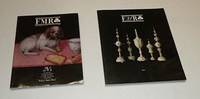
16-5257Paris: Franco Maria Ricci 1986-2006 . 120 issues. 4to. Fine. Original wraps and original black slipcases in the 20th Century; format 23 x 30 cm. 112 issues. In the 21st Century format is 27 x 32 cm. without slipcases. 8 issues. 2004-2006. Very heavy.The Italian publisher editor and collector Franco Maria Ricci died at the age of 82 in 2020. In sumptuously produced art books and as editor of the bi-monthly art magazine FMR Ricci published writing by Jorge Luis Borges Italo Calvino Umberto Eco Roland Barthes and many others over the course of his long and distinguished career. In 2019 Susan Moore visited his estate at Fontanellato near Parma where in recent years Ricci had constructed the largest labyrinth in the world out of bamboo; they discussed Ricci’s notable collection of largely 18th- and 19th-century sculpture and paintings as well as his library of books published by the great typographer Giambattista Bodoni whose works Ricci had reprinted in his first foray into publishing. The interview is published in full below.Collecting may be read as a form of autobiography written with works of art rather than words. In the case of Franco Maria Ricci his is a life composed of both words and pictures. He has not only published the most lavishly produced art magazine – FMR – and art books in the world but also spent the last 50 years amassing a peerless collection of volumes produced by the great Italian typographer compositor and publisher Giambattista Bodoni 1740–1813 and a rich eclectic collection of some 500 largely neoclassical and baroque paintings and sculptures. Both collections are at the heart of his most recent and extraordinary venture the creation of the immense star-shaped Labirinto della Masone near Parma the largest labyrinth in the world – and surely one of the few planted with bamboo. Paris: Franco Maria Ricci, 1986-2006 paperback
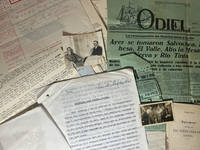
1936003854Private original letters. A first-hand account of the taking of the Rio Tinto Mines during the Spanish Civil War 1936 along with A confidential typescript of an interview with General Franco in 1950 GOUGH Arthur Trevor Major in the Royal Field Artillery; General Manager of the Rio Tinto Mines in Spain. A substantial archive c. 1914-1950 comprising official commissions letters and decorations from the First World War; an extensive run of 26 typed and autograph letters written from Huelva Nerva Bella Vista and the Rio Tinto mining district in the summer and autumn of 1936; contemporary press material; and a small group of period photographs two confidential corporate reports about restructuring and then an extremely rare typescript one of only four in relation to an interview with General Franco. All material is about good to very good. A full inventory of the contents of this archive can be seen on request but about 50 documents and around 130 pages in total. The core of the archive is a sequence of 26 long closely written personal letters dated July-September 1936 sent by Gough from the company's headquarters at Bella Vista and from Huelva to his wife. Written as events unfolded they form a continuous narrative of the collapse of civil authority the initial occupation of the mining district by Republican forces and the rapid advance of Nationalist columns from Seville towards Nerva Zalamea Salvochea and Rio Tinto itself. Gough records the evacuation of women and children to Gibraltar the breakdown of communications censorship and the cutting of telephone and postal services the use of armbands and permits for workers and the conversion of the company's transport and housing infrastructure to military control. He describes bombing from aircraft the movement of armoured lorries the arrest and summary execution of prisoners bodies taken to cemeteries in groups and the climate of fear among both miners and civilian families. The letters are notably precise in naming places individuals and units and in distinguishing between rumour and what he had personally witnessed or confirmed through company and diplomatic channels. They also reveal the position of a British industrial concern caught between local military commanders the London board and the British diplomatic service attempting simultaneously to protect staff preserve plant and navigate the political realities of a rapidly escalating civil war. The archive also has a confidential typescript report headed "Lord Bessborough's Interview with General Franco" dated 11 October 1950 and marked "Private & Confidential". The distribution list explicitly includes "Mr. Gough" as one of only four to receive it. The report records in detail Bessborough's audience with Franco the circumstances of the meeting at the Pardo Palace the presence of senior Foreign Office and embassy officials and extended discussion of Anglo-Spanish relations British press and broadcasting Labour and Conservative opinion non-intervention and the Generalísimo's views on the international position of Spain. The report demonstrated the strategic importance attached to the company and its senior officers in the post-war relationship between Britain and Franco's Spain. Supporting the archive are documents that show Gough's standing and career. It includes his First World War commissions and decorations among them official certificates of being Mentioned in Despatches and foreign awards together with formal royal and governmental documents attesting to his service with the Royal Field Artillery. A signed letter from Neville Chamberlain written in 1919 addresses him as "Major Gough" and refers to his prospective return to Spain already indicating the transition from decorated artillery officer to senior figure in British industrial operations overseas. A small group of period photographs shows Gough in uniform and in civilian company and views associated with the Rio Tinto . Very Good. Soft cover. 1st Edition. 1st Printing. 1936. Private original letters paperback
1712JC021<p>EXTRAHIDO EM GRANDE PARTE DO COURS DAGRICULTURE DE ROSIER COM MUITAS MUDANÇAS PRINCIPALMENTE RELATIVAS A´ THEORIA E AO CLIMA DE PORTUGAL E OFFERECIDO A SUA ALTEZA REAL O PRINCIPE REGENTE NOSSO SENHOR POR FRANCISCO SOARES FRANCO DEMONSTRADOR DE ANATOMIA OPERAÇÕES CHIRURGICAS E ARTE OBSTETRICIA NA UNIVERSIDADE DE COIMBRA OPPOSITOR DE MEDICINA BACHAREL FORMADO EM PHILOSOPHIA ETC. COIMBRA: NA REAL IMPRENSA DA UNIVERSIDADE. 1804.</p>_x000d_<p>Obra em 5 volumes. In 8º gr. de 125x19 cm com xviii 392 1 416 1 378 1 431 499 págs.</p>_x000d_<p>Encadernações da época inteiras de pele com ferros a ouro na lombada e nos rótulos negros.</p>_x000d_<p>Ilustrado em extratexto com gravuras de página inteira intercaladas nas partes mais relevantes do texto.</p>_x000d_<p>Obra de uma importância que ultrapassa o seu título pois trata-se de uma enciclopédia agrícola na qual o autor ainda acrescenta entradas sobre os seus conhecimentos da sua especialização em obstectricia higiene e saúde pública cirurgia e outras entradas que transcendem a agricultura e mostram como seriam vários os assuntos colaterais tratados nas aulas da Universidade de Coimbra.</p>_x000d_<p>Nomeadamente:</p>_x000d_<p>Volume 1º contém um Tratado de Apicultura nas primeiras 94 páginas apresentando duas gravuras com abelhas colmeias ou cortiços no modelo tradicinal e no modelo moderno. O mesmo volume apresenta nas últimas trinta páginas um tratado sobre a batata que define as suas onze variedades originais.</p>_x000d_<p>Volume 2º contém um Tratado sobre o Bicho da Seda nas primeiras sessenta e seis páginas não apresentando gravuras. Segue-se um tratado de dez páginas sobre o gado vacum. Em seguida o autor apresenta uma gravura sobre os borroletes ou feridas das árvores. Sobre o cavalo o autor apresenta um artigo com dezasseis páginas ilustrado com uma gravura desdobrável com o conceito das proporções harmoniosas da fisionomia do cavalo das suas pelagens e alimentação. Neste volume existe um extenso capítulo com quarenta e duas páginas sobre charruas arados e o modo de engatar as juntas e de fazer as lavras ilustrado com três gravuras de arados e semeadoras. Nas últimas vinte e cinco páginas deste volume existe um Tratado sobre os Alambiques e sobre a Destilação dos vinhos e das aguardentes ilustrado com uma gravura com o desenho da destilaria.</p>_x000d_<p>Volume 3º contém um Manual sobre a Enxertia nas primeiras vinte e cinco páginas ilustrado com uma gravura mostrando as várias técnicas. Notar que o autor vai abordar extensamente o tema da Enxertia em várias entradas ao longo da obra. Segue-se um capítulo sobre os estrumes apresentando-se uma máquina de moer a planta do fagopiro que na Europa era usada como estrume. Mais adiante apresenta-se uma pequena entrada com uma gravura de um edifício págs. 148-149: uma construção ou forno para incubar ovos e obter pintos que o autor diz ter sido inventada pelos antigos egípcios.</p>_x000d_<p>Segue-se uma gravura com uma máquina de gradar os terrenos cuja explicação entra na página 188. Apresenta-se uma bela gravura com o desenho preciso e à escala de canivetes podoas e outros instrumentos de poda das árvores. Outra gravura mais adiante apresenta uma colecção de gadanhos e outros instrumentos para a colheitas das plantas gramíneas.</p>_x000d_<p>Um pequeno Tratado sobre a Lã e a possibilidade do seu aperfeiçoamento encontra-se nas páginas 204 a 220. Segue-se de imediato a entrada Lagar na qual se apresenta uma gravura com duas prensas de lagar. A entrada sobre o Linho e a linhaça tem uma explicação entre as páginas 262 e 276 ilustrada com uma gravura com os instrumentos de trilhar e repigar e com um ciclo com as lunações importante para o ciclo do linho e para a previsão da mudança climatérica na lua nova que é discutida e calculada numa tabela de Lunário. Este volume apresenta ainda mais duas gravuras: uma com um herbário de lucernas e ervilhacas e outra gravura com a representação dos instrumentos e processos de produzir manteiga. O volume termina com uma reflexão acerca das gravuras apresentadas.</p>_x000d_<p>Volume 4º: contém um pequeno Tratado sobre o Óleo o Azeite e a Oliveira que ocupa as primeiras sessenta e quatro páginas deste volume estando ilustrado com uma gravura de um lagar de azeite entre as páginas 16 e 17. A estampa seguinte mostra-nos pás de cavar e uma representação de herbário com a planta denominada Pastel das Tontureiras. Na entrada "Parteiras" o autor - especializado em obstetrícia - faz uma pequena dissertação sobre o tema da saúde pública em Portugal. A estampa seguinte que nos surge nas págs. 90/91 é sobre o enxerto e a poda do pessegueiro e sobre a forma a acomodar os arbustos numa plantação moderna ou industrial. Na página 103 estabelece um paralelo entre a enxertia e a cirurgia humana e estabelece uma avaliação do que os vários autores pensam sobre os enxertos. Segue-se uma entrada sobre a criação de perús. Na entrada sobre as Pestes e os Contágios o autor regressa ao tema colateral da saúde pública e sobre a preservação da saúde nos espaços públicos. Seguem-se entradas extensas sobre a criação de perús sobre a cultura dos pinheiros e corte dos abetos. Segue-se uma entrada geral sobre plantas na qual se volta ao tema da poda desta vez ilustrada com uma gravura com um quadrante do corte e orientação da planta. O autor fornece uma interessante e extensa entrada sobre os prados naturais com uma gravura de catorze das suas plantas naturais particularmente gramíneas descritas detalhadamente no texto. As entradas "Queijo" e "Queijarias" apresentam um extenso texto em trinta páginas antecedido de um plano do trabalho acerca do queijo que o autor divide em cinco capítulos apresentando uma estampa com os utensílios para a produção do queijo. No final do volume aparece-nos una gravura com um carro ou viatura rural que pertence à entrada Transportes.</p>_x000d_<p>Volume 5º contém uma extensíssima entrada oitenta páginas com um Tratado sobre o Trigo o qual apresenta um índice de duas páginas e uma gravura com as máquinas de debulha mecânica accionadas manualmente. A segunda parte deste tratado respeita à conservação do trigo nos celeiros. Segue-se uma entrada sobre a urtiga e a sua cultura e aplicação. O autor faz uma apologia sobre a utilidade desta planta na alimentação humana e na alimentação animal bem como a sua aplicação na industrial têxtil com resultados superiores aos do linho e do cânhamo. Seguem-se duas entradas quase sucessivas e complementares sobre as vacas os seus partos e o tratamento das vitelas; e sobre os verdes na alimentação do gado. Seguem-se os mais extensos tratados desta obra: um Tratado sobre e videira e sobre a vinha com oitenta e sete páginas e outro Tratado sobre o vinho e o vinagre com oitenta e três páginas. Estes tratados não apresentam gravuras no entanto o Tratado sobre a Vinha apresenta um desdobrável com uma chave dicotómica da análise morfológica das folhas e dos bagos com a finalidade de distinguir as castas.</p>_x000d_<p>As últimas oitenta páginas deste último volume da obra contêm um suplemento que corresponde à actualização das entradas de A a Z da obra homóloga francesa de Rosier no entanto omitindo os artigos franceses que não dizem respeito à agricultura propriamente dita. Assim o autor acrescentou mais uma entrada com Abelhas e Cortiços incluindo mais uma gravura dos mesmos; outra entrada ilustrada com a abertura de Valas; e ainda outra entrada ilustrada com um Lavadouro de lãs.</p>_x000d_<p><strong>Inocêncio III 63 e IX 378:</strong> FRANCISCO SOARES FRANCO 1.º do Conselho de Sua Majestade Comendador da Ordem de Cristo e Cavaleiro de Nossa Senhora da Conceição de Vila Viçosa; Doutor e Lente jubilado de Medicina na Universidade de Coimbra Bacharel em Filosofia Medico da Real Camara Deputado ás Cortes gerais e Constituintes de 1821 e à Camara de 1826 Director do Hospital regimental do Castelo Presidente do Conselho de Saúde do Exército Secretario do Conselho geral de Beneficência Socio da Academia Real das Ciências de Lisboa etc. etc. Nasceu no lugar de Loures termo de Lisboa de pais humildes pelos anos de 1772 ou 1773 e frequentou os estudos em Coimbra a expensas da Casa Pia de Lisboa. Morreu nesta cidade em 1844. Vide o seu Elogio pelo Dr. Joaquim José Vidigal Salgado inserto no Diário do Governo de 4 de Junho do dito Ano e as Memorias biográficas pelo Sr. Dr. Rodrigues de Gusmão na Gazeta Medica de Lisboa tomo VI 1858 n.° 125 das quais se tiraram também exemplares em separado; bem como quanto aos seus trabalhos parlamentares em 1821 a Galeria dos Deputados já por vezes citada pag. 139. E. O Dr. Soares Franco foi também redactor da Gazeta de Lisboa pelos anos de 1809 e seguintes até o de 1813 em que foi substituído n"este encargo por Joaquim José Pedro Lopes. Na qualidade de membro da Comissão nomeada por decreto de 6 de Outubro de 1838 para organizar uma nova farmacopeia geral do reino em harmonia com os conhecimentos do tempo a fim de substituir a antiga V. Francisco Tavares teve parte na obra que esta Comissão publicou em desempenho do encargo que recebera. A dita obra contudo não chegou a ser legalmente autorizada posto que diz o sr. dr. Rodrigues de Gusmão o merecesse com iguais senão melhores títulos que a Pharmacopéa de Tavares e o Codigo Pharmaceutico de Agostinho Albano. Eis aqui o seu titulo: Pharmacopéa Lusitana composta pela Commissão creada por decreto da Rainha Fidelissima D. Maria II em 6 de Outubro de 1838. Lisboa na Typ. de José Baptista Morando 1841.</p>_x000d_<p>O Dicionário de Agricultura extraído em grande parte do « Cours d"Agriculture » de Rosier com muitas mudanças principalmente relativas à teoria e ao clima de Portugal e oferecido a S. A. R. o Príncipe Regente. Coimbra na Imp da Univ. 1804 a 1806. 4.º 5 tomos com estampas. O Dicionário de cujos exemplares se vão tornando raros de achar no mercado é distribuído pela fórma seguinte: O tomo I consta de XVIII-399 pag. - O tomo II de IV-416 pag. - O tomo III de IV-378 pag. - O tomo IV de IV-431 pag. - e o tomo V de IV-499 pag.; tendo cada um deles no fim sua página de erratas.</p> M-3-GAV1-2 unknown
1969137566Beverly Hills CA: Emidela / United Artists 1969. Collection of vintage black-and-white negatives contact sheets and mounted slides and transparencies from the 1969 Italian-French film "Burn!" here under the original Spanish title "Quemada." From the collection of Sam Gilman with his name on several of the film processing envelopes in holograph ink. Gilman did not work in this film but worked with Brando on earlier films like "One-Eyed Jacks" 1961 and "The Young Lions " 1958 as well as later on "The Missouri Breaks" 1976. <br/><br/>Over 130 images representing on-the-set production featuring Marlon Brando on a lunch break director Pontecorvo riding a mule and members of the cast and crew as well as images of locals likely used as extras. Formats include 35mm color slides 35mm negative filmstrips medium-format negatives and mounted color transparencies and three 8 x 10 contact sheets. <br/><br/>Based loosely on the life of Sir William Walker 1824-1860. Walker Brando is a professional mercenary who ignites a slave revolt on an island in the Caribbean where the British sugar trade is in turmoil. After a successful mission Walker returns to Britain where he remains for ten years. The same slave revolt he helped initiate is now at war with the replacement regime and he is sent back to quell the revolt. Seen as a traitor to the natives Walker is subsequently assassinated riddled with guilt upon his death. <br/><br/>Shot on location in Colombia Morocco Italy and France. <br/><br/>All items Near Fine overall with slides transparencies and negatives still in the original film processing envelopes and boxes from the Emidela processing company in Barranquilla Colombia. <br/><br/>Complete collation details available on request. Emidela / United Artists unknown books
020333Pollenza Italy: La Nuova Foglio Editrice 1972. Book. Very good condition. Hardcover. First Edition. Quarto 4to. x pages of text followed by 160 unnumbered pages containing photographic images including a final gate-fold illustration all in black and white. Original printed paper-covered boards with minimal shelfwear soiling and a tiny spot of staining on the front cover. Original black linen spine with minimal shelfwear. A few tiny spots of foxing to the first and final pages. With a preface by Renato Barilli. The photographer and conceptual artist installed a Photomatic booth in a room with an invitation in four languages to "Leave a photographic trace of your passage on these walls". The resulting exhibition documented in this publication offers a view of the collected self-portrait specimens of hundreds of photo strips. Limited to 500 copies published and therefore highly uncommon. This is a nicely preserved copy. Text is in Italian. First edition. La Nuova Foglio Editrice Hardcover
200792068Umberto Allemandi. New. 2007. 8842215244 . FREE UPGRADE to Courier/Priority Shipping Upon Request - IN STOCK AND IMMEDIATELY AVAILABLE FOR SHIPMENT - flawless copy brand new pristine never opened -- TWO 2 VOLUME SET. 528 pages. Description: "The enormous success enjoyed by Venini design helped arouse international interest in Venetian glass. New techniques and models impossible to imitate contributed to the evolution of the decorative arts from the rank of crafts to that of art and placed Venini artworks among the highest artistic expressions of our times. This is the much awaited reprint of the last edition of the catalogue raisonné of Venini. One of the most important changes during the 20th century was the evolution of decorative arts from the rank of crafts to that of art: glass today has duly earned its place in museums markets and the public opinion. The extraordinary inventiveness between the end of the 1940s and throughout the 1950s together with the enormous success enjoyed by Venini design helped increase international interest in Venetian glass. New techniques impossible to imitate risked consigning the firm's earlier production from 1925 to the Second World War undeservingly to the shadows while they placed Venini artworks among the highest artistic expressions of our times. This long-awaited reprint of the last edition of the catalogue raisonné has been enlarged with a section on lighting lamps and chandeliers a dictionary of artists the Red Catalog the Green Catalog and the extended Blue Catalog doubled compared to the earlier edition. The original three catalogs contain all the reproductions of Venini items as distributed in shops; the most important pieces are grouped together on a scale of 1: 10 in chronological order accompanied by notes on the technique and materials used blown pulegosi pietra dura in corpo flowers and fruit lattimi a mezza filigrana a bollicine sommersi pesanti diamante corrosi frames a treccia clocks a rilievi handles and ash trays. Since these catalogs are not for sale they have become extremely rare but indispensable for the historical and technical information they contain." Catalogue Raisonne Catalog Raisonné Complete Works Catalogo Ragionato Catalogo Delle Opere L'Opera Completa Life and Work Raisonnee Umberto Allemandi unknown
199793655Edizioni Dei Soncino. New. 1997. Paperback. FREE UPGRADE to Courier/Priority Shipping Upon Request - IN STOCK AND IMMEDIATELY AVAILABLE FOR SHIPMENT - FLAWLESS COPY BRAND NEW PRISTINE NEVER OPENED -- Text in Italian. 297 pages; over 100 illustrations including 41 in color. Catalogue Raisonne Catalog Raisonné Complete Works Catalogo Ragionato Catalogo delle Opere L'Opera Completa Raisonnee Edizioni Dei Soncino paperback
198593583Rizzoli. New. 1985. Hardcover. 0847805093 . FREE UPGRADE to Courier/Priority Shipping Upon Request - IN STOCK AND IMMEDIATELY AVAILABLE FOR SHIPMENT - Flawless copy brand new pristine never opened -- Text in English. 378 pages; well-illustrated. Catalogue Raisonne Catalog Raisonné Complete Works Life and Work Raisonnee Rizzoli hardcover
194489156Roma: Documento 1944. Ottimo Fine. Dieci acqueforti originali numerate e firmate dall'Artista cm da 145x195 a 30x195. Foglio cm 355x27. Ogni incisione reca a matita anche un proverbio di Gentilini. Edizione curata dalla Libreria La Margherita. 4to cm 37x285. Ottimo Fine. Prima edizione di 45 esemplari numerati. Prima cartella di incisioni di Franco Gentilini. Documento, unknown
1984135254Various cities: Various studios 1984. Collection of 311 vintage still photographs from 95 sexploitation films released between 1941 and 1981 comprised predominantly of black and white studio photographs but with some color or reference photos. <br/><br/>Sexploitation films in the mid-century featured female stars in sexually charged roles as stewardesses nurses prostitutes virgins teens inmates rollergirls bikers beachgoers cheaters curious aliens Scandanavians submissives beatniks junkies and just about any other marketable context. The genre hit its peak in the 1960s but was by no means limited to that decade. Differing attitudes towards sex in the United States Europe Central America and Asia resulted in a wide variety of content perspective and subtext. The collection offered here features a diverse international range of films made in Sweden France West Germany Japan Italy the United Kingdom the United States Mexico and elsewhere. <br/><br/>The collection runs the gamut of the genre from its relatively innocent beginnings to a high point of creative content by the 1970s. As an example "They Wear No Clothes" 1941 simply explores life in a nudist colony whereas by the 1970s titles such as "Girls at the Gynecologist" "Naughty Stewardesses" "Truck Stop Women" and "Erotica" are more imaginative explicit and subversive. Also in the collection are examples of sexploitation films made between 1968-1979 that due to a somewhat gentler approach reached broader international audiences including "The Story of O" titles in both English or French "Here We Go Round the Mulberry Bush" Walerian Borowczyk's controversial "Immoral Tales" and "Goodbye Emmanuelle."<br/><br/>Stills largely approximately 8 x 10 inches. Very Good plus to about Fine condition. Various studios unknown books
1719R300114502NO REAL COLLEGIO DAS ARTES DA COMPANHIA DE JESUS. 1719. In-4. Relié plein cuir. Bon état, Couv. convenable, Dos à nerfs, Intérieur frais. 856 pages + 785 pages - ouvrages essentiellement en Portugais - textes sur deux colonnes - quelques bandeaux, lettrines et culs de lampe en noir et blanc - dos à 5 nerfs - titre et tomaison dorés sur le dos - ouvrages en bon état - 7 photos disponibles .. . . . Classification Dewey : 840.05-XVIII ème siècle
1969137566Beverly Hills CA: Emidela / United Artists 1969. Collection of vintage black-and-white negatives contact sheets and mounted slides and transparencies from the 1969 Italian-French film "Burn!" here under the original Spanish title "Quemada." From the collection of Sam Gilman with his name on several of the film processing envelopes in manuscript ink. Gilman did not work in this film but worked with Brando on earlier films like "One-Eyed Jacks" 1961 and "The Young Lions " 1958 as well as later on "The Missouri Breaks" 1976. <br /> <br /> Over 130 images representing on-the-set production featuring Marlon Brando on a lunch break director Pontecorvo riding a mule and members of the cast and crew as well as images of locals likely used as extras. Formats include 35mm color slides 35mm negative filmstrips medium-format negatives and mounted color transparencies and three 8 x 10 contact sheets. <br /> <br /> Based loosely on the life of Sir William Walker 1824-1860. Walker Brando is a professional mercenary who ignites a slave revolt on an island in the Caribbean where the British sugar trade is in turmoil. After a successful mission Walker returns to Britain where he remains for ten years. The same slave revolt he helped initiate is now at war with the replacement regime and he is sent back to quell the revolt. Seen as a traitor to the natives Walker is subsequently assassinated riddled with guilt upon his death. <br /> <br /> Shot on location in Colombia Morocco Italy and France. <br /> <br /> All items Near Fine overall with slides transparencies and negatives still in the original film processing envelopes and boxes from the Emidela processing company in Barranquilla Colombia. Emidela / United Artists unknown
200386956Felici Editore. New. 2003. 8888327266 . FREE UPGRADE to Courier/Priority Shipping Upon Request - IN STOCK AND IMMEDIATELY AVAILABLE FOR SHIPMENT - Flawless copy brand new pristine never opened -- Corresponds to ISBN: 8888327266. 197 pages; many plates in color. Catalogue Raisonne Catalog Raisonné Complete Works Catalogo Ragionato Catalogo delle Opere L'Opera Completa Raisonnee Felici Editore unknown
2007C92068Umberto Allemandi. As New. 2007. 8842215244 . FREE UPGRADE to Courier/Priority Shipping Upon Request - IN STOCK AND IMMEDIATELY AVAILABLE FOR SHIPMENT - flawless copy brand new pristine never opened -- TWO 2 VOLUME SET. 528 pages. Description: "The enormous success enjoyed by Venini design helped arouse international interest in Venetian glass. New techniques and models impossible to imitate contributed to the evolution of the decorative arts from the rank of crafts to that of art and placed Venini artworks among the highest artistic expressions of our times. This is the much awaited reprint of the last edition of the catalogue raisonné of Venini. One of the most important changes during the 20th century was the evolution of decorative arts from the rank of crafts to that of art: glass today has duly earned its place in museums markets and the public opinion. The extraordinary inventiveness between the end of the 1940s and throughout the 1950s together with the enormous success enjoyed by Venini design helped increase international interest in Venetian glass. New techniques impossible to imitate risked consigning the firm's earlier production from 1925 to the Second World War undeservingly to the shadows while they placed Venini artworks among the highest artistic expressions of our times. This long-awaited reprint of the last edition of the catalogue raisonné has been enlarged with a section on lighting lamps and chandeliers a dictionary of artists the Red Catalog the Green Catalog and the extended Blue Catalog doubled compared to the earlier edition. The original three catalogs contain all the reproductions of Venini items as distributed in shops; the most important pieces are grouped together on a scale of 1: 10 in chronological order accompanied by notes on the technique and materials used blown pulegosi pietra dura in corpo flowers and fruit lattimi a mezza filigrana a bollicine sommersi pesanti diamante corrosi frames a treccia clocks a rilievi handles and ash trays. Since these catalogs are not for sale they have become extremely rare but indispensable for the historical and technical information they contain." Catalogue Raisonne Catalog Raisonné Complete Works Catalogo Ragionato Catalogo Delle Opere L'Opera Completa Life and Work Raisonnee -- with a bonus offer-- - May be EITHER: out of print OOP and extremely rare in this pristine condition; signed by author or contributor; or a first or special edition; inquire for details . Umberto Allemandi unknown
1997C93655Edizioni Dei Soncino. As New. 1997. Paperback. FREE UPGRADE to Courier/Priority Shipping Upon Request - IN STOCK AND IMMEDIATELY AVAILABLE FOR SHIPMENT - FLAWLESS COPY BRAND NEW PRISTINE NEVER OPENED -- Text in Italian. 297 pages; over 100 illustrations including 41 in color. Catalogue Raisonne Catalog Raisonné Complete Works Catalogo Ragionato Catalogo delle Opere L'Opera Completa Raisonnee -- with a bonus offer-- - May be EITHER: out of print OOP and extremely rare in this pristine condition; signed by author or contributor; or a first or special edition; inquire for details . Edizioni Dei Soncino paperback
1985C93583Rizzoli. As New. 1985. Hardcover. 0847805093 . FREE UPGRADE to Courier/Priority Shipping Upon Request - IN STOCK AND IMMEDIATELY AVAILABLE FOR SHIPMENT - Flawless copy brand new pristine never opened -- Text in English. 378 pages; well-illustrated. Catalogue Raisonne Catalog Raisonné Complete Works Life and Work Raisonnee -- with a bonus offer-- - May be EITHER: out of print OOP and extremely rare in this pristine condition; signed by author or contributor; or a first or special edition; inquire for details . Rizzoli hardcover