4 308 résultats
39847713like new. unknown
0128167157.Gpaperback. Good. Access codes and supplements are not guaranteed with used items. May be an ex-library book. paperback
2002Q-0687045541Abingdon Press 2002-02-28. Paperback. New. In shrink wrap. Looks like an interesting title! Abingdon Press paperback
A9798868904547Paperback / softback. New. paperback
ria9798868904547_inpPaperback. New. New Book; Fast Shipping from UK; Not signed; Not First Edition; This book is carefully written to include a robust collection of over 180 real practice exam questions within the Florida Educational Leadership Examination FELE study book. These questions have been recently developed to empower you paperback
1970Q-0870241788University of Miami Press 1970-01-01. Hardcover. New. In shrink wrap. Looks like an interesting title! University of Miami Press hardcover
0870241788New. New. Satisfaction Guaranteed or your money back. unknown
0870243128New. New. Satisfaction Guaranteed or your money back. unknown
19721653glsMiami Florida: E. A. Seemann Publishing Inc. 1972. First Edition. Octavo grey cloth hardcover 189 pp. Very Good with soiling to page edges and small inked notation to ffep; in a Good dust jacket with light edgewear. From dust jacket: From Jacksonville to St. Augustine from Key West to Cross Creek roving Miami Herald reporter Nixon Smiley is familiar with every highway and hidden back road and with the places and personalities that have played their part in the colorful history of Florida his native state. Not a travel guide in the conventional sense this book is rather a theoretical trip around the Florida peninsula conducted by a student of hisotry and human nature. Through personal interviews and his first-hand research Nixon Smiley has added a new dimension to the lives of such matchless characters as Henry Flagler; Harriet Beecher Stowe; Thomas Edison; Sadie McLain the Ox-Woman; architect Addison Mizner and Marjorie Kinnan Rawlings. The firey Minnorcans Mrs. Fuller’s water hyacinths Fort San Marcos the Celestial Railroad the Millionaires Club at Boca Raton the Singing Tower and Sexton’s junk mountain -- all belongto the heritage of this unique and fascinating state. They come to life as never before when described by the author in the intimate informal style that has made him a favorite of newspaper readers for so many years. E. A. Seemann Publishing, Inc., (1972). First Edition. hardcover books
1972623Miami: E. A. Seemann. Near Fine in Very Good dust jacket. 1972. Hardcover. 0912458194 . First edition. Small stain on front free endpaper else near fine in a very good or better a bit of foxing on the rear flap dust jacket. . E. A. Seemann hardcover books
0498018261.Ghardcover. Good. Access codes and supplements are not guaranteed with used items. May be an ex-library book. hardcover
0498066509.Ghardcover. Good. Access codes and supplements are not guaranteed with used items. May be an ex-library book. hardcover
1968045297USA: A. S. Barnes 1968. Book. Good. Hardcover. Light wear overall. A. S. Barnes Hardcover
Q-0498018261Oak Tree Pubns. hardcover. New. New. In shrink wrap. Looks like an interesting title! Oak Tree Pubns hardcover
19777597A. S. Barnes and Company 1977. Second Edition . Hardcover. Very Good/Good. 8vo - over 7¾" - 9¾" tall. Dj has light edgewear with a couple tiny tears light rubbing & very light soiling. Light wear. Very light soiling. Has been stamped with a personal impressed stamp on bottom corner of front endpage. <br/> <br/> A. S. Barnes and Company hardcover
1968HWN-00057A. S. Barnes. 1968. Hardcover. Second printing published in 1971. No dust jacket. Back bottom corner is bumped quite a bit and other corners are slightly bumped. No marking or writing in book. Side edge of pages has a small stain. Covers have some light scuffing.; 8.40 X 5.50 X 1.20 inches; 336 pages . A. S. Barnes hardcover
08-1045South Brunswick: A. S. Barnes & Co. 1971 336pp illus. owner's stamp to tp slight shelfwear slight foxing throughout slight soiling & wear to dj. Cloth. Very Good -/Very Good -. A. S. Barnes & Co. Hardcover
197754093010South Brunswick: A.S. Barnes nd 1977. Black cloth. Edges lightly foxed soiled else clean tight copy: VG/VG dj lightly rubbed soiled. 8vo. Illustrated in color and black and white. Second edition revised A.S. Barnes hardcover
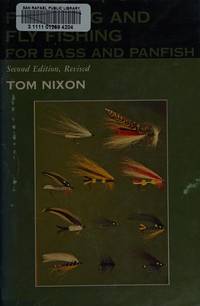
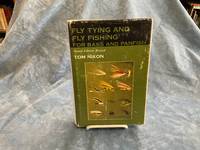
19771722nd edition hardcover Fly Tying and Fly Fishing for Bass and Panfish. Cover in good condition with some discoloration. Dust jacket fully intact but some wear. Oak Tree Pubns hardcover
1977biblio39880A.S. Barnes & Company / Thomas Yoseloff Ltd. 1977. 480 pages. Illustrated. NearFine Hardcover Good DJ. The Book has no Wear. Clean Unmarked. Perfect binding and hinges. The DJ got light to moderate edge wear and minimal soiling. 87"x5.75"x1.7". be34502. A.S. Barnes & Company / Thomas Yoseloff, Ltd. hardcover
18994447167<p>241pp slight wear to covers name stamp and sticker residue on flyleaf otherwise unmarked.</p> B. Herder hardcover
1913002886Boston: Davis and Bond 1913 Book. Illus. by Uncredited Cover and Decoration. Very Good. Hardcover. First No Additional printings. 12mo - over 6¾" - 7¾" tall. Original paper boards with subtle shaded colouring in orange brown and gilt Look carefully; it's not grimy. 26 straightforward positive uncomplicated poems of inspiration. I recently discovered one of Waterman's poems on the internet and have a copy of it hanging beside my desk. Previous owner's inscription dated 1920. 30 pp. Davis and Bond hardcover
19130088-08-45Boston: Davis and Bond 1913. Decorative Cloth. Very Good /Poor. 30pgs rice paper dust wrapper only partially left very nice copy Davis and Bond hardcover
15105Paris, Fayard, 1976 13 x 21, 393 pp., broché, bon état.
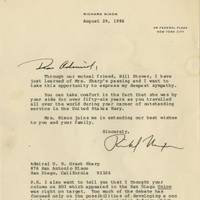
1986941029/08/1986. <blockquote><p>""Too much of the debate has focused only on the possibilities of developing a one hundred percent leak-proof population defense which even the strongest proponents agree could not be developed until next century.""</p></blockquote><p>President Nixon made his mark in the area of foreign policy. Although he had made his own career as a militant opponent of Communism Nixon saw opportunities to reduce the temperature of the Cold War by improving relations with the Soviet Union.</p><p>One of these was the Strategic Arms Limitation Talks negotiations which were a series of meetings beginning in Helsinki that lasted from November 17 1969 until May 1972. After a long deadlock the first results of SALT I came in May 1971 when an agreement was reached over anti-ballistic missiles systems. Further discussion brought the negotiations to an end in Moscow on May 26 1972 when Richard Nixon and Leonid Brezhnev signed both the Anti-Ballistic Missile Treaty and the Interim Agreement Between The United States of America and The Union of Soviet Socialist Republics on Certain Measures With Respect to the Limitation of Strategic Offensive Arms. These served to slow the growth in nuclear weapons and halt extensive proliferation.</p><p>A premise of the Cold War mutually assured destruction meant simply that neither the US nor the USSR would attack the other because it would ensure that both would be obliterated. You could get the first shot in but unless you wiped out the entire capacity of the other side in one blow you would ensure your own demise. In 1969 Nixon announced an anti-ballistic missile defense system called Safeguard which aimed to protect the deterrent nuclear force of the United States its missile fields to maintain that deterrent capacity. This happened at the same time as the country was publicly debating the possibility of protecting entire US cities in a shield the technology of which did not exist. Safeguard never fully operated at its intended capacity and in fact was shut down soon after it launched.</p><p>Ronald Reagan was not an active proponent of mutually assured destruction MAD. In 1983 he proposed the Strategic Defense Initiative SDI to use ground-based and space-based systems to protect the United States from attack by ballistic strategic nuclear weapons. The initiative focused on strategic defense rather than the prior strategic offense doctrine of MAD. It was dubbed ""Star Wars"" by critics. The goal was to neutralize the Soviets' nuclear capacity regardless of the success of ongoing negotiations. The Soviets strongly opposed the Strategic Defense Initiative as they could not afford to match the U.S. in this area and they felt that if successful the concept of mutually assured destruction would be lost and the U.S. would be in a dominant position.</p><p>In November of 1985 Gorbachev and Reagan were to meet in Geneva for a major summit. Both the Soviet Union and the United States were seeking to cut the number of nuclear weapons with the Soviets seeking to halve the number of nuclear-equipped bombers and missiles and the U.S. desiring to ensure that neither side gained a first-strike advantage and to protect rights to the Strategic Defense Initiative. These ideas of arms limitations and strategic defense were the cornerstones to the Cold War negotiations between the two global powers in a bi-polar world.</p><p>One of those who joined the debate was U.S. Grant Sharp a 4-star admiral who was Commander in Chief of the US Pacific Fleet and of US Pacific Command including during the Gulf of Tonkin Incident. He wrote a piece in the San Diego papers which advocated the protection of US-based counter-force assets which touched on a subject central to Nixon's presidency and close to his heart missiles that would serve as a first-strike deterrent.</p><p><strong>Typed letter signed</strong> August 29 1986 New York City to Admiral U.S. Grant Sharp. <em>""Through our mutual friend Bill Stover I have just learned of Mrs. Sharp's passing and I want to take this opportunity to express my deepest sympathy. You can take comfort in the fact that she was by your side for over fifty-six years as you traveled all over the world during your career of outstanding service in the United States Navy. Mrs. Nixon joins me in extending our best wishes to you and your family. Sincerely Richard Nixon.</em></p><p>""P.S. I also want to you that I thought your column on SDI which appeared in the San Diego Union was right on target. Too much of the debate has focused only on the possibilities of developing a one hundred percent leak-proof population defense which even the strongest proponents agree could not be developed until next century. On the other hand a defense of our counter-force missile silos which presently are vulnerable to a first strike from Soviet Union's SS-18s could be deployed in the near future. Unless the Soviet Union agrees to offensive cuts which would remove its first-strike capability we have no choice but to go forward with an SDI program which would deny them that capacity.""</p> unknown