120 résultats
3639081552.Gpaperback. Good. Access codes and supplements are not guaranteed with used items. May be an ex-library book. paperback
19272332New York: Sun Printing and Publishing Association 1927. <br /><br /> Octavo 8 1/2 x 5 1/2 inches; 215 x 140 mm 11 1 pages in stapled wrappers. <br /><br />A short history of The Sun founded in New York by Benjamin H. Day in 1833. The Sun was a trendsetter in American journalism according to the media historian Edwin Emery. "Journalism began a new epoch on September 3 1833 with the appearance of a strange little newspaper The New York Sun It Shines for ALL" he writes in The Press and America: An Interpretive History of the Mass Media. "Most of the material was trivial flippant -- but highly readable. Most important it was cheap. Within six months the Sun had a circulation of around 8000 which was nearly twice that of its nearest rival." <br /><br />The Sun was sold in the street for only a penny and appealed especially to working-class readers with its mix of human-interest stories and emphasis on clear lively sometimes exaggerated storytelling. It was also notable for relying largely on advertising rather than subscriptions for its revenue. <br /><br />"An Outline of The Sun" features numerous photographs of key people at The Sun through the years including the great editor Charles A. Dana who led the paper and was its owner for 20 years. Its editorial cartoonist Rube Goldberg won the Pulitzer Prize in 1948. But perhaps its most famous moment came in 1897 with the publication of a letter from a young girl wanting to know if there is a Santa Claus. That led to one of the most renowned newspaper editorials ever commonly known as "Yes Virginia there is a Santa Claus." Oddly though the pamphlet doesn't mention it. <br /><br />The Sun continued to publish until 1950 when it was folded into the New York World-Telegram. <br /><br />OCLC shows only 2 institutional holdings at Columbia and the New York Historical Society. None in commerce. RARE. <br /><br />A short but interesting look at a famous American newspaper known for its emphasis on human-interest storytelling. <br /><br />CONDITION: Some soiling to the wrappers upper corners bumped upper part of wrappers pulled away from staple small split at bottom of spine. Clean bright and unmarked on the inside pages. About Very Good. Sun Printing and Publishing Association paperback
0469854669.Gpaperback. Good. Access codes and supplements are not guaranteed with used items. May be an ex-library book. paperback
195916482Garden City: Doubleday & Co. 1959. First edition. Hardcover. Near Fine/Very Good. Foreword by Gene Fowler. Signed Inscribed by author Perkin and two former newspaper editors Foster and Chase to another former managing editor Dwyer all referenced in the book. Laid in is a somewhat tanned 4-page outside sheet facsimile on newsprint of the first issue of the 12x15" tabloid newspaper of Saturday April 23 1859. Dust jacket with price on flap has a 1" and a 1/2" tear a tiny corner chip and edgewear. <br/><br/> Doubleday & Co. hardcover
1844DEMO014602IPhiladelphia: George R. Graham 1844. First edition. Hardcover. Good . mezzotintsengravingsmusic. 8vo contemporary half calf marbled boards stain at heel foxing rebacked with original spine new endpapers; lacks several engravings. <br/><br/>Contains Poe's poem "Dream-Land" and a review "Review of Orion". Also contributions by Fenimore Cooper Longfellow O.W.Holmes W.W.Story Hawthorne J.R.Lowell. Also book reviews of Kendall's "Texan-Santa Fe Expedition" Holmes' " Position and Prospects of the Medical Student" Eugene Sue's "Mysteries of Paris" and Ralph Waldo Emerson's "Essays". Hawthorne's story "Earth's Holocaust" is a tale about book burning. Mezzotints engravings music. George R. Graham hardcover
B9783639081558Paperback / softback. New. paperback
5913A9 Class. PBO Decorated Wraps with few minor chips Cvr & small ink mrk former owner nameVG AS-IS SOFTCOVER. Soft Cover. A9 Class paperback
2111902158405144internal company N.A. Soft Cover. Fine. Number of pages: 281 111p Size: 19cm internal company paperback
2090502113712308Not Available N.A. Soft Cover. Fine. The book is in fine condition. Not Available paperback
19882090502113716343Not Available 1988. Soft Cover. Fine. The book is in fine condition. Not Available paperback
19842090502113715524Not Available 1984. Soft Cover. Fine. The book is in fine condition. Not Available paperback
19912090502113717983Not Available 1991. Soft Cover. Fine. The book is in fine condition. Not Available paperback
22703'40 rue Laffitte Paris September 29 1894.'. 1p 4to. On leaf of aged worn and creased cartridge paper. Addressed to 'A. T. Q. C. Care of The Editor of The Speaker 115 Fleet Street E.C. London.' An interesting letter touching on English and American journalistic practice 'sensational' copy plagiarism and fin-de-siècle Paris. The context is not entirely clear: one reading is that the recipient reported on or reproduced in the Fleet Street newspaper the Speaker one of Heilig's 'sensational letters to the American Sunday papers' only to have it 'cribbed' by Pearson's Weekly. Heilig begins: 'Dear Sir I was so amused to compare your own text with that of your robber's in a recent number of The Speaker enclosed. In the one case it was a stolen ruby or flute or piano or spade. In the present it is some stolen skeletons. My business of writing sensational letters to the American Sunday papers does not hold me to any crazy accuracy. The editors trust me they allow me to paint the lily.' He explains that 'In the Cabaret du Neant there are really no skeletons sitting about or at most one in miniature upon a shelf. I thought there ought to be skeletons sitting around so I put them in.' He explains that 'The "P. W. man" going towards the Montmartre hill in full Montmartre! saw these skeletons "lounging on benches" and some which stood about and snapped their jaws a frequent intervals.' He explains that another passage 'has no place in the patter of the show. I took it bodily from their first advertising sheet a journal called "La Mort".' He begins the final paragraph by explaining that he knows 'little of London and nothing of Pearson's Weekly' but that it has occurred to him that 'there may be something even yet more amusing behind their offers of twenty guineas etc.' He believes that 'one of the uses of these offers is to give the editors a screen behind which to protect themselves from even the appearance of evil. They can always say: "The thing was sent in to us. We regret it." Nevertheless I fancy the cribbing is done regularly in their own offices by paid clerks.' '40 rue Laffitte, Paris, | September 29, 1894.' unknown
20074349<p>Fine Hardcover. No notes underlining or highlighting. </p><p>A signature will be required for delivery.</p><p>B6</p> SIU Carbondale hardcover
20007On his letterhead University of London King's College Stand W.C.2. 27 April 1937. 1p. 4to. In good condition lightly aged laid down on leaf removed from album. Clarke writes that a King's student also named Clarke whom Stuart took 'for vacation work' has returned 'full of enthusiasm & gratitude for all you & your people have taught him'. He only hopes that the student 'made as good an impression on you as you have done on him'. He concludes: 'Why don't you come and give the students a talk one day' According to an official account: 'The University of London ran courses in journalism from around 1923. Study comprised a two-year diploma programme initially available at four participating institutions: University College Bedford College the London School of Economics and King's College and comprising classes in practical journalism composition modern history and English Literature. Teaching was concentrated at King's College from 1935 under the directorship of Tom Clarke former editor of the News chronicle and teachers included Hugh Todd Naylor Gaitskell lecturer in Political Economy at University College and the future Chancellor of the Exchequer. The course was suspended on the outbreak of war in September 1939 and never reinstated.' Clarke was also author of "Northcliffe in history. An intimate study of press power". On his letterhead, University of London King's College, Stand W.C.2. 27 April 1937. unknown
0483157538.Gpaperback. Good. Access codes and supplements are not guaranteed with used items. May be an ex-library book. paperback
2001Q-0970110413National Press Photographers Association 2001-01-01. Hardcover. New. In shrink wrap. Looks like an interesting title! National Press Photographers Association hardcover
19774590New York: Alfred A. Knopf 1977. Second printing. Hardcover. Fine/fine. 8vo 191 pages cloth; in blue cloth custom slipcase. <br/><br/>Inscribed by the author to James O. Freedman a former President of Dartmouth College. Naipaul was awarded an honorary doctorate at Dartmouth in 1997. This is the second volume in Naipaul's India trilogy. Signed copies of the Knopf edition are quite scarce. Alfred A. Knopf hardcover
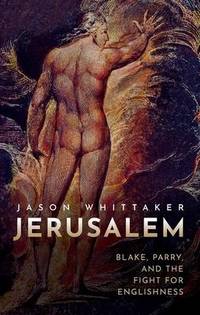
ria9780192845870_inpHardback. New. New Book; Fast Shipping from UK; Not signed; Not First Edition; A reception history of William Blake's 'Jerusalem' that traces the hymn's increasing associations with national identity and explores how different social and political factions both left and right have sought to impose their own mean hardcover
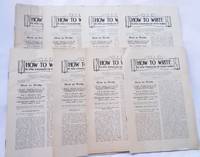
1906015255<p>Detroit MI: The Sprague Correspondence School of Journalism. Offered is a lot of eight issues of "How To Write: The Little Schoolmaster for Literary Workers" from 1906 and 1907 edited by Wm. William C. Sprague and published by The Sprague Correspondence School of Journalism out of Detroit Michigan. A stapled magazine measuring approximately 6-1/8" by 9" and containing 24 pages each. The issues are: May 1906 Vol. 8 No. 12; June 1906 Vol. 9 No. 1; July 1906 Vol. 9 No. 2; August 1906 Vol. 9 No. 3; September 1906 Vol. 9 No. 4; November 1906 Vol. 9 No. 6; December 1906 Vol. 9 No. 7; and February 1907 Vol. 9 No. 9. With articles instructional lessons columns and contributions from readers. Articles include Editor Norman Hapgood editor of Collier's Weekly Finds Flaws in the Dailies; Aspirant for Literary Fame Must Travel Up-Hill Road; Chances of the Young Writer; The Joke and Its Surroundings; The Proofreader; When Journalism Becomes Literature; Country Journalism as a Profession; Newspaperdom; Gossip About Novels and Novelists; How the Wicked Editors Wrong Unknown Writers; The Mistakes of Young Writers; Advice to Amateur Poets. With lengthy columns "Our Experience Meeting" by various contributors on a variety of writing and publishing topics and the "Art and Practice of Journalism" by Frederic Reddale. Staples light to moderately rusted to most issues; the May 1906 issue is worn and edge-chipped to blank margins only; the other seven issues are in Very Good or better condition. . Good. Magazine. 1st Edition. 1st Printing. 1906.</p> The Sprague Correspondence School of Journalism