642 résultats
AUB-685Félix Alcan 1907. In-8 broché, 174 pages avec index, table .. Couverture usagée.
208 pages including index and bibliography. Virtual slaves, these children were uprooted from their villages in central and southern Italy to perform as barrel-organists, harpists, violinists, fifers, pipers, and animal exhibitors. "This extremely, unusual study, enlivened by photographs, throws a floodlight on ethnic prejudice, cultural constructs of childhood, Tammany Hall politics and 19th-century immigration and working conditions." - Publishers Weekly. Very light wear. Glossy laminated covers. Clean and unmarked. Excellent copy. Book
1991x-0792312813Kluwer Academic Pub 1991. Hardcover. New. 1st edition. 182 pages. 9.56x6.52x0.66 inches. Kluwer Academic Pub hardcover

Signed by one of contributors on front end paper. No other marks or inscriptions. No creasing to covers or to spine. Very clean very tight pages with bright unmarked boards, slightly dusty, very slightly foxed page edges and no bumping to corners. 405pp. A collection of papers covering different area of Africa and examining forced labour and labour migration during the 19th and 20th centuries from Senegal to Tanzania, Kenya, Mozambique, South Africa and Namibia.
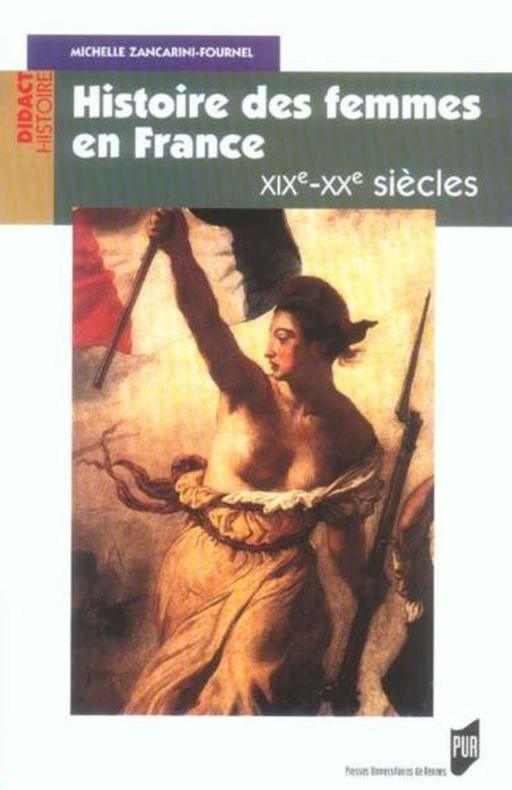
2005SPN-152Rennes : Presses Universitaires (PUR), Collection Didact-Histoire, 2005. 254 p., annexe (Galerie de brefs portraits), chronologie sommaire, bibliographie.
19900921Editions Matrice Collection Points dappui 1990 Broché - 212 pages Bon état général Couverture coins frottés 290 g
A withering critique of age stereotyping in the modern world based on a study of older men and women. Index. 198 pages. Dust jacket rubbed on surface and browned around edges.
Harcover in-8, 266 pp., cartonnage de l'éditeur. Bel exemplaire. [BL-9]
grand in-8°, 168 pages, broché. Bel exemplaire. [MI-26]
1935189931935. Women's Employment World-War II McConnell Dorothy. Women War and Fascism. New York: The American League Against War and Fascism 1935. 18 pages. Bound in brown cardstock wrappers. Measuring 5.5" x 8". McConnell presents a "protest against the use of women as cheap labor in factories and offices in the U.S. as well as in the fascist states" asserting that "Munitions plants employ women at dangerous tasks with long hours and low wages. Discriminatory laws against women should be defeated and women's wages made equal with men's for equal work". Wrappers are vibrant and unworn. Small penciled inscription on the title page not affecting text. An interesting pamphlet promoting the fight for women's labor safety and equal pay during WWII. Very clean and bright pages in very good condition. unknown
1919163201919. Women Employment:: This document was created with the intent of finding employment and for women contracted on temporary terms to work in government-appointed positions during World War I. The Committee advised that women have options to become permanent members of the government workforce and be treated equally with male colleagues i.e. equal pay not having additional clerical duties etc. Ministry of Reconstruction. Women's Advisory Committee. Report of the Sub-Committee Appointed to Consider the Position after the War of Women Holding Temporary Appointments in Government Departments. Presented to Parliament by Command of His Majesty. London: Published by his Majesty's Stationery Office 1919.Modern blue card wrappers with paper label. 8 page folio. Very good condition. The sub-committee which wrote this was composed of six women and two men demonstrating the interest and respect for women's work and labor contributions during World War I. unknown
19942083002117803105Working Standards Examination 1994. Soft Cover. Fine. Number of pages: 237p Size: 21cm Working Standards Examination paperback
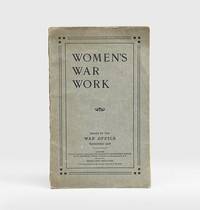
1916183494London: Chiswick Press 1916. First edition of this illustrated government publication promoting women's wartime employment. Women's War Work contains a detailed list of several hundred roles left vacant by men that women successfully fulfilled. Several of these are demonstrated by characterful photographs which show women employed in a range of professions including the postal service factories breweries and shops. The War Office recruited women into the workplace to maintain productivity produce munitions and ensure that as many men as possible were available for the Armed Forces. By July 1916 it was estimated that 750000 women across Britain had taken up such work and the War Office produced Women's War Work in September to further increase their numbers. The preface asserts that employers who had women in their workface would "readily admit that the results achieved by the temporary employment of women far exceed their original estimates and even so are capable of much further extension" p. 5. Women's contributions to the war effort drastically changed public perception of their capabilities and helped women over 30 to achieve enfranchisement in 1918. Provenance: from the collection of the suffrage historian Elizabeth Crawford. Quarto. 72 black and white photographs. Drab paper wrappers front and rear cover printed in black. Library sticker of the Women's Service Library and withdrawal stamp on front inside cover former shelfmark to front cover in pencil former bookseller's price to half-title. Spine repaired loss to ends wrappers lightly toned extremities a little creased extending to outer leaves at bottom corner occasional light finger-soiling to contents but otherwise clean: a very good copy of a fragile publication. unknown
1878189841878. Watherston Edward J. The Industrial Employment of Women in France Compared with England. London: Spottiswoods and Co. 1878. French Silk Manufactures and the Industrial Employment of Women. London: Dryden Pres - J Davy and Sons 1879. Both measure 8.5" x 5.25". 16 and 23 pages respectively. The 1878 pamphlet "The Industrial Employment of Women in France." is a comparative analysis of the labor participation rate of women in France and in England. French women were much more integrated into the labor market this study finds even despite the fact that England had a disproportionate demographic surplus of women and an even more developed industrial sector. At the conclusion of the pamphlet Watherston proposes three major steps spur female employment in England based off the French example which are the: "1. Establishment of special training schools for certain trades following a preliminary general education. 2. These training schools. must be made self-supporting within a short time. All pupils must pay a moderate fee for being taught. 3. There should be union of the managers of training schools with all manufacturers wishing to employ female labour. The union must aim both to give employment to women and to advise as to the directions in which it may be sought and into which it may be extended." Watherston lays blame for the poor labor participation rate of English women at the fact that they are barred from major employment sectors such as the railways as well as a private sector which demonstrated no inclination to hire them. He concludes that English women need organization first and foremost and should establish a "Society for the Industrial Employment of Women". <br /> <br /> The second pamphlet focuses on first the history of the French silk industry and later women's employment within it noting the unique advances that the French female silk workers enjoyed. Watherston notes that "Other countries before France made use of female labour but the French were the first who employed not only as we do the hands but also the brains of women. The technical education of female workers took place simultaneously with that of the men and it is to the results of this that not a little of the excellence of the French silk manufactures of the present day is due." Watherston goes on to examine the silk manufacture at Jujurieux which took in young women from a rural underdeveloped region and lodged fed and rigorously trained them in silk production. In both of these pamphlets he highlights and endorses enterprises that transform women into workers often through a process that includes living and training amongst fellow apprentices for years at a time. There is a prevailing belief that women must be engineered into working class subjects through this total immersion but with a confidence that they are technically and intellectually skilled enough should they be properly acclimated. Some minor chipping to left edge 3/4 in. tear on top edge of one pamphlet overall in very good condition. unknown
16264The Occupations of Women According to the Census of England and Wales 1911." Arranged and compiled by L. Wyatt Papworth and Dorothy M. Zimmern. London: The Women's Industrial Council 1914. Statistics drawn from the census of England and Wales to determine the industries currently most open and profitable for women and to be used in increasing opportunities for women's employment. Handling creases and soiling to wrappers. Front wrapper has creased corners. Small loss to lower right corner of back wrapper and few pages. Item originating from the Women's Services Library at the Millicent Fawcett House. Fawcett was a renowned activist and leader in the fight for women's suffrage and educational opportunities. The census information is organized into tables analyzing occupations of men and women marriage status of women workers and numbers of retired women workers among other things. An interesting document that shows women's growing significance in the labor force and the interest in expanding future opportunities. unknown books
16266Circular of the Working Girls' Society. Bylaws for one of the first organizations in New York that was created specifically to support women workers. Extremely rare.Two very light horizontal fold marks. Light thumb-soiling. 2" tear at bottom of center fold. Very good condition. <br/><br/>The Working Girls' Society was designed to provide space for girls and women to gather take classes and socialize after working hours; it was dedicated to providing working women with a safe and clean space that could help them advance their professional lives. Information in the bylaws related to membership and to members' uses of the organization's library and rooms at 222 West 38th Street. Perks of joining the society the club even include special vacation benefits and discounted train tickets. An extremely rare early document that details the social communities which developed around a larger urban female workforce in the late 19th century. Extremely scarce OCLC Worldcat lists no other known copies of this document in any institution of library worldwide. unknown books
16265Woman's Work For Woman A Union Illustrated Magazine Published Monthly by the Women's Foreign Missionary Societies of the Presbyterian Church. Vol. XI No. 1. January 1896. New York. 28 pages. Vertical fold down the center of the booklet with soiling on the front and back cover water damage on the top and right edge of the front cover and small losses on the bottom edge of the back cover. Very rare; OCLC locates no other known copies.<br/><br/>Woman's Work for Woman was published from 1890-1904. The magazine contains articles and updates about life in different missionary locations in Asia South America and the Middle East. With most of the submissions by women and with an all women Editorial Committee this magazine is indicative of some of the most acceptable ways for women to participate in public life in the late 19th century. Women were not allowed to participate in Presbyterian church councils or leadership until the mid-twentieth century but working with the Women's Missionary Societies gave new opportunities for writing organizing and leadership positions. In the late 19th century women who sought work outside the home were often criticized for abandoning family and domestic responsibilities but women who pursued religious work did not face this same criticism since they had an altruistic motive. Working on religious causes allowed women agency and independence that they would not be able to access in other occupations. Very rare; OCLC Worldcat locates no known copies at any library or institution. unknown books
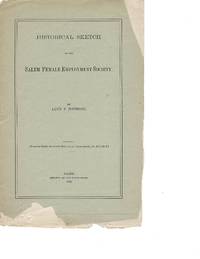
16738Women's Fight for Employment Equality Pamphlet. ''Historical Sketch of the Salem Female Employment Society" 1880. The Salem Female Employment Society was founded in Salem Massachusetts on January 15 1861 by members of the North Church Sewing Circle as the Society for the Employment of the Poor. The purpose of the society was to produce sewing work for poor women who were unable to gain employment elsewhere Manufactured garments were sold by members at a store they owned and operated at 366 Essex Street. By April 22 1867 the society had incorporated as the Salem Female Employment Society. OCLC reports only 2 other known copies among Institutional or library Collections according to OCLC Worldcat. unknown books
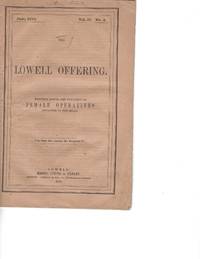
16739Women's Fight for Employment Equality. "Lowell Offering. Written Edited and Published by Female Operatives Employed in the Mills." 1844. Pamphlet. The Lowell Offering was a monthly publication run by women working in the Lowell Textile Mill from 1840-1845. Featuring the women's poetry essays and other literary efforts the magazine gave female factory workers the opportunity to share their creative endeavors; for the women who edited and published the periodical the Lowell Offering also provided demonstrable and employable skills in publishing and journalism. This 1844 edition comes from the penultimate year of the publication. It is the earliest piece in the collection. <br/><br/>Lowell solved the problem of labor at his mills by employing young women between the ages of 15 and 35 who became known as "mill girls". Unlike European industries which had access to "large landless urban populations whose reliance on the wage system gave them few economic choices" American companies had to grapple with a small labor supply because the population was small and most preferred farming their own land and the economic independence that came with it. In order to persuade these young women to work at a mill they were paid in cash once "every week or two weeks". In line with the Boston Associates' worldview the mill girls were encouraged to educate themselves and pursue intellectual activities. They attended free lectures by Ralph Waldo Emerson and John Quincy Adams and read books they borrowed from circulating libraries. They were also encouraged to join "improvement circles" that promoted creative writing and public discussion. unknown books
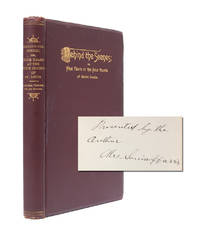
18934179St. Louis: A. R. Fleming & Co 1893. First edition. Near Fine. Original publisher's cloth binding with gilt to spine and front board. Brown coated endpapers. A square tight copy with just a bit of rubbing to extremities and light shelfwear to bottom edges of boards. Some cracking to hinges but both holding firm. Internally clean and unmarked collating viii 9-220: complete including frontis. Inscribed on the front endpaper: "Presented by the Author Mrs. Louisa Harris." The first book published by a policewoman in America it is scarce both institutionally and in trade. OCLC reports 23 copies and the modern auction record shows only three; of these only one was signed. <br /><br />Despite assumptions to the contrary "women have served in organized law enforcement in the U.S. almost from the beginning. The first police departments in America were established in the 19th century and in 1845 women began working as matrons in New York City jails" Smith. The practice rapidly spread across the country where police forces needed assistance in supervising female prisoners and dealing with the specific challenges faced by this population. Women's clubs -- particularly the American Female Moral Reform Society and the Women's Christian Temperance Union -- urged recognition for the widespread violence perpetrated on female prisoners and called for meaningful change. "It was these women's groups that fought for these distinctly female positions demanding there was a need for women to take care of women.and they provided police departments with funds for paid matron positions until the government could be convinced of the necessity of having women in the police force" Maiorano.<br /><br />Louisa Harris having served in the prisons and courts of Missouri for nearly a decade became the first of these women to publish about her experience. The resulting narrative reflects an awareness of the social forces that often put women at a disadvantage driving them toward arrests or recidivism. Domestic violence poverty and the stigma placed on sex work all do damage to women; and according to Harris these women should not be treated as or placed with violent offenders when they could with proper assistance find safety or build more secure lives. This is the motivation for Harris' memoir. In the introduction she explains that while she hesitated to publish the book which might in some readers awaken a "morbid curiosity" she ultimately moved ahead because "I reasoned that if the world knew more about the unfortunate and their revolting experiences together with the causes that promote misfortune there might be more true sympathy exhibited.While I have from personal observation become familiar with so-called criminals I have had the opportunity to learn many of the causes of the committal of crimes. The law seldom recognizes the palliating influences but humanity should." Harris calls for reforming the handling of juvenile offenders advocates for therapeutic programs for young women and taps into a number of other systemic issues of concern within policing today. Near Fine. A. R. Fleming & Co books
16206Women's Employment. Photograph: Original Vintage Gelatin silver print Photograph of Women Civil Servants 1918. Black and white photograph showing a room of over one hundred women seated at crowded desks and tables reading and sifting through piles of letters. 6 x 8 in. Press photo with many handwritten pencil inscriptions in English and Swedish and two stamps. One inscription on center back reads: "The work of the postal censorship. The room where letters to from German prisoners of war are examined". Another line reads: "Engleska postcensuren 1918" or "English postal censorship 1918" in Swedish. Overall good condition with light scattered creasing but a crisp and clear image. An interesting image that shows an one unique way that women's labor and intellectual skills were important to support the war effort of World War I. unknown books
1911182771911. Imperial size albumen portraits of faculty and students at American Medical College. St. Louis Missouri 1911. Large photo measures 24 x 20 inches. 40 subjects every one of them male except for a single female student listed below as "F Heflin." Photographed by Hays Studio. Mounted to photographer's board. The American Medical College a medical school founded in 1873 graduated its first woman in 1888. In 1911 the American Medical College combined with the Barnes Medical College. The following year the combined school became the Medical Department of the National University of Arts and Sciences in St. Louis. The National University then merged with the St. Louis College of Physicians and Surgeons around 1915. Female students like this one would have come in at a significant disadvantage proving her qualifications against skepticism in a field notorious for gender discrimination. The value of female doctors for female patients in particular has been profound. Board scuffed on one side does not affect images or text. Chipped at corner and top does not affect images or text. Overall very good condition. Expressions and details in images clear. unknown
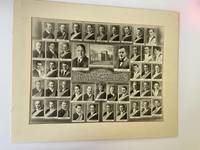
18278Silver gelatin portraits of faculty and graduating class from the University of Manitoba Medical School. Canada 1932. Measures 16 x 12.5 inches. 42 student subjects including a single female student. 2 faculty members with illustration of school building between them. Mounted to photographer's board. Photographer's info in bottom corner "Campbell." After fierce educational activism throughout the 19th century led to the admission of women into medical schools at the turn of the century the twentieth century saw a decline of women in the profession. By 1949 only 5.5% of students entering medical schools were women. Students are shown in graduation gowns with sashes across their chests. student's name are listed including Female medical student as "V. McDorman." In very good condition. unknown
1900182761900. Imperial size albumen portraits of faculty and graduates from the medical class at Iowa State University. 1900. Large photo measures 18 x 22 inches. 36 subjects. 27 wear graduation caps and gowns. Only one graduate is female a Mrs. M. L Nell all the others white and male. Throughout the 19th century women left the country in order to pursue medical degrees and fulfill residency requirements. Fierce advocacy by educational activists led to the integration of some colleges by the turn of the century. Female students like this one would have come in at a significant disadvantage proving her qualifications against skepticism in a field notorious for gender discrimination. The value of female doctors for female patients in particular has been profound. One corner of photographer's board bumped does not affect images or text. Photo of the school's medical building set between student portraits in center. Overall very good condition. unknown
18100Silver gelatin photo of nurses in uniform posed in operating room. C. 1900. Measures 8" x 11" inches. Photo shows 25 women arranged in three rows with 3 men standing behind them. The nurses wear long white smocks over gray dresses with white cuffs and small white hats perched on their heads. Their bodies are turned toward the camera but their gazes wander about the room with some looking directly into the camera but others looking elsewhere. Three men in lab coats with black ties visible beneath stand behind them gazing over the women's heads toward the camera. Surgical equipment in the form of two large metal barrels connected by pipes stand against the wall behind the group in the room with tiled floor and subway tiles running floor to ceiling. Nursing in the early twentieth century was one of the few professional fields available to women though opportunities for advancement were rare. In addition to working with patients nurses were required to change and launder linens prepare meals scrub the floors and order supplies. Still the number of women who became nurses rose rapidly through the early twentieth century. Photo is mounted to black photographer's board with "Compliments of.Massey Ltd 235 Yonge st" on verso. The women's names are written in neat rows in pencil on verso. The women in this photo were pioneers in a field they would come to dominate. unknown